Vienna Tours & Experiences: Every Tour Type Compared
Every kind of guided experience in Vienna, with real 2026 prices and an honest verdict on each: walking tours, hop-on hop-off buses, the Fiaker, Danube boats, concerts, food tours and day trips.
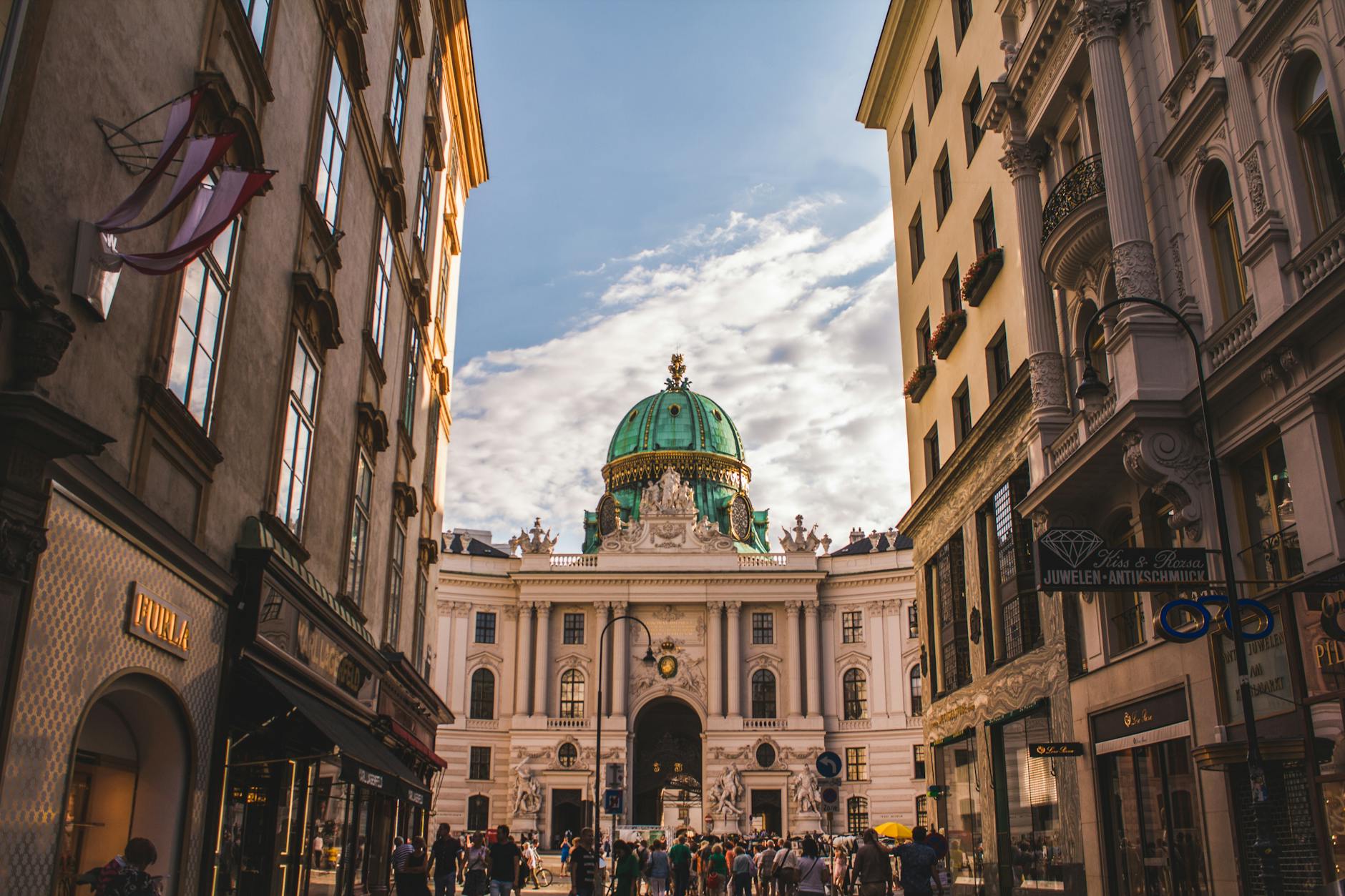
Photo by Prakhar Bansal
- Vienna Tours at a Glance: What Everything Costs
- How the Vienna Tour Market Actually Works
- Walking Tours: Free, Paid and Self-Guided
- Hop-On Hop-Off Buses: The Honest Verdict
- The Fiaker: Vienna’s Horse-Drawn Carriages
- Boat Trips: The Danube, the Canal and Bratislava
- Concerts and Opera: The Biggest Trap in Vienna Tourism
- Food and Drink Tours
- Bike, Segway and Scooter Tours
- Themed and Niche Tours
- Day Tours from Vienna
- Private Guides and Custom Tours
- Tours for Families, Solo Travellers and Limited Mobility
- Where to Book, and What It Costs You
- What We Would Actually Book
- How to Avoid Getting Ripped Off
- Seasonality: What Runs When
- Frequently Asked Questions About Vienna Tours
- Related Vienna Guides
- Photo Credits
This article contains advertising. Our booking links are routed through a partner that adds commission tracking automatically, so if you book through one we earn a commission from the provider, at no extra cost to you. It never affects what we recommend. Affiliate disclosure
Almost every visitor books at least one guided experience here, and almost every visitor overpays for at least one of them. Vienna tours range from genuinely excellent — a two-hour walk that rearranges how you read the Ringstrasse — to industrial-scale tourist processing that costs four times what the same experience costs a local. The gap between the two is not obvious from a booking page, and the platforms that sell them have no interest in explaining it.
This guide covers every category of organised experience in Vienna: walking tours, hop-on hop-off buses, the Fiaker, Danube boats, concert and opera tickets, food tours, bike tours, themed and niche tours, day excursions, and private guides. For each one you get real 2026 prices, how the market actually works, who each option genuinely suits — and, where it applies, a clear statement that you should skip it. Prices were checked in September 2026 and change; treat them as the right order of magnitude rather than a quote.

Vienna Tours at a Glance: What Everything Costs
The table below is the short version. Every figure is per person unless noted, and every category is unpacked properly further down.
| Tour type | Typical price | Duration | Worth it for |
|---|---|---|---|
| Free (tip-based) walking tour | €10–15 tip | 2–2.5 hrs | Almost everyone, on day one |
| Paid themed walking tour | €20–45 | 2–3 hrs | A specific interest done properly |
| Hop-on hop-off bus (24h) | €37–45 | All day | Limited mobility, heat, rain, kids |
| Fiaker, city centre short | €60 per carriage | ~20 min | A splurge, split four ways |
| Fiaker, city centre long | €105 per carriage | ~40 min | Same, with actual sightseeing |
| Danube sightseeing cruise | from €33 | 1–3.5 hrs | Seeing the modern city |
| Boat to Bratislava | €29 one way | ~75 min | A day trip with a view |
| Tourist Mozart concert | €69–139 | ~2 hrs | People who want the costumes |
| State Opera standing room | €13–18 | 2–4 hrs | Anyone willing to queue |
| Food tour | €70–140 | 3–4 hrs | First-timers, one meal replaced |
| Guided bike tour | €35–50 | 3 hrs | Covering ground beyond the Ring |
| Private licensed guide | €180–350 | Half day | Groups of three or more |
| Full-day coach excursion | €50–120 | 8–12 hrs | Hallstatt, and little else |
How the Vienna Tour Market Actually Works
Three things explain almost every pricing oddity you will run into.
First, Vienna is unusually walkable and unusually well served by public transport. The historic core inside the Ringstrasse is roughly 1.5 kilometres across. Nearly every headline sight — St. Stephen’s Cathedral, the Hofburg, the State Opera, the Kunsthistorisches Museum — sits within twenty minutes’ walk of the others. A 24-hour transport pass costs €9.70 in the WienMobil app (€10.20 on paper). This means many tours are competing against a genuinely excellent free alternative, and the honest ones know it. Anything sold primarily as “transport around the city” is selling you something you can buy for under €10.
Second, there is a licensing system and it matters. Austria regulates the title of Fremdenführer (licensed tourist guide). Qualifying takes a multi-year course and a state examination covering art history, architecture, history and Austrian law. Licensed guides are legally the only people permitted to guide commercially inside many museums and monuments. Free walking tours mostly operate outside this system, which is perfectly legal on public streets and is not a knock on the guides — many are excellent — but it does explain why a two-hour street walk costs a tip while three hours with a licensed guide inside the Hofburg costs €200.
Third, the resale layer is enormous. Very few of the “companies” you see on booking platforms actually run tours. GetYourGuide, Viator, Tiqets, Klook and a long tail of white-label ticket sites resell the same handful of Viennese operators, marked up, under different product names. Two listings with different titles, different photos and a €15 price difference are routinely the same bus, the same boat, or the same concert. It is always worth searching the operator’s own name before booking.
Walking Tours: Free, Paid and Self-Guided
Walking is how Vienna is meant to be seen, and walking tours are the best value in the city by a wide margin.
Free (tip-based) walking tours
Several operators run daily tip-based tours in English, including Good Vienna Tours, Walkative! and guides listing through GuruWalk. The standard product is a two to two-and-a-half hour circuit of the Innere Stadt: Stephansplatz, the Graben, Michaelerplatz, the Hofburg complex, Heldenplatz, the Ringstrasse, usually finishing near the Rathaus or the opera.
They are genuinely useful on your first morning, for a reason that has nothing to do with facts: they give you a mental map. Two hours in, you know which direction the Danube is, why the Ring is a ring, and which of the enormous imperial buildings is which. Everything you do for the rest of the trip is easier.
The honest caveats. “Free” means tip-based, and €10–15 per person is the normal range — a group of four tipping properly is paying €40–60, which is real money and worth budgeting. Groups can be large in July and August, sometimes thirty or more, and at that size you will spend the tour watching an umbrella. Quality varies sharply by guide rather than by company. And the business model creates a mild but persistent nudge toward whatever the guide can also sell you at the end.
Booking is worth doing even though it is free, because the popular slots cap out. Turn up ten minutes early.
Paid themed walking tours
Once you have the orientation, the paid walks are where Vienna gets interesting. Expect €20–45 for two to three hours. The themes that consistently justify the money are the ones where the subject is invisible without a guide: Jewish Vienna, Red Vienna and the interwar social housing programme, Secession and Jugendstil architecture, Freud’s Vienna, and the city’s role in 1938 and after. These are stories written into facades and street corners you would otherwise walk past.
Self-guided walking
If you would rather not be in a group at all, Vienna rewards this better than most cities — the sights are dense, signage is good, and English is widely spoken. Our self-guided Vienna walking routes lay out several circuits you can do at your own pace, and the Ringstrasse architecture guide works well as a two-hour walk in its own right. For a first visit with limited time, the 3-day Vienna itinerary sequences the same ground without a guide fee.
Hop-On Hop-Off Buses: The Honest Verdict
Two operators run open-top double-decker circuits: Big Bus Vienna (red) and Vienna Sightseeing (yellow and green). Big Bus starts around €37 for 24 hours and €45 for 48. Vienna Sightseeing runs four colour-coded routes with more than fifty stops and audio commentary in nineteen languages, at broadly comparable prices. Both are resold at a markup on the big platforms.
For most visitors in most conditions, this is the worst value on the list. The core reason is the one above: the historic centre is small and the U-Bahn is fast and cheap. You will spend a meaningful share of your 24 hours sitting in Ringstrasse traffic, passing buildings you could have walked to in eight minutes, listening to commentary that is thinner than the free walking tour you could have taken instead. The buses also cannot enter much of the pedestrianised core, so the stops are on the periphery of exactly the area you most want to be in.
There are four situations where it genuinely earns its price, and they are not marginal:
- Limited mobility. If walking distances are a real constraint, a seat that delivers you to the door of each sight changes the trip. This is the single best argument for the ticket.
- Heat. Vienna reaches the mid-thirties in July and August, and the open top deck with moving air beats a paving-stone walk at 3pm.
- Rain, with children. A covered lower deck plus something to look at solves a genuinely hard afternoon. Our rainy day guide has non-bus options too.
- Schönbrunn plus the centre in one day. The one route the buses do usefully cover is out to Schönbrunn Palace and back. Though the U4 does it faster for a €3.20 single (€3.00 in the app).
If you do buy, buy the 48-hour ticket rather than the 24. The marginal cost is small and it removes the pressure to extract value in a single day, which is what makes people ride the bus instead of seeing the city.

The Fiaker: Vienna’s Horse-Drawn Carriages
The Fiaker is the most photographed and most argued-about experience in the city. Here are the official prices, which are set and published rather than negotiated, and which are per carriage for up to four or five people — not per person. That distinction changes the maths completely.
| Route | Duration | Price per carriage |
|---|---|---|
| City centre, short tour | ~20 minutes | €60 |
| City centre, long tour | ~40 minutes | €105 |
| Schönbrunn palace park | ~30 minutes | €95 |
| Zentralfriedhof, short | 30 minutes | €65 |
| Zentralfriedhof, long | 60 minutes | €110 |
| Wheelchair-accessible carriage | per hour | €160 |
Carriages wait at fixed stands: Stephansplatz, Michaelerplatz, Albertinaplatz, Petersplatz and Burgtheater/Volksgarten in the centre, plus Gate 2 of the Zentralfriedhof and the Schönbrunn grounds. The Zentralfriedhof and Schönbrunn routes run seasonally, roughly mid-March to autumn.
Our honest read. The twenty-minute city-centre tour at €60 is poor value as sightseeing — you cover a small loop, slowly, at eye level with parked cars and other tourists. The forty-minute tour at €105 is a different product: it gets round the Ring and into quieter lanes, and split between four adults it is €26 each for something you will remember. If you are two people and price-sensitive, skip it. If you are four, or it is an anniversary, take the long one.
The Zentralfriedhof route is the underrated one. Vienna’s Central Cemetery is enormous, genuinely beautiful, full of composers’ graves, and impossible to cover on foot in an afternoon. A carriage is the sensible way to see it, not the romantic way — which makes it the one Fiaker route that is arguably the best tool for the job rather than the most expensive one.
On the animal-welfare question, which visitors increasingly ask about: Vienna’s Fiaker trade is regulated, with rules governing horse working conditions and hot-weather operation, and the city has tightened them repeatedly over the past decade. It remains a contested subject locally, and some visitors will look at horses standing on hot summer paving and decide it is not for them. That is a reasonable conclusion and we are not going to talk you out of it. If you do ride, the practical welfare signals worth noticing are horses that look well-conditioned, clean harness, and a driver who waters them between runs.
Boat Trips: The Danube, the Canal and Bratislava
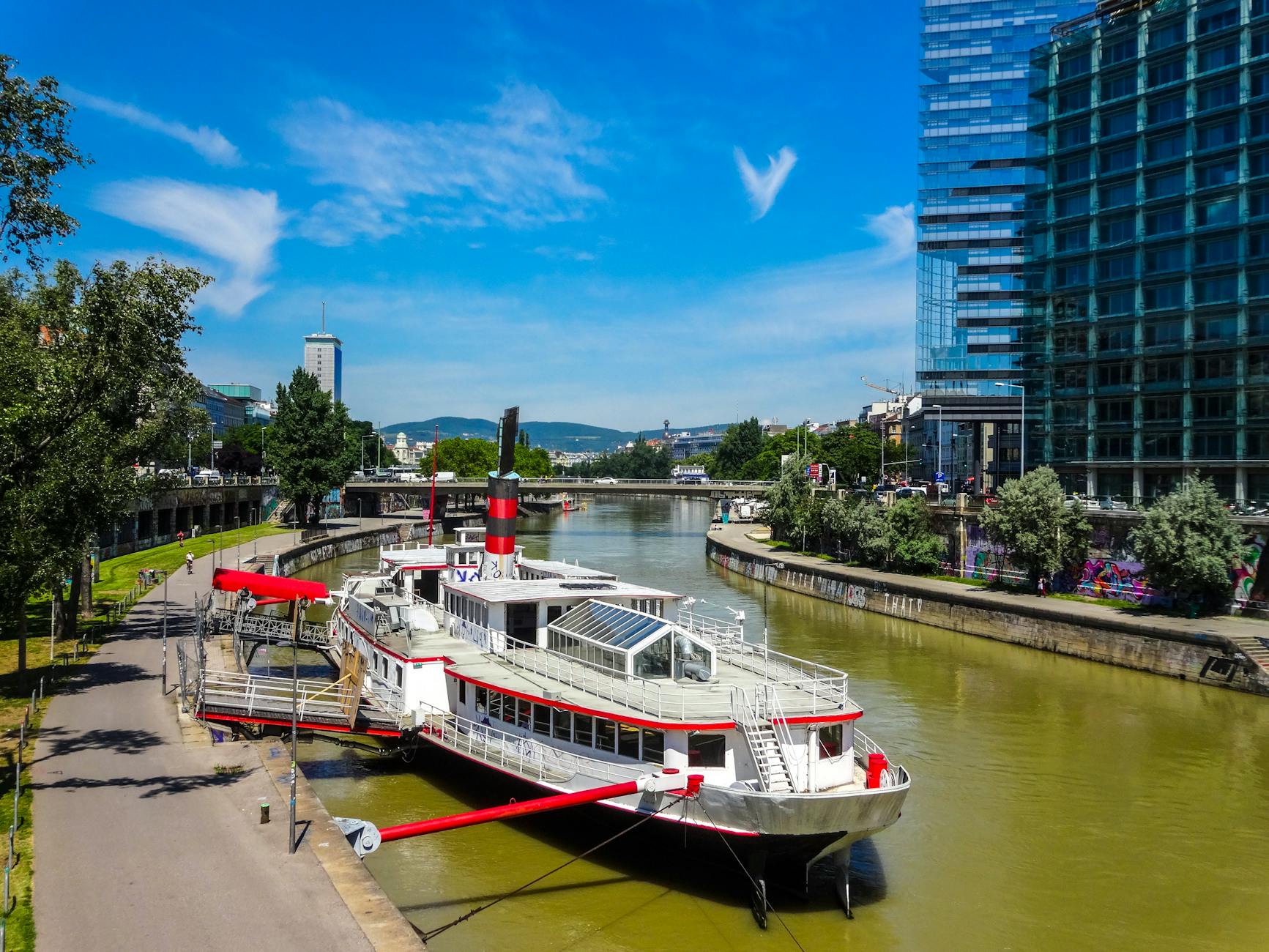
Vienna’s relationship with the Danube confuses first-time visitors, and it changes what a boat trip is worth. The main river runs well north-east of the centre; what flows past the old town is the narrow, straight-sided Danube Canal. Neither is the storybook river of the Wachau. Set expectations accordingly.
Sightseeing cruises
DDSG Blue Danube runs the main programme — city cruises, a longer Danube panorama tour, and evening sailings — starting from about €33. What you actually see is modern Vienna: the UN complex at Donaustadt, the Danube Island, the Millennium Tower, bridges and container terminals. It is interesting in its own way, and it is emphatically not imperial Vienna. Anyone booking a Danube cruise expecting Habsburg facades will be disappointed, and that mismatch is behind most of the mediocre reviews these sailings get.
Evening and dinner cruises are the better version of the product, because the industrial edges vanish and the lights work in your favour. Our Danube activities guide covers the swimming, cycling and beach side of the river, which for many visitors is the better use of a summer day than a boat ticket.
The boat to Bratislava
This is the one boat trip we would put on a first-timer’s list. The Twin City Liner catamaran runs from Schwedenplatz, in the middle of Vienna, to central Bratislava in about 75 minutes. DDSG also sells the route from €29 one way, with breakfast or evening-buffet upgrades at €35 and €49. Arriving in another country’s capital by fast boat, having boarded a five-minute walk from your hotel, is a genuinely good day out — and considerably more fun than the train, which is cheaper and faster but is a train. See the Bratislava day trip guide for what to do at the other end.
Wachau river cruises
The river cruise people picture when they imagine the Danube is not in Vienna at all — it is the Wachau Valley, between Krems and Melk, an hour upstream by train. Vineyard terraces, castle ruins, Dürnstein’s blue church tower. If you only take one boat in Austria, take that one, not a city cruise.
Concerts and Opera: The Biggest Trap in Vienna Tourism
This section matters more than any other on this page, because the amount of money involved is larger and the quality gap is enormous.
The costumed sellers on Kärntner Straße
You will be approached — repeatedly — by people in eighteenth-century wigs and breeches selling tickets to “exclusive” Mozart concerts. They work Kärntner Straße, the Graben, Stephansplatz and the pavement outside the State Opera. The tickets typically run €70–120 for tourist-grade performances by small ensembles in minor venues. Do not buy concert tickets from costumed street sellers. This is the single most reliable way to be overcharged in Vienna, and it is the reason this page exists.
The legitimate tourist concert
There is a real, licensed version of the same idea. The Wiener Mozart Konzert stages costumed Mozart-and-Strauss programmes in serious venues — the Golden Hall and Brahms Hall of the Musikverein, and the State Opera. Published prices run €69 (Category C), €89 (B), €109 (A) and €139 (Superior).
Is it worth it? If what you want is a Mozart greatest-hits evening in a spectacular gilded room, with musicians in costume, and you do not much care whether the programme is artistically serious — then yes, honestly, it delivers exactly that and people enjoy it. If you are a classical listener, you will find the programming shallow and the venue wasted. Know which of those two people you are before you spend €109.
What we would actually book
Vienna State Opera standing room. Balcony standing costs €13, gallery €15, parterre €18. Tickets are sold only on the day of the performance, released online at 10:00 Vienna time. For less than the price of two coffees and a slice of cake you get a world-class house performing at full strength. Nothing else in European travel offers this ratio. The catch is that you stand for two to four hours and you must organise yourself in the morning. Full mechanics — which queue, which entrance, how the scarf-on-the-rail system works — are in our Vienna State Opera guide.
The Musikverein and Konzerthaus proper. Regular subscription-season concerts in the Musikverein are frequently cheaper than the tourist Mozart concert in the same building, and are the real thing. Check the venue’s own website for what is on during your dates rather than a reseller’s.
Church concerts. Karlskirche, the Peterskirche and the Jesuitenkirche all run affordable classical programmes, often €25–45, in acoustically rewarding rooms.
Our Vienna classical music guide covers the venues and what is on; the Vienna Boys’ Choir and the Spanish Riding School each have their own booking quirks worth reading before you commit.
Food and Drink Tours
Vienna food tours run roughly €70–140 for three to four hours, and typically cover the Naschmarkt, a coffee house, a Würstelstand, and a traditional Beisl, with tastings substantial enough to replace a meal.
The value case is narrower than operators suggest. Viennese food is not hard to access: menus are widely available in English, portions are large, and the classics are unmissable by design. What a good tour actually buys you is sequencing and confidence — someone explaining which of eleven coffee names to order, what a Beisl is, why Sachertorte comes with unsweetened cream, and how to order a Käsekrainer at midnight without embarrassment. That is worth real money on day one of a first visit, and close to nothing on day four.
Wine is the stronger case. A Heurigen tour into Grinzing, Nussdorf or Neustift takes you to a genuinely local institution in an outer district you would probably not reach alone, with someone who can navigate the buffet counter and the wine list. Vienna is the only world capital with commercial vineyards inside the city limits, and that is a real thing to see.
If you would rather do it yourself, the Vienna food guide, the coffee house guide and the Austrian wine guide cover the same ground for the price of nothing. For the guided version, our Vienna food tours page compares the specific operators.
Bike, Segway and Scooter Tours
Guided bike tours run about €35–50 for three hours and are the most underrated of the motorised-ish options. Vienna has excellent separated cycle infrastructure, flat terrain in the centre, and — crucially — the distances that defeat walking are exactly bike distances: the Prater, the Danube Island, the Augarten, Schönbrunn.
The standard route runs the Ringstrasse, down into the Prater, along the Danube Canal and back. It covers three or four times the ground of a walking tour without becoming a bus. For families with teenagers, this is often the tour everyone actually enjoys.
Segway tours exist and cost more; they are slower than a bike, less flexible than walking, and mostly banned from the places you want to go. Skip them. If you would rather ride independently, biking in Vienna covers rentals, the WienMobil bike-share scheme and the best routes.
Themed and Niche Tours
This is where Vienna outperforms most European cities, because the city’s history is unusually strange and unusually well documented.
- The Third Man tour. Around two and a half hours tracing Carol Reed’s 1949 film through post-war Vienna, including the sewer system used in the chase sequence. It works as film history and as an introduction to the four-power occupation, which most visitors know nothing about.
- Crypts and catacombs. The Kaisergruft holds 150 Habsburgs; the catacombs beneath Stephansdom hold rather more people, less ceremonially. Both are guided-access only in parts.
- Jewish Vienna. Judenplatz, the Stadttempel, the Leopoldstadt. Reading these sites without a guide is difficult because so much of what mattered is absent rather than present. See our Jewish Vienna guide.
- Klimt, Schiele and 1900. The Klimt trail connects the Secession building, the Belvedere and the Leopold into a single argument rather than three separate ticket queues.
- Street art and contemporary Vienna. The Danube Canal walls and the outer districts, covered in our street art guide.
- Ghost and legend walks. Fine as evening entertainment, weak as history. Book them knowing which one you are getting.
Day Tours from Vienna
Full-day coach excursions run €50–120 and go to Hallstatt, Salzburg, the Wachau, Bratislava, Melk or some combination. The rule of thumb is simple and it saves people a lot of money:
Where the train is easy, take the train. Salzburg is a direct two-and-a-half-hour railjag from Hauptbahnhof. The Wachau is an hour to Krems then a boat or a bike. Bratislava is an hour on the train or 75 minutes by catamaran. Paying a coach operator €90 to do any of these is paying for a commentary you did not need and a schedule you cannot change.
Where the connections are awkward, the coach earns it. Hallstatt is the clear case: independently it is a four-hour journey each way with two changes and a ferry, which turns a beautiful village into a punishing day. Multi-stop itineraries that combine Melk Abbey with a Wachau cruise and a wine tasting are the other case, because chaining those by public transport requires the timetable skills of a commuter.
The full comparison is in our day trips from Vienna guide, which prices each destination both ways.
Private Guides and Custom Tours
A licensed private guide costs roughly €180–350 for a half day, depending on the guide’s specialisation and whether museum entries are included. That number frightens people until they divide it. For a family of four or a group of five, a half-day private guide is €45–70 a head — comparable to two people taking two paid group walks, with none of the compromises.
Private guiding is worth it in three situations: a group of three or more; a specific specialist interest (Habsburg court politics, Jugendstil architecture, Freud, the 1938 Anschluss) that no group tour covers at depth; or limited time and mobility constraints, where a guide who can restructure the day around your actual pace is transformative.
Book through the Vienna Guides association or the city tourist board rather than a general platform, and confirm the guide is licensed if you want museum access included.
Tours for Families, Solo Travellers and Limited Mobility
Families. The bike tour and the Prater usually beat anything explicitly marketed as a “kids’ tour”. Schönbrunn’s grounds, the zoo and the Prater are self-guiding. Our Vienna with kids guide is more useful here than any operator’s family product.
Solo travellers. Free walking tours and food tours are the two categories that reliably produce conversation; the Fiaker and private guides are the two that reliably do not. See solo travel in Vienna.
Limited mobility. Vienna’s centre is cobbled in places and its palaces have stairs, but the city is better than most: U-Bahn stations are almost universally lift-equipped, the hop-on hop-off bus genuinely helps, and a wheelchair-accessible Fiaker is available at €160 an hour. A private guide briefed properly in advance is the single best money you can spend.
Where to Book, and What It Costs You
Four routes, in rough order of preference:
- The operator’s own website. Almost always the cheapest, and the only place you can be sure which product you are buying. Requires knowing the operator’s name — which is exactly what the platforms make hard.
- The venue’s own box office for anything musical. The Musikverein, Konzerthaus and State Opera all sell direct, usually below reseller prices.
- GetYourGuide, Viator, Tiqets. Convenient, honestly reviewed, free cancellation — and marked up. Fine for convenience, and genuinely useful for reading recent reviews before committing.
- Costumed sellers on the street. Never.
On city passes: the Vienna Pass and the Vienna City Card are frequently sold alongside tours, and whether either pays back depends entirely on your itinerary. The City Card versus Vienna Pass comparison and our detailed cost analysis run the numbers properly. For transport alone, a plain 24-hour or 7-day ticket (€25.20 in the app) from the standard transport ticket range is usually the cheaper answer.
What We Would Actually Book
One day in Vienna. A free walking tour in the morning, nothing else guided. Spend the money saved on a proper lunch and one museum.
Two to three days. Free walking tour on arrival morning. State Opera standing room one evening — the single best-value experience in the city. One themed walk matched to whatever you actually care about. Nothing else.
Four to five days. Add a guided bike tour, and either a Heurigen evening or the boat to Bratislava. If there are four of you, the long Fiaker tour becomes defensible.
A week or more. Add a Wachau day by train and boat, a half-day private guide on a subject you care about, and a Zentralfriedhof carriage. Skip the hop-on hop-off entirely; by day six you will know the city better than the commentary does.
Travelling with reduced mobility, or in a July heatwave. Invert most of the above. Buy the 48-hour bus ticket, book a private guide for one half day, and treat walking tours as optional.
How to Avoid Getting Ripped Off
- Never buy from costumed street sellers. Concert tickets, “skip the line” passes, anything.
- Check the operator’s own site before booking a platform listing. The same bus, boat or concert is frequently 15–30% cheaper direct.
- Fiaker prices are per carriage. If a driver quotes you a per-person price, walk to the next stand.
- Do not pay for city transport disguised as a tour. A 24-hour transport ticket is €10.20 on paper, €9.70 in the WienMobil app.
- “Skip the line” often means nothing. At several Vienna sights the timed online ticket from the official website already skips the line, at face value.
- Tip in cash on free tours, and budget €10–15 per person for it.
- Book direct with venues for music. Always.
More general defences are in our Vienna safety guide, and the money side in Vienna money-saving tips and the trip cost breakdown.
Seasonality: What Runs When
A surprising number of Vienna tours are seasonal, and booking pages are not always honest about it. Planning around the calendar saves both money and disappointment.
Spring (April to June) is the best all-round window. Everything is running, the Fiaker’s seasonal routes have reopened, boats are back on the Danube after the winter break, and the walking tours have not yet hit summer group sizes. The best time to visit Vienna guide makes the fuller case, but for guided experiences specifically, May is the sweet spot.
Summer (July and August) is when tour quality degrades most. Walking groups swell, the centre is crowded, and afternoon heat makes anything on foot genuinely unpleasant. This is the one period where the hop-on hop-off bus and the boats look better than they do the rest of the year, and where an early-morning start is worth more than any operator upgrade. Note that the State Opera and the Musikverein both take a summer break — the opera’s season typically pauses from late June to the start of September — so the standing-room strategy that is our top recommendation the rest of the year does not work in high summer. Check the venue calendars before you build an evening around it. Our Vienna in summer guide covers the outdoor alternatives that fill the gap.
Autumn (September and October) is quietly the best-value season. The concert calendar restarts, the crowds thin, boats and seasonal Fiaker routes are still running into late October, and the wine harvest makes a Heurigen evening more than a novelty.
Advent and Christmas (mid-November to late December) brings a whole parallel tour economy: Christmas market walking tours, illuminated evening carriage rides, Advent concerts in churches and palaces. Prices rise, availability tightens, and booking two to three weeks ahead stops being optional. The Christmas markets guide ranks the markets themselves; a guided tour of them is mostly unnecessary, since the markets are twenty minutes apart on foot and self-explanatory once you are there.
January to March is the thin season. Boats stop, several Fiaker routes close, outdoor tours shorten. What replaces them is the indoor calendar at its strongest: the ball season, a full concert programme, and museums without queues. See Vienna in winter and the ball season guide.
Frequently Asked Questions About Vienna Tours
Are Vienna tours worth it, or can I do everything myself? Vienna is one of the easiest European capitals to self-guide: compact, signposted, English-friendly and cheap to move around. The tours worth paying for are the ones that give you something you cannot get alone — a specialist’s knowledge, access to somewhere closed to independent visitors, or transport to a place the trains do not serve well. Everything else you can do yourself.
How much should I tip on a free walking tour? €10–15 per person is the normal range for a good two-hour tour. Cash, at the end. If the tour was poor, less is entirely acceptable — that is how the model is meant to work.
Is the hop-on hop-off bus worth it in Vienna? For most visitors, no — the centre is walkable and a 24-hour transport pass costs €10.20 (€9.70 in the app). It becomes worth it for limited mobility, extreme heat, rain with children, or a day combining Schönbrunn with the centre.
How much is a Fiaker ride in Vienna? €60 for the short city-centre tour (about 20 minutes) and €105 for the long one (about 40 minutes), per carriage for up to four or five people. Schönbrunn park is €95 and the Zentralfriedhof routes are €65 and €110.
Should I book Vienna tours in advance or on arrival? Book anything with fixed capacity and a fixed date — concerts, private guides, popular food tours, Hallstatt day trips — before you travel, especially May to September and during Advent. Walking tours, bus tickets and boats can wait until you are there and can see the weather.
Are the Mozart concerts in costume any good? The licensed ones in the Musikverein and State Opera are competently performed and enjoyable if you want a gilded-room greatest-hits evening. They are not artistically serious, and at €69–139 they cost several times a State Opera standing ticket. The unlicensed ones sold on the street are worse and cost about the same.
What is the best tour for a first-time visitor? A tip-based walking tour on your first morning, followed by State Opera standing room in the evening. Total cost around €30, and it is a better introduction to Vienna than any €150 package.
Do I need to speak German for Vienna tours? No. Everything above runs in English, and the bus commentary covers nineteen languages. See English in Vienna for the wider picture.
Concert tickets deserve more space than we could give them above, because the gap between the two prices on offer is wider than in any other category. Our dedicated guide to Vienna concert tickets goes venue by venue with real 2026 price bands and an honest verdict on the tourist Mozart concerts.
The bus category deserves a closer look than we could give it above, because the two operators are less alike than they appear and the tram alternative is genuinely competitive. Our head-to-head comparison of Vienna’s hop-on hop-off buses covers routes, stops, frequencies and 2026 prices, and sets out the five situations where a ticket actually earns its fare.
Tip-based walks deserve a page of their own, because “free” is doing a great deal of quiet work in the name. Our guide to free walking tours in Vienna explains how the guides are actually paid, what you should really tip, where each operator meets, and how to tell a good guide from a bad one in the first ten minutes.
The Fiaker is the item on this page people most often get wrong, in both directions — overpaying alone, or dismissing it without knowing the rate is per carriage. Our dedicated guide to Fiaker rides in Vienna has the official 2026 rates, the stands, the routes and an honest account of the animal-welfare argument.
The boats deserve unpicking in more detail than we could give them above, because the cheap convenient one and the genuinely worthwhile one are not the same trip. Our guide to Danube boat trips from Vienna compares the City Cruise, the Grand Danube and the Bratislava catamaran with current fares.
Related Vienna Guides
- 101 Best Things to Do in Vienna
- Vienna Attractions & Sightseeing
- Self-Guided Vienna Walking Routes
- Vienna Food Tours Compared
- Best Day Trips from Vienna
- Vienna State Opera: Tickets & Standing Room
- Vienna Pass Review
- Getting Around Vienna
- First Time in Vienna: 15 Essential Tips
Photo Credits
Hop-on hop-off bus: Hop on hop off Bus Wien by Johann Werfring, CC BY-SA 3.0, via Wikimedia Commons.