Danube Boat Trips from Vienna: DDSG Cruises, Dinner Boats & Canal Rides
Every DDSG cruise with 2026 prices and durations, why the canal and the river show you two different cities, what the locks are actually like, and the one boat trip worth the full fare.
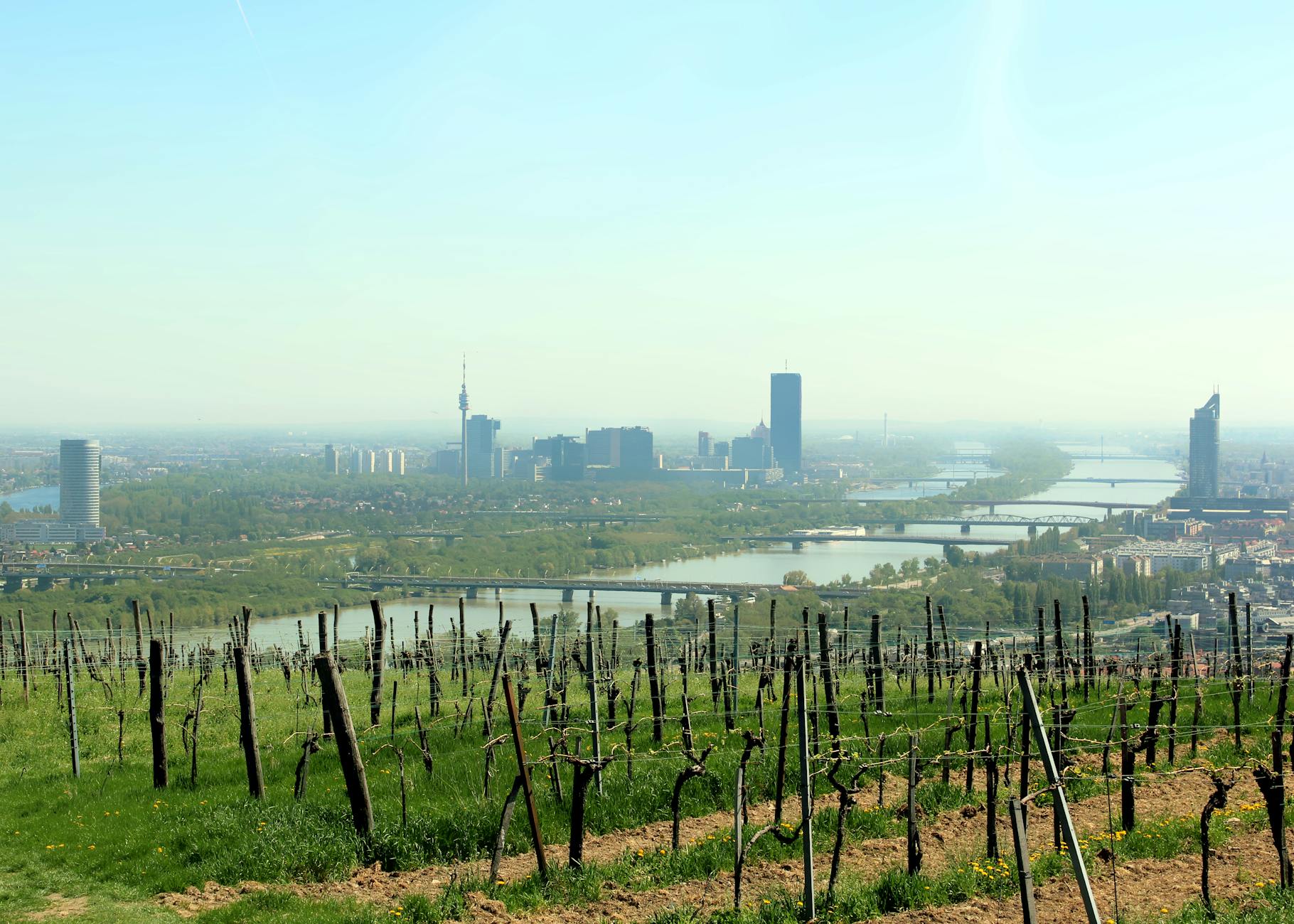
The Danube and Vienna's modern skyline — a different side of the city
- Vienna Danube Cruises at a Glance
- First, Where the Water Actually Is
- The DDSG City Cruise
- The Grand Danube River Cruise
- What You Actually See, Stretch by Stretch
- Dinner Boats, Evening Cruises and Food Combos
- The Twin City Liner to Bratislava
- What About the Wachau?
- Why the Danube Is Not Blue, and Other Things Worth Knowing
- Who Should Book a Vienna Boat Trip
- Who Should Skip It
- The Free Alternative: Walk the Canal
- Practical Details
- Frequently Asked Questions
- Related Vienna Guides
- Photo Credits
This article contains advertising. Our booking links are routed through a partner that adds commission tracking automatically, so if you book through one we earn a commission from the provider, at no extra cost to you. It never affects what we recommend. Affiliate disclosure
Johann Strauss called it blue. It is not blue; it is a broad, fast, greenish-grey working river that runs past the northern edge of the city rather than through the middle of it, and the water most visitors actually see is a narrow canal lined with graffiti and pop-up bars. Understanding that geography is the first step to booking a Vienna Danube cruise that gives you what you were hoping for, because the boats on the canal and the boats on the river are showing you two completely different cities.
This guide explains where the water actually is, what each DDSG cruise costs and how long it takes, which one is worth booking, what the dinner and evening boats are like, and where the Twin City Liner fits in. Prices are the operator’s published 2026 rates, checked in September 2026; confirm on their own site before booking, because the season dates move.
Vienna Danube Cruises at a Glance
| Cruise | Price | Duration | Departs | Season |
|---|---|---|---|---|
| DDSG City Cruise (Donaukanal) | €35 | 75 minutes | Schwedenplatz | 365 days a year |
| Grand Danube, full route A+B | €50 | 3.5 hours | Schwedenplatz | 28 Mar – 1 Nov 2026 |
| Grand Danube, Section A (south) | €35 | 2 hours | Schwedenplatz | 28 Mar – 1 Nov 2026 |
| Grand Danube, Section B (north) | €35 | 1.5 hours | Reichsbrücke | 28 Mar – 1 Nov 2026 |
| Cruise plus food combo | From €44.50 | Varies | Varies | Seasonal |
| Twin City Liner to Bratislava | €29 one way | About 75 minutes | Schwedenplatz | Seasonal |
| Bratislava with breakfast | €35 | About 75 minutes | Schwedenplatz | Seasonal |
| Bratislava with evening buffet | €49 | About 75 minutes | Schwedenplatz | Seasonal |
Grand Danube departures are at 10:30 and 14:00 daily in season. There is no City Cruise on 24 December, and the Grand Danube does not run on 21–22 July 2026.
First, Where the Water Actually Is
This confuses almost everyone, and it explains every booking decision below. Vienna has four separate channels of water, and they are not interchangeable.
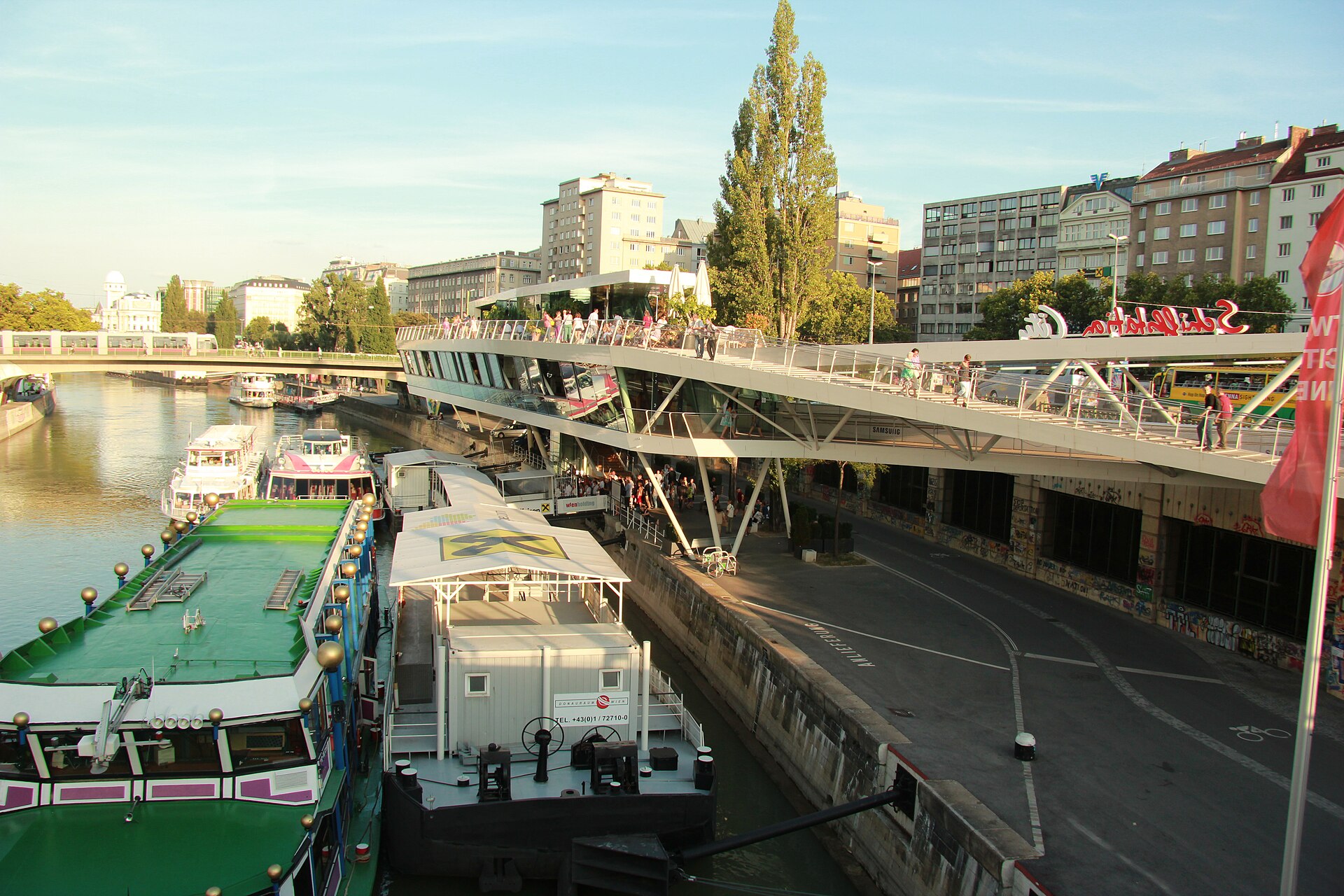
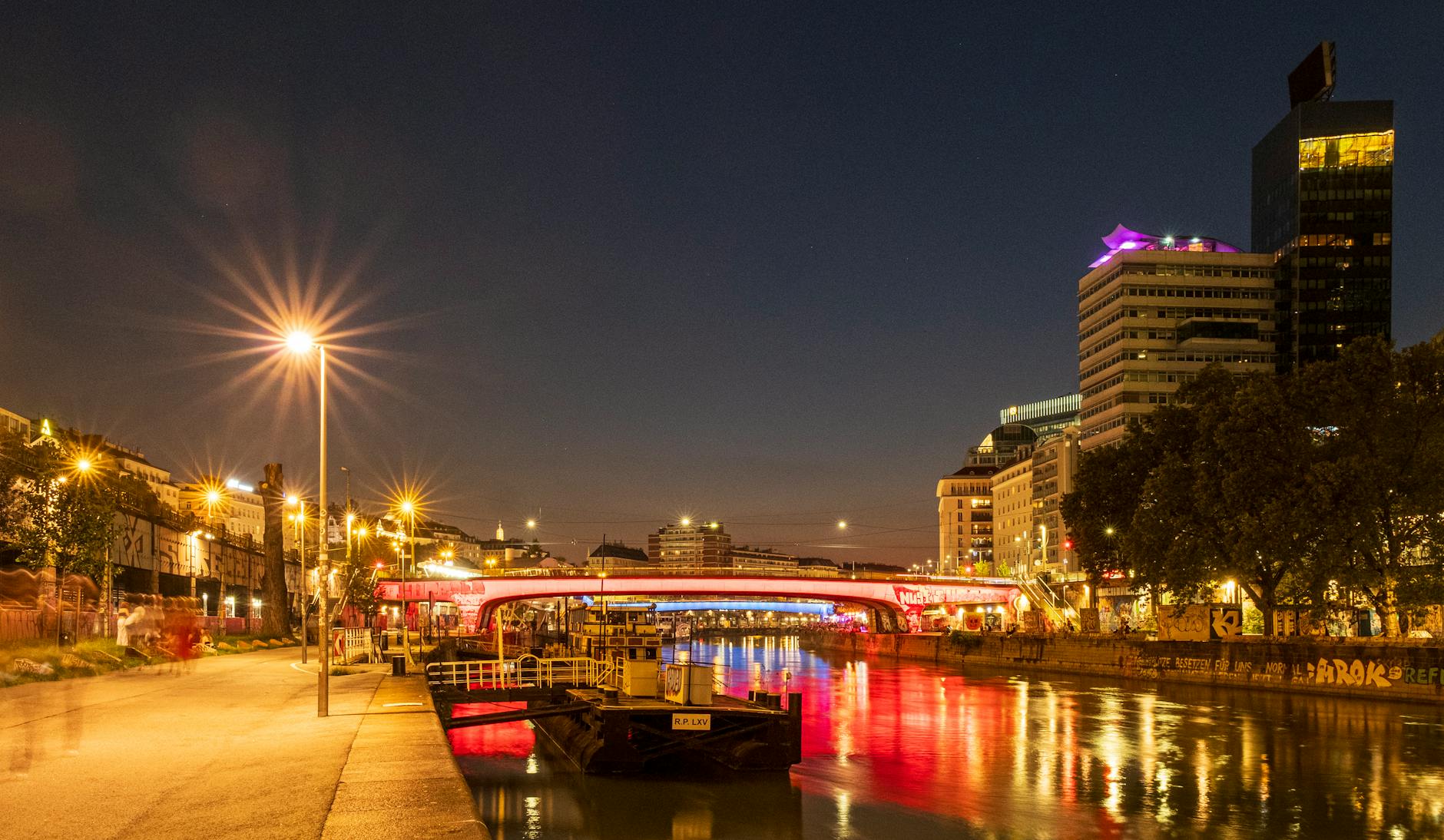
- The Donaukanal is the narrow arm that curves past the edge of the Innere Stadt at Schwedenplatz. It is not a canal in the engineering sense — it is a regulated side arm of the river — and it is the water you will actually walk past. Its banks are lined with street art, summer bars and cycle paths. This is where the City Cruise goes.
- The Danube proper runs about two kilometres north of the centre, a serious, wide, fast working river carrying commercial barges to the Black Sea. This is where the Grand Danube cruise goes.
- The Neue Donau is an artificial flood-relief channel dug alongside it in the 1970s, with the Donauinsel — a 21-kilometre artificial island — between the two. It is Vienna’s summer beach and festival ground.
- The Alte Donau is a cut-off oxbow lake to the north east, used for swimming and sailing.
Our guide to the Danube in Vienna covers all four properly. The short version for boat purposes: the canal is the picturesque, urban, graffiti-and-bars one; the river is the wide, modern, engineering one. Neither of them is Baroque Vienna, because Baroque Vienna is not on the water.
That last point matters and no operator will lead with it: you cannot see the Stephansdom, the Hofburg or the Ringstrasse from a boat. A Danube cruise in Vienna shows you a modern city of towers, bridges and locks. If what you want is the imperial city, it is a walking proposition — see our walking routes.
The DDSG City Cruise
€35, 75 minutes, from Schwedenplatz, 365 days a year.
The Donaukanal loop, and the one most visitors take because it starts in the centre and does not eat an afternoon. Boarding is at the Ship Station Vienna / City on Franz-Josefs-Kai, straight out of the U1/U4 station at Schwedenplatz, which makes it the easiest boat in the city to reach.
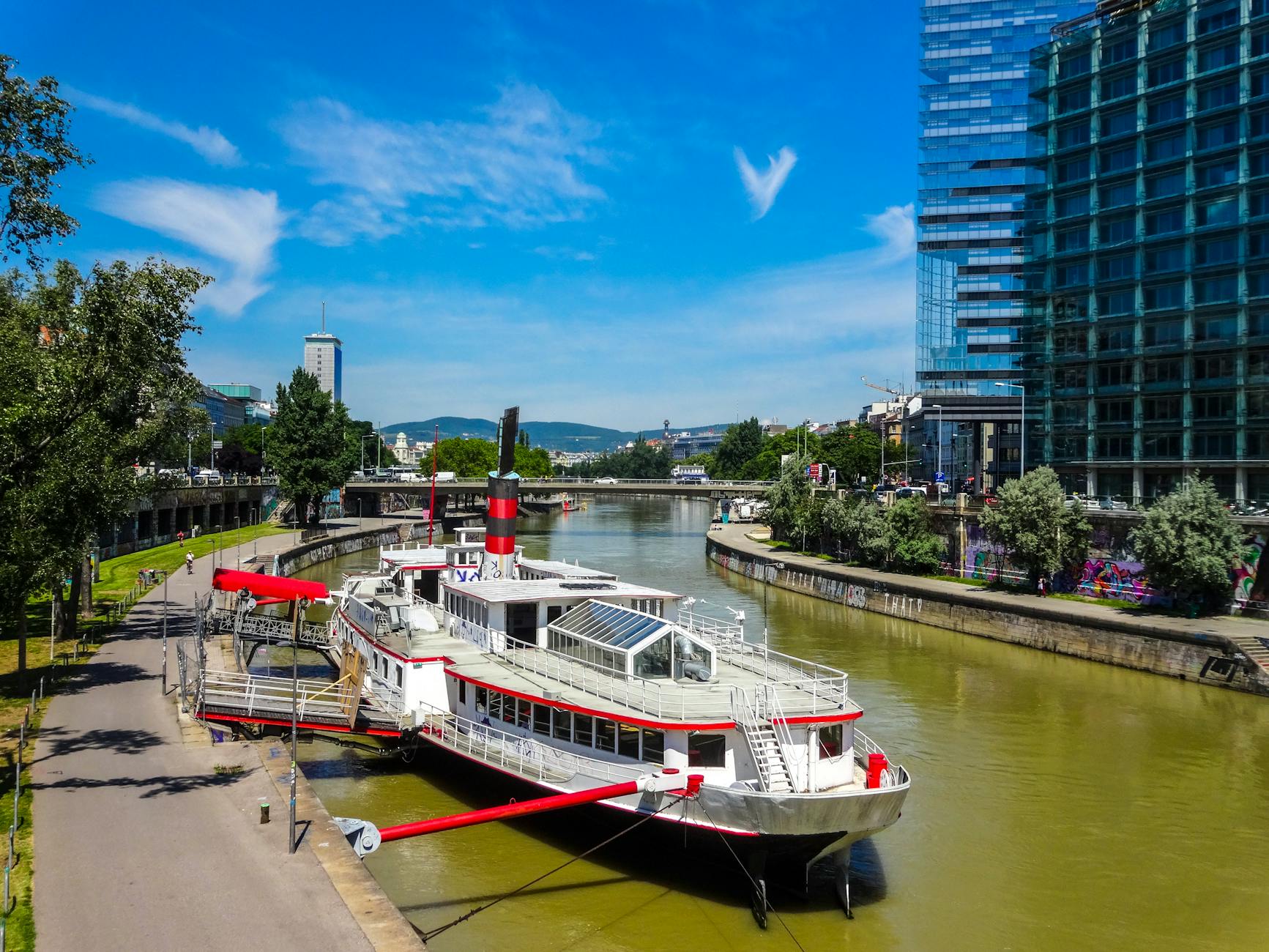
You get the canal’s specific character: the street art, which is genuinely one of Europe’s better legal graffiti corridors and is refreshed constantly; the summer bar boats and beach clubs; Otto Wagner’s Schützenhaus; the bridges; and the Urania. It runs year round on the MS Blue Danube, which makes it the only Vienna boat trip available in January.
Verdict: pleasant, convenient, and not remarkable. €35 for 75 minutes is a lot for a view you can get for free by walking the canal bank, which is a genuinely good walk. Take it if you want to sit down, if the weather is against walking, or if you are travelling with someone who cannot manage the distance. Our guide to Vienna street art covers the same corridor on foot.
The Grand Danube River Cruise
€50 for the full 3.5 hours, or €35 for either half.
This is the one that actually justifies buying a boat ticket, and it is the one most visitors have never heard of. It runs in two sections which can be taken separately or joined:
- Section A (south), €35, 2 hours, from Schwedenplatz down the canal and out onto the river, through the Freudenau lock.
- Section B (north), €35, 1.5 hours, from the Reichsbrücke (U1 Vorgartenstraße) upstream through the Nussdorf lock.
- A+B together, €50, 3.5 hours, which is by some distance the better value.
Season is 28 March to 1 November 2026, daily, departing 10:30 and 14:00, not running on 21–22 July.
The locks are the point. Going through the Freudenau or Nussdorf lock — watching a large boat drop or rise several metres inside a concrete chamber while the gates close behind you — is a genuinely absorbing forty minutes and is the single most memorable thing on any Vienna boat. Children are transfixed by it. It is also something you cannot experience any other way.
The rest is the modern city: the Danube Tower, the DC Tower and the towers of the Donau City, the UN complex, the Donauinsel, the bridges, and the working river with barges on it. It is not pretty in the way the Wachau is. It is impressive in a completely different register — a very large piece of infrastructure doing its job — and if that appeals at all, the full route is the best €50 of boat travel available here.
What You Actually See, Stretch by Stretch
Since the marketing photographs tend to show the Wachau, here is what is genuinely out of the window on a Vienna sailing.
On the Donaukanal
Steep stone embankments carrying one of Europe’s better legal graffiti corridors — the walls are repainted constantly and no two months look the same. Otto Wagner’s Schützenhaus, a small green-and-white Jugendstil lock-keeper’s building from 1906 that is one of the loveliest overlooked things in the city. The Urania observatory. A string of summer bars, beach clubs and floating restaurants that appear from about April. The Ringturm, the Uniqa Tower and the backs of the Leopoldstadt. It is a scrappy, energetic, very un-imperial Vienna, and it is the version most young Viennese people actually use.
Out on the river
A different scale entirely. The Donauinsel, a 21-kilometre artificial island built as flood defence in the 1970s and now the city’s beach, running track and festival ground. The Donau City towers, including the DC Tower — Austria’s tallest building — and the Donauturm, the 252-metre observation tower with a revolving restaurant. The Vienna International Centre, one of the four United Nations headquarters cities. Commercial barges heading downstream towards Budapest and the Black Sea. Bridges, and a great many of them.
In the locks
The Freudenau lock in the south and the Nussdorf lock in the north are the two engineering set pieces, and they are the reason to take the full route. The boat enters a concrete chamber, the gates close, and the water level changes by several metres while you stand on deck watching the walls move past. It takes a while, it is completely silent, and it is genuinely more interesting than that description makes it sound.
Dinner Boats, Evening Cruises and Food Combos
DDSG runs an evening sightseeing cruise and sells combination tickets pairing a cruise with food — schnitzel, apple strudel, a lunch, a prosecco or Aperol — from €44.50.
Our honest view, consistent with everything else on this site about eating in Vienna: the combo tickets are a reasonable way to have a drink on a boat and a poor way to eat. A schnitzel served on a moving vessel to two hundred people simultaneously is not the schnitzel this city is famous for. Buy the cruise, buy a coffee or a glass of wine on board, and eat properly afterwards — our Wiener Schnitzel guide and restaurant picks both apply.
The evening cruise itself is a different matter and is genuinely good in summer, when the light on the water lasts until nine and the canal bars are filling up. It is one of the better evening activities in Vienna if you have already done the opera.
The Twin City Liner to Bratislava
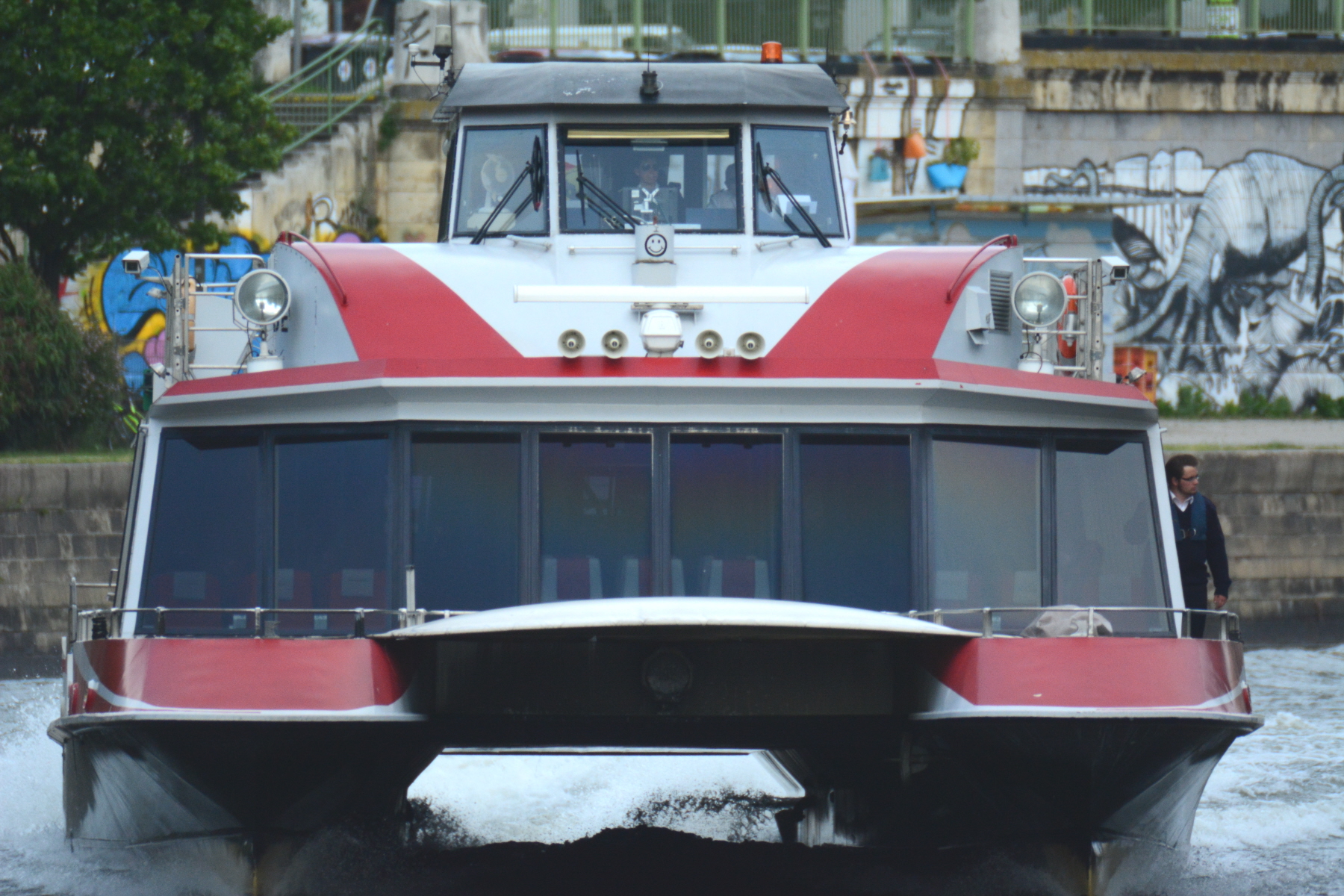
The most interesting boat in Vienna is not a sightseeing cruise at all: it is a fast catamaran that takes you to another country’s capital city in about 75 minutes, departing from the same Schwedenplatz station.
Fares are €29 one way, €35 with breakfast and €49 with an evening buffet. It runs seasonally rather than year round.
As a day trip it is excellent: you leave from the middle of Vienna, arrive in the middle of Bratislava, and the journey itself is the sightseeing. As transport it is slower and dearer than the train, which does the same journey in about an hour for less money. The trade-off is entirely about whether you want the crossing to be part of the day.
Our guide to getting from Vienna to Bratislava compares the boat against the train and the bus with current fares, and our Bratislava day trip guide covers what to do when you arrive.
What About the Wachau?
The boat trip most people actually have in mind when they picture a Danube cruise — terraced vineyards, hilltop ruins, Dürnstein’s blue tower, Melk Abbey on its rock — does not start in Vienna. It runs between Krems and Melk, about an hour and a half upstream, and it is a genuinely beautiful stretch of river.
You get there by train to Krems, and the boat operates from roughly April to October. It is the best river scenery in Austria and it is worth a full day. It is also a different article: our Wachau Valley day trip guide has the connections, the boat times and the fares, and Melk Abbey and Krems cover the ends of it.
If you are choosing between a Vienna boat and a Wachau boat and you only have time for one, take the Wachau. It is not close.
Why the Danube Is Not Blue, and Other Things Worth Knowing
A little context makes the trip considerably better, and none of it appears in the on-board commentary.
The river was moved. Until the 1870s the Danube ran past Vienna as a braided, unpredictable mess of shifting channels and islands that flooded the city regularly and catastrophically. Between 1870 and 1875 it was straightened into a single engineered channel, which is why the modern river runs in an unnaturally direct line and why the Donaukanal exists at all — it is a preserved remnant of one of the old arms. Almost everything you see from the water is the product of that decision.
The Donauinsel is entirely artificial. The 21-kilometre island between the Danube and the Neue Donau was created between 1972 and 1988 by digging a parallel flood-relief channel and piling the spoil in the middle. It is a piece of flood engineering that happens to have become the city’s beach, and it is one of the more successful pieces of twentieth-century public works anywhere in Europe.
And it is not blue. It is greenish-grey and, in spring meltwater, distinctly brown. Strauss wrote An der schönen blauen Donau in 1867, and by most accounts it was not blue then either. The waltz was a choral piece first, with fairly ridiculous lyrics, and it flopped at its premiere. It is now the piece the Vienna Philharmonic plays every New Year’s Day, and it is the single most effective piece of tourism marketing in Austrian history. Our guide to Vienna’s composers covers the Strauss family properly.
The river is a working motorway. The Danube runs 2,850 kilometres from the Black Forest to the Black Sea through ten countries, and the barges you pass are carrying freight. The Rhine-Main-Danube canal connects it to the North Sea. That is why the locks exist and why the traffic is commercial rather than recreational — you are on a piece of continental infrastructure, not a scenic lake.
Who Should Book a Vienna Boat Trip
- Anyone who likes infrastructure. The locks are genuinely excellent and nothing else in the city shows you that.
- Families with children. Boats and locks hold attention in a way that a museum does not. See Vienna with kids.
- Anyone who has already done the imperial circuit and wants to see the twenty-first-century city on the river.
- Limited mobility. Sitting down for three and a half hours while Vienna goes past is a real benefit.
- A hot July afternoon. There is a breeze on the water and nowhere else in the city has one.
- Anyone going to Bratislava who wants the journey to be part of the day.
Who Should Skip It
- Anyone on a short first visit. Three and a half hours is a large fraction of a two-day trip, and the boat shows you the least famous version of Vienna.
- Anyone expecting the historic centre from the water. It is not there.
- Anyone expecting the Wachau. Also not there.
- Anyone who would rather walk the canal. The Donaukanal bank is a good free walk with the same views and better bars.
- Winter visitors, mostly. Only the City Cruise runs, the light goes at four, and an enclosed boat on a grey canal is a modest experience for €35. Our guide to Vienna in January has better cold-weather options.
The Free Alternative: Walk the Canal
We would not be doing our job if we did not say this plainly. The Donaukanal bank is a continuous, flat, traffic-free promenade running several kilometres through the middle of Vienna, and walking it costs nothing.
Start at Schwedenplatz and head downstream towards the Prater, or upstream towards Roßauer Lände and Nussdorf. You get the same street art the City Cruise shows you — closer, and with time to actually look at it. You get the bars, which you cannot get off a boat to visit. You get the Schützenhaus at eye level. And you can stop, turn round, or peel off into the city whenever you like.
In summer the canal bank is one of the best things about Vienna: the Strandbar Herrmann with its imported sand, the floating clubs, people swimming off pontoons in the Neue Donau further out, the cycle path running the whole length. Our guides to Vienna in summer and cycling in Vienna both cover the route, and free things to do in Vienna covers the wider principle.
The boat gives you a seat, a bar, a commentary and the locks. The walk gives you everything else, for nothing. Choose deliberately.
Practical Details
Where to board
Ship Station Vienna / City, Franz-Josefs-Kai 2, directly at the U1/U4 Schwedenplatz interchange, for the City Cruise, Grand Danube Section A and the Twin City Liner. Reichsbrücke / Vienna Shipping Center, U1 Vorgartenstraße, for Grand Danube Section B. Our U-Bahn guide covers the lines.
Booking
Book directly with DDSG rather than through a resale platform. As with every other tour product in this city, the same boat appears on GetYourGuide, Viator and a dozen white-label sites under different names and at different prices — a pattern we cover in our comparison of Vienna tours and experiences. In high summer the 14:00 departures fill; the 10:30 rarely does.
On board
Boats have an open upper deck and an enclosed lower one with a bar. Take the upper deck if the weather allows — the whole point is the view — and take a layer, because it is meaningfully colder on the water and there is a headwind on a moving boat even in July.
Accessibility
The main DDSG vessels are step-free from the landing stage, and the Schwedenplatz station has lift access. Confirm with the operator for a specific sailing.
Combining it with the rest of the day
Section B ends at the Reichsbrücke, which puts you a short walk from the Prater and the Donauinsel. Section A returns you to Schwedenplatz in the middle of the first district. A morning boat and an afternoon museum is a good combination; two boats in a day is not.
Frequently Asked Questions
How much is a Danube cruise in Vienna?
€35 for the 75-minute City Cruise on the Donaukanal, €35 for either half of the Grand Danube River Cruise, and €50 for the full 3.5-hour Grand Danube route. Cruise-plus-food combinations start at €44.50, and the Twin City Liner to Bratislava is €29 one way.
Which Vienna Danube cruise is best?
The full Grand Danube River Cruise, A+B, at €50 for 3.5 hours. It is the only one that takes you onto the river proper and through the Freudenau and Nussdorf locks, which are the most interesting thing on any Vienna boat.
Can you see the old town from a Danube cruise in Vienna?
No. Historic Vienna is not on the water — the Danube runs about two kilometres north of the centre and the Donaukanal only skirts its edge. Boats show you the modern city: towers, bridges, locks and street art. For the imperial city, walk.
Do Vienna boat trips run in winter?
Only the DDSG City Cruise on the Donaukanal, which operates 365 days a year (excluding 24 December). The Grand Danube runs from 28 March to 1 November, and the Twin City Liner is seasonal.
Where do Danube boats leave from in Vienna?
Ship Station Vienna / City at Franz-Josefs-Kai 2, right at the U1/U4 Schwedenplatz stop, for most sailings. Grand Danube Section B leaves from the Reichsbrücke / Vienna Shipping Center at U1 Vorgartenstraße.
Is the Twin City Liner worth it?
As a day out, yes — centre-to-centre from Vienna to Bratislava in about 75 minutes at €29 one way, with the journey as part of the experience. As pure transport the train is faster and cheaper.
How long does a Danube cruise take from Vienna?
75 minutes for the City Cruise, 1.5 or 2 hours for a single Grand Danube section, and 3.5 hours for the full route.
Is a Vienna Danube cruise good for children?
Yes, and better than most things in the city for that age group — largely because of the locks, which are genuinely absorbing to watch. The full 3.5-hour route may be long for the very young; a single section is a better fit.
Can I do the Wachau valley by boat from Vienna?
Not directly. The Wachau boats run between Krems and Melk, about ninety minutes upstream by train from Vienna, from roughly April to October. It is the better river scenery by a wide margin and worth a full day.
Should I book a Vienna Danube cruise in advance?
In July and August, yes, for the 14:00 departures. Otherwise a day or two is plenty. Book directly with the operator rather than through a resale platform.
Related Vienna Guides
- The Danube in Vienna
- Vienna Tours & Experiences Compared
- The Wachau Valley Day Trip
- Vienna to Bratislava Transport
- Bratislava Day Trip from Vienna
- Vienna Street Art
- The Prater
- Vienna in Summer
- Best Day Trips from Vienna
Photo Credits
The Schiffstation on the Donaukanal: Donaukanal 8009 by Karl Gruber, CC BY-SA 3.0, via Wikimedia Commons.
Catamaran on the Donaukanal: Wien Donaukanal Twin-City-Liner by GuentherZ, CC BY 3.0, via Wikimedia Commons.