Biking in Vienna: Bike Rentals, Best Routes & Cycling Guide 2026
Biking in Vienna is one of the best ways to explore. Complete guide to bike rentals, scenic routes including the Donauinsel and Ringstrasse, and cycling rules.
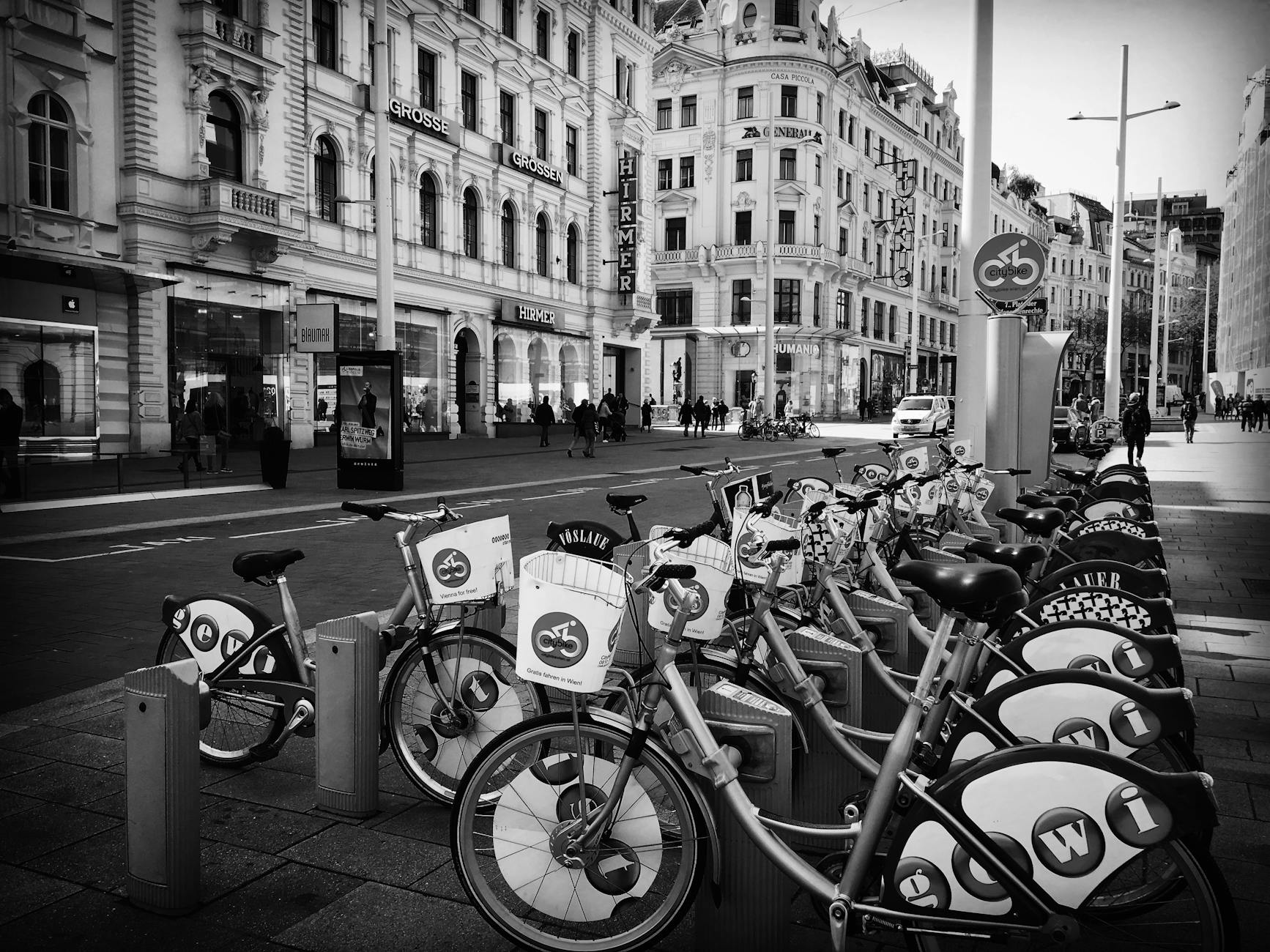
Photo by Mel Q. QNel
- Why bike in Vienna?
- Bike rental options in Vienna
- Vienna’s best cycling routes for tourists
- Vienna cycling rules and etiquette
- Combining cycling with public transport
- Where to bike in winter
- Bike-friendly accommodation
- Best time of year to bike in Vienna
- Safety considerations and common hazards
- Bike theft and locking
- Family cycling in Vienna
- Where to start your first Vienna ride
- Day-of essentials
- The Vienna cycling culture
- Vienna bike rental FAQ
This article contains advertising. Our booking links are routed through a partner that adds commission tracking automatically, so if you book through one we earn a commission from the provider, at no extra cost to you. It never affects what we recommend. Affiliate disclosure
Vienna is one of Europe’s most bikeable capitals, with 1,720 kilometres of cycle network, a flat city core, and an enviable car-free island that runs for 21 kilometres along the Danube. Yet most tourists never rent a bike, which is a shame because cycling unlocks parts of Vienna that walking is too slow for and the U-Bahn skims past. This complete guide covers where to rent, the best scenic routes, what to expect from Vienna’s cycling infrastructure, and the rules tourists most often miss.
Why bike in Vienna?
Three factors make Vienna unusually friendly to casual cyclists. First, the historic center sits on the Danube floodplain, so the entire inner city is functionally flat with only modest slopes around Belvedere and the western Vienna Woods foothills. Second, the city has invested heavily in segregated cycle paths along major boulevards and on the Donauinsel (Danube Island), meaning much of your ride happens on dedicated infrastructure rather than mixed traffic. Third, drivers are generally calm and bike-aware, having grown up sharing roads with cyclists.
Vienna’s bike network now exceeds 1,720 kilometres, and the share of trips made by bicycle continues to rise each year. For a tourist, this translates to genuinely safe and signposted routes from the Innere Stadt out to Schoenbrunn, along the Donaukanal, and across the Donauinsel, three of the most rewarding rides in any European capital.
Bike rental options in Vienna
Three rental categories cover almost every visitor’s needs: bike-share systems for short hops, traditional rental shops for full-day touring, and guided tour operators for those who want a route and a local expert.
WienMobil Rad (the city bike share)
WienMobil Rad is Vienna’s city-operated bike-share, run by Wiener Linien (the same agency that runs the U-Bahn). Costs are 0.80 euros per started 30 minutes, capped at 20 euros for 24 hours. You register through the WienMobil app, pay with a credit card, and unlock bikes from docking stations spread throughout the city. The bikes are sturdy three-speed cruisers, not fast, but reliable.
This is the right option for short journeys between sights, say, hopping from the Vienna history and architecture along the Ringstrasse to MuseumsQuartier, then later from Stephansdom to the Danube canal. The 30-minute pricing is generous if you dock the bike between segments.
Traditional bike rental shops
For longer rides, especially the full Donauinsel or a half-day along the Donau cycle path, rent from a shop. Pedal Power near Praterstern offers e-bikes, road bikes, kids’ bikes, and child seats. Pricing typically runs 25-35 euros per day for a city bike, 40-55 for an e-bike. Other reliable shops include Fahrradverleih Hochschaubahn near Prater and Wien Bike Tours near the Hofburg.
Most rental shops require ID and a credit card hold. Locks are included. Helmets are typically free or 2 euros extra. If you book online a day or two ahead, you can usually skip the queue and have your bike ready in 10 minutes.
Guided bike tours
If you’d rather follow a guide than navigate, several operators run scheduled 3-hour or full-day bike tours. Pedal Power’s classic Vienna tour covers the Innere Stadt, Augarten, and Prater for around 40 euros including bike. For wine-country and Vienna Woods rides, Vienna Explorer Tours and Austria Trails run small-group day tours from 75 to 120 euros depending on distance.
Vienna’s best cycling routes for tourists
Vienna offers an unusual range of scenic rides for a capital city, with routes ranging from compact 5-kilometre loops to 100-kilometre Danube expeditions. The following are the most rewarding for visitors with a half-day or full day to spare.
The Ringstrasse loop (5.3 km, 30 minutes)
The Ringstrasse circles the historic center and is the easiest scenic ride in Vienna, served by a separated cycle lane on much of its length. You pass the State Opera, Hofburg complex, Parliament, Rathaus (City Hall), Burgtheater, University of Vienna, Votivkirche, and onto the Donaukanal in a single 30-minute loop.

This is the perfect first ride for visitors uncertain about Vienna cycling, protected lane, no major hills, abundant exit points to stop for coffee, and access to the Vienna attractions that flank the boulevard. Combine with a visit to one of the Ring buildings such as the Kunsthistorisches Museum or Parliament.
The Donauinsel (Danube Island, 21 km one-way)
Donauinsel is a 21-kilometre artificial island created in the 1970s as a flood control measure. Today it’s a car-free strip of beaches, swimming areas, floating bars in summer, and uninterrupted bike paths along both shores. Renting a bike for a full day and riding the entire length, then back, gives you a 40+ kilometre car-free ride that few tourists ever experience.
The most popular section is the middle portion accessible from U1 Donauinsel station, where you’ll find swimming areas, the Copa Cagrana restaurant strip, and the floating Skybar in summer. Cycle north toward the Reichsbrücke and you reach quieter sections; ride south and you eventually reach the Danube Park and UNO City.
The Donaukanal route (city to Prater, 6 km)
The Donaukanal is an arm of the Danube that breaks off to flow close to the city center. A dedicated cycle path runs along the southern bank from Spittelau in the north past Schwedenplatz and onto the Prater and the Danube proper. The route is one of the prettiest urban rides in Europe, lined with street art, pop-up beach bars in summer, and views of the city skyline.
Combine this ride with a stop at one of the canal-side bars (Adria Wien, Strandbar Herrmann) or a visit to Hundertwasserhaus, which sits a short walk from the canal in Landstrasse.
Vienna to Schoenbrunn (8 km, 35 minutes)
Riding to Schoenbrunn Palace via the dedicated cycle path along Mariahilfer Strasse and Hadikgasse is faster than the U-Bahn for most visitors. Park at the secure bike racks outside the main entrance and tour the gardens (free) and palace (paid). On the return, detour through the Naschmarkt area for lunch.

The Danube cycle path (Vienna to Wachau Valley)
The Donauradweg is one of Europe’s classic long-distance cycle routes, running from the source of the Danube in Germany to the Black Sea. The Vienna section connects to the famous Wachau Valley stretch around 80 km west of the city. Many visitors do a day trip by training to Krems and riding the 35 km back to Vienna along the river, flat, downstream, and stunning vineyard scenery.
Bike rental in Krems can be returned in Vienna with most chain rental operators, which simplifies the logistics. This is the ride to plan if you have a full day to spare and want a genuinely memorable Austria experience.
Vienna cycling rules and etiquette
Cyclists in Vienna are expected to follow the same traffic laws as motorists. Key rules tourists often miss:
Cycle paths are mandatory where they exist. If a separated bike lane runs alongside the road, you must use it, not the road. You can ride on the road only if no bike lane is present or if the lane is blocked.
Sidewalks are not for cycling. Riding on the sidewalk is forbidden except for children under 12 and on streets specifically signed for shared use.
Helmets are mandatory for children under 12 but optional for adults. Most rental shops include a helmet free.
Front and rear lights are required after dark and on all rental bikes. Reflectors on pedals and wheels are also required.
One-way streets often allow two-way cycling. Look for signs reading “Radfahrer gegen die Einbahn frei”, cyclists are exempt from the one-way rule.
Drinking and cycling is treated seriously. The legal alcohol limit for cyclists is 0.8 promille (per mille), higher than for drivers (0.5), but police do enforce, especially near Heuriger areas.
Combining cycling with public transport
You can take a bike on the U-Bahn outside peak hours (before 6:30 a.m., between 9 a.m. and 3 p.m., and after 6:30 p.m. on weekdays; all weekend) for the price of a separate bike ticket (2.40 euros, half the adult fare). This is useful for riding to one end of the city and taking the U-Bahn back.
S-Bahn trains accept bikes at all times with the same separate ticket. The Westbahn and OeBB long-distance trains allow bike reservation for travel out to Wachau Valley, Salzburg, or Bratislava, useful for one-way bike tours.
Trams generally do not accept bikes except folding bikes that fit in a bag. If you have a folding bike, you can take it on any U-Bahn or tram at any time without a ticket.
Where to bike in winter
Vienna’s bike share runs year-round, and the city plows priority cycle paths after snowfall. Winter cycling is comfortable for short trips when temperatures sit above freezing, but the Donauinsel and longer scenic routes become impractical when snow accumulates.
For winter visitors, focus on the Ringstrasse loop on dry days and use bike-share for sight-to-sight hops rather than long expeditions. Layered clothing, gloves, and a hat under the helmet are essential. Combining a short ride with a Vienna food guide coffee-house break is one of the most pleasant ways to experience winter Vienna.
Bike-friendly accommodation
Most Vienna hotels offer either dedicated bike storage or basement bike rooms on request. Pedal Power and some other rental shops also offer hotel delivery and pickup for an extra 10-15 euros, which is convenient if you don’t want to walk to the shop. Cyclist-specific accommodations include the Hotel Capricorno on the Donaukanal and several Pension properties in the 7th and 8th districts.
Best time of year to bike in Vienna
Late April through mid-October is peak cycling season, with May, June, and September offering the best balance of mild temperatures and lower tourist density. July and August are warmer but bring crowds to the Donauinsel and Prater, and renting in summer should be booked at least a day ahead. Read our guide to the best time to visit Vienna for the full seasonal breakdown.
Winter cycling is possible on dry days from November through March, but expect cold hands and limited daylight. The Vienna Christmas markets season actually brings a special charm to canal-side rides, with the Christmas market lights reflecting off the water at dusk.
Safety considerations and common hazards
Vienna is safe for cyclists by international standards, but two hazards account for most incidents:
Tram tracks are the number-one cause of falls. Always cross tracks at as close to a 90-degree angle as possible. Riding parallel to tracks and drifting into them is the classic mistake.
Right-turning trucks at intersections can fail to see cyclists in their blind spot. Wait behind, not beside, large vehicles at red lights.
Door zones on streets without segregated bike lanes, leave at least 1 metre between you and parked cars.
Tourist pedestrians stepping into bike lanes outside the Hofburg, Stephansdom, and MuseumsQuartier without looking. Ring your bell early.
Bike theft and locking
Bike theft happens in Vienna, especially at popular tourist areas. Always lock both wheels and the frame to a fixed object using the heavy U-lock provided by the rental shop. If you use bike-share, dock properly at a station rather than parking on a regular bike rack.
Avoid leaving expensive rented road bikes or e-bikes unattended overnight outside hotels, most rental shops offer overnight storage at the shop for free or a small fee.
Family cycling in Vienna
Vienna is particularly welcoming for family cycling. Donauinsel, Prater Hauptallee (the long chestnut-tree-lined avenue inside Prater), and the Augarten are all flat, car-free, and ideal for children. Rental shops have child trailers, tag-alongs, and small kids’ bikes available with advance booking.
Children under 12 ride free on public transport with adults and can be added to a bike-share account for the same flat rate. The famous Vienna attractions like the Giant Ferris Wheel and Prater amusement park are easy to reach by bike, making for a memorable kid-focused day.
Where to start your first Vienna ride
If you’ve never cycled in Vienna, start with the Ringstrasse loop on a Sunday morning. Traffic is lightest, the protected cycle path runs almost the entire 5.3 km loop, and you’ll pass nearly every major Habsburg-era monument on a single ride. After this confidence-builder, you’ll be ready for the Donaukanal, the Prater, and eventually the Donauinsel for a proper half-day expedition.
The second easiest place to start is the Donauinsel itself. Take the U1 to Donauinsel station, rent from one of the seasonal bike kiosks at the station, and ride south or north along the dedicated path. You’ll never share the path with cars, and the Danube views provide constant scenery. Ideal for families and nervous first-timers.
Day-of essentials
A few practical items make Vienna rides more comfortable. Sunscreen for spring through autumn (cycling along the Danube reflects more sun than you’d expect). A small daypack with water, snacks, and a light rain jacket. A phone mount or arm-band for navigation. A bell on your bike (legally required and helpful for warning pedestrians).
If you’re using bike-share for a sight-to-sight day, plan your route to dock the bike every 25 minutes to keep within the free pricing window. A typical sightseeing day on WienMobil Rad runs 4-6 euros total if you dock smartly between segments.
The Vienna cycling culture
Vienna’s cycling culture is calm and pragmatic rather than aggressive. Most cyclists you’ll see are commuters in regular clothes rather than spandex-clad road racers. Cargo bikes carrying children and groceries are a common sight, and senior citizens cycle confidently into their 70s. The atmosphere reflects this: drivers are patient, pedestrians (mostly) yield to bikes on shared paths, and there’s space for everyone.
For visitors, this culture means you don’t need to be a “serious cyclist” to enjoy Vienna by bike. Wear your normal clothes, take it at your own pace, stop for coffee whenever you want. Vienna cycling is more like Amsterdam than London or New York: civilized, casual, and built into daily life rather than treated as athletic recreation.
Vienna bike rental FAQ
Can I rent a bike at Vienna Airport? Direct rental at the airport is limited, but several rental shops will deliver to your hotel for 10-15 euros.
Are e-bikes available? Yes, most rental shops offer e-bikes for 40-55 euros per day. WienMobil Rad does not currently offer e-bikes.
Can I take a bike on the Vienna Pass hop-on hop-off bus? No, the hop-on hop-off does not accept bikes.
Do I need cycling insurance? Most rental shops include third-party liability insurance. Personal injury insurance is your travel insurance’s responsibility, verify your policy covers cycling.
What apps should I use? Komoot and Bikemap have the best Vienna route maps. WienMobil is essential for bike-share. Google Maps cycling directions work but sometimes miss the dedicated bike paths.
Can I ride into the Vienna Woods? Yes, several signed cycle routes lead into the Vienna Woods from the western edge of the city. The climbs are real, so consider an e-bike if you’re not a strong cyclist.
Cycling transforms how you experience Vienna. You cover distance the U-Bahn handles in minutes but with the freedom to stop anywhere, at a canal-side bar, an unexpected church, a market stall, a coffee house. Whether you take a 30-minute Ringstrasse spin or commit a full day to the Donauinsel, the bike rental is one of the highest-value 25 euros you can spend in this city. Pair it with one of our day trips from Vienna for a multi-day Austria adventure that feels uniquely local.
Everything above assumes you want to ride on your own, which most people should. If you would rather have somebody else find the route on your first morning, the guided market is small and well priced — the standard three-hour city tour runs about €49 with a bike included, and there are specialist rides covering the Red Vienna housing blocks and Otto Wagner’s outer-district work. We compare the operators, times and distances in our guide to Vienna bike tours.
Cycling is only one part of the city’s outdoor life. Our guide to outdoor Vienna combines the best rides — the Prater Hauptallee, the Danube Island and the Lobau — with hiking in the Vienna Woods, swimming in the Danube, Therme Wien and winter skating, so you can build a whole active weekend.