Vienna Street Art & Contemporary Culture: The New Creative Scene
Vienna street art guide: Donaukanal murals, Calle Libre Festival, contemporary galleries, and the creative districts that define modern Vienna.
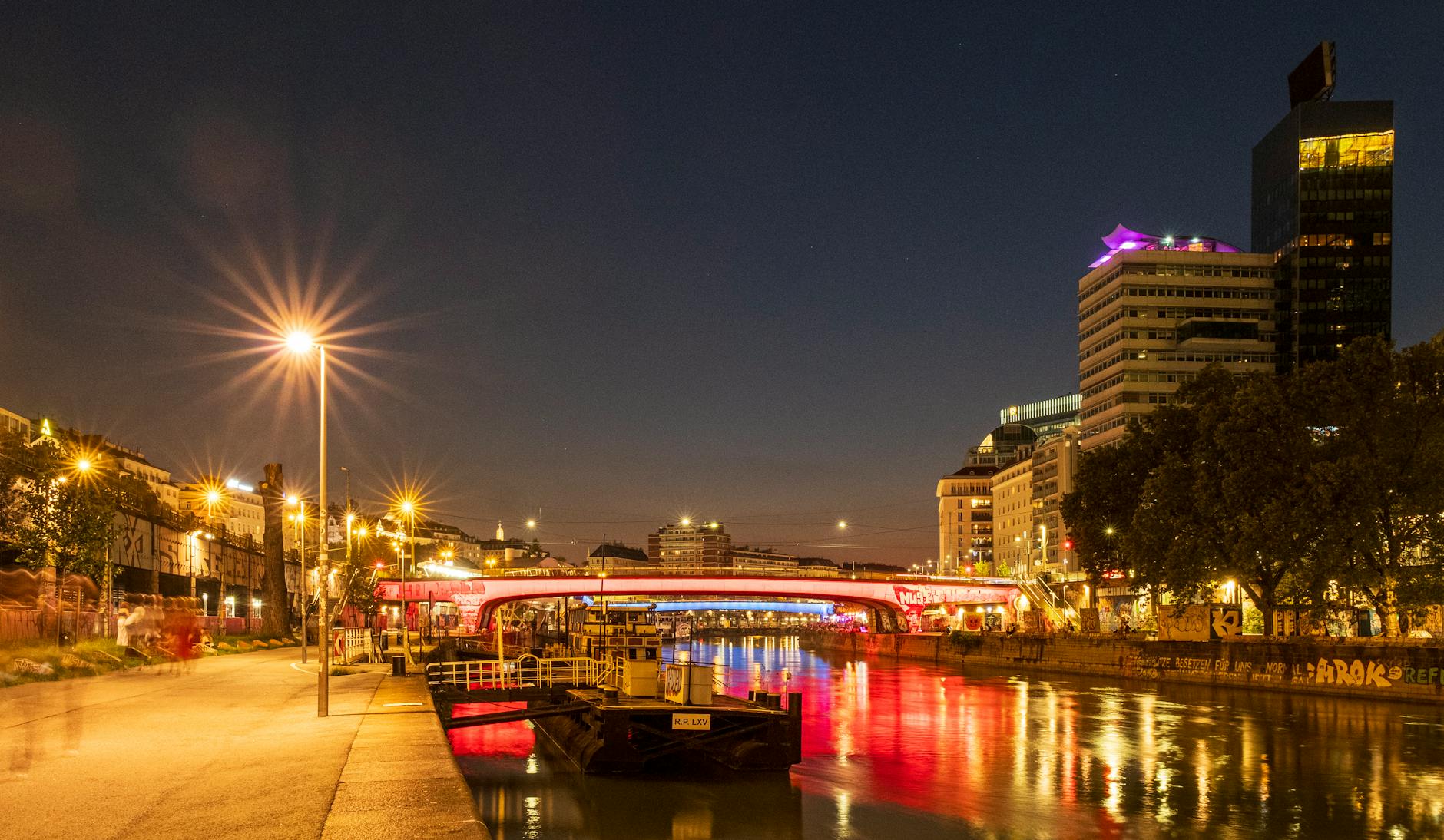
Photo by pierre matile
- The Donaukanal: Vienna’s Open-Air Gallery
- Major Calle Libre Murals
- Contemporary Art Galleries
- Major Contemporary Art Museums
- Creative Districts: Where Artists Actually Live
- Free Cultural Programming
- Street Art Walking Routes
- Photography Tips
- Combining with Other Vienna Culture
- Practical Information
- Vienna’s Major Street Artists
- Vienna’s Contemporary Art Scene in Context
- The Donaukanal in Detail
- Vienna’s Underground Scenes
- Practical Wandering Strategy
- FAQ
- Related Vienna Guides
This article contains advertising. Our booking links are routed through a partner that adds commission tracking automatically, so if you book through one we earn a commission from the provider, at no extra cost to you. It never affects what we recommend. Affiliate disclosure
Vienna’s contemporary culture and street art scene is one of Europe’s most dynamic — a counterpoint to the city’s Habsburg-era cultural inheritance. The Donaukanal hosts one of Europe’s largest officially sanctioned graffiti zones; the Calle Libre Festival brings world-class muralists each summer; small galleries cluster in the 4th, 7th, and 9th districts; and venues like Brotfabrik, the MAK, and Belvedere 21 anchor an art ecosystem that runs from spray-can art to museum-quality contemporary painting. This guide is your introduction to the Vienna nobody finds in classical tourism — the murals, the galleries, the creative districts, and the festivals that define the city’s 21st-century art scene.
The Donaukanal: Vienna’s Open-Air Gallery

The Donaukanal — a 17-kilometer arm of the Danube that loops through central Vienna — is the heart of the city’s street art scene. From the early 2000s, parts of the canal’s concrete walls were officially designated as legal graffiti zones, creating what is now one of Europe’s largest open-air galleries. Walking the canal path, you pass:
- Continuous murals stretching for kilometers, layered with new work over old — the canal repaints itself constantly
- The “Hall of Fame” section, a 1.5-kilometer stretch around the Roßauer Lände where the city’s most established artists work
- Pieces by internationally famous street artists who have been brought to Vienna through the Calle Libre Festival
- Pop-up beach bars, swimming areas, food trucks, and bars along the water in summer
The best walking section is between Friedensbrücke (U4) and the Urania (U4, U1) — roughly 3 kilometers along the canal’s south bank. Bring water and good walking shoes; you can do it in 60–90 minutes including stops for photos.
Major Calle Libre Murals

The Calle Libre Festival (held each August since 2014) is Central Europe’s largest street art festival and is responsible for most of Vienna’s permanent large-scale murals. Each year the festival commissions 10–15 major works on building walls across the city. Notable festival pieces still visible:
- Karmel Markt mural (2nd district): Large-scale figurative work overlooking the Karmelitermarkt.
- Mariahilfer Straße back streets (6th district): Several Calle Libre pieces along Esterházygasse and Capistrangasse.
- Brotfabrik building walls (10th district): The former bread factory turned art center has multiple festival commissions.
- Westbahnstraße and the wider 7th district: Street art interventions throughout the neighborhood.
- Margaretenstraße (4th and 5th districts): Several large pieces along this artery.
The festival publishes a free map of all current Calle Libre murals (calle-libre.at). The map updates annually as new works are added.
Contemporary Art Galleries

Vienna’s commercial gallery scene clusters in three districts:
1st District (Inner Stadt)
- Galerie Krinzinger: Major gallery for international contemporary art. Founded 1971. Seilerstätte 16.
- Galerie Ulysses: Established gallery for Austrian post-war painting. Opernring 21.
- Hilger Contemporary: Mid-sized gallery for international contemporary. Dorotheergasse 5.
- Mario Mauroner Contemporary Art: Spaces in both Vienna and Salzburg. Weihburggasse 26.
4th District (Wieden)
- Margaretenstraße gallery quarter: Galleries Charim, Christine König, Andreas Huber, Emanuel Layr, Konzett, Krobath, and others within walking distance.
- Galerie Charim: Important post-1945 Austrian and international art. Schottenring 14 and Dorotheergasse 12.
- Galerie Krobath: Contemporary art with strong photography program. Eschenbachgasse 9.
7th District (Neubau)
- Various small project spaces in side streets off Mariahilfer Straße.
- WUK Performing Arts: Alternative cultural center with regular contemporary art shows.
2nd District (Leopoldstadt)
- Galerie Mezzanin: Contemporary art in unusual upper-floor space. Eschenbachgasse 9.
- Multiple small project spaces in side streets near the Karmelitermarkt.
Major Contemporary Art Museums
Beyond galleries, Vienna has several contemporary-focused museums:
- Belvedere 21: The Belvedere’s contemporary art branch, in a 21st Vienna World Exhibition pavilion. Major contemporary Austrian artists. €9 adult ticket; included in Belvedere combined tickets. Schweizergarten.
- mumok: Already covered in the MQ section. Central Europe’s largest contemporary art museum.
- Kunsthalle Wien: Vienna’s main contemporary exhibition hall, also in the MQ.
- Albertina Modern: Branch of the Albertina museum focused on post-1945 art. Karlsplatz 5; €14 adult.
- 21er Haus / Belvedere 21: See Belvedere section. Strong photography program.
- Heidi Horten Collection: New (2022) collection of 20th-century international art in a converted bank. €15 adult. Hanuschgasse 3.
For broader context, see our best museums guide.
Creative Districts: Where Artists Actually Live
Several Vienna neighborhoods have evolved into creative-class districts with concentrations of artists, studios, and small galleries:
Neubau (7th District)
The most established creative neighborhood. Side streets off Mariahilfer Straße are full of designer shops, vintage stores, small galleries, third-wave coffee shops, and contemporary cuisine restaurants. Spittelberg, a small preserved 18th-century quarter, has galleries and design shops. Burggasse, Lerchenfelder Straße, and the side streets between are the heart of the scene.
Leopoldstadt (2nd District)
Particularly the streets around the Karmelitermarkt and Praterstern. Younger, less established than Neubau. Lower rents have attracted artists, designers, and small galleries to the district. The area between the Augarten and the Donaukanal has Vienna’s most concentrated street art (alongside the canal itself).
Brotfabrik (10th District)
A former bread factory at Absberggasse 27 converted into a contemporary art complex. Houses 30+ artist studios, a contemporary art gallery (das weisse haus / The White House), photography exhibition spaces, and design studios. Open hours vary by tenant; major events for “Open Studios” weekends. Tram 1, 6, 11 to Quellenstraße. Slightly far from central Vienna but the most concentrated artist working space in the city.
Donaukanal — Both Banks
The Donaukanal area in the 1st, 2nd, and 9th districts (and on both banks) has emerged as Vienna’s most distinctive cultural quarter. The legal graffiti walls anchor the scene; bars like Strandbar Herrmann, Adria Wien, and Tel Aviv Beach bring summer crowds; small art project spaces and galleries cluster nearby.
Free Cultural Programming
Several free Vienna cultural events make contemporary art accessible:
- Vienna Art Week (mid-November): Free admission to most major Vienna art institutions for one week. Major panel discussions, gallery walks, late-night exhibition openings.
- Curated by Vienna (September): Galleries citywide host guest-curator exhibitions, often with free entry.
- Open Studios weekends (various): Major art complexes (Brotfabrik, Augarten, others) hold open-studio events where you can visit working artists.
- MQ Sommer (June–August): Free programming in the MQ courtyards including talks, performances, and DJ events.
- Calle Libre Festival (August): The murals being painted are public; you can watch artists work over a week and meet them at the festival events.
Street Art Walking Routes
Three suggested routes for seeing Vienna’s street art:
Route 1: Donaukanal Central (2 hours)
Start at Schwedenplatz (U1, U4). Walk south along the canal toward Friedensbrücke. Continuous murals on the canal walls; multiple bar stops if it’s warm. End at Friedensbrücke U4 station.
Route 2: Brotfabrik and Favoriten (3 hours)
Tram 1 or 6 to Quellenstraße. Walk to Brotfabrik (Absberggasse 27). Visit the contemporary art galleries, walk through artist studios, see the major murals on the surrounding buildings. Coffee at the Brotfabrik café.
Route 3: Mariahilf and Calle Libre Map (3 hours)
Download the Calle Libre festival map (calle-libre.at). Start at Mariahilfer Straße and follow the map through the 6th and 7th districts. The walk passes 10–15 major murals plus dozens of smaller pieces.
Photography Tips
- Best light: Late afternoon (90 minutes before sunset) gives murals warm color and shadows reveal texture. Morning light is harsher.
- Equipment: Wide-angle lens (24–35mm equivalent) lets you photograph large pieces from close distance.
- Respect: Don’t add to or modify existing pieces. The graffiti walls are working spaces and the artistic community polices them.
- Permissions: Most street art is in public space and free to photograph. Some private murals on shop walls technically require commercial permission for editorial photography.
Combining with Other Vienna Culture
The Vienna street art and contemporary scene pairs well with several other parts of the city:
- Donaukanal walk + MuseumsQuartier visit: The two anchor the city’s contemporary culture geography. See our MQ guide.
- Belvedere 21 + Brotfabrik: Both in the 10th district within an afternoon’s tour.
- Albertina Modern + Calle Libre walk: Pairs the central institutional contemporary art with the street version.
- Vienna for Photographers: Combine street art with the Hidden Gems route. See our first time visiting Vienna tips for context.
Practical Information
- Best season: Late spring through autumn (April–October). Many street art events and outdoor culture happen during warmer months.
- Calle Libre Festival: Annually first 2 weeks of August. Schedule at calle-libre.at.
- Vienna Art Week: Mid-November (5 days). Full schedule at viennaartweek.at.
- Gallery hours: Most commercial galleries open Tuesday–Saturday 11:00–18:00. Many have special openings on Fridays at 18:00–20:00.
- Donaukanal access: Free, public, 24/7. Free wifi in several stretches.
- Brotfabrik tours: Most spaces require advance contact; check brotfabrik-wien.at.
Vienna’s Major Street Artists
Several Vienna-based and visiting street artists have shaped the city’s wall culture. Names to look for:
- Vidam: Vienna-based artist known for surreal animal portraits in vibrant colors. Multiple major pieces along the Donaukanal.
- Knarf: One of Vienna’s longest-established graffiti writers; works in classical letter-form graffiti.
- Roa: Belgian artist (not Vienna-based) but Calle Libre brought him to paint several large animal murals in Vienna.
- Skirl: Vienna-based abstract muralist with multiple Donaukanal pieces.
- Frau Isa: Vienna’s most prominent woman street artist, with characteristic figurative work.
- Nychos: Vienna-born, internationally known anatomical-illustration artist. Mural collaborations across the city.
- Jana & JS: Stencil duo specializing in photorealistic portraits in unusual locations.
- Boicut: Vienna-based artist creating geometric abstract murals throughout the city.
The Calle Libre Festival publishes artist biographies and walking tours of their work; their website and printed festival guide are the most reliable resources.
Vienna’s Contemporary Art Scene in Context
Vienna’s contemporary art and street art scene exists in conversation with the city’s broader cultural history. The Vienna Secession 130 years ago broke from academic tradition with the slogan “Der Zeit ihre Kunst” (“to the age its art”); today’s street artists work within the same questioning relationship to inherited cultural authority, just in different forms.
The city’s commercial gallery scene supports roughly 60 working spaces of various sizes, with collector bases drawn from the Austrian financial sector, Eastern European new wealth, and international visitors. The Vienna Contemporary art fair (each September) brings 100+ international galleries to Vienna for four days of art-world activity; the smaller Spark Art Fair and parallel events extend the season.
Public art commissioning happens primarily through KÖR Wien (Kunst im öffentlichen Raum Wien), the city’s public art organization that has commissioned 300+ permanent and temporary projects since 2004. Their work includes both major sculptural pieces (the gold Bruno Gironcoli sculpture near Schwedenplatz, multiple Donaukanal interventions) and the support of mural projects via Calle Libre and similar festivals.
The Donaukanal in Detail
Different stretches of the Donaukanal have distinct character:
- Schwedenplatz to Aspernbrücke: The most touristy and accessible stretch; bars, beach clubs, and dense murals. Highest foot traffic.
- Aspernbrücke to Marienbrücke: Slightly quieter; major commissioned murals from KÖR Wien and Calle Libre. Best for photography.
- Marienbrücke to Friedensbrücke: The “Hall of Fame” stretch where the most established artists work. Highest concentration of large-scale, complex pieces.
- Friedensbrücke to Brigittenauer Brücke: Less polished but more authentic working-graffiti zone; pieces change weekly.
- Across the canal (north bank): Quieter; fewer murals but interesting architecture and the Donaukanal-rear of the 2nd district.
Summer transforms the canal entirely. From late May through September, pop-up bars open along the water (Strandbar Herrmann, Tel Aviv Beach, Adria Wien, Hermann Beach), bringing thousands of locals and tourists for evening drinks, food, and DJ sets. The murals are best experienced when the surrounding scene is alive — a daytime walk for photography, an evening visit for atmosphere.
Vienna’s Underground Scenes
Beyond the visible street art and galleries, Vienna has thriving underground scenes that intersect with the contemporary art world:
- Electronic music: Pratersauna, Grelle Forelle, Flex (legendary canal club), and Werk are among Vienna’s most respected electronic venues. Many host visual artists as well as DJs.
- Independent publishing: Several small art presses operate in Vienna, including Christine Maul publishing, Ennsthaler, and Schlebrügge editions for art books.
- Performance art venues: brut Wien, Hauptbahnhof, and Tanzquartier in the MQ form the city’s contemporary performance art infrastructure.
- Artist-run spaces: das weisse haus, MQ Project Spaces, and various Brotfabrik tenants run shows outside the commercial gallery system.
Practical Wandering Strategy
If you want to absorb Vienna’s contemporary scene rather than just check off boxes:
- Spend a full afternoon at the Donaukanal with stops for drinks, photos, and watching artists work.
- Take a Saturday morning to walk gallery district streets in the 4th and 7th, noting which galleries match your taste for future visits.
- Visit Brotfabrik on an Open Studios weekend rather than a regular day — the difference is enormous.
- Attend a Vienna Art Week opening in November to see the scene at its most active.
- Take the Calle Libre festival map walking tour in summer or early autumn for the most concentrated mural-viewing experience.
- Find a gallery that matches your taste and ask for recommendations of similar spaces.
FAQ
Where is the best street art in Vienna?
The Donaukanal between Friedensbrücke and Schwedenplatz has continuous murals for 1.5+ kilometers. Major large-scale murals from the annual Calle Libre Festival are scattered throughout central Vienna; their official map is at calle-libre.at. The Brotfabrik in the 10th district has Vienna’s most concentrated artist working space.
Is graffiti legal in Vienna?
Designated zones on the Donaukanal are officially sanctioned for street art (with restrictions). Graffiti on private property without permission remains illegal. Most building-wall murals are commissioned through the Calle Libre Festival or KÖR Wien (the public art commissioning organization).
When is Vienna’s Calle Libre Festival?
Annually for two weeks in early-to-mid August. The festival brings 10–15 international muralists to paint major works on Vienna’s walls. The new pieces become permanent additions to the city’s street art map.
Are Vienna’s contemporary art galleries free?
Most commercial galleries are free to enter. Major museums (mumok, Kunsthalle, Belvedere 21, Albertina Modern, Heidi Horten Collection) charge admission €9–15.
What is Brotfabrik in Vienna?
A former bread factory in the 10th district converted into a contemporary art complex. Houses 30+ artist studios, contemporary galleries, photography spaces, and design studios. Tram 1, 6, 11 to Quellenstraße. Open Studios weekends are particularly worth attending.
How do I find current Vienna gallery exhibitions?
The website kunstmagazin.at and the printed Falter weekly magazine both publish complete weekly listings. Vienna Art Week (November) publishes a comprehensive directory annually.
Can I take photos of Vienna street art?
Yes, in public spaces. Avoid commercial publication of murals on private property without permission. Don’t modify or add to existing pieces — the street art community polices its own walls.
The Donaukanal walls are best seen on foot, but they are also the whole visual content of the city’s most-booked boat trip. Our guide to Danube boat trips from Vienna compares the €35 canal cruise against simply walking the same bank for nothing.
Further along the Danube Canal, KunstHausWien — the museum Hundertwasser built inside the old Thonet furniture factory — pairs a permanent display on his work with a contemporary programme of photography and ecology exhibitions. Entry is €16, or 30% less with a Vienna City Card, and it is open daily. See our guide to the Hundertwasserhaus and KunstHausWien.