Vienna Theater Guide: Plays, Musicals & Performances (2026)
Vienna theater guide: Burgtheater, Volkstheater, Vienna's English Theatre, musical theater venues, cabaret, and how non-German speakers can attend.
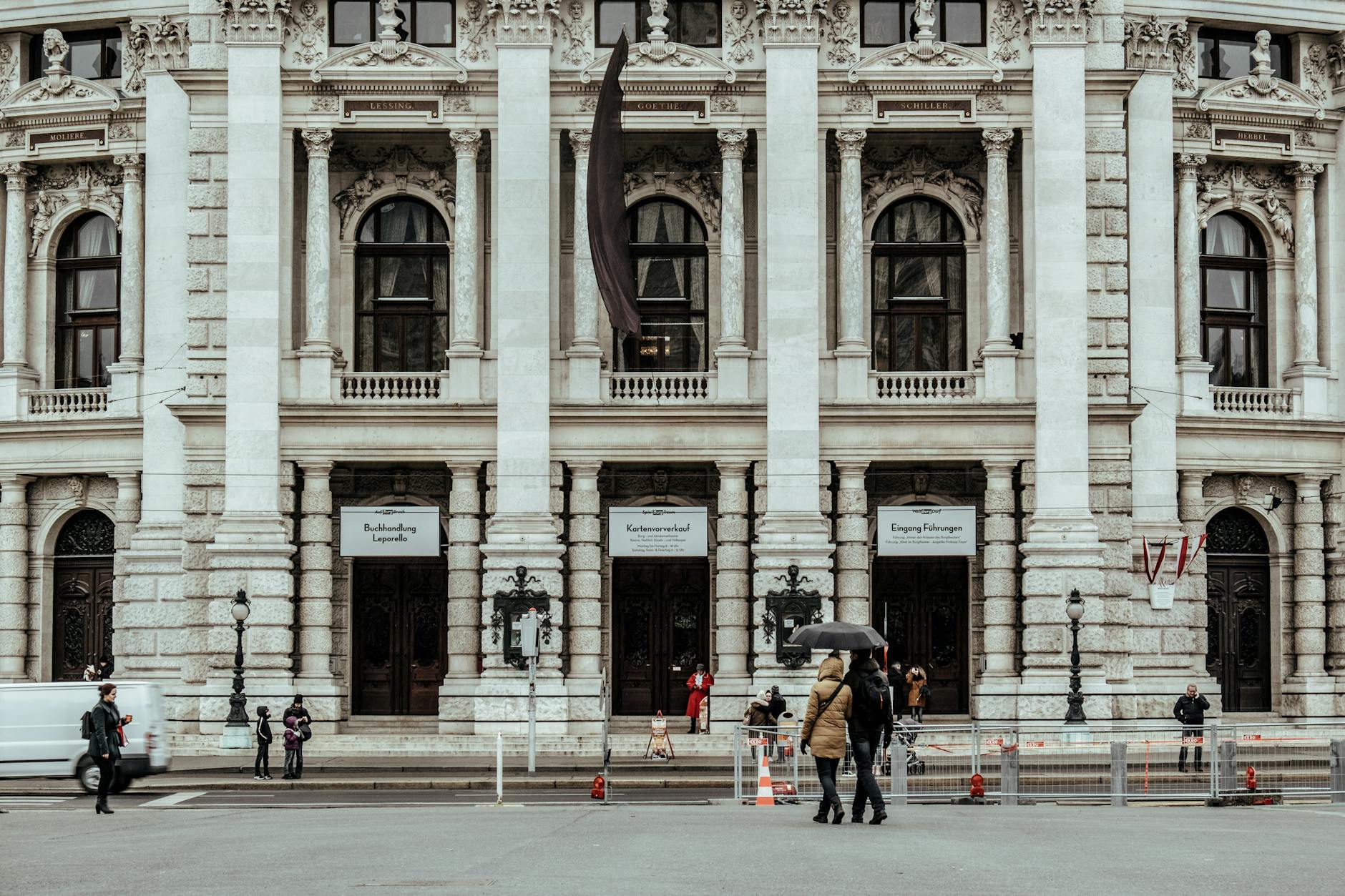
Photo by Eray
- The Major Theaters
- Musical Theater
- English-Language Theater
- Independent and Experimental Theater
- Cabaret (Kabarett)
- How to Book Theater Tickets
- What to Wear
- Vienna Theater Season
- For Non-German Speakers: What’s Actually Accessible
- Practical Tips
- The Burgtheater’s History and Cultural Status
- Vienna’s Festival Calendar
- The Vienna Acting Tradition
- Beyond the Major Venues
- Themes and Repertoire Patterns
- Tickets and Subscription Models
- Theater Districts to Know
- FAQ
- Related Vienna Guides
This article contains advertising. Our booking links are routed through a partner that adds commission tracking automatically, so if you book through one we earn a commission from the provider, at no extra cost to you. It never affects what we recommend. Affiliate disclosure
Vienna’s theater scene extends far beyond opera and classical music — the city has one of the leading German-language dramatic stages (Burgtheater), continental Europe’s oldest English-language theater (Vienna’s English Theatre, founded 1963), major musical theater venues, and a thriving independent scene. While most international tourists focus on the State Opera and Musikverein, the city’s spoken theaters deserve attention. This guide covers what’s worth seeing, how to find English-friendly performances, where Vienna’s musical theater happens (the Ronacher and Raimund), and how to navigate a scene that’s predominantly German-language but increasingly accessible to non-speakers.
The Major Theaters
1. Burgtheater (Imperial National Theater)

The Burgtheater is one of the leading German-language theaters and counts among the most important drama houses anywhere. Its story begins in 1741, when Empress Maria Theresa gave permission for a ball house to be turned into a theater; in 1888 the company moved into its current Neo-Renaissance building on the Ringstrasse.
The repertoire spans:
- Classical German drama: Goethe’s Faust, Schiller’s plays, Lessing’s Nathan the Wise
- Austrian classics: Grillparzer, Schnitzler, Thomas Bernhard, Elfriede Jelinek
- Shakespeare (in German translation)
- Contemporary international drama (Brecht, Ionesco, Beckett, Stoppard) in German translation
- New plays and contemporary work
For English-speaking visitors: the Burgtheater offers English surtitles for selected performances through a free smartphone app called Subs — download before the show, the text scrolls in your hand as the actors speak. This is the best way for non-German speakers to experience the house’s most famous productions.
Regular seats cost €9.50–72 Sunday to Thursday and €10–74 on Fridays, Saturdays and premieres; the cheapest seats have a restricted view. The grand interior (Karl Hasenauer architect, similar style to the Kunsthistorisches Museum) is worth seeing for itself — adult guided tours cost €12.50 and run in German, with English tours on selected dates (times are in the booking calendar on burgtheater.at). Address: Universitätsring 2, U-Bahn Schottentor or Herrengasse.
2. Akademietheater (Burgtheater’s sister stage)
The smaller second venue of the Burgtheater, located behind the Konzerthaus on Lisztstraße 1. Programming similar in seriousness to the main house but in a more intimate hall of about 500 seats. Seats go up to €72 Sunday to Thursday and €74 on Fridays, Saturdays and premieres; standing places are €5 and €6.
3. Volkstheater
The “People’s Theater” opened in 1889 as the bourgeois counterpart to the imperial Burgtheater, and it remains one of the larger stages in the German-speaking world. Programming is consciously broader: classics, contemporary plays, political theater, occasionally lighter fare. The Volkstheater offers English surtitles via the same Subs app for selected performances. Ticket prices are listed on volkstheater.at. Address: Arthur-Schnitzler-Platz 1, U-Bahn Volkstheater.
4. Theater in der Josefstadt
One of the oldest theaters in Vienna (opened 1788), located in the 8th district. Specializes in lighter, well-produced drama — classical and contemporary plays staged for an audience that wants accessible, high-craft theater rather than challenging experimental work. The house was rebuilt in 1822, with a facade by Joseph Kornhäusel. For the 2026/27 season, regular afternoon and evening tickets cost €6–63, premieres €6–82 and dress rehearsals €6–42. Address: Josefstädter Straße 26.
Musical Theater

Musicals are a big part of Vienna’s stage life. The Vereinigte Bühnen Wien (United Stages of Vienna) stages its long-running musicals at two historic theaters:
5. Raimund Theater
The original 1893 Viennese musical theater venue, restored and now hosting major long-running productions. Recent and current shows: Phantom of the Opera, Elisabeth (the famous Sisi musical), Tanz der Vampire, Rebecca. Most shows offer English surtitles. Prices vary by show and are listed on musicalvienna.at. Address: Wallgasse 18–20, U6 Gumpendorfer Straße or U3 Westbahnhof.
6. Ronacher
The other major musical theater venue, given a comprehensive refurbishment between 2005 and 2008. Hosts the second of the city’s two big musical productions running in parallel. Programming and pricing similar to the Raimund. Address: Seilerstätte 9, central Vienna.
7. Theater an der Wien
Historic theater (opened 1801) where Beethoven’s opera, later known as Fidelio, had its premiere in 1805. Mozart’s Magic Flute belongs to an older house: it premiered in 1791 at the Theater auf der Wieden. Now a chamber opera venue specializing in early music and contemporary opera. Programming is more experimental than the Staatsoper but the singers and orchestras are world-class. Ticket prices vary by production. Address: Linke Wienzeile 6.
English-Language Theater

For plays performed entirely in English, head to Josefsgasse:
8. Vienna’s English Theatre
Founded in 1963 by Austrian director Franz Schafranek and American actress Ruth Brinkmann, this is the oldest English-language theater in continental Europe. The house on Josefsgasse stages several productions each season — classics (Pinter, Mamet), contemporary plays, and occasional musical revues. All productions are in English with British or American casts. Programme and ticket prices are on englishtheatre.at.
Independent and Experimental Theater
Vienna has a thriving small-venue scene of independent theaters:
- Schauspielhaus Wien: Contemporary international drama, often German-language premieres of London and New York hits.
- Garage X / Werk X: Experimental performance and contemporary dance.
- Theater Drachengasse: Mid-sized contemporary theater in central Vienna.
- WUK Performing Arts: Alternative cultural center with theater, music, and dance programming.
- brut Wien (Hauptbahnhof and other venues): Vienna’s main contemporary performance space, with experimental dance, theater, and performance art.
- Theater am Spittelberg: Cabaret, comedy, and small-format theater in the cozy Spittelberg quarter.
Cabaret (Kabarett)
Austrian and German Kabarett is a tradition of political satire and stand-up commentary that’s been distinct from English comedy for over a century. Vienna’s main cabaret venues:
- Stadtsaal: The main cabaret venue, hosting Vienna’s most famous satirists.
- Kabarett Niedermair: The original cabaret house, in the 8th district.
- Kulisse: Long-established cabaret theater.
- Vindobona: Newer venue, more experimental programming.
- Kabarett Simpl: Founded in 1912, it bills itself as the world’s oldest continuously operating cabaret.
Cabaret is challenging for non-German speakers — political and linguistic references require fluency. Worth knowing about, less essential for English-speaking visitors.
How to Book Theater Tickets
- Buy directly from venue websites: burgtheater.at, volkstheater.at, josefstadt.org, theaterwien.at, vereinigtebuehnenwien.at (Raimund and Ronacher).
- Wien-Ticket aggregator: wien-ticket.at handles bookings for most major Vienna venues.
- Day-of-performance discounts: Some theaters release remaining tickets at a reduced price shortly before curtain, so ask at the box office on the day.
- Standing room: Burgtheater standing places cost €5 Sunday to Thursday and €6 on Fridays, Saturdays and premieres. Limited number, queue early.
What to Wear
Vienna theaters expect smart-casual dress in the auditorium:
- Burgtheater, Akademietheater, Theater in der Josefstadt: Slightly more formal — jacket and trousers for men, dress or smart trousers for women.
- Volkstheater, Schauspielhaus, Vienna’s English Theatre: Casual smart is fine — jeans plus a nice top works.
- Musical theaters (Raimund, Ronacher): Casual to smart-casual; very relaxed by Vienna standards.
- Cabaret venues: Casual.
No theater in Vienna has a strict dress code requiring evening dress. Even the Burgtheater accepts smart-casual.
Vienna Theater Season
- September: Season opens at all major venues.
- October–December: Peak season, full programming.
- January: Continues with major productions and Christmas revivals.
- February–March: Mid-season; cabaret peaks during Fasching (Carnival).
- April–May: Spring productions and the Wiener Festwochen (Vienna Festival) brings international guest performances.
- June: Most theaters wind down toward summer break.
- July–August: All major theaters closed for summer; some open-air and festival programming.
For Non-German Speakers: What’s Actually Accessible
- Vienna’s English Theatre — entirely English programming, no language barrier.
- Burgtheater, Volkstheater, and Theater in der Josefstadt with the Subs app — English surtitles on your phone for selected performances. Check each theater’s website for which shows have it.
- Musical theaters (Raimund, Ronacher) — many shows offer English surtitles; the musical numbers are universally understood and the plots are usually familiar (Phantom, Elisabeth, Rebecca).
- Theater an der Wien — all operas have multilingual surtitles.
- Contemporary dance (brut Wien, Tanzquartier at MQ) — non-verbal, no language barrier.
Practical Tips
- Arrive 30 minutes before curtain. Latecomers wait until the first appropriate break before they are let in.
- Performances start punctually. 19:30 means 19:30, not 19:32.
- No food in auditoriums. Theaters have intermission bars; bring small bills for service.
- Photography prohibited in all theaters during performances.
- Coat check available at the major venues.
- Intermissions are long enough for drinks but not for a full meal.
The Burgtheater’s History and Cultural Status
Understanding the Burgtheater means understanding its place in the German-speaking cultural world. It began in 1741, when Maria Theresa authorised Joseph Karl Selliers to convert a ball house into a theater. The Burgtheater’s stages have premiered works by every major German-language playwright since — Schiller, Grillparzer, Schnitzler, Hofmannsthal, Bernhard, Jelinek. A premiere there is still a major event in German-language theater.
The current building (Karl von Hasenauer, Gottfried Semper, 1888) was devastated by bombs and fire in 1945 and reopened in 1955. The rebuilt auditorium kept much of its box-theater character, but the imperial box gave way to two tiers and a sloping ceiling was added. The result is one of Vienna’s most beautiful interior spaces, decorated with ceiling paintings by Gustav Klimt and his brother Ernst (Klimt’s first significant commissions before his Secession years).
Look closely during your visit: the Klimt ceiling paintings above the grand staircase depict scenes from the history of theater. Look for Klimt’s only known painted self-portrait — he appears as a spectator in the scene of Shakespeare’s Globe Theatre.
Vienna’s Festival Calendar
Several major theater festivals shape Vienna’s year:
- Wiener Festwochen (Vienna Festival, May–June): an international performing-arts festival bringing German and international theater, music, and dance productions to venues across the city. The 2026 edition ran 15 May – 21 June with more than forty theater and music productions, installations and community projects.
- Impulstanz (July–August): International contemporary dance festival, one of Europe’s largest. Workshops, performances, and after-parties.
- Vienna Musikalischer Sommer (July–August): Outdoor and indoor classical programming during the summer theater break.
- Wien Modern (November): Festival of contemporary classical music at the Konzerthaus and Musikverein.
- SchauPlatz / brut nordwest (year-round): Vienna’s contemporary performance art programming.
The Vienna Acting Tradition
The Burgtheater keeps a large permanent ensemble, with actors under contract who perform on both the main house and Akademietheater stages. Regular theatergoers follow the same faces across many productions and seasons.
This permanent-ensemble model produces the “Burg style” of acting — psychologically intense, vocally trained for the large house, capable of speaking the rhetorical verse of Schiller and the prose realism of contemporary plays without changing technique. Famous Burgtheater actors of recent decades include Klaus Maria Brandauer, Tobias Moretti, Birgit Minichmayr, August Diehl, and Cornelius Obonya.
Beyond the Major Venues
Vienna’s small-venue theater scene rewards exploration once you’ve seen the major institutions:
- Hamakom — Jewish theater and cultural center in the 9th district, specializing in works that explore Jewish themes in Austrian society.
- Theater Akzent — midsize commercial theater in the 4th district, with light entertainment and visiting productions.
- Kosmos Theater — politically engaged and feminist theater in the 7th district.
- Dschungel Wien — children’s and youth theater in the MuseumsQuartier.
- Theater Heuschober and Theater Spielraum — off-venue contemporary spaces.
- Theater Nestroyhof Hamakom and TAG (Theater an der Gumpendorfer Straße) — small companies producing strong contemporary work in district venues.
Themes and Repertoire Patterns
Vienna theater programming follows certain repertoire patterns that can help you choose what to see:
- Austrian classics: Grillparzer (König Ottokars Glück und Ende), Schnitzler (Reigen, Anatol, The Green Cockatoo), Nestroy comedies, Raimund magic-plays. The Burgtheater and Theater in der Josefstadt revive these regularly.
- Thomas Bernhard: Austria’s most internationally famous late-20th-century playwright. His plays are still controversial; the Burgtheater performs them periodically.
- Elfriede Jelinek: Nobel Prize-winning Austrian playwright. Her work is regularly premiered in Vienna; intellectually demanding political theater.
- Shakespeare in German: The Burgtheater and Volkstheater both perform Shakespeare regularly in German translation. The Schlegel-Tieck translations are considered classic.
- Contemporary German-language drama: Premieres of major new works by playwrights like Rene Pollesch, Marius von Mayenburg, Sibylle Berg.
- International translated drama: Mamet, Pinter, Stoppard, Caryl Churchill, Mark Ravenhill, Sarah Kane all appear in German translation at major Vienna theaters.
Tickets and Subscription Models
Vienna theaters offer multiple subscription and discount models worth understanding:
- Bundestheaterkarte: Free Austrian Federal Theatres membership card. Gives access to youth discounts at the Burgtheater, Akademietheater, Staatsoper, and Volksoper.
- Subscription series (Abonnement): Season tickets covering several productions at a single venue. Significant discount but requires planning.
- Last-Minute discounts: Unsold seats are sometimes released at a reduction just before the performance. Student/youth ID required for the youth rate.
- Vienna Pass and tourist discount cards: Generally don’t cover theater tickets directly; some hotel packages include theater nights.
- Premiere prices: At the Burgtheater, premieres use the Friday and Saturday tariff, so the top category costs €74 instead of €72. Other theaters set their own premiere prices, so check each one.
Theater Districts to Know
Vienna’s theaters cluster in specific neighborhoods:
- Ringstrasse (1st district): Burgtheater, Theater an der Wien, Akademietheater, Theater Drachengasse. Walking distance from each other.
- Neubau (7th district): Volkstheater, Theater am Spittelberg, Schauspielhaus, brut Wien. Vienna’s most concentrated theater district.
- Josefstadt (8th district): Theater in der Josefstadt, Kabarett Niedermair, Vienna’s English Theatre. Quiet, classic Vienna feel.
- Mariahilf and Westbahnhof area (6th-15th districts): Raimund Theater, WUK Performing Arts.
- 1st district central: Ronacher musical theater, Vereinigte Bühnen Wien venues.
FAQ
Are Vienna theater performances available in English?
Selected performances at the Burgtheater, Volkstheater, and Theater in der Josefstadt offer English surtitles via the Subs smartphone app. Everything at Vienna’s English Theatre is performed in English. Musical theaters (Raimund, Ronacher) often have English surtitles.
What’s the most famous Vienna theater?
The Burgtheater on the Ringstrasse, founded 1741 by Maria Theresa. It’s one of the leading German-language theaters and has occupied its Ringstrasse building since 1888.
How much do Vienna theater tickets cost?
Burgtheater €9.50–72 Sunday to Thursday and €10–74 on Fridays, Saturdays and premieres (standing €5–6). Theater in der Josefstadt €6–63 for regular performances and €6–82 for premieres. The Volkstheater, the musical theaters, Vienna’s English Theatre and the independent venues each set their own prices, so check the box office for the show you want.
Can I see a musical in Vienna in English?
Yes — the Raimund Theater and Ronacher typically offer English surtitles for major musical productions. The songs are in German, but the surtitles let non-German speakers follow.
What’s the Sisi musical at the Raimund Theater?
Elisabeth is a 1992 musical about Empress Elisabeth (Sisi) of Austria. It premiered at the Theater an der Wien in 1992 and has been revived in Vienna several times since. The Raimund Theater runs revivals regularly. See our Sisi guide.
What is the Burgtheater dress code?
Smart casual. No formal dress code requires evening dress, but jeans and t-shirts feel out of place in the parterre. Jacket for men, dress or smart trousers for women is the standard.
When does the Vienna theater season run?
September through June, with most theaters closed in July and August. Peak programming is October–December and April–May.
Burgtheater audiences have been crossing to Café Landtmann next door since the 1870s, and the carved wooden reliefs inside show scenes from Burgtheater premieres. It makes a natural stop for a proper meal after a performance. See our guide to Cafe Landtmann for hours, prices and when to book.