Empress Sisi in Vienna: Her Story, Museums & Sisi Trail
Empress Sisi guide: her tragic life, the Sisi Museum at the Hofburg, Schönbrunn, the Hermesvilla, and how to walk Sisi's Vienna in one day.

Photo by Wellington Silva
- Sisi’s Real Life
- Where to See Sisi in Vienna
- Sisi Myth vs. Sisi Reality
- The Sisi Trail (Half-Day Walking Tour)
- Combined Ticket: The Sisi Pass
- Sisi in Popular Culture
- Buying Sisi-Related Souvenirs
- Common Misconceptions
- Daily Routines That Shaped Sisi
- Sisi’s Travels — Where She Spent Her Last Decades
- Beyond the Hofburg: Lesser-Known Sisi Sites in Vienna
- FAQ
- Related Vienna Guides
This article contains advertising. Our booking links are routed through a partner that adds commission tracking automatically, so if you book through one we earn a commission from the provider, at no extra cost to you. It never affects what we recommend. Affiliate disclosure
Empress Elisabeth of Austria — “Sisi” — was the 19th-century equivalent of Princess Diana: a beautiful, troubled, beloved royal whose tragic life became cultural mythology. Born a Bavarian princess in 1837, she married Emperor Franz Joseph at 16, gave birth to four children, lost one to suicide, was assassinated in Geneva at 60, and became Austria’s most enduring popular icon. This guide walks you through her real life, where to see her in Vienna today (the Sisi Museum at the Hofburg is the centerpiece), and how to separate the popular myth from the historical reality.
Sisi’s Real Life
Elisabeth Amalie Eugenie von Wittelsbach was born December 24, 1837 in Munich, the fourth child of Duke Maximilian Joseph in Bavaria and Princess Ludovika of Bavaria. Her family was the cadet (junior) branch of the Bavarian royal family — Wittelsbach by name but not in line for the Bavarian throne. They lived informally in Munich and in summer at Possenhofen on the Starnberg lake. Elisabeth’s childhood was unusual for European royalty: minimal protocol, lots of nature, horseback riding, mountain hiking, swimming. She didn’t learn formal court etiquette and didn’t expect to need it.
In August 1853, when Sisi was 15, the family traveled to Bad Ischl in upper Austria for the imperial summer. Emperor Franz Joseph (23) was supposed to meet his cousin Helene (Sisi’s older sister) as a potential bride. Franz Joseph instead fell suddenly and obsessively in love with the 15-year-old Sisi. Within days, the engagement was announced. They married April 24, 1854, in Vienna’s Augustinerkirche.
The reality of being Empress destroyed her. The strict Spanish court ceremony was suffocating. Her overbearing mother-in-law Archduchess Sophie controlled her household, raised her first child without her input, and viewed Sisi as politically dangerous (Sisi’s pro-Hungarian sympathies threatened the German-dominated imperial structure). Sisi developed eating disorders, exercised obsessively (gymnastics equipment in every imperial palace), and increasingly fled Vienna for months at a time — touring Madeira, Corfu, Greece, Hungary, the British Isles. She returned to Vienna primarily for ceremonial duties.
Her Children
- Sophie (1855–57) — died at 2 from a fever during a Hungarian trip.
- Gisela (1856–1932) — married a Bavarian prince; lived to 76.
- Rudolf, Crown Prince (1858–89) — the heir to the throne; committed suicide with his mistress Mary Vetsera at Mayerling in January 1889. The tragedy destroyed Sisi.
- Marie Valerie (1868–1924) — Sisi’s beloved fourth child, born after a long period of absence from court. Sisi raised Valerie personally, defying her mother-in-law. The two were closest until Sisi’s death.
Her Assassination
On September 10, 1898, Sisi was walking along the lakeshore in Geneva, Switzerland with her lady-in-waiting Countess Sztaray. She was 60 years old, increasingly fragile, but still traveling incognito under the name “Countess of Hohenembs.” A 25-year-old Italian anarchist named Luigi Lucheni had been waiting in Geneva intending to assassinate any aristocrat he could find. Spotting Sisi, he ran toward her and stabbed her through the heart with a sharpened file.
The wound was so precise and bled internally so slowly that Sisi didn’t realize she’d been stabbed. She got up, continued walking, boarded the steamer to Caux. Minutes into the trip she lost consciousness and died. Lucheni was caught immediately, served life imprisonment, and hanged himself in his Geneva cell in 1910.
Where to See Sisi in Vienna
1. The Sisi Museum at the Hofburg
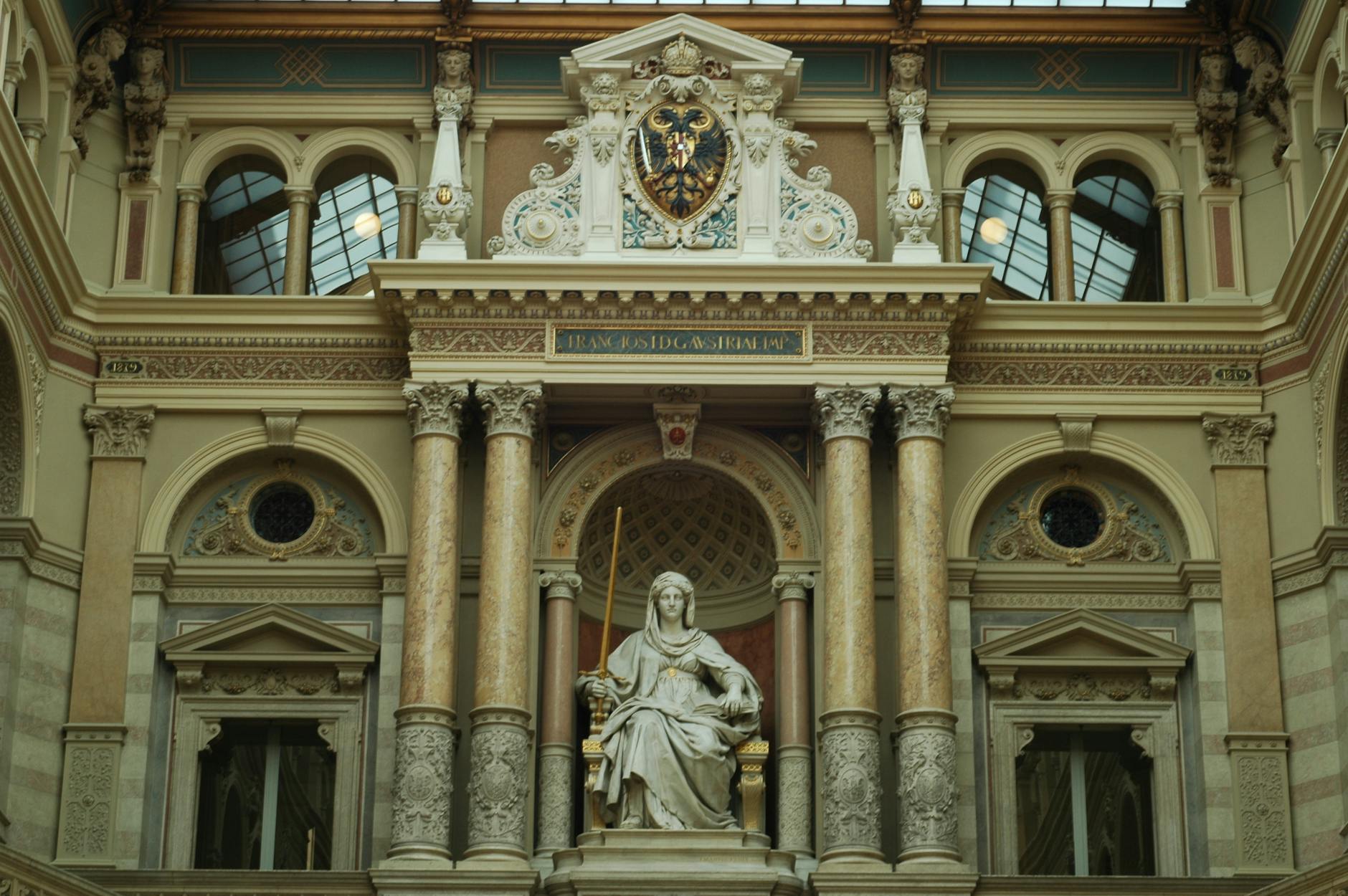
The major Sisi attraction. Opened in 2004 in her former imperial apartments, the museum was designed by costume and stage designer Rolf Langenfass to organize itself into five sections “starting with death and ending with death.” The visit covers:
- The death section: The actual file used in her assassination; her death masque; mourning protocol artifacts.
- Her childhood: Reconstructed Possenhofen rooms; her informal upbringing.
- The marriage: Reconstruction of the betrothal and wedding.
- Court life: The Spanish ceremony; the apartments she occupied at the Hofburg; her exercise rooms and gymnastics equipment.
- Her own apartments: Restored bedroom, dressing room, salon — the actual rooms she lived in.
- The myth: How Sisi became a popular icon after her death (Hollywood films, novels, the famous “Sissi” film trilogy of 1955–57, the modern Elisabeth musical).
The Imperial Apartments ticket costs €15 for adults until 18 November 2026. The Sisi Museum area is closed until the redesigned museum opens on 19 November 2026. The Sisi Pass (€60 adult, €38 ages 6–18, valid for one year) combines the Hofburg with Schönbrunn Palace and the Vienna Furniture Museum. Allow 90 minutes for the Sisi Museum and Imperial Apartments together.
2. Schönbrunn Palace
Sisi’s summer residence and the place where her formal portraits hang. Several rooms at Schönbrunn are personally associated with her: her ground-floor private apartments (where she slept in summer), her gymnastic equipment, her writing rooms. The Sisi Pass includes the Grand Tour at Schönbrunn. See our Schönbrunn guide.
3. The Hermesvilla (Läinzer Tiergarten)
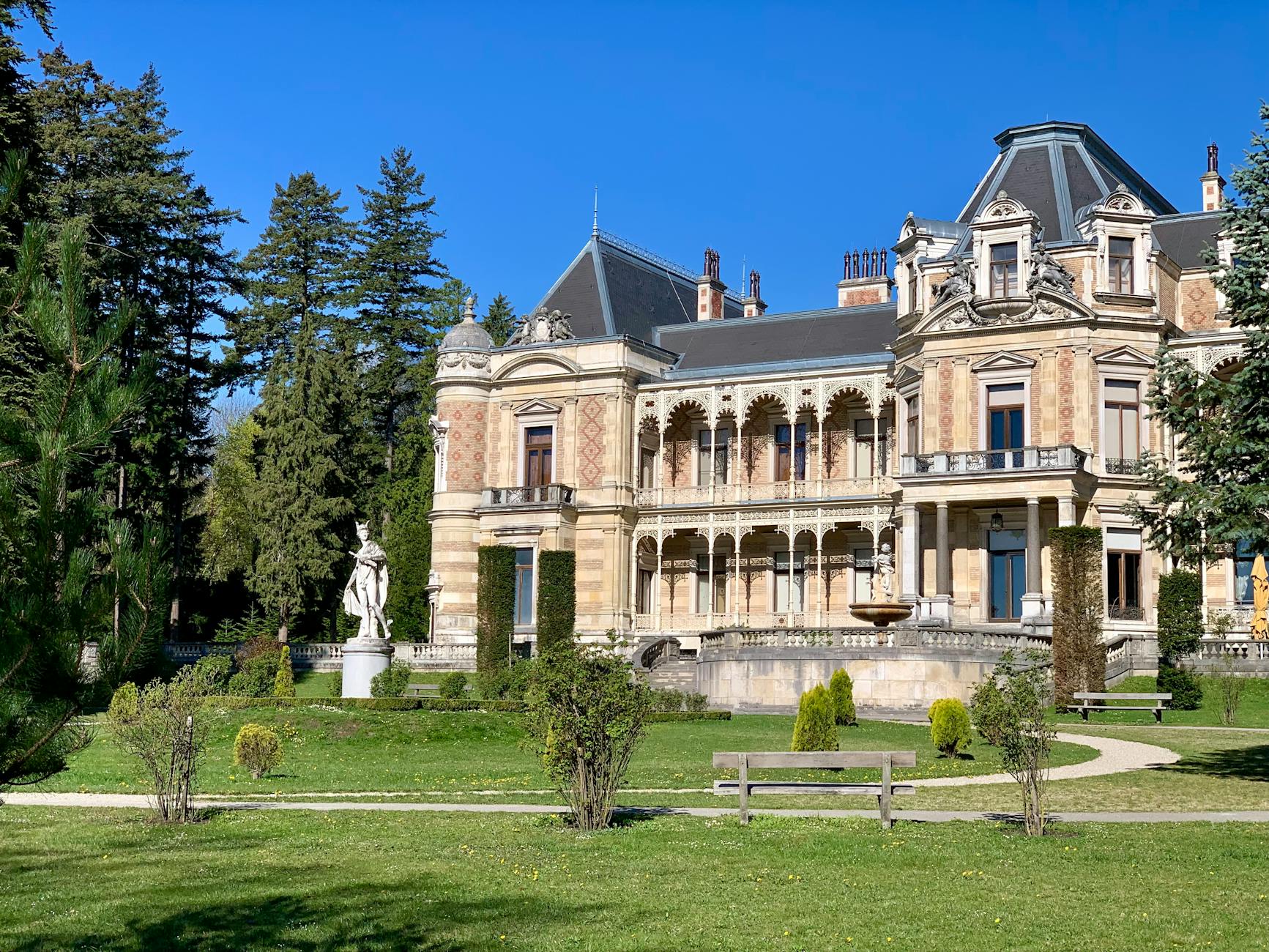
Built for Sisi by Franz Joseph in 1881–86 in the Läinzer Tiergarten (a Habsburg game park west of Vienna). The “Castle of Dreams” was meant as a retreat where she could escape Vienna’s court life. Decorated with murals by Hans Makart and Klimt’s elder brother Ernst (with Gustav Klimt assisting). Today the villa is a museum showing both Sisi’s life and rotating Habsburg-era exhibitions. Tickets €7 adult. Open Tuesday–Sunday 10:00–18:00 (closed Mondays and from November–mid-March). U-Bahn U4 to Hietzing, then Bus 60B to Hermesstraße. The villa is in a vast nature reserve worth visiting alone.
4. The Imperial Crypt (Kapuzinergruft)
Sisi’s tomb is in the Kapuzinergruft below the Capuchin Church. Her sarcophagus is in the Franz Joseph Crypt (separate room from most other Habsburgs) alongside Franz Joseph and their son Crown Prince Rudolf. Visitors leave flowers daily — Sisi’s grave receives more attention than any other Habsburg tomb. €7.50 ticket.
5. Augustinerkirche
Where Sisi and Franz Joseph were married April 24, 1854. The church is a working Catholic parish on Augustinerstraße directly adjacent to the Hofburg. Mass times include 11:00 a.m. Sunday High Mass with the church’s own choir.
6. Other Sisi Sites
- Bad Ischl: The Upper Austrian spa town where Sisi met Franz Joseph. The Imperial Villa (Kaiservilla) where they spent summers is now a museum. 90 minutes from Vienna by train.
- Achilleion Palace, Corfu: Sisi’s private retreat on Corfu, Greece. Built to her specifications in 1890. Open to the public.
- Possenhofen Castle, Bavaria: Sisi’s childhood home on Lake Starnberg. Today a museum.
- Madeira: Sisi spent several months on Madeira during periods of withdrawal from Vienna; the Reid’s Palace Hotel has a Sisi room.
Sisi Myth vs. Sisi Reality
Popular Sisi is a Cinderella story: beautiful princess marries handsome emperor and lives happily until tragic death. Real Sisi is more complicated and more interesting. Some important distinctions:
The Famous Beauty
Yes, Sisi was beautiful, but her beauty was also a prison. She maintained her famous 16-inch waist through extreme calorie restriction, exercise obsession, and tight corseting that probably caused permanent organ damage. Her knee-length hair required 3+ hours daily of grooming by special hairdressers. She refused to be photographed or formally painted after age 32 because she didn’t want her aging documented — later portraits use idealized early-life models.
The Marriage
Despite the romantic founding (Franz Joseph’s instant love), the marriage was largely a failure. Sisi and Franz Joseph lived apart for most of their lives. He was a workaholic monarch obsessed with administrative detail; she was a romantic intellectual who preferred poetry, horseback riding, and travel. Franz Joseph had a long-term relationship with the actress Katharina Schratt, which Sisi knew about and tolerated.
The Hungarian Sympathy
Sisi was genuinely fluent in Hungarian (the only Habsburg empress who learned it) and politically supportive of Hungarian autonomy. Her advocacy contributed to the 1867 Compromise that created the Austro-Hungarian dual monarchy. She was crowned Queen of Hungary at Buda in 1867 and is buried with a Hungarian flag in her Vienna sarcophagus.
The Mental Illness
Modern historians believe Sisi suffered from severe depression, possibly bipolar disorder, and what we’d now diagnose as anorexia nervosa. Her brother and several Wittelsbach relatives had documented mental illness (her cousin Ludwig II of Bavaria was the “Mad King”). She turned increasingly to mediums and psychics in her later years. After Rudolf’s 1889 suicide, she dressed only in black for nine years until her death.
The Death and the Cult
The “Sisi cult” really began after her death. The Empress was deeply unpopular among Vienna’s German-speaking aristocracy during her lifetime (she was viewed as eccentric, politically interfering, neglectful of her ceremonial duties). After her assassination, the absence became more attractive than the presence. Books, plays, and films transformed her into the romantic icon she’s now known as. The 1955–57 “Sissi” films starring Romy Schneider crystallized the modern myth.
The Sisi Trail (Half-Day Walking Tour)
- Start at the Augustinerkirche (Augustinerstraße) for the marriage church.
- Walk 2 minutes to the Hofburg — enter the Imperial Apartments. Visit the Sisi Museum and walk through her personal rooms (90 minutes).
- Walk 8 minutes to the Kapuzinergruft — Sisi’s tomb in the Imperial Crypt. Leave a flower if you like (many visitors do).
- U-Bahn U4 to Schönbrunn for the Grand Tour through Sisi’s summer apartments. Total visit 2 hours.
- Optional: U-Bahn U4 to Hietzing, Bus 60B to Hermesvilla. Visit her private retreat in the Läinzer Tiergarten nature reserve (90 minutes plus travel).
Full Sisi trail in one day: 7–8 hours. Spread across two days for a comfortable pace.
Combined Ticket: The Sisi Pass
The Sisi Pass (€60 adult) covers:
- Imperial Apartments at the Hofburg + Sisi Museum (the museum area is closed until 19 November 2026)
- Schönbrunn Palace Grand Tour
- Imperial Furniture Collection (Hofmobiliendepot)
Valid 12 months from purchase. Worth it if you plan to see all three sites; add up the individual tickets before you buy to see what it saves you. Buy at the Hofburg ticket office or online.
Sisi in Popular Culture
- The Sissi films (1955–57): Three Austrian/German films starring Romy Schneider as a romanticized Sisi. Played repeatedly on European television; created the modern popular image of Sisi as an innocent, beautiful, kind empress.
- Elisabeth (1992 musical): The major Vienna musical at the Raimund Theater. Darker than the films; depicts Sisi’s relationship with Death personified. Internationally toured. See our Vienna theater guide.
- The Empress (Netflix, 2022): German-language drama series; more historically accurate than the films.
- Corsage (2022): Austrian film with Vicky Krieps as a fictionalized Sisi at age 40. Won major European film awards.
- Sisi (2021 series, RTL+): Another European TV series adaptation.
- Numerous biographies, novels, and historical accounts in dozens of languages.
Buying Sisi-Related Souvenirs
The Hofburg Imperial Apartments gift shop, the Schönbrunn Palace gift shop, and many tourist shops in central Vienna sell Sisi-themed merchandise: jewelry, perfume bottles, scarves, biographies, “Sissi” film DVDs, postcards. Quality varies enormously. The Hofburg’s own shop has the most authentic and well-researched items; tourist shops often sell mass-produced kitsch.
One traditional Sisi-related purchase: a bottle of “Vienna Imperial” or “Eau de l’Impératrice” perfume, said to replicate scents Sisi used. Sold at the Hofburg shop and some Vienna parfumeries. Not historically verified but evocative.
Common Misconceptions
- “Sisi” is the popular nickname; “Sissi” is the film spelling. Family members and contemporaries used “Sisi” or sometimes “Lisi.” The double-s came from the 1950s films.
- She wasn’t an Austrian princess by birth. She was Bavarian. The Wittelsbachs were rivals to the Habsburgs for centuries.
- The “Spanish riding school horses” weren’t named after her. The Lipizzaner stallions date from the 16th century; their connection to Sisi is just that she rode them.
- Her tattoo was real. At age 51, Sisi got an anchor tattoo on her shoulder in Greece. This is documented; Habsburg propaganda hid it during her lifetime.
- She wasn’t always loved by the Austrian public. Modern adoration is posthumous; during her lifetime she was viewed as eccentric and absent.
Daily Routines That Shaped Sisi
Several daily routines defined Sisi’s life and shaped the historical record:
- Three-hour morning hair grooming: Two attendants worked daily to wash, brush, and elaborately braid Sisi’s knee-length chestnut hair. The empress reportedly counted the hairs that fell out and reprimanded any that exceeded her quota. Court rumor claimed she once made an attendant fashion her shed hairs into a doll for her amusement.
- Strict exercise regimen: Sisi installed gymnastic equipment, including rings and parallel bars, in every imperial residence. She fenced daily, rode horses for hours, and ran up palace staircases two at a time. Her training equipment from the Hofburg apartments is preserved in the Sisi Museum.
- Severe calorie restriction: Her diet consisted primarily of clear broths, freshly pressed orange juice, and small amounts of meat. She weighed herself multiple times daily; if she exceeded her self-imposed limit (around 110 pounds at 5’8″ tall), she would fast.
- Cold treatments: She bathed in cold water daily and applied raw veal slices to her face for skin tone. Her treatments included spinach and strawberry pulp facials, olive oil baths, and the occasional consumption of small portions of raw veal “for the iron.”
- Long-distance walking and travel: Sisi could walk 8–12 hours per day during her travels. Her ladies-in-waiting struggled to keep up; she changed companions frequently because few could handle her physical pace.
Sisi’s Travels — Where She Spent Her Last Decades
After Rudolf’s suicide in 1889, Sisi essentially abandoned Vienna for the last nine years of her life. She moved continuously:
- Corfu (1888–91): Built the Achilleion Palace as a private retreat. After her death, Kaiser Wilhelm II of Germany bought the property; today it’s a museum.
- Madeira (multiple visits 1860s–90s): She first traveled there in 1860 during a period of psychological crisis. The Reid’s Palace Hotel still has a Sisi room.
- England and Ireland (1870s–90s): She hunted with the British upper class; her riding skills were legendary even by British standards.
- Hungary (regular): She spent extended periods at Gödöllő Palace outside Budapest, which became almost a second home.
- Cap Martin and the French Riviera (1890s): Increasingly her winter destination.
- Switzerland (multiple times including her final trip): She was visiting Geneva when assassinated.
Beyond the Hofburg: Lesser-Known Sisi Sites in Vienna
- St. Stephen’s Cathedral: Her funeral was held here on September 17, 1898. The cathedral’s Sisi memorial plaque is in the south aisle.
- Volksgarten: She often walked here incognito. A small Sisi statue sits in the garden (sculpted by Hans Bitterlich, 1907).
- Bad Ischl Imperial Villa (Kaiservilla): Where she met Franz Joseph in 1853. Now a museum (90 minutes by train from Vienna). Annual “Sisi Days” festival.
- Sigmund Freud Park (formerly Votivpark): The Votivkirche nearby was built (1856–79) as a thanksgiving for Franz Joseph surviving an 1853 assassination attempt — the same year he met Sisi.
- Habsburggasse: A small street in central Vienna named for the dynasty.
FAQ
Who was Empress Sisi?
Empress Elisabeth of Austria (1837–1898), nicknamed Sisi. She was Bavarian by birth, married Emperor Franz Joseph at 16 in 1854, and ruled as Empress of Austria and Queen of Hungary until her assassination in Geneva in 1898 at age 60.
Where can I learn about Sisi in Vienna?
The Sisi Museum at the Hofburg Imperial Apartments (€15 adult ticket until 18 November 2026, with the museum area reopening redesigned on 19 November 2026; the €60 Sisi Pass covers multiple sites). Also the Imperial Crypt below the Capuchin Church (her tomb), the Hermesvilla in the Läinzer Tiergarten (her private retreat), and Schönbrunn Palace (her summer residence).
What is the Sisi Pass?
A combined pass (€60 adult, €38 ages 6–18) covering the Hofburg Imperial Apartments + Sisi Museum, Schönbrunn Palace, and the Vienna Furniture Museum. Valid for one year.
How did Empress Sisi die?
She was assassinated September 10, 1898 in Geneva, Switzerland by Italian anarchist Luigi Lucheni, who stabbed her in the heart with a sharpened file. She was 60 years old. Lucheni was caught immediately, served life imprisonment, and hanged himself in 1910.
Did Sisi and Franz Joseph have a happy marriage?
The marriage was largely unsuccessful. Despite Franz Joseph’s instant love at 23 and their wedding in 1854, Sisi found court life suffocating and spent most of the marriage traveling away from Vienna. Franz Joseph had a long-term relationship with the actress Katharina Schratt that Sisi knew about and tolerated. They had four children together.
Is the Sissi film accurate?
No — the 1955–57 Romy Schneider films are heavily romanticized. They depict Sisi as innocent and joyful; the real Sisi suffered from severe depression, eating disorders, and family tragedies. Modern accounts like Corsage (2022) and The Empress (Netflix) are more historically accurate.
How long should I spend at the Sisi Museum?
Allow 60–90 minutes for the Sisi Museum and Imperial Apartments together. Add another 90 minutes if you’re also doing Schönbrunn Palace on the same day.
If you only visit one place on this trail, make it the museum in the Hofburg that was built specifically to argue with the Romy Schneider version — the parasols, the gymnastics rings, the death certificate and a replica of the file that killed her. Our full Sisi Museum guide covers 2026 ticket prices, the autumn discount window and how long to allow for the whole circuit.
The trail ends in the Kapuzinergruft, where Elisabeth lies between Franz Joseph and Rudolf in a coffin no grander than theirs, usually with fresh flowers on it. Our Imperial Crypt guide has the practicalities and explains why this is the right place to finish rather than to start.