Schönbrunn Palace Guide: Tickets, Tours & Gardens (2026)
Complete guide to visiting Schönbrunn Palace — the Habsburg summer residence and UNESCO World Heritage Site. Every ticket type explained (Imperial Tour, Grand Tour, Classic Pass, Sisi Pass), garden highlights (Gloriette, Neptune Fountain, Privy Garden), zoo strategy, seasonal calendar, and insider tips for avoiding the 11 am-2 pm peak crowd window. Plus sample half-day, full-day, and family visit plans.
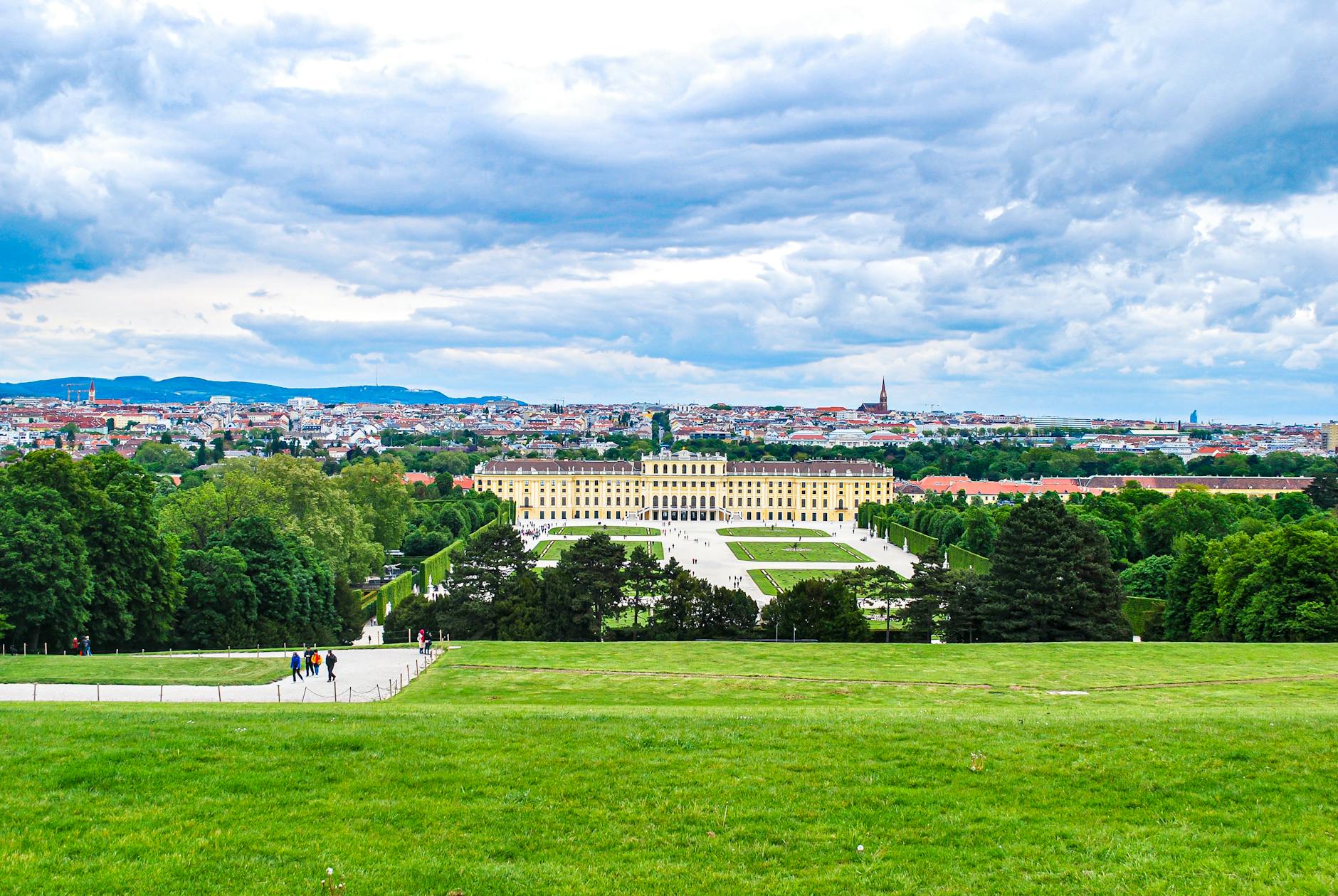
Photo by Cristian Salinas Cisternas
- Schönbrunn at a Glance
- Schönbrunn Palace Tickets — Every Option Explained
- Booking Strategy: Timed Entry Is Mandatory
- The Schönbrunn Palace Highlights — Room by Room
- The Schönbrunn Gardens — Free and Vast
- The Schönbrunn Zoo (Tiergarten Schönbrunn)
- Schönbrunn’s Lesser-Known Attractions
- Best Visit Strategies by Time of Day
- How to Get to Schönbrunn
- Schönbrunn by Season
- Schönbrunn Tickets — Sample Prices and Combos (2026)
- What to Wear and Bring to Schönbrunn
- Eating at Schönbrunn
- Schönbrunn Christmas Market
- Sample Visit Plans
- Common Schönbrunn Mistakes to Avoid
- FAQ
- Final Tip: Schönbrunn Rewards Slow Visits
- Related Vienna Guides
This article contains advertising. Our booking links are routed through a partner that adds commission tracking automatically, so if you book through one we earn a commission from the provider, at no extra cost to you. It never affects what we recommend. Affiliate disclosure
Schönbrunn Palace is the centerpiece of Habsburg Vienna — and the single most-visited historic attraction in Austria. 8+ million visitors a year tour the 1,441-room Baroque palace, walk the 120-hectare formal gardens, photograph the hilltop Gloriette, and stretch the day with the adjacent Schönbrunn Zoo (the world’s oldest, founded 1752). UNESCO listed the entire complex as a World Heritage Site in 1996. The challenge isn’t deciding whether to visit — it’s optimizing the experience to avoid the worst crowds, choosing the right ticket among five overlapping options, and knowing what to skip vs what’s genuinely worth the time.
This is the complete Schönbrunn Palace guide: every ticket type explained, the canonical visit plan, garden highlights you’d miss without a guide, zoo strategy, the seasonal calendar, and the under-the-radar adjacent attractions most travelers never know about. Pair with our Vienna attractions.
Schönbrunn at a Glance
| Aspect | Detail |
|---|---|
| Location | 13th district (Hietzing), 15 minutes by U4 from Stephansplatz |
| Open hours (palace) | April-October 8:30 am-5:30 pm; November-March 8:30 am-5 pm |
| Open hours (gardens) | 6:30 am to dusk — entirely free entry |
| Best time to visit | Early morning (8-9 am) or late afternoon (4-5:30 pm); avoid 11 am-2 pm peak |
| Allow | 2-3 hours for palace + gardens; 4-5 hours if adding zoo |
| UNESCO status | World Heritage Site since 1996 |
| Number of rooms | 1,441 (40 open for tours) |
| Garden size | 120 hectares (300 acres) |
| Zoo founded | 1752 (world’s oldest continuously operating) |
Schönbrunn Palace Tickets — Every Option Explained
Schönbrunn sells 5 main palace tickets plus several combos. The differences matter:
1. Imperial Tour (€30 Adult)
The shortest and most popular option. 22 rooms, 35-minute audio-guide tour. Covers the south-facing reception rooms, private apartments of Franz Joseph and Sisi, the Mirror Room where Mozart performed for Maria Theresia at age 6 in 1762, the Great Gallery, and several ceremonial spaces. Best for time-conscious visitors who want the headlines.
2. Grand Tour (€42 Adult)
The recommended choice for most visitors. 40 rooms, 50-60 minute audio-guide tour. Everything in the Imperial Tour plus the Maria Theresia rooms, the Vieux-Laque Room with original Japanese lacquer panels, the Million Room with rosewood and Indo-Persian miniatures, the Chinese Cabinet, the Hall of Ceremonies, and the Berglzimmer landscape rooms. Add €4 for the Grand Tour with Guided Tour upgrade (live guide vs audio).
3. Sisi Ticket / Sisi Pass (€60 Adult)
The combo for Sisi enthusiasts. Includes Schönbrunn Grand Tour PLUS the Hofburg Imperial Apartments + Sisi Museum in central Vienna PLUS Vienna Furniture Museum (the Sisi Museum itself is closed until its redesigned rooms open on 19 November 2026). Valid for 1 year; €38 for ages 6–18. Worth it if you’re visiting all three Habsburg sites.
4. Classic Pass (€32 Adult)
Schönbrunn-only combo: Grand Tour + Privy Garden + Gloriette terrace + Maze + Apple Strudel Show. Saves 20% vs buying separately if you’ll do all the components.
5. Classic Pass Plus (€81 Adult)
Classic Pass plus the Imperial Carriage Museum (Wagenburg) and Court Bakery + Apple Strudel demonstration. Best for travelers doing the full Schönbrunn experience.
Booking Strategy: Timed Entry Is Mandatory
Schönbrunn switched to timed-entry tickets in 2016. This means:
- Online booking is essentially required in peak season (May-October, December). Walk-up tickets sell out by mid-morning
- Book at schoenbrunn.at directly — the official site has the best prices and selection
- Choose your time slot carefully — 8:30 am, 9 am, and 9:30 am slots are emptiest. 11 am-2 pm has cruise-ship and bus-tour crowds. 4-5 pm is empty again
- Avoid third-party “skip-the-line” sites — these typically charge 30-50% markup over the official site. Schönbrunn doesn’t have separate skip-the-line tickets; you skip the line by booking online ahead
- The Vienna PASS includes Schönbrunn Imperial Tour — verify it covers your chosen tour level
The Schönbrunn Palace Highlights — Room by Room
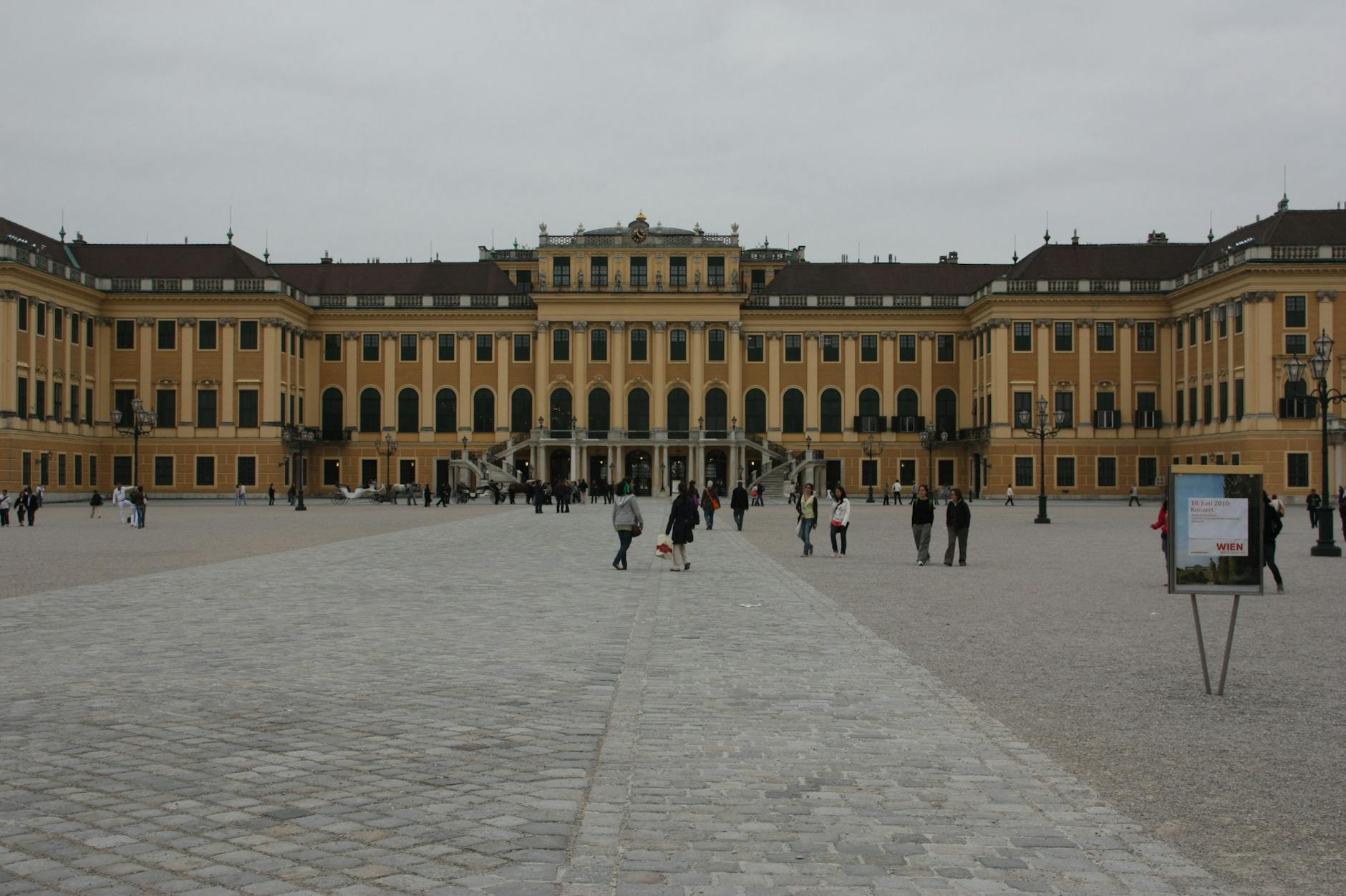
The Grand Tour route hits 40 rooms in about an hour. The genuine standouts:
The Great Gallery
The most spectacular single room — 43 meters long, with two ceiling frescoes by Gregorio Guglielmi, three crystal chandeliers, mirror walls, and parquet flooring. This is where state banquets are still held; Kennedy and Khrushchev met here in 1961.
The Mirror Room (Spiegelsaal)
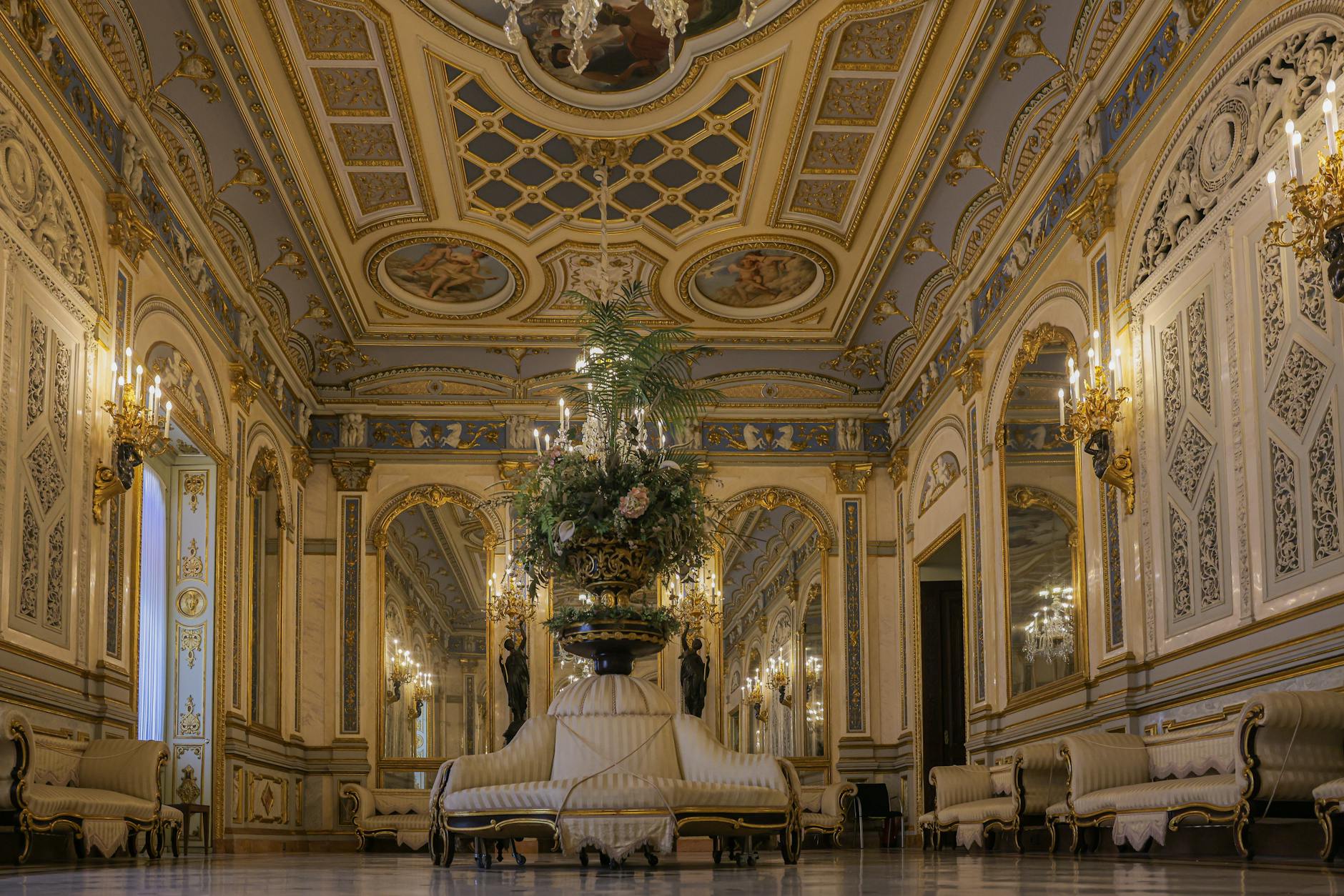
Where 6-year-old Mozart performed for Maria Theresia and the imperial family in 1762. The room’s white-and-gold rococo design with mirror-paneled walls amplifies sound and light. The performance led to Mozart sitting on Maria Theresia’s lap afterward — possibly the most-told Vienna anecdote in tour guide repertoire.
The Vieux-Laque Room
Maria Theresia’s personal mourning room after her husband Franz Stephan died in 1765. Originally Franz Stephan’s office, she transformed it with original 17th-century Japanese black lacquer panels and integrated portraits of her family. The panels are extraordinary.
The Million Room
So named because Maria Theresia reportedly spent a million ducats on the rosewood paneling. The walls contain 60 Indo-Persian miniature paintings illustrating Mughal and Persian court life. One of the most ornate interiors in Europe.
The Chinese Cabinets (Round and Oval)
Two small rooms paneled with imported Chinese black lacquer and porcelain. Maria Theresia used the Round Chinese Cabinet for private meetings with her chancellor — the rooms allowed her to receive visitors without the full imperial protocol.
Franz Joseph’s Bedroom
Surprisingly austere. The longest-reigning Habsburg emperor (1848-1916) slept on a simple iron military bed, woke at 4 am daily, and worked from a small wooden desk. The contrast with the rest of the palace is striking and politically meaningful.
The Sisi Rooms
Empress Elisabeth’s private apartments — her writing room, her gymnastics room (she was obsessed with maintaining a waist of about 51 cm), and her bedroom. The Hofburg has more comprehensive Sisi exhibits, but Schönbrunn has the original spaces she actually lived in.
The Schönbrunn Gardens — Free and Vast
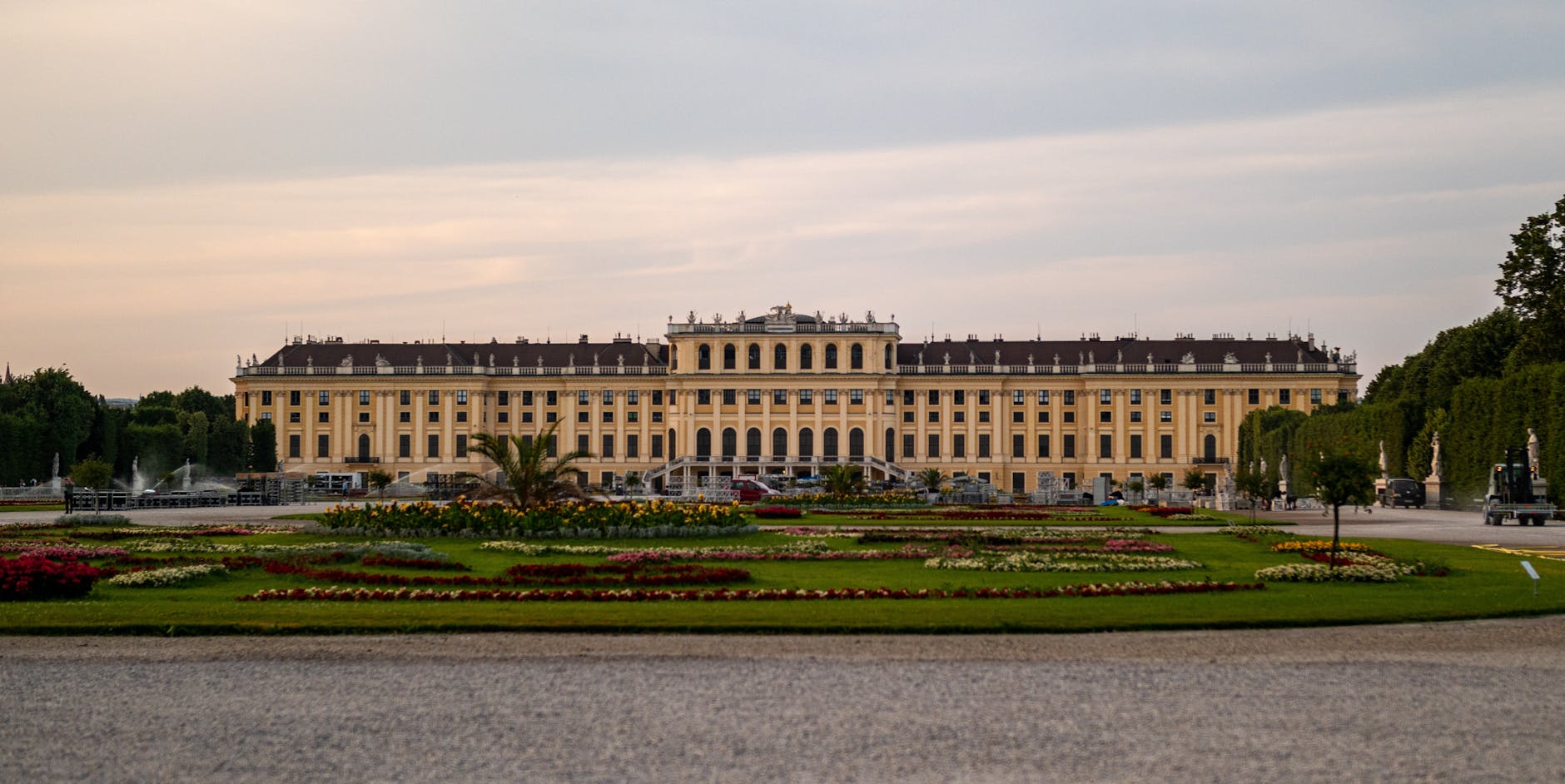
The 120-hectare formal Baroque gardens are completely free to enter. The palace ticket only covers the interior. This means: even on a budget, Schönbrunn’s gardens deliver a full half-day experience.
Gardens Highlights
The Great Parterre
The formal hedge-and-flower-bed front garden between the palace and the Neptune Fountain. Designed in 1817 in classic French Baroque style. Best in May-June (tulip and rose peak) and September (autumn dahlias). Allow 30 minutes minimum to walk and photograph.
The Neptune Fountain
1781 monumental fountain at the base of the Gloriette hill. Designed by Johann Ferdinand Hetzendorf von Hohenberg with sculptures by Wilhelm Beyer. The classical mythological scene of Thetis pleading with Neptune for her son Achilles’ safety is one of Vienna’s most-photographed sculptural ensembles.
The Gloriette
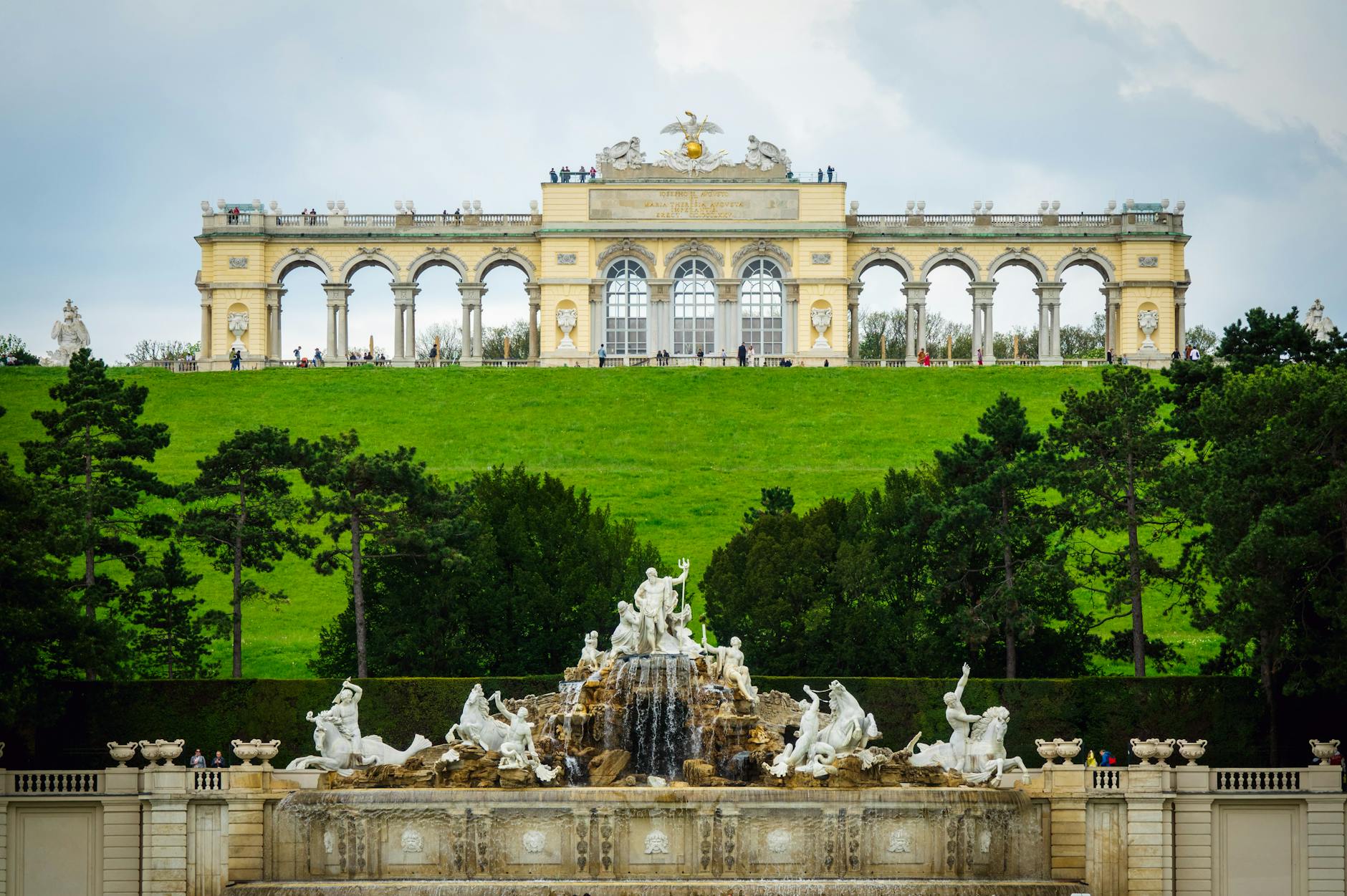
The hilltop folly was completed in 1775 — built from the stones of the abandoned Schloss Neugebäude. It commemorates the Habsburg victory in the Battle of Kolín. The terrace below the Gloriette is free; the rooftop terrace charges €4.50 for the elevated panorama. Most visitors miss that the view from the ground-level base is essentially identical to the rooftop.
The Privy Garden (Kronprinzgarten)
A hedge-walled private garden once reserved for the imperial family. €4.50 entry; included in Classic Pass. Much quieter than the main parterre; excellent for photography.
The Roman Ruins
A 1778 artificial ruin — designed to look ancient but built specifically as a romantic garden feature. The Baroque concept of constructed melancholy. Walking distance from the main palace.
The Obelisk
An Egyptian-style obelisk at the far end of the formal garden, 1777. Walk to it for the classic Schönbrunn perspective shot back through the gardens.
The Maze and Labyrinth (Irrgarten)
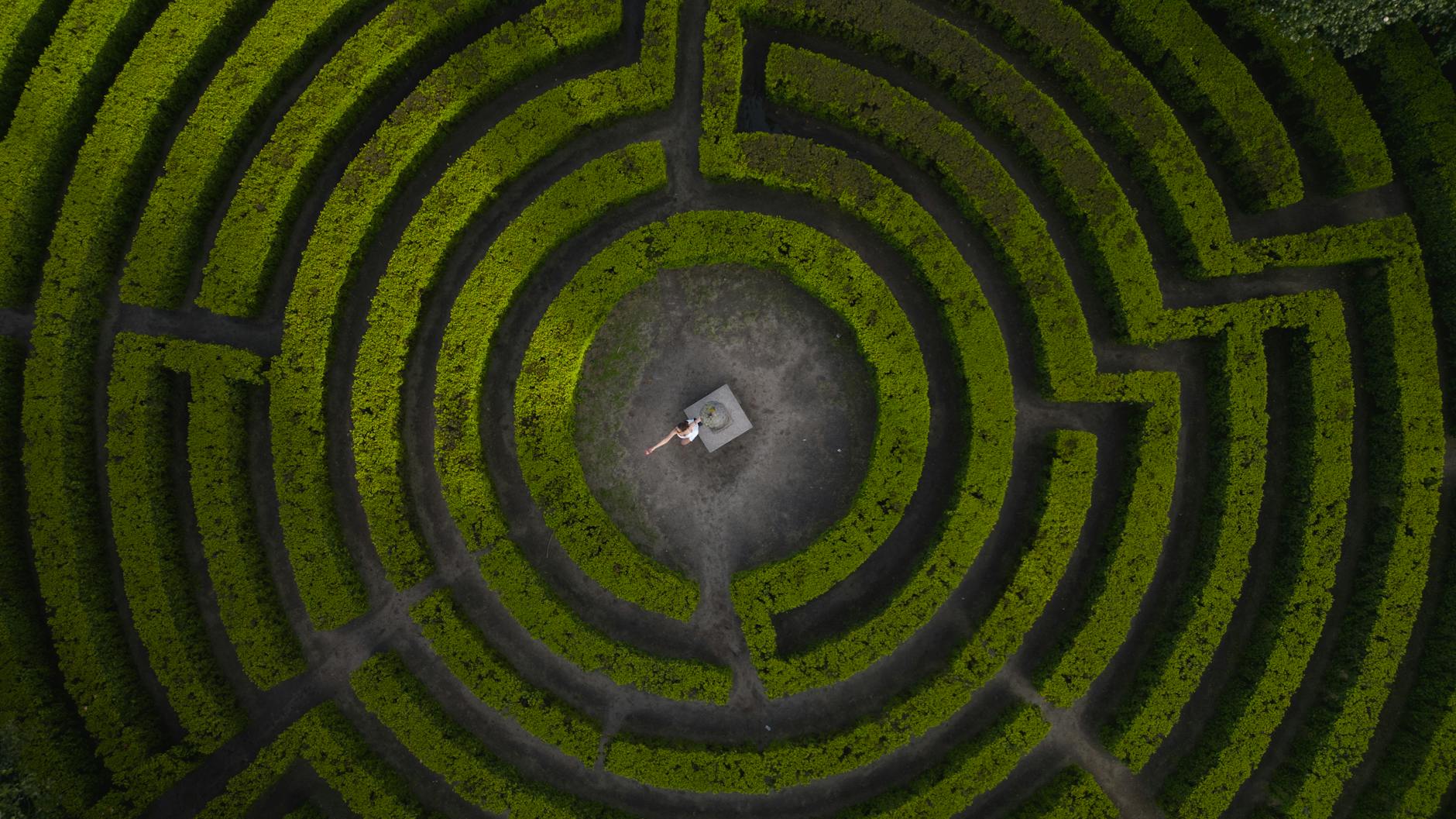
A 1720s hedge maze recreated based on the original Maria Theresia-era plan. €5.50 entry; included in Classic Pass. Excellent for kids and families.
The Schönbrunn Zoo (Tiergarten Schönbrunn)
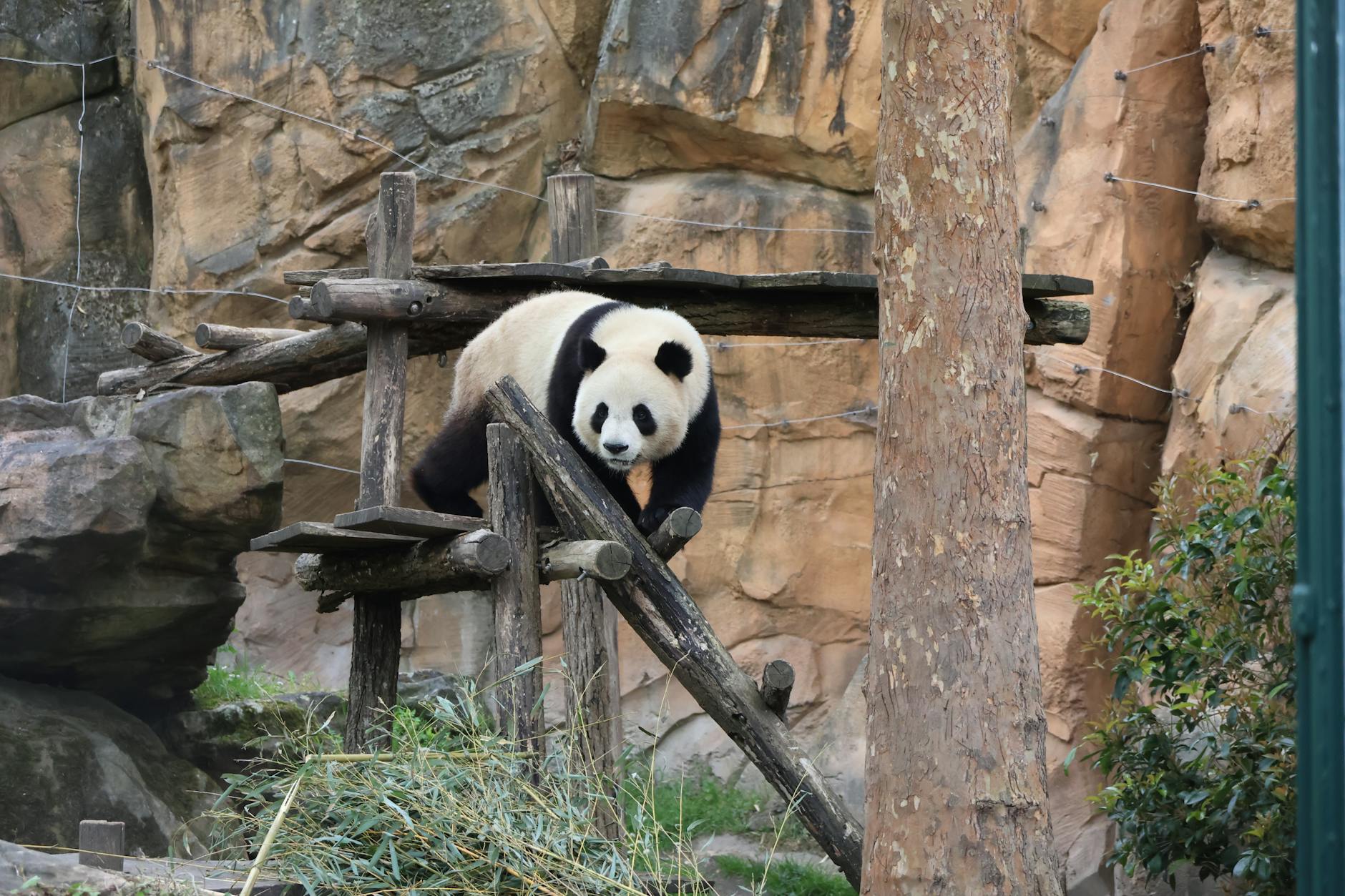
The world’s oldest continuously operating zoo, founded in 1752 by Emperor Franz Stephan as a menagerie within the palace grounds. The zoo charges separate admission (€29 adult, €13 child) and operates independent of the palace. Allow 3+ hours minimum; you could easily spend a full day.
Zoo Highlights
- Giant pandas — Schönbrunn was the first European zoo to successfully breed giant pandas. The current breeding pair is one of Europe’s most-visited zoo attractions
- Tropenhaus — a climate-controlled rainforest pavilion
- Polar bears with new aquatic enclosure
- Koalas — one of only a handful of European zoos with the species
- Tirolerhof — an Alpine farm reconstruction within the zoo grounds, traditional Austrian animals
- Reptile house with major snake and lizard collection
- Aquarium — fish, sharks, and marine life
The zoo is genuinely excellent and globally ranked — not just “a zoo at a palace.” For families, it often becomes the highlight of the Schönbrunn visit.
Schönbrunn’s Lesser-Known Attractions
Wagenburg (Imperial Carriage Museum)
A separate building west of the main palace containing the imperial family’s coaches, sleighs, and ceremonial vehicles. €13 adult; included in Classic Pass Plus. Excellent for transport history fans.
Court Bakery and Apple Strudel Show
A live demonstration of traditional Apfelstrudel-making in the historic palace bakery. €7.90 entry; daily shows. Included in Classic Pass and Classic Pass Plus. Great for families with kids.
Schönbrunn Kindermuseum
Dedicated children’s museum within the palace complex. Kids can dress in period costumes as Habsburg princes and princesses, peek into recreated Imperial schoolrooms, and learn about royal life. €9.50 child; included in some combo tickets. Best for ages 4-12.
Court Pharmacy and Court Apothecary
A preserved 18th-century palace pharmacy with original equipment. Often part of guided tour add-ons.
The Palmenhaus (Palm House)
Not the famous Burggarten Palmenhaus in central Vienna — Schönbrunn has its own historic glass-and-iron palm house from 1882 (the largest such structure in continental Europe when built). €7 entry; year-round.
The Schönbrunn Suite
Yes — you can stay overnight in the palace itself. The 167-m² East Wing Schönbrunn Suite is rentable through schoenbrunn.at; €2,500-€4,000+ per night with two bedrooms, salon, and views of the Neptune Fountain. Book 4-6 months ahead for a bucket-list Vienna experience.
Best Visit Strategies by Time of Day
Sunrise to 9 AM (Best)
Gates to the gardens open at 6:30 am. Walk the parterre, climb to the Gloriette base, photograph the palace facade — all before any tour group arrives. The palace interior opens 8:30 am; the 8:30-9:30 am slots are emptiest.
9-11 AM
Crowds build but still manageable. Tour groups begin arriving 9:30-10 am. Good for combining palace + gardens.
11 AM-2 PM (Peak Crowds — Avoid)
Cruise ship buses, school groups, and tour buses all arrive. Lines for the palace can reach 90 minutes even with timed-entry tickets. The gardens get busy. Visit indoor attractions (zoo, Wagenburg) during this window if you must be on-site.
2-4 PM
Crowds slowly thin. Reasonable time for the palace tour or the gardens.
4 PM-Sunset
Golden hour for photography. Crowds clear out. The palace closes at 5:30 pm (April-October) or 5 pm (November-March); the gardens stay open until dusk.
After Sunset
Garden entrance closes at dusk. The palace lights up beautifully in the evening; the Gloriette is illuminated. Best viewed from outside the gates.
How to Get to Schönbrunn
By U-Bahn (Best Option)
U4 from Stephansplatz/Karlsplatz to Schönbrunn station (15 minutes). The station is a 5-minute walk from the main palace gate. Direction “Hütteldorf.” Cost: €3.20 single ticket (€3.00 in the WienMobil app) or covered by any Vienna transit pass.
By Tram
Tram 10, 60, or 58 to Schönbrunn — similar journey time but a more scenic route through the 13th and 14th districts.
By Taxi / Bolt / Free Now
About 15-20 minutes from the 1st district. €15-€25 depending on traffic. Not necessary unless you have mobility needs.
By Car
Not recommended — central Vienna parking is restricted and Schönbrunn parking fills up by mid-morning. Public transit is faster.
Schönbrunn by Season
| Season | What’s Special |
|---|---|
| Spring (April-June) | Tulips peak late April; rose garden in May-June; fewer crowds than summer |
| Summer (July-August) | Maximum crowds and heat; gardens are lush; the Schönbrunn Summer Night concert series (one night per year) |
| Autumn (September-October) | Strong gold and red foliage; comfortable temperatures; lower crowds |
| Winter (November-March) | Empty palace tours; Schönbrunn Christmas Market mid-Nov-Dec 23; New Year’s Day Vienna Philharmonic outdoor concert; snow-dusted facade |
Schönbrunn Tickets — Sample Prices and Combos (2026)
| Ticket Type | Adult | Child (6-18) | Under 6 |
|---|---|---|---|
| Imperial Tour | €30 | €16 | Free |
| Grand Tour (audio) | €42 | €20 | Free |
| Grand Tour (live guide) | €30 | €23 | Free |
| Classic Pass | €32 | €24 | Free |
| Classic Pass Plus | €81 | €58 | Free |
| Schönbrunn Zoo | €26 | €13 | Free |
| Wagenburg | €13 | €8 | Free |
| Maze + Labyrinth | €5.50 | €3 | Free |
| Gloriette terrace | €4.50 | €3 | Free |
| Sisi Pass (3 attractions) | €60 | €38 | Free |
Prices include audio guide unless noted. Family tickets and senior discounts are available; verify on the official site.
What to Wear and Bring to Schönbrunn
- Comfortable walking shoes — gravel garden paths, palace interior with cobblestones nearby
- Layered clothing — the palace interiors are climate-controlled (cool in summer, warm in winter); the gardens are at outside temperature
- Sun hat and sunscreen in summer — gardens have minimal shade
- Umbrella — gardens are exposed; rain can be sudden
- Camera — palace photography is restricted inside (no flash); gardens unrestricted
- Refillable water bottle — Vienna tap water is excellent; fountains throughout the gardens
- Light snacks or pack a picnic — gardens permit picnics in designated areas; the on-site restaurants are pricey
- Bag rules — bags larger than 25×30 cm must be checked at the entrance cloakroom
Eating at Schönbrunn
- Café Gloriette — touristy but the view back over the palace earns it. Lunch and coffee, €15-€30 per person
- Schönbrunn Restaurant Residenz — formal restaurant in a converted palace wing; €30-€60 per person
- Tirolerhof restaurant (within zoo) — Alpine-themed; €15-€25
- Café Schönbrunn (outside main gate) — coffee and snacks at the U4 station entrance
- Pack a picnic — the gardens have benches and lawn areas; significantly cheaper
Schönbrunn Christmas Market
From mid-November through December 23 (plus an Easter market in spring), the courtyard between the palace gates becomes one of Vienna’s most-loved Christmas markets. The Schönbrunn market is smaller, more local-feeling, and more atmospheric than the giant Rathausplatz market. Includes a kid-sized petting zoo, craft vendors, mulled wine, and traditional food stalls. Visit before 3 pm for the lowest crowds.
Sample Visit Plans
Half-Day Visit (3 hours)
- 8:30 am palace Grand Tour (1 hour)
- Walk parterre + Neptune Fountain + Gloriette base (1 hour)
- Lunch at Café Gloriette or back at U4 station (1 hour)
Full-Day Visit (5-6 hours)
- 8:30 am palace Grand Tour
- Walk to Gloriette + Privy Garden
- Lunch at Café Gloriette
- Schönbrunn Zoo (3 hours)
- Wagenburg or Apple Strudel demonstration
- Coffee at Café Schönbrunn
Family Day Plan
- Schönbrunn Kindermuseum (1 hour)
- Zoo (3 hours)
- Lunch at Café Gloriette
- Maze and Labyrinth (1 hour)
- Walk back through gardens
Photography-Focused Day
- Gates 6:30 am opening — empty gardens
- Parterre and Neptune Fountain shoot (1 hour, golden light)
- Walk up to Gloriette base for elevated palace shot (1 hour)
- Privy Garden quieter alternative (45 minutes)
- Palace exterior + parterre return shoot at sunset
Common Schönbrunn Mistakes to Avoid
- Buying tickets at the door — sells out by 11 am in peak season; book online
- Using third-party “skip-the-line” sites — pay 30-50% markup for no benefit over the official site
- Trying to see palace + gardens + zoo in 2 hours — impossible; you’ll rush and miss the highlights
- Visiting 11 am-2 pm — the absolute peak crowd window
- Skipping the Privy Garden — part of the €16 Exclusive Gardens ticket, and the quietest, most photogenic Schönbrunn space
- Not walking up to the Gloriette — the panoramic view back over the palace is the canonical shot
- Eating at the palace café when the gardens have picnic areas — significantly more expensive than packing food
- Treating the zoo as an afterthought — it’s genuinely one of Europe’s best zoos and deserves its own half-day
FAQ
How long does it take to visit Schönbrunn?
Allow 2-3 hours for palace + gardens; 4-5 hours if adding the zoo; a full day if you want to see everything including Wagenburg, Maze, Kindermuseum, and Apple Strudel show.
What’s the best Schönbrunn ticket?
The Grand Tour (€42) for most visitors — 40 rooms, full audio guide, 50-60 minutes. The Imperial Tour (€30) at 22 rooms is too short; the Classic Pass (€32) is excellent value if you’ll do the maze and Gloriette terrace.
Is the Gloriette worth the climb?
Yes — the panoramic view back to the palace is iconic. The free base of the Gloriette has essentially the same view as the paid rooftop terrace. Allow 20 minutes uphill walk.
Can you visit the Schönbrunn gardens free?
Yes — entry to the 120-hectare gardens is completely free. Gates open 6:30 am to dusk. Only the palace interior, Privy Garden, Maze, Gloriette rooftop, and the various small attractions inside the gardens (Maze, Wagenburg, Palmenhaus) require tickets.
Do I need to book Schönbrunn tickets in advance?
Yes — Schönbrunn requires timed-entry tickets. Online booking via schoenbrunn.at is essentially required in peak season; walk-up tickets sell out by 11 am.
What’s the difference between the Schönbrunn Imperial Tour and Grand Tour?
Imperial Tour = 22 rooms, 35 minutes — covers reception rooms and main highlights. Grand Tour = 40 rooms, 50-60 minutes — adds Maria Theresia’s private apartments, the Million Room, Vieux-Laque Room, and Chinese Cabinets. Most visitors should choose Grand Tour for the additional 30 minutes.
Is Schönbrunn worth visiting in winter?
Yes — interiors are climate-controlled, the palace is dramatically less crowded, the Schönbrunn Christmas Market runs Nov-Dec, and snow-dusted facades are extraordinary for photography.
Can I visit Schönbrunn with the Vienna PASS?
Yes — Vienna PASS includes the Imperial Tour (€30 value). It does NOT include the Grand Tour upgrade, Privy Garden, Maze, Gloriette terrace, or Zoo. Verify which level you have.
What is the Schönbrunn Suite?
A 167-m² overnight suite inside the East Wing of the palace. Bookable through schoenbrunn.at; €2,500-€4,000+ per night. Two bedrooms, salon, balcony view of the Neptune Fountain and Gloriette. Book 4-6 months ahead.
Can I take photos inside Schönbrunn Palace?
Photography is restricted in some palace rooms; no flash is allowed anywhere; verify the current policy at entry. Garden photography is unrestricted.
Final Tip: Schönbrunn Rewards Slow Visits
The single biggest mistake travelers make at Schönbrunn is rushing it. The palace interior takes a focused hour; the gardens deserve another 1-2 hours; the Gloriette another 45 minutes; and the zoo can easily fill 3-4 hours on its own. Visitors who try to compress all of this into 90 minutes leave with a checklist photo and a vague sense of having “done Schönbrunn.” Visitors who give it a full half-day or even a full day come home with the city’s most enduring memory. Start early (gardens at 6:30 am, palace at 8:30 am), pack a picnic, climb to the Gloriette, and let the place earn its UNESCO status.
For more, see our Vienna attractions, our Vienna travel guide, our Hofburg guide in the supporting cluster, and our family-friendly Vienna with kids article.
Inside the same park, a ten-minute walk up from the palace, is Tiergarten Schönbrunn — founded in 1752 and the oldest zoo in the world still operating, with giant pandas, elephants and a baroque breakfast pavilion at its centre. If you are doing both in a day, the Classic Pass Plus (€81 adult, €75 with a Vienna City Card) bundles the palace, the zoo and the glasshouses. Our guide to Schonbrunn Zoo tickets and highlights has the prices and hours.
The part of Schönbrunn most visitors underuse is the part that costs nothing. The park opens at 06:30 every day of the year, the climb to the Gloriette and the view back down the axis are free, and only four enclosed gardens sit behind a ticket. Our Schönbrunn gardens and Gloriette guide sets out exactly what is free, what the €16 Exclusive Gardens ticket buys, and the seasonal hours that change four times a year.