Belvedere Palace Vienna: Klimt’s The Kiss & Complete Guide
Visit the Belvedere Palace to see Klimt's iconic The Kiss. Complete guide to the Upper and Lower Belvedere - tickets (€12-€32), best time to visit, Klimt and Schiele collections, the three-tiered Baroque gardens with the famous reflecting pond, and how to combine with Vienna's other major art sites. Plus visit-route strategy and family tips.
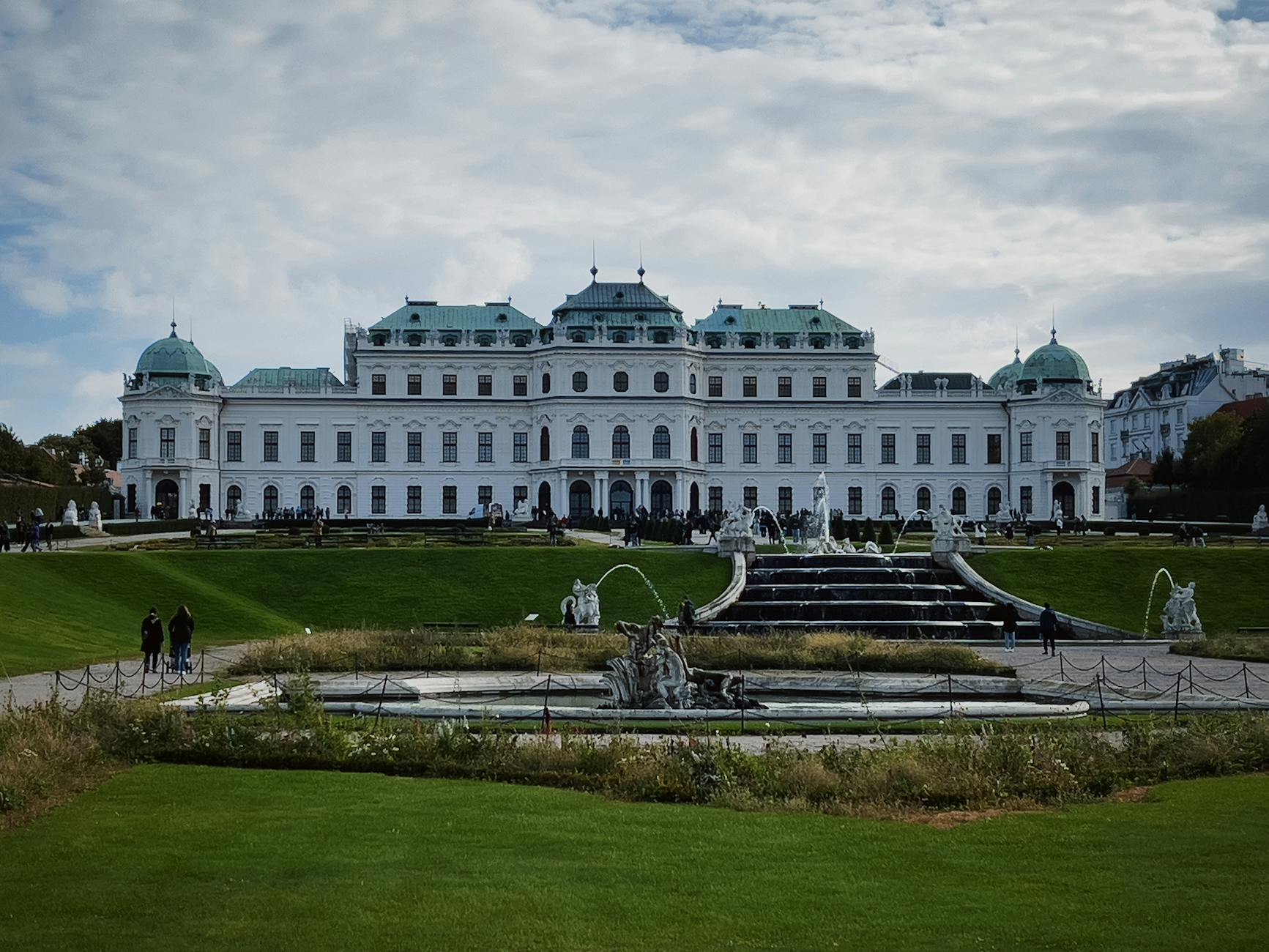
Photo by Mehmet Turgut Kirkgoz
- Belvedere Vienna at a Glance
- Belvedere Tickets — Every Option
- Klimt’s The Kiss: Why It Matters
- The Upper Belvedere Collection Beyond The Kiss
- Upper vs Lower Belvedere: The Difference
- The Belvedere Gardens
- How to Visit the Belvedere — The Canonical Route
- The Lower Belvedere & Orangerie
- Belvedere 21: The Contemporary Wing
- Prince Eugene of Savoy: The Builder
- How to Get to the Belvedere
- Belvedere with Kids
- Combining the Belvedere with Other Vienna Sights
- Belvedere by Season
- What to Wear and Bring
- Avoiding Common Belvedere Mistakes
- Belvedere Pricing Comparison (2026)
- How the Belvedere Compares to Other Vienna Art Venues
- FAQ
- Final Tip: Spend Time with the Painting
- Related Vienna Guides
This article contains advertising. Our booking links are routed through a partner that adds commission tracking automatically, so if you book through one we earn a commission from the provider, at no extra cost to you. It never affects what we recommend. Affiliate disclosure
The Belvedere is Vienna’s second-most-visited palace — and the home of Austria’s most famous painting. Gustav Klimt’s The Kiss hangs in the Upper Belvedere, drawing about 1.5 million visitors a year specifically to see the gold-and-pattern masterpiece. But the Belvedere is much more than a single painting: a Baroque palace complex from 1717, three-tiered formal gardens with the city’s best-known reflecting pond, a major Egon Schiele collection, holdings of Oskar Kokoschka and Austrian 19th-century painting, plus a modern wing (Belvedere 21) showing contemporary work.
This is the complete Belvedere Palace Vienna guide: every ticket option explained, the Upper vs Lower Belvedere distinction, the best route through the galleries, the gardens that connect them, and how to combine the Belvedere with broader Vienna sightseeing. Pair with our Vienna attractions.
Belvedere Vienna at a Glance
| Aspect | Detail |
|---|---|
| Location | 3rd district (Landstraße), 5 minutes by tram from Karlsplatz |
| Upper Belvedere hours | 9 am-6 pm daily; some Fridays until 9 pm |
| Lower Belvedere hours | 10 am-6 pm daily; exhibition-dependent |
| Gardens hours | 6:30 am to dusk; free entry |
| Allow | Upper Belvedere 2 hours; full complex 3-4 hours |
| Built | 1714-1723 by Prince Eugene of Savoy |
| Klimt collection | 24 paintings, including The Kiss (1908) |
| Schiele collection | Major collection |
Belvedere Tickets — Every Option
Upper Belvedere Ticket (€23 Adult)
The most-purchased ticket. Covers the Upper Belvedere only — where Klimt’s The Kiss, the rest of the Klimt collection, Schiele, Kokoschka, and the Austrian permanent collection sit. Allow 2 hours. Under-19s enter free with ID.
Lower Belvedere Ticket (€14 Adult)
Includes the Lower Belvedere palace + Orangery and the rotating special exhibitions. Less popular but often features world-class temporary shows.
Combined Belvedere Ticket (€32 Adult)
Upper + Lower Belvedere. Best value if you’ll do both.
Belvedere 21 (€12 Adult)
The contemporary art wing in a 1958 modernist pavilion south of the main palaces. Strong for post-war and 21st-century Austrian art.
Combined Plus Belvedere 21
All three sites. Best for serious art visitors with a full day to spend. The Belvedere ticket shop shows the current price for this ticket.
Vienna PASS
Includes Upper Belvedere admission. Verify which Belvedere ticket level your PASS covers.
Klimt’s The Kiss: Why It Matters
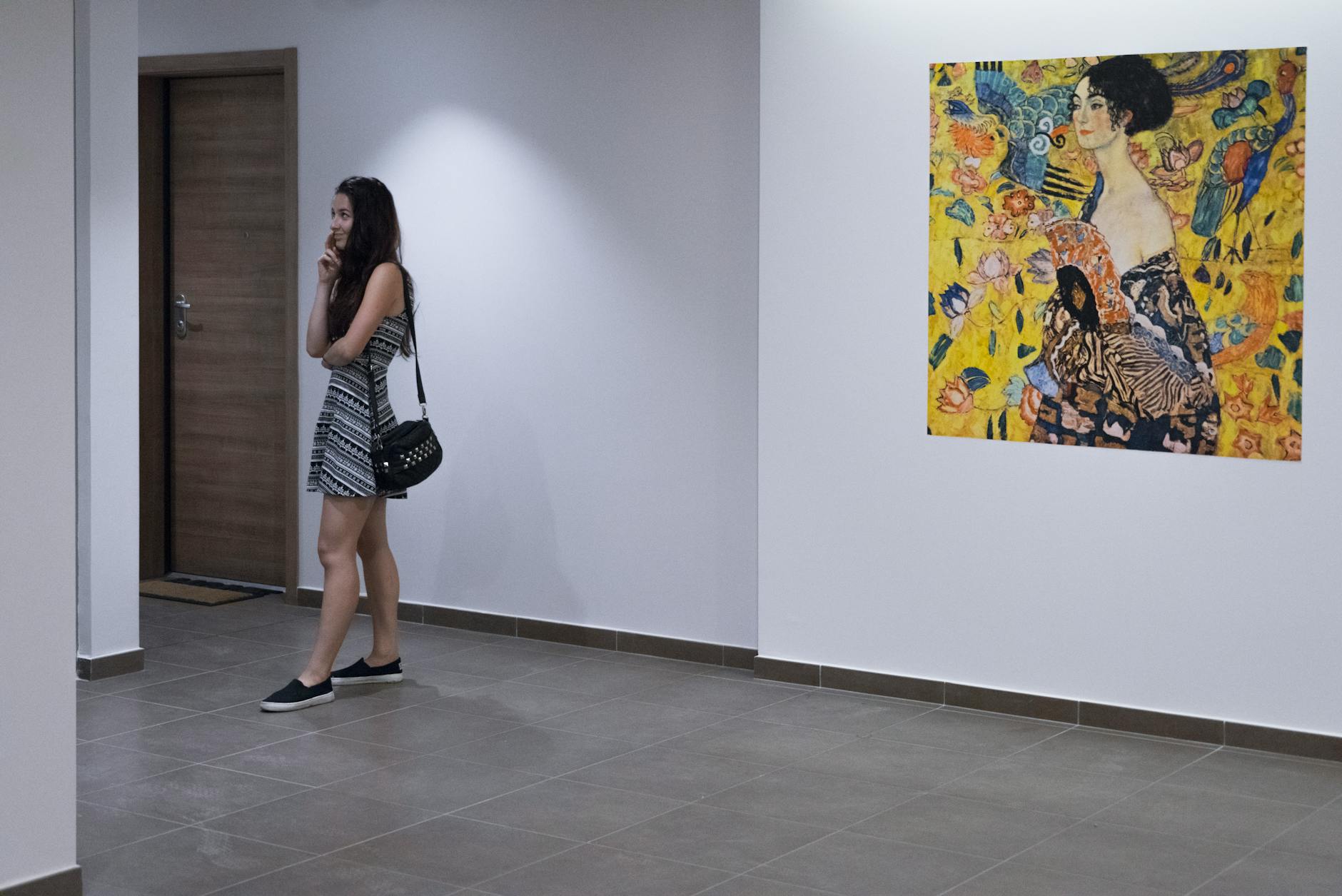
Gustav Klimt’s The Kiss (1907-1908) is the most-reproduced Austrian painting and the centerpiece of the Belvedere. The work is 180 × 180 cm, painted in oil and gold leaf on canvas, and depicts a couple embracing against a gold abstract background — the man wearing a black-and-white rectangular pattern robe, the woman in a flowing dress of circular floral patterns.
Several things make it special:
- The “Golden Period” — Klimt’s most celebrated phase, when he used actual gold leaf in compositions
- Symbolism — the patterns aren’t decorative; the male’s rectangles represent rationality, the female’s circles represent organic continuity
- Cultural icon — sold over 50 million reproductions worldwide; appears on everything from postcards to T-shirts to phone cases
- Austrian identity — became a national symbol post-WWII, when Austria sought cultural emblems separate from Habsburg imperial imagery
The painting hangs in Room 16 of the Upper Belvedere, behind protective glass. The room is consistently crowded — visit at opening (9 am) or 4-5 pm to see it without major lines.
The Upper Belvedere Collection Beyond The Kiss
The Upper Belvedere holds 23 other Klimt paintings beyond The Kiss, a major Egon Schiele collection, and major works by Oskar Kokoschka, Hans Makart, and the Austrian 19th-century Romantics. Highlights worth seeking out:
Other Major Klimt Works
- Judith and the Head of Holofernes (1901) — another gold-period masterpiece, often described as Klimt’s most psychologically intense painting
- The Beethoven Frieze details — though the original Frieze is at the Secession, related Klimt studies appear in the Belvedere
- Landscape paintings — Klimt’s later work; less famous but stunning
- Portraits of Vienna society women — including Sonja Knips and several others
The Schiele Collection
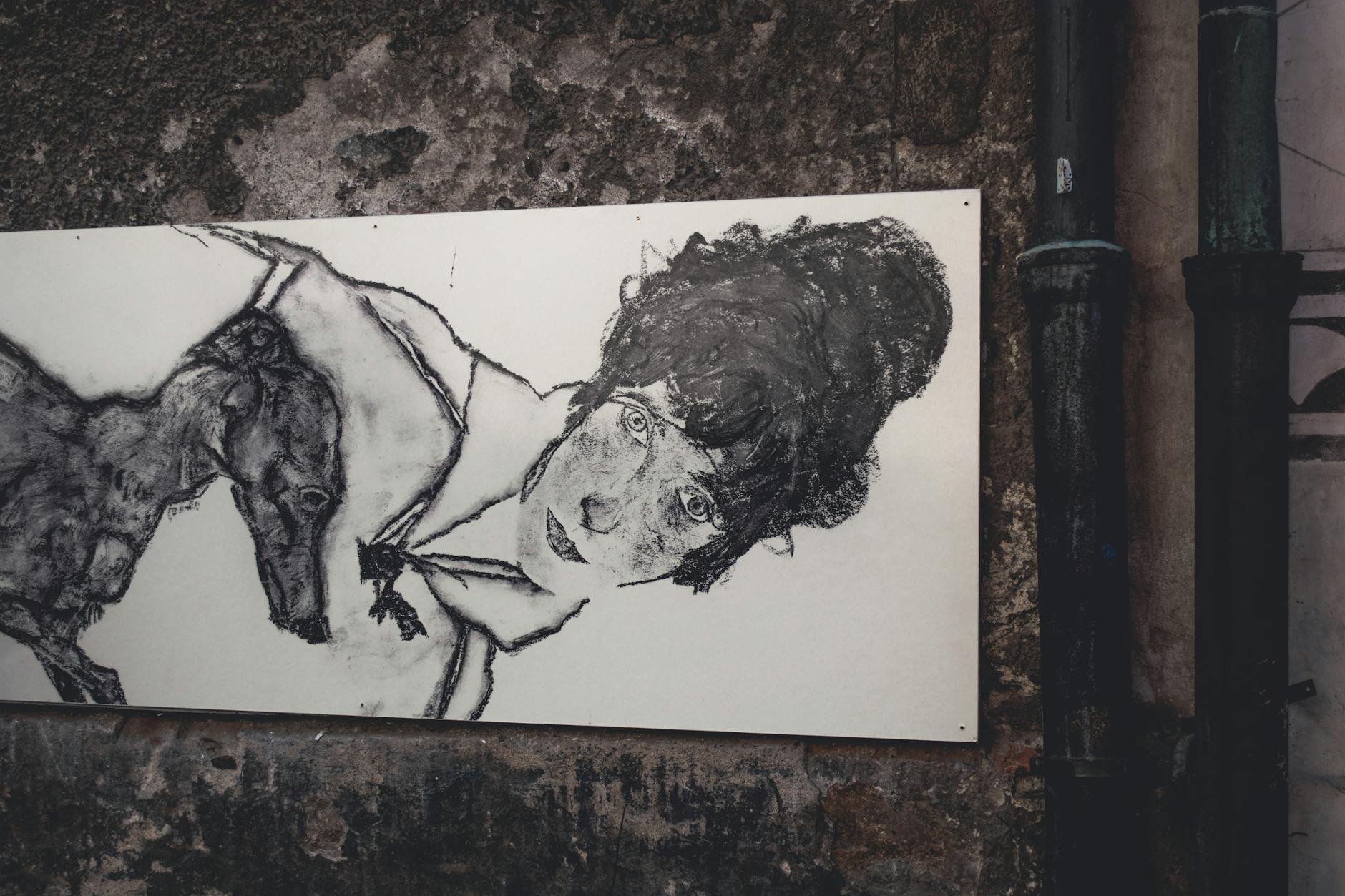
Egon Schiele (1890-1918) was Klimt’s most important protégé and one of the great expressionist painters. The Belvedere shows Schiele alongside Klimt, but the Leopold Museum at the MuseumsQuartier holds the world’s most comprehensive Schiele collection, with more than 220 works, so go there if Schiele is the main draw. Allow 60-90 minutes specifically for the Schiele rooms.
Oskar Kokoschka
The third major Austrian early-modernist. The Belvedere holds major Kokoschka portraits and landscapes from his pre-WWI and inter-war periods.
Hans Makart
The dominant Vienna painter of the 1860s-1880s — historical scenes, society portraits, allegorical works. The Belvedere’s Makart Room is a complete period piece showing what Vienna’s “imperial-romantic” art looked like before the modernist break.
Upper vs Lower Belvedere: The Difference
| Aspect | Upper Belvedere | Lower Belvedere |
|---|---|---|
| Built | 1721-1723 | 1714-1716 |
| Purpose | Prince Eugene’s ceremonial residence and art gallery | Prince Eugene’s original summer palace and living quarters |
| Today houses | Permanent collection including Klimt, Schiele, Kokoschka | Rotating special exhibitions in restored ceremonial rooms |
| Allow | 2 hours | 1-1.5 hours |
| Best for | First-time visitors, art history fans | Repeat visitors, exhibition-specific interest |
Most travelers should prioritize the Upper Belvedere if time is limited. The Lower Belvedere’s rotating exhibitions are excellent but variable — check the current schedule before adding to your itinerary.
The Belvedere Gardens
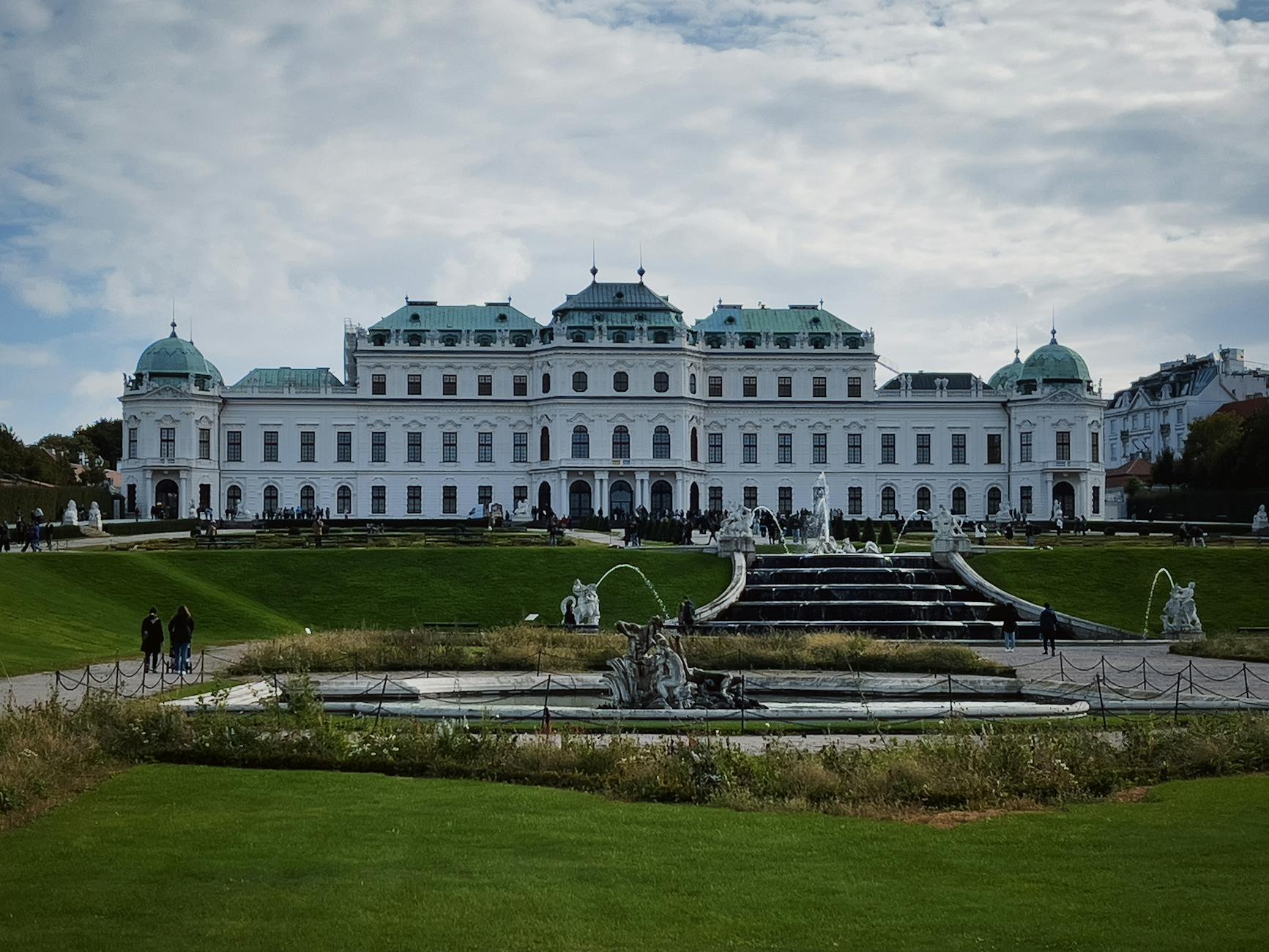
The 18th-century formal Baroque gardens connecting the Upper and Lower Belvedere are completely free to walk. The design is three-tiered, dropping from the Upper Belvedere’s hilltop position down to the Lower Belvedere’s flatter ground.
Garden Highlights
- The Reflecting Pond in front of the Upper Belvedere — Vienna’s most-photographed palace shot when the water is still
- The cascading fountains and stone steps linking the tiers
- The Sphinxes and ornamental sculptures from the 1720s
- The Orangerie — the original 18th-century plant house, now used for special exhibitions
- Belvedere 21 at the southern garden end — the modernist contemporary wing
- The Alpine Garden — small but lovely; spring blooms peak May-June
Best Time for Garden Photography
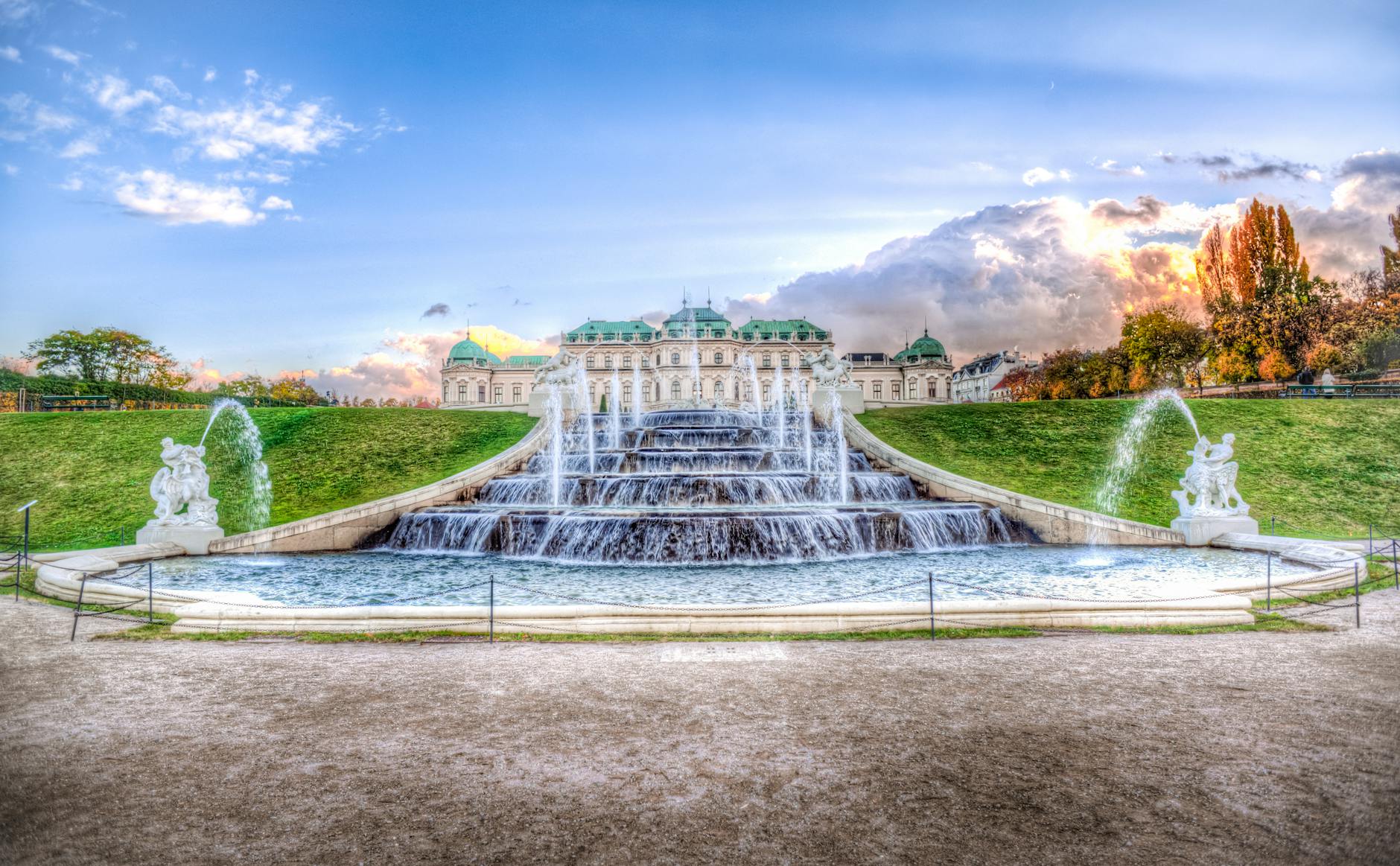
The Upper Belvedere reflecting pond is best at sunrise on a windless morning — the water is glass-still and the Baroque facade is golden-lit. After 10 am, wind ripples destroy the reflection and crowds fill the foreground. Photographers should arrive at 7-8 am for the iconic shot.
How to Visit the Belvedere — The Canonical Route
Hour 1 (9 am)
Enter Upper Belvedere at opening. Head directly to Room 16 for Klimt’s The Kiss before crowds arrive. 10-15 minutes with the painting alone.
Hour 2 (10 am)
Tour the rest of the Klimt collection (Judith, Sonja Knips portrait, landscapes). Continue to Schiele rooms.
Hour 3 (11 am)
Kokoschka, Makart Room, and the 19th-century Austrian collection. Skip if time-pressed.
Hour 4-5
Walk down through the gardens. Photograph the reflecting pond. Continue to Lower Belvedere for the current special exhibition (allow 1 hour) or skip and walk to a nearby café.
Lunch / Coffee
Salm Bräu (block away, traditional Austrian + house-brewed beer) or Café Schwarzenberg near the gardens. Or pack a picnic for the gardens.
The Lower Belvedere & Orangerie
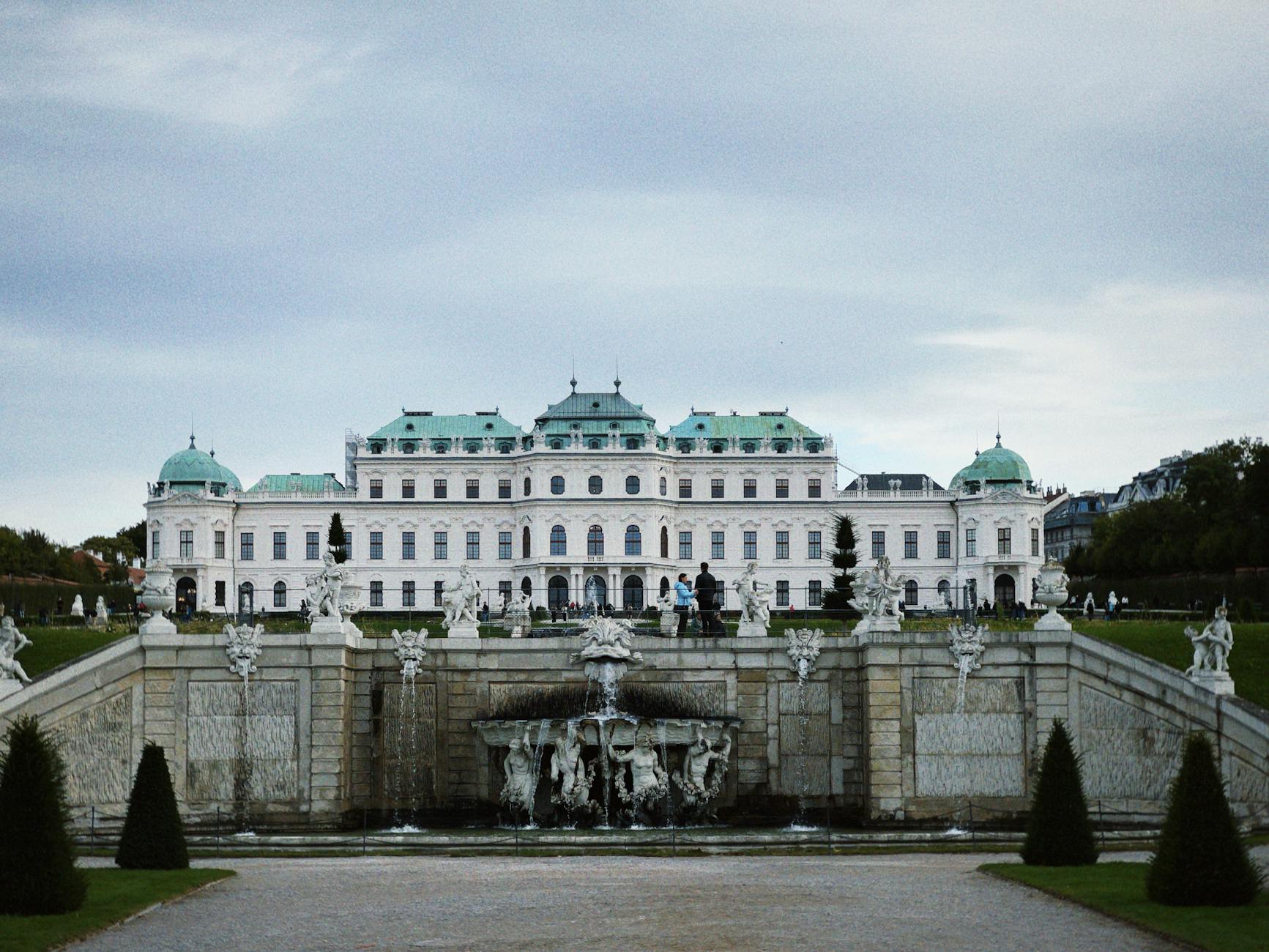
The Lower Belvedere is the original 1716 palace — Prince Eugene’s actual summer residence. The Marble Hall, Hall of Grotesques, and Golden Room are extraordinary Baroque ceremonial spaces in their own right. Today they house rotating exhibitions ranging from major retrospectives to thematic shows. Recent exhibitions have included Helene Funke (early 20th-century Austrian artist), various Klimt-context shows, and international loans.
The adjacent Orangerie hosts smaller special exhibitions. Both spaces are worth visiting if you’re already at the Belvedere; less essential as a standalone destination.
Belvedere 21: The Contemporary Wing
Belvedere 21, in a 1958 modernist pavilion at the south end of the Belvedere gardens, focuses on contemporary and post-1945 Austrian art. The collection includes Maria Lassnig, Arnulf Rainer, Valie Export, and major international contemporary holdings. €12 standalone; €32 with the Combined Ticket.
The pavilion itself is architecturally significant — built for the 1958 Brussels World’s Fair and relocated to Vienna afterward. The architect was Karl Schwanzer; the building is a sleek glass-and-steel pavilion completely different in feel from the Baroque palaces above it.
Prince Eugene of Savoy: The Builder
The Belvedere was built for Prince Eugene of Savoy (1663-1736) — military genius, art collector, and the most-feared general of his era. Eugene was a French-born Habsburg commander who led the imperial armies against the Ottoman Empire (winning the 1697 Battle of Zenta), against Louis XIV’s France (driving the French out of Italy and the Netherlands), and against virtually every major military power of his time. The Belvedere was his statement palace, built to display his military trophies, his art collection, and his exotic-plant menagerie.
Eugene died at the Belvedere in 1736. The palace passed to the Habsburgs, who used it as a state residence into the 1890s. It became a public museum in 1899 — the early years of Habsburg cultural opening that also produced the Hofmuseum (Kunsthistorisches and Naturhistorisches museums).
How to Get to the Belvedere
Tram
Tram D from Karlsplatz or Schwedenplatz to “Schloss Belvedere” station — the most direct route. Tram 71 also stops at the Belvedere.
U-Bahn + Walk
U1 to Taubstummengasse, then 5-minute walk. Less convenient than the tram.
From Naschmarkt
15-minute walk south through the Wieden district.
From Stephansplatz
Walking: 25 minutes via Kärntner Straße and Karlsplatz. Tram D: 12 minutes including transfers.
Belvedere with Kids
The Belvedere is moderately kid-friendly. The Upper Belvedere requires quiet behavior in galleries; younger kids may not engage with the Klimt-Schiele-Kokoschka focus. Tips for families:
- Free entry under 19 with ID — significant savings
- Strollers welcome in the gardens; check at coat check before the galleries
- Children’s audio guide available in English and German
- Garden time works well for kids — let them run between the formal sections
- Time it short — 60-90 minutes for the Upper Belvedere works better than 3 hours for families
- Pair with Salm Bräu next door — the house-brewed beer hall has a kid-friendly atmosphere
Combining the Belvedere with Other Vienna Sights
Half-Day Plan
Upper Belvedere → gardens walk → lunch at Salm Bräu or Café Schwarzenberg → afternoon at Naschmarkt (15-minute walk).
Full Art Day
Upper Belvedere (morning) → Lower Belvedere current exhibition → afternoon at the Albertina (Inner City).
Architecture Walk
Upper Belvedere → walk west to Karlsplatz (Karlskirche + Otto Wagner pavilions) → Inner City.
Family Day
Upper Belvedere shortened (1 hour for The Kiss) → gardens picnic → Vienna Tiergarten Schönbrunn (zoo, 30 minutes by U-Bahn).
Belvedere by Season
| Season | What’s Special |
|---|---|
| Spring (April-June) | Gardens at bloom peak; Alpine Garden at best; comfortable temperatures |
| Summer (July-August) | Crowded but full hours; outdoor seating at Salm Bräu |
| Autumn (September-October) | Strong golden foliage; quieter than summer; ideal photography |
| Winter (November-March) | Empty galleries; snow-dusted facade; gardens accessible but bare |
What to Wear and Bring
- Comfortable shoes — gallery walking + garden walking
- Layered clothing — galleries are climate-controlled; gardens outside-temperature
- Bag rules — bags over 25×30 cm must be checked at the cloakroom (free)
- Camera — photography is allowed in most galleries without flash; verify with the front desk
- Notebook — many serious art visitors take notes; benches available throughout
- Water bottle — refillable; fountains throughout the gardens
Avoiding Common Belvedere Mistakes
- Visiting at 11 am-2 pm when tour groups peak — visit at 9 am opening or 4-5 pm
- Heading directly to Klimt’s room and leaving — the rest of the collection (Schiele, Kokoschka, Makart) is exceptional
- Skipping the gardens — they’re free, beautiful, and the reflecting pond shot is iconic
- Buying tickets at the door — sells out in peak season; book online
- Missing the Lower Belvedere — if doing the Combined Ticket, allow time for both buildings
- Visiting Wednesday-Sunday only — the Belvedere is open daily; weekday mornings are quietest
Belvedere Pricing Comparison (2026)
| Ticket | Adult | Senior (65+) | Student | Under 19 |
|---|---|---|---|---|
| Upper Belvedere | €23 | €13 | €12 | Free |
| Lower Belvedere | €14 | €11 | €10 | Free |
| Combined Upper + Lower | €32 | €22 | €19 | Free |
| Combined + Belvedere 21 | €32 | €26 | €22 | Free |
| Belvedere 21 only | €12 | €6 | €5 | Free |
How the Belvedere Compares to Other Vienna Art Venues
If you only have time for one Vienna art museum: the Kunsthistorisches Museum for Old Masters (Bruegel, Vermeer, Caravaggio); the Belvedere for Austrian modernism (Klimt, Schiele); the Albertina for graphic arts and Modernist breadth. The three are complementary; serious art travelers visit all three on different days.
FAQ
What’s the most famous painting at the Belvedere?
Gustav Klimt’s The Kiss (1907-1908) — Austria’s most famous painting, displayed in Room 16 of the Upper Belvedere.
How much does it cost to visit the Belvedere?
Upper Belvedere alone: €23 adult. Combined Upper + Lower: €32. All three (plus Belvedere 21): see the Belvedere ticket shop for the current price. Under-19s enter free with ID.
Should I visit Upper or Lower Belvedere?
Upper Belvedere is essential — it has Klimt’s The Kiss, the Schiele collection, and the permanent Austrian art highlights. The Lower Belvedere hosts rotating exhibitions; visit if a specific show interests you or if you’re a serious art visitor.
How long should I spend at the Belvedere?
2 hours for Upper Belvedere alone; 3-4 hours for the full complex including gardens and Lower Belvedere.
Can I take photos at the Belvedere?
Photography (no flash) is generally allowed in most galleries. Special exhibitions may restrict photography; verify at entry. Garden photography is unrestricted.
What’s the best time to visit the Belvedere?
9 am opening for the emptiest Klimt rooms. 4-5 pm is also quiet. Avoid 11 am-2 pm peak crowd window.
Is the Belvedere worth visiting if I’ve seen Schönbrunn?
Yes — the Belvedere is an art museum, not a palace tour. Schönbrunn is about Habsburg interiors; the Belvedere is about Austrian art (Klimt, Schiele, etc.). The two are complementary, not redundant.
Are the Belvedere gardens free?
Yes — the formal Baroque gardens between Upper and Lower Belvedere are completely free to walk. Only the palace interiors and special exhibitions require tickets.
Where can I eat near the Belvedere?
Salm Bräu next door (Austrian + house-brewed beer); Café Schwarzenberg (Belle Époque coffeehouse); Café Goldegg (4th district, walking distance). All within 5-10 minutes’ walk.
Final Tip: Spend Time with the Painting
The single best Belvedere advice: don’t rush past Klimt’s The Kiss. Most visitors take a phone photo and move on in 30 seconds. The painting rewards 5-10 minutes of focused looking — at the abstract gold backgrounds, at the patterns differentiating the male and female figures, at the way Klimt uses real gold leaf in the foreground while flattening the background. It’s one of the great paintings of the 20th century; treat it as such, not as a checklist photo.
For more, see our Vienna attractions, our Schönbrunn guide in the supporting cluster, our romantic Vienna for couples, and our first time visiting Vienna tips.