Vienna Attractions & Sightseeing: Palaces, Museums & Landmarks (2026)
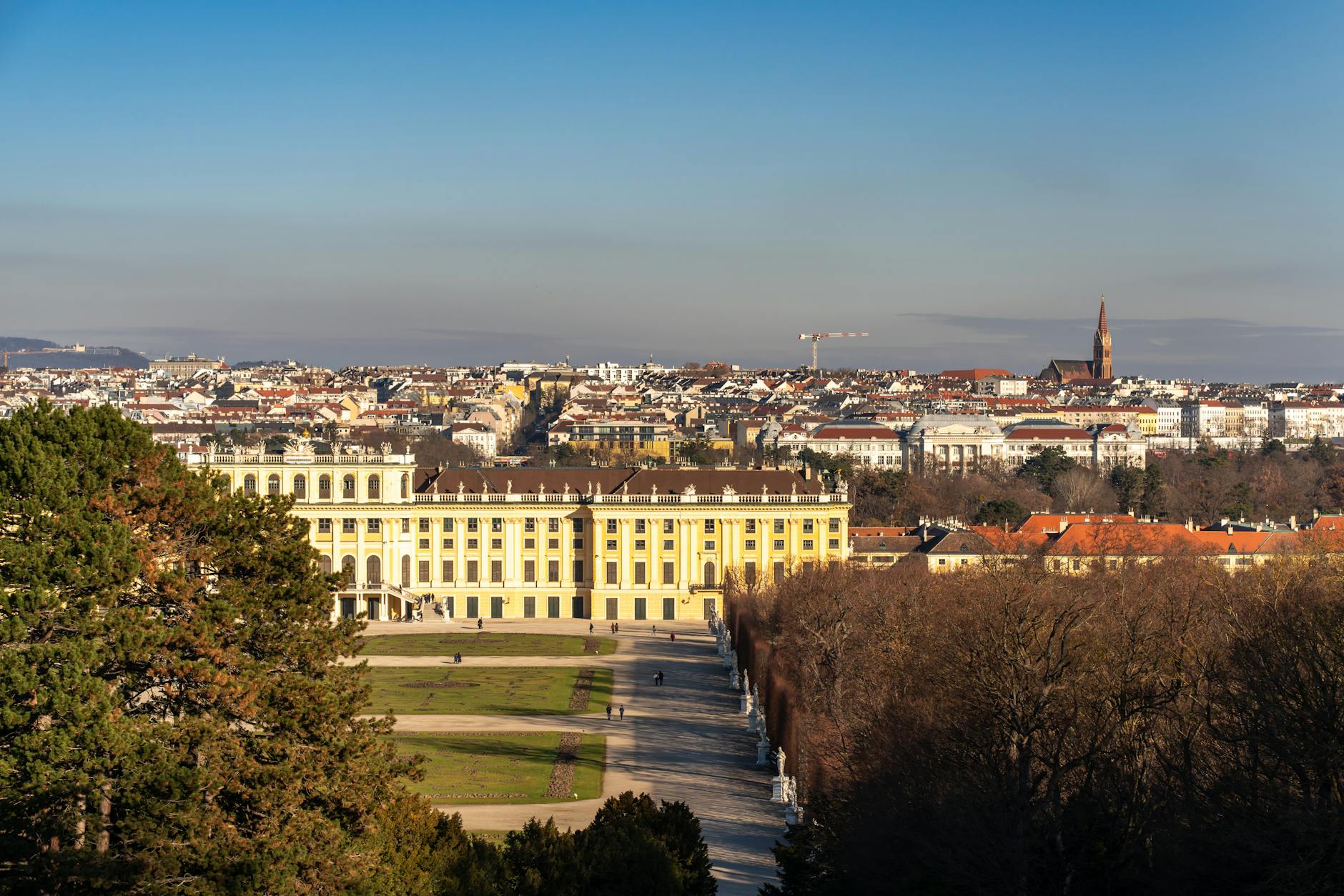
Schönbrunn Palace — Vienna's grandest imperial residence and a UNESCO World Heritage Site
This article contains advertising. Our booking links are routed through a partner that adds commission tracking automatically, so if you book through one we earn a commission from the provider, at no extra cost to you. It never affects what we recommend. Affiliate disclosure
A Vienna attractions guide that goes beyond the obvious: the imperial palaces that shaped European history, the museums housing priceless masterpieces, and the landmarks that make this city one of the most beautiful on Earth. Vienna isn’t a place you simply visit — it’s a city you experience, layer by layer, from Habsburg grandeur to cutting-edge contemporary art.
This comprehensive sightseeing guide covers every must-see attraction in Vienna for 2026, with current admission prices, opening hours, insider tips for avoiding crowds, and honest advice on how to prioritize your time. Whether you have one day or one week, you’ll know exactly where to go and what to skip.
Vienna’s Imperial Palaces
Three imperial palaces define Vienna’s skyline and its identity. Together, they tell the story of the Habsburg dynasty — the family that ruled much of Europe for over six centuries. Each palace offers a distinct experience, and understanding the differences will help you decide how to spend your time.
Schönbrunn Palace
Schönbrunn is Vienna’s most visited attraction, and for good reason. This 1,441-room Rococo summer palace was the primary residence of Empress Maria Theresa in the 18th century and later became the favorite summer retreat of Emperor Franz Joseph and Empress Elisabeth (Sisi). The palace and its gardens are a UNESCO World Heritage Site, and the sheer scale of the estate — 160 hectares of manicured gardens, fountains, a maze, and the world’s oldest zoo — means you could easily spend half a day here.
The standard Imperial Tour covers 22 rooms and takes about 35 minutes, while the Grand Tour opens 40 rooms and runs approximately 50 minutes. Highlights include the Great Gallery (a 43-meter-long ballroom dripping with Rococo gilding), the Mirror Room (where the six-year-old Mozart performed for Maria Theresa), and the Millions Room (paneled with rare rosewood and 260 Indo-Persian miniature paintings).
Practical information: Schönbrunn opens daily at 9:00am (8:30am in summer). Adult tickets are €30 for the Imperial Tour (the State Apartments) and €42 for the Grand Tour. The Sisi Pass (€60 for adults, valid for a year) combines Schönbrunn, the Vienna Furniture Museum, and the Hofburg‘s Imperial Apartments and Sisi Museum, so it is the ticket to look at if you plan to visit all three. Book online at least two weeks ahead during peak season (May–September) to secure a specific time slot and avoid the 45-minute queues that form by 10am.
Don’t miss the Gloriette, the hilltop arcade at the far end of the gardens offering panoramic views over the palace and the Vienna skyline. The gardens themselves are free to enter and open from dawn until dusk — perfect for a morning jog or evening stroll.
The Schönbrunn Zoo (Tiergarten Schönbrunn), founded in 1752, is the world’s oldest continuously operating zoo and consistently rated among Europe’s best. Home to giant pandas, polar bears, Siberian tigers, and over 700 species, it’s a major attraction in its own right — budget at least 2–3 hours if visiting with children. A combined palace + zoo ticket offers savings. The Palm House (Palmenhaus), a stunning iron-and-glass conservatory built in 1882, houses a tropical rainforest environment and is worth a quick visit, especially on cold or rainy days.
For a quieter experience, explore the Orangery Garden and the Crown Prince Garden on the palace’s east side, where you’ll find manicured hedgerows, flowering beds, and far fewer visitors than the main parterre. The palace’s maze and labyrinth (€6 separate admission) is particularly popular with families — the historic hedge maze dates from 1720 and has been carefully restored.
Hofburg Palace
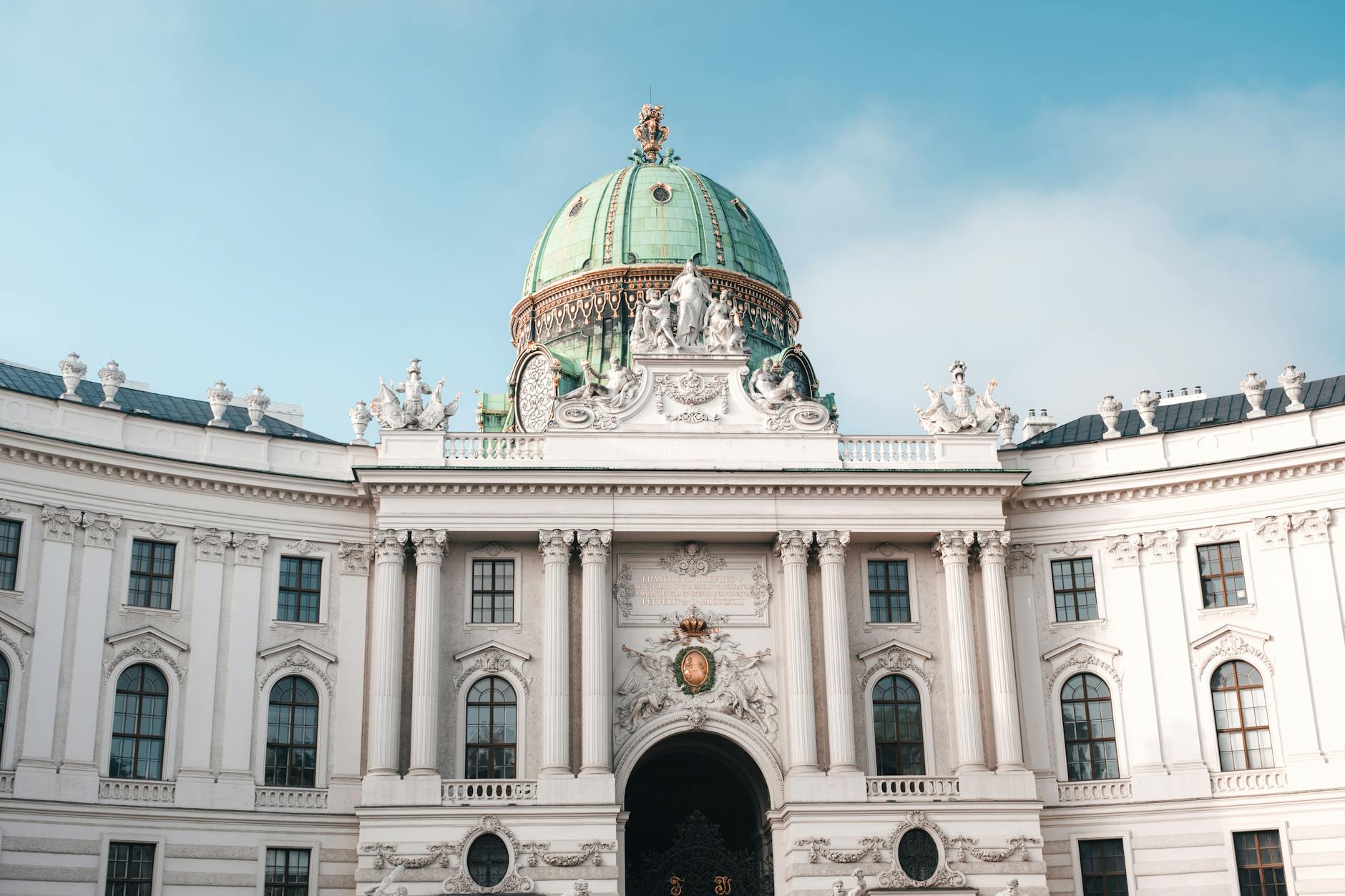
While Schönbrunn was the summer palace, the Hofburg served as the winter residence and seat of power for the Habsburgs from the 13th century until the empire’s collapse in 1918. Today, it’s the official residence of Austria’s president, but most of the enormous complex — 18 wings, 19 courtyards, and 2,600 rooms — is open to the public as museums and cultural institutions.
The Hofburg holds several distinct attractions under one roof. The Imperial Apartments reveal the private quarters of Franz Joseph and Sisi, preserved largely as they left them. The Sisi Museum, closed until its redesigned rooms open on 19 November 2026, provides a nuanced portrait of the empress that goes beyond the glamorous myth, displaying personal objects including her exercise equipment and the dress she wore on the night of her assassination.
Beyond the imperial apartments, the Hofburg also houses the Imperial Treasury (Schatzkammer), home to the Imperial Crown of the Holy Roman Empire, the Austrian Imperial Crown, and a nail reportedly from the Crucifixion. The Spanish Riding School performs classical dressage with Lipizzaner stallions in the magnificent Winter Riding School — one of Vienna’s most unique experiences. Book performance tickets months in advance; alternatively, morning training sessions are available with shorter wait times and lower prices.
Practical information: The Imperial Apartments cost €15 for adults until 18 November 2026, while the Sisi Museum area stays closed until the redesigned museum opens on 19 November. The Sisi Pass (€60 for adults) adds Schönbrunn and the Vienna Furniture Museum and is the one to consider for a longer stay. The Imperial Treasury requires a separate ticket (€16 online, €18 on site). The Spanish Riding School performances range from €25–€185 depending on seating. The Hofburg complex is centrally located, accessible from multiple U-Bahn stations (Herrengasse U3, Museumsquartier U2).
Belvedere Palace
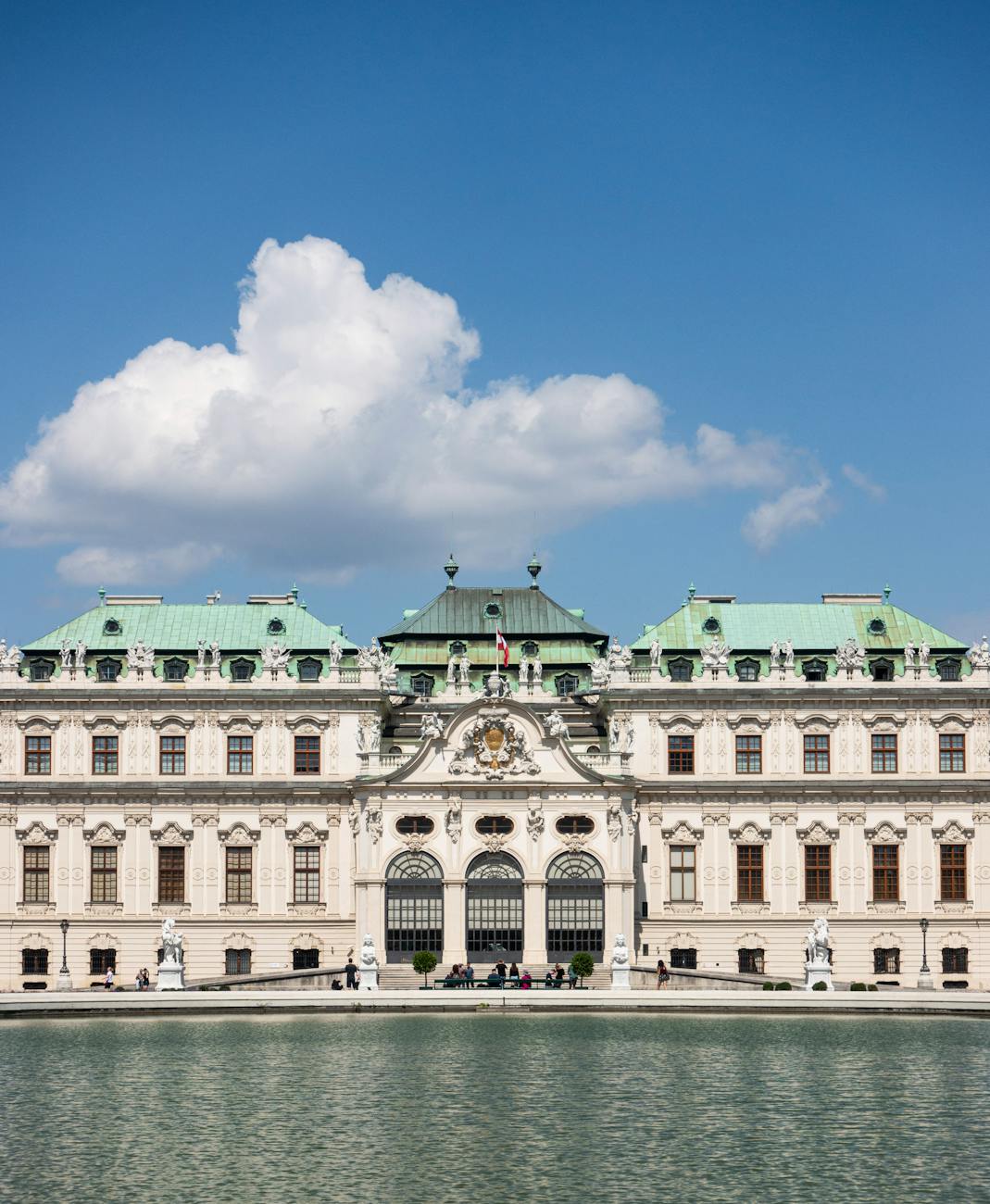
The Belvedere is actually two palaces — the Upper and Lower Belvedere — connected by a series of magnificent formal gardens. Built as the summer residence of Prince Eugene of Savoy in the early 18th century, the complex is now Austria’s most important art museum. The draw: Gustav Klimt’s “The Kiss”, displayed in a dedicated room of the Upper Belvedere alongside other masterworks of Viennese Jugendstil, Egon Schiele, and Oskar Kokoschka.
Beyond Klimt, the Upper Belvedere houses an outstanding collection spanning medieval art through French Impressionism, including works by Renoir, Monet, and Van Gogh. The Lower Belvedere hosts rotating special exhibitions in the former orangery and marble gallery.
The gardens between the two palaces are free to enter and are arguably the most beautiful in Vienna — French formal design with cascading fountains, sculpted hedges, and a reflecting pool that perfectly mirrors the Upper Belvedere’s façade. Visit at sunset for the best photographs.
Practical information: Upper Belvedere admission is €23 for adults (free for visitors under 19). A combined ticket for the Upper and Lower Belvedere is €32. Open daily 10am–6pm (Fridays until 9pm). The Upper Belvedere is a 15-minute walk from Karlsplatz or a short ride on tram D to Schloss Belvedere stop.
Which Palace Should You Visit?
If you only have time for one: Schönbrunn for the complete imperial experience with gardens and zoo, or Belvedere if art is your priority (Klimt alone is worth the visit). For the most efficient half-day, combine the Hofburg (city center, easy to reach) with either the Belvedere (20 minutes by tram) or Schönbrunn (15 minutes by U-Bahn). All three palaces can be visited in a single ambitious day if you start early.
World-Class Museums
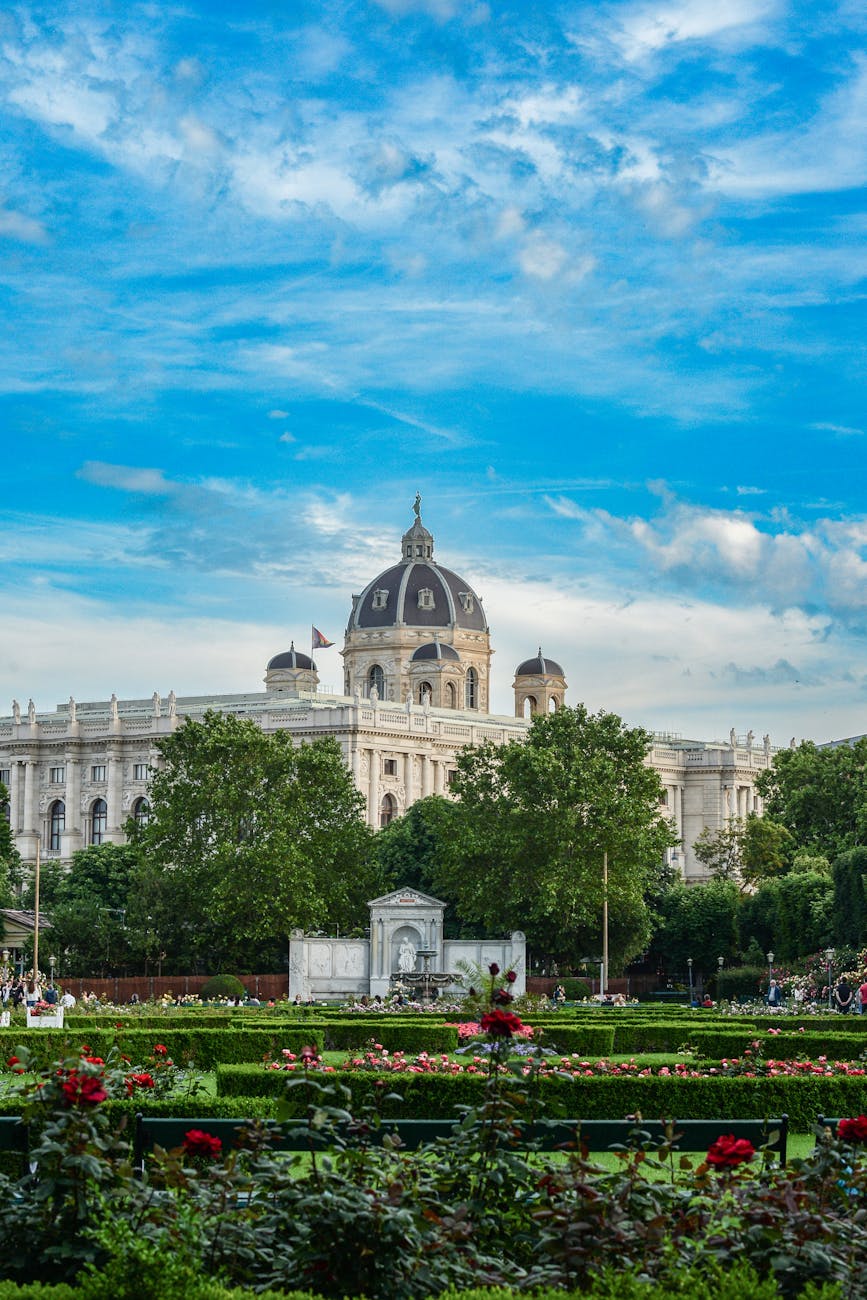
Vienna’s museum landscape rivals Paris and London, with collections that span everything from Egyptian antiquities to contemporary digital art. The city’s museums reflect centuries of imperial patronage and a culture that has always placed art at the center of civic life.
Kunsthistorisches Museum (Museum of Art History)
If you visit only one museum in Vienna, make it the Kunsthistorisches Museum (KHM). Housed in a palatial building on the Ringstraße that’s itself a work of art — Klimt painted sections of the staircase — the KHM holds one of the world’s premier collections of European old master paintings.
The picture gallery occupies the entire first floor and includes the world’s largest collection of Pieter Bruegel the Elder paintings (twelve, including “The Tower of Babel” and “Hunters in the Snow”), works by Vermeer, Raphael, Caravaggio, Titian, and Velázquez. The ground floor houses an exceptional Egyptian and Near Eastern collection, Greek and Roman antiquities, and the Kunstkammer (Chamber of Art and Wonders) — a cabinet of curiosities featuring Benvenuto Cellini’s famous salt cellar.
Practical information: Adult admission €22 online (€24 on site), free for visitors under 19. Open daily 10am–6pm (Thursdays until 9pm). Allow 2–3 hours minimum. The café inside the museum, located under the magnificent dome, is one of Vienna’s most atmospheric places for coffee and cake.
MuseumsQuartier (MQ)
One of the world’s largest cultural complexes, the MuseumsQuartier occupies the former Imperial Stables and houses multiple museums and cultural institutions in a space roughly the size of a small city neighborhood. The courtyard between the buildings has become Vienna’s living room — locals and visitors alike sprawl on the colorful “MQ furniture” (geometric outdoor loungers) on sunny afternoons.
The Leopold Museum holds the world’s largest Egon Schiele collection alongside works by Klimt, Kokoschka, and other Viennese modernists. MUMOK (Museum of Modern Art) covers 20th and 21st-century art from Andy Warhol to contemporary installations. Kunsthalle Wien focuses on rotating contemporary exhibitions — no permanent collection, but often shows cutting-edge international work.
Practical information: Each museum charges separate admission (Leopold: €19, MUMOK: €18). The MQ courtyard and outdoor spaces are free and open 24/7. Located directly behind the Kunsthistorisches Museum, the MQ is accessible via U2 Museumsquartier.
Albertina
The Albertina sits atop one of the last remaining sections of Vienna’s original city wall, housing one of the world’s most important graphic art collections — over one million prints and 65,000 drawings, including works by Dürer, Rembrandt, Rubens, Monet, and Picasso. The permanent Batliner Collection features Impressionism through contemporary art in beautifully curated galleries. Don’t miss the Habsburg State Rooms, twenty lavishly restored rooms that rival any palace interior in Vienna.
Practical information: Adult admission €20.90. Open daily 10am–6pm (Wednesdays and Fridays until 9pm). Located at the southern tip of the Hofburg complex, a 2-minute walk from the Vienna State Opera.
Naturhistorisches Museum (Natural History Museum)
The architectural twin of the Kunsthistorisches Museum across Maria-Theresien-Platz, the Naturhistorisches Museum houses 30 million objects spanning 250 years of collecting. Highlights include the Venus of Willendorf (a 29,500-year-old limestone figurine and one of the world’s most famous prehistoric artworks), a spectacular gem collection, dinosaur skeletons, and the world’s largest and oldest collection of meteorites.
Practical information: Adult admission €16, free under 19. Open daily except Tuesdays, 9am–6:30pm (Wednesdays until 9pm). The rooftop terrace offers a spectacular view across Maria-Theresien-Platz.
Specialized Museums Worth Your Time
Vienna’s smaller museums offer depth that larger institutions can’t. The Mozarthaus Vienna (€16) is the only surviving apartment where Mozart lived, just behind St. Stephen’s Cathedral — he composed “The Marriage of Figaro” here. The Sigmund Freud Museum (€14) occupies Freud’s actual apartment and consulting rooms at Berggasse 19, where he developed psychoanalysis. The Weltmuseum Wien (€16) in the Hofburg’s Neue Burg wing houses extraordinary ethnographic collections, including Montezuma’s famous feathered headdress.
For military history enthusiasts, the Heeresgeschichtliches Museum (Museum of Military History) occupies a striking Moorish-Byzantine arsenal building and covers Austrian military history from the Thirty Years’ War to 1945. Its most significant exhibit is the car in which Archduke Franz Ferdinand was assassinated in 1914, along with his blood-stained uniform — the event that triggered World War I. Admission is just €8, making it one of Vienna’s best-value museums.
The Haus der Musik (House of Music) on Seilerstätte offers an interactive journey through the world of sound, from the physics of acoustics to the history of the Vienna Philharmonic. Visitors can conduct a virtual orchestra, create their own compositions, and explore the lives of Vienna’s great composers through immersive exhibits. It’s especially appealing to families and music lovers who want a more hands-on experience than traditional museums offer. Admission is €16 for adults.
Art lovers should also note the Secession Building — the distinctive white cube topped with a golden filigree dome (nicknamed “the golden cabbage” by Viennese). Built in 1898 as the exhibition hall of the Vienna Secession movement, it permanently houses Klimt’s Beethoven Frieze, a monumental 34-meter-long painting that’s one of the most important works of Viennese Jugendstil. Admission is €11, and the building itself is a landmark of Art Nouveau architecture.
Churches and Religious Landmarks
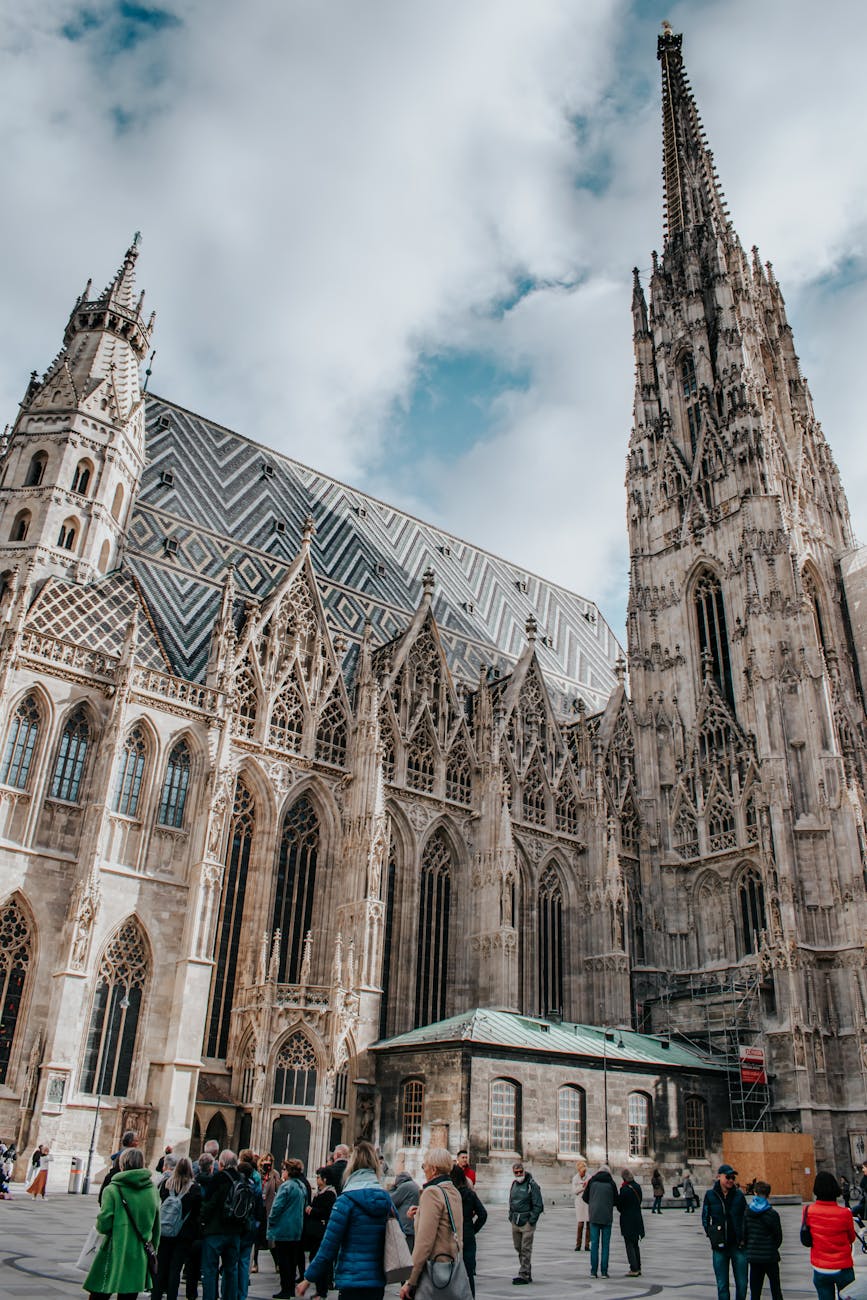
St. Stephen’s Cathedral (Stephansdom)
The Stephansdom is the spiritual heart of Vienna and its most recognizable silhouette. The Gothic cathedral dates from the 14th century, and its south tower (Steffl) rises 136 meters above the city — you can climb 343 steps for a panoramic view that’s arguably the best in Vienna. The spectacular chevron-patterned roof, covered in 230,000 glazed tiles depicting the Habsburg double eagle, is visible from viewpoints across the city.
Inside, highlights include the carved Gothic pulpit by Anton Pilgram (who hid a self-portrait peering through a window beneath the stairs), the baroque high altar, and the catacombs beneath the cathedral containing the remains of 10,000 Viennese citizens and the bronze urns holding Habsburg entrails (their bodies are in the Imperial Crypt at the Kapuzinerkirche).
Practical information: Sightseeing inside the cathedral costs €8 for adults. The south tower climb costs €6, the catacombs tour €8 (guided only, every 30 minutes), and the north tower elevator €7. Open Monday–Saturday 6am–10pm, Sundays from 7am. Arrive before 9am or after 5pm to avoid the heaviest crowds.
Karlskirche (St. Charles’s Church)
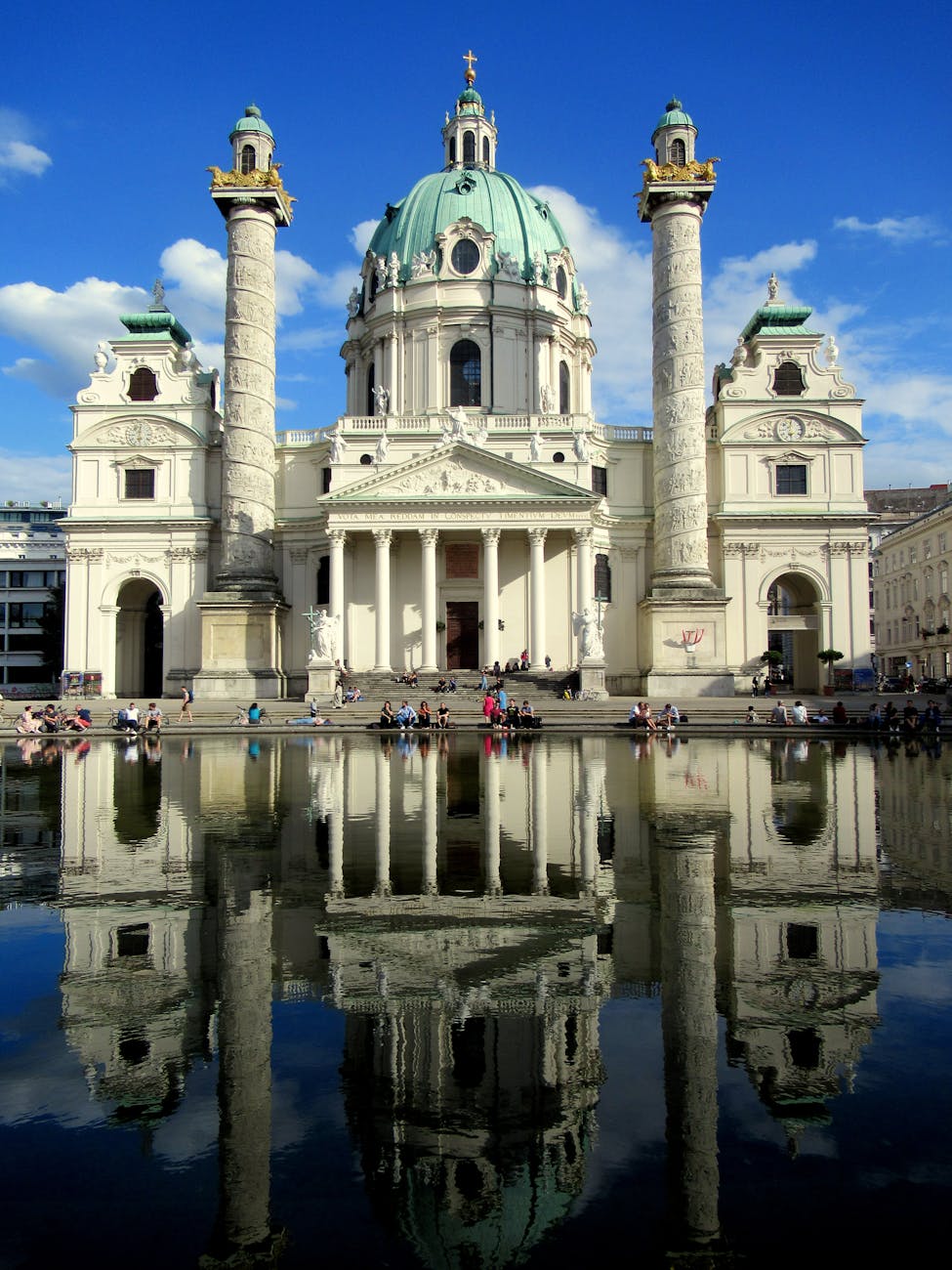
Vienna’s finest baroque church sits at the edge of the Innere Stadt, its striking dome flanked by two triumphal columns modeled on Trajan’s Column in Rome. Built in the 1730s as a votive offering after a plague epidemic, the Karlskirche combines Roman, Greek, and Oriental architectural elements in a uniquely Viennese synthesis. The interior features stunning ceiling frescoes by Johann Michael Rottmayr.
A panoramic elevator inside the church takes you up to the dome, providing an extraordinary close-up view of the frescoes and, through the windows, a panoramic view of Vienna. The reflecting pool in front of the church — part of a modern art installation — creates picture-perfect reflections, especially at dusk.
Practical information: Admission €9.50 (includes panoramic elevator). Open Monday–Saturday 9am–6pm, Sundays 11am–7pm. Located at Karlsplatz, directly accessible from U1/U2/U4. Classical concerts are held regularly inside the church — check the schedule for Mozart and Vivaldi performances.
Other Notable Churches
The Kapuzinerkirche (Capuchin Church) is architecturally modest but houses the Imperial Crypt (Kaisergruft) where 149 Habsburgs are interred in elaborate sarcophagi, including the double coffin of Maria Theresa and Francis I (€15). The Votivkirche, a neo-Gothic masterpiece on the Ringstraße, was built after a failed assassination attempt on Emperor Franz Joseph — its twin spires and intricate stone lacework rival any French cathedral. Peterskirche on Petersplatz is a jewel-box baroque church with free organ concerts and an intimate atmosphere that contrasts with St. Stephen’s grandeur.
The Ringstraße: Vienna’s Grand Boulevard
The Ringstraße (Ring Road) is one of the world’s great urban boulevards — a 5.3-kilometer loop that replaced Vienna’s medieval fortifications in the 1860s. Emperor Franz Joseph commissioned the project to modernize his capital, and the result is a parade of monumental public buildings that showcase virtually every architectural revival style of the 19th century.
Walking the full Ring takes about 90 minutes and passes: the Vienna State Opera (neo-Renaissance), Parliament (Greek Revival with its Athena fountain), Rathaus (City Hall, neo-Gothic, modeled on Brussels’ town hall), the Burgtheater (Imperial Court Theatre), the twin museums (Kunsthistorisches and Naturhistorisches), the University of Vienna (neo-Renaissance), and the Votivkirche. Tram lines 1 and 2 each run along sections of the Ring — a €3.20 ride (€3.00 in the WienMobil app) that functions as a budget sightseeing tour.
The best way to experience the Ringstraße is on foot, but you can also combine walking with strategic tram rides. Starting from the Vienna State Opera — arguably the most acoustically perfect opera house in the world — walk counterclockwise past the Burggarten (a peaceful oasis with a marble Mozart memorial), through the Heldenplatz (Heroes’ Square) with its equestrian statues and views of the Hofburg’s Neue Burg wing, past the monumental Parliament building (currently undergoing restoration until 2026), and up to the magnificent neo-Gothic Rathaus (City Hall) with its 98-meter central tower.
Across the park from the Rathaus stands the Burgtheater (Imperial Court Theatre), considered the most important German-language theater in the world. Even if you don’t attend a performance, the grand staircase features ceiling frescoes by Gustav and Ernst Klimt (Gustav’s early, pre-Secession work). Free guided tours are available on specific days — check the theater’s website for the current schedule.
The Ringstraße is also home to several significant memorial sites. The Monument Against War and Fascism on Albertinaplatz, by sculptor Alfred Hrdlicka, commemorates the victims of Nazism and war. The Judenplatz Holocaust Memorial, designed by Rachel Whiteread, is a cast-concrete library turned inside out — a haunting tribute to the 65,000 Austrian Jews murdered during the Holocaust. Both are free to visit and essential for understanding Vienna’s complex 20th-century history.
Parks, Gardens & Outdoor Attractions
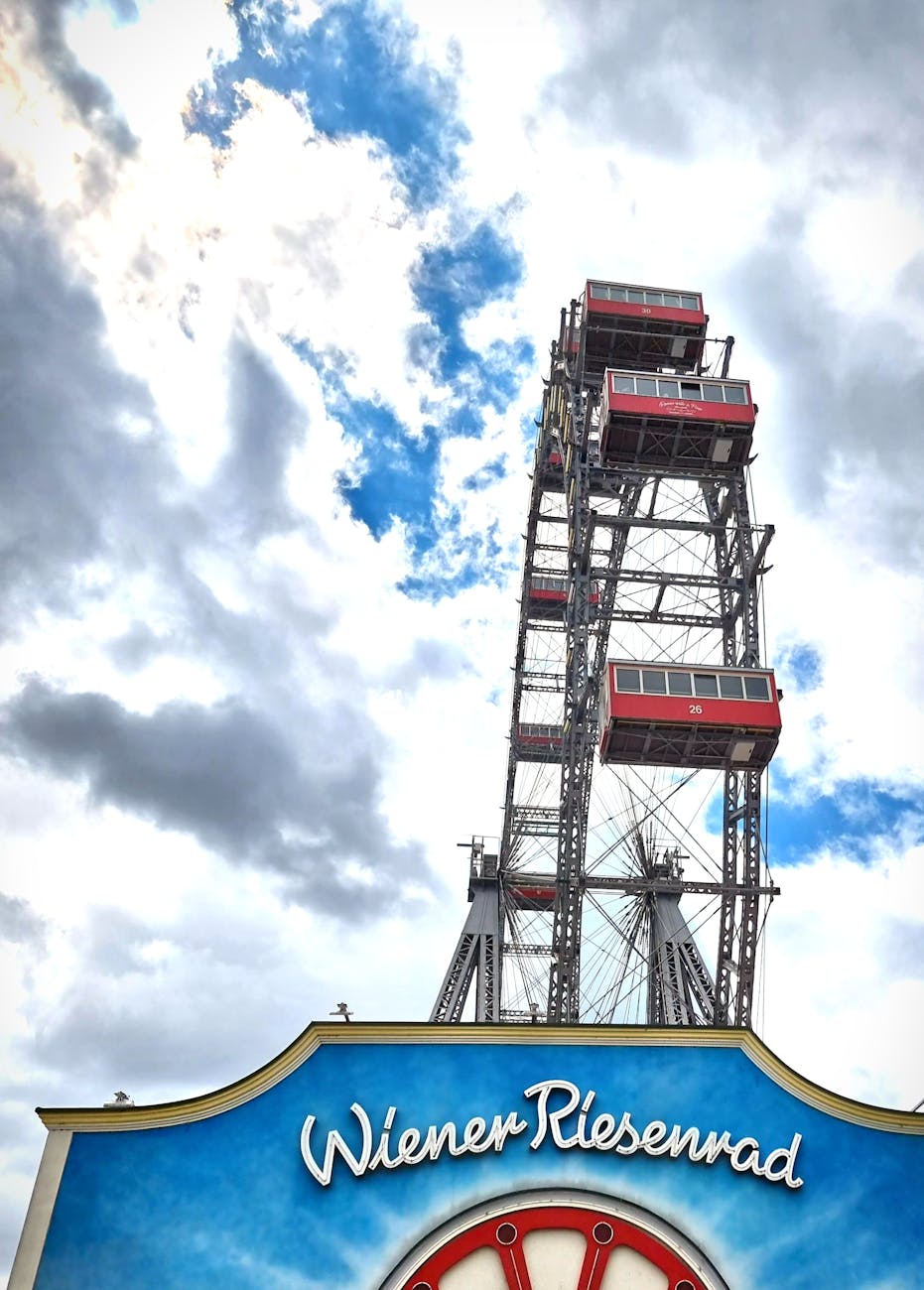
The Prater and the Giant Ferris Wheel
The Prater is two things: a vast public park stretching along the Danube (the Grüner Prater, or Green Prater) and the Wurstelprater amusement park at its entrance. The park’s 6-kilometer-long main avenue (Hauptallee) is lined with chestnut trees and is beloved by joggers, cyclists, and horse-drawn carriage riders.
The Riesenrad (Giant Ferris Wheel) is the Prater’s — and arguably Vienna’s — most iconic landmark. Built in 1897, it stands 64.75 meters tall and offers spectacular views over the city during its 15-minute rotation. If the name sounds familiar, it’s because the Riesenrad featured memorably in the 1949 film noir “The Third Man.” Adjacent attractions include roller coasters, a planetarium, and the Prater Museum documenting the park’s 250-year history.
Practical information: The Green Prater is free and open 24/7. The Riesenrad costs €13.50 for adults (€6 for children). The amusement park rides are individually priced. U1 Praterstern provides direct access.
Stadtpark and the Strauss Monument
Vienna’s Stadtpark (City Park) is best known for its gilded Johann Strauss II monument — the most photographed monument in Vienna, depicting the “Waltz King” playing his violin beneath a marble arch. Beyond the selfie spot, the park stretches along the Wien River with landscaped paths, ponds, and the ornate Kursalon concert hall where Strauss concerts are performed nightly.
Danube Island (Donauinsel)
This 21-kilometer artificial island between the Danube and the New Danube is Vienna’s summer playground — swimming, cycling, barbecuing, and beach bars line the waterfront from May through September. It’s entirely free and accessible via U1 Donauinsel. In June, the Donauinselfest (Danube Island Festival) draws over 3 million visitors to what’s billed as Europe’s largest open-air music festival — also free.
Volksgarten and Burggarten
Two imperial gardens adjacent to the Hofburg offer distinctly different experiences. The Volksgarten (People’s Garden) is Vienna’s most elegant park — its formal rose garden blooms spectacularly from May through October with over 400 varieties. The neoclassical Theseus Temple (a smaller replica of the Athenian original) and the Sisi memorial add cultural depth to what’s already a beautiful green space. The Burggarten, behind the Hofburg, is more relaxed — locals sunbathe on the lawns, and the Art Nouveau Palmenhaus (now a café-bar) and the Schmetterlinghaus (Butterfly House, €7) provide additional diversions.
Kahlenberg and the Vienna Woods
For a perspective most tourists miss, take bus 38A from Heiligenstadt (U4) to Kahlenberg, a 484-meter hill on Vienna’s northern edge offering sweeping views over the city, the Danube, and the Vienna Woods. On clear days, you can see as far as the Carpathian Mountains in Slovakia. The neighboring Leopoldsberg has even better views and a newly renovated exhibition about Vienna’s history. Combine the visit with lunch at a Heuriger (wine tavern) in the village of Kahlenberg or nearby Grinzing on the descent.
Free and Budget Attractions
Vienna is one of Europe’s more expensive cities, but an impressive number of its best experiences cost nothing at all. Strategic planning can dramatically reduce your sightseeing budget without sacrificing quality.
Always Free
Schönbrunn Palace Gardens — all 160 hectares, including the Gloriette viewpoint (exterior). Belvedere Gardens — formal French gardens and reflecting pools. Stadtpark and all public parks — including the Volksgarten’s rose garden near the Hofburg. The Ringstraße — walk or take the tram for a budget architectural tour. Danube Island — 21 kilometers of recreation. Naschmarkt — browsing and window shopping at Vienna’s most famous market. Public art — Vienna’s KÖR program has installed over 200 contemporary artworks throughout the city.
First Sunday Free Museums
Several municipal museums offer free admission on the first Sunday of each month, including the Wien Museum (reopened after major renovation in 2023, now one of Vienna’s best), Prater Museum, Clock Museum, Beethoven Museum, and the Römermuseum (Roman ruins beneath Hoher Markt). Plan your trip to include a first Sunday and you’ll save significantly.
Money-Saving Passes
The Vienna Pass (from €109 for adults) includes free entry to over 90 attractions and a hop-on-hop-off bus. It pays for itself if you visit 3–4 major attractions per day. The Vienna City Card (from €19 for 24 hours) provides unlimited public transport plus discounts at museums and restaurants — less comprehensive but more affordable.
Practical Sightseeing Tips
How to Avoid Crowds
Vienna’s biggest attractions get crowded between 10am and 3pm, especially from May through September. The most effective strategies: book timed tickets online for Schönbrunn, the Belvedere, and the KHM at least a week ahead. Visit popular museums on late-opening evenings (KHM Thursdays until 9pm, Albertina Wednesdays and Fridays until 9pm, Upper Belvedere Fridays until 9pm). Start your day at 9am sharp when attractions open — you’ll often have the first 30 minutes nearly to yourself. Visit St. Stephen’s Cathedral early morning or at dusk for a peaceful experience.
Optimal Sightseeing Routes
One day: Morning at Schönbrunn (arrive at opening), midday at the Hofburg/city center, afternoon at St. Stephen’s and the Kunsthistorisches Museum, evening stroll along the Ringstraße. Three days: Add the Belvedere, MuseumsQuartier, Prater, Naschmarkt, and deeper exploration of the 1st district. One week: Add day trips, specialized museums, neighborhood walks, and repeat visits to favorites.
Accessibility
Vienna is generally accessible for visitors with mobility challenges. Most major museums and attractions have wheelchair access, elevators, and accessible restrooms. The Hofburg, Belvedere, and KHM all have wheelchair-accessible routes. Schönbrunn’s ground-floor rooms are accessible, though the upper floors require stairs. Public transport (U-Bahn, trams) is largely step-free. The Vienna Tourist Board provides a detailed accessibility guide at wien.info.
Photography Tips
Vienna is extraordinarily photogenic, but the best shots require planning. For Schönbrunn, arrive at 8:30am before the palace opens to photograph the empty parterre gardens with the Gloriette in the background — golden hour light is spectacular. The Belvedere reflecting pool offers its best reflections on calm mornings before wind picks up. Inside St. Stephen’s Cathedral, photography is allowed without flash — use a wide-angle lens and a high ISO to capture the vaulted ceilings. The Riesenrad is most photogenic at blue hour (30 minutes after sunset), when the lights come on against the twilight sky.
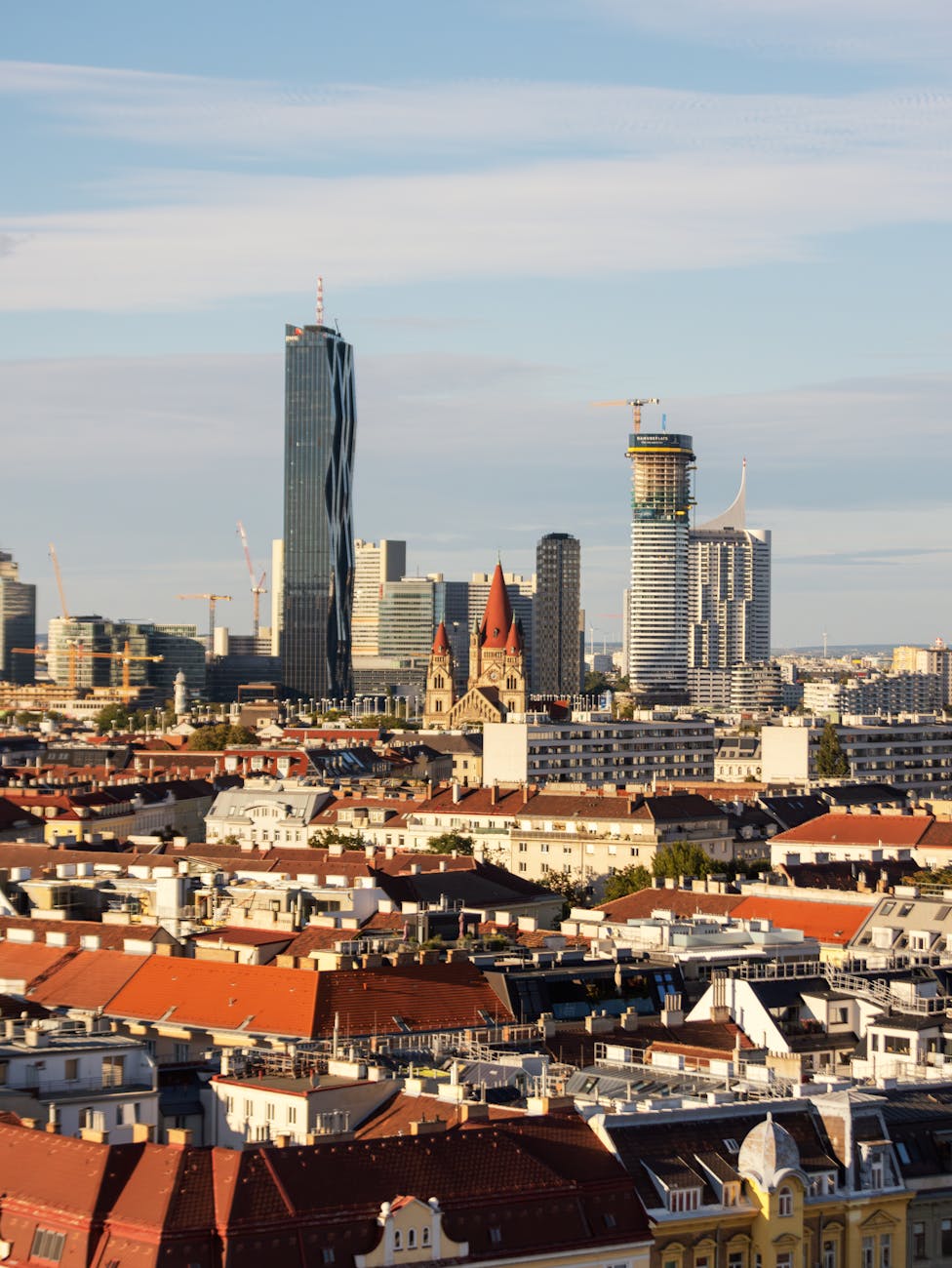
For the quintessential Vienna skyline shot, head to the Haus des Meeres rooftop terrace (free with museum admission of €12.30) or the south tower of St. Stephen’s Cathedral. The Justizpalast (Palace of Justice) on Schmerlingplatz has a recently opened rooftop café with panoramic views that few tourists know about.
Visiting with Children
Vienna is more family-friendly than its imperial reputation suggests. Beyond Schönbrunn Zoo and the Prater amusement park, the ZOOM Children’s Museum in the MuseumsQuartier offers hands-on exhibits where kids can create art, build structures, and explore scientific concepts. The Haus des Meeres (House of the Sea) aquarium in a converted WWII flak tower is another family favorite, with 10,000 animals across eleven floors. The Technisches Museum (Technical Museum) near Schönbrunn has extensive interactive exhibits covering energy, transport, and industry — kids can operate miniature trains, experiment with physics, and explore a reconstructed coal mine.
Most museums offer free or heavily discounted admission for children under 19, and many have dedicated family programs and audio guides. The Time Travel Vienna attraction on Habsburgergasse offers a 50-minute multimedia journey through Vienna’s history that kids enjoy — not a traditional museum, but entertaining and educational.
Frequently Asked Questions
What is the number one attraction in Vienna?
Schönbrunn Palace consistently ranks as Vienna’s top attraction by visitor numbers and reviews. However, the Belvedere (for art lovers) and St. Stephen’s Cathedral (for its central location) are equally essential. The “number one” depends on your interests — no single attraction captures everything that makes Vienna extraordinary.
How many days do I need to see Vienna’s attractions?
A minimum of three full days allows you to cover the three palaces, two or three museums, St. Stephen’s, and the Ringstraße at a comfortable pace. Five days gives you time for the Prater, specialized museums, and day trips. One day is possible but requires strict prioritization — pick one palace and one museum.
Is the Vienna Pass worth it?
If you plan to visit 3–4 major attractions daily, yes. The pass (from €109 for adults) covers Schönbrunn Grand Tour (€42), Belvedere (€23), KHM (€22), Albertina (€20.90), Hofburg apartments (€15), and the Riesenrad (€13.50) — a total value of over €136. If you prefer a slower pace with 1–2 attractions per day, buying individual tickets is more economical.
Are Vienna attractions open on Sundays?
Most major attractions are open daily including Sundays. Notable exceptions: some smaller museums close on Mondays (not Sundays). The Naturhistorisches Museum closes on Tuesdays. Check specific opening hours on individual attraction websites before planning your visit.
What are the best free attractions in Vienna?
The Schönbrunn and Belvedere gardens, all public parks including the Prater and Stadtpark, the Ringstraße walking tour, Danube Island, and Naschmarkt are all free. Several municipal museums also offer free admission on the first Sunday of each month.
Your Vienna Sightseeing Itinerary
Day 1 — Imperial Vienna: Schönbrunn Palace and gardens (morning), Hofburg Imperial Apartments and Treasury (afternoon), Ringstraße evening walk past the Opera, Parliament, and Rathaus.
Day 2 — Art and Culture: Kunsthistorisches Museum (morning), MuseumsQuartier and Leopold Museum (early afternoon), Belvedere Palace and Klimt’s “The Kiss” (late afternoon), dinner near Karlsplatz.
Day 3 — City Discovery: St. Stephen’s Cathedral and south tower climb (morning), Albertina (midday), Naschmarkt for lunch, Prater and the Giant Ferris Wheel (afternoon), Stadtpark and Strauss monument at sunset.
Day 4 — Hidden Vienna: Secession Building and Beethoven Frieze (morning), Naschmarkt and Flohmarkt (midday), Heeresgeschichtliches Museum (afternoon), Heuriger wine tavern in Grinzing or Neustift am Walde (evening).
Day 5 — Nature and Views: Kahlenberg and Leopoldsberg for panoramic views (morning), Danube Island or Alte Donau for relaxation (afternoon), Vienna State Opera performance or classical concert at the Musikverein (evening).
Vienna rewards the curious. Every palace corridor, every museum gallery, every church nave reveals something unexpected — a hidden Klimt, a Habsburg secret, a view that stops you in your tracks. Take your time, wander off the main routes, and let this extraordinary city reveal itself at its own pace.
Planning your Vienna trip? Explore our complete guides to Vienna travel essentials, 101 things to do in Vienna, where to stay, and Vienna’s food scene. For getting between attractions, see our Vienna transportation guide.
Almost every attraction on this page can be visited independently, and most of them should be. Where a guide genuinely adds something — and where it does not — is set out in our comparison of Vienna tours and experiences, including what the licensed-guide system actually buys you inside the palaces and museums.
Worth knowing as a separate visit in its own right: Tiergarten Schönbrunn, in the palace grounds, is the oldest zoo in the world still operating and keeps its own ticketing — €29 for adults, open from 09:00 every day of the year, with giant pandas back since 2025. Our Schönbrunn Zoo guide covers tickets, combinations and the best time of day to go.