Vienna to Bratislava: Train, Bus, Boat Day Trip Guide (2026)
Vienna to Bratislava day trip transport guide. Train, bus, and Twin City Liner boat options compared with prices, schedules, and what to see.
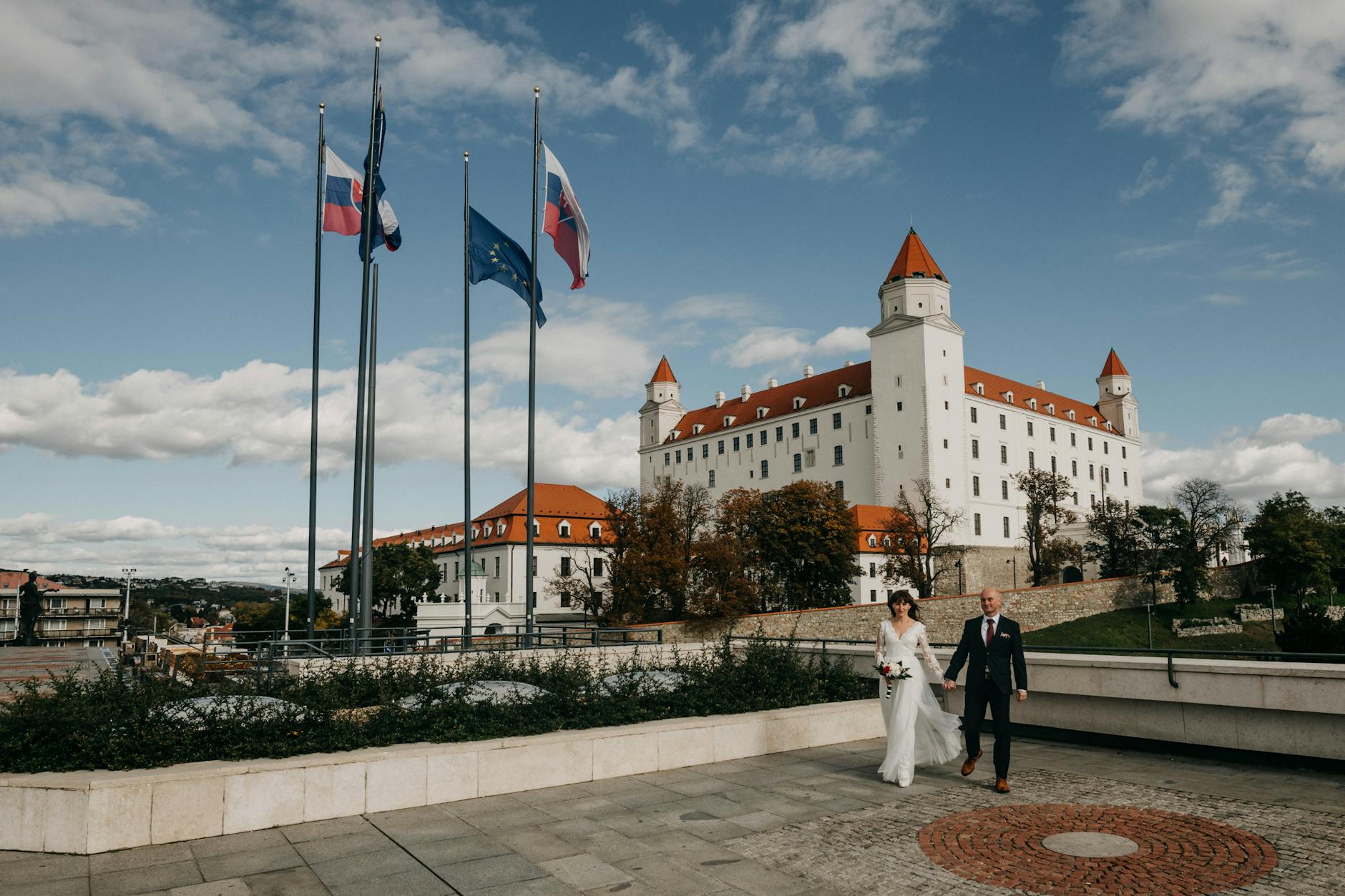
Photo by Helena Jankovičová Kováčová
- Why visit Bratislava from Vienna?
- Vienna to Bratislava at a glance
- Vienna to Bratislava by train
- Vienna to Bratislava by bus
- Vienna to Bratislava by boat (Twin City Liner)
- Which option is best for your trip?
- What to see and do in Bratislava in one day
- Bratislava sights worth a longer visit
- Currency and money tips
- Border crossing and documentation
- Language in Bratislava
- Bratislava day trip vs. overnight
- Common Vienna to Bratislava mistakes
- Bratislava with kids
- Bratislava nightlife after a day trip
- What to buy in Bratislava
- Vienna to Bratislava FAQ
- Related Vienna Guides
This article contains advertising. Our booking links are routed through a partner that adds commission tracking automatically, so if you book through one we earn a commission from the provider, at no extra cost to you. It never affects what we recommend. Affiliate disclosure
Bratislava sits about 80 kilometres east of Vienna by road, making it one of the easiest international day trips in Europe and a favorite escape for visitors who want to add a second capital and a second country to their Austria trip. The two cities are connected by frequent trains and buses, and by a seasonal high-speed Danube catamaran. This complete 2026 guide compares every option, lists current prices and schedules, and recommends the best transport mode based on your travel style and the time of year.
Why visit Bratislava from Vienna?
Bratislava, Slovakia’s capital, is small, walkable, and packed with character. The compact old town features baroque palaces, a 9th-century castle on a hill, communist-era architecture, and an unusually high concentration of quirky bronze street statues. Beer is cheap (typical pint around 2.50 euros vs. 5 euros in Vienna), restaurants are excellent value, and the city has reinvented itself in the past decade with stylish cafes, design shops, and a confident food scene.
For Vienna-based travelers, Bratislava is the ideal half-day or full-day trip. The journey takes about an hour by train or 75 minutes downstream by catamaran, and the main sights sit close together in a compact old town that is easy to cover on foot. Many travelers visit on a Saturday or Sunday to escape Vienna’s slower weekend pace.
Vienna to Bratislava at a glance
Three main transport modes connect the two capitals:
Train: Direct REX trains twice an hour, journey time around 1 hour, fares from 16 to 35 euros round-trip; the OeBB Bratislava-Ticket covers the return trip plus city transport in Bratislava on its first day.
Bus: Frequent Slovak Lines and FlixBus departures (FlixBus alone lists 45 a day), fastest journeys around 55 minutes, fares vary by departure.
Boat (Twin City Liner): 3 daily departures each way in high season (1 May to 2 November in 2026), 75 minutes downstream and 90 minutes back, Economy 34 or 39 euros per journey (68-78 euros for both legs before extra charges).
For most travelers, the train wins on price, speed, and convenience. The boat wins on novelty and scenery. The bus wins on absolute cheapest fare.
Vienna to Bratislava by train
OeBB and Slovak Railways jointly operate REX trains twice an hour from Vienna Hauptbahnhof to Bratislava-Petrzalka or Bratislava Hlavna Stanica (main station). Either way, the ride takes about an hour.
The most useful ticket is the EUREGIO Bratislava-Ticket, an OeBB-issued return ticket; check the current price on oebb.at. It covers the train journey there and back plus public transport in Bratislava itself on its first day of validity, which is convenient for visitors planning to ride the city’s trams or buses.
If you don’t need the Bratislava transport portion, a standalone single train ticket runs around 17 euros (advance) to 28 euros (walk-up); compare it with the Bratislava-Ticket for your travel date before you buy.
Bratislava-Petrzalka station is in the southern part of the city, across the Danube from the old town: take a short bus ride or walk over the river. Bratislava Hlavna Stanica is north of the old town, about a 15-minute walk away. Either station works for a day trip; the Hlavna route is the more direct to the city center.
Vienna to Bratislava by bus
Slovak Lines and FlixBus both run frequent services on the route. Slovak Lines, the established cross-border operator, leaves from Wien Hauptbahnhof (Hbf Wiedner Gürtel, stop C1). FlixBus departs from Vienna International Busterminal (VIB) at U3 Erdberg as well as some other Vienna pickup points.
Round-trip bus tickets typically cost 10-20 euros total, but fares change with demand and with how far ahead you book, so compare prices for your date. The fastest FlixBus journeys take about 55 minutes; others take longer depending on stops, route and traffic. Buses drop you at Most SNP (under the UFO Bridge) in central Bratislava, which is closer to the old town than either train station.
The bus is best for budget travelers and last-minute planners. Disadvantages include less comfortable seating than trains, exposure to motorway traffic delays on Friday afternoons and Sunday evenings, and no toilet on most buses (though stops can be requested).
Vienna to Bratislava by boat (Twin City Liner)
The Twin City Liner is a high-speed catamaran that runs along the Danube River from Vienna’s Schwedenplatz to the landing stage in Bratislava’s old town in 75 minutes; the upstream return takes 90. Its 2026 main season runs 20 March to 2 November, with 3 daily services in each direction from 1 May.
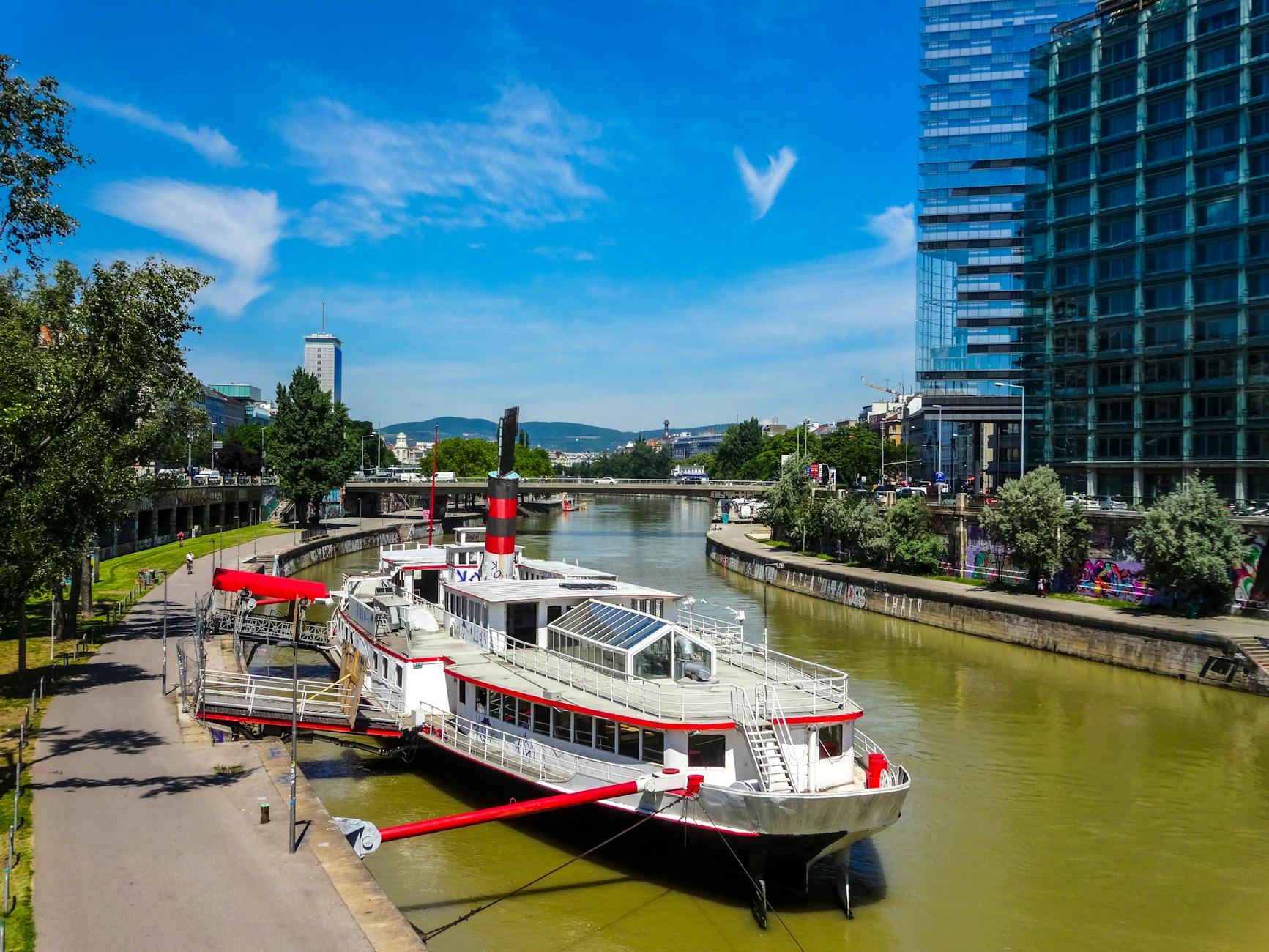
Economy starts at 34 euros per journey, First Class at 44 euros and the Captain’s Lounge costs 56 euros, so an Economy return starts at 68 euros before any extra charges. Seats on the open deck are a separate 36-euro category sold one hour before departure. The boat is best suited to travelers wanting a scenic experience rather than the fastest transit.
The Danube ride passes through wetlands, vineyards, and the Slovakian border region, with views of the Donauturm tower in Vienna and Bratislava Castle on arrival. In good weather, sitting on the open upper deck is a memorable Vienna day trip in itself.
Downsides include the seasonal schedule (outside the main season there are only winter weekend sailings, 7 February to 15 March, and Advent sailings, 27 November to 20 December), higher cost than train or bus, limited frequency (3 sailings vs. two trains an hour), and weather sensitivity (boats may be cancelled in heavy fog or storms, so check the operator’s service notices before you travel).
Which option is best for your trip?
For most travelers: take the train. It’s the right balance of cost, speed, and reliability. The 1-hour journey gets you to Bratislava with plenty of time for sightseeing, and 17-18 euros for the EUREGIO Bratislava-Ticket is good value because it bundles the return trip with a day of city transport.
For budget travelers: take the bus. Round-trip bus fares of 10-15 euros, lower still if you book early, leave more money for food and beer in Bratislava itself, where eating out usually costs less than in Vienna.
For scenic and special experiences: take the boat. The Twin City Liner is more of an activity than transit, but it’s a memorable one. Take the train back in the evening to avoid sunset boat schedules.
Best of both: train out, bus back. Some travelers take the morning train (fast, comfortable) and return on an evening bus (cheaper). This saves money while preserving the daylight in Bratislava.
What to see and do in Bratislava in one day
Bratislava’s old town is compact and easy to explore on foot. A typical one-day itinerary looks like this:
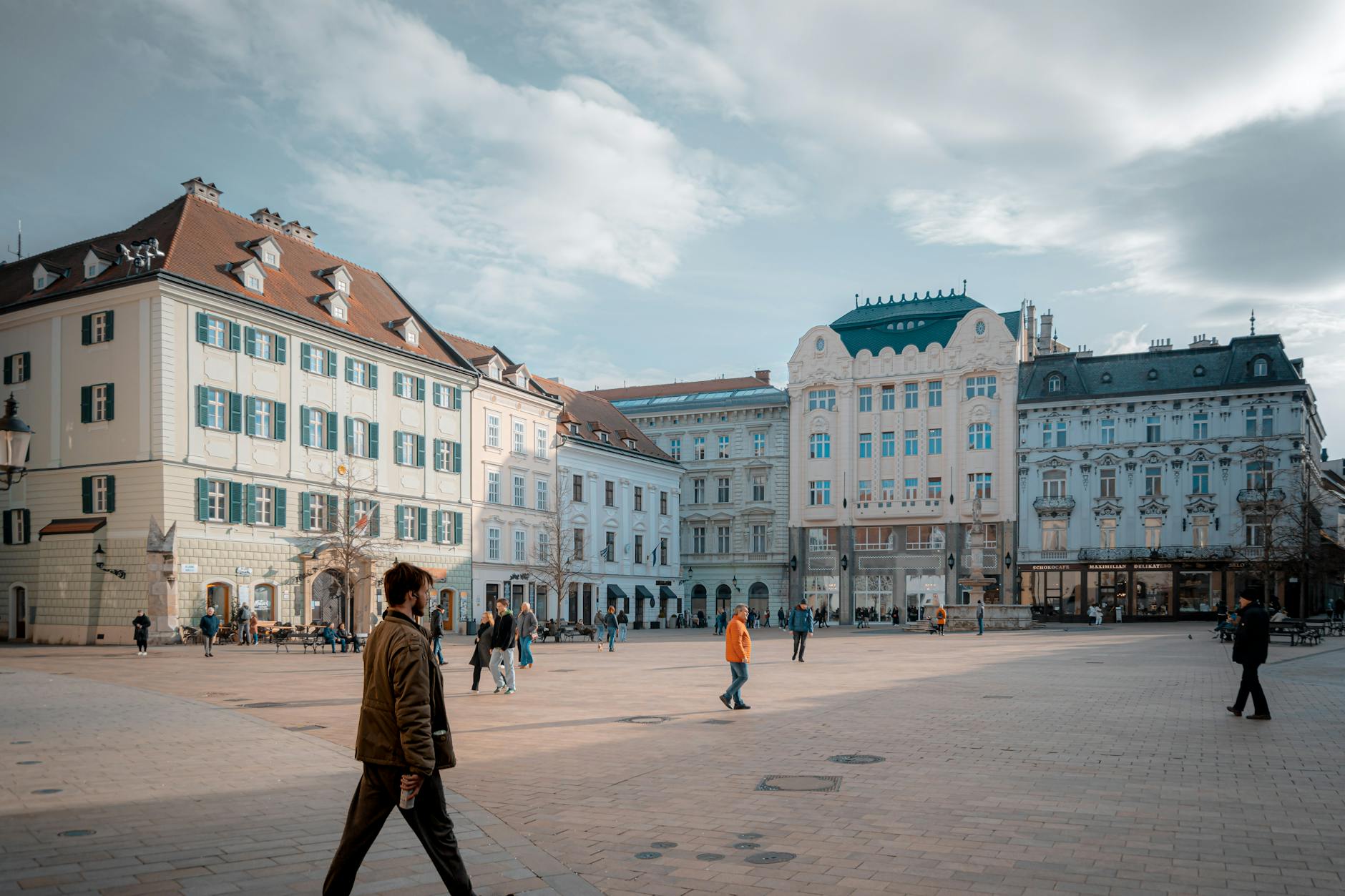
Morning: Arrive 10:00-10:30. Walk into the old town (about 15 minutes from the main station, Hlavna Stanica). Coffee at a cafe on Hlavne Namestie (the main square). Visit the Old Town Hall and its tower for views.
Late morning: Walk up from the old town to Bratislava Castle for views over the Danube. The castle interior houses the Slovak National Museum (paid entry).
Lunch: Eat at a local restaurant in the old town. Try bryndzove halusky (potato dumplings with sheep cheese and bacon), the national dish, or kapustnica (sauerkraut soup). Expect to pay 8-15 euros for a full meal vs. 18-25 euros in Vienna.
Afternoon: Stroll Michalska Brana (St. Michael’s Gate), explore Sedlarska Street, find the famous bronze statues (Cumil the sewer worker peeking out of a manhole is the most photographed). Visit St. Martin’s Cathedral, where ten Habsburg kings and one reigning queen, as well as seven royal consorts, were crowned.
Late afternoon: Cross the New Bridge (Most SNP) and ride the elevator up the UFO observation tower for views back over the old town. Coffee or beer at the UFO bar before returning.
Evening: Catch a late train or bus back to Vienna, arriving 8-10 p.m.
Bratislava sights worth a longer visit
If you stay overnight or have a slow full day, additional highlights include:
Devin Castle: Dramatic ruined castle 10 km west of Bratislava at the confluence of the Danube and Morava rivers. Reachable by city bus 29 from Most SNP; check the current timetable for the journey time.
Slavin Memorial: Soviet World War II memorial on a hill north of the city, with sweeping views.
Slovak National Gallery: Major art museum recently renovated, with Slovak and European collections.
Blue Church (Church of St. Elizabeth): Art Nouveau church painted pale blue inside and out, with blue majolica decoration and a blue-glazed tile roof.
Modra and Pezinok: Small Slovak Carpathian wine towns a short bus or train ride from Bratislava, worth a half-day excursion in autumn.
Currency and money tips
Slovakia uses the euro, so no currency exchange is needed if you’re coming from Austria or another eurozone country. Restaurant meals, drinks and basic services in Bratislava generally cost less than in Vienna, and hotels often do too.
ATMs are widely available in central Bratislava. Cards are accepted at most restaurants and shops, but small cafes and market stalls may be cash-only. Bring 20-50 euros in small notes for the trip.
Border crossing and documentation
Both Austria and Slovakia are in the Schengen Zone, so border checks are typically absent between the two countries. EU citizens need only a national ID card. Non-EU citizens (US, UK, Canada, Australia, etc.) need a passport that’s valid for the Schengen Zone.
On rare occasions, random border checks happen at the train or bus crossing, especially during major events or security situations. Always carry a valid travel document: a passport, or a national identity card if you are eligible to travel on one.
Language in Bratislava
Slovak is the local language, but English is widely spoken in tourist-facing businesses, restaurants, and at major sights. German is also commonly understood given the proximity to Austria. A few phrases of Slovak go a long way: “Dakujem” (thank you), “Prosim” (please), “Ahoj” (hello/goodbye informal).
Bratislava day trip vs. overnight
A day trip captures the old town and castle adequately. An overnight stay adds the evening atmosphere (the old town is most beautiful at twilight), one or two additional sights like Devin Castle or the Blue Church, a leisurely Slovak dinner, and the chance to use Bratislava as a base for a Carpathian wine country excursion.
Hotels in central Bratislava run 70-150 euros per night for mid-range options, with budget hostels from 25 euros and luxury stays at 200+ euros. Depending on your dates and the hotels you compare, a 2-night Bratislava extension can work out cheaper than 2 extra nights in Vienna.
For other regional escapes, see our complete day trips from Vienna guide which covers options including Wachau Valley, Salzburg, Budapest, and Prague.
Common Vienna to Bratislava mistakes
The most common mistake is buying separate tickets when the EUREGIO Bratislava-Ticket would have saved money. Always check the EUREGIO ticket first if you’ll use Bratislava public transport at all.
The second is showing up at the wrong Vienna station. Trains leave from Hauptbahnhof, Slovak Lines buses from stop C1 on Wiedner Gürtel outside Hauptbahnhof, FlixBus from VIB Erdberg, and the boat from Schwedenplatz. Check which one your ticket is for before you set off.
Third, don’t expect Bratislava to be “Vienna lite.” It’s a distinct city with its own character, communist-era history, and rough-and-ready charm. Travelers expecting Habsburg grandeur will be underwhelmed; travelers expecting authentic Central European life will be delighted.
Fourth, don’t underestimate the hill climb to the castle. The walk up from the old town is steady uphill all the way. Wear comfortable shoes and take the path that starts behind the cathedral, which is the gentlest gradient.
Bratislava with kids
Bratislava is family-friendly with manageable distances and a compact old town. Kids enjoy the bronze statues (especially Cumil the sewer worker and Schoene Naci tipping his hat), the castle hill walk-up, and the UFO observation tower with its glass-floor section. The Slovak National Museum at the castle has age-appropriate exhibits, and several old town squares have playgrounds.
Pack snacks because food gaps between meal restaurants are longer than in Vienna. Bratislava also lacks Vienna’s density of family-friendly attractions like Prater or Schoenbrunn, so factor in walking and unstructured exploration rather than packed itineraries.
Bratislava nightlife after a day trip
If you stay overnight, Bratislava’s evening scene rewards adventurous travelers. The old town has cozy wine bars (try Apollon or Be About) and craft beer pubs (Stupavar). Slovak wines from the nearby Small Carpathians wine region are excellent and underexposed internationally, and ordering a flight at a wine bar for 12-18 euros is a great cultural experience.
The UFO Bar at the top of the New Bridge observation tower offers cocktails with panoramic views over the city and the Danube. Drinks run 8-12 euros each.
What to buy in Bratislava
Slovak hand-painted ceramics from Modra, a wine town in the Small Carpathians, make distinctive souvenirs. Slovak amber, glass, and folk art are widely available in old town shops. Skip the mass-produced “I love Bratislava” magnets in favor of small artisan shops on Michalska or Panska streets.
For food souvenirs, look for Slovak Slivovica (plum brandy), Tatra Tea (alcoholic herbal liqueur), and high-quality Slovak honey. Most are available at the old town market or at specialty shops.
Vienna to Bratislava FAQ
Is Bratislava worth visiting? Yes, especially as a day trip. The old town is small but charming, prices are lower than Vienna, and the chance to add a second capital city to your trip is irresistible for many travelers.
How long should I stay in Bratislava? A day trip is enough for first-time visitors. An overnight is better for travelers who want to see Devin Castle or the Slovak countryside.
Can I do Bratislava with kids? Yes. The compact old town, the castle, and the bronze statues are appealing to children. Pack snacks because food gaps in the city can stretch longer than in Vienna.
Is Bratislava safe? Yes, central Bratislava is safe by European standards. Standard tourist precautions apply (watch for pickpockets in crowded areas, don’t leave bags unattended).
Are there guided day tours from Vienna? Yes, several operators run guided Vienna-Bratislava day tours from 60-120 euros that bundle transport and a guide, sometimes with lunch; compare what each includes before booking. Worth considering if you want history context without planning logistics.
Can I do Vienna-Bratislava-Budapest in one day? Technically possible but exhausting. Vienna to Bratislava takes about an hour by train, but the onward leg to Budapest is considerably longer, so check the timetables before you commit. We recommend at least an overnight in Bratislava or Budapest if combining.
Are there any group discounts? Yes, the EUREGIO Bratislava-Ticket has reduced family fares, and Slovak Lines bus offers small group discounts.
A day trip to Bratislava is one of the highest-value experiences you can add to a Vienna trip. For roughly 20 euros and a few hours, you visit a second Central European capital with a distinct history, excellent food, and great views from a castle on a hill. Whether you take the train, bus, or boat, you’ll return to Vienna with a richer sense of the region. Combine it with one of our first time visiting Vienna tips for first-time visitor planning or one of our other day trips from Vienna for a multi-stop adventure.
The catamaran is the only one of these options where the journey is itself the attraction, which is a different calculation from simply getting there. Our guide to Danube boat trips from Vienna sets the Twin City Liner alongside the city’s other sailings and says when the boat is worth choosing over the train.
These connections work just as well in the other direction, and increasingly that is the point: Ryanair has shifted capacity from Vienna to Bratislava because of Austria’s air transport levy, so flying into BTS and taking the bus or train across is now a genuine money-saver rather than a curiosity. Our guide to cheap flights to Vienna works through when the saving justifies the extra hour.
The same buses also run straight from Bratislava Airport. Slovak Lines links the BTS terminal with Vienna Hauptbahnhof, with Vienna Airport on its published route, and FlixBus runs Bratislava Airport to Vienna services that stop at Erdberg, which makes Bratislava a workable arrival airport for Vienna. Our guide to Bratislava Airport as a Vienna alternative works through the fares, the timings and the trips where it is worth it.