Melk Abbey Day Trip from Vienna: Complete Guide (2026)
Melk Abbey day trip from Vienna 2026. Tour the baroque masterpiece, explore the Danube Valley, and combine with Wachau wine tasting.
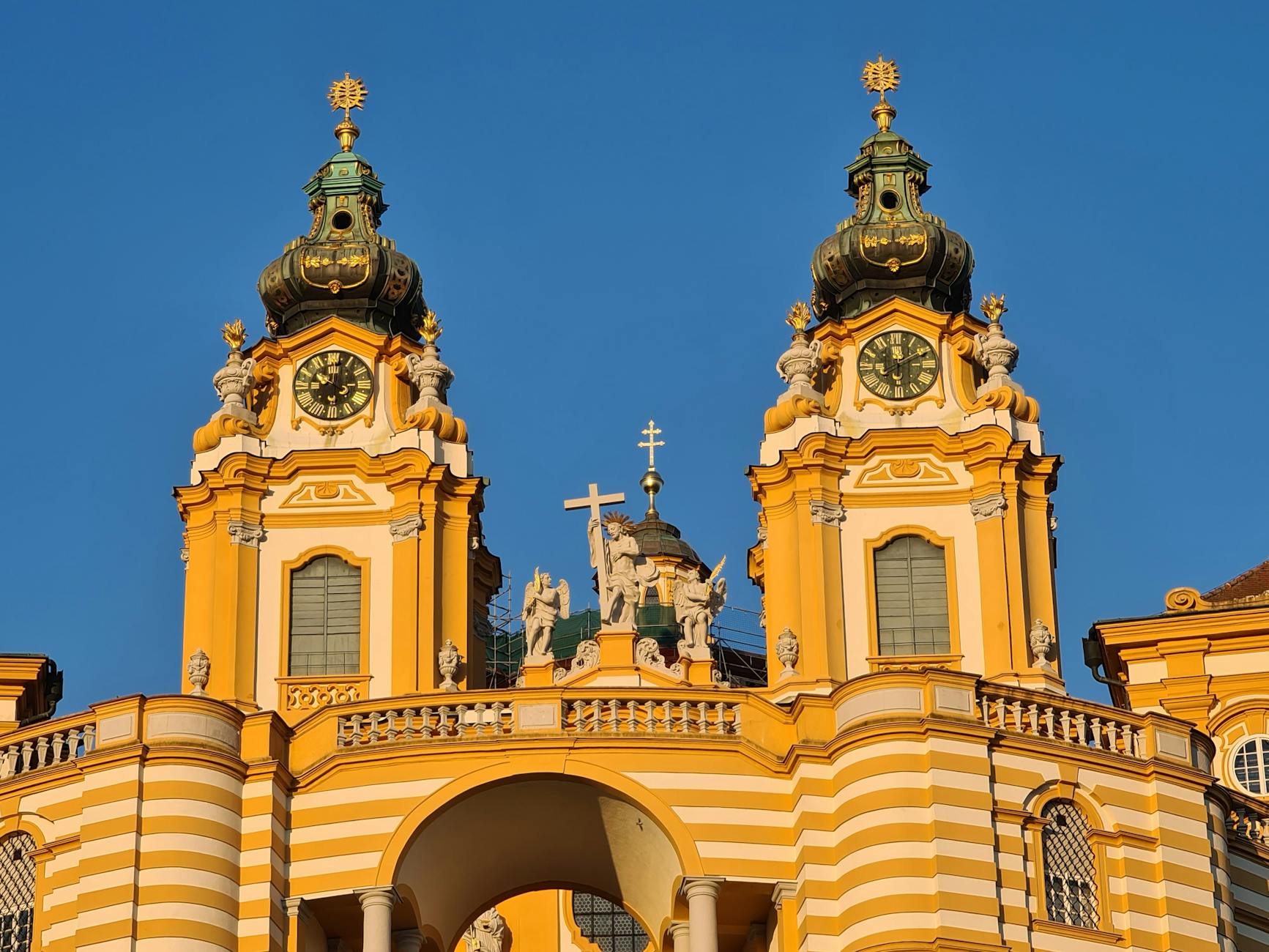
Photo by Usman Younas
- Melk Abbey day trip: the essentials
- How to get to Melk Abbey from Vienna
- Melk Abbey tickets and tours
- What to see inside Melk Abbey
- Planning your visit time
- Combining Melk with the Wachau Valley boat ride
- The town of Melk
- Best time to visit Melk Abbey
- What to pack for a Melk day trip
- Melk Abbey with kids
- History of Melk Abbey
- Photography tips at Melk
- Combining Melk with other Wachau attractions
- Common Melk Abbey day trip mistakes
- Melk Abbey opening hours and visit planning
- What you can buy at Melk
- Melk Abbey FAQ
- Related Vienna Guides
This article contains advertising. Our booking links are routed through a partner that adds commission tracking automatically, so if you book through one we earn a commission from the provider, at no extra cost to you. It never affects what we recommend. Affiliate disclosure
Melk Abbey (Stift Melk) is one of the world’s most spectacular baroque buildings, a 900-year-old Benedictine monastery perched dramatically above the Danube River at the western gateway to the Wachau Valley. The yellow-and-white facade stretches over 320 metres along a rocky outcrop, the abbey church drips with gold and frescoes, and the library has been ranked among the most beautiful in the world. As a day trip from Vienna, Melk is one of the most rewarding 8-hour excursions you can plan. This 2026 guide covers transport, opening hours, what to see inside, ticket pricing, and how to combine Melk with a Wachau Valley Danube boat ride.
Melk Abbey day trip: the essentials
Melk Abbey sits 90 minutes west of Vienna by train. Combined with a 2-3 hour abbey tour and optional Wachau Valley extension, a Melk day trip runs 6-10 hours total from your Vienna hotel. The classic format is:
Train Vienna to Melk (1h05)
Walk 10 minutes to abbey
Tour abbey (2-3 hours)
Lunch in Melk town or onboard Danube boat
Optional: Danube boat downstream through Wachau Valley to Krems, then train back to Vienna
Total cost: 60-100 euros per person depending on transport mix and extras.
How to get to Melk Abbey from Vienna
By train
OeBB trains run hourly from Vienna Hauptbahnhof to Melk. Most direct trains take 1h05 via InterCity; some regional connections take 1h20 with a transfer. Round-trip Vienna-Melk tickets cost 35-45 euros walk-up, 20-30 euros booked 2 weeks ahead via OeBB Sparschiene.
From Melk train station, walk 10 minutes south through the town to the abbey entrance. The route is signposted and pleasant, passing through Melk’s small but pretty old town.
By car
The drive from Vienna to Melk via A1 takes 1h10 (90 km). Parking is available at the abbey for 5-7 euros per day. Self-driving allows you to combine Melk with multiple Wachau villages flexibly.
By guided tour
Many Vienna operators run guided Melk + Wachau day tours from 70-150 euros per person. Convenient if you want zero planning, but the train option offers more flexibility.
By Danube boat
Direct boat from Vienna to Melk takes 5+ hours each way (against the current upstream), making it impractical for day trippers. The Wachau boat ride is typically downstream from Melk to Krems.
Melk Abbey tickets and tours
Melk Abbey offers several visit options for 2026:
Self-guided tour: 16 euros adult, 9 euros student, 4 euros child. Includes the abbey museum, imperial rooms, library, abbey church, and gardens. Audio guides available for 4 euros extra.
Guided tour: 19-20 euros adult, includes all above plus a 1-hour guided commentary in German or English. Several tour times per day.
Combined ticket (abbey + boat): Various packages combining abbey entry with Wachau boat ride. Check DDSG Blue Danube combos.
Tickets are sold at the abbey ticket office or online at stiftmelk.at. Buying online avoids queues in peak summer.
Photography is forbidden inside the library and the abbey church (the two most photogenic interiors). Photography is welcome throughout the abbey park, courtyards, museum, and balcony viewpoint.
What to see inside Melk Abbey
The Abbey Museum (Stiftsmuseum)
The visit begins with the museum, housed in the former imperial wing. Displays cover 900 years of Benedictine history, including illuminated manuscripts, religious art, and gold work. Allow 30-45 minutes for a thorough visit.
The Imperial Wing and Imperial Corridor
A long corridor connects the museum rooms to the library and abbey church. The corridor is lined with portraits of Austrian emperors and rulers. The proportions and light are remarkable.
The Library (Bibliothek)
Melk’s baroque library is the architectural highlight and the moment that justifies the entire day trip. The hall is decorated with a ceiling fresco by Paul Troger (1731-1732) depicting “Faith” as an allegory, and houses approximately 100,000 volumes including 1,888 medieval manuscripts and 750 incunabula (books printed before 1500).
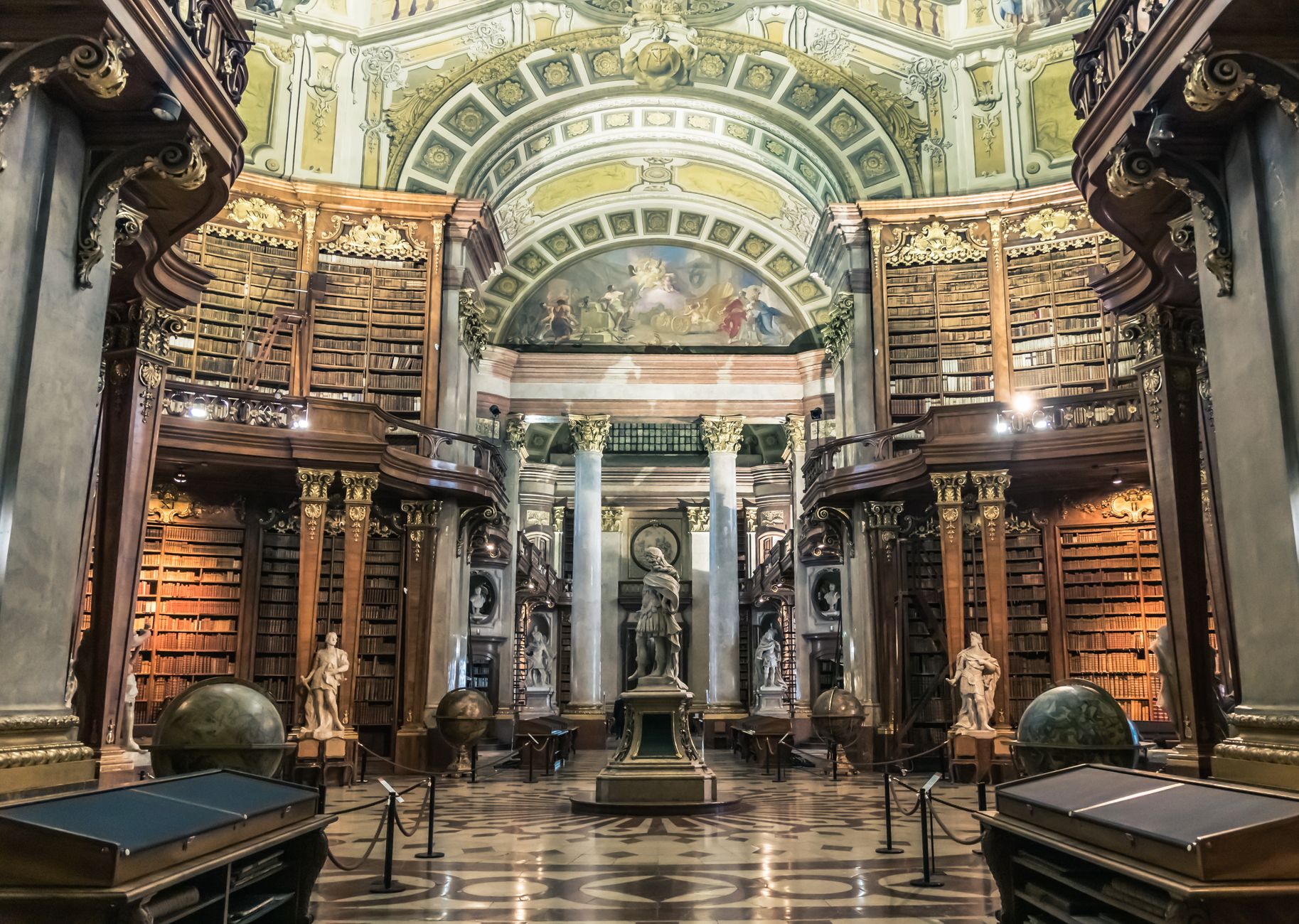
The library regularly appears on “most beautiful libraries in the world” lists alongside the Strahov Library in Prague, the National Library in Vienna, and the Trinity College Library in Dublin. Stand in the center and look up; the perspective of book-lined walls rising 12 metres to a frescoed ceiling is unforgettable.
Photography is forbidden in the library. Bring your eyes and a journal; written impressions are the souvenir.
The Spiral Staircase
Connecting the library to the abbey church is a spiral staircase decorated with mirrors at the top, creating an infinite-perspective optical illusion that makes the staircase appear to descend forever. A photographer’s dream and an Instagram favorite.
The Abbey Church (Stiftskirche)
Melk’s abbey church is one of the most exuberant baroque interiors in Austria. The gold-leaf decoration, marble columns, and frescoed dome are designed to overwhelm the senses. The high altar by Johann Michael Rottmayr (1722) is breathtaking.
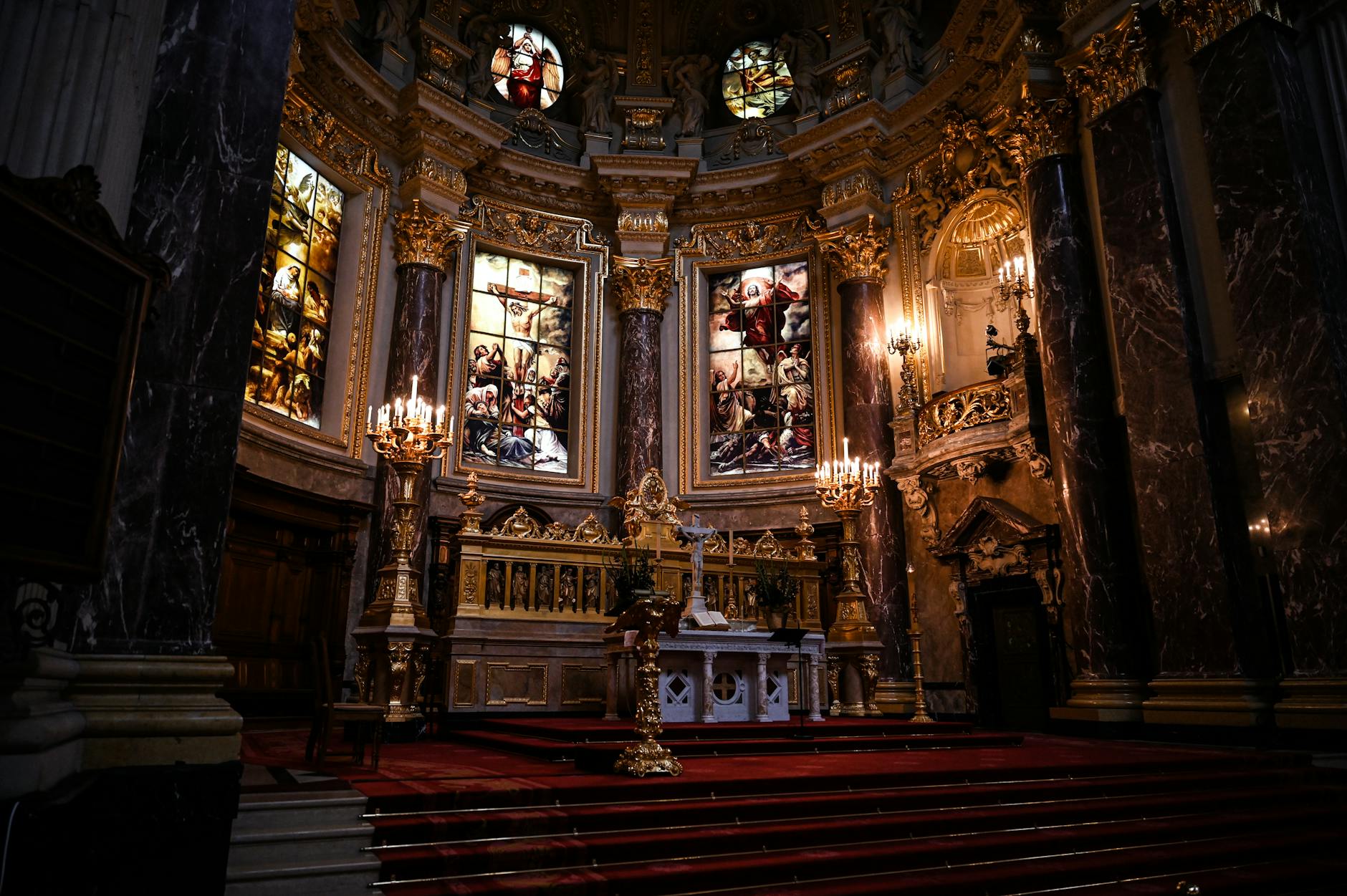
The church remains an active place of worship; Benedictine monks live and pray here. Be respectful: no loud talking, no photography, removed hats for men. Mass times are posted; visiting during a service is welcomed but please observe quietly.
The Panoramic Balcony
The balcony offers spectacular views over the Danube River, the Wachau Valley, and the medieval town of Melk below. Photography is welcome here. Best light is mid-morning to early afternoon.
The Abbey Park and Garden Pavilion
The abbey gardens include the Garden Pavilion with its remarkable rococo frescoes, a vegetable and herb garden, and several walking paths. Spring and summer are best for the gardens. Free with abbey entry.
The Bastion
Recently restored bastion section offers additional views and architectural details. Worth a brief stop if you have time.
Planning your visit time
Plan at least 2 to 2.5 hours for the abbey itself. A thorough self-guided visit with audio guide takes 2 hours; a guided tour takes about 1 hour but you’ll want additional time in the gardens and at the viewpoints.
For a relaxed day, add another hour for lunch in Melk town and 30 minutes for walking between train station and abbey. Total: 4-5 hours just for Melk and town.
Combined with a Wachau boat ride from Melk to Krems and return train to Vienna, the full day runs 9-10 hours from Vienna hotel back to Vienna hotel.
Combining Melk with the Wachau Valley boat ride
The classic Wachau day trip combines Melk Abbey with a Danube boat ride downstream to Krems. This is the most popular combination and produces a memorable 8-hour day:
Morning: Train Vienna to Melk (1h05). Tour Melk Abbey (2.5 hours).
Lunch: Quick meal in Melk old town or onboard the boat.
Afternoon: Board DDSG Blue Danube boat at Melk pier. Cruise downstream through the Wachau Valley (about 2 hours), passing terraced vineyards, ruined castles, and the charming villages of Spitz, Weissenkirchen, and Durnstein.
Late afternoon: Disembark at Krems. Walk to Krems train station.
Evening: Train from Krems back to Vienna (1h15).
Boats run mid-April through late October. Outside this window, the abbey is still visitable but the boat option doesn’t apply.
For more on the full Wachau day trip, see our complete Wachau Valley day trip guide.
The town of Melk
While the abbey dominates, Melk town itself is worth 30-60 minutes if you have time. The medieval main square (Rathausplatz) has restaurants and shops; the parish church on the square has its own baroque interior; the Melk waterfront has Danube views and small cafes.
Recommended lunch spots in Melk town:
Stiftsrestaurant: Restaurant attached to the abbey, with terrace seating overlooking the courtyard. 18-30 euros per person.
Restaurant Madar: Casual Austrian fare in Melk town. 12-22 euros per person.
Hofbauerhof: Traditional Wachau cuisine and house wines. 15-28 euros.
Best time to visit Melk Abbey
April-October: Boats run. Gardens in bloom. Most enjoyable overall.
May-June, September-October: The sweet spot. Mild weather, less crowded than summer peak.
July-August: Peak crowds with tour buses. Book guided tour slot ahead.
November-March: Boats don’t run. Abbey hours reduced. Crowds thin. Beautiful at Christmas with festive lighting.
For full seasonal planning, see our best time to visit Vienna guide.
What to pack for a Melk day trip
Bring comfortable walking shoes (you’ll walk 3-4 km total including the abbey). Layers for weather variability (especially spring/autumn boat ride which can be cool). Camera with no flash for the museum and corridors. Refillable water bottle (refill stations in the abbey). A light bag rather than backpack (some areas restrict large bags).
Melk Abbey with kids
Melk works adequately with kids but isn’t optimized for them. The library and church require quiet behavior. The gardens, panoramic balcony, and museum highlights work well. The boat ride from Melk to Krems is genuinely fun for children.
Kids under 12 are usually well-suited; teenagers may find the abbey more interesting than younger children. Combine the abbey with riverbank picnic time and boat ride for the best family rhythm.
History of Melk Abbey
The current abbey building is the third on the site. The first abbey was founded in 1089 by Leopold II, Margrave of Austria, who donated his castle to the Benedictines for monastic use. The medieval abbey was the spiritual and intellectual center of Austria for centuries.
The current baroque building was constructed 1702-1736 by Jakob Prandtauer, who also designed the church and library. The transformation from medieval fortress to baroque palace took 34 years and several generations of architects.
Melk has been continuously a working monastery since 1089. Twenty-three Benedictine monks live and pray here today. The abbey is famous internationally as the setting for Umberto Eco’s novel “The Name of the Rose,” which begins with the narrator’s youthful visit to a fictional German abbey but channels Melk’s atmosphere.
Photography tips at Melk
The library and abbey church are photography-restricted; respect this fully. Where photography is permitted, the best shots are:
The yellow facade from the Melk town side (mid-morning light).
The view from the panoramic balcony over the Danube.
The spiral staircase optical illusion (look down or up).
The garden pavilion frescoes.
The abbey from below in Melk town (best with a wide-angle lens).
Combining Melk with other Wachau attractions
Schloss Schoenbuehel: Castle on a rocky outcrop just downstream from Melk. Visible from the boat. Sometimes open for tours.
Aggstein Castle ruins: Dramatic ruined castle high above the Danube, between Melk and Spitz. Hiking from the river up to the castle takes 90 minutes; well-marked trail with reward views.
Krems and Stein: Larger town at the downstream end of the Wachau. Caricature Museum, Kunsthalle Krems, baroque old town. Worth 60-90 minutes if your boat lands here.
Common Melk Abbey day trip mistakes
Mistake 1: Rushing the visit. The abbey rewards slow appreciation. 90 minutes is the minimum to actually see things; 2.5-3 hours is better.
Mistake 2: Missing the gardens. Many visitors spend all their time on the tour and skip the gardens. The garden pavilion frescoes are worth 30 minutes.
Mistake 3: Trying photography in the library or church. Don’t attempt; staff enforce strictly, and you’ll be asked to leave if caught.
Mistake 4: Visiting in winter expecting the boat option. Boats stop November-April. Plan accordingly.
Mistake 5: Skipping audio guide. The 4 euro audio guide enriches the visit significantly with historical context the building alone can’t convey.
Mistake 6: Driving and trying to combine multiple Wachau wine tastings. If wine is the goal, take the train or book a tour with a designated driver.
Melk Abbey opening hours and visit planning
Melk Abbey is open daily April-October from 9 a.m. to 5 p.m. (last entry 4 p.m.). November-March hours are shorter and varying; check stiftmelk.at for current schedule.
Sunday mass at 10 a.m. limits visitor flow in the church for about an hour. Plan around or attend respectfully.
For day trippers arriving on the 9 a.m. train from Vienna, you’ll arrive around 10:15 a.m. and have 5-6 hours before needing to catch the boat or return train. Plenty of time for a thorough abbey visit.
What you can buy at Melk
The abbey shop sells:
Religious books and prayer cards.
Honey from the abbey beekeepers.
Wine from monastic vineyards (Stift Melk produces its own wine).
Beer from the abbey brewery.
Local Wachau products (apricot jam, schnapps).
Postcards and guide books in multiple languages.
The Stift Melk wines are excellent value (10-20 euros per bottle) and a unique souvenir.
Melk Abbey FAQ
How long do I need at Melk Abbey? 2 to 3 hours minimum. Add another hour or two for lunch and town exploration.
Are tickets available online? Yes, at stiftmelk.at. Booking online saves time in summer queues.
Is Melk Abbey worth visiting? Absolutely. The library alone justifies the trip; the church and gardens add depth.
Can I attend mass? Yes, mass is open to visitors. Schedule is posted at the church entrance. Be respectful and quiet.
Is photography allowed? Yes everywhere except the library and abbey church. The balcony, gardens, museum, and corridors are all photography-friendly.
Is the abbey wheelchair accessible? Partially. The main routes have elevator access. Some corridors and the abbey church have steps. Contact the abbey ahead for specific routes.
Are there guided tours in English? Yes, several daily. Audio guides are available in 9 languages.
How busy is the abbey? Summer brings tour buses; mornings less crowded than afternoons. Spring and autumn are notably calmer.
Can I have lunch at the abbey? The Stiftsrestaurant on-site serves Austrian cuisine with abbey views. Reservations recommended for summer weekends.
Melk Abbey is one of Europe’s most unforgettable baroque experiences and an essential day trip from Vienna. The library alone is worth the journey; the church, museum, and panoramic balcony add layers that justify the full 2-3 hour visit. Combined with the Wachau Valley boat ride and a stop in Krems, you have a 9-10 hour day trip that captures the architectural, cultural, and scenic richness of Lower Austria. Combine with our complete day trips from Vienna guide for full day-trip planning.