Best Time to Visit Vienna: Month-by-Month Guide (2026)
When is the best time to visit Vienna? Late April to early June and September to mid-October are most often recommended, but each month has its own appeal — from May's tulips to December's Christmas markets and February's ball season. Complete month-by-month guide with weather, crowds, prices, and festivals.
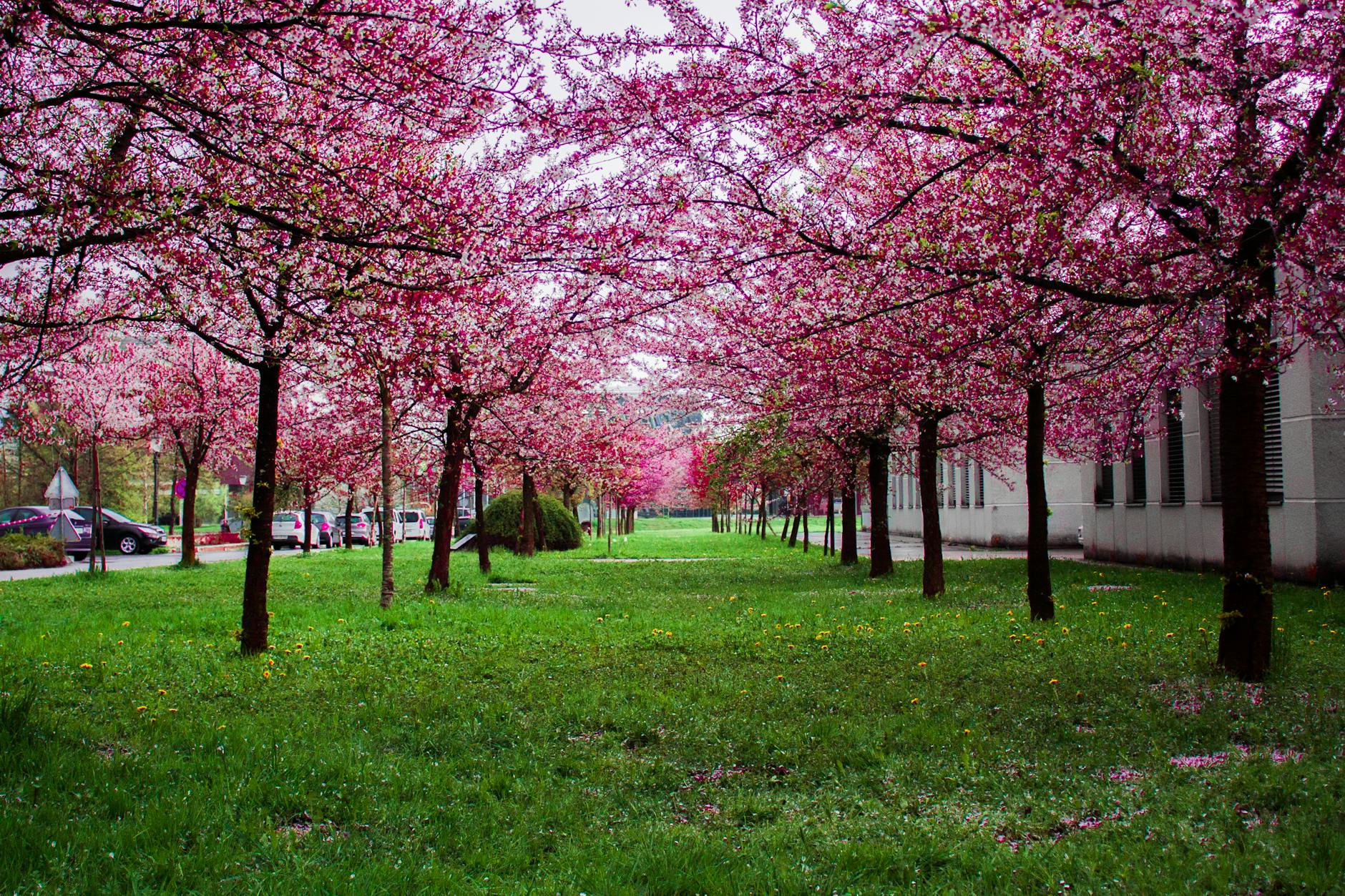
Photo by Jan Krnc
- Best Time to Visit Vienna at a Glance
- Vienna Weather: Year-Round Reality Check
- Spring in Vienna: March, April & May
- Summer in Vienna: June, July & August
- Autumn in Vienna: September, October & November
- Winter in Vienna: December, January & February
- Best Time to Visit Vienna by Type of Traveler
- Vienna Festival & Event Calendar
- How Crowds & Prices Vary by Month
- Day Trips & Seasonal Considerations
- What’s Open When: Closures & Restorations
- Frequently Asked Questions
- Final Recommendation: When to Visit Vienna
- Related Vienna Guides
This article contains advertising. Our booking links are routed through a partner that adds commission tracking automatically, so if you book through one we earn a commission from the provider, at no extra cost to you. It never affects what we recommend. Affiliate disclosure
The best time to visit Vienna depends on what kind of trip you want. Locals will tell you that Vienna has at least four distinct seasons — and three additional micro-seasons (heuriger, Christmas market, ball season) that the calendar doesn’t quite capture. This month-by-month guide gives you the real picture: weather, crowds, prices, festivals, and what’s open versus closed, so you can pick the window that matches the trip you’re imagining.
Short answer: late April through early June and September through mid-October are the consensus best windows — mild weather, gardens in bloom or in autumn color, full cultural calendar, and prices that haven’t peaked. But Vienna’s appeal varies wildly by interest, and a December trip for the Christmas markets or a January trip for ball season can be just as magical.
Best Time to Visit Vienna at a Glance
| Window | Weather | Crowds | Prices | Best For |
|---|---|---|---|---|
| Late April – early June | Mild, blooming | Building | Mid-shoulder | Sightseeing, gardens, balanced trip |
| July – August | Hot, humid | Heavy | Peak | Outdoor culture, festivals (with caveats) |
| September – mid-October | Crisp, dry | Manageable | Mid-shoulder | Best balance of weather + culture |
| Mid-November – December 23 | Cold, often grey | Heavy on weekends | Spike for markets | Christmas markets, romantic atmosphere |
| January – February | Cold, sometimes snowy | Lowest | Lowest | Ball season, museums, deals |
| March – mid-April | Variable, freshening | Light | Low-mid | Budget travel, Easter markets |
Vienna Weather: Year-Round Reality Check
Vienna sits in central Europe at 48° N — about the same latitude as Seattle. The climate is humid continental: cold winters, warm-to-hot summers, and noticeable rainfall in every month. Three things to keep in mind that don’t show up in average temperature charts:
- Winter is darker than you’d expect. Sunset in late December is around 4:00 pm. Late November and January days often see only a few hours of weak sun.
- Summer can swing extreme. July and August routinely hit 32–35°C (90–95°F) during heat waves; few historic buildings have full air conditioning.
- Spring and autumn are the most pleasant — and the most reliable. May, June, September and October temperatures hover at 18–25°C (65–77°F) with the city’s signature sunny-but-breezy days.
Spring in Vienna: March, April & May
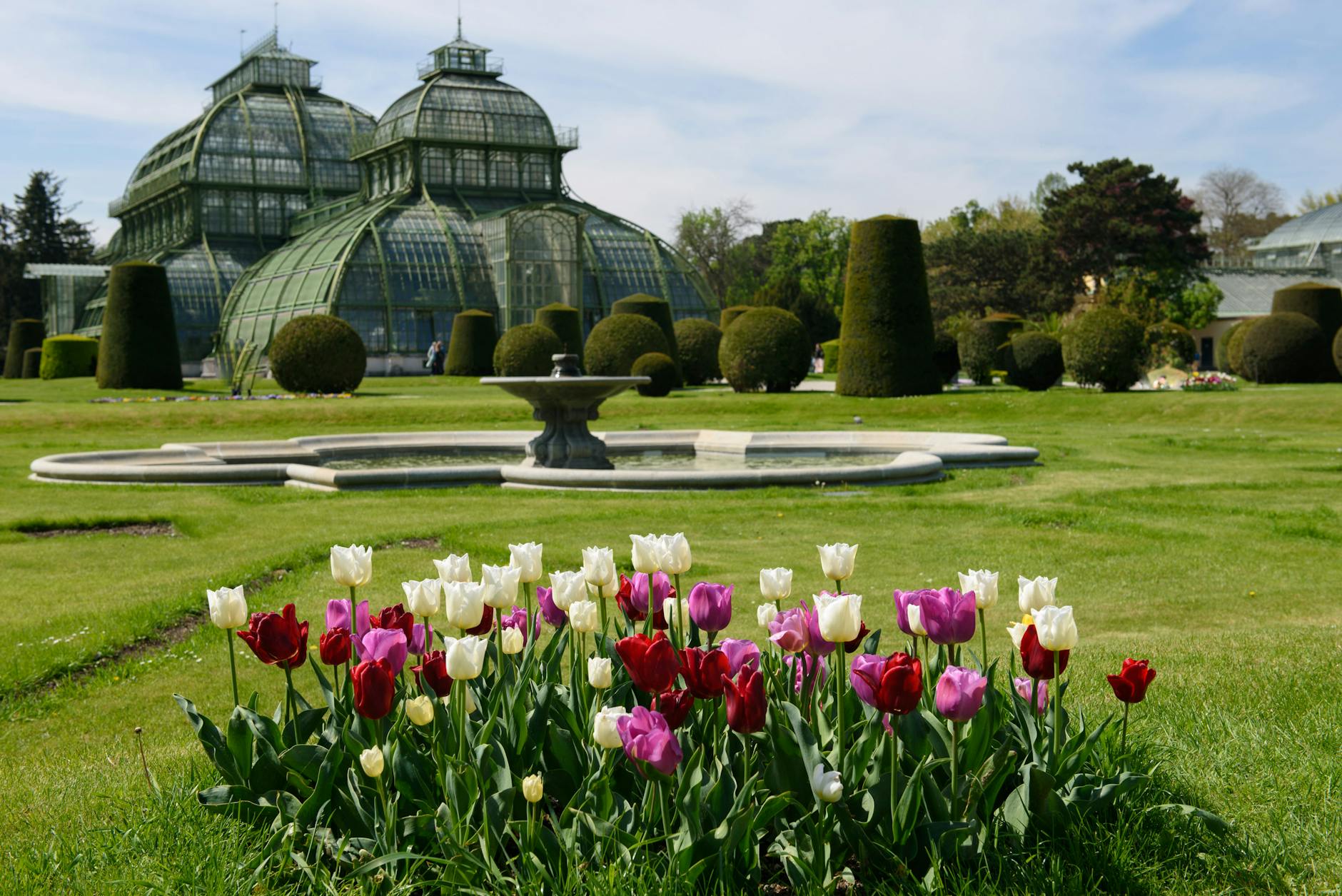
Spring is when Vienna shakes off its winter dimness. By late March the linden and chestnut trees in the Stadtpark begin to bud; by mid-April the Schönbrunn parterre erupts in tulips; by Mother’s Day in May the entire city smells like blossoms.
March in Vienna
Weather: 3–10°C (37–50°F), often grey but with steadily lengthening days. Snow is possible but rare in the second half of the month.
Crowds: Light. Most museums and palaces have moved past winter restoration closures.
What’s special: Easter markets typically run for the two weeks before Easter Sunday at Freyung, Am Hof, and Schönbrunn. The Vienna State Opera’s main season is in full swing.
Drawbacks: Outdoor cafes haven’t fully reopened; gardens are not yet in bloom.
April in Vienna
Weather: 7–15°C (45–59°F), with the first reliably sunny days. Bring layers — mornings can still be cold.
Crowds: Moderate during Easter holidays (school break weeks vary by EU country); otherwise still light.
What’s special: The Vienna City Marathon (typically third or fourth Sunday of April) closes much of the Ringstrasse and brings 40,000+ participants. Schönbrunn’s tulips, magnolias, and Japanese cherry blossoms peak around April 20–30.
Drawbacks: Weather is genuinely variable — pack as if for two seasons.
May in Vienna
Weather: 11–20°C (52–68°F), the most consistently pleasant month of the year. Sunny days outnumber grey ones.
Crowds: Building noticeably. Hotel prices begin their summer climb.
What’s special: The Wiener Festwochen (Vienna Festival) starts mid-May with five weeks of avant-garde theater, music, and performance art. Outdoor cafes are at full capacity. Heuriger taverns in Grinzing and Nussdorf throw open their gardens.
Drawbacks: Few. May is widely considered Vienna’s best single month.
Summer in Vienna: June, July & August
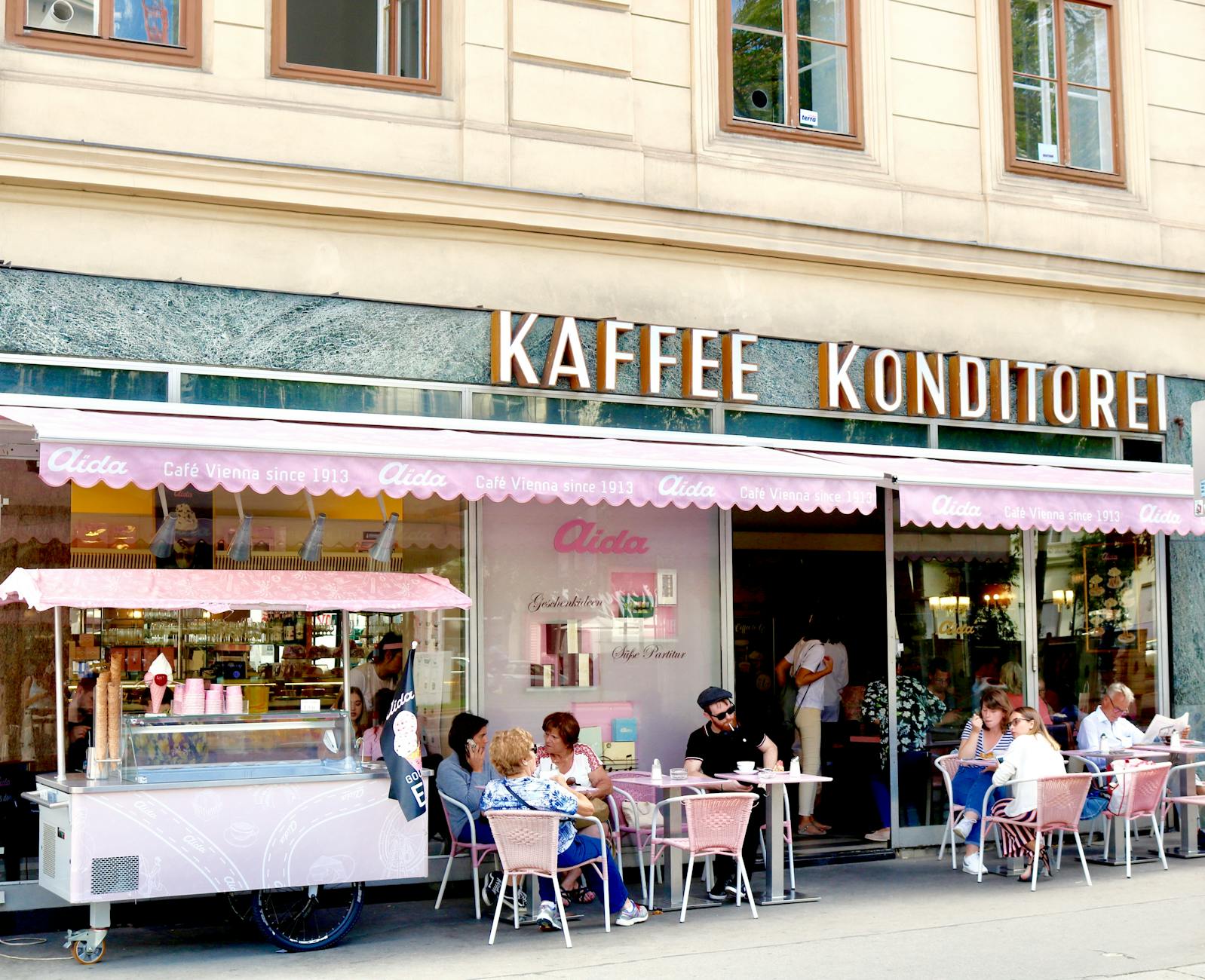
Vienna in summer is a city in dialogue with itself. Locals decamp en masse — many to the Wachau, the Salzkammergut, or further south to the Adriatic — and the city tilts noticeably toward visitors. Two things to know: the indoor cultural calendar (opera, Musikverein) takes a deliberate intermission, while the outdoor calendar explodes.
June in Vienna
Weather: 14–24°C (57–75°F). Long evenings (sunset ~9pm), occasional thunderstorms.
Crowds: Heavy and rising; still bearable in the first half of the month.
What’s special: The Donauinselfest (Danube Island Festival) is the largest free open-air festival in Europe — three days, three million attendees. The State Opera’s last performances of the season (typically last week of June) often feature the company’s strongest casting.
Drawbacks: Schools are still in session through late June, so weekday family attractions remain manageable; weekends fill up.
July in Vienna
Weather: 17–27°C (63–81°F), with frequent heat waves into the low 30s. Few historic apartments have air conditioning.
Crowds: Peak. Hotel rates highest of the year, particularly the second and third weeks.
What’s special: The Vienna Film Festival at Rathausplatz (free, nightly) shows operas, ballets, and concerts on a giant screen with food stalls from around the world — a Viennese summer ritual. The MuseumsQuartier courtyard becomes a nightly gathering place.
Drawbacks: Vienna State Opera, Musikverein, and Burgtheater are all closed for the summer break. Many small Beisl and family-run restaurants take their annual holidays.
August in Vienna
Weather: 17–27°C (63–81°F), but heat waves push the high frequently above 30°C (86°F).
Crowds: Still peak, particularly at Schönbrunn, Belvedere, and Stephansdom. Cruise ship arrivals add to the load.
What’s special: The Salzburg Festival overlaps (worth the day trip if you can score tickets). Vienna’s outdoor pools and Danube Island swim spots are at their best.
Drawbacks: Heat plus closed cultural institutions plus crowds make August the hardest month for a classic culture-focused Vienna trip. If you’re committed to August, prioritize an air-conditioned hotel and plan museum visits in the heat of the afternoon.
Autumn in Vienna: September, October & November
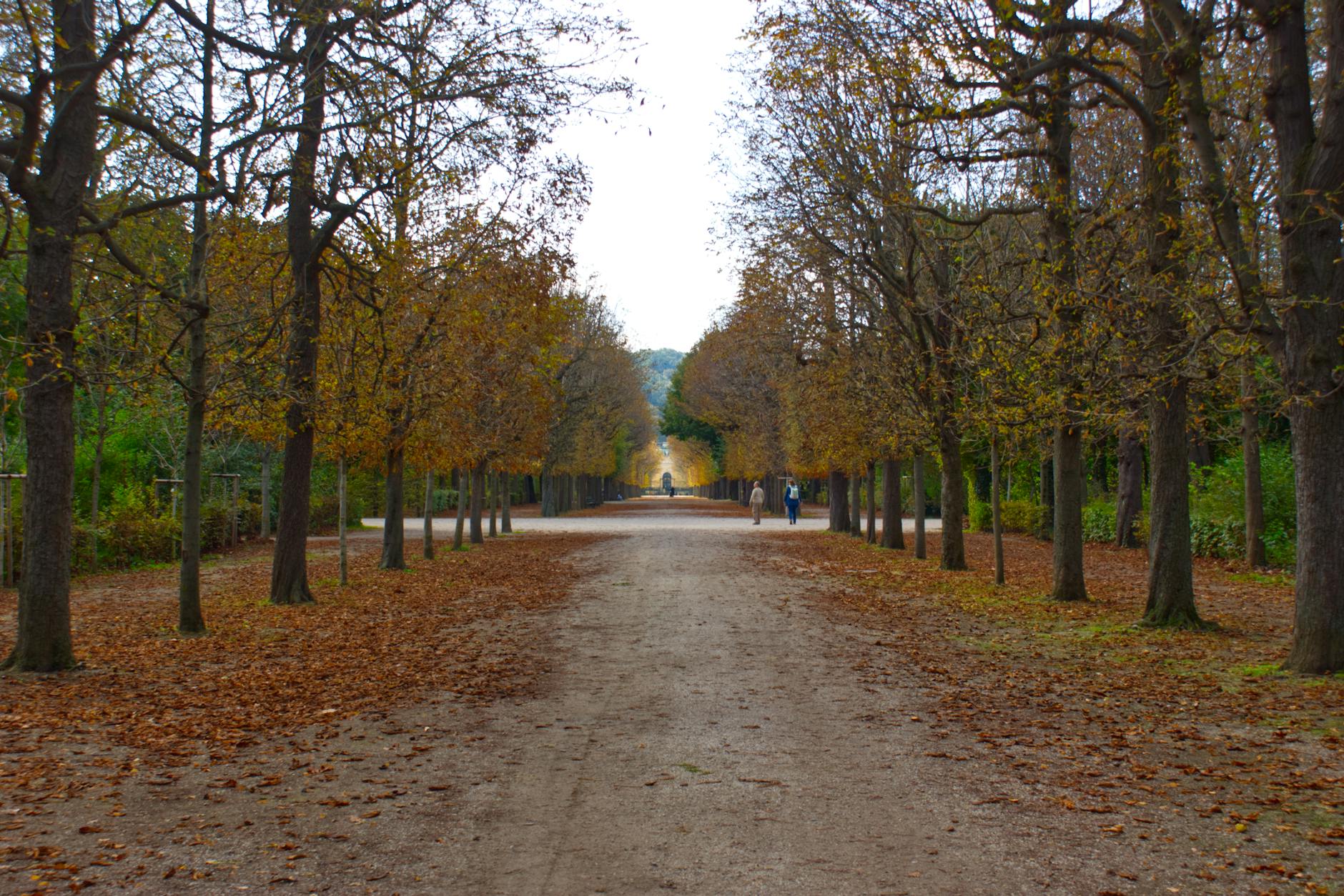
Many locals will quietly tell you autumn is the best season for Vienna. The cultural calendar restarts, the heat retreats, the Vienna Woods turn copper and gold, and the heuriger taverns fill with new wine.
September in Vienna
Weather: 10–22°C (50–72°F). Stable, often sunny, occasionally still warm enough for outdoor cafes well into late evening.
Crowds: Drop noticeably after the first week as European school holidays end.
What’s special: Vienna State Opera and Musikverein season opens (typically first week). Heuriger season shifts into high gear. The Lange Nacht der Museen (Long Night of Museums) in early October — but the buildup begins in September — opens 100+ museums until 1 am for one ticket.
Drawbacks: Almost none. September is the strongest competitor to May for Vienna’s best month.
October in Vienna
Weather: 5–14°C (41–57°F). Crisp, dry, often sunny. Pack layers.
Crowds: Moderate; hotel rates near their lowest of the year.
What’s special: Peak autumn color in the Schlosspark, Stadtpark, and Wienerwald. Viennale film festival (mid-October) and the Vienna Design Week. The first new heuriger wines are bottled.
Drawbacks: Daylight begins to retreat noticeably; clocks fall back the last weekend of October.
November in Vienna
Weather: 1–7°C (34–45°F), grey and damp. The least photogenic month.
Crowds: Lowest of the year before the Christmas markets open in mid-November.
What’s special: The Christmas market season opens around November 14–17, transforming the city overnight. The first three weeks of the month, before that, are the cheapest and quietest in Vienna.
Drawbacks: Outdoor sightseeing is unpleasant most days. Few cafes remain open with outdoor seating.
Winter in Vienna: December, January & February
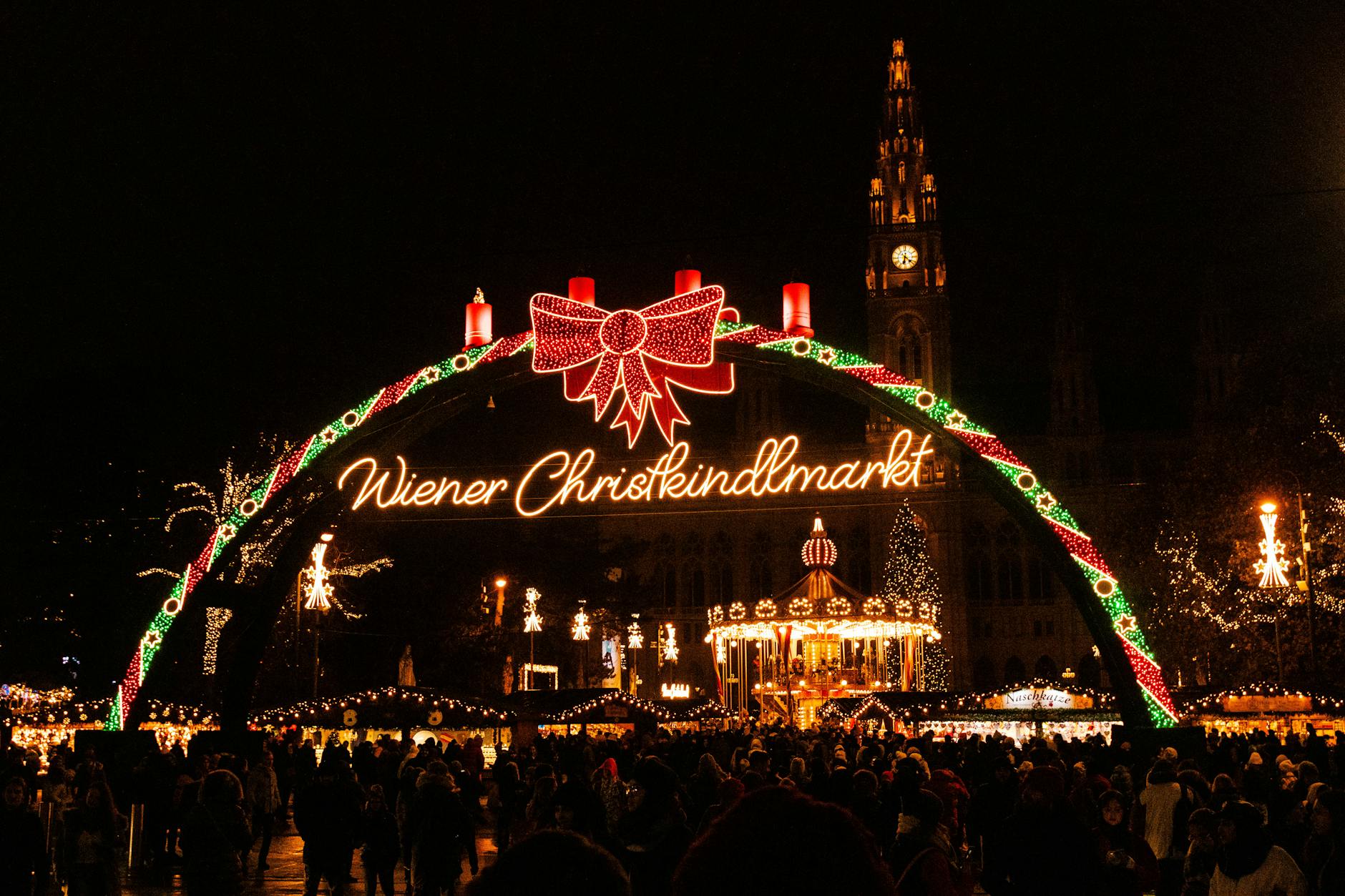
Winter Vienna is a different city — colder, slower, more interior. Two seasons within winter shape the trip you’ll have: Christmas market season (mid-November to December 23) and ball season (Epiphany on January 6 through Shrove Tuesday).
December in Vienna
Weather: -1 to 4°C (30–39°F). Frequent overcast days; occasional snow that rarely sticks long. Sunset around 4 pm.
Crowds: Very heavy on weekends through December 23. Quieter on weekdays before December 8.
What’s special: The Christkindlmärkte at Rathausplatz, Schönbrunn, Karlsplatz, Spittelberg, Belvedere, and Maria-Theresien-Platz are the city’s best-known winter draw. New Year’s Eve in Vienna is a serious affair — the Vienna State Opera’s New Year’s Eve concert and the streets-of-Vienna “Silvesterpfad” are both major events.
Drawbacks: Markets close December 23 (some on December 26). Hotel rates surge for the first three weeks.
January in Vienna
Weather: -2 to 3°C (28–37°F). Often grey, sometimes snowy. The coldest month on average.
Crowds: The first week is busy (post-Christmas holiday); after January 7 the city empties dramatically.
What’s special: The Vienna Philharmonic New Year’s Concert on January 1 (broadcast worldwide; tickets allocated by lottery). Ball season begins with the Imperial Ball on December 31 and runs through Lent — over 450 balls in the season, including the Vienna Opera Ball, the Hofburg Ball, and the unique science-and-medicine balls. Many balls accept guests; check schedules well in advance.
Drawbacks: Genuine cold. Daylight short. Outdoor sightseeing requires real winter clothing.
February in Vienna
Weather: 0–5°C (32–41°F). Days lengthen visibly toward the end of the month.
Crowds: Lowest of the year alongside November.
What’s special: Ball season continues at full pace. The Vienna Opera Ball (on Shrove Thursday — date varies by year) is the social event of the year. Museum exhibitions are typically at their fullest before the spring rotations.
Drawbacks: Same as January, but with the trade-off that hotel rates are at their lowest.
Best Time to Visit Vienna by Type of Traveler
First-Time Visitor
Late April to early June, or September to early October. You’ll get full opening hours at every attraction, comfortable weather, and the city looking its best. Pair with our 5-day Vienna itinerary for the optimal length.
Couples & Romantic Trips
Two windows are unbeatable: late May (gardens in bloom, heuriger season, mild evenings) and December (Christmas markets after dusk, mulled wine, a snowy Stephansplatz). Avoid August’s heat. We’ve put together a dedicated guide to Vienna nightlife.
Families with Kids
Late June (school not yet out everywhere) or early September (after European school returns). Schönbrunn’s gardens, the Tiergarten, and the Prater are at their best in mild weather. Avoid the August heat with young kids.
Culture & Music Lovers
September through early November or January through March. The Vienna State Opera, Burgtheater, and Musikverein run their full programs. Skip July and August entirely — most major venues close. See our Vienna opera and classical music for what’s on.
Christmas Market Visitors
The five-day window from late November through December 8 is the sweet spot — markets are fully open, prices haven’t fully spiked, and weekends are still bearable. Avoid the last weekend before December 23 unless you love crowds. Full schedule and tips in our Vienna Christmas markets guide.
Budget Travelers
February (post-ball season slowdown), early March, and the first half of November are the cheapest weeks of the year. You’ll find hotel deals 30–40% below summer peak. Day trips by train to Bratislava or the Wachau are inexpensive year-round. See our Vienna on a budget guide for more savings.
Photographers
Two windows: April 20 to May 10 (cherry blossoms, tulips, magnolia, fresh greens) and October 10 to November 5 (autumn color, fewer crowds, low golden light). Winter snow is photogenic but unreliable.
Foodies & Wine Lovers
September and October — heuriger season is at its peak, the new wines (Sturm and Junger Wein) are pouring, the Wachau apricot harvest has finished, and chefs are using the autumn larder. Detailed restaurant suggestions in our Vienna food guide.
Vienna Festival & Event Calendar
| Month | Major Events |
|---|---|
| January | Vienna Philharmonic New Year’s Concert; Ball Season opens |
| February | Vienna Opera Ball; Carnival/Fasching parades |
| March | Easter markets begin; OsterKlang Festival |
| April | Vienna City Marathon; Schönbrunn tulips peak |
| May | Wiener Festwochen begins; outdoor cafe season fully open |
| June | Donauinselfest; Vienna State Opera season ends |
| July | Film Festival on Rathausplatz; Jazz Fest Wien |
| August | Outdoor concerts continue; many institutions closed |
| September | State Opera and Musikverein reopen; Lange Nacht der Museen |
| October | Viennale Film Festival; Vienna Design Week |
| November | Christmas markets open mid-month |
| December | Christmas markets at peak; New Year’s Eve celebrations |
How Crowds & Prices Vary by Month
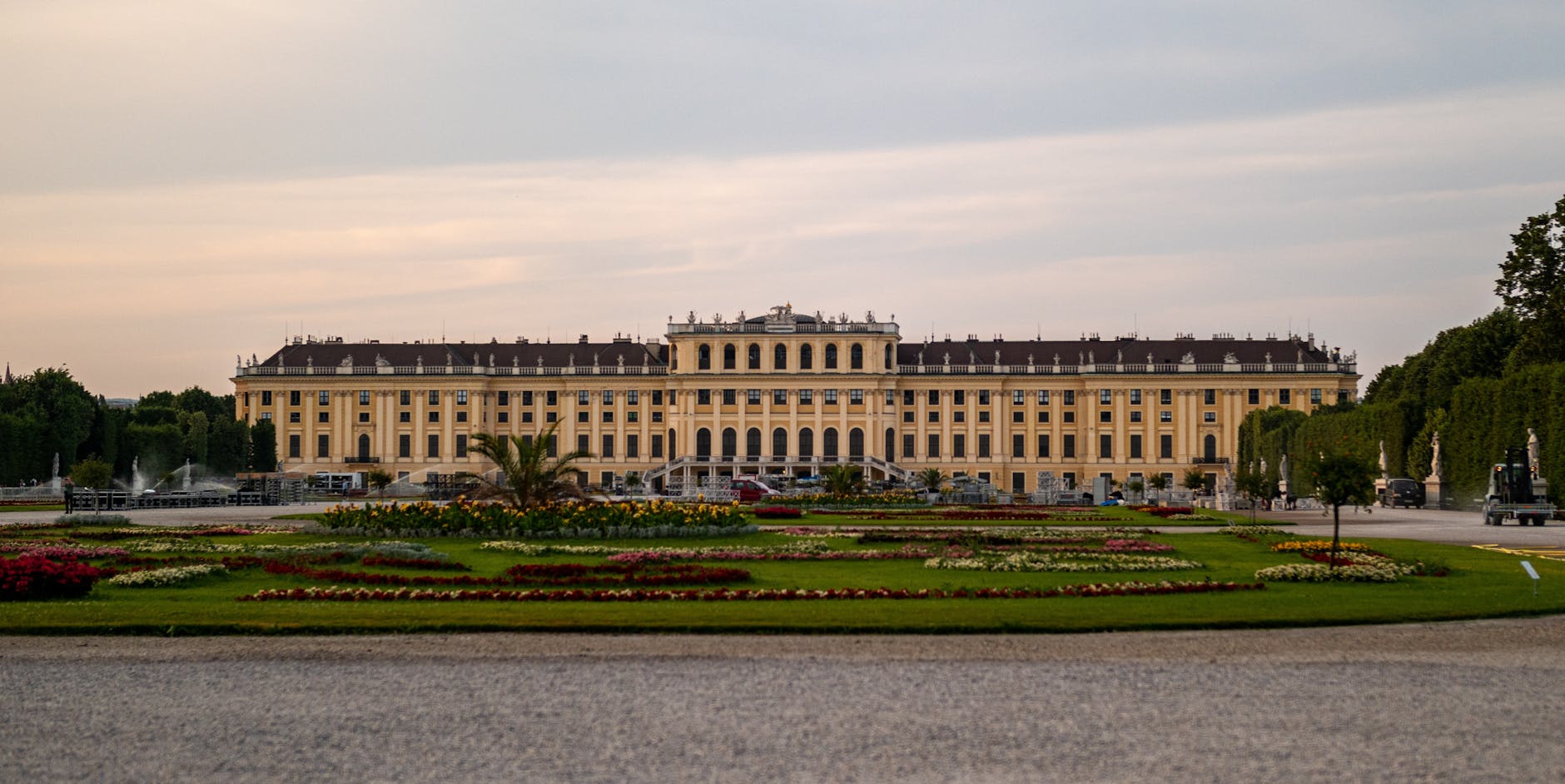
Vienna’s tourist seasonality is sharp but understandable:
- Peak (highest prices, biggest crowds): July, August, the third week of December (Christmas), and any week with major trade fairs.
- High shoulder: May, June, September, early October — comfortable weather brings serious culture travelers.
- Low shoulder: April, mid-October to mid-November, mid-January to February — hotel rates 25–40% lower than peak.
- Trough: Early to mid-November and late January — best for budget hunters, though weather is grey.
Hotel prices roughly double from January to July at popular 4-star Inner City hotels. Booking 8–12 weeks ahead is enough for shoulder season; for May, September, and December peak weekends, book 3–4 months ahead.
Day Trips & Seasonal Considerations
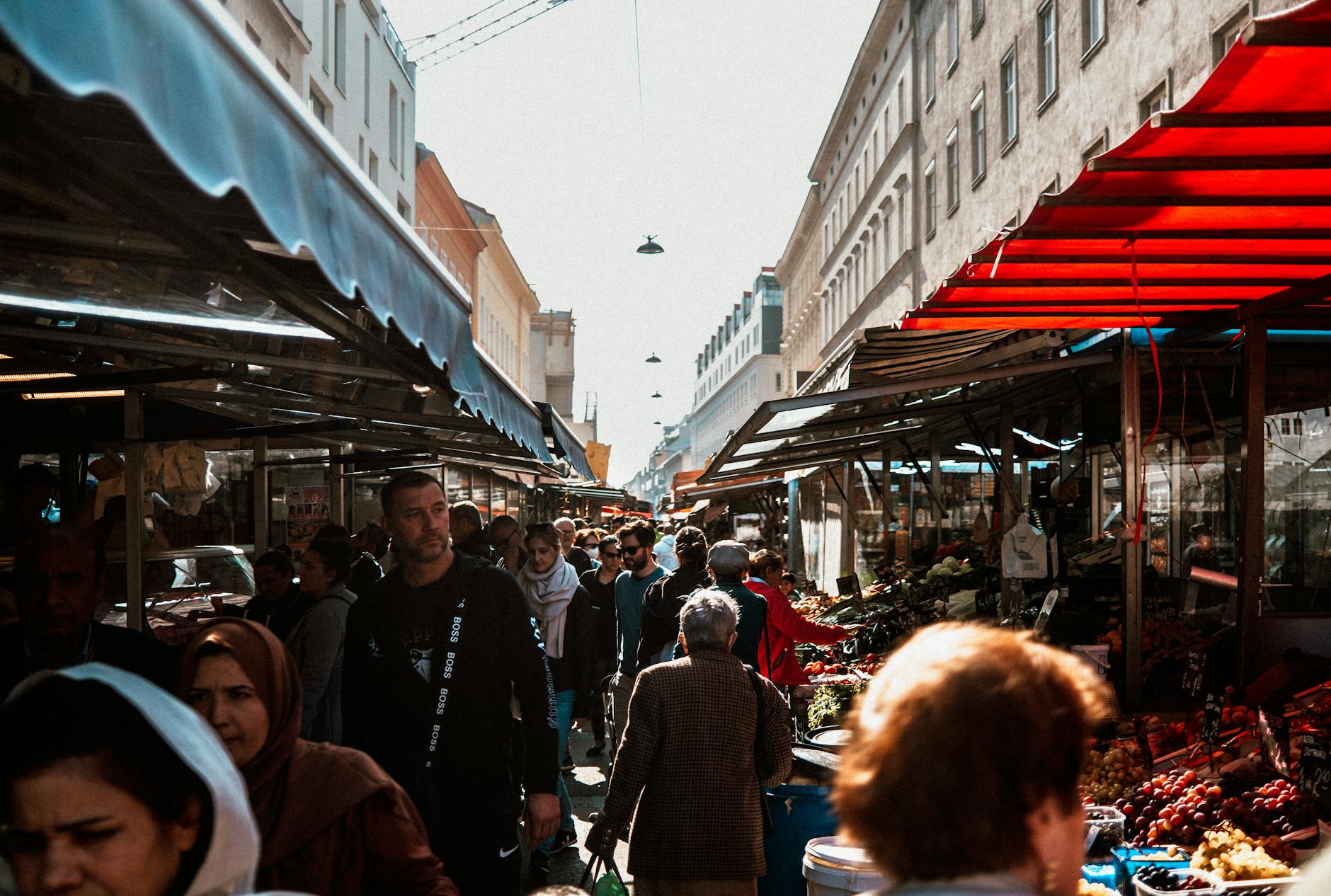
Vienna’s day-trip options change dramatically by season. The day trips from Vienna guide covers each in detail, but here’s the seasonal short answer:
- Wachau Valley: Best in late April (apricot blossoms), September (harvest), and October (foliage). Avoid November–March when many wineries close.
- Bratislava: Year-round; loveliest in May and September.
- Salzburg: Spring, summer, and December (for Christmas markets). The Salzburg Festival (late July–August) requires planning months ahead.
- Hallstatt: Year-round, but best avoided on summer weekends. Winter has its own snow-globe charm if you can handle the long travel day.
- Vienna Woods (Wienerwald): Spring wildflowers, autumn color. Skip in winter unless you ski.
What’s Open When: Closures & Restorations
A few big institutions take seasonal breaks worth knowing about:
- Vienna State Opera, Volksoper, and Burgtheater: Typically dark from late June through early September.
- Musikverein: Limited summer programming June–August; full season from September.
- Heurigers: Most have ausgsteckt (open) signs only when they’re pouring; many open just 2–3 weeks per month, particularly outside September–October peak.
- Christmas markets: Open mid-November through December 23 (some run to December 26).
- Smaller museums: Many take a January or February restoration break — always check before traveling in deep winter.
Frequently Asked Questions
What is the best month to visit Vienna?
May and September are most consistently recommended. May offers spring blooms, mild weather, and the start of outdoor cafe season; September brings the cultural season opening, comfortable weather, and lower crowds than summer. April and October are also excellent if you don’t mind cooler edges.
What is the worst time to visit Vienna?
Late July to mid-August is the most challenging window — hot, crowded, expensive, with major cultural institutions on summer break. November (before Christmas markets open) is the gloomiest, but it’s also the cheapest, so the answer depends on priorities.
When are Vienna Christmas markets open?
Most Christmas markets run from mid-November (typically November 14–17) through December 23, with some — Spittelberg, Karlsplatz — extending through December 26. Check individual markets, as opening dates vary slightly each year.
What is the cheapest month to visit Vienna?
The first half of November and most of February are the cheapest. Hotel rates fall 30–40% below July–August peaks; flights are also at their cheapest. Trade-off: weather is grey-cold and daylight is short.
Is Vienna nice in winter?
Yes, especially in December (Christmas markets), January (ball season, Vienna Philharmonic New Year’s), and February (ball season continues). Days are short and cold, but the city has more indoor cultural life per square kilometer than any city in Europe.
How long does Vienna spring last?
Realistic spring runs from late March to early June. The most photogenic window — cherry blossoms, tulips, magnolias all overlapping — is roughly April 20 to May 15.
Is it worth visiting Vienna in August?
Only if you accept the trade-offs: heat, peak crowds, and most major opera and theater venues closed. The outdoor festival scene compensates somewhat, and day trips to lakes (Salzkammergut) make for excellent breaks. For pure city culture, prefer May, June, September, or October.
How many days should I spend in Vienna?
Three days for a fast first visit, five days for a relaxed trip with a day trip to the Wachau or Bratislava. See our 5-day Vienna itinerary for a detailed itinerary.
Final Recommendation: When to Visit Vienna
If you can’t choose, the answer most locals would give is mid-May or mid-September. You’ll catch the gardens at their best, the cultural calendar at full force, hotel prices comfortably below peak, and weather that does what weather is supposed to do.
If your trip is locked to a different window, plan around it: pack layers in March, expect heat in August, dress warm and book early in December, and embrace the quiet emptiness of February. Vienna is one of those rare cities that rewards visitors in every season — you just need to arrive with the right expectations.
For a complete planning resource start to finish, see our Vienna travel guide and the deeper where to stay in Vienna breakdown.
Of everything on this page, October is the month that most often surprises people — near-September weather in its first fortnight, a fraction of the crowds, and the whole cultural season already running. We make the case in detail, along with the honest drawbacks, in our guide to Vienna in October.
The strongest value argument in the whole calendar sits in the second half of January: the full opera and concert season running, the museums genuinely empty, and hotel rates near their annual floor. We set out the case — and the real cost in cold and darkness — in our guide to Vienna in January.