Hallstatt Day Trip from Vienna: Worth It? (2026 Honest Guide)
Hallstatt day trip from Vienna 2026. Honest assessment of the 4-hour journey, overcrowding, and whether it's truly worth the trip.
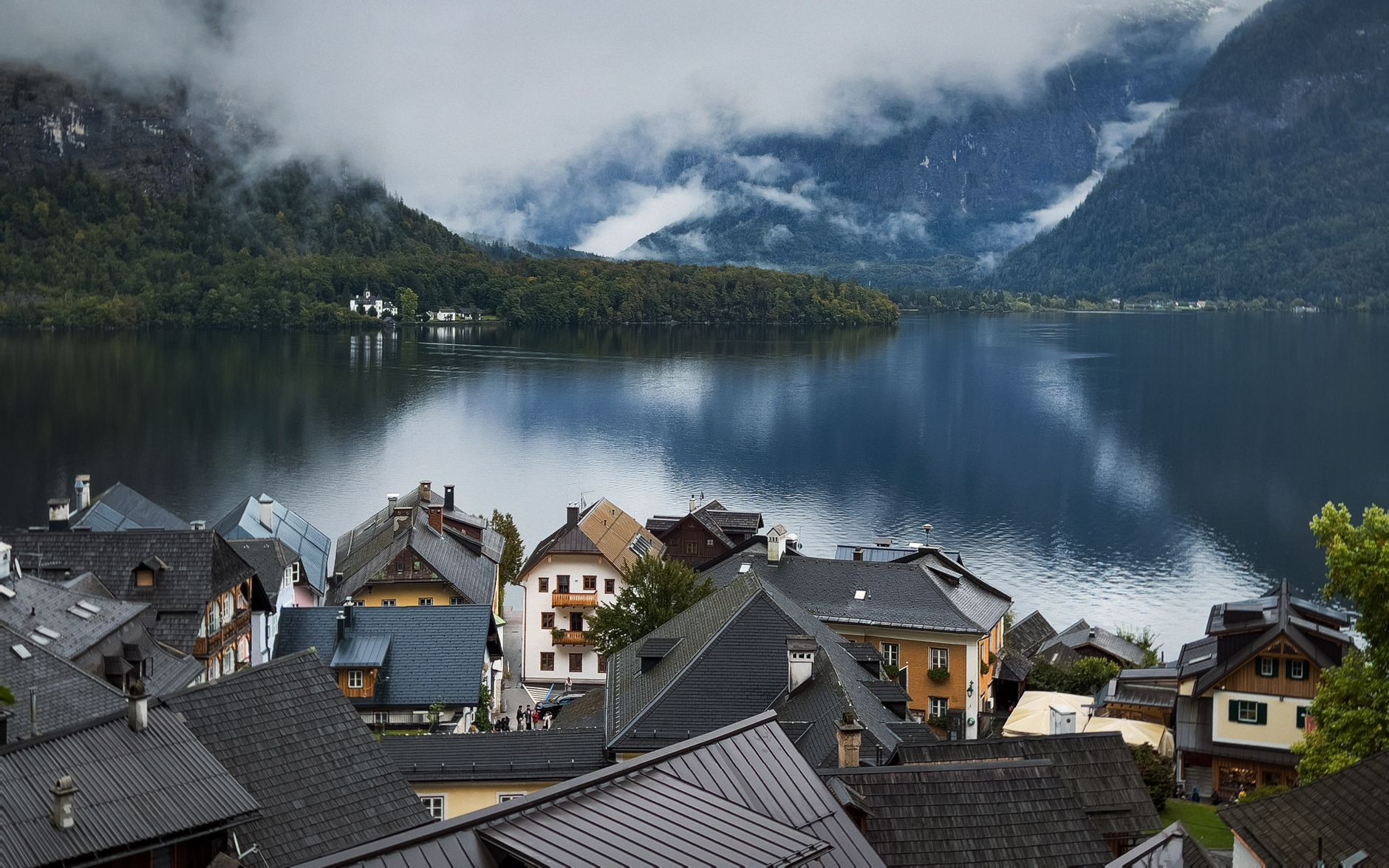
Photo by Mehmet Turgut Kirkgoz
- Hallstatt day trip from Vienna: the honest answer
- How to get to Hallstatt from Vienna
- The Hallstatt overcrowding issue
- What to see in Hallstatt
- What you can’t do on a day trip from Vienna
- Sample Hallstatt day trip itinerary from Vienna
- Hallstatt overnight stay
- Photography tips for Hallstatt
- The Hallstatt China replica
- Common Hallstatt day trip mistakes
- Alternatives if you skip Hallstatt
- Hallstatt overnight accommodations in detail
- Photography ethics in Hallstatt
- Hallstatt day trip FAQ
This article contains advertising. Our booking links are routed through a partner that adds commission tracking automatically, so if you book through one we earn a commission from the provider, at no extra cost to you. It never affects what we recommend. Affiliate disclosure
Hallstatt is arguably the most photographed Austrian village in the world. Pinned between the steep Alps and the crystal Hallstaetter See lake, with pastel houses cascading down to the water’s edge, it has appeared on millions of Instagram feeds and inspired theme-park reconstructions in China. The question of whether to attempt a Hallstatt day trip from Vienna is genuinely complicated: the journey is 4-5 hours each way, the village itself takes only 2-3 hours to explore, and summer overcrowding has become a real issue. This honest 2026 guide tells you exactly what to expect, including the strong arguments for skipping Hallstatt or visiting only overnight.
Hallstatt day trip from Vienna: the honest answer
Visiting Hallstatt from Vienna in a single day is possible but exhausting and incomplete. The journey takes 3.5-4 hours one-way via train, leaving roughly 4-5 hours in the village if you depart Vienna at 6 a.m. and return by 10 p.m. That window is enough for the village highlights but doesn’t include time for the salt mine (a major attraction) or the Krippenstein cable car (the panoramic alpine experience above the lake).
Most Hallstatt veterans recommend an overnight stay or visiting from Salzburg (1h45 vs Vienna’s 4 hours) rather than a Vienna day trip. If your Austria itinerary allows even one night in Hallstatt or a Salzburg-based visit, take it.
That said, if a day trip is your only option, it remains doable and rewarding, just understand the tradeoffs.
How to get to Hallstatt from Vienna
By train (most common)
The Vienna-to-Hallstatt train journey involves one or two changes via Attnang-Puchheim. From Attnang, a regional train heads south to Hallstatt Bahnhof, which sits across the lake from the village. A small passenger ferry (FahrradTransport included) connects the train station to the village in 7 minutes.
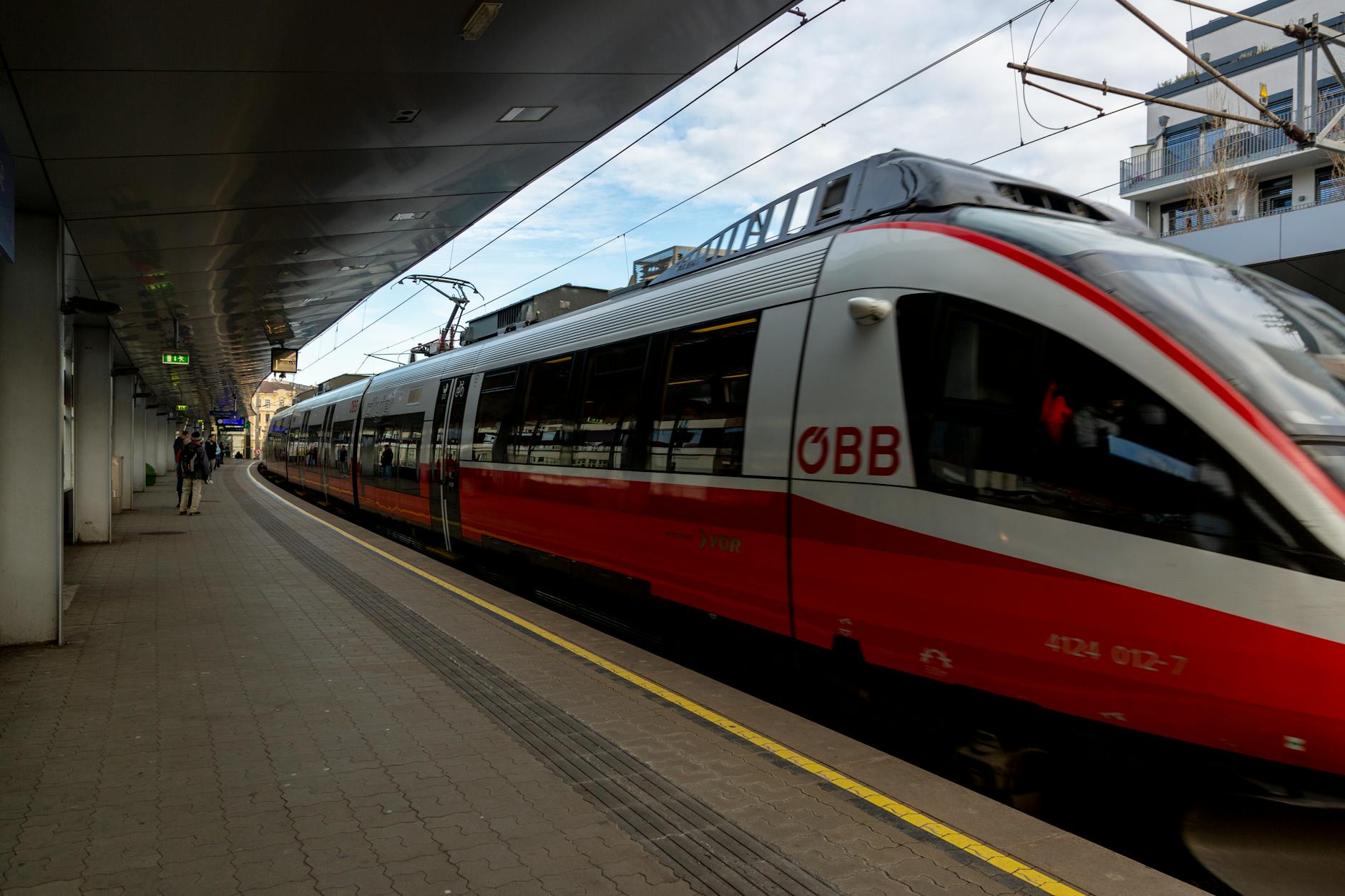
Total Vienna-to-Hallstatt time: 3.5-4 hours including the ferry crossing. Single ticket Vienna-Hallstatt: 60-75 euros walk-up, 30-45 euros if booked 2+ weeks ahead with OeBB Sparschiene. Round-trip: 100-120 euros walk-up, 60-80 euros advance.
The ferry is timed to meet arriving trains, but a delayed train can cause you to miss the connecting ferry by a few minutes and wait 30-60 for the next one. Buffer your timing.
By car
The drive from Vienna to Hallstatt via the A1 motorway takes 3h30 (290 km) and requires an Austrian motorway vignette (12.80 euros for 10 days). Parking near Hallstatt is highly restricted in summer 2026: you must park at one of the designated P1, P2, or P3 lots outside the village and walk in (10-15 minutes). Day parking costs 7-12 euros per day.
Driving makes sense if you’re already on a multi-stop Austria trip but is less efficient than the train for a one-shot day trip.
By guided day tour
Several Vienna-based operators run full-day Hallstatt tours (around 130-180 euros per person) using minibuses or small coaches. These typically include round-trip transport, a guided village walk, and sometimes a salt mine visit. Convenient for stress-free planning but inflexible.
Combining with Salzburg or Wachau
Travelers planning to visit both Salzburg and Hallstatt often base out of Salzburg, taking a Salzburg-Hallstatt day trip (1h45 each way) rather than a Vienna-Hallstatt day trip. The shorter journey leaves more village time and allows the salt mine and cable car visits.
The Hallstatt overcrowding issue
Hallstatt receives roughly 1 million tourists per year for a permanent population of 750. The crowding is real, particularly:
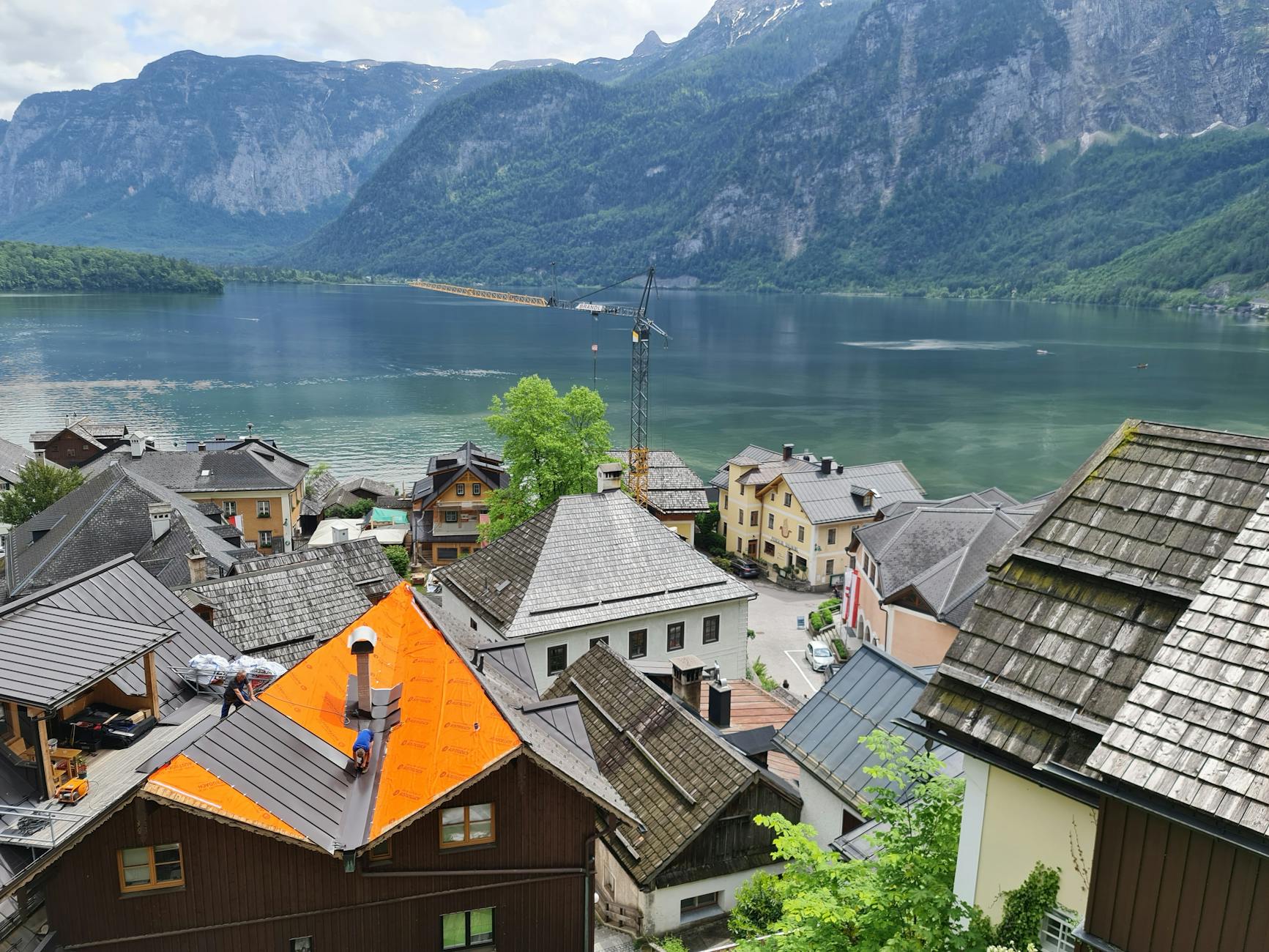
Summer Saturdays and Sundays (July-August): The village is packed with cruise ship excursion groups and Asian tour buses. The famous “Hallstatt Classic View” photo spot has 20-50 people queuing for the same shot at all times during daylight.
Late morning to mid-afternoon: Tour buses arrive around 10-11 a.m. and leave by 3-4 p.m. The window of relative calm is before 9 a.m. and after 5 p.m.
The narrow main street: Hallstatt’s main lakeside street is genuinely narrow, with sidewalks only 3-4 feet wide in places. Pedestrian congestion can make walking slow and the experience feel theme-park-like in peak hours.
Selfie crowds at landmark spots: The Catholic and Protestant church towers, the small marketplace, and the lakeside path are choked with tour groups.
How to avoid the worst crowds
Visit shoulder season: April, early May, late September, or October provide much thinner crowds with still-decent weather and most amenities open.
Visit in winter: December-March with snow is magical, less crowded, and visually stunning, but check that the cable car and salt mine are operating (they often have winter hours).
Arrive early or stay late: Before 9 a.m. and after 5 p.m., the village is calmer. Day-trippers arriving at 11 a.m. and leaving at 3 p.m. miss the best hours.
Stay overnight: Evening and early morning Hallstatt, when day-trippers have left, is what visitors remember as magical. The crowd peak is a 4-hour window during the day.
Weekday vs weekend: Tuesday-Thursday is significantly less crowded than Saturday-Sunday in any season.
What to see in Hallstatt
The village itself is small. The main attractions and points of interest:
The Classic View: The famous photo spot is at the north end of the village near the Lutheran church. Best light is mid-morning. Don’t expect privacy.
Hallstatt Catholic Church (Pfarrkirche) and Beinhaus (Bone House): The church with its lakeside position is iconic. The Beinhaus (Charnel House) is a small chapel containing 1,200 painted skulls of former villagers, an unsettling but fascinating tradition due to limited burial space. 2 euros entry.
The Lutheran Church (Evangelische Kirche): Pretty Lutheran church at the village center.
Hallstatt Marktplatz (Market Square): Tiny but charming central square with a fountain and several restaurants.
Salt Mine (Salzbergwerk Hallstatt): The historic salt mine above the village, accessible by funicular. Tours run 1h30 and cost roughly 38 euros (combined ticket including funicular). The mine is genuinely interesting with a slide between levels. Allow at least 3 hours for the visit (funicular up, mine tour, funicular down). Closed January-April.
Hallstatt Skywalk and Welterbeblick viewpoint: A panoramic platform reached via the salt mine funicular. Spectacular views over the lake and Alps.
Hallstaetter See: The lake itself with boat rentals, swimming areas, and lakeside walks.
Hallstatt Museum: Small museum on village history and Celtic origins. 11 euros.
What you can’t do on a day trip from Vienna
With only 4-5 hours in Hallstatt after a Vienna train day trip, you likely cannot fit:
The salt mine tour (3 hours minimum) plus the village highlights.
The Krippenstein cable car (a 3-hour excursion including transport).
The 5-Fingers viewing platform above the lake (requires the Krippenstein cable car).
The Dachstein Ice Cave or Mammoth Cave (separate full-day excursion).
Hiking the lakeside trail beyond the village.
Boat trip across the lake to the smaller village of Obertraun.
If any of these are priorities, you need an overnight stay or a Salzburg-based visit.
Sample Hallstatt day trip itinerary from Vienna
For dedicated day-trippers, here’s the tightest realistic Vienna-Hallstatt itinerary:
5:45 a.m.: Depart hotel for Vienna Hauptbahnhof.
6:30 a.m.: Board OeBB Railjet to Salzburg.
8:45 a.m.: Change at Attnang-Puchheim.
10:30 a.m.: Arrive Hallstatt Bahnhof; take ferry to village.
10:45 a.m.: Walk through village to Classic View spot; photograph quickly before crowds peak.
11:30 a.m.: Visit the Catholic church, Beinhaus, and Marktplatz.
12:30 p.m.: Lunch at a lakeside restaurant.
1:30 p.m.: Funicular up to salt mine. Tour the mine (skip if running tight on time).
4:00 p.m.: Return to village; walk Lakeside path.
4:30 p.m.: Ferry to train station.
5:00 p.m.: Board train to Attnang.
7:00 p.m.: Arrive Attnang; transfer to Railjet to Vienna.
9:30 p.m.: Arrive Vienna Hauptbahnhof.
Note: this itinerary is tight. Any delay (missed ferry, slow lunch) cascades into the train return. Always have a buffer.
Hallstatt overnight stay
If your itinerary allows, staying one night transforms the experience. Hotels in Hallstatt run 130-300 euros per night for the limited inventory:
Heritage Hotel Hallstatt: Historic property in the village center, 180-280 euros.
Seehotel Gruener Baum: Lakeside hotel with charm, 200-320 euros.
Pension Sarstein: Family-run with lake views, 130-180 euros.
Hallstatt Hideaway: Boutique stays for couples.
Hallstatt rooms book up months ahead for summer. Reserve early.
Alternatives in nearby Obertraun (across the lake, 10 minutes by car or shuttle) offer more options and 30-40% lower rates.
Photography tips for Hallstatt
The famous “Classic View” is at the north end of the village near a small wooden boat rental dock. Best light is mid-morning to early afternoon (the sun moves around the lake’s eastern side). The light at 9 a.m. is excellent; by noon the sun is harsh.
For uncrowded shots, arrive at the Classic View before 8 a.m. or wait until after 7 p.m. The middle of the day will have 20+ people in every frame.
Alternative photo angles include the Lutheran church reflected in the lake, the Marktplatz fountain, the catholic church from the lake side, and the funicular tracks rising into the mountain.
Wide-angle lenses help capture the depth of the lake-mountain-village composition. Polarizing filters reduce reflection on the water.
The Hallstatt China replica
Hallstatt is so famous that a near-exact replica was built in Boluo County, China, in 2012. The original Hallstatt residents were not consulted; the controversy generated international news. This anecdote captures both Hallstatt’s global cultural reach and the conflicted feelings of locals about overtourism.
Common Hallstatt day trip mistakes
Mistake 1: Attempting Hallstatt as a half-day add-on. The 4-hour each-way journey demands a full day. Anything shorter doesn’t work.
Mistake 2: Arriving at peak tourist hours. 11 a.m. to 3 p.m. is the worst time. Arrive earlier or later.
Mistake 3: Trying to fit the salt mine into a Vienna day trip. Mathematically tight; usually means rushed village exploration. Prioritize one or the other.
Mistake 4: Visiting in January-March without checking what’s open. Some attractions close in winter. Verify before booking.
Mistake 5: Not buying advance train tickets. Walk-up fares are 60-75 euros vs. 30-45 advance. Book 2+ weeks ahead.
Mistake 6: Underestimating the ferry. The ferry waits don’t sync perfectly with all trains; sometimes you wait 30+ minutes for the next departure.
Mistake 7: Driving to Hallstatt without parking reservation. Summer parking is restricted with a reservation system; show up without a confirmed slot and you may be turned around.
Alternatives if you skip Hallstatt
If a Hallstatt day trip doesn’t fit your schedule, several closer Vienna day trips offer comparable scenic beauty without the 8-hour transit:
Wachau Valley: 90 minutes from Vienna. Wine, river, baroque abbey, villages.
Bratislava: 1 hour. Slovak capital, castle, old town.
Salzburg: 2.5 hours. Mozart, fortress, baroque architecture.
Baden bei Wien: 30 minutes. Thermal spa town, Beethoven history.
Melk Abbey: 90 minutes. Spectacular baroque monastery.
See our complete day trips from Vienna guide for full Vienna day trip comparisons.
Hallstatt overnight accommodations in detail
Heritage Hotel Hallstatt: Historic property in the village center. Rooms with lake views. 180-280 euros per night. Restaurant on-site.
Seehotel Gruener Baum: Lakeside location, traditional Austrian style. 200-320 euros per night.
Pension Sarstein: Family-run pension with lake views. 130-180 euros per night.
Hallstatt Hideaway: Boutique apartments for couples. 250-400 euros per night.
Hotel Gruener Baum: Another historic option. 180-280 euros.
For families and budget travelers, Obertraun across the lake (10 minutes by car) offers more options at 80-140 euros per night.
Photography ethics in Hallstatt
Hallstatt residents have grown weary of constant tourist photography. Best practices:
Don’t photograph through windows of private homes.
Respect “no photography” signs at private residences.
Don’t trespass into private gardens or alleys for shots.
Be mindful of local residents going about their daily lives. Quick photos are fine; long photography sessions blocking sidewalks are not.
Consider whether your shot really needs to include people’s homes or whether the lake/mountain composition works alone.
Hallstatt day trip FAQ
Is Hallstatt worth the trip from Vienna? If you’ve never been and have the day to spare, yes, but be aware of crowds. Better as part of a Salzburg-based trip or overnight stay.
Is the village itself worth seeing? Absolutely. The scenery is genuinely as beautiful as the photos. The crowds detract but don’t ruin the experience.
Can I swim in the lake? Yes, in summer. The water is cold (alpine lake) but refreshing. Several designated swimming areas exist.
Is the salt mine worth it? Yes, especially for kids. The wooden slides are fun, the history is interesting, and the views from the funicular and Skywalk are spectacular.
Can I visit with a wheelchair? Partially. The village center is walkable but narrow. The salt mine has stairs. The funicular is wheelchair accessible.
Is photography really restricted? Not officially, but residents have grown weary of constant photography of their houses. Be respectful, avoid photographing inside private homes through windows, and don’t trespass.
What language is spoken in Hallstatt? German is the native language. English is widely spoken in tourist-facing businesses. Many Asian tourists hear Mandarin or Korean translations.
Are there any restaurants for late dinner? Yes, but most close by 9 p.m. If you arrive late, eat on the train or stock up at the village shops.
Hallstatt is a one-of-a-kind destination that lives up to its photographs. The day trip from Vienna is doable but demanding, with the village’s overcrowding adding to the challenge. If you have flexibility in your itinerary, consider overnighting or visiting from Salzburg for a more relaxed experience. If a Vienna day trip is your only option, book early trains, plan a tight schedule, and prepare for the magic of the village to outweigh the crowd inconveniences. Combine with our complete day trips from Vienna guide for full day-trip planning.
If a very long day of travelling for a few hours in the village sounds like a poor trade, the alternative is to make Hallstatt one stop on a longer route: a night in Salzburg, a bus over to Bad Ischl and the lakes, and an overnight in Hallstatt itself once the day visitors have gone. Our guide to Austria beyond Vienna sets out the routes, the train times and when each region is at its best.