Vienna to Salzburg: All Travel Options Compared (2026 Guide)
Vienna to Salzburg by train, bus, or car compared. Complete 2026 guide with OeBB vs Westbahn prices, schedules, and day trip itinerary.
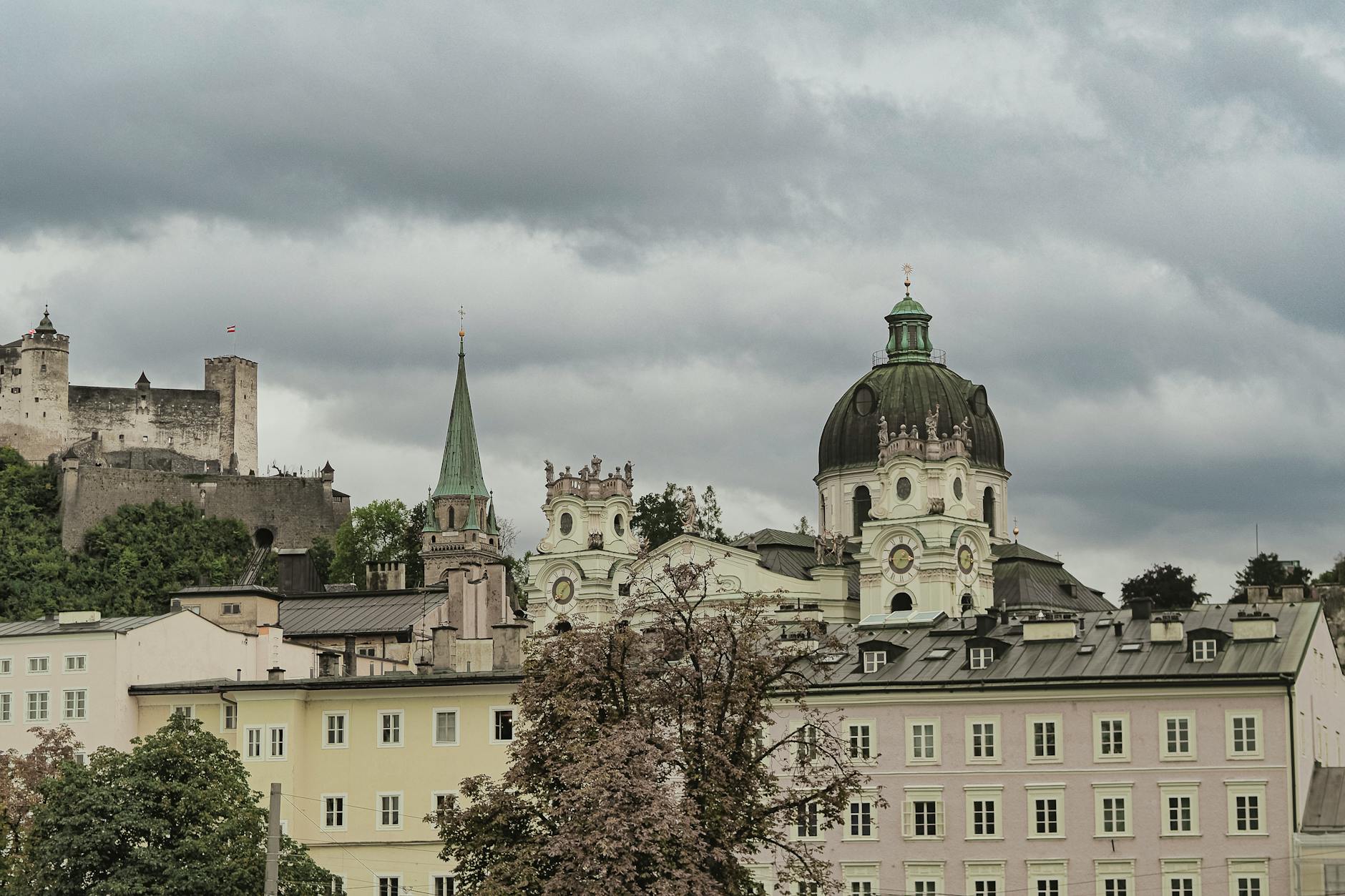
Photo by Laura Chouette
- Vienna to Salzburg at a glance
- By train: OeBB Railjet vs Westbahn compared
- How to book Vienna to Salzburg train tickets
- By bus: FlixBus and other operators
- By car: driving from Vienna to Salzburg
- By plane: when does flying make sense?
- What to do in Salzburg: a quick orientation
- Day trip from Vienna to Salzburg
- Salzburg as a stop on a wider Austria trip
- Luggage and storage
- Bringing a bike on the train
- Discount tickets and rail passes
- Common Vienna to Salzburg mistakes
- Comparing total trip costs
- The OeBB Vorteilscard math
- Onboard timing tips
- Vienna to Salzburg FAQ
- Related Vienna Guides
This article contains advertising. Our booking links are routed through a partner that adds commission tracking automatically, so if you book through one we earn a commission from the provider, at no extra cost to you. It never affects what we recommend. Affiliate disclosure
Vienna to Salzburg is one of the most popular intercity journeys in Austria, connecting the imperial capital with Mozart’s birthplace and the Alps. The 295-kilometre route is served by two competing train operators, regular buses, a major highway, and even a few connecting flights, but for almost every traveler the train is the right answer. This complete 2026 guide compares all options, decodes the OeBB and Westbahn ticket maze, lists current prices and travel times, and explains why the seemingly cheaper options often cost more once you factor in time and convenience.
Vienna to Salzburg at a glance
The fastest and most comfortable way from Vienna to Salzburg is by direct train, which takes between 2 hours 22 minutes and 2 hours 53 minutes depending on the service. Two operators compete on the route: state-owned OeBB (Austrian Federal Railways) and private operator Westbahn. Both run trains roughly twice every hour during the day, with the first departures around 5:30 a.m. and the last reasonable connection around 10 p.m.
Tickets bought well in advance start at 19.90 euros on either operator. Walk-up fares on the day reach 65 euros on OeBB and around 35 euros on Westbahn, making advance booking worth the effort even by a few days. By contrast, FlixBus tickets typically run 12-25 euros for a 3 to 3.5 hour journey, while driving the A1 motorway covers around 295 km and takes roughly 3 hours plus tolls and fuel.
By train: OeBB Railjet vs Westbahn compared
Both operators run modern, comfortable trains on the route, but they depart from different Vienna stations and have different onboard amenities. Understanding the difference is the key to a smooth journey.

OeBB Railjet (state railway)
OeBB runs sleek red-and-white Railjet trains every hour from Vienna Hauptbahnhof (the main station) to Salzburg Hauptbahnhof. Express services take 2h22, while regular services take around 2h53. Frequencies are typically twice per hour during peak times.
The Railjet has three classes: Economy (2nd class), First, and Business. Economy seats are airline-style with reclining backrest, power sockets at every seat, free WiFi, and a quiet luggage area. The Bordbistro restaurant car serves hot meals, coffee, and Austrian beer at reasonable prices. Business class adds wider seats, a welcome drink, and meal service.
Advance-purchase Sparschiene tickets start at 19.90 euros in 2nd class or 29.90 euros in 1st class. These are train-specific and non-refundable; if you miss the train, the ticket is gone. The full-flex Standardpreis costs 65 euros in 2nd class or 126.80 euros in 1st class, valid for any train of the day with no advance booking required.
Westbahn (private operator)
Westbahn runs distinctive double-deck trains twice an hour between Vienna Westbahnhof (the old western station, near Mariahilfer Strasse) and Salzburg Hauptbahnhof. Journey time is around 2h28 on most services.
Westbahn’s classes are Standard, Comfort, and First. All classes have power sockets, free WiFi, and access to vending machines for drinks and snacks (no restaurant car). The Comfort and First classes have wider seats and quieter sections.
Westbahn ticket pricing is more straightforward: typical fares run 16-30 euros without advance booking, and you can buy directly from the conductor on board if you didn’t book ahead. This flexibility makes Westbahn the better choice for spontaneous travel.
Which train operator is better?
For most travelers, the answer depends on where in Vienna you’re starting from. If you’re staying near the things to do in Vienna or in the Innere Stadt, OeBB’s departures from Vienna Hauptbahnhof are usually more convenient via the U1 metro to Hauptbahnhof. If you’re staying near Mariahilfer Strasse, the things to do in Vienna 7th district, or Neubau, Westbahn from Westbahnhof is closer.
For onboard experience, Railjet has the edge with a proper restaurant car and slightly faster express options. For pricing flexibility and last-minute travel, Westbahn wins because you can simply turn up and pay onboard.
How to book Vienna to Salzburg train tickets
OeBB Railjet tickets are sold through the OeBB website (oebb.at) and Scotty app, at station ticket machines, and at staffed counters. The cheapest Sparschiene fares appear roughly 6 months in advance and sell out as the date approaches. Aim to book at least 2-3 weeks ahead for the best prices.
Westbahn tickets are sold via westbahn.at, at the Westbahnhof ticket office, at the Westbahn vending machines on platform, or directly from the conductor onboard. Onboard payment carries a small surcharge of around 1.50 euros but otherwise the same pricing tiers apply.
Third-party sites like Trainline, Omio, and Rail Europe sell both operators’ tickets but add booking fees of 1-3 euros. Use them if you want to compare both operators in one place; book directly with the operator if you’ve already decided.
By bus: FlixBus and other operators
FlixBus runs roughly 10-15 daily services between Vienna and Salzburg, typically taking 3-3.5 hours with one or two stops. Tickets typically cost 12-25 euros, making the bus the cheapest option for budget travelers. Buses depart from Vienna International Busterminal (VIB) at Erdberg (U3 Erdberg) and arrive at Salzburg Hauptbahnhof or Salzburg Sued.
The savings vs. train are smaller than they appear because the bus journey takes 30-60 minutes longer, has fewer toilet breaks, and is more vulnerable to motorway traffic. The Vienna-Salzburg corridor has heavy weekend traffic in summer that can delay buses significantly.
Other bus operators include Eurolines and various local carriers. They generally don’t undercut FlixBus significantly and have less frequent service. The bus is the right choice if you’ve found a 12-15 euro fare and your time is flexible.
By car: driving from Vienna to Salzburg
The A1 West Autobahn covers the 295-kilometre route in roughly 3 hours under normal traffic. Tolls are not direct but require an Austrian vignette (motorway sticker), which costs 12.80 euros for a 10-day pass in 2026 and is mandatory on all motorways. Fuel costs are roughly 30-40 euros each way in a typical petrol car.
Driving makes sense if you’re continuing to the Salzkammergut lakes, the Salzburg Alps, or further into Bavaria. For city-to-city travel only, the train is faster, cheaper, and saves you the headache of parking in Salzburg’s old town (where parking is restricted and expensive).
If you rent a car in Vienna for the drive, factor in roughly 50-70 euros per day plus the vignette. Several agencies including Sixt, Hertz, and Europcar have stations in central Vienna and at the airport.
By plane: when does flying make sense?
Direct flights between Vienna and Salzburg take 50 minutes in the air, but with airport transfers and security, total door-to-door time is rarely under 3.5 hours, making them slower than the train. Austrian Airlines occasionally runs the route, but most flight searches for Vienna-Salzburg now return connections via other hubs, which take longer than the direct train.
The exception is if you’re flying internationally into Vienna and continuing to Salzburg as part of a single ticket. In that case the connecting flight may save baggage transfers, but you still pay extra for what amounts to a comfortable train journey.
What to do in Salzburg: a quick orientation
Salzburg’s UNESCO-listed old town fits in a compact area roughly 1 km long. Key sights for first-timers include the Hohensalzburg Fortress on the hill (great views), Salzburg Cathedral (Dom), Mozart’s Birthplace at Getreidegasse 9, Mozart’s Residence across the river, the Mirabell Palace and Gardens, and the bustling Getreidegasse shopping street.

For families, the Salzburg Marionette Theatre and the Sound of Music Tour (the 1965 film was set largely in Salzburg) are popular. Music lovers should book a concert at the Mozarteum, the Festspielhaus, or one of the smaller venues like the Salzburg Marionette Theatre.
If you have only one day, focus on the old town and Hohensalzburg Fortress, eat lunch on Getreidegasse, and take a stroll through Mirabell Gardens. Two days lets you add the Sound of Music sites and a short drive into the Salzkammergut.
Day trip from Vienna to Salzburg
A Salzburg day trip from Vienna is doable but tight. Catch the 7:30 a.m. Railjet from Vienna Hauptbahnhof, arrive Salzburg around 10 a.m., have until roughly 6 p.m. to explore, and return on a 6:30 p.m. or 7:00 p.m. train, reaching Vienna by 10 p.m. This gives you 7-8 hours in Salzburg, enough for the old town highlights but not for the Sound of Music tour or any nearby excursions.
If your budget allows, an overnight stay transforms the experience. Salzburg in the evening, after day-trippers have left, is one of the most magical small cities in Europe. Even modest hotels start around 80-100 euros per night in shoulder season, and adding one night turns a rushed day into a relaxed weekend.
For broader options including overnight day trips to the Wachau Valley, Bratislava, and Budapest, see our complete day trips from Vienna guide.
Salzburg as a stop on a wider Austria trip
Salzburg sits perfectly halfway between Vienna and Innsbruck/Munich, making it a natural stop on a multi-city Austria trip. From Salzburg, additional trains reach Hallstatt (90 minutes by train plus boat), Innsbruck (1h50m), Berchtesgaden (Germany, 45 minutes by bus), and Munich (1h30m).
Many travelers do Vienna-Salzburg-Hallstatt as a 5-7 day Austria triangle. The trains run frequently, all routes accept the same OeBB tickets, and you can buy multi-city packages at discounts.
Luggage and storage
Both Vienna Hauptbahnhof and Westbahnhof have left-luggage lockers and staffed luggage offices. Salzburg Hauptbahnhof has lockers from 4 to 8 euros per day. If you’re doing a day trip, dropping your bags at Salzburg station saves you carrying them through the old town.
On the trains themselves, large luggage racks are available at the end of each carriage. There are no luggage size restrictions on OeBB or Westbahn, but heavy bags should be lifted onto upper racks for safety.
Bringing a bike on the train
OeBB allows bikes on most Railjet services with a reservation (5 euros) and bike ticket (typically 6-12 euros depending on distance). Westbahn allows bikes on most services with a 3 euro bike ticket, no reservation required, but bike spaces are limited.
Note that the Wachau Valley cycle route is popular and bike spaces sell out on summer Saturdays. Book ahead if you’re planning a Vienna-Krems train + cycle back combination.
Discount tickets and rail passes
OeBB Vorteilscard (advantage card) gives 50% off most OeBB tickets and pays for itself after 2-3 long-distance journeys. The youth Vorteilscard costs 19 euros for one year for under-26s; the standard Vorteilscard costs 66 euros. Worth considering if you’re spending a week or more touring Austria by train.
The Eurail Austria Pass and the broader Eurail Global Pass both cover Vienna-Salzburg, with some passes requiring seat reservations on Railjet. For most short Austria visits, point-to-point Sparschiene tickets cost less than passes.
The OeBB Einfach-Raus-Ticket is a daily group ticket starting at 39 euros for two people, valid on all regional trains but not on Railjet. Useful for slow scenic travel but not for the direct Vienna-Salzburg route.
Common Vienna to Salzburg mistakes
The most common mistake is showing up at the wrong station. OeBB Railjet departs from Vienna Hauptbahnhof (south of the city center, U1). Westbahn departs from Vienna Westbahnhof (west of center, U3 and U6). They are 4 kilometres apart, so always confirm your ticket lists the correct departure station.
The second is buying a Sparschiene ticket and missing the train. These tickets are train-specific and non-refundable. If you’re unsure of your travel time, pay slightly more for a flexible Standardpreis or Westbahn ticket.
Third, on summer Sunday evenings the Vienna-Salzburg route fills with Austrian commuters returning from weekend trips. Book seat reservations on OeBB at peak times, or expect to stand for part of the journey.
Comparing total trip costs
For two adults round-trip Vienna-Salzburg, expect total costs in this range:
Train (Sparschiene, both directions): Roughly 80-100 euros for two adults, booked 3+ weeks ahead.
Train (walk-up Standardpreis): Roughly 240-260 euros for two adults.
Bus (FlixBus): Roughly 50-80 euros for two adults round-trip.
Car rental + fuel + vignette: Roughly 150-200 euros for a 2-day trip in a small car.
Add hotel costs of 80-150 euros per night, food of 30-60 euros per person per day, and attraction tickets of 15-25 euros per person to estimate the full trip.
The OeBB Vorteilscard math
For travelers planning multiple Austrian train journeys, the OeBB Vorteilscard discount card is worth considering. It costs 66 euros for a year (19 euros for under-26 and 36 euros for over-60) and provides 50% off most OeBB tickets. The break-even point is roughly 2-3 long-distance journeys, so it makes sense if you’re planning Vienna-Salzburg-Innsbruck or similar multi-city Austria itineraries.
The Vorteilscard does not apply to Westbahn services and does not cover discounts on Sparschiene already-cheapest fares. Buy it in advance online at oebb.at; the card is digital via the OeBB app.
Onboard timing tips
Vienna’s two main train stations have very different vibes. Vienna Hauptbahnhof is modern, with extensive shopping, multiple restaurants, and a comfortable waiting hall. Plan to arrive 20-30 minutes before departure to navigate platforms. Westbahnhof is older and smaller, with fewer amenities; 10-15 minutes ahead is enough. Both stations have luggage lockers from 3-8 euros per day.
On the train, board through any door 5-10 minutes before departure. Seat reservations are optional on Westbahn and recommended on Railjet during peak times (Sunday evenings, summer Saturdays). Reserved seats show on small displays above each seat.
Vienna to Salzburg FAQ
Is the train scenic? The first hour leaving Vienna is mostly flat farmland. The scenery becomes more dramatic in the second half as you approach the Salzkammergut and pass through hilly country with views of the Alps. Sit on the left side of the train heading west for the best mountain views in the final 45 minutes.
Can I work onboard? Yes. Both Railjet and Westbahn have power sockets and WiFi at every seat. The WiFi quality varies but is usually adequate for email and web browsing.
Are food and drinks available? Railjet has a Bordbistro restaurant car serving hot meals, sandwiches, Austrian beer, and coffee. Westbahn has vending machines and snack carts at peak times.
Is the train wheelchair accessible? Yes, both operators have step-free boarding via lifts at major stations and dedicated wheelchair spaces on board. Request assistance 24 hours ahead through the respective operator.
Can I take pets? Yes, dogs ride for half the adult fare on OeBB; small dogs in carriers ride free. Westbahn has similar rules. Cats and other small pets must be in carriers.
What if my train is cancelled? Both operators offer refunds or rebooking for cancelled services. Sparschiene tickets are normally exempt from refund but become refundable in cancellation cases.
Vienna to Salzburg by train is genuinely one of the easier intercity trips in Europe: fast, frequent, comfortable, and reasonably priced if you book ahead. Whether you go for a day, a weekend, or as part of a longer Austria itinerary, the journey itself is part of the experience, watching the Alps appear in the distance as you sip coffee from the bistro car. Pair the trip with one of our other day trips from Vienna for a multi-city adventure through one of Europe’s most rewarding countries.