Jewish Vienna: History, Heritage Sites & Memorials Guide
Vienna Jewish history guide: the Jewish Museum, Stadttempel synagogue, Judenplatz Holocaust Memorial, Stolpersteine, and a walking trail.
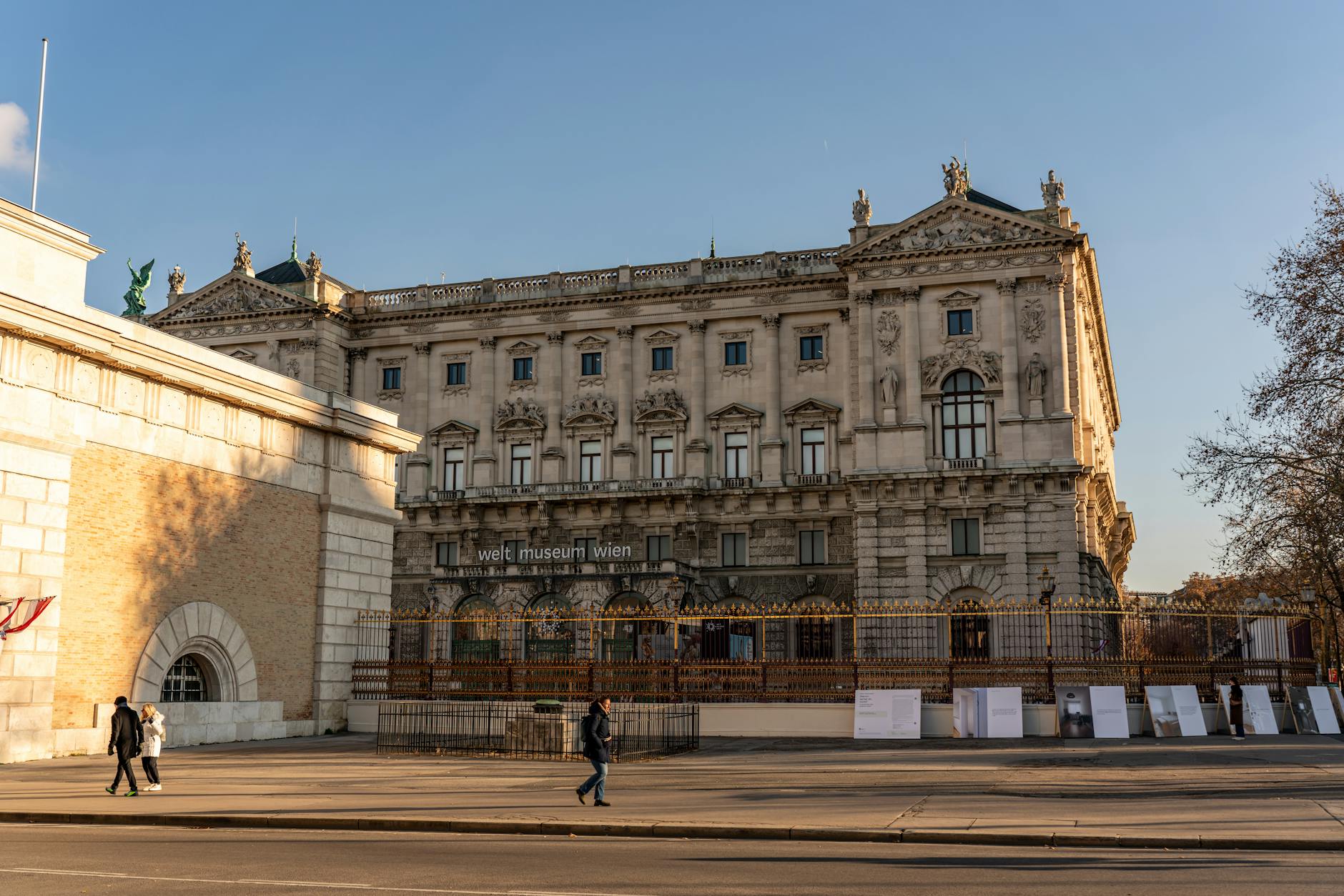
Photo by Vladimir Srajber
- Jewish Vienna: A Brief History
- The Major Jewish Vienna Sites
- A Jewish Vienna Walking Trail (Half-Day)
- Common Visitor Mistakes
- Eating and Resting on the Trail
- Modern Vienna Jewish Community
- Practical Information
- Notable Vienna Jewish Cultural Figures
- The 1938 Anschluss and Vienna’s Response Today
- Leopoldstadt: The 2nd District Today
- Resources for Deeper Engagement
- FAQ
- Related Vienna Guides
This article contains advertising. Our booking links are routed through a partner that adds commission tracking automatically, so if you book through one we earn a commission from the provider, at no extra cost to you. It never affects what we recommend. Affiliate disclosure
Vienna’s Jewish history is among the oldest, richest, and most tragic of any European city — a community present since the 12th century, destroyed in the Holocaust, and slowly rebuilding since 1945. Today Vienna has two Jewish Museums, a working community of around 8,000, the Stadttempel synagogue (which survived Kristallnacht because the Nazis feared damaging neighboring buildings), Judenplatz with Rachel Whiteread’s stark Holocaust Memorial, and dozens of memorial sites scattered through the city. This guide walks you through Jewish Vienna’s history, the major sites to visit, and how to engage thoughtfully with one of Europe’s most complex urban Jewish heritages.
Jewish Vienna: A Brief History
The earliest documented Jewish presence in Vienna dates to 1194. By the 13th century, the medieval community had its own neighborhood around today’s Judenplatz with a major synagogue and a yeshiva. The community was destroyed in the 1421 “Wiener Gesera” persecution — the Jews were either burnt at the stake, killed in prison, expelled, or forced to convert. The stones of their synagogue were used to build the University of Vienna.
Jews were officially excluded from Vienna for 200 years. Small communities were tolerated under various Habsburg emperors but only fully emancipated by Emperor Franz Joseph in 1867. The period 1867–1938 was Vienna Jewry’s golden age: the community grew to 200,000 (about 10 percent of Vienna’s population), built dozens of synagogues, and produced an extraordinary number of major cultural figures — Sigmund Freud, Stefan Zweig, Arnold Schoenberg, Gustav Mahler (who converted to Catholicism for career reasons), Theodor Herzl (founder of modern Zionism), Karl Kraus, Hermann Broch, Joseph Roth, and many more.
The 1938 Anschluss began Vienna’s destruction of its Jewish community. The November 1938 Kristallnacht destroyed 92 of Vienna’s 94 synagogues. About 65,000 Vienna Jews were deported and murdered in concentration camps; another 130,000 emigrated, often after months of harassment and the confiscation of their property. By 1945 fewer than 6,000 Vienna Jews remained alive.
The Major Jewish Vienna Sites
1. Jewish Museum (Jüdisches Museum Wien) — Two Locations
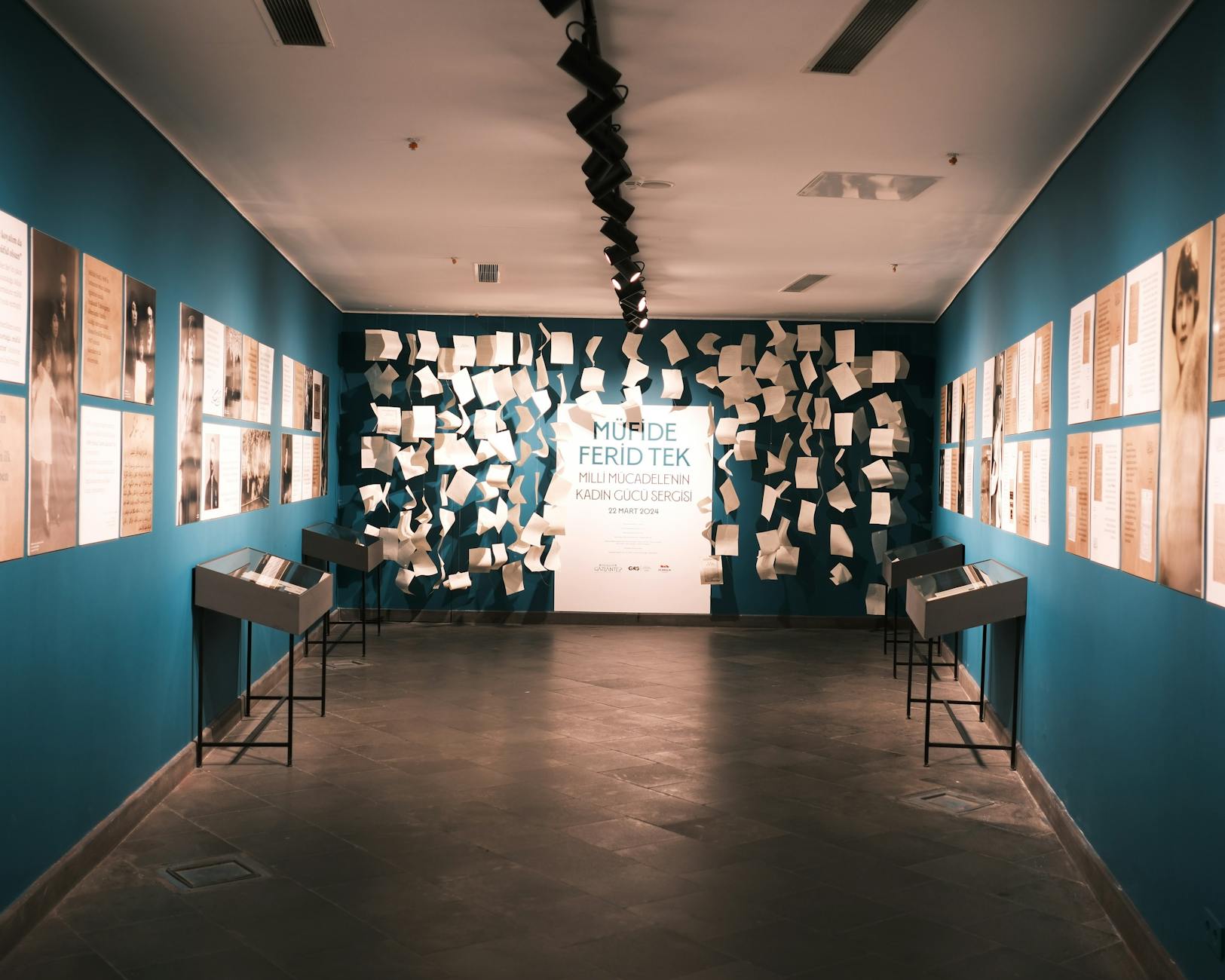
Vienna’s Jewish Museum operates two adjacent venues:
- Jüdisches Museum Dorotheergasse 11: The main historical and contemporary exhibition. Covers Vienna’s Jewish history from medieval times to today. Permanent exhibition “Our City” plus rotating special exhibitions.
- Museum Judenplatz: A separate building on Judenplatz containing the excavated foundations of the 13th-century synagogue (destroyed 1421), discovered during 1996 archaeological work. The medieval ruin is preserved underground beneath the square.
Combined ticket €12 adult covers both venues plus Stadttempel guided tour. Open Sunday–Friday (closed Saturdays as the Jewish Sabbath). Allow 2–3 hours for both museums.
2. Judenplatz and the Holocaust Memorial
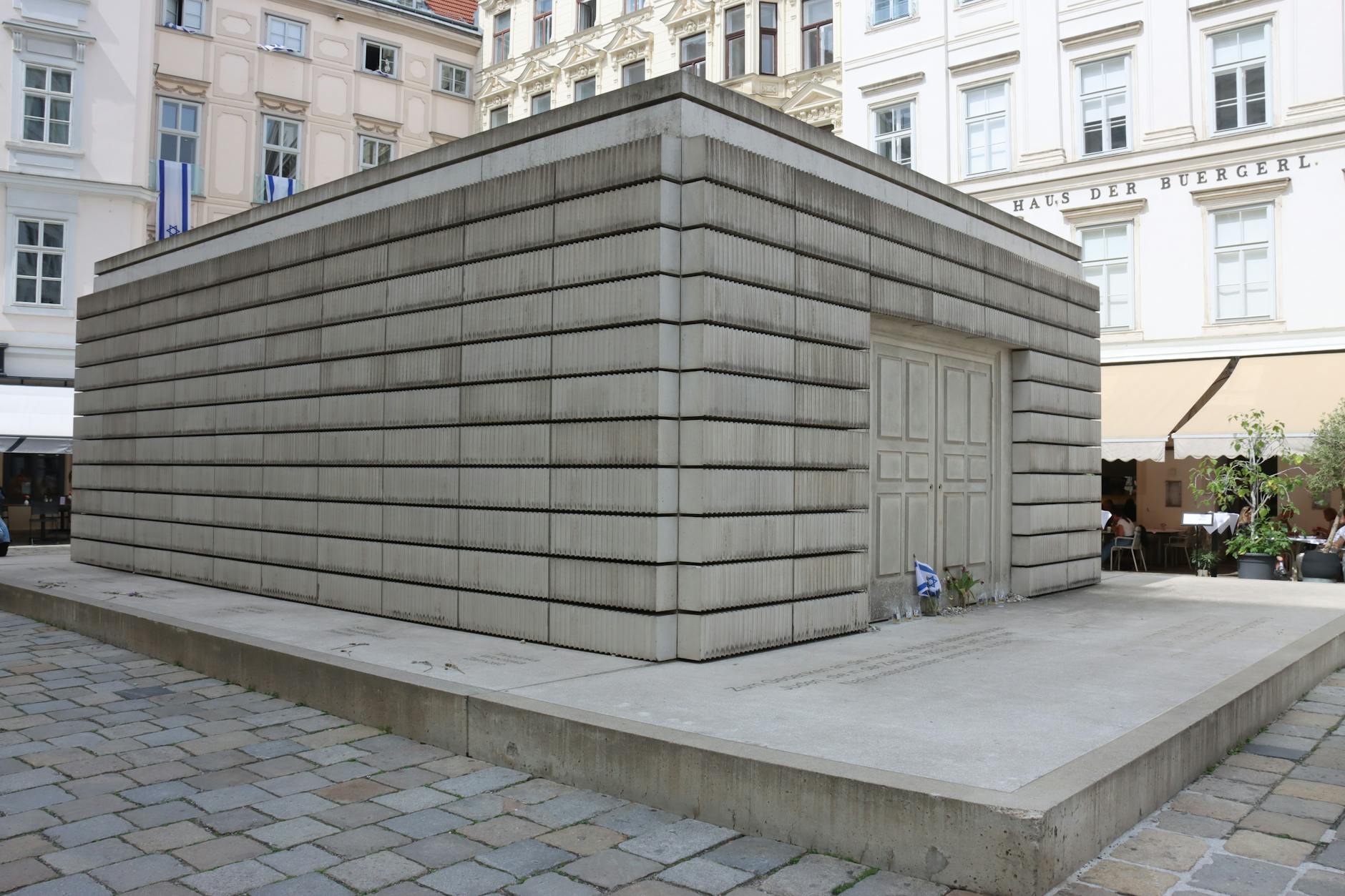
Judenplatz is the small central square at the heart of medieval Jewish Vienna. The square contains four major elements:
- The Holocaust Memorial (Rachel Whiteread, 2000): A concrete cast of a library interior turned outside-in — the books face inward, hidden from view, with the spines invisible. Names of the 65,000 murdered Austrian Jews are inscribed on the base by camp of death. The memorial is deliberately silent and severe; many visitors find it more powerful than more elaborate Holocaust memorials elsewhere.
- The Lessing monument: Bronze sculpture of the German philosopher Gotthold Ephraim Lessing, who advocated Jewish equality in the 18th century.
- The “Misrachi-Haus” (Judenplatz 8): The Museum Judenplatz with the underground medieval synagogue ruins.
- The painted Mary Anti-Jewish Plaque on Judenplatz 2: A still-visible 17th-century inscription celebrating the 1421 persecution — left in place as a historical document. Contextualized with a counter-plaque explaining the cruel history.
Visiting the square is free; the Museum Judenplatz costs €8 (included with combined Jewish Museum ticket).
3. Stadttempel (Seitenstettengasse Synagogue)
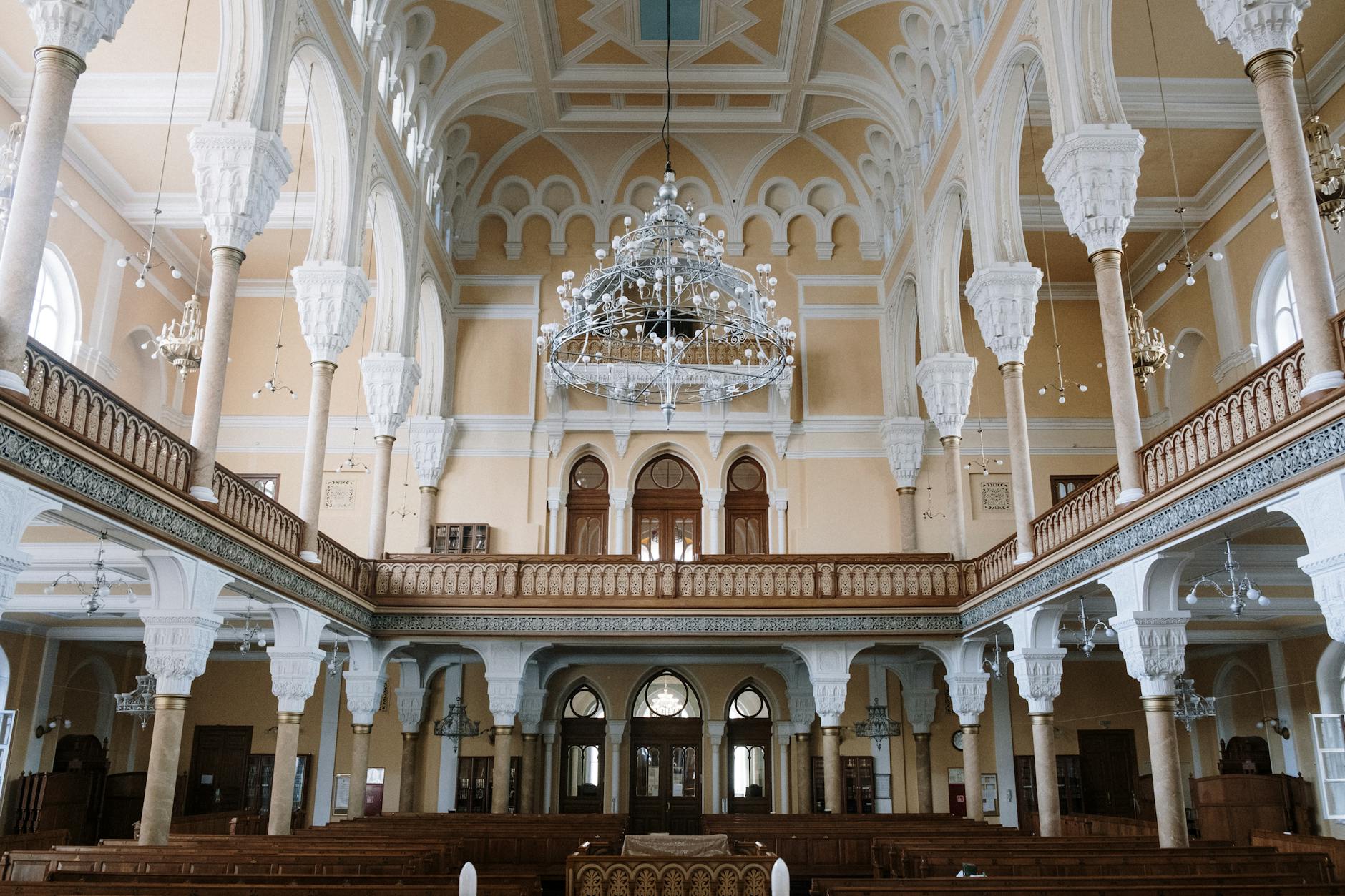
Vienna’s only synagogue to survive Kristallnacht intact — the Nazis feared the building’s destruction would damage the surrounding apartment buildings (under the 1826 city law, synagogues had to be hidden behind ordinary facades, so the Stadttempel was nested inside an apartment block). Built 1824–26 in a classical Empire style with biedermeier ornamentation, the interior is one of Europe’s most beautiful 19th-century synagogue spaces.
Visit only by guided tour, which must be booked through the Jewish Museum. Adult €7 (included in combined museum ticket). Tours run Monday–Thursday at 11:30 and 14:00. Photo ID required for security. Address: Seitenstettengasse 4, 1010 Vienna.
4. The Memorial against War and Fascism
Alfred Hrdlicka’s monumental sculpture on Albertinaplatz, completed 1988, includes the “Straßenwaschender Jude” (Street-Washing Jew) — a bronze figure of a Jewish man forced to scrub the pavement during Nazi-era humiliations. The work is controversial (some Jewish leaders objected to depicting a humiliated victim) but central to Vienna’s post-1988 official Holocaust memorial program.
5. The Jewish Cemetery Old (Seegasse 9-11)
Vienna’s oldest surviving Jewish cemetery, established in the 16th century. Behind a working old-age home; access is restricted but can be arranged through the Jewish community office. Walking among the gravestones provides one of Vienna’s most affecting historical encounters.
6. The Jewish Cemetery Central (Central Cemetery, Section IV)
The Zentralfriedhof’s Jewish section is Europe’s second-largest Jewish cemetery (after Prague). Gates I (older, 1879–1916) and IV (newer, 1917–present) contain over 70,000 graves including Vienna’s major Jewish cultural figures. Notable graves: Friedrich Torberg (writer), Theodor Herzl’s original grave (relocated to Israel in 1949 but the monument remains), Arthur Schnitzler, and dozens of others. Free entry through main cemetery gates. See our cemetery content.
7. The Sigmund Freud Museum
Freud was Jewish; his Vienna apartment at Berggasse 19 is now a museum about his life and the founding of psychoanalysis. Forced to flee Vienna in 1938, Freud emigrated to London where he died in 1939. The museum addresses his Jewish identity and the Anschluss explicitly. See our forthcoming Freud guide. €14 adult.
8. The Servitengasse “Stolpersteine”
Vienna has hundreds of small brass “stumbling stones” (Stolpersteine) installed in the pavement outside houses where Jewish residents lived before being deported. Each plaque names the resident and their fate. The 9th district’s Servitengasse area has one of the densest concentrations — walking the street reveals the scale of the loss.
A Jewish Vienna Walking Trail (Half-Day)
- Start at the Jewish Museum Dorotheergasse for context. 90 minutes.
- Walk 8 minutes north to Judenplatz for the Holocaust Memorial and Museum Judenplatz. 60 minutes.
- Walk 5 minutes east to the Stadttempel for the guided tour (book ahead). 45 minutes.
- Walk 6 minutes south to Albertinaplatz for the Memorial against War and Fascism. 20 minutes.
- Walk 3 minutes to Café Hawelka or Café Bräunerhof — coffee at the historic Jewish-Vienna intellectual cafes.
- Optional: U-Bahn to Berggasse 19 for the Sigmund Freud Museum. 90 minutes.
- Optional: U-Bahn to Central Cemetery for the major Jewish cemetery (Gates I and IV). 2 hours.
Full Jewish Vienna trail: 6–8 hours including travel and reflection time.
Common Visitor Mistakes
- Visiting Saturday. The Jewish Museum, Stadttempel, and most Jewish sites close for the Sabbath. Plan for Sunday–Friday visits.
- Not booking the Stadttempel ahead. Tours sell out and require photo ID. Book through the Jewish Museum 1–3 days ahead.
- Rushing the Holocaust Memorial. Whiteread’s piece rewards slow, quiet attention. Read the names inscribed at the base. Allow 20+ minutes.
- Skipping Berggasse 19. Freud’s apartment is among the most intellectually significant Jewish Vienna sites; see our Freud guide.
- Underestimating the emotional weight. Vienna’s Jewish history is genuinely heavy. Build rest stops into your day.
Eating and Resting on the Trail
Several restaurants and cafes connect to Jewish Vienna’s cultural tradition:
- Café Central (Herrengasse 14) — the legendary intellectual cafe where Freud, Schnitzler, Karl Kraus, and Theodor Herzl met. It is closed for renovation until its reopening, scheduled for winter 2026; the temporary DECENTRAL operates at Freyung.
- Café Bräunerhof (Stallburggasse 2) — coffeehouse Freud preferred; Thomas Bernhard’s later favorite.
- Café Hawelka (Dorotheergasse 6) — legendary literary cafe with original interior. Near the Jewish Museum.
- Beth Hatfutsot kosher dining options: The 2nd district (Leopoldstadt) around the Karmelitermarkt has Vienna’s main kosher restaurants today. Aida, Berman’s Bagel, and several smaller establishments.
Modern Vienna Jewish Community
Today Vienna has roughly 8,000–12,000 Jewish residents, the third-largest Jewish community in German-speaking Europe (after Berlin and Frankfurt). The community is mostly Russian-, Romanian-, and Hungarian-origin Jews who emigrated to Vienna in the 1970s–1990s. Active institutions include:
- The Israelitische Kultusgemeinde Wien (IKG, the official Jewish community organization)
- The Lauder Business School and other Jewish educational institutions
- Multiple working synagogues across the city
- The annual Jewish Film Festival (every November)
- An active musical and literary scene with regular events
Practical Information
- Jewish Museum Dorotheergasse: Dorotheergasse 11, U-Bahn Stephansplatz. Sun–Fri 10:00–18:00. €12 combined ticket.
- Museum Judenplatz: Judenplatz 8. Same hours and combined ticket.
- Stadttempel: Seitenstettengasse 4. Tours Monday–Thursday 11:30 and 14:00 via Jewish Museum booking. Photo ID required.
- Sigmund Freud Museum: Berggasse 19, U-Bahn Schottentor. Daily 10:00–18:00. €14.
- Central Cemetery Gates I and IV: Free entry through main cemetery. Tram 6 or 71 to Zentralfriedhof.
- Stolpersteine map: Available online at stolpersteine.at.
Notable Vienna Jewish Cultural Figures
Vienna 1867–1938 produced an astonishing concentration of major Jewish cultural figures. A partial list with where to find their traces in the city today:
- Sigmund Freud (1856–1939): Founder of psychoanalysis. Apartment at Berggasse 19, now a museum.
- Theodor Herzl (1860–1904): Founder of modern Zionism. His original grave was at the Central Cemetery Gate I; remains relocated to Jerusalem in 1949.
- Arthur Schnitzler (1862–1931): Playwright (La Ronde, Dream Story). Grave at Central Cemetery.
- Karl Kraus (1874–1936): Satirist and editor of Die Fackel. Frequented Café Central.
- Stefan Zweig (1881–1942): Novelist and biographer. Fled Vienna in 1934; committed suicide in Brazil in 1942.
- Joseph Roth (1894–1939): Novelist (The Radetzky March). Wrote the great elegies for the Habsburg empire from his Vienna and Paris cafes.
- Hermann Broch (1886–1951): Novelist (The Sleepwalkers, The Death of Virgil). Fled to America after 1938.
- Elias Canetti (1905–1994): Nobel laureate novelist (Auto-da-Fé). Studied in Vienna.
- Arnold Schoenberg (1874–1951): Composer who invented twelve-tone music. Vienna’s “Second Viennese School” was largely Jewish.
- Gustav Mahler (1860–1911): Composer, Court Opera director. Converted to Catholicism for the appointment.
- Otto Wagner (1841–1918): Architect. Not Jewish, but key non-Jewish figure of the Vienna 1900 cultural moment.
- Ludwig Wittgenstein (1889–1951): Philosopher. Born to a partly-Jewish family in Vienna; family palace at Alleegasse (now demolished).
- Bruno Kreisky (1911–1990): Chancellor of Austria 1970–83. Jewish refugee returned to Vienna; restored Vienna Jewry’s public position.
The 1938 Anschluss and Vienna’s Response Today
The 1938 Anschluss (Nazi annexation of Austria) was particularly violent in Vienna — Jewish humiliation began within hours of German troops entering the city. Iconic scenes from those weeks include the forced street-scrubbing depicted in Hrdlicka’s Albertinaplatz memorial, the Aryanization of Jewish-owned shops and properties (50,000+ Jewish businesses were “transferred” to non-Jewish owners in 1938–39), and the November 1938 Kristallnacht destruction of 92 of Vienna’s 94 synagogues.
For decades after 1945, Austria officially treated itself as Hitler’s “first victim,” resisting full acknowledgment of Austrian participation in Nazi crimes. The 1986 Waldheim affair (UN Secretary-General Kurt Waldheim’s concealed Nazi service) finally forced the issue. Chancellor Franz Vranitzky’s 1991 speech to parliament acknowledged Austrian co-responsibility for Nazi crimes. The Holocaust Memorial on Judenplatz (2000), the Vienna Restitution Law (1998), and the major Jewish Museum expansion (2011) all flow from this gradual confrontation with history.
Today, Vienna’s official Holocaust memorial program is among Europe’s most comprehensive — Stolpersteine, museum exhibitions, school curriculum, annual commemorations, and ongoing restitution efforts. The relationship remains imperfect and contested, but visitors can engage with Vienna’s Jewish history through serious, well-curated institutions.
Leopoldstadt: The 2nd District Today
Vienna’s 2nd district (Leopoldstadt) was historically the Jewish neighborhood — sometimes called “Mazzesinsel” (Matzo Island) because it’s bounded by the Danube Canal and the Danube River. Before 1938, half of Vienna’s Jewish population lived here. Today the district has the city’s main concentration of working synagogues, kosher restaurants, and Jewish institutions, though the population is mixed.
Walking Leopoldstadt streets reveals dozens of small memorial plaques on buildings where Jewish institutions once stood. The Karmelitermarkt area has the densest concentration. Stolpersteine (“stumbling stones”) are particularly numerous on Praterstrasse, Taborstrasse, and Czerningasse.
Resources for Deeper Engagement
- Documentation Centre of Austrian Resistance (DOEW) — archive and museum documenting Austrian Nazi era and resistance. Wipplingerstrasse 6–8.
- Vienna Wiesenthal Institute for Holocaust Studies — research institute and library on Holocaust history.
- The City of Vienna’s Jewish Heritage Map — free printed map showing 100+ Jewish heritage sites with brief descriptions.
- Books worth reading before visiting: Stefan Zweig’s The World of Yesterday, Joseph Roth’s The Radetzky March, Carl Schorske’s Fin-de-Siècle Vienna, Hella Pick’s Guilty Victim: Austria from the Holocaust to Haider.
FAQ
Is the Jewish Museum Vienna worth visiting?
Yes — it’s the essential introduction to Vienna’s Jewish history. Two adjacent museums (Dorotheergasse and Judenplatz) cover 800 years of community history including the medieval period, golden age 1867–1938, Holocaust, and post-war revival. €12 combined ticket. Allow 2–3 hours.
Can I visit the Stadttempel synagogue?
Yes, but only by guided tour booked through the Jewish Museum. Tours Monday–Thursday at 11:30 and 14:00. Photo ID required for security. The Stadttempel is the only Vienna synagogue to survive Kristallnacht and is one of Europe’s most beautiful 19th-century synagogue interiors.
How do I get to Berggasse 19?
U-Bahn Schottentor (U2) is closest — 5-minute walk. The Sigmund Freud Museum at Berggasse 19 is on the 2nd floor of the apartment building where Freud lived and worked 1891–1938.
When were Vienna’s Jews deported?
The mass deportations began in October 1941. Between then and the war’s end, roughly 65,000 Vienna Jews were deported to the Theresienstadt ghetto and the Auschwitz, Maly Trostenez, and other death camps. The names of the 65,000 are inscribed on the base of the Judenplatz Holocaust Memorial.
What is the Judenplatz Holocaust Memorial?
Rachel Whiteread’s 2000 concrete sculpture cast from the interior of a library, turned outside-in. The books face inward and are invisible; the spines are blank. Names of Austrian Holocaust victim camps and dates are inscribed on the memorial base.
Are Vienna’s Jewish sites open on Saturday?
No — the Jewish Museum, Stadttempel, and most Jewish community institutions close for the Sabbath (Friday evening through Saturday evening). Plan visits for Sunday–Friday.
How long has the Jewish community been in Vienna?
Continuous documented Jewish presence dates to 1194 (over 800 years), with interruptions: the 1421 Wiener Gesera persecution destroyed the medieval community, and the 1938–45 Holocaust destroyed the modern community. The current community of 8,000–12,000 mostly emigrated to Vienna in the 1970s–90s.