Vienna Boys’ Choir: How to See a Performance (2026 Guide)
See the world-famous Vienna Boys' Choir perform. Sunday Mass schedule, concert venues, ticket booking tips, and the choir's 500-year history.
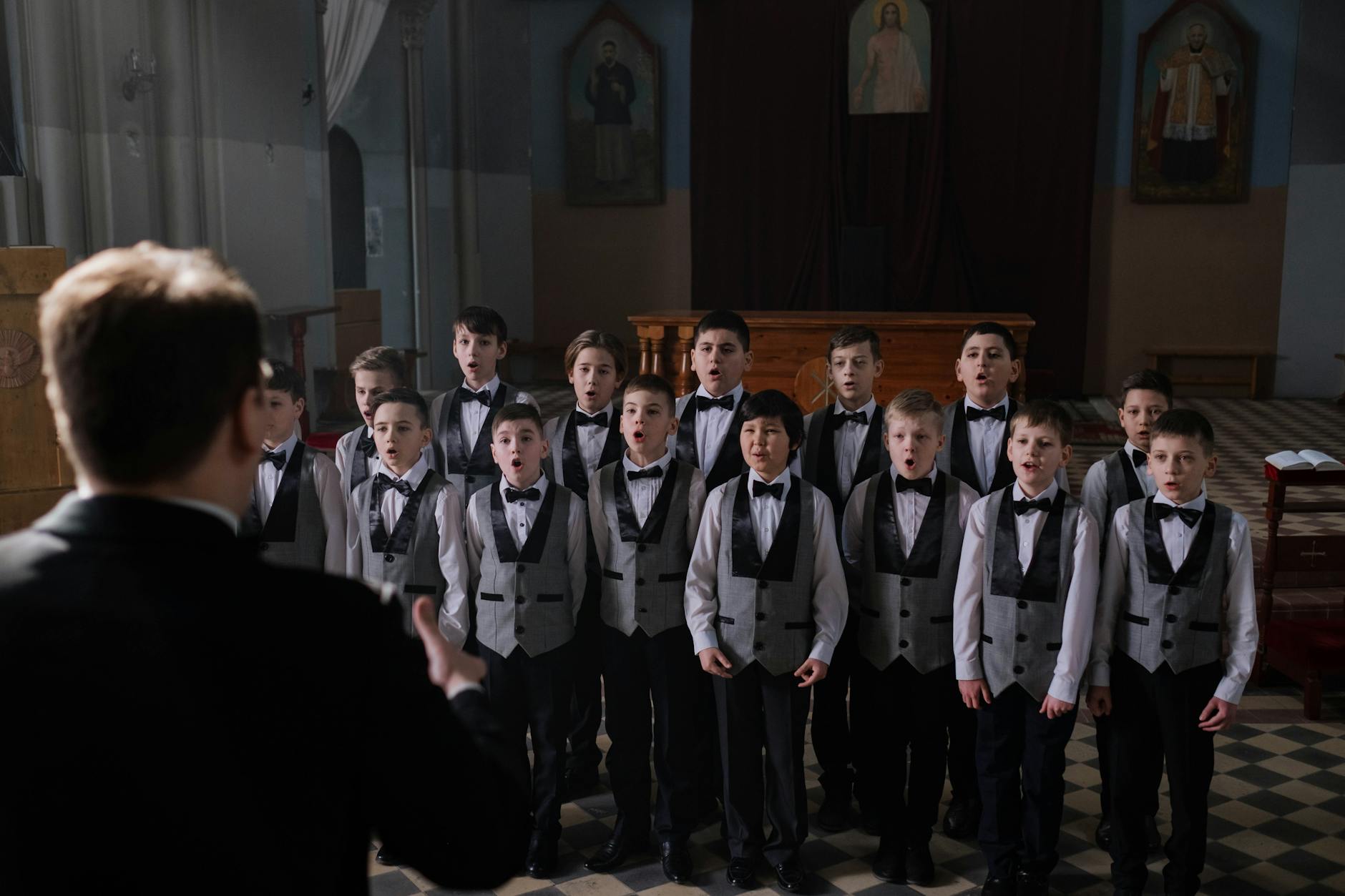
Photo by cottonbro studio
- The Three Ways to Hear the Vienna Boys’ Choir
- The Choir Itself: How It Works
- Historical Background
- What to Expect from a Sunday Mass
- Practical Information
- Which Option Is Best?
- Combining with Other Vienna Sights
- Common Mistakes
- The Hofburgkapelle Itself
- The Choir’s Repertoire
- Famous Recordings and Television Broadcasts
- FAQ
- Related Vienna Guides
This article contains advertising. Our booking links are routed through a partner that adds commission tracking automatically, so if you book through one we earn a commission from the provider, at no extra cost to you. It never affects what we recommend. Affiliate disclosure
The Vienna Boys’ Choir (Wiener Sängerknaben) is one of the world’s most famous boys’ choirs, with roots in the court chapel Emperor Maximilian I set up in 1498; the court ensemble was disbanded in 1920, and the choir in its modern form was founded in 1924. Today the boys sing in four touring choirs, and at the Sunday Mass in the Imperial Chapel they are joined by members of the Vienna State Opera’s men’s choir and orchestra. For visitors, there are three main ways to hear them: the famous Sunday Mass at the Hofburgkapelle, Friday concerts at their dedicated MuTh concert hall, and special seasonal performances. This guide explains each option in detail — including how to book, what to expect, and which is best for first-time visitors.
The Three Ways to Hear the Vienna Boys’ Choir
1. Sunday Mass at the Hofburgkapelle

The most authentic and historic option. Sunday morning High Mass at the Imperial Chapel (Hofburgkapelle) carries on the musical tradition of the court chapel founded in 1498. The chapel is part of the Hofburg complex, in the inner courtyard near the Spanish Riding School. Mass starts at 9:15 a.m. every Sunday from mid-September to the end of June; the boys alternate with the Vienna Girls’ Choir, so check the programme for the Sunday you want.
What you hear:
- A full sung Catholic Mass with the choir performing the Ordinary (Kyrie, Gloria, Credo, Sanctus, Agnus Dei) plus motets and the Proper of the day.
- The repertoire rotates weekly: Schubert Mass in G, Haydn’s Nelson Mass, Mozart’s Coronation Mass, Bruckner motets, Schubert’s Mass in B-flat, and dozens of others over the year.
- The choir is invisible: they sing from the rear gallery, behind the congregation. You hear them but cannot see them during the Mass itself.
- A closing motet at the altar: at the end of the service, the choir comes down and sings the closing motet in front of the high altar. This is your only chance to see them.
- The orchestra in the pit is provided by members of the Vienna Philharmonic and the Chorus of the Vienna State Opera — this is some of the best-staffed Sunday Mass music in Europe.
Mass starts at 9:15; how long it runs depends on the setting being sung. Seated tickets cost €14, €22, €38 or €52 depending on category. Bookable through hofmusikkapelle.gv.at or in person at the box office. Free standing tickets for the back of the chapel are issued on Sundays from 8:30 and cannot be reserved — you can attend the Mass for free without seeing the choir performance at the end.
2. Friday Concerts at MuTh (Augarten)
MuTh (short for “Musik und Theater”) is the Vienna Boys’ Choir’s purpose-built concert hall in Augarten, the 2nd district. The choir performs Friday evenings here from September through June, with a varied program that includes:
- Standard concert repertoire from Renaissance polyphony to contemporary commissions
- Occasional family concerts; check the MuTh programme for dates and age guidance
- Themed evenings: Christmas, Easter, Strauss waltzes, Mozart programs
- The choir’s “Crossover” concerts with jazz, world music, and contemporary collaborations

The MuTh hall has around 400 seats in a modern, acoustically excellent room. The Friday Afternoon concerts are designed for tourist audiences and last about two hours, including an interval. For the concert on 10 April 2026, standard adult seats cost €49–62 and VIP seats €80, with Junges MuTh tickets for under-26s at €14–25; prices vary by date, so check the listing for yours.
This is the best option for first-time visitors who want to actually see the choir performing.
3. Special Performances and Festivals
Beyond regular Sunday Mass and Friday concerts, the Vienna Boys’ Choir performs:
- Christmas concerts: Multiple performances throughout Advent at MuTh, the Musikverein, and various Vienna venues. Tickets sell quickly.
- Easter Triduum: Holy Week services at the Hofburgkapelle with major repertoire (Bach’s St. Matthew Passion, Mozart’s Requiem).
- New Year season: Special concerts in the Musikverein and Konzerthaus.
- Tours: Each of the choir’s four touring groups spends about nine to eleven weeks a school year on tour. If you can’t get to Vienna, check the choir’s tour schedule.
The Choir Itself: How It Works

The Vienna Boys’ Choir is a private foundation that operates as a school plus four parallel touring choirs. The basics:
- ~100 boys total aged roughly 9–14, divided into four choirs named after famous Austrian composers: Bruckner, Haydn, Mozart, and Schubert.
- Boys audition at age 9 or 10 and live at the Augarten Palace boarding school while singing.
- Each choir splits its year between touring and Vienna, where the boys sing Sunday Mass at the Hofburgkapelle and the Friday concerts at MuTh.
- Boys “graduate” out of the choir when their voices change.
- The school provides full academic education: Austrian state curriculum plus music. Boys aren’t paid; their education and boarding are free.
Historical Background
The choir traces its roots to 1498, when Emperor Maximilian I ordered his court chapel to employ a conductor, two bass singers and six choirboys. The court ensemble was disbanded in 1920, and the Vienna Boys’ Choir was founded in its modern form in 1924. Famous alumni include:
- Franz Schubert — sang in the court chapel’s boys’ choir as a boarder at the Imperial Court Chapel boarding school.
- Joseph Haydn — sang at St. Stephen’s Cathedral as a boy (not the same institution, but the precursor model).
- Clemens Krauss — famous conductor and frequent Vienna Philharmonic director.
- Many members of the Vienna Philharmonic and Vienna State Opera.
What to Expect from a Sunday Mass
For first-time visitors to the Hofburgkapelle Mass, several practical points:
- This is an actual Catholic religious service. Tourists are welcome (no dress code or denomination requirements), but you should sit quietly during prayers, follow the congregation’s lead for sitting and standing, and not take photos during the service. Photography is permitted only at the very end, while the choir sings the closing motet.
- The Mass is in Latin and German. A program is provided (German with English summary) so you can follow the structure.
- You will not see the choir during the Mass — they sing from the gallery at the back. You see them only at the end, when they come down to sing the closing motet before the high altar.
- Seating is allocated by category: seats come in four price categories, with the front rows closest to the altar, plus free standing places at the rear; those tickets go out on the day and cannot be booked ahead.
- Length varies with the music: official listings run from about an hour to about 100 minutes, so leave some slack in your Sunday morning plans.
Practical Information
Hofburgkapelle (Sunday Mass)
- Address: Schweizerhof, Hofburg, 1010 Vienna (inner Hofburg courtyard)
- U-Bahn: Stephansplatz (U1, U3) or Herrengasse (U3), then walk through the Hofburg
- Mass time: Sundays at 9:15, mid-September through end of June (the boys alternate with the Vienna Girls’ Choir)
- Closed: July, August, and on Hofmusikkapelle holidays
- Tickets: €14, €22, €38 or €52 seated; standing tickets free
- Booking: hofmusikkapelle.gv.at, viennaticketoffice.com, or in person at the chapel box office
- Arrival: The ticket desk opens at 8:00; free standing tickets are issued from 8:30
MuTh Concert Hall (Friday Concerts)
- Address: Am Augartenspitz 1, 1020 Vienna
- U-Bahn: Tabor Straße (U2)
- Concert times: Friday concerts at 17:00; check MuTh’s listings for family-concert dates
- Season: September through June
- Tickets: €49–62 standard adult and €80 VIP for the 10 April 2026 concert; €14–25 for under-26s; prices vary by date
- Booking: muth.at or viennaboyschoir.net
Which Option Is Best?
For most visitors, the answer depends on what you value:
- Hofburgkapelle Sunday Mass: Choose this for the historical authenticity. You’re hearing a tradition rooted in the court chapel of 1498, in the original Habsburg chapel. The closing motet at the altar lets you see the choir briefly. Best for: travelers interested in history, religious music in original context, and those who don’t mind sitting through a full Catholic Mass.
- MuTh Friday Concert: Choose this for the best musical experience. The concerts are designed for audiences (60–90 minutes, varied repertoire), the boys are visible throughout, and the acoustics are excellent. Best for: families with children, music-lovers who want to actually hear them sing standard concert programs, and those who don’t want to spend 95 minutes at a Mass.
- Both: Have a Sunday morning at the chapel and a Friday evening at MuTh. Together they show two completely different sides of the choir’s work.
For more on Vienna’s broader cultural calendar, see our Vienna culture and arts pillar.
Combining with Other Vienna Sights
Both venues are well-placed for adding other sights to your visit:
- After Hofburgkapelle Sunday Mass, you’re a short walk from the Spanish Riding School (its 2026 calendar lists 11:00 performances, so check the date you want) and from the Imperial Apartments; the Sisi Museum is closed until its redesigned rooms open on 19 November 2026. See our Spanish Riding School guide and Hofburg guide.
- After a MuTh Friday concert, you’re in Vienna’s 2nd district near the Prater amusement park, the Donaukanal, and Leopoldstadt’s Jewish quarter restaurants. The U2 from Taborstraße gets you back to the center in a few stops.
Common Mistakes
- Showing up without tickets to the Hofburgkapelle Mass. Standing room is free but limited. To get a seat, you must book ahead through hofmusikkapelle.gv.at or viennaticketoffice.com.
- Expecting to see the choir during the Mass. They sing from the gallery at the back, behind the congregation — only for the closing motet, sung in front of the high altar, do you actually see them perform.
- Confusing the Vienna Boys’ Choir with the Vienna Boys’ Choir Tour. The choir has four parallel touring groups. If you see a “Vienna Boys’ Choir” concert advertised in another city, this is one of the four tour ensembles, not the home choir.
- Booking ViaGoGo or other resale. The official sites publish every seat category and its price, so you know exactly what you’re paying. Use the official sites.
- Photography during Mass. The chapel allows photos only at the very end, during the closing motet at the altar; during the Mass itself, all photography is prohibited.
- Wearing shorts to Mass. No formal dress code but the Hofburgkapelle expects respectful attire — no shorts, tank tops, or beach wear.
The Hofburgkapelle Itself
The chapel where the Sunday Mass takes place is itself a remarkable historical space worth understanding. First documented in 1296 under Albrecht I and remodeled many times since, it stands in the Swiss Court (Schweizerhof), which holds the oldest parts of the Hofburg; the Gothic chapel itself dates from the 15th century. The Gothic ribbed vaulting in the chancel survives from the medieval phase; the rest of the chapel was remodeled in the Baroque period.
The chapel is small, which is why the Sunday Mass tickets are so coveted. The acoustic is excellent for choral music — the chapel’s relatively small size, hard stone surfaces, and high vaulted ceiling produce a clear, warm sound that emphasizes the boys’ voices rather than overwhelming them. Musicians from the Vienna State Opera orchestra and men from its chorus fill out the texture for Mass settings that require larger forces.
The chapel is also one of the few Hofburg interiors that survives almost unchanged from the Imperial period — the rest of the palace was modernized for the Court Opera, Spanish Riding School, and ceremonial functions over the centuries, but the chapel remained the imperial family’s private worship space.
The Choir’s Repertoire
The Vienna Boys’ Choir performs an unusually wide range of music for a youth choir:
- Sacred works: Schubert Masses in G, B-flat, and A-flat; Haydn’s Missa in Angustiis (“Nelson Mass”) and Missa Cellensis; Mozart’s Coronation Mass and Missa Brevis settings; Bruckner’s E Minor Mass and motets; Beethoven’s Mass in C.
- Operatic and orchestral works: When the Vienna Philharmonic needs a children’s choir for Mahler’s 3rd Symphony, Britten’s “War Requiem,” or Strauss’s “Friedenstag,” the Vienna Boys’ Choir provides the choir.
- Folk songs and arrangements: Each touring program includes Austrian folk songs in dialect plus arrangements of international folk repertoire.
- Christmas and seasonal music: Their Christmas concerts include both traditional Austrian carols and international repertoire.
- Contemporary commissions: The choir regularly premieres new works by Austrian composers, including children’s operas and crossover collaborations with jazz and world musicians.
Famous Recordings and Television Broadcasts
The Vienna Boys’ Choir has a long recording catalog. Notable recent releases include their complete Schubert Masses with the Vienna Philharmonic, multiple Christmas albums (their “Christmas with the Vienna Boys’ Choir” series is a perennial holiday catalog), and crossover albums with film composers and jazz musicians.
Television broadcasts include the annual Christmas Eve concert from St. Stephen’s Cathedral (broadcast across Austria and Germany), regular ORF specials, and occasional appearances at the Vienna Philharmonic’s New Year’s Day Concert. For a sample before your visit, search for the choir’s recent Christmas Eve broadcasts or their YouTube channel.
FAQ
How much do Vienna Boys’ Choir tickets cost?
Hofburgkapelle Sunday Mass seats cost €14, €22, €38 or €52 depending on category, and free standing tickets are issued on the day from 8:30 (no reservations). At MuTh, the Friday Afternoon concert on 10 April 2026 cost €49–62 for standard adult seats and €80 for VIP, with under-26s paying €14–25.
Can you see the Vienna Boys’ Choir for free?
Yes, the standing-room area at the back of the Hofburgkapelle Sunday Mass is free. Arrive at the chapel by 8:30 a.m. for the 9:15 Mass; standing room fills up quickly.
What’s the difference between the Hofburg Mass and the MuTh concert?
The Hofburg Mass is a Catholic religious service (mid-September through end of June) lasting roughly an hour to 100 minutes, where the choir sings from the rear gallery and comes into view only for the closing motet at the high altar. The MuTh concert is a standard concert of about two hours, including an interval. The Mass is more historic; the concert is more musically focused.
Do you have to be Catholic to attend the Hofburgkapelle Mass?
No. Tourists of all backgrounds and faiths attend the Mass. Sit quietly, follow the program (provided in German with English summary), and don’t take communion unless you’re a Catholic in good standing.
When is the Vienna Boys’ Choir on holiday?
The Sunday Hofburgkapelle Mass cycle runs mid-September through end of June, with the boys taking turns with the Vienna Girls’ Choir. July and August are summer break with no Hofburg performances. The MuTh concert season similarly runs September through June.
Can children attend Vienna Boys’ Choir performances?
Yes, both venues welcome children. MuTh also programmes family concerts from time to time; its listings give the dates and the recommended age for each.
What should I wear to a Vienna Boys’ Choir performance?
Smart casual for both venues. The Hofburgkapelle is a working chapel and expects respectful attire (no shorts, tank tops, beach wear). The MuTh is a modern concert hall with relaxed dress code (jeans and shirts are fine).
How long has the Vienna Boys’ Choir existed?
The choir traces its roots to the court chapel Emperor Maximilian I founded in 1498. That court ensemble was disbanded in 1920, and the Vienna Boys’ Choir as it exists today was founded in 1924. Famous alumni include Franz Schubert and Clemens Krauss.