Vienna 2-Day Itinerary: A Perfect Weekend in the City
An hour-by-hour plan for 2 days in Vienna: Stephansdom and the Hofburg, Schönbrunn and the Belvedere, music and Heurigen evenings, a weekend version, 2026 prices and mistakes to avoid.

Photo by Vish Pix
- The Two Days at a Glance
- Before You Start: Four Things to Sort Out
- Day 1: The Imperial Centre
- Day 2: Schönbrunn, the Belvedere and an Evening Out
- Where to Eat Dinner
- The Weekend Version: Saturday and Sunday
- Alternative Versions of the Plan
- What Two Days in Vienna Costs
- Mistakes That Waste a Two-Day Trip
- Is Two Days Enough for Vienna?
- Frequently Asked Questions
- Related Vienna Guides
- Photo Credits
This article contains advertising. Our booking links are routed through a partner that adds commission tracking automatically, so if you book through one we earn a commission from the provider, at no extra cost to you. It never affects what we recommend. Affiliate disclosure
Two days is the length of trip Vienna gets most often and plans for least. It is a weekend on a city break, a stop between Salzburg and Budapest, or the tail end of a business trip, and it is just long enough to fall for the place and just short enough to spend half of it queuing in the wrong order. The good news is that the city is compact, the transport is excellent, and nearly everything a first-time visitor wants to see sits in two neat clusters: the old imperial centre inside the Ringstraße, and Schönbrunn with the palaces and museums south and west of it. A good 2 days in Vienna itinerary gives each cluster a day, fills the evenings with music, wine or the Prater, and leaves enough slack for a long coffee.
This guide is that plan, hour by hour: day one in the Innere Stadt and the Hofburg, day two at Schönbrunn and the Belvedere, with evening options, a Saturday-and-Sunday version for weekend visitors, alternatives for art lovers, music lovers, families and rainy days, a realistic budget and the mistakes that waste the most time. Prices were checked in September 2026 against the operators’ own sites; check them again before you travel. If you have one day or three, see our one-day Vienna itinerary and three-day itinerary instead.
The Two Days at a Glance
| Time | Day 1: Imperial Centre | Day 2: Palaces and Klimt |
|---|---|---|
| Morning | Stephansdom, Graben and Kohlmarkt, the Hofburg and the Sisi Museum | Schönbrunn Palace (timed entry) and the climb to the Gloriette |
| Lunch | Naschmarkt, or open sandwiches in the 1st district | Near Schönbrunn, or back in town |
| Afternoon | Kunsthistorisches Museum or the Albertina; a tram ride around the Ringstraße | Upper Belvedere for Klimt’s The Kiss; Karlskirche and the Secession |
| Evening | State Opera standing room or a Musikverein concert | The Riesenrad at the Prater, or a Heuriger wine tavern |
| Transport | A 24-hour Vienna transport ticket each day, €10.20 (€9.70 in the WienMobil app) | |
Before You Start: Four Things to Sort Out
1. Book Schönbrunn now
Schönbrunn Palace uses fixed, timed admission for every palace ticket, and in busy periods the morning slots go days in advance. Decide which ticket you want and book your time slot before you travel. For a two-day trip, book an early slot on day two.
- Grand Tour (the whole state floor, about 75 minutes, audio guide): adult €42, child 6–18 €30, student 19–25 €31.50.
- State Apartments (the ceremonial rooms only, about 40 minutes): adult €30, child €20, student €23.
- Sisi Pass (a Schönbrunn palace ticket plus the Sisi Museum and Imperial Apartments at the Hofburg, plus the Furniture Museum; confirm which Schönbrunn tour is included when you book): adult €60, child €38, valid for a year. On this itinerary, where you visit both the Hofburg and Schönbrunn, this is usually the ticket to buy.
These are the palace’s own 2026 prices. Our Schönbrunn Palace guide explains the tours in detail.
2. Get a transport ticket
Buy a 24-hour ticket for €10.20 on each day (€9.70 in the WienMobil app); Wiener Linien stopped selling its 48- and 72-hour tickets on 1 January 2026. It covers the U-Bahn, trams and buses inside the city, and on this itinerary you will easily take more than three rides a day, which is where it pays off against single tickets at €3.20 (€3.00 in the app). The Vienna City Card costs €31 for 48 hours and adds discounts at museums and attractions; whether that is worth the extra €10.60 over two paper 24-hour tickets depends on how many discounts you actually use. Our transport tickets guide and City Card vs Vienna Pass comparison do the arithmetic.
3. Check the airport situation
From 7 September 2026 until the end of October 2027, the central S-Bahn line through Vienna is closed for engineering work. The CAT airport express runs as a replacement bus between Wien Mitte and the airport, and the S7 is cut short at St. Marx. On a two-day trip, every hour counts, so check your airport transfer before you land. Our airport to city centre guide has the current options.
4. Stay central
With only two days, stay inside or just outside the Ringstraße, or near a U-Bahn line that takes you straight there. Losing forty minutes each way to a cheap hotel on the edge of the city is a false economy on a short trip. See where to stay in Vienna.
Day 1: The Imperial Centre
Day one stays almost entirely on foot within the 1st district. The distances are short; the danger is trying to go inside everything. Pick one museum for the afternoon and enjoy the streets in between.
08:30 — Breakfast
Start in a traditional coffee house. Café Prückel on the Stubenring opens at 08:30 and is a ten-minute walk from Stephansplatz; Café Landtmann on the Ring opens at 07:30. Order a Melange and a Viennese breakfast, and do not rush. If you are the kind of traveller who wants to be at the first sight as the doors open, grab a pastry from a bakery instead. Our breakfast and brunch guide has more options.
09:30 — Stephansdom
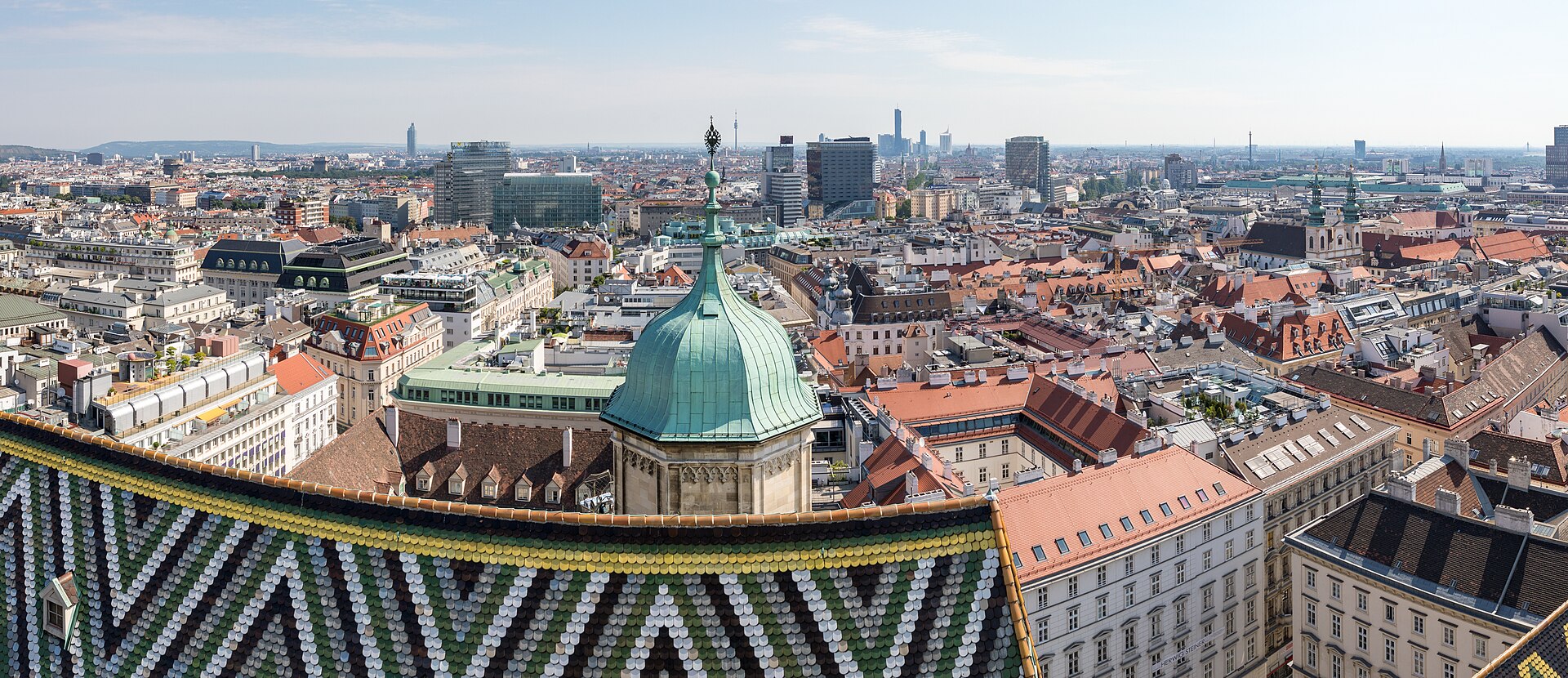
St Stephen’s Cathedral is the centre of Vienna in every sense, and it is at its best early, before the tour groups. Walk around the outside first to see the glazed tile roof, then go in. The all-inclusive ticket (€29) covers the audio guide, both towers, the catacombs and the cathedral museum; if you only want one extra, choose between the South Tower (a long climb up spiral stairs, with the best view) and the catacombs (a 30-minute guided tour, €8 on its own). Allow 60–90 minutes. Our Stephansdom guide has the details.
11:00 — Graben, Kohlmarkt and Michaelerplatz
Walk west along the Graben, past the baroque Plague Column, then turn left into the Kohlmarkt. Look into the windows of Demel, the former imperial confectioner, even if you do not go in. The Kohlmarkt ends at Michaelerplatz, where the great domed gateway of the Hofburg faces Adolf Loos’s plain-fronted Looshaus, the building that famously offended the Emperor. The walk takes fifteen minutes without stops and much longer with them.
11:30 — The Hofburg: Sisi Museum and Imperial Apartments
The Hofburg was the Habsburgs’ winter palace and the seat of their empire for more than six centuries. For a two-day visit, the part to see is the combined Sisi Museum and Imperial Apartments, entered from the Michaelerkuppel. The Sisi Museum rooms reopen, redesigned, on 19 November 2026, and until then the ticket covers the Imperial Apartments at a reduced price. It tells the story of Empress Elisabeth and shows the rooms where she and Franz Joseph lived. If you bought the Sisi Pass, this is already covered. Allow about 90 minutes.
Afterwards, walk through to Heldenplatz for the view of the Neue Burg, and through the Volksgarten or Burggarten for a breather. Our Hofburg guide covers the other museums in the complex, including the Treasury and the Spanish Riding School.
13:00 — Lunch
Two good options, depending on the day:
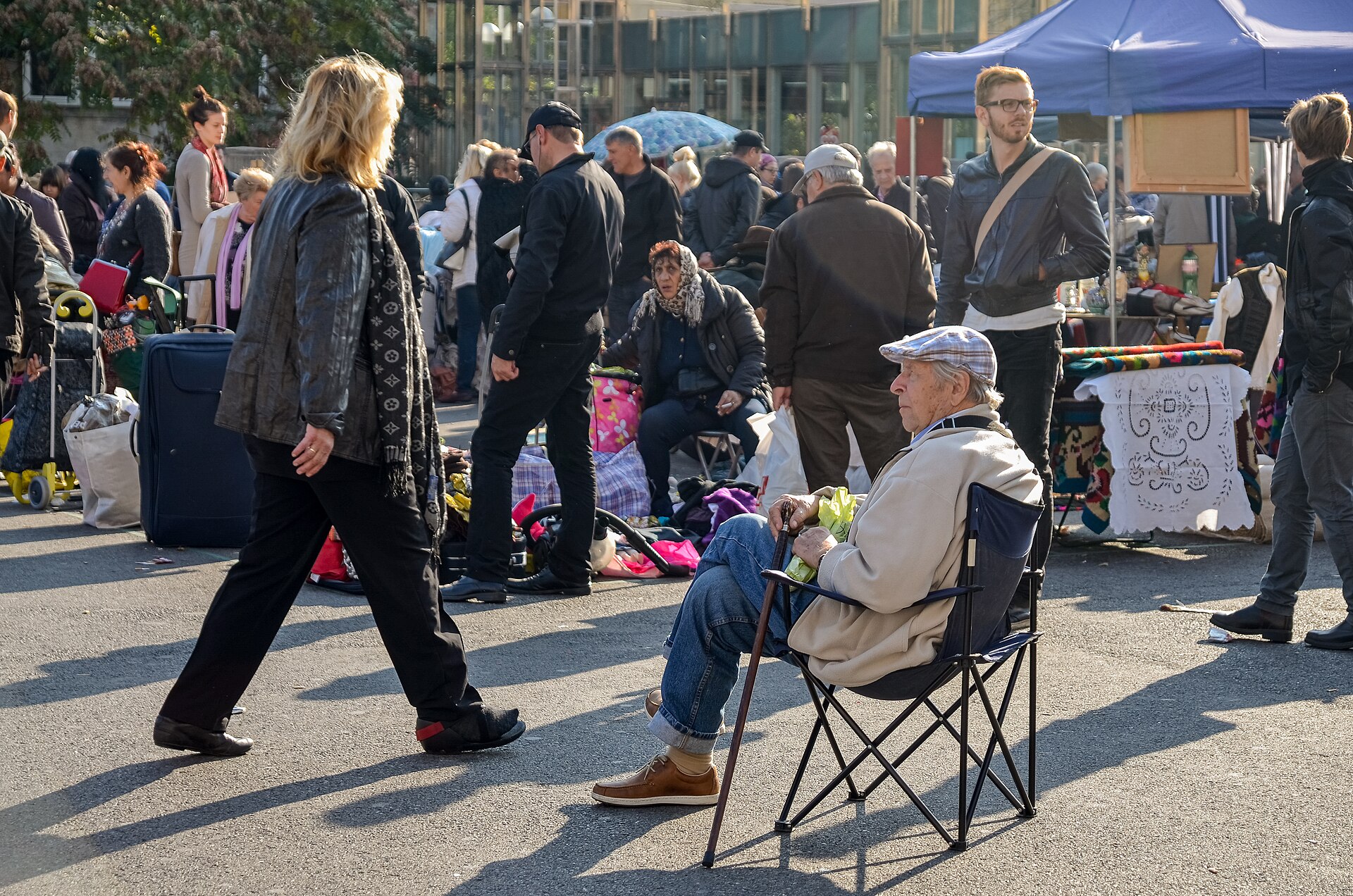
- The Naschmarkt, a fifteen-minute walk south past the Opera. Many of its restaurant stalls serve lunch, and on Saturdays there is a flea market at the far end. It is closed on Sundays. Look at the prices before sitting down; see our Naschmarkt guide.
- A weekday Mittagsmenü: many restaurants in the 1st district serve a set lunch on weekdays for much less than their evening prices. It is one of the best-value meals in the city. Our cheap eats guide explains how it works.
14:30 — One Great Museum
Choose one. Trying to do two big museums on the same afternoon is the most common way people exhaust themselves in Vienna.
- Kunsthistorisches Museum — the Habsburg picture collection, with the world’s greatest group of paintings by Pieter Bruegel the Elder, plus Vermeer, Raphael, Titian and Velázquez, in one of the most beautiful museum buildings in Europe. Have a coffee under the dome. Allow two to three hours. See our Kunsthistorisches Museum guide.
- The Albertina — a Habsburg palace with state rooms and a superb collection of modern art from Monet to Picasso, plus major temporary exhibitions. Smaller and easier to manage in a couple of hours, and right behind the Opera.
Check prices and opening hours on the museums’ own websites before you go; they change with exhibitions.
17:00 — The Ringstraße by tram
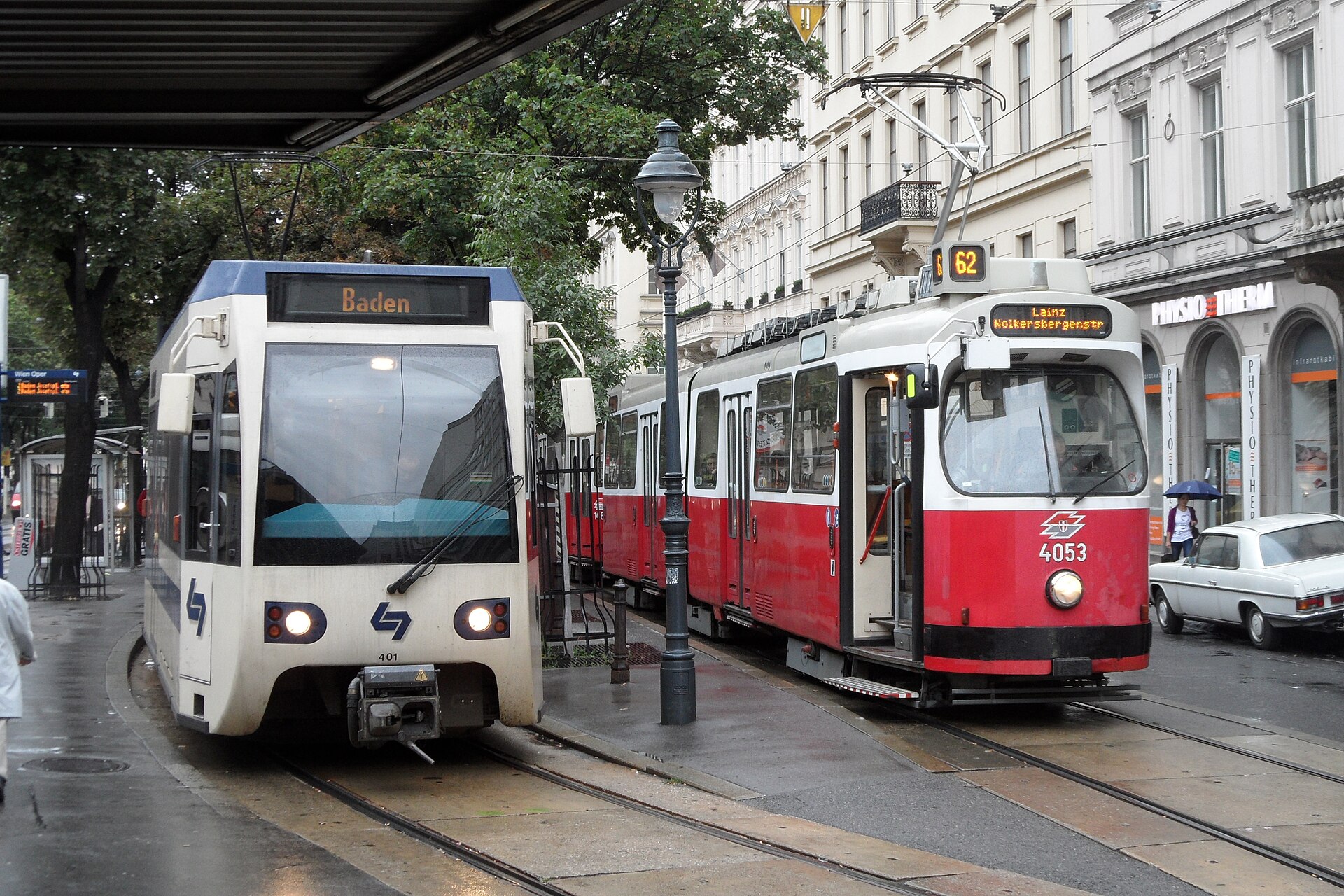
Before dinner, see the grand boulevard that replaced the city walls in the nineteenth century. Trams on the Ring — including lines 1, 2 and D on different stretches — pass the Opera, the Hofburg, Parliament, the Rathaus, the Burgtheater, the University and the Votivkirche. Your 24-hour ticket covers it. Sit on the right-hand side and get off wherever something catches your eye. Our Ringstraße guide explains what you are passing, and our tram guide shows which lines cover which stretch.
19:00 — Evening: Music
You are in Vienna. Spend one evening on music, and make it this one, because the Opera and the Musikverein are both a short walk from the Ring.
- State Opera standing room is the best-value night out in Europe: €13 on the balcony, €15 in the gallery, €18 in the parterre, sold on the day of the performance only, online from 10:00 Vienna time. You stand, and you may want to leave at the interval, but you see a world-class production in a legendary house. See our State Opera guide.
- Musikverein standing places in the Golden Hall usually cost about €12 when they are available.
- A Mozart concert for visitors, such as the Wiener Mozart Konzert in the Musikverein, costs from €69 and is a gentler, costumed introduction.
Avoid the costumed ticket sellers on Kärntner Straße, the Graben and outside the Opera. They sell tickets for €70–120 to tourist-grade concerts in minor venues. Buy directly from the venue instead. Our concert tickets guide explains how.
Day 2: Schönbrunn, the Belvedere and an Evening Out
Day two uses the U-Bahn and trams to reach the two great palaces outside the old centre, and finishes either on the Prater’s giant wheel or in the vineyards on the edge of the city.
08:30 — Schönbrunn Palace
Take the U4 to Schönbrunn or Hietzing, both a few minutes’ walk from the palace entrance. Arrive 15 minutes before your time slot. The palace opens at 08:30, and the first hour is by far the calmest.
The Grand Tour takes about 75 minutes and covers the whole state floor, including the Great Gallery, the Hall of Mirrors where the six-year-old Mozart performed for Maria Theresa, and the rooms of Franz Joseph and Elisabeth. If you are short of time or energy, the State Apartments ticket covers the most famous ceremonial rooms in about 40 minutes.
10:00 — The gardens and the Gloriette
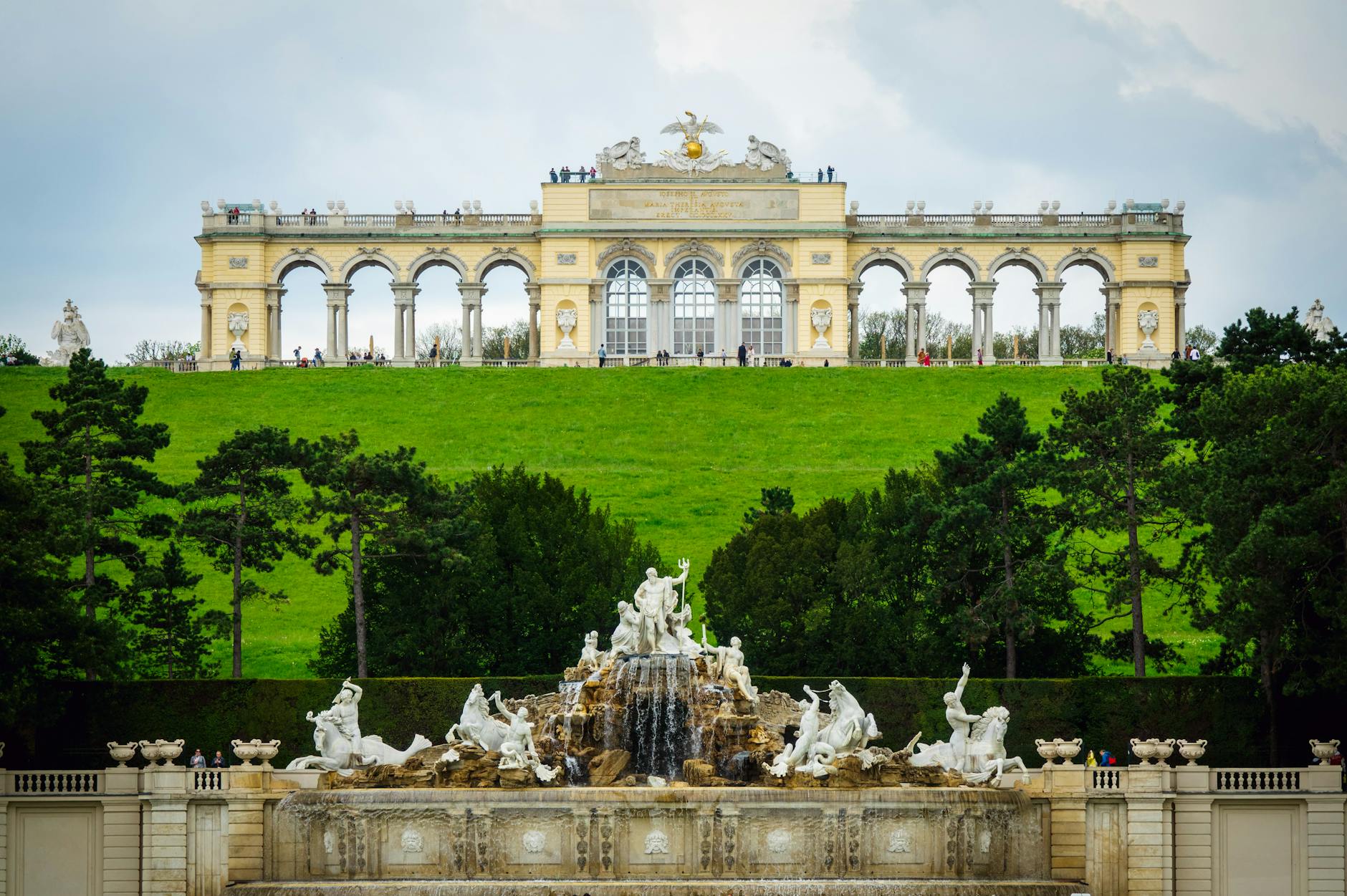
The palace park is free and open from early morning. Walk straight up the central parterre past the Neptune Fountain and climb the hill to the Gloriette, the colonnaded pavilion on the ridge. The view back over the palace to the city is the image of Vienna that everyone recognises, and it costs nothing. From late March to early November, the Classic Pass (€49) adds the Maze, the Privy Garden, the Orangery Garden and the Gloriette viewing terrace to the palace tour; the separate Exclusive Gardens ticket costs €16.
If you have children with you, the zoo is inside the palace grounds; see the family version of this plan below.
12:30 — Lunch
Eat near Schönbrunn or head back towards the centre on the U4 and eat near Karlsplatz. If you have been walking all morning, sitting down for a proper Wiener Schnitzel is the obvious reward; our Wiener Schnitzel guide tells you where it is worth ordering and where it is a tourist menu.
14:00 — The Belvedere and Klimt’s The Kiss
Take the U4 to Karlsplatz, then tram D towards the Hauptbahnhof to the Schloss Belvedere stop, right by the upper palace entrance. The Upper Belvedere is a baroque summer palace built for Prince Eugene of Savoy, and it holds the world’s most important collection of Gustav Klimt, including The Kiss, along with major works by Egon Schiele and Oskar Kokoschka. Allow about two hours, then walk down through the formal gardens to the Lower Belvedere, which has the city’s best view of the Upper Belvedere’s facade. Ticket prices vary between online and on-site sales and with exhibitions, so check the Belvedere’s website. See our Belvedere Palace guide.

16:30 — Karlskirche, the Secession and coffee
Walk from the Belvedere to Karlsplatz in about fifteen minutes. Look at the Karlskirche, with its green dome and two giant columns, and at Otto Wagner’s Stadtbahn pavilions on the square. Then cross to the Secession, with its gilded dome of laurel leaves. For a late-afternoon coffee, Café Museum is across the road and Café Sperl is a short walk away; see our guide to Café Sperl and Café Museum.
18:30 — Evening: choose your finale
Option A: the Prater and the Riesenrad. Take the U1 to Praterstern and walk into the Wurstelprater, the amusement park. Ride the Riesenrad, the giant Ferris wheel of 1897 made famous by The Third Man, ideally around sunset, then eat at one of the beer gardens or restaurants in the Prater. Our Prater guide has tickets and times.
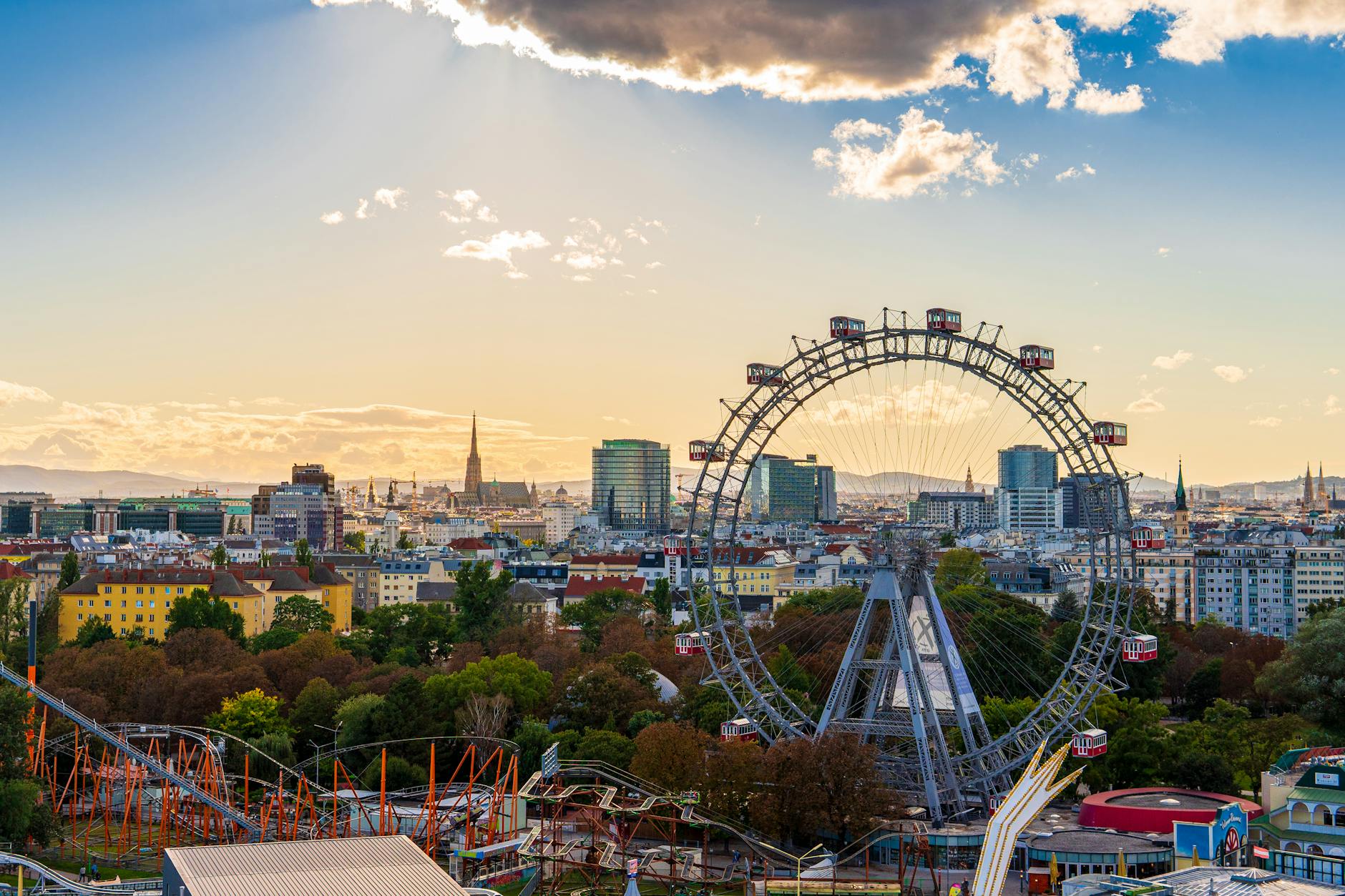
Option B: a Heuriger. Take tram D north to its terminus at Nussdorf, on the edge of the vineyards, and spend the evening at a Heuriger, one of Vienna’s wine taverns, with a glass of the local Gemischter Satz and a plate from the cold buffet. It is the most Viennese evening you can have, and very few short-stay visitors do it. Many Heurigen open only on certain days, so check before you set out. Our Heurigen guide explains how they work.
Where to Eat Dinner
Two dinners is not many, so make them count. Book ahead on Friday and Saturday nights.
- A classic Wiener Schnitzel. Figlmüller, near Stephansdom, is the famous name and is usually busy with visitors; it is worth it if you book and treat it as an institution rather than a secret. Our Wiener Schnitzel guide has the alternatives locals prefer.
- Tafelspitz. Boiled beef served in its broth with apple-horseradish and chive sauce, the dish Franz Joseph is said to have eaten almost daily. Plachutta on Wollzeile is the best-known specialist.
- A Beisl. The traditional Viennese neighbourhood inn, with goulash, schnitzel, dumplings and beer at fair prices. Our traditional Viennese dishes guide tells you what to order.
- A Würstelstand after the Opera. The sausage stand behind the Opera by the Albertina is a Vienna ritual: a Käsekrainer and a mustard at a standing table, often next to people in evening dress.
- A Heuriger on the evening of day two, if you choose that finale, is dinner and entertainment in one.
Avoid restaurants with touts on the door and picture menus on Kärntner Straße. Walk a couple of streets in any direction and prices fall while quality rises. Our best restaurants in Vienna guide covers every budget.
The Weekend Version: Saturday and Sunday
Most two-day visits are weekends, and Vienna’s weekends have their own rhythm. A few adjustments make the plan work better.
Saturday
- Do day one on Saturday. The Naschmarkt and its flea market are at their liveliest, shops are open, and the city centre is busy in a good way.
- Book restaurants for Saturday night. Popular places fill up.
- Buy anything you need from a supermarket on Saturday, because almost everything will be shut on Sunday.
Sunday
- Do day two on Sunday. The palaces and museums are open, and the parks and the Prater are at their most sociable.
- Shops and supermarkets are closed, and the Naschmarkt is closed. Station shops and bakeries at the main railway stations are the exception.
- If you want to hear the Vienna Boys’ Choir, it traditionally sings Sunday Mass in the Hofburg Chapel during the school year. Seats must be booked and times vary, so check first; see our Vienna Boys’ Choir guide. If you do this, swap the order so you are in the Hofburg on Sunday morning.
- Many coffee houses open later on Sundays. Café Sperl, for example, opens at 10:00 on Sundays and closes altogether on Sundays in July and August.
Alternative Versions of the Plan
For art lovers
Keep the Kunsthistorisches Museum on day one and the Belvedere on day two, and replace the Hofburg morning with the Leopold Museum in the MuseumsQuartier for its Schiele collection, or the Albertina. Skip the Schönbrunn Grand Tour and just walk the gardens to the Gloriette, which frees the morning for the Secession and the Beethoven Frieze. Our best museums in Vienna guide helps you choose, and the Klimt guide follows one artist around the city.
For music lovers
Plan both evenings around music: State Opera standing room one night and a Musikverein or Konzerthaus concert the next. In the daytime, add the House of Music (Haus der Musik) and one of the composers’ apartments. Our classical music guide and composers’ Vienna have the details.
With children
Swap the afternoon museum on day one for the Natural History Museum opposite the Kunsthistorisches Museum, or the House of Music. On day two, pair the palace with the Children’s Museum at Schönbrunn (€12) and the zoo in the palace grounds, which is the oldest zoo in the world still operating; the combined Children’s Museum, Maze and Zoo ticket is €39 for adults and €29 for children. Finish at the Prater rather than a Heuriger. See Vienna with kids.
On a tight budget
Walk everywhere on day one; the 1st district is small. See Schönbrunn from the free gardens and the Gloriette instead of the palace rooms, and spend the saving on State Opera standing room. The Ringstraße by tram is sightseeing for the price of a transport ticket. Eat a weekday Mittagsmenü for lunch and a Würstelstand sausage for dinner. Our Vienna on a budget guide and free things to do have more ideas.
If it rains
Vienna is one of Europe’s best cities in the rain. Keep the museums, swap the Ringstraße tram ride for a long coffee-house afternoon, and move the Gloriette climb to whenever the weather clears. See rainy day activities in Vienna.
What Two Days in Vienna Costs
An indicative budget for one adult, excluding accommodation and travel to Vienna. The sight and transport prices are the operators’ published 2026 prices; the food figures are rough estimates.
| Item | Cost |
|---|---|
| Two 24-hour transport tickets | €20.40 (€19.40 in the WienMobil app) |
| Stephansdom all-inclusive ticket | €29 |
| Sisi Pass (Schönbrunn palace, Sisi Museum and Imperial Apartments, Furniture Museum) | €60 |
| One major museum (Kunsthistorisches Museum or Albertina) | Check current price |
| Upper Belvedere | Check current price |
| State Opera standing room | €13–18 |
| Riesenrad or a Heuriger evening | Varies |
| Food and coffee for two days | Roughly €80–150 depending on how you eat |
If you are visiting both the Hofburg and Schönbrunn, compare the Sisi Pass with the two separate tickets before you buy; for most people on this plan it is the simpler and cheaper option. For a fuller picture, see our Vienna trip cost guide.
Mistakes That Waste a Two-Day Trip
- Turning up at Schönbrunn without a time slot. You may wait hours for the next available entry, or not get in at all that day.
- Two big museums in one afternoon. Choose one and enjoy it.
- Buying concert tickets from costumed touts. Buy from the venue.
- Queuing for Café Central. It has been closed for renovation since March 2026, and even when open, the queue is not worth a slice of your two days. There are dozens of excellent coffee houses without queues.
- Planning a Sunday shopping afternoon. The shops will be closed.
- Buying the Vienna Pass for two days without doing the maths. For most people on this itinerary, individual tickets plus a transport pass cost less. Our Vienna Pass analysis shows when it pays off.
- Eating on Kärntner Straße or around Stephansplatz from a picture menu. Walk two streets away.
- Assuming the airport train is running normally during the 2026–27 S-Bahn closure.
Is Two Days Enough for Vienna?
Two days is enough to see the essentials — the cathedral, the Hofburg, Schönbrunn, the Belvedere, a great museum, the Ringstraße and an evening of music — and to understand why people come back. It is not enough to see the city at a relaxed pace, to take a day trip, or to explore neighbourhoods like Neubau, Leopoldstadt and the wine villages properly. If you can stretch to three days, do. Our guide to how many days to spend in Vienna sets out what each extra day adds.
Frequently Asked Questions
Is 2 days enough in Vienna?
Yes, for the main sights. With a plan like this one you can see Stephansdom, the Hofburg, Schönbrunn, the Belvedere, a major museum and have two good evenings. Three days is more comfortable.
What should I not miss with 2 days in Vienna?
Stephansdom, the Hofburg and Sisi Museum, Schönbrunn Palace and the Gloriette, Klimt’s The Kiss at the Upper Belvedere, a Viennese coffee house, and an evening of music.
Should I buy the Vienna Pass for 2 days?
Usually not, unless you plan to visit many included attractions each day. For most two-day visitors, two 24-hour transport tickets (€10.20 each, or €9.70 in the app) and individual tickets, such as the Sisi Pass (€60), cost less.
Do I need to book Schönbrunn in advance?
Yes. All palace tickets use fixed admission times, and popular slots sell out. Book online before you travel.
How do I get around Vienna in 2 days?
On foot inside the 1st district, and by U-Bahn and tram for everything else. Buy a 24-hour ticket for each day: it costs €10.20 at a machine or €9.70 in the WienMobil app and covers the whole city network.
What is the best evening activity with 2 days in Vienna?
State Opera standing room (€13–18) for one evening, and either the Riesenrad at the Prater or a Heuriger wine tavern for the other.
What is closed in Vienna on Sundays?
Shops, supermarkets and the Naschmarkt. Museums, palaces, most restaurants and coffee houses stay open.
Related Vienna Guides
- Vienna 1-Day Itinerary
- 3-Day Vienna Itinerary
- How Many Days in Vienna?
- First-Time Vienna Tips
- Vienna Attractions
- Schönbrunn Palace Guide
- Getting Around Vienna
- Vienna Travel Guide
Photo Credits
Trams at the Oper stop: S3932 Wien Oper, ET 401 WLB, 4053 by Falk2, CC BY-SA 4.0, via Wikimedia Commons.
Flea market at the Naschmarkt: Flohmarkt (flea market) am Naschmarkt Wien by Sandor Somkuti from Wien, Österreich, CC BY-SA 2.0, via Wikimedia Commons.