Cafe Sperl & Cafe Museum: The Secession Coffee Houses
Café Sperl and Café Museum, the two coffee houses either side of the Secession: history, Klimt and Loos, Before Sunrise, 2026 hours and prices, a walk linking them and our verdict.
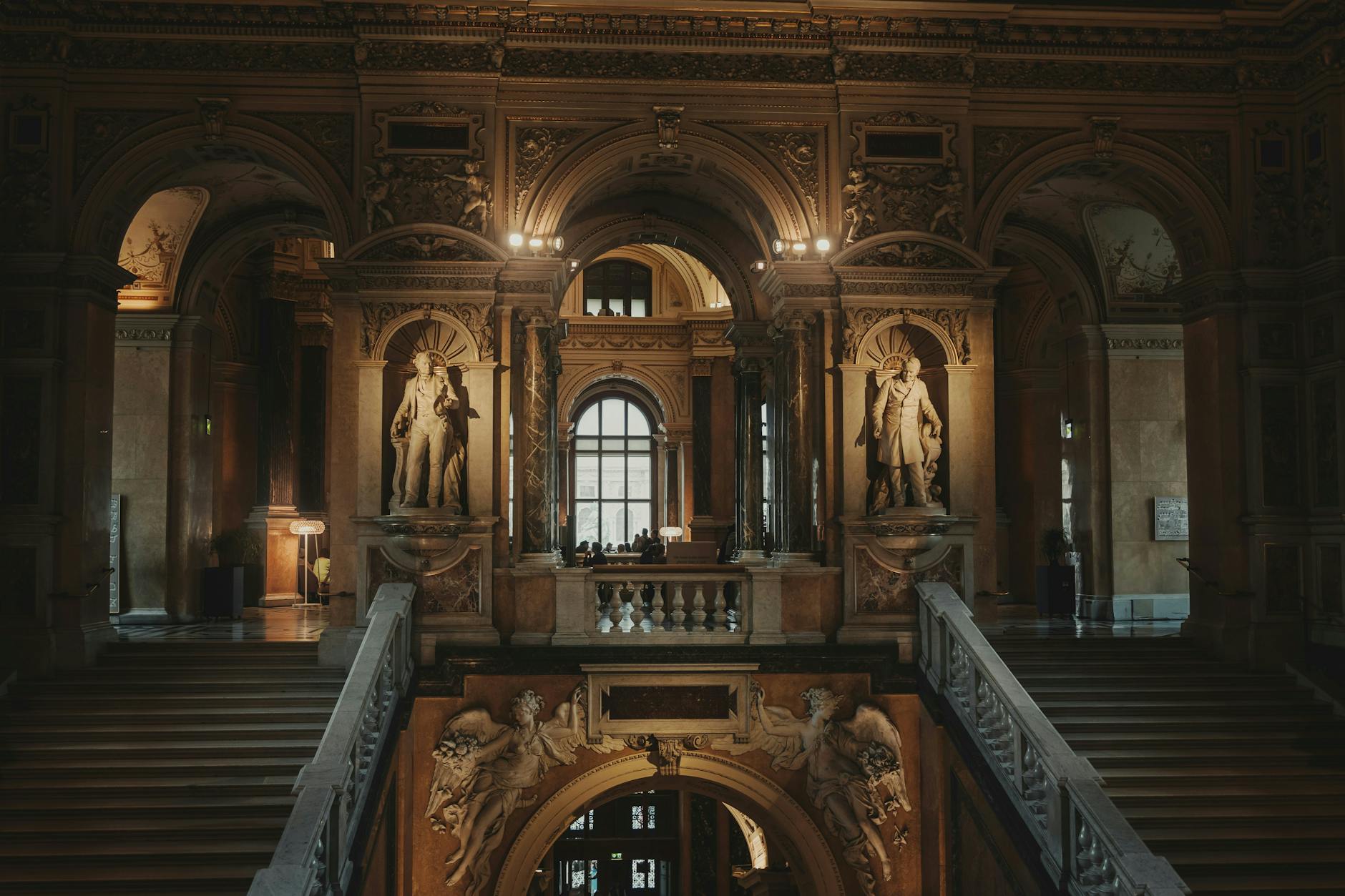
Photo by Michael Pointner
- The Two Cafés at a Glance
- Café Sperl: The Coffee House That Did Not Change
- Café Museum: The Coffee House of the Secession
- Sperl or Museum? Which to Choose
- A Half-Day Walk: Secession, Naschmarkt and Two Cafés
- What to Look For in the Rooms
- Other Cafés Nearby
- Is It Worth It? Our Verdict
- Frequently Asked Questions
- Related Vienna Guides
- Photo Credits
This article contains advertising. Our booking links are routed through a partner that adds commission tracking automatically, so if you book through one we earn a commission from the provider, at no extra cost to you. It never affects what we recommend. Affiliate disclosure
Stand on the steps of the Secession, the white exhibition hall with the gilded dome of laurel leaves, and you are within a few minutes’ walk of two coffee houses that tell opposite halves of the same story. Across the road is Café Museum, which opened in 1899 with a stripped-down interior by Adolf Loos so plain that the Viennese nicknamed it Café Nihilismus, and which became a second home for Klimt, Schiele and the artists who had just broken away from the establishment. Ten minutes’ walk the other way, past the Naschmarkt, is Café Sperl. Look up Cafe Sperl Vienna and every photograph shows the same room, kept almost unchanged since 1880: billiard tables, chandeliers, upholstered banquettes and all the Ringstraße-era ornament that Loos was rebelling against.
This guide covers both cafés: their history and their famous guests, what the rooms are like now, what to order, opening hours and practical details, when to go, how to combine them with the Secession, the Naschmarkt and the Third Man sewer tour, and an honest verdict on each. Opening hours for Café Sperl come from its own website and for Café Museum from its published listing, both checked in September 2026.
The Two Cafés at a Glance
| Café Sperl | Café Museum | |
|---|---|---|
| Address | Gumpendorfer Straße 11, 1060 (Mariahilf) | Operngasse 7, corner of Friedrichstraße, 1010 |
| Opened | 1880 | 1899 |
| Style | Historicist Ringstraße-era, largely original | Modern classic; restored in 2010 after the 1930s Josef Zotti design |
| Opening hours | Mon–Sat 07:00–22:00; Sun 10:00–20:00; closed Sundays in July and August | Listed as daily 08:00–21:00 — check before you go |
| Nearest U-Bahn | Museumsquartier (U2) or Kettenbrückengasse (U4), about 5 minutes | Karlsplatz (U1, U2, U4), 2 minutes |
| Known for | Billiard tables, Sunday piano, Before Sunrise, local regulars | Adolf Loos, Klimt and Schiele, the Secession next door |
| Owned by | Independent | The Querfeld family (Café Landtmann group) |
| Melange | Not published online | €6.90 (the Landtmann group price list) |
| Best for | A long, slow breakfast or a rainy afternoon | Coffee before or after the Secession, the Opera or Karlsplatz |
Café Sperl: The Coffee House That Did Not Change
History
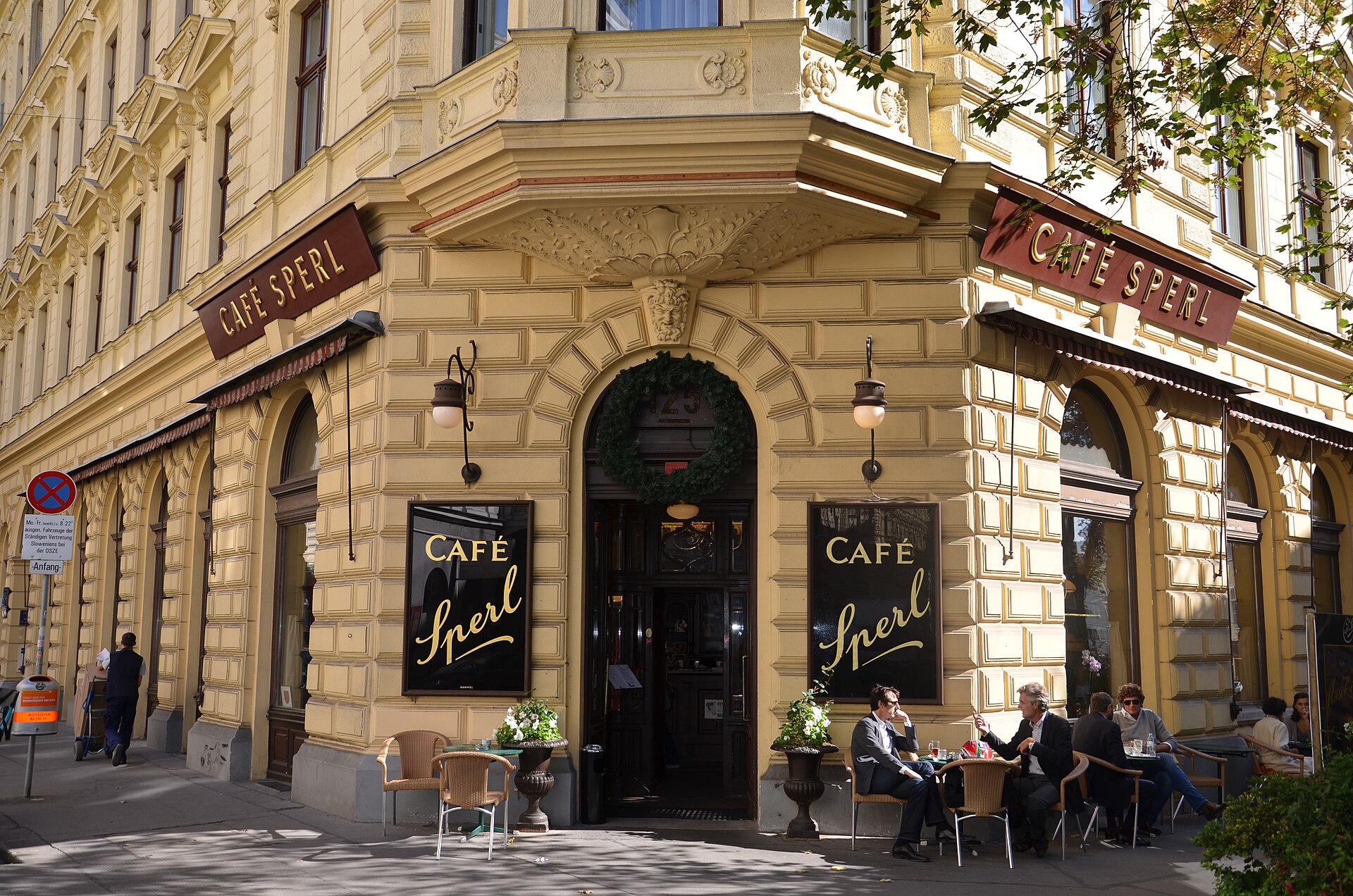
Café Sperl opened in 1880 as the Café Ronacher, founded by Jakob Ronacher, and was fitted out by the furniture and interior makers Gross & Jelinek. It did not keep that name for long: by December 1880 it had a new proprietor named Sperl, who renamed it after himself, and the name has stuck for nearly a century and a half.
Its location explains its early clientele. The 6th district around Gumpendorfer Straße was close to the Theater an der Wien, the Ringstraße and the military buildings of the time, and the café drew officers, architects, actors and musicians from the theatres nearby. Unlike the grander cafés on the Ring, it was never rebuilt or modernised in a serious way, and that is its great good fortune. Much of what you see — the long room, the high windows, the chandeliers, the marble tables, the Thonet chairs, the billiard tables at the back — is a rare survival of what an ordinary well-to-do Viennese café looked like at the end of the nineteenth century.
The room
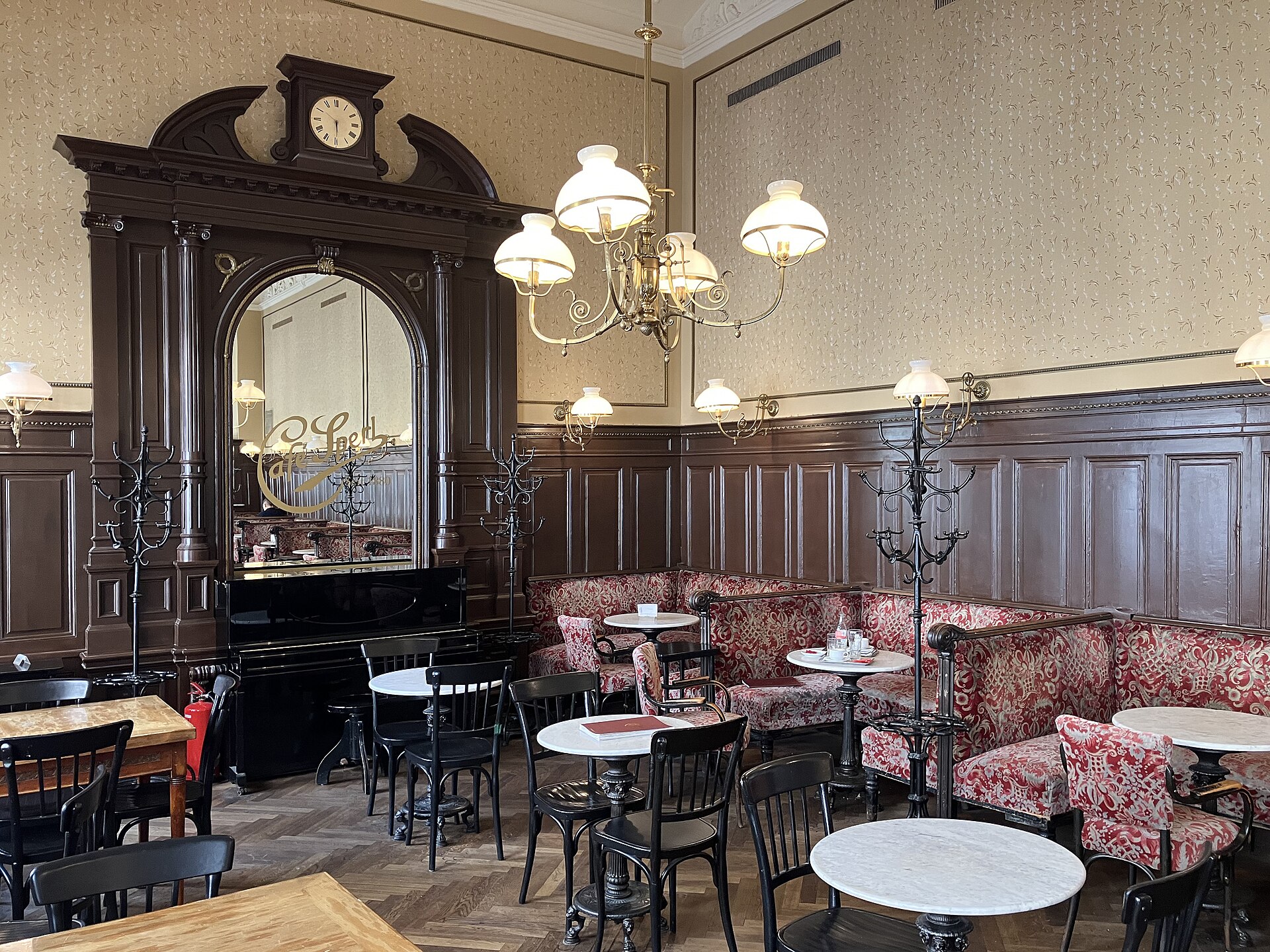
Café Sperl is essentially one long, open space rather than a warren of rooms. Windows run down the street side, so it is lighter than Café Hawelka and much less intimidating than the palatial Ringstraße cafés. The banquettes are upholstered, the wood panelling and mirrors are dark, the chandeliers hang low, and the whole place has the slightly worn look of a room that is used every day rather than restored for visitors.
At the back are three carom billiard tables — Karambol, the pocketless version of the game that was the standard coffee-house billiards of old Vienna. You will often see older regulars playing, and the café has a small children’s corner next to them. In spring and summer there are outdoor tables on the pavement.
Before Sunrise
Film fans come to Café Sperl for one reason. In Richard Linklater’s Before Sunrise (1995), the scene in which Ethan Hawke and Julie Delpy pretend to phone their friends and confess what they really think of each other was filmed here. The café has changed so little that the room is instantly recognisable. Please be discreet if you want to recreate the scene: this is a working café full of people reading newspapers, not a set.
What to order at Café Sperl
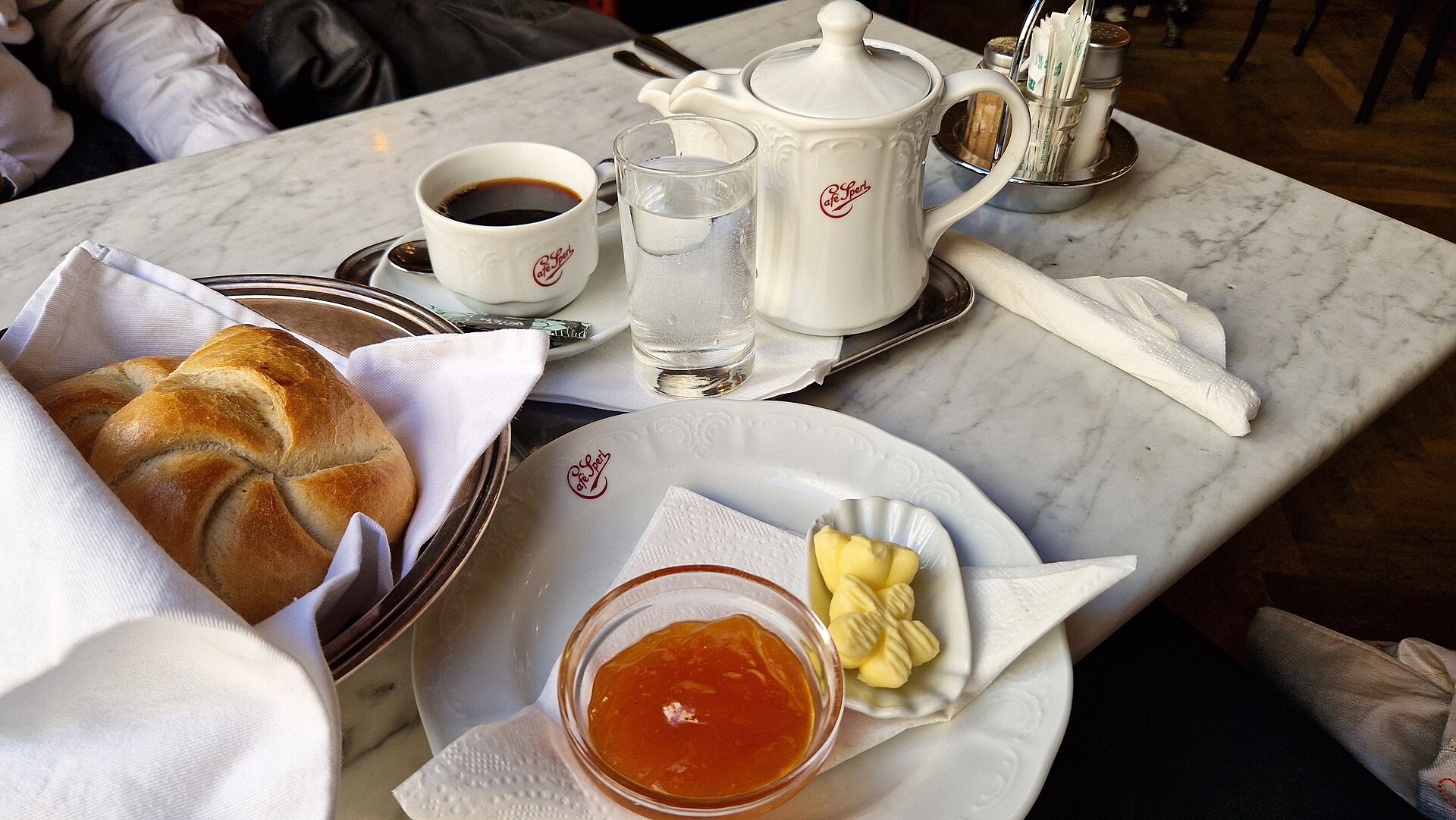
- Breakfast. Sperl opens at 07:00 Monday to Saturday, earlier than most of the famous cafés, and a Viennese breakfast here — a Kaisersemmel, butter, apricot jam and coffee, or two soft-boiled eggs in a glass — is one of the best ways to start a day in the city. See our breakfast and brunch guide for more.
- The Sperltorte. The café’s own house cake, which it makes a point of. Order it with a Melange.
- Coffee. The classics. If you are unsure what to ask for, our Viennese coffee menu guide explains the difference between a Melange, a Verlängerter and an Einspänner.
- Simple warm dishes at lunchtime — the menu is traditional Viennese café food rather than a restaurant menu.
Café Sperl does not publish its prices online. Expect neighbourhood-café prices that are a little lower than the grand cafés in the 1st district, but not cheap.
Hours and practical details
- Monday to Saturday: 07:00–22:00
- Sunday: 10:00–20:00, with piano music from 15:30
- Closed on Sundays in July and August — this catches out a lot of summer visitors
- Address: Gumpendorfer Straße 11, 1060 Vienna
- Phone: +43 1 586 4158
From Museumsquartier (U2), walk south along Getreidemarkt and turn right into Gumpendorfer Straße; it takes about five minutes. From Kettenbrückengasse (U4), walk through the Naschmarkt and up one of the side streets. Bus 57A runs along Gumpendorfer Straße.
Café Museum: The Coffee House of the Secession
Loos and “Café Nihilismus”
Café Museum opened in 1899 on the corner of Operngasse and Friedrichstraße, a stone’s throw from the brand-new Secession building, which had been completed the year before as the exhibition hall of the artists who had split from the conservative Künstlerhaus. The interior was designed by the young architect Adolf Loos, who would go on to write the essay “Ornament and Crime” and build the plain-fronted Looshaus on Michaelerplatz that scandalised the Emperor.
Loos’s café was a manifesto. At a time when every Viennese café was a riot of stucco, gilding and velvet, he gave Café Museum plain walls, simple bentwood chairs, bare lighting and clean lines. The Viennese hated it and loved it in roughly equal measure, and the nickname Café Nihilismus stuck.
Klimt, Schiele and the regulars
Its position next to the Secession and the Academy of Fine Arts made Café Museum the natural meeting place for the Vienna Secession and the generation that followed. Among the artists and architects associated with it are Gustav Klimt, Egon Schiele, Otto Wagner and Oskar Kokoschka, and it was popular with writers and critics as well as painters. For Klimt, whose Beethoven Frieze is still in the Secession basement across the road, this was the neighbourhood café. Our Gustav Klimt guide follows him around the city, and our guide to the Secession and Art Nouveau covers the movement.

What happened to the Loos interior
This is where visitors who have read the history are sometimes disappointed. The Loos interior did not survive. The café was redesigned in the 1930s by Josef Zotti, a student of Josef Hoffmann, and changed again in later decades. At the end of 2009 the café closed, and in the summer of 2010 it reopened under Irmgard and Berndt Querfeld, the family that owns Café Landtmann. The architect Peter Schwarz renovated it following Zotti’s design, not the Loos original.
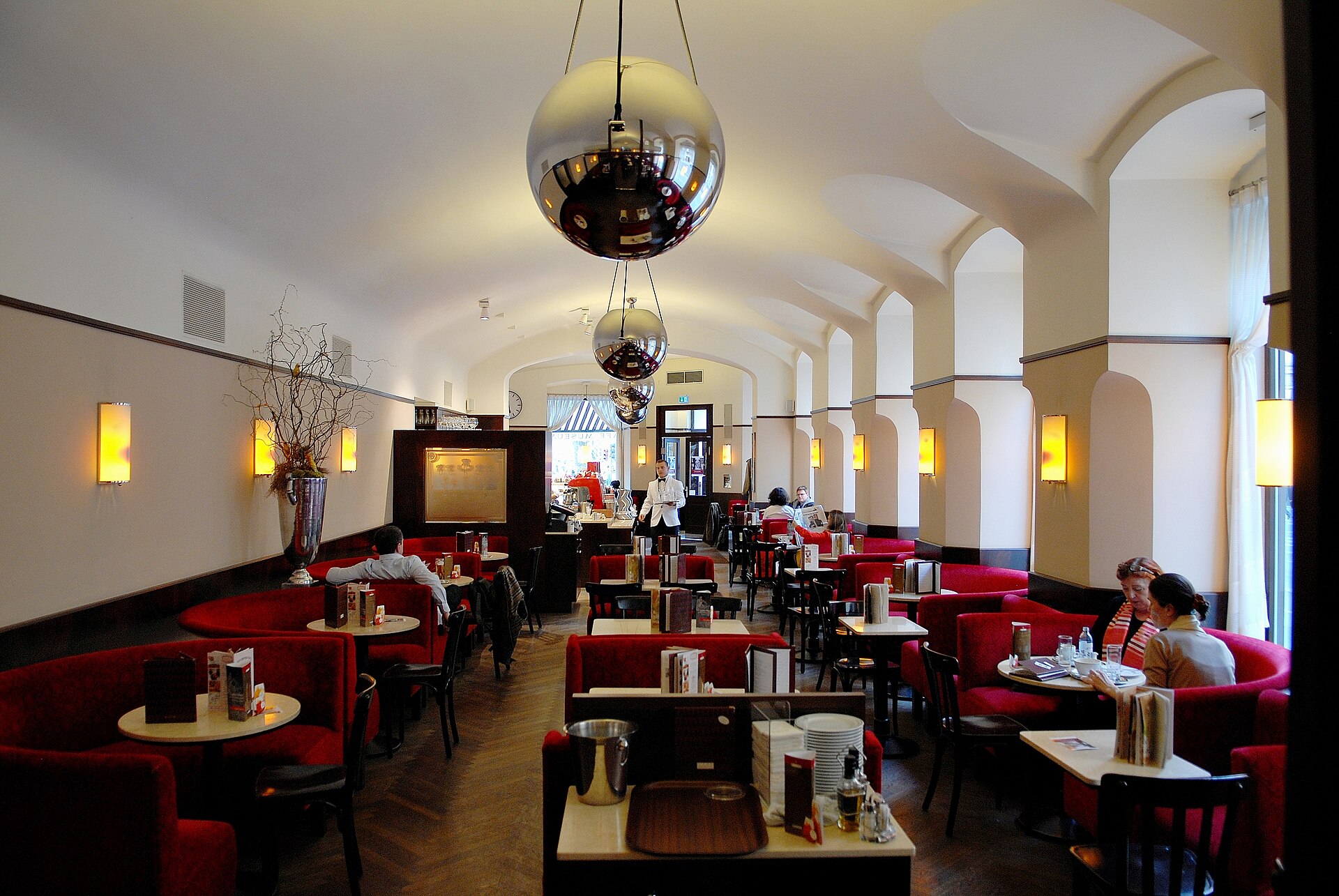
So what you see today is an elegant, restrained early-modern café with long red banquettes, arched windows and simple lamps. It is a handsome room and it is faithful to one period of the café’s history — just not the 1899 one that made it famous. If you want to see what Loos’s ideas looked like, the American Bar (Loos Bar) on Kärntner Durchgang, which he designed in 1908, is the place to go.
What to order at Café Museum
Café Museum shares its coffee list with the rest of the Querfeld group, so prices match Café Landtmann on the Ring: a Kleiner Brauner €4.20, a Wiener Melange €6.90 and a Salon Einspänner €7.20. It serves breakfast, cakes from the group’s patisserie and a menu of Viennese dishes through the day. It is not a destination for the food, but it is a comfortable, reliable stop in one of the busiest parts of the city.
Hours and practical details
- Hours: listed as daily 08:00–21:00. Check before you go.
- Address: Operngasse 7, on the corner of Friedrichstraße, 1010 Vienna.
- U-Bahn: Karlsplatz (U1, U2, U4), two minutes’ walk; use the Secession / Friedrichstraße exits.
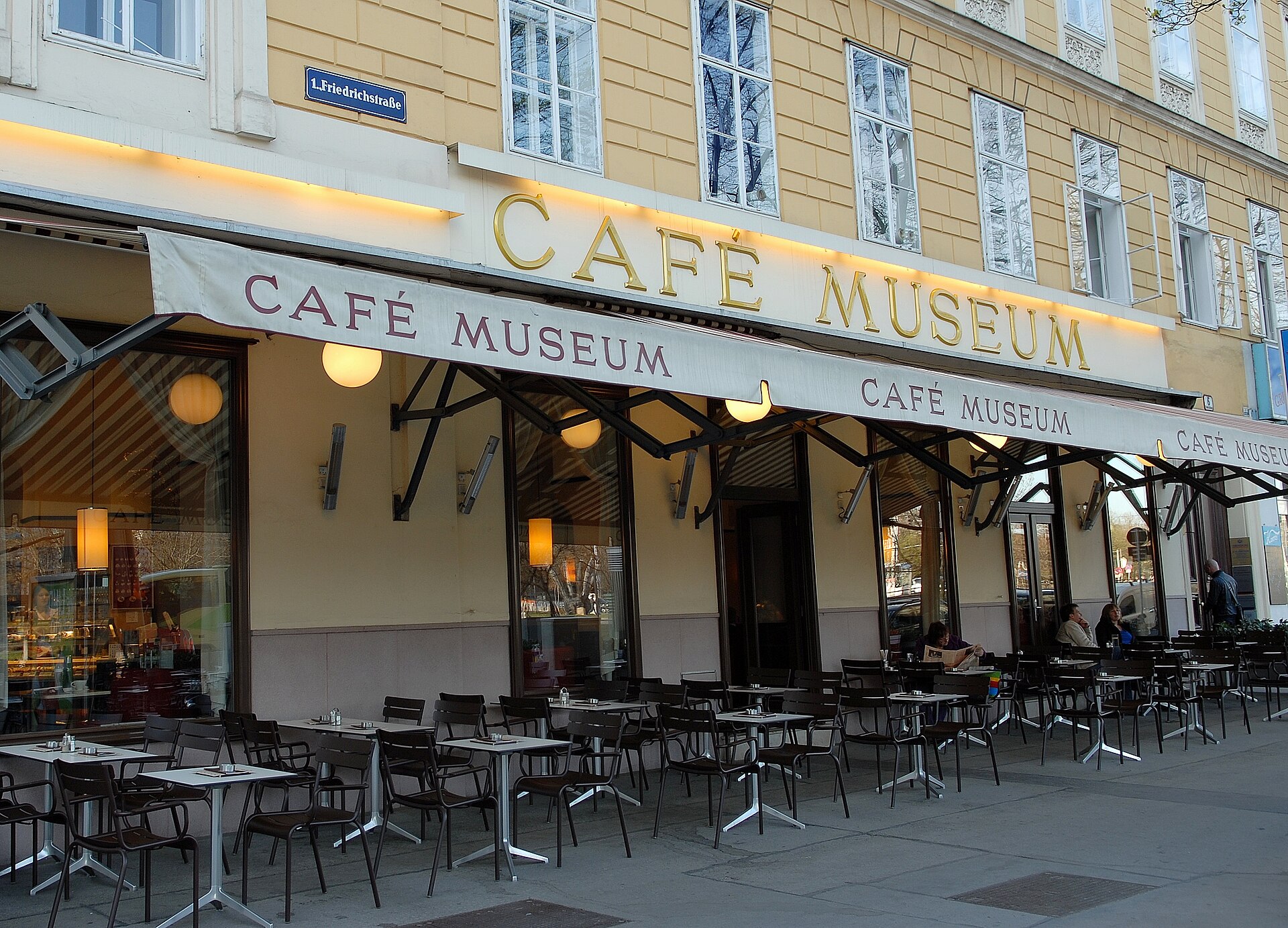
- Terrace: a large Schanigarten on the pavement in the warmer months.
Sperl or Museum? Which to Choose
| If you want… | Go to |
|---|---|
| An authentic, largely unchanged nineteenth-century coffee house | Café Sperl |
| Breakfast before 08:00 | Café Sperl (opens 07:00 Monday to Saturday) |
| The Before Sunrise location | Café Sperl |
| Billiards | Café Sperl |
| A café right next to the Secession, the Opera or Karlsplatz | Café Museum |
| The Klimt and Schiele connection | Café Museum (history), though the room is not the one they knew |
| A Sunday in July or August | Café Museum — Sperl is closed |
| Sunday afternoon piano | Café Sperl, from 15:30 (not in July and August) |
If you only have time for one, choose Café Sperl. It is the more atmospheric room and the more genuine survival. Café Museum is the more convenient stop, and its history is richer, but the history is mostly on the page rather than in the room.
A Half-Day Walk: Secession, Naschmarkt and Two Cafés
The two cafés sit at either end of one of the best short walks in Vienna, and they fit neatly into a morning or an afternoon.
- Start at Café Museum with a coffee. Arrive at Karlsplatz and look at Otto Wagner’s two green-and-gold Stadtbahn pavilions on the square before you go in.
- Cross to the Secession. Look at the gilded dome and the motto over the door — “To every age its art, to art its freedom” — and go inside for the Beethoven Frieze if you have time.
- Walk through the Naschmarkt. The market runs south-west from the Secession towards Kettenbrückengasse. Browse the stalls, and on Saturdays continue to the flea market at the far end. Our Naschmarkt guide explains which end is which.
- Look up at the Linke Wienzeile. On the north side of the market, at numbers 38 and 40, are Otto Wagner’s Majolikahaus and Medallion House, two of the finest Jugendstil apartment buildings in Europe.
- Finish at Café Sperl. Cut up one of the side streets to Gumpendorfer Straße for cake, or a late breakfast if you started early.
Allow two to three hours at a relaxed pace, longer if you go into the Secession. Our guide to Art Nouveau and Jugendstil in Vienna covers the buildings in more detail.

The Third Man connection
There is one more reason to know Café Museum. The Third Man sewer tour, run by the city’s own sewer utility, meets in the Girardipark, directly opposite Café Museum, beside an oversized red sewer grate. The tour runs from May to October, Thursday to Sunday, and tickets are sold only on site. Café Museum is the obvious place to wait, or to warm up afterwards. Our Third Man tour guide has the times and prices.
What to Look For in the Rooms
Both cafés reward a slower look than most visitors give them. A few things to notice once you have ordered.
At Café Sperl
- The bentwood chairs. The light, curved chairs of the Viennese coffee house were a Viennese industrial invention: Michael Thonet’s steam-bent beech furniture made it possible to fill a café cheaply with chairs that were strong, stackable and elegant. Sperl is one of the best places to see them in use in their natural setting.
- The billiard tables. Carom billiards is played with three balls and no pockets; you score by making your cue ball hit both of the others. It was once as much a part of coffee-house life as newspapers. Watch the regulars for a few minutes and you will quickly see how it works.
- The newspapers. Stacked on their wooden holders near the entrance. Take one back to your table and return it when you have finished; that is exactly what they are for.
- The windows. Sit along the street side in the morning for the best light.
At Café Museum
- The restraint. Compare the room with Sperl and you will see the argument of Viennese design history in miniature: the ornament of the 1880s against the clean lines that Loos began in 1899 and Zotti softened in the 1930s. Café Museum is not plain in the way Loos intended, but it is far quieter than any Ringstraße café.
- The view. From the window tables on the Friedrichstraße side you look towards the Secession and the Karlsplatz end of the Naschmarkt, which is as good a setting for the Vienna of 1900 as you will get from a café chair.
- The corner. The café’s position on the Operngasse corner, with the Opera behind you and the Academy of Fine Arts a few minutes away, explains why it became the artists’ café in the first place.
Other Cafés Nearby
If both are full, or you are collecting coffee houses, the streets between Karlsplatz, the Naschmarkt and Mariahilf have several more worth knowing. Hours at independent cafés change often, so check before you make a special trip.
- Café Drechsler, Linke Wienzeile 22, on the Naschmarkt. A traditional market café that was redesigned by the British designer Terence Conran and now mixes an old coffee-house layout with a modern look. Useful for its long hours and its position right on the market.
- Café Rüdigerhof, Hamburgerstraße 20, in the 5th district, a short walk beyond the far end of the Naschmarkt. It sits in the ground floor of a striking Jugendstil apartment block by Oskar Marmorek and has a mid-century interior and a lovely garden in summer. One of the least touristy cafés in this part of the city.
- Café Savoy, Linke Wienzeile 36, beside Otto Wagner’s buildings. A high-ceilinged historic café with enormous mirrors that has long been a fixture of the city’s LGBTQ scene and welcomes everyone. Our LGBTQ+ Vienna guide has more on the area.
Is It Worth It? Our Verdict
Café Sperl: yes
Café Sperl is one of the best coffee houses in Vienna for anyone who wants the real thing without the queues of the most famous names. It has a local crowd, a genuine old room, early opening, billiards and Sunday piano. The service is traditional, which means it can be slow when it is busy; the menu is not exciting; and on summer Sundays it is shut. None of that matters much. If you are going to have one long, slow morning in a Viennese coffee house, this is a very good place to do it.
Café Museum: yes, with adjusted expectations
Café Museum is a comfortable, handsome and well-run café in a perfect location, and its history is among the most important of any café in the city. But the Loos interior is long gone, and the room you sit in today is a careful restoration of a later design. Go because it is next to the Secession, the Opera and the Third Man tour, and because it is a good place for a coffee — not because you expect to sit where Klimt sat in the room he knew. At €6.90 for a Melange, it is also at the top of the price range.
For the whole spectrum of Viennese cafés, from the grandest to the smallest, see our Vienna coffee houses guide, and our pages on Café Landtmann and Café Hawelka.
Frequently Asked Questions
Where is Café Sperl?
At Gumpendorfer Straße 11 in the 6th district, Mariahilf, about five minutes’ walk from Museumsquartier (U2) or Kettenbrückengasse (U4) and close to the Naschmarkt.
What are Café Sperl’s opening hours?
Monday to Saturday 07:00 to 22:00 and Sunday 10:00 to 20:00. It is closed on Sundays in July and August (checked September 2026).
Was Before Sunrise filmed at Café Sperl?
Yes. The café scene with the pretend phone calls in Before Sunrise (1995) was filmed at Café Sperl, and the room looks almost exactly the same today.
Can you play billiards at Café Sperl?
The café has three carom billiard tables at the back of the room, the traditional pocketless game.
Is there live music at Café Sperl?
Yes, piano music on Sundays from 15:30, except in July and August when the café is closed on Sundays.
Where is Café Museum?
At Operngasse 7, on the corner of Friedrichstraße in the 1st district, two minutes from Karlsplatz and across the road from the Secession.
Is the Adolf Loos interior still at Café Museum?
No. The café was redesigned by Josef Zotti in the 1930s, and the 2010 restoration followed Zotti’s design rather than Loos’s 1899 original.
Did Klimt go to Café Museum?
Yes. Gustav Klimt, Egon Schiele, Otto Wagner and Oskar Kokoschka are among the artists associated with the café, which was the natural meeting place for the Secession artists next door.
How much is a coffee at Café Museum?
Café Museum uses the same price list as Café Landtmann: a Kleiner Brauner is €4.20 and a Wiener Melange €6.90.
Related Vienna Guides
- Vienna Coffee Houses Guide
- Café Landtmann
- Café Hawelka
- Café Central Vienna
- The Secession and Art Nouveau
- Gustav Klimt in Vienna
- Naschmarkt Vienna Guide
- Neubau and Mariahilf Guide
Photo Credits
Entrance of Café Sperl: Cafe Sperl 1 by Mary2605, CC BY-SA 3.0, via Wikimedia Commons.
Interior of Café Sperl: Café Sperl, Wien (2) by © 1971markus, CC BY-SA 4.0, via Wikimedia Commons.
Viennese breakfast at Café Sperl: Cafe Sperl Frühstück by Geolina163, CC BY-SA 4.0, via Wikimedia Commons.
Interior of Café Museum: Cafe Museum innen 2012 by Vindobohann, CC BY-SA 3.0, via Wikimedia Commons.
Terrace of Café Museum: Cafe Museum Schanigarten by Vindobohann, CC BY-SA 3.0, via Wikimedia Commons.