The Third Man Tour Vienna: Sewers, the Wheel & Every Film Location
The Third Man sewer tour with 2026 prices, its restrictive season and the ticket rule that catches people out, plus every film location you can still stand in for free.
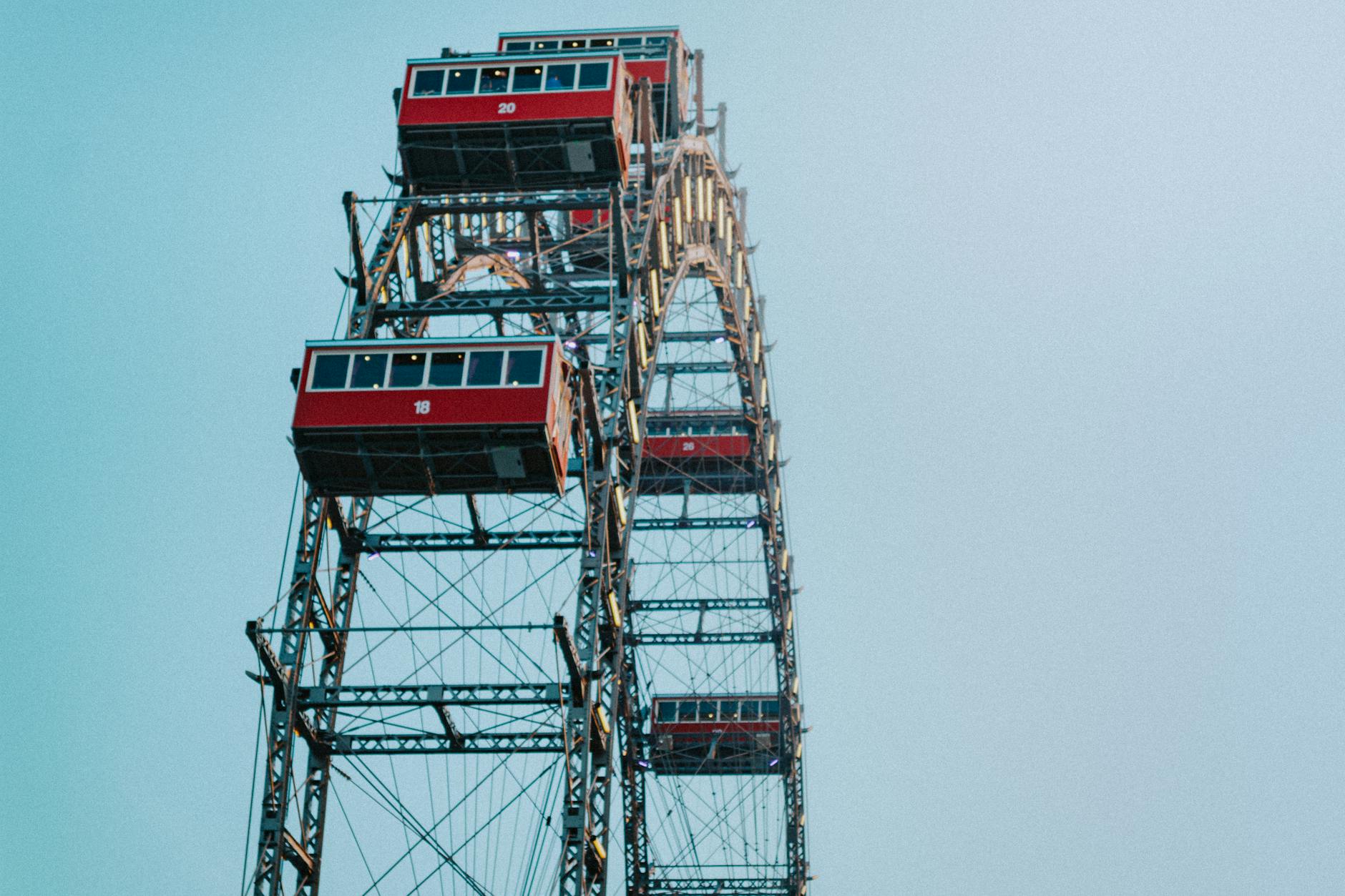
The Riesenrad — Vienna's iconic Giant Ferris Wheel since 1897
- The Sewer Tour at a Glance
- The Sewer Tour: How It Actually Works
- Vienna in 1948, Which Is What You Are Really Looking At
- The Film Locations You Can Still Stand In
- The Third Man Museum
- Guided Third Man Walking Tours
- Building the Day
- Watch the Film First
- The Honest Verdict
- Frequently Asked Questions
- Related Vienna Guides
- Photo Credits
This article contains advertising. Our booking links are routed through a partner that adds commission tracking automatically, so if you book through one we earn a commission from the provider, at no extra cost to you. It never affects what we recommend. Affiliate disclosure
There is a red steel sewer grate the size of a dining table set into the grass of a small park beside Karlsplatz, with a neon sign above it, and no attempt whatsoever at subtlety. That is the entrance. A Third Man tour Vienna visitors book expecting a film-buff curiosity turns out to be run by the city’s sewer utility, conducted in a working drain, and considerably better than it has any right to be — which is roughly what you would expect from a city that has spent seventy-five years being quietly proud of a film that portrays it as a bombed-out black market run by a penicillin racketeer.
This guide covers the sewer tour first, because it is the thing people mean, with its 2026 prices, its unusually restrictive season and the ticketing rule that catches everybody out. Then the rest of the film’s geography: the doorway, the Ferris wheel, the cemetery, the square where Harry Lime lived, and which of the celebrated locations you can actually stand in today. Prices and times were checked in September 2026; the sewer tour in particular changes its schedule year to year, so confirm before you plan a day around it.
The Sewer Tour at a Glance
| Detail | 2026 |
|---|---|
| Price | €14 full; €9 reduced |
| Season | May to October only |
| Days | Thursday to Sunday |
| Times | Hourly on the hour, 10:00–20:00; last tour 19:00 |
| English departure | Reported at 15:00 — confirm when reserving |
| Meeting point | Girardipark, 1040 Wien, opposite Café Museum |
| Nearest station | Karlsplatz (U1/U2/U4), Secession exit |
| Minimum age | 12 |
| Tickets | Sold on site only; reserve by phone or online first |
The Sewer Tour: How It Actually Works
The tour is operated by Wien Kanal, the municipal sewer authority, which is the detail that makes it good. This is not a film company’s set dressing; it is the people who maintain the system letting you into it, and the commentary is as much about Vienna’s Victorian-era drainage engineering as about Carol Reed. You descend the original spiral staircase used in the film, walk a section of the channels, and come back up.
Price and reductions
Admission is €14. The first reduction band is €9 and covers students, national-service personnel, co-operation guests and — usefully — Vienna City Card holders. A second reduction applies to apprentices and pupils aged 12 to 18 and to teachers. If you already hold a City Card this is one of the discounts that genuinely pays; our City Card versus Vienna Pass comparison lists the others.
Ignore the range of prices you will see on resale sites, which runs from about seven euros to eighteen and reflects old data, bundled products and pure invention. Fourteen euros is the gate price.
The season, and why it catches people out
This is the single most important practical fact on the page: the tour runs May to October, Thursday to Sunday only. Four months of the year and four days of the week. Visitors arriving in Vienna in March, or on a Tuesday in June, routinely discover this at the grate.
Within the season, departures are hourly on the hour from 10:00 to 20:00, with the last tour at 19:00. Most departures are in German. The English-language slot is reported as 15:00, and you should treat that as the figure to confirm rather than to rely on — language allocation shifts with demand and season. Phone or check when you reserve.
The ticketing rule everybody gets wrong
Tickets can only be bought on site, at the ticket counter by the entrance. There is no e-ticket to show on your phone and no marketplace listing that substitutes for one. What you can do — and should — is reserve a place in advance, either through the operator’s booking system or by phone on +43 1 4000-3033 (Monday to Friday, 07:30 to 16:30). Reservations for the season open in January.
In practice: reserve, then arrive fifteen minutes early to pay. Turning up unreserved on a wet August Saturday and expecting a place is optimistic; turning up unreserved on a Thursday in May is usually fine.
What it is like down there
You are issued a safety helmet and a headlamp and taken down a spiral staircase into a working sewer. It smells like a sewer, though considerably less than people expect — Vienna’s system carries a lot of clean water from the Wienfluss and the channels are well ventilated. The chambers are brick-vaulted, lit for the tour, and echo enormously. Projections and sound cues from the film are used at points, which sounds naff and works better than it should.
Minimum age is 12, firmly. It is not suitable for anyone with mobility limits: there are stairs both ways, uneven footing and no alternative route. Wear shoes you do not mind, take a layer, and do not bother with anything that needs to stay clean.
Why a sewer utility runs a film tour
The reason the tour exists at all is worth a paragraph, because it explains why it is better than the equivalent in most cities. Vienna’s sewer network is a Habsburg-era public work of genuine ambition — the Wienfluss was progressively vaulted over through the second half of the nineteenth century and the main collectors were engineered to a standard that has kept them serviceable for a hundred and fifty years. Wien Kanal is proud of it, in the specific way that municipal engineering departments are proud of things, and the film gave them a reason to let the public in.
The consequence is a tour with two registers running at once. One is Carol Reed and Orson Welles and the shoes in the doorway. The other is flow rates, storm overflows and what happens under the city when it rains hard. Visitors who arrive for the first and leave more interested in the second are common enough that the guides expect it.
Vienna in 1948, Which Is What You Are Really Looking At
The film was shot in a city under four-power military occupation. Austria had been divided into American, British, French and Soviet zones in 1945; Vienna, inside the Soviet zone, was itself split four ways, with the Innere Stadt administered jointly and patrolled by a jeep carrying one soldier from each power — the “four men in a jeep” that appear in the film are not an invention. That arrangement lasted until the State Treaty of 1955.
Two things follow for a visitor standing in these locations today. The first is that the sector boundaries were real and consequential: crossing from one to another meant a change of jurisdiction, which is the entire mechanism of the plot. When the film makes a point of who controls which district, it is describing an administrative fact you can trace on a map.
The second is that the rubble was real. Vienna was bombed heavily in 1944 and 1945 and fought over street by street in April 1945; the Staatsoper and the Stephansdom roof both burned. The bomb sites Reed shot in are gone, rebuilt through the 1950s, and this is the one part of the film’s Vienna that has genuinely vanished. The wartime and postwar history guide sets out what was destroyed and what was reconstructed.
The penicillin racket was real too, and is the least fictional thing in the film. Diluted and counterfeit antibiotics circulated on the black market across occupied Europe, and the consequences for the people who received them were exactly as the film describes. Graham Greene did not invent Harry Lime’s trade; he reported it.
The zither
The score was played by Anton Karas, a Viennese zither player Reed reportedly heard at a Heuriger and hired on the spot. He was not a film composer and had never scored anything. The Harry Lime Theme went to number one in the United States in 1950, sold millions, and made him internationally famous in a way that visibly bewildered him for the rest of his life.
It also permanently attached the zither to Vienna in the international imagination, which is faintly unfair to a city with rather a lot of other music. You will still hear it in tourist restaurants. You will not hear it anywhere Viennese people eat.
The Film Locations You Can Still Stand In
Carol Reed shot The Third Man on location in Vienna in late 1948, in a city still divided into four occupation zones and still full of rubble. A surprising amount of what he filmed survives, and most of it is walkable in an afternoon.
The doorway on Schreyvogelgasse
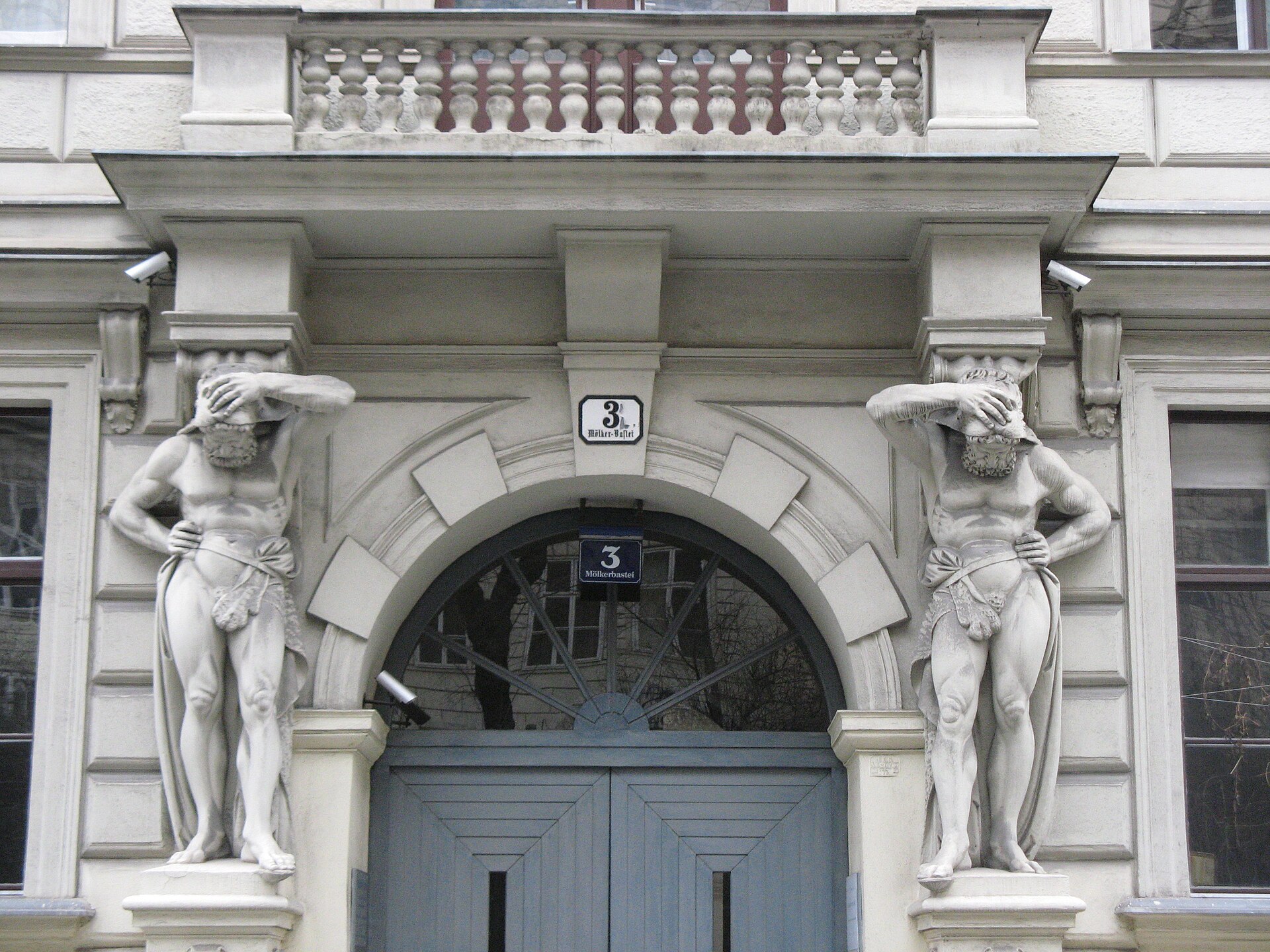
The most famous shot in the film — the cat, the shoes, the headlight catching Orson Welles’s face in a recessed doorway — was filmed at Schreyvogelgasse 8, a short, quiet street below the Mölker Bastei in the first district. The doorway is still there and still recessed. There is a small plaque.
Two honest notes. It is a residential street, and the people who live there did not sign up to have their front step photographed at all hours; keep your voice down. And the doorway is, viewed in daylight without a lighting rig, a fairly ordinary Viennese doorway. Go at dusk if you want it to look like anything.
The Riesenrad
The Ferris wheel scene — the cuckoo-clock speech, the little dots on the ground far below — was filmed in a cabin of the Prater’s Riesenrad, which has been turning since 1897 and is still turning now. You can ride it. It costs a fraction of the sewer tour and takes about fifteen minutes for a full revolution.
The honest verdict on the Riesenrad is that it is a very slow wheel with a very good view and a genuine claim on cinema history, and that the queue in August is longer than the ride. Go in the early evening or out of season. The cabins are enclosed and roomy enough to stand and walk about in, which is why the scene could be staged in one at all.
The Zentralfriedhof
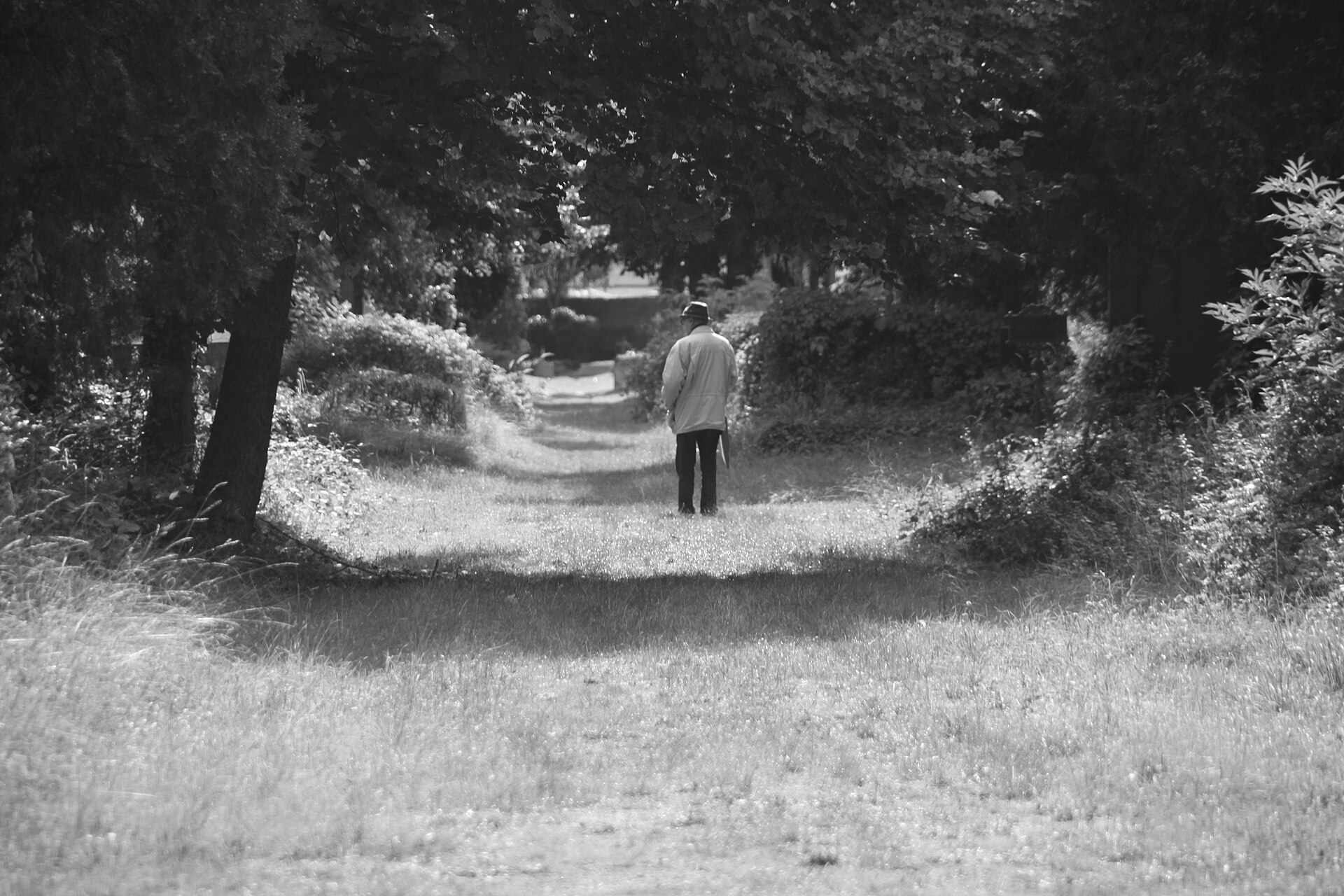
The film opens with a funeral and closes with the long, unmoving shot down a cemetery avenue as Anna walks past Holly Martins without a glance — three-quarters of a minute of nothing happening, and the most quoted ending in British cinema. Both were shot at the Zentralfriedhof, out on the 71 tram, which is free to enter and enormous.
You will not find the exact avenue signposted, and guides disagree about which it is. That matters less than you would think: the cemetery has dozens of avenues that look like the shot, and standing in any of them in November does the job. While you are there, the musicians’ graves and the Jugendstil Karl Borromäus church are worth the trip on their own, and our guide to Vienna’s crypts and cemeteries covers the wider subject.
Josefsplatz and the Palais Pallavicini
Harry Lime’s apartment building — the one Holly Martins arrives at to find his friend dead — is the Palais Pallavicini on Josefsplatz, immediately behind the Hofburg. The caryatid portal is unmistakable and appears in the film almost exactly as it stands. Josefsplatz at night, empty and floodlit, is the single most Third Man-looking place in Vienna and costs nothing to visit.
Café Mozart and the Ringstrasse
Café Mozart on Albertinaplatz appears in the film and is still trading. It is a perfectly decent Viennese coffee house that now trades hard on the connection, with prices to match; go for the association if you want it, but do not expect a bargain, and read our coffee house guide for better-value alternatives two streets away. The Ringstrasse itself, and the rubble-strewn squares of the film, have been rebuilt beyond recognition — this is the one part of the film’s Vienna that genuinely no longer exists.
The Third Man Museum
A privately run museum in the fourth district holds an extensive collection of material about the film, its production and the occupation-era Vienna it was shot in — original posters, equipment, documents, an original zither. It opens on a very limited schedule, historically Saturday afternoons, and we have not verified the current hours or admission price for 2026, so check before setting out.
It is the right destination for people who love the film specifically rather than Vienna generally. Casual visitors will get more from ninety minutes walking the locations.
Guided Third Man Walking Tours
Several operators run walking tours built around the film, typically two to two and a half hours and €20–40 per person, covering the doorway, Josefsplatz, the Ringstrasse and the occupation-era history. They generally do not include the sewer, which is a separate ticket on a separate schedule — check this before booking, because a listing that mentions the sewer in its description is not the same as a listing that includes the entrance.
Are they worth it? If the occupation and the four-power division of the city interest you, yes — a good guide turns the walk into a lesson in what Vienna was between 1945 and 1955, which is a period the city’s museums cover surprisingly thinly. If you only want to see the doorway, walk it yourself with a map; the locations are close together and self-evident. Our walking tours guide covers how to judge an operator.
Building the Day
The sewer tour’s schedule dictates everything, so build outwards from it.
- Morning. Zentralfriedhof on the 71 tram from Schwarzenbergplatz. Allow two hours including travel. Free.
- Late morning. Back into town; Josefsplatz and the Palais Pallavicini portal, then up to Schreyvogelgasse and the Mölker Bastei. Forty minutes, free.
- Lunch near Karlsplatz, not at Café Mozart unless you want the association.
- 15:00. The sewer tour at Girardipark, if you are here Thursday to Sunday between May and October. About an hour with the briefing. €14.
- Evening. The Prater and the Riesenrad, which is at its best in the last hour of light.
That is a full, genuinely coherent day for well under fifty euros in tickets, most of it free. It is also one of the better ways to see a spread of Vienna that has nothing to do with Habsburgs, which after three days of palaces is a relief. If your dates fall outside the sewer season, the rest of the day still works and you have not lost much — the locations above ground are the better half.

Getting to the meeting point
Girardipark is a small triangle of grass on the south-west side of Karlsplatz, and Karlsplatz station is one of the largest and most confusing interchanges in Vienna. Take the Secession exit, come up at street level, and walk towards the Naschmarkt end — Café Museum is the landmark and the red grate is directly opposite it. Allow ten minutes more than you think, because people who navigate to “Karlsplatz” and surface at the Karlskirche end lose fifteen minutes crossing back.
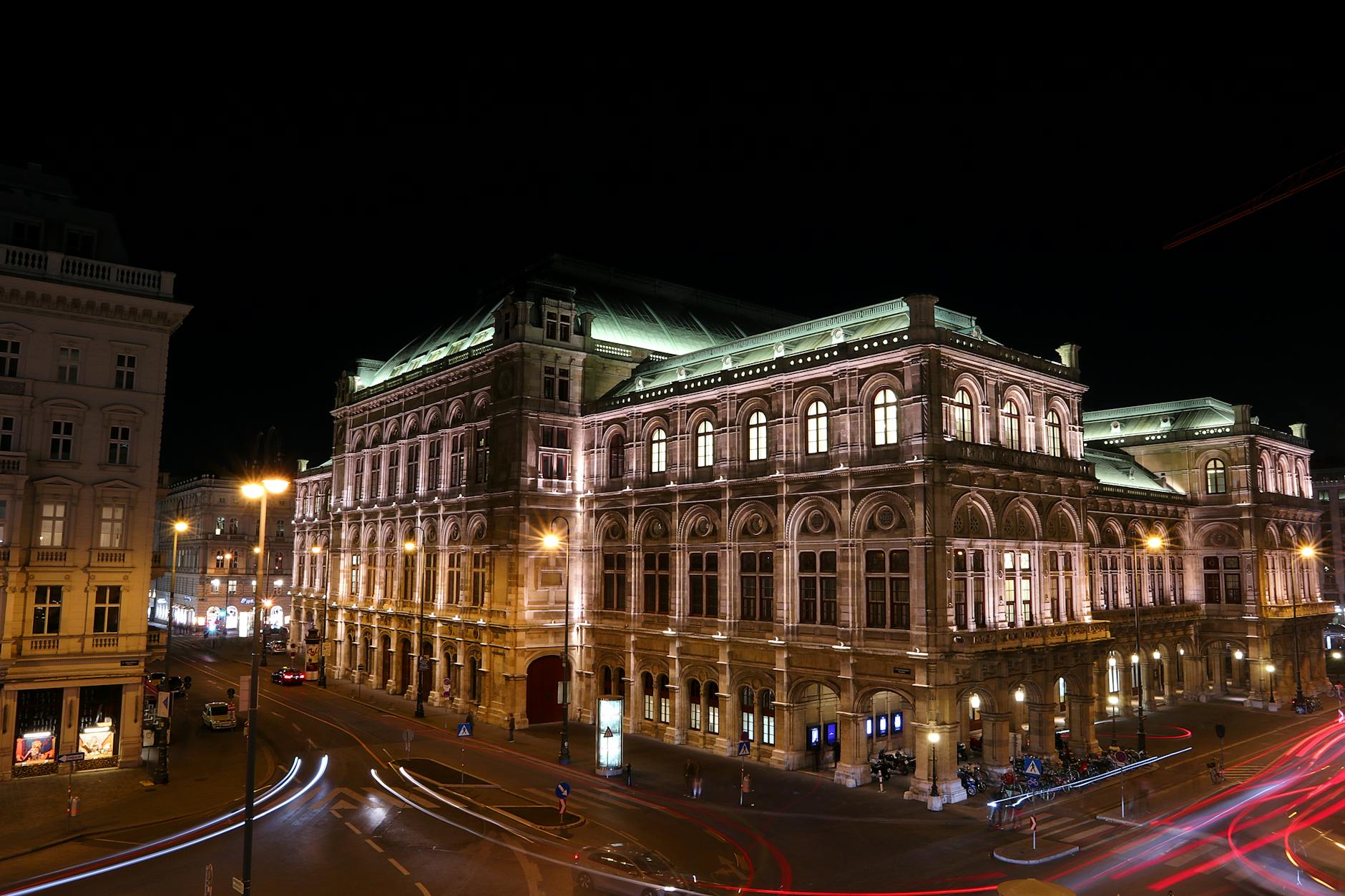
If you are coming from the Innere Stadt on foot it is about twelve minutes from the Staatsoper down the Operngasse. Trams 1, 2, 62 and 71 and the Badner Bahn all stop at Karlsplatz.
What to do if the tour is closed
Arriving out of season is common and not fatal. The above-ground locations are all open all year and are better in winter, when the light is low and the streets are wet and the whole city looks like the film. Josefsplatz and the Mölker Bastei in January at four in the afternoon are as close to the film’s visual register as anywhere gets.
The Riesenrad runs year-round. The Zentralfriedhof is open year-round and is genuinely at its best in November fog. And if you want something underground on a day when the sewer is shut, the Stephansdom catacombs run all year for €6.50 — a different sort of tunnel, but a tunnel.
Watch the Film First
Obvious, but worth saying: the tour and the locations are substantially less interesting if you have not seen The Third Man. It runs 104 minutes, it is available everywhere, and it is not homework — it is a genuinely great thriller with a zither score that got to number one in the American charts in 1950 and has been irritating people ever since.
A small thing that improves the visit: the film is set in a Vienna divided between American, British, French and Soviet sectors, with the Innere Stadt jointly administered and patrolled by a jeep containing one soldier from each. Knowing that, the geography of the film stops being arbitrary. When Harry Lime disappears into the Soviet sector, that is a real line on a real map you are standing on. Our guide to wartime and postwar Vienna sets out where those lines ran.
The Honest Verdict
The sewer tour is worth €14 and is the rare film-related attraction that is genuinely good on its own terms, because the people running it care more about the drains than the film. Book it if your dates allow; do not reshape your trip around it.
The above-ground locations are free, close together and better than the museum for most people. The Riesenrad is worth riding once for the view rather than the scene. And Café Mozart is a coffee house charging a premium for a connection, which is exactly the sort of thing this site exists to tell you about — go if you want to, but go knowing.
Frequently Asked Questions
How much does the Third Man sewer tour cost?
€14 for adults. A €9 reduction applies to students, national-service personnel and Vienna City Card holders, with a further band for pupils aged 12–18 and teachers. Tickets are sold only at the entrance; reserve ahead by phone or online and pay on arrival.
When does the Third Man tour run?
May to October only, Thursday to Sunday only. Departures are hourly on the hour from 10:00 to 20:00, with the last tour at 19:00. Most are in German; the English departure has been running at 15:00 but confirm when you reserve.
Where does the Third Man tour start?
Girardipark, 1040 Vienna, opposite Café Museum, marked by an oversized red sewer grate and a large neon sign. The nearest station is Karlsplatz on the U1, U2 and U4 — take the Secession exit.
Is there a minimum age for the sewer tour?
Yes, twelve years. This is not flexible. The tour involves stairs, uneven ground and a working sewer, and there is no step-free route.
Can you visit the Third Man doorway?
Yes. It is at Schreyvogelgasse 8 in the first district, below the Mölker Bastei, marked with a plaque and free to visit at any hour. It is a residential street, so be quiet about it. It photographs far better after dark.
Is the Third Man tour worth it?
If you have seen the film, yes — it is well run, genuinely underground, and the commentary on Vienna’s sewer engineering is more interesting than the film connection. If you have not seen the film, watch it first or spend the €14 elsewhere.
Do Third Man walking tours include the sewer?
Usually not. The sewer is a separate ticket sold on site by the city’s sewer utility on its own restricted schedule. A walking tour that mentions the sewer in its description is not necessarily including entry — check the inclusions list explicitly before booking.
Can you still ride the Ferris wheel from the film?
Yes. The Riesenrad in the Prater has been running since 1897 and a full revolution takes about fifteen minutes. Queues are long in July and August; early evening and the shoulder seasons are far better.
Related Vienna Guides
- The Prater and the Riesenrad
- Wartime and Postwar Vienna
- Vienna Walking Tours Compared
- Vienna Underground: Catacombs and Crypts
- Vienna Tours & Experiences
- Vienna Coffee Houses
- Vienna Hidden Gems
- The Innere Stadt
Photo Credits
Avenue at the Zentralfriedhof: Allee zwischen den Grabreihen by Cheeky76, CC BY-SA 3.0 AT, via Wikimedia Commons.
Doorway at Mölker Bastei 3: Mölker Bastei 04 by Buchhändler, CC BY-SA 3.0, via Wikimedia Commons.