Vienna Underground: Catacombs, Crypts & Ghost Tours
The bookable underground: Stephansdom's catacombs, the Habsburg Imperial Crypt, the Michaelerkirche mummies and Vienna's ghost walks, with 2026 prices, times and honest verdicts.
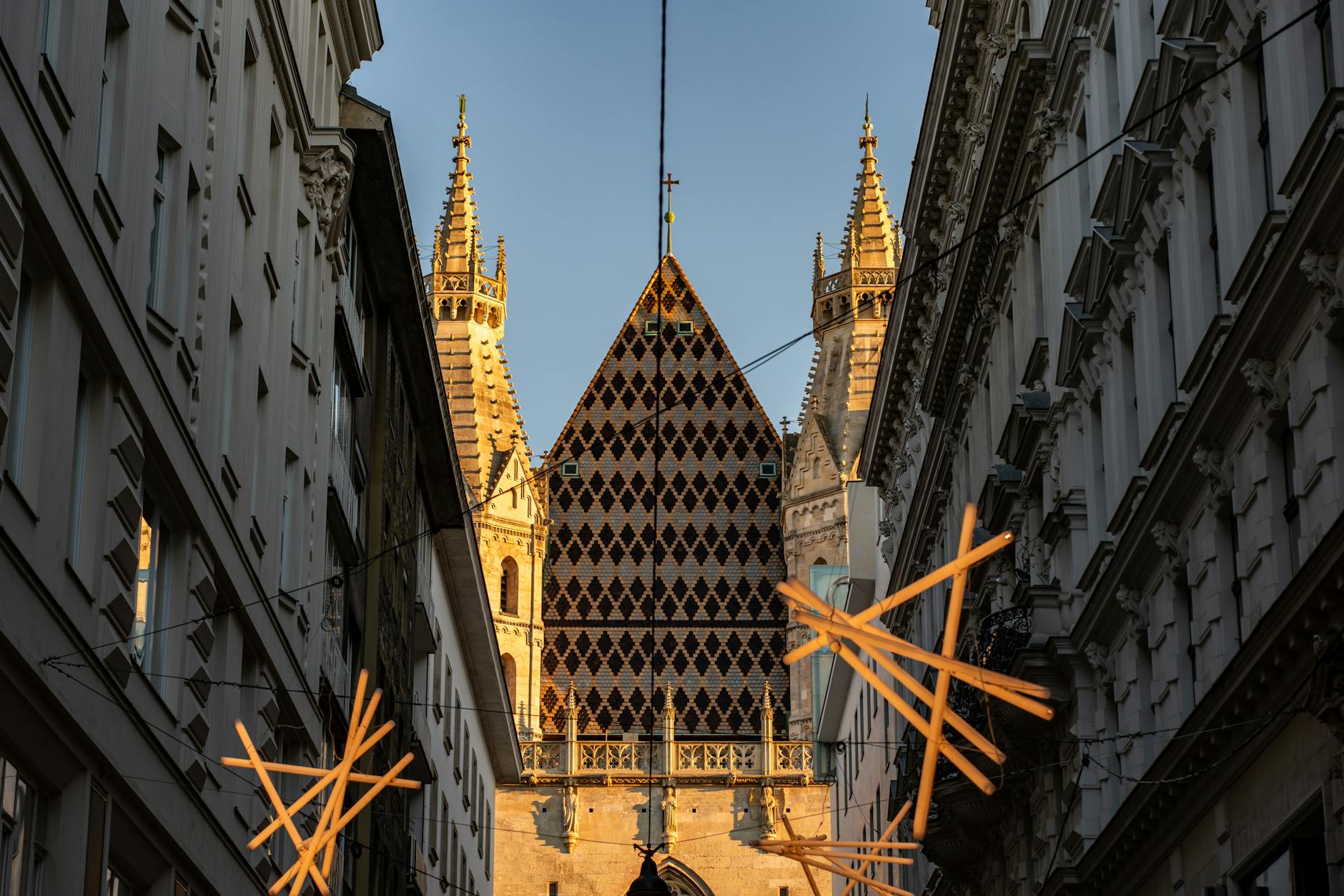
St. Stephen's Cathedral — a must-see that deserves unhurried time
- Vienna’s Underground at a Glance: Prices and Times
- The Stephansdom Catacombs
- The Kapuzinergruft: the Imperial Crypt
- The Michaelerkirche Crypt
- The Smaller Crypts and the Ones You Cannot Visit
- Ghost Tours, Legend Walks and What They Actually Are
- Building an Underground Day
- Practical Notes Before You Go Down
- The Honest Verdict
- Frequently Asked Questions
- Related Vienna Guides
- Photo Credits
This article contains advertising. Our booking links are routed through a partner that adds commission tracking automatically, so if you book through one we earn a commission from the provider, at no extra cost to you. It never affects what we recommend. Affiliate disclosure
There is a doorway in the north aisle of Stephansdom that most visitors walk past without noticing, and a small sign beside it giving times. Behind the door a stone staircase drops into chambers holding the remains of roughly eleven thousand people. A Vienna catacombs tour costs less than a museum coffee, lasts half an hour, and is the single most concentrated encounter with the city’s relationship to death that you can buy — which, in a city that invented the phrase eine schöne Leich for a beautiful funeral, is saying something.
This guide covers the bookable underground: the cathedral catacombs, the Habsburg Imperial Crypt at the Kapuzinerkirche, the vaults beneath the Michaelerkirche, the smaller church crypts, and the ghost and legend walks that trade on all of it. What each costs in 2026, how long each takes, when you need to book and when you can simply turn up, and — because at least two of these are sold much harder than they deserve — which are worth your afternoon. Prices were checked in September 2026; treat them as current but verify before travelling. For the architecture and history above ground, our guide to Vienna’s Gothic churches is the companion piece.
Vienna’s Underground at a Glance: Prices and Times
Everything in this table is inside the Ringstrasse and reachable on foot from Stephansplatz in under ten minutes.
| Site | Price | Length | Booking | Verdict |
|---|---|---|---|---|
| Stephansdom catacombs | €6.50 | ~30 min | Turn up | The best value underground in Vienna |
| Kapuzinergruft (Imperial Crypt) | €15 / €13 conc. | 45–75 min | Turn up | Essential if you care about the Habsburgs |
| Michaelerkirche crypt | €10 | ~45 min | Check times first | The strangest of the three |
| Augustinerkirche Herzgruft | Small charge | ~20 min | Very limited hours | For completists only |
| Ghost / legend walking tour | €20–35 | 1.5–2 hrs | Book ahead | Entertainment, not history |
Doing all three main crypts in a day is entirely possible and costs about thirty-two euros. It also makes for a fairly relentless day, and we would space them out.
The Stephansdom Catacombs
The cathedral catacombs are two things stacked on top of each other, and the tour makes the distinction clearly. The upper level is the ducal crypt, built in the fourteenth century, where the Habsburgs kept the internal organs of family members whose bodies went to the Kapuzinergruft and whose hearts went to the Augustinerkirche. The lower level is the eighteenth-century burial vaults, dug when the city’s parish graveyards were closed on public-health grounds and thousands of Viennese were interred beneath the cathedral instead.
What it costs and when it runs
Adults pay €6.50. The tour lasts about thirty minutes and departures run roughly every half hour. In practice that means Monday to Saturday at 10:00, 11:00 and 11:30, then hourly from 13:30 to 16:30, and Sundays and public holidays hourly from 13:30 to 16:30. There is no advance booking — you buy at the door inside the cathedral and wait for the next departure. Times shift for liturgical reasons more often than the cathedral advertises, so check the board on arrival rather than planning your day around a timetable found online.
If you are also going up the towers, the cathedral’s all-inclusive ticket at €18 bundles the audio guide, both towers, the catacombs and the Dom Museum Wien. That only pays back if you genuinely want all four; buying the catacombs alone is the better move for most people. The full Stephansdom guide works through the ticket combinations properly.
What you actually see
Vaulted brick chambers, some lit, some deliberately dim. Copper urns on shelves in the ducal crypt. Further down, the bone chambers — rooms where remains were stacked and sorted in the 1780s, some of it arranged by prisoners paid for the work, and it looks like it. The guide is brisk and factual rather than theatrical, which is the right register for the material.
Two practical warnings. It is genuinely cool down there, around twelve degrees year-round, so the summer crowd in shorts always regrets it. And the stairs are narrow, steep and unavoidable; there is no lift and no alternative route. Anyone claustrophobic should know that several chambers are low-ceilinged and the group is packed in fairly tight.
The Kapuzinergruft: the Imperial Crypt
The Habsburg burial vault sits under an unassuming Capuchin church on the Neuer Markt, five minutes from the Staatsoper, and contains one hundred and fifty members of the family across ten connected chambers. It is the most-visited crypt in Vienna and the only one where the price is high enough to need justifying.
Admission is €15 for adults and €13 concession. It opens daily 10:00 to 18:00, last entry 17:30, at Tegetthoffstraße 2, Neuer Markt, 1010. Holders of the Vienna City Card, the Vienna Pass, the Flexi Pass and the Kulturpass get a reduction — worth checking if you already hold one, though not worth buying a pass for. Our City Card versus Vienna Pass comparison covers whether either is worth it in the first place.
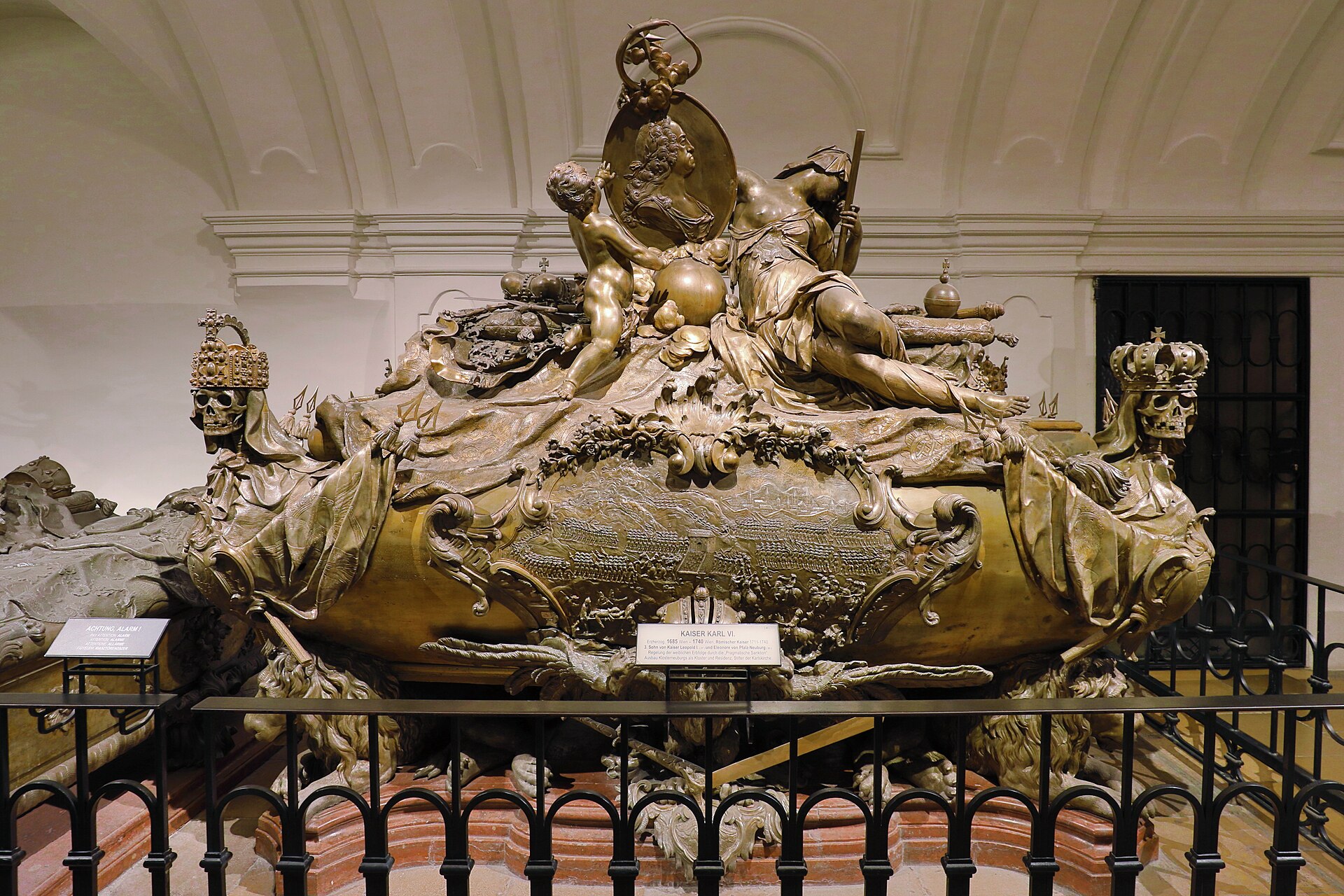
You walk it yourself; there is no compulsory guided tour, and forty-five minutes is a comfortable pace, longer if you read the panels. The progression through the chambers is roughly chronological and the change in taste is the real story: sober early boxes, then the baroque explosion of the eighteenth century — Karl VI’s sarcophagus with crowned skulls at the corners, Maria Theresa and Franz Stephan sharing an enormous double tomb with the pair of them sitting up looking at each other — then a hard swerve into nineteenth-century austerity. Franz Joseph lies between Elisabeth and Crown Prince Rudolf, and that trio is where almost everyone stops longest. Fresh flowers appear on Elisabeth’s tomb constantly; see our guide to Sisi in Vienna for why.
The honest verdict: fifteen euros is a lot for a room of coffins if the Habsburgs mean nothing to you, and there is no shame in skipping it. If you have already done Schönbrunn and the Hofburg, though, this is the chapter those visits are missing, and it recontextualises both. The Habsburg dynasty guide gives you the family tree you will want in your head beforehand.
The Michaelerkirche Crypt
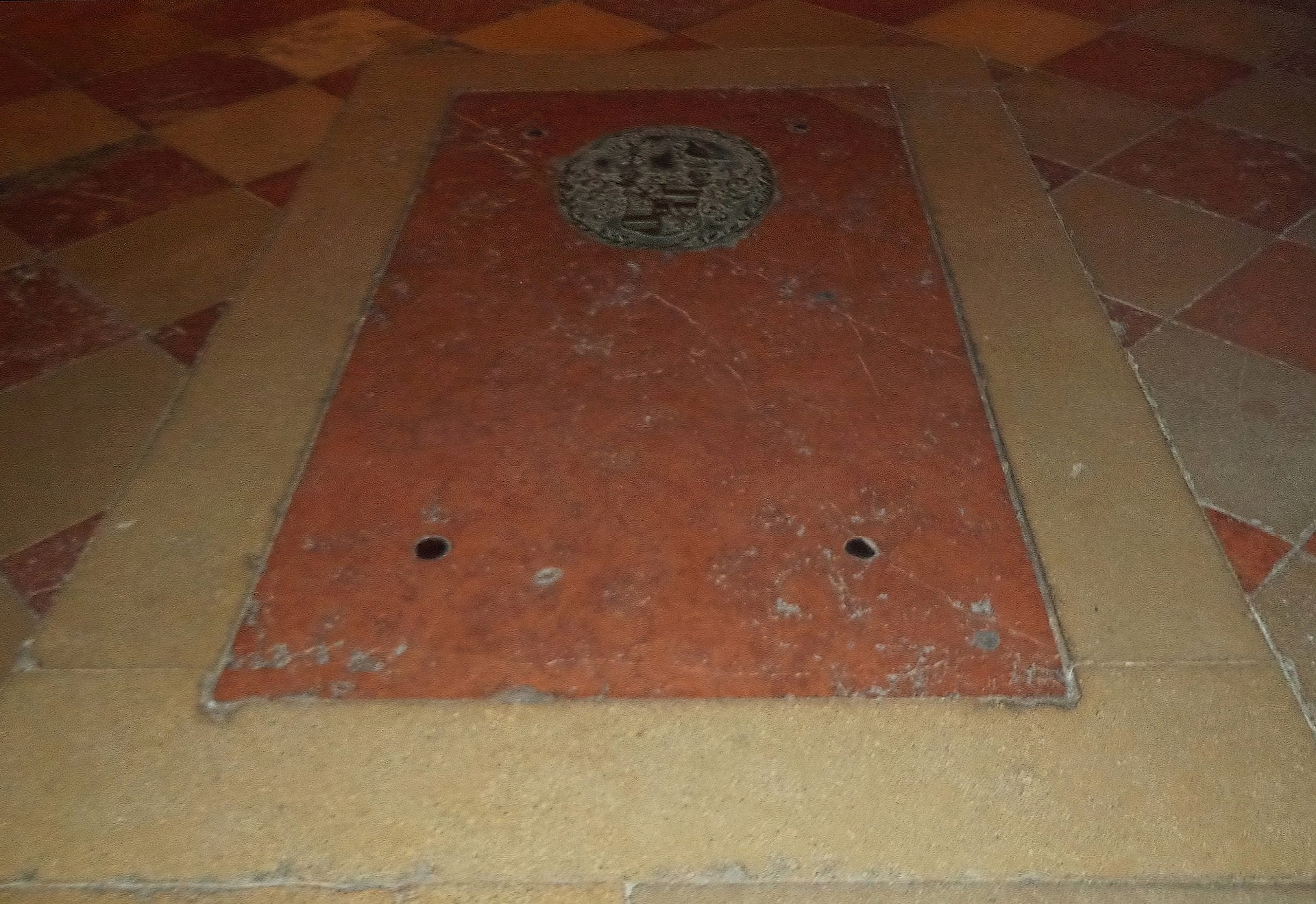
The strangest of the three, and the one visitors talk about afterwards. The Michaelerkirche stands on Michaelerplatz opposite the Hofburg gate, and beneath it are burial vaults used from the medieval period until the 1780s, when Joseph II’s reforms ended intramural burial. Because the vaults are dry and ventilated, a number of the eighteenth-century burials mummified naturally rather than decaying. They are still there, in their coffins, in their clothes.
Public guided tours cost €10 for adults and run in German and English; private tours can be arranged. The tour takes around forty-five minutes. The crucial practical point is that times vary and are liturgy-dependent — this is a working parish church, not a museum, and the schedule bends around services. Do not travel across the city for this without checking the current times on the day. Groups are small and it does sell out.
Whether you want to see it is a genuine question rather than a rhetorical one. These are recognisably individual dead people rather than anonymous bones, wigs and shoes and all, and some visitors find it a step past what they wanted from an afternoon. Others find it the most human thing they see in Vienna. It is not gruesome so much as intimate, which is arguably worse. Children under about twelve should probably be somewhere else.
The Smaller Crypts and the Ones You Cannot Visit
The Augustinerkirche Herzgruft
The Habsburg heart vault, in the church where Franz Joseph married Elisabeth, holds fifty-four silver urns each containing a heart. It is a single small room and access is limited to a narrow window of hours, generally after Sunday mass, for a small charge. It is a twenty-minute experience for completists and a wasted trip for anyone else. Check current access with the church directly rather than relying on tour listings, which routinely quote times that no longer apply.
The Virgilkapelle
Not a crypt but genuinely underground: a fourteenth-century chapel discovered during U-Bahn construction and now displayed inside Stephansplatz station, visible through glass from the passageway and enterable as part of the Wien Museum network. It is free to look at from the concourse, which makes it the cheapest underground sight in the city.
What is not on offer
Vienna’s sewer system is bookable, but only as the Third Man tour, which is a specific product with its own timetable and is covered separately. The city’s air-raid shelters and the tunnels under the Ringstrasse appear occasionally on specialist tours and are not reliably available. And there is no equivalent of the Paris catacombs here — no single vast ossuary you walk through for an hour. Anything marketed as such is one of the sites above with more adjectives.
Why there is so much of this in Vienna
The concentration of visitable crypts in a few hundred square metres is not an accident of preservation. Until the 1780s the Viennese buried their dead inside the walls, in vaults under parish churches and in graveyards squeezed against the buildings, and by the middle of the eighteenth century the city was running out of room in a way that had become a public-health emergency. Joseph II ended intramural burial by decree, closed the inner-city graveyards and moved the dead outside the walls. That single reform is why the vaults under Stephansdom and the Michaelerkirche stop abruptly in the 1780s, why they were sealed rather than cleared, and why they survive at all.
The Habsburgs exempted themselves, which is how the three-way division of the imperial body came about: the corpse to the Kapuzinergruft, the heart to the Augustinerkirche, the viscera to the ducal crypt at Stephansdom. Three separate churches, three separate ceremonies, one dead emperor. If you visit all three you will have followed a single funeral across the Innere Stadt in the order the Habsburgs themselves arranged it, which is a stranger and better way to spend a day than most guidebooks suggest.
Ghost Tours, Legend Walks and What They Actually Are
A handful of operators run evening walks under names involving ghosts, legends, murderers, plague or the underworld. They typically last 90 minutes to two hours and cost €20–35, meeting in the Innere Stadt and covering a loop of the old town after dark.
Be clear about what you are buying. These are almost never underground tours — the crypts are closed in the evening and no ghost-walk ticket gets you into them. They are storytelling walks above ground, and the good ones are genuinely good: the plague years, the Basilisk of Schönlaterngasse, the executioner’s trade, Vienna’s spectacular death rituals, the legend of Der liebe Augustin who allegedly fell drunk into a plague pit and climbed out alive. The bad ones are a guide in a cape reciting invented hauntings at buildings that never had any.
How to tell them apart before booking: read what the tour actually names. A listing that specifies streets, dates and documented events is a history walk with atmosphere. A listing built on the words “chilling”, “haunted” and “if you dare” with no named location in the description is a theatre performance, which is fine if that is what you want and a disappointment if you expected the other thing. Our Vienna walking tours guide covers the wider market and how the good operators differ.
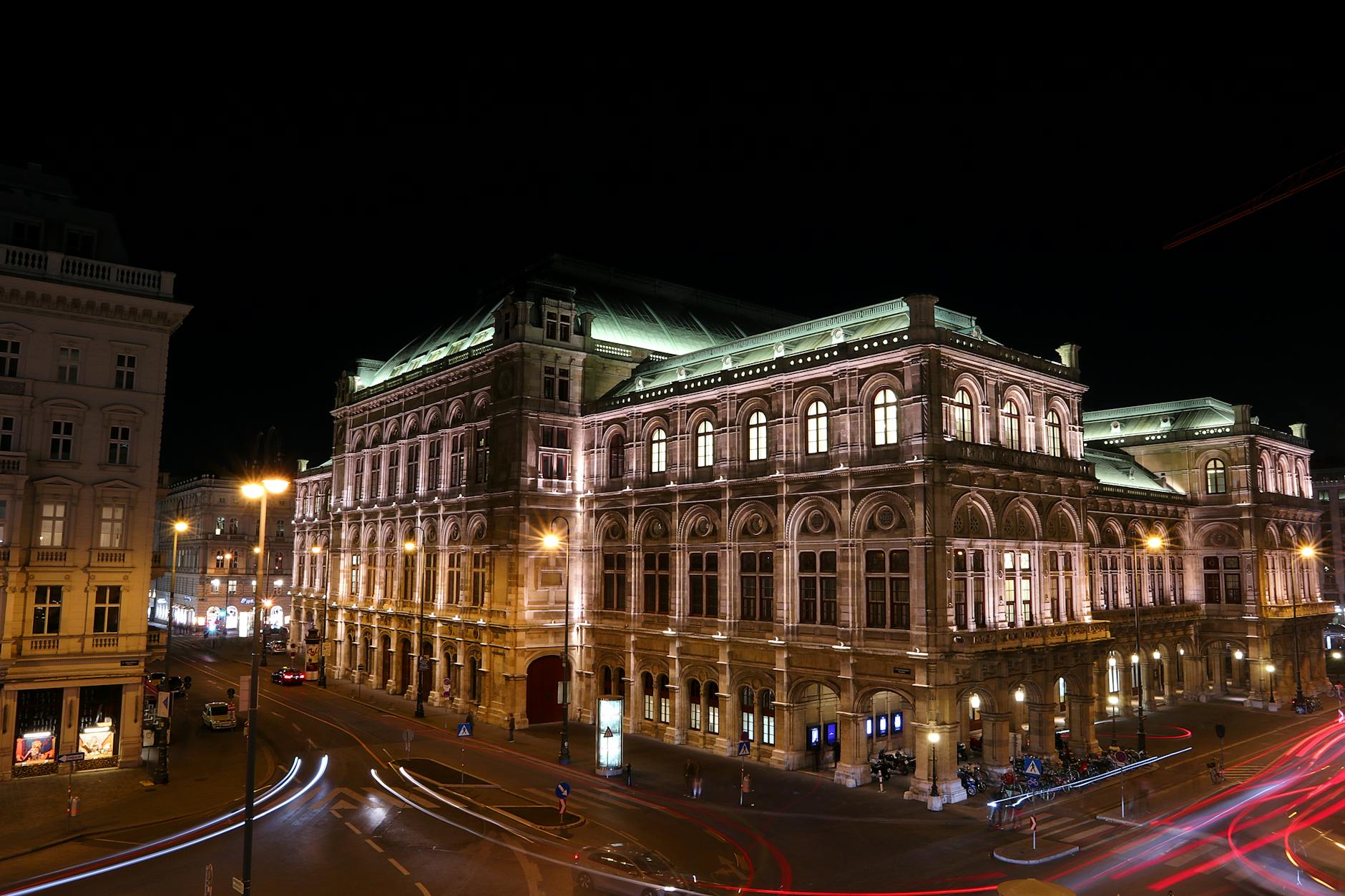
Where the ghost tours meet, and the tout problem
Legitimate operators publish a specific meeting point and a booking system. Vienna has a well-documented problem with costumed sellers on Kärntner Straße and around the Staatsoper pushing overpriced tickets to tourist-grade experiences, and evening tours are increasingly part of what they hawk. Never buy an evening tour from someone who approached you in the street; the price is inflated, the product is often not what was described, and there is nobody to complain to afterwards.
Building an Underground Day
If you want the whole subject in one go, this sequence works and requires almost no walking between stops.
- Late morning. Kapuzinergruft on the Neuer Markt from 10:00, before the coach groups. Allow an hour.
- Lunch anywhere off the Neuer Markt — you are two minutes from some of the worst-value restaurants in Vienna, so walk three streets further.
- Early afternoon. Stephansdom catacombs on the 13:30 or 14:30 departure. Half an hour.
- Mid-afternoon. Michaelerkirche, if the day’s tour times work. Ten minutes’ walk.
- Late afternoon. The Virgilkapelle on your way through Stephansplatz station, free, five minutes.
That is roughly €31.50 in admissions and a full but not exhausting day. It is also, incidentally, one of the better wet-weather itineraries in the city, since almost all of it is indoors — see our rainy day guide for more of the same.
If you want more of this, above ground
The crypts are the compressed version of a subject Vienna does at enormous scale outdoors. The Zentralfriedhof, out on the 71 tram, is one of the largest cemeteries in Europe and holds Beethoven, Brahms, Schubert, Strauss and Schoenberg in a single group of honorary graves, plus the extraordinary Jugendstil Karl Borromäus church at its centre. Entry is free. It is a forty-minute journey each way and a genuinely different experience from a half-hour in a vaulted chamber — wide, green, quiet and not remotely morbid.
There is also the Bestattungsmuseum, Vienna’s funeral museum, sharing the Zentralfriedhof site: a small, dry, entirely unironic collection about the city’s burial industry, including the reusable coffin with the trapdoor bottom that Joseph II tried to impose on the population and had to withdraw after public revolt. If the crypts leave you wanting the wider story, that is where it is.

Practical Notes Before You Go Down
- Temperature. All the crypts sit around 10–13°C regardless of the season. Bring a layer in July; you will want it within two minutes.
- Photography. Restricted or banned in the Kapuzinergruft and the Michaelerkirche vaults, and enforced. Do not plan on photographs.
- Accessibility. None of the three main crypts is step-free. The Stephansdom catacombs in particular involve a long, narrow staircase both ways.
- Dress and conduct. These are consecrated burial places and the Kapuzinergruft is still an active Capuchin foundation. Ordinary respectful behaviour is expected; hats off, voices down.
- Cash. The smaller church crypts sometimes take cash only. Carry a note. Our payment guide explains where card acceptance still fails in Vienna.
The Honest Verdict
The Stephansdom catacombs at €6.50 are the easiest recommendation in this article — thirty minutes, almost no planning, and a genuine jolt. The Kapuzinergruft is worth €15 to anyone who has spent a day in Habsburg palaces and nothing at all to anyone who has not. The Michaelerkirche is the one to seek out if you want the experience nobody else in your group will have had, and the one to skip if mummified human remains are not what you came for.
Ghost tours are entertainment. Buy one because you want a well-told story on a cold evening, not because you expect to learn something or go underground. And if a costumed man on Kärntner Straße offers you one, keep walking — the same advice that applies to concert tickets applies here.
Frequently Asked Questions
How much does the Stephansdom catacombs tour cost?
€6.50 for adults. The tour runs about thirty minutes with departures roughly every half hour: Monday to Saturday at 10:00, 11:00, 11:30 and hourly 13:30–16:30, Sundays and holidays hourly 13:30–16:30. Tickets are bought inside the cathedral on the day.
Do I need to book the Vienna catacombs in advance?
No. The Stephansdom catacombs and the Kapuzinergruft are both walk-up. The Michaelerkirche crypt has fewer, less predictable departures and smaller groups, so checking times ahead is essential even though formal booking is not always required.
Can you see mummies in Vienna?
Yes, in the Michaelerkirche crypt, where dry ventilated conditions naturally mummified a number of eighteenth-century burials that remain in their coffins and clothing. The guided tour costs €10 and takes about forty-five minutes. It is not suitable for young children.
Is the Imperial Crypt worth €15?
If you have visited Schönbrunn or the Hofburg and want the ending of that story, yes. If the Habsburgs are just a name to you, the €6.50 cathedral catacombs deliver more impact for less money. There is no compulsory guide; you walk it yourself in about forty-five minutes.
Are Vienna’s catacombs suitable for children?
The Stephansdom catacombs are fine for most children over about eight, though the narrow stairs and low chambers unsettle some. The Kapuzinergruft is calm and mostly a room of decorated boxes. The Michaelerkirche mummies are a different matter and we would not take a young child.
Are there ghost tours in Vienna, and are they any good?
Yes, several operators run 90-minute to two-hour evening legend walks for roughly €20–35. They are above-ground storytelling walks, not underground tours. The good ones are grounded in documented plague history, executions and folklore; the weak ones are invented atmosphere. Judge by whether the listing names real places and events.
How cold is it in the Vienna crypts?
Around 10 to 13°C all year. In summer the temperature difference from the street is severe enough to be genuinely uncomfortable in shorts and a t-shirt for a thirty-minute tour. Carry a layer.
Can I visit Vienna’s sewers?
Only as part of the Third Man tour, which enters a section of the sewer system beneath the Karlsplatz area on a fixed seasonal timetable. It is a separate product from the church crypts and needs booking in its own right.
The grandest of Vienna’s underground rooms is also the quietest: the Kaisergruft, where the Habsburg bodies went while their hearts went to the Augustinerkirche and their viscera to Stephansdom. Our Kaisergruft guide sets its €15 ticket against the cathedral catacombs at €6.50 and says which to pick.
Related Vienna Guides
- Stephansdom: The Complete Guide
- Vienna’s Gothic Churches
- The Habsburg Dynasty in Vienna
- Empress Sisi in Vienna
- Vienna Walking Tours Compared
- Vienna Tours & Experiences
- Vienna Hidden Gems
- Vienna on a Rainy Day
Photo Credits
Sarcophagus of Karl VI in the Kaisergruft: Wien – Kaisergruft, Sarkophag Kaiser Karl VI. (a) by C.Stadler/Bwag, CC BY-SA 4.0, via Wikimedia Commons.
Vault slab in the Michaelerkirche floor: Michaelerkirche Wien, Werdenberg-Gruft DSC02316 by PicturePrince, CC BY-SA 4.0, via Wikimedia Commons.