Vienna in October: Autumn Colour, National Day & Museum Weather
What October in Vienna is actually like: two very different halves of weather, the Long Night of Museums, Nationalfeiertag closures, Sturm season at the Heurigen, and where the autumn colour is worth the tram ride.

Autumn reveals Vienna's wine country — vineyards with city skyline views from Kahlenberg
- Vienna in October at a Glance
- The Weather: What October Actually Feels Like
- What to Pack for October
- The Three Dates Worth Planning Around
- Autumn Colour: Where It Is Actually Worth Going
- Sturm, Maroni and the Heurigen in October
- Crowds, Prices and Booking
- What Is Open, and What Is Winding Down
- The Best Things to Do in Vienna in October
- Rainy Days in October
- What October Is Not Good For
- A Three-Day October Weekend
- Frequently Asked Questions
- Related Vienna Guides
- Photo Credits
This article contains advertising. Our booking links are routed through a partner that adds commission tracking automatically, so if you book through one we earn a commission from the provider, at no extra cost to you. It never affects what we recommend. Affiliate disclosure
The first week of October in Vienna still looks like a good September — people outside coffee houses in shirtsleeves, the Schönbrunn parterre full of light, the last of the summer terraces doing business. By the last week the same city is dark at half past four, the Maroni stands are smoking on street corners, and everyone has found their coat. Vienna in October is really two different months bolted together, and the difference between a good trip and a damp one is largely a matter of knowing which half you have booked.
This guide covers what the weather actually does across the month, the three fixed dates worth planning around, where the autumn colour is genuinely worth the tram ride, what Sturm and Maroni season means in practice, and what October is honestly not good for. Prices and dates were checked in October 2026; confirm anything time-critical on the venue’s own site before you travel.

Vienna in October at a Glance
| Average high | 14.3°C for the month (Hohe Warte, 1991–2020) |
|---|---|
| Average low | 7.3°C for the month (Hohe Warte, 1991–2020) |
| Rain | 46.9mm for the month (Hohe Warte, 1991–2020) |
| Daylight | About 11 hours 40 minutes on 1 October; 9 hours 59 minutes on the 31st |
| Sunshine | About 4 hours a day, roughly 40% of available daylight |
| Clocks | Go back on Sunday 25 October 2026 — sunset drops to around 16:45 |
| Crowds | Moderate and falling. Noticeably quieter than September |
| Hotel prices | Mid-season, softening through the month |
| Key dates | Lange Nacht der Museen (3 Oct 2026), Viennale (22 Oct–3 Nov), Nationalfeiertag (26 Oct) |
| Christmas markets | None. The first open on 6 November; most follow between 13 and 20 November |
The Weather: What October Actually Feels Like
Vienna sits far enough east to get a properly continental autumn — clear, still, cool days rather than the wet Atlantic murk that settles over western Europe at this time of year. October is one of the drier months in the Viennese calendar, and the rain that does fall tends to be grey persistence rather than the thunderstorms of July.
The first two weeks
Genuinely pleasant, and in a good year exceptional. The average high for the month is 14.3°C, the light is low and golden, and on a good day you can still sit outside for a coffee at midday without regretting it. This is the best fortnight of the autumn for walking the city, and the single strongest argument for booking October over September: you get nearly the same weather with a fraction of the crowds.
The second two weeks
The month turns, usually somewhere around the 15th to the 20th. Highs drop into the low teens, the mornings get foggy along the Danube, and the evenings become genuinely cold. Terraces put out blankets, then stop bothering. It is still good walking weather — but it is coat, scarf and indoor-plans weather rather than shirtsleeves weather.
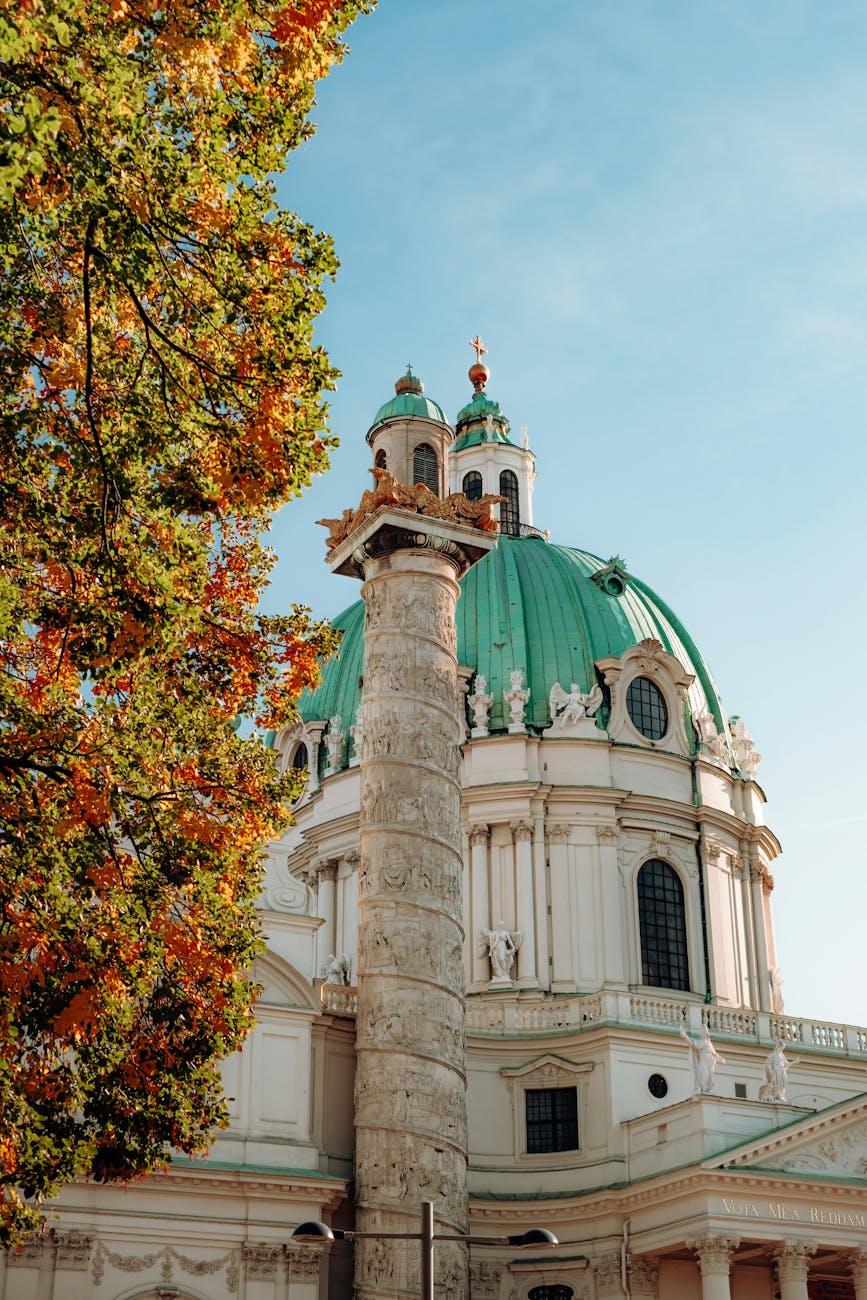
The clocks, and why they matter more than the temperature
Central European Summer Time ends on Sunday 25 October 2026. On the Saturday, the sun sets around 17:45. On the Sunday, it sets around 16:45. Nothing about the weather changes, but the shape of the day does, abruptly and permanently for the season.
This is the practical planning point of the whole month. If you are visiting after the 25th, you have roughly nine and a half hours of daylight and it is dark before dinner. Front-load anything outdoors — gardens, viewpoints, the vineyards, the Zentralfriedhof — into the morning and early afternoon, and put the museums, concerts and coffee houses into the evening, which is what Viennese autumn is designed for anyway.
What to Pack for October
- Layers, not a single warm coat. A mild afternoon and a cold evening can happen on the same day.
- Waterproof outer layer. A shell beats an umbrella; the rain is light and the wind along the Ring is not.
- Proper shoes. Vienna is cobbled in the places you most want to walk, and wet leaves on cobbles are slippery.
- Something for the evening. The opera and concert season is in full swing and Vienna dresses up more than most European cities. Not black tie — but not hiking trousers either.
- Sunglasses. Sounds silly; the low autumn sun down a long straight Ringstrasse is genuinely blinding.
Our full Vienna packing list goes into more detail, including what the dress codes at the opera actually mean in practice.
The Three Dates Worth Planning Around
ORF Lange Nacht der Museen — 3 October in 2026
The Long Night of Museums puts all of its participating venues on one ticket, and the same ticket covers the shuttle buses between them. In 2026 it ran from 18:00 until midnight, when a large number of Vienna’s museums, galleries and cultural institutions opened late: €19 full price, €16 concession.
To put that in context, a single adult ticket to one major museum in Vienna typically costs €16–21 on its own. If you visit two institutions, the night has paid for itself; ambitious people manage six or seven.
How to actually do it well: pick a cluster and walk it rather than criss-crossing the city on shuttles. The MuseumsQuartier and the museums immediately around it make one obvious circuit. The smaller and stranger institutions — district museums, technical collections, archives that are never otherwise open in the evening — are the real reason to go, and they are much less crowded than the headline names at 22:00. In 2026 online sales closed on 27 September, and after that tickets were sold at participating venues on the night. Check the organiser’s site for the next date and ticket deadline.
Viennale — 22 October to 3 November 2026
The Viennale, in its 64th edition, opens at the Gartenbaukino on 22 October and runs until 3 November. It is a proper festival with an international programme rather than a red-carpet parade.
Two practical notes. Tickets for the popular screenings go quickly once the programme is published, so if the Viennale is a reason for your trip, check the schedule as soon as it appears. And it has a knock-on effect on hotels: late October is otherwise a soft period, but festival weekends firm up. Our Vienna events calendar tracks how the year’s fixtures overlap.
Nationalfeiertag — Monday 26 October 2026
Austria’s National Day marks the 1955 Declaration of Neutrality, and it is a full public holiday. For a visitor it cuts two ways, and both are worth understanding before you find out the hard way.
The good half: some museums open free of charge on National Day; the Haus der Geschichte Österreich has confirmed free entry on 26 October 2026. The list varies year to year, so check each museum’s own site rather than assuming. There is also a large Austrian Armed Forces display on Heldenplatz — equipment on show, ceremonial units, a considerable crowd, and a genuinely Viennese atmosphere of families wandering among armoured vehicles eating sausages.
The awkward half: it is a public holiday, which in Austria means shops close. Not “some shops” — supermarkets, department stores and the vast majority of retail shut entirely. Restaurants and cafes largely stay open, as do museums and public transport, but if you were planning a shopping day on Kärntner Straße or the Mariahilfer Straße, move it. Buy groceries on the Saturday.

Autumn Colour: Where It Is Actually Worth Going
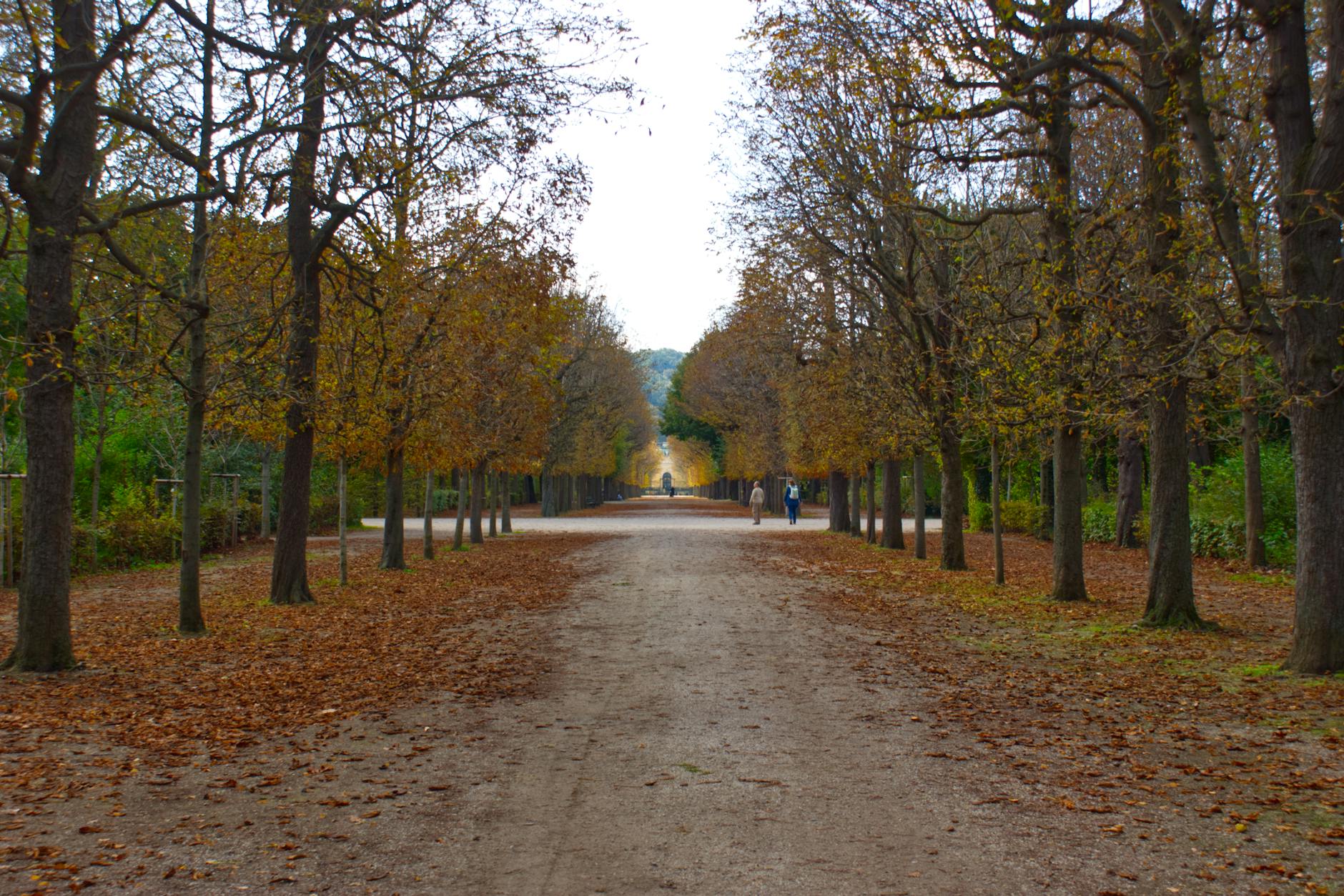
Vienna is one of the greenest capitals in Europe — roughly half the city’s area is parkland, vineyard, woodland or water — and October is when that pays off visually. Peak colour usually lands in the second and third weeks, though it varies by a fortnight either way depending on the year.
- Schönbrunn’s park is the obvious one and deserves it. The hedge allées either side of the main parterre turn a deep yellow, and the walk up to the Gloriette gives you the whole thing at once. It is also free, unlike the palace interiors. See our Schönbrunn guide for timing the interior visit around it.
- The Prater’s Hauptallee — four and a half kilometres of chestnut trees running arrow-straight through the park — is the best long autumn walk in the city, and gets you away from the funfair end entirely. Our Prater guide covers both halves.
- The Belvedere gardens give you formal terraces, the city skyline and Klimt indoors when it rains. Details in the Belvedere guide.
- The vineyards at Nussdorf, Grinzing and Neustift turn gold over the city, and October is harvest season, so there is actual work going on in them. Combine with a Heurigen, below.
- The Lainzer Tiergarten, a former imperial hunting ground in the far west of the city, is proper woodland with wild boar in it. Almost no tourists. Check the seasonal opening dates before you go — it does not keep normal park hours.
- The Zentralfriedhof is at its best in autumn: enormous, half-wild, full of monumental graves and roaming deer, and quietly appropriate as the month runs towards All Saints’ Day.
More on all of them in our guide to Vienna’s parks and gardens, and the best photography spots in Vienna if you are chasing the light.
Sturm, Maroni and the Heurigen in October
This is the genuinely seasonal part of a Viennese October, and it is not something you can experience at any other time of year.
Sturm is grape juice caught partway through fermentation — cloudy, sweet, faintly fizzy, somewhere between four and nine percent alcohol, and sold roughly from late August through November. It is served by the glass at the Heurigen and at market stalls, it tastes like nothing else, and it is deceptively strong for something that goes down like cloudy apple juice. It cannot be exported or kept, because it is still working; the bottles have vented caps. Drink it where it is made.
Maroni — roast chestnuts — appear in small heated stands on street corners from about October onwards, often alongside Kartoffelpuffer (potato fritters). They cost a few euros a paper bag and they are the correct thing to hold while walking around a cold city at dusk.
The Heurigen are Vienna’s wine taverns, most of them in the villages folded into the city’s northern and western edges. October is their proper season: the new wine is in, the vineyards outside are turning, and the courtyards are still just about usable with a blanket. Go in the afternoon rather than the evening — you want to see the vines, and the last part of the month gets dark early. Our Heurigen guide covers which villages are worth the tram and which are coach-tour theatre, and the Vienna wine guide explains what you are actually drinking.
Crowds, Prices and Booking
October is one of the better value months in Vienna, and it improves as it goes on.
The summer peak is comfortably over by the start of the month and the Christmas market surge does not begin until the second half of November, which leaves a genuine gap. Hotel rates through most of October sit meaningfully below both July and December. Queues at Schönbrunn, the Kunsthistorisches and the Belvedere are shorter than in any month since April.
Two exceptions to watch. The Viennale weekends firm up late-October hotel prices. And the days around Nationalfeiertag are a long weekend for Austrians and Germans, which means domestic city-break demand exactly when you might have expected quiet.
Advance booking is still worth it for the State Opera and the Musikverein, both of which are in full season by October and are what a lot of people actually come for. For the museums, October is one of the few months when turning up is fine. Our Vienna trip cost breakdown has the numbers by season.
What Is Open, and What Is Winding Down
October is a transitional month and several things change under you during it.
- Palace gardens and outdoor sites close earlier as the days shorten. At Schönbrunn the main park closes at 19:00 in October and 17:30 in November and December, and the Privy and Orangery Gardens close at 16:00 from 26 October to 2 November. Check the closing time on the day, not the summer one you read three months ago.
- The Wurstelprater’s rides operate a reduced autumn schedule and many close for the season around the end of the month. The Riesenrad runs year-round.
- The Danube beaches and swimming spots are done. The Alte Donau is for walking in October, not swimming.
- Outdoor terraces and Schanigärten thin out through the month and are largely gone by the end of it.
- Everything indoors is at its best. The opera, concert, theatre and museum seasons are all fully underway, which is the compensation.
- 26 October: shops shut. Worth saying twice.
The Best Things to Do in Vienna in October
- Walk the Schönbrunn park up to the Gloriette on a clear morning — free, and the best half-hour of the month.
- Look up the date of the Long Night of Museums before you book: in 2026 it fell on 3 October. Nothing else in the year is comparable value.
- Take tram 38 to Grinzing for Sturm at a Heurigen with the vineyards turning behind you.
- Buy standing room at the State Opera. The season is running and the balcony Stehplatz is €13 — sold on the day, online from 10:00 Vienna time. The single best cultural bargain in Europe.
- Walk the Prater Hauptallee end to end under the chestnuts, then get the funfair out of your system at the far end.
- Spend a wet afternoon properly in a coffee house — a real one, with a newspaper and no time pressure. Our coffee house guide has the ones that still work that way.
- Go to the Zentralfriedhof in the last week, as the city turns towards All Saints’ Day and the graves fill with candles and chrysanthemums.
- Eat the heavy food. Gulasch, Backhendl, Tafelspitz and Sturm belong to this weather in a way they do not in July. Our guide to traditional Viennese dishes covers what to order.
Rainy Days in October
You will get one or two. Vienna handles rain better than almost any city in Europe, because the indoor offer is enormous and the transport is entirely usable in bad weather.
The default answers are the Kunsthistorisches Museum for an entire day, the museum circuit generally, the Naschmarkt for lunch under cover, and a long afternoon in a coffee house. Our rainy day guide has the full list, including the ones that are genuinely good rather than merely dry.
What October Is Not Good For
In the interest of not overselling a month:
- Christmas markets. There are none in October. If Advent is what you want, the first markets (Schönbrunn and Stephansplatz) open on 6 November and most of the rest follow between the 13th and the 20th — see our Christmas markets guide.
- Ball season. It runs from New Year to Shrove Tuesday. October has none of it. The ball season guide explains the calendar.
- Long evenings outdoors. After the 25th, dark before five.
- Swimming, sunbathing, or anything involving the Danube and a towel.
- Reliable blue sky for photography. Four hours of sunshine a day is an average, and it is made of some brilliant days and some entirely grey ones.
If none of that bothers you, October is arguably the best month of the year to see Vienna: the city functioning normally, the culture running at full tilt, the parks at their most beautiful, and the crowds gone home. Our guide to the best time to visit Vienna weighs it against the rest of the calendar.
A Three-Day October Weekend
Friday. Arrive, drop bags, walk the Innere Stadt in the low afternoon light — Stephansplatz, the Graben, Michaelerplatz, Heldenplatz. Dinner somewhere heavy. State Opera standing room if there is something on.
Saturday. Schönbrunn first thing for the park and the palace before the coaches arrive. Back into town for lunch. Kunsthistorisches or Belvedere in the afternoon depending on rain. Tram out to a Heurigen for Sturm as the light goes.
Sunday. The Prater Hauptallee under the chestnuts, then the Naschmarkt or a long coffee house breakfast. Museums are open on Sundays; shops are not, which makes it the right day for the former.
Our three-day Vienna itinerary has the fuller version with timings and transport.
Frequently Asked Questions
Is October a good time to visit Vienna?
Yes — arguably one of the two best months, alongside May. The weather in the first half is genuinely pleasant, the crowds and prices are down from the summer peak, the entire cultural season is running, and the parks are at their most photogenic. The trade-off is short days in the second half of the month and no Christmas atmosphere at all.
How cold is Vienna in October?
It starts mild and ends cold. The average high for the month is 14.3°C and the average low 7.3°C (Hohe Warte, 1991–2020). Frost is unusual but not impossible late in the month.
Does it rain a lot in Vienna in October?
No. October is one of Vienna’s drier months — around nine days with some rain and about 40mm in total, mostly as light drizzle. Bring a shell layer and do not reorganise your trip around it.
Are there Christmas markets in Vienna in October?
No. Vienna’s Advent markets open in the second half of November. Anything advertising a Christmas market in October is not one.
What is Sturm and where do I try it?
Partially fermented grape must — cloudy, sweet, lightly fizzy and available only in autumn. Try it at a Heurigen in Grinzing, Nussdorf or Neustift am Walde, or at a market stall. It is stronger than it tastes.
What happens on 26 October in Vienna?
Nationalfeiertag, Austria’s national day. Some museums open free, there is an Armed Forces display on Heldenplatz, and it is a full public holiday — shops and supermarkets close. Museums, restaurants and public transport run.
When do the clocks change in Vienna?
Sunday 25 October 2026. Sunset moves from roughly 17:45 to roughly 16:45 overnight. Plan outdoor activities for the morning after that date.
Is Vienna crowded in October?
Much less than in summer. The main exceptions are the Nationalfeiertag long weekend, which brings domestic and German visitors, and the Viennale weekends in the final ten days.
What should I wear in Vienna in October?
Layers, a waterproof outer shell, comfortable shoes that cope with wet cobbles, and one smarter option for the opera or a concert. A heavy winter coat is overkill for the first fortnight and about right for the last week.
If your dates are flexible by a fortnight, it is worth knowing what happens next: the first markets open at Schönbrunn and Stephansplatz on 6 November and most of the rest follow between the 13th and the 20th. Our guide to Vienna in November makes the case that the last ten days of that month are the best time all year to see them.
Related Vienna Guides
- Vienna in Autumn: The Full Season
- The Best Time to Visit Vienna
- Vienna’s Heurigen Wine Taverns
- Vienna’s Parks & Gardens
- Vienna Events Calendar 2026–2027
- Rainy Day Vienna
- What to Pack for Vienna
- The Three-Day Vienna Itinerary
- Vienna in Winter
Photo Credits
Autumn hedge allée at Schönbrunn: Autumn in Schoenbrunn 01 by Zeynel Cebeci, CC BY-SA 3.0, via Wikimedia Commons.
Nationalfeiertag on Heldenplatz: Nationalfeiertag – Heldenplatz by Österreichisches Außenministerium, CC BY 2.0, via Wikimedia Commons.