Austria Beyond Vienna: The Complete Country Guide
Where to go in Austria once you have seen Vienna: Salzburg, Hallstatt, Innsbruck, Graz, the lakes and the Alps, with train times, driving rules, sample routes and honest verdicts.
- Austria at a Glance
- The Nine Regions in Brief
- Choosing Where to Go by Interest
- Getting Around Austria
- Salzburg
- Hallstatt and the Salzkammergut
- Innsbruck and Tyrol
- Graz and Styria
- Linz and Upper Austria
- The Wachau and Lower Austria
- Carinthia’s Lakes
- Vorarlberg and Burgenland: The Two Ends of the Country
- The Alps: Scenic Drives, Hiking and Skiing
- When to Go
- Arriving and Leaving: Think About Where You Finish
- How to Put It Together: Three Sample Routes
- What Austria Costs Beyond Vienna
- Eating and Drinking Your Way Round Austria
- Practical Tips for Travelling Around Austria
- Honest Verdicts: Where Austria Over- and Under-Delivers
- Common Mistakes
- Frequently Asked Questions
- Related Vienna Guides
- Photo Credits
This article contains advertising. Our booking links are routed through a partner that adds commission tracking automatically, so if you book through one we earn a commission from the provider, at no extra cost to you. It never affects what we recommend. Affiliate disclosure
From the departure board at Wien Hauptbahnhof you can read the whole country: Salzburg, Innsbruck, Graz, Klagenfurt, Linz, Bregenz, most of them a few hours away on a train with a restaurant car and a socket at every seat. Most visitors never board one. They do three or four days in Vienna, perhaps a coach to Hallstatt, and leave thinking they have seen Austria. This Austria travel guide is for everyone who suspects there is more — because there is, and most of it is easier to reach than you think.
It covers the regions and the cities worth your time, how to get around by train or car, what the Alps actually involve, when to go, how to string it all together, and where Austria is better than its reputation and where it is worse. It is written from Vienna outwards, so journey times are from the capital. Prices and timetables were checked in October 2026; treat them as the right order of magnitude and confirm anything time-critical before you travel. For the classic same-day excursions, our guide to day trips from Vienna is the companion piece; this page is about staying away for a night or more.
Austria at a Glance
| Basics | The short answer |
|---|---|
| Size | About 84,000 km² — a little smaller than Portugal, and roughly two-thirds Alpine |
| Population | Just over nine million, around a fifth of them in Vienna |
| Regions | Nine federal states (Bundesländer), each with its own capital and character |
| Highest point | Grossglockner, 3,798 m |
| Currency | Euro; cards widely accepted, but carry cash for mountain huts and small inns |
| Language | German, with strong regional dialects; English is widely spoken in tourist areas |
| Trains | ÖBB runs most of the network; Vienna–Salzburg takes about 2½ hours, Vienna–Innsbruck about 4¼ |
| Driving | Motorway vignette required: €9.60 for one day, €12.80 for ten days (2026) |
| Best seasons | June–September for lakes and hiking; December–March for skiing and Christmas markets |
The single most useful thing to know is that Austria is a long, thin country. It stretches from the Hungarian plain in the east to Lake Constance in the west, and the Alps fill most of it. Vienna sits at the flat eastern end, which is why the city feels so different from the mountain image on the postcards — and why the further west you go, the more Alpine everything becomes.
The Nine Regions in Brief
Every Austrian state has a distinct identity, and Austrians are quick to tell you which one they come from. Here is the cheat sheet, with typical rail times from Vienna to each capital.
| State | Capital | Known for | By train from Vienna |
|---|---|---|---|
| Vienna | Vienna | Palaces, coffee houses, music, wine taverns | — |
| Lower Austria | St. Pölten | The Wachau, Melk Abbey, Semmering, wine country | About 30 minutes to St. Pölten |
| Burgenland | Eisenstadt | Lake Neusiedl, red wine, storks, Haydn | About 1 hour |
| Upper Austria | Linz | Linz’s culture scene, the Danube, part of the Salzkammergut lakes | About 1¼ hours |
| Styria | Graz | Graz, vineyards, pumpkin-seed oil, thermal spas | About 2½ hours |
| Salzburg | Salzburg | Mozart, the festival, Baroque old town, Alpine valleys | About 2½ hours |
| Carinthia | Klagenfurt | Warm lakes, Wörthersee, a Mediterranean feel | About 3 hours |
| Tyrol | Innsbruck | High mountains, skiing, hiking, Habsburg Innsbruck | About 4¼ hours; longer from 8 February to 9 July 2027 |
| Vorarlberg | Bregenz | Lake Constance, the floating opera stage, modern timber architecture | About 6½ hours; longer via the Arlberg from 8 February to 9 July 2027 |
Two practical conclusions follow. Everything as far as Salzburg and Graz works for a stay of a night or two from Vienna. Tyrol and Vorarlberg are a different trip — closer to Munich and Zürich than to the capital, and better treated as the western end of a journey through the country than as an excursion from Vienna.
Choosing Where to Go by Interest
If you only have time for one or two places beyond Vienna, let your interests decide. This is how we would match them:
| If you love… | Go to | Why |
|---|---|---|
| Classical music | Salzburg; Eisenstadt | Mozart’s birthplace and the summer festival; Haydn’s decades at the Esterházy court |
| Mountains without a car | Innsbruck | Cable cars from the city centre and buses into the side valleys |
| Lakes and swimming | Carinthia; the Salzkammergut | Warm water in the south; drama and history in the Salzkammergut |
| Wine | The Wachau; southern Styria; Lake Neusiedl | Whites on the Danube and in Styria, reds by the lake |
| Modern architecture and art | Graz; Linz; Vorarlberg | The Kunsthaus, Ars Electronica and the Bregenzerwald’s new timber buildings |
| Twentieth-century history | Linz and Mauthausen | The memorial at Mauthausen is one of the most important in Europe |
| Food | Styria | Pumpkin-seed oil, fried chicken, wine taverns and farm shops on every back road |
| Skiing | Tyrol; Salzburgerland; Vorarlberg | The big resorts — easier from Munich, Innsbruck or Zürich than from Vienna |
| A short, easy escape | The Wachau or Semmering | An hour or two from Vienna, and an overnight stay changes the experience |
Most first trips combine two of these. Music and lakes points to Salzburg and the Salzkammergut; wine and modern cities points south to Graz; mountains and history points west to Innsbruck with a stop in Linz on the way.
Getting Around Austria
By train: the best way for most visitors
Austria has one of the best rail networks in Europe, and for a first trip beyond Vienna it is the obvious choice. The national operator, ÖBB, runs fast Railjet trains on the main lines, with comfortable seats, Wi-Fi, a restaurant car on most services and three classes. On the busy Vienna–Salzburg line the private operator WESTbahn competes with ÖBB, which keeps fares honest. The main stations are Wien Hauptbahnhof for trains south and east and for most westbound services, and Westbahnhof for WESTbahn.
| From Vienna to | Typical fastest time | Notes |
|---|---|---|
| Linz | About 1¼ hours | Frequent Railjets on the western line |
| Salzburg | About 2½ hours | ÖBB and WESTbahn; roughly half-hourly between them |
| Graz | About 2½ hours | Over the Semmering line; the base tunnel due around 2030 will cut this sharply |
| Klagenfurt | About 3 hours | Via Graz and the new Koralm line, opened December 2025 |
| Hallstatt | Check the ÖBB timetable | Railjet to Attnang-Puchheim, then the regional train to Hallstatt station and a short ferry across the lake |
| Innsbruck | About 4¼ hours | Roughly hourly |
| Bregenz | About 6½ hours | Over the Arlberg; spectacular but long |
Plan around one temporary change. From 8 February to 9 July 2027, engineering work closes the line through Germany between Freilassing and Rosenheim, so trains from Vienna to Tyrol and Vorarlberg take longer or include a replacement bus, and at the same time the Tauern line is closed between Schwarzach-St. Veit and Mallnitz-Obervellach. Check the ÖBB timetable for travel in those months.
The big change of recent years is in the south. Since December 2025 the Koralm line has linked Graz and Klagenfurt in around 42 minutes, through a tunnel under the Koralpe, where the old route took about three hours. It brings Carinthia’s lakes within a comfortable three-and-a-bit hours of Vienna and makes a southern loop — Vienna, Graz, Klagenfurt — one of the easiest multi-stop trips in the country.
Book ahead where you can. ÖBB’s Sparschiene advance fares cost a fraction of the flexible price on the same train, and they sell out on popular departures. Seat reservations are optional but worth a few euros on Friday and Sunday afternoons, when Railjets fill with students and weekenders. The KlimaTicket Österreich, a year of unlimited public transport for well over €1,000, is a superb deal for residents and irrelevant for almost every visitor. Our Vienna to Salzburg travel guide walks through the fares on the busiest route.
Buses for the last mile
Where the trains stop, the Postbus network carries on into valleys and lakeside villages, and timetables are integrated with the railways. It is how you reach much of the Salzkammergut and many Alpine trailheads without a car. Services thin out on Sundays and outside the main seasons, so check the connection before you commit to a remote overnight.
By car: freedom, at a price
A car makes sense for the high Alpine roads, the wine country and the smaller lakes, and for families with a lot of luggage. It makes less sense for the cities, where parking is expensive and public transport is excellent. If you drive, know the rules:
- The vignette. All motorways and expressways require a toll sticker or its digital equivalent. In 2026 a one-day vignette costs €9.60 (digital only), a ten-day vignette €12.80, a two-month vignette €32.00 and an annual one €106.80. Bought online, the ten-day and one-day versions are valid immediately; digital annual and two-month vignettes bought online only become valid 18 days after purchase, under consumer-protection rules. From 2027 the sticker disappears and the digital vignette becomes compulsory. Cars rented in Austria normally come with one — check before you drive off.
- Extra tolls. Some Alpine routes charge a separate toll on top of the vignette, among them the Brenner motorway, the Tauern and Katschberg tunnels on the A10 and the Arlberg road tunnel.
- Speed limits. 130 km/h on motorways, 100 km/h on other roads and 50 km/h in towns, unless signed otherwise. Speed cameras are common and fines arrive by post.
- Winter rules. From 1 November to 15 April, winter tyres are compulsory in wintry conditions, and snow chains are required on some mountain roads when signed.
Salzburg
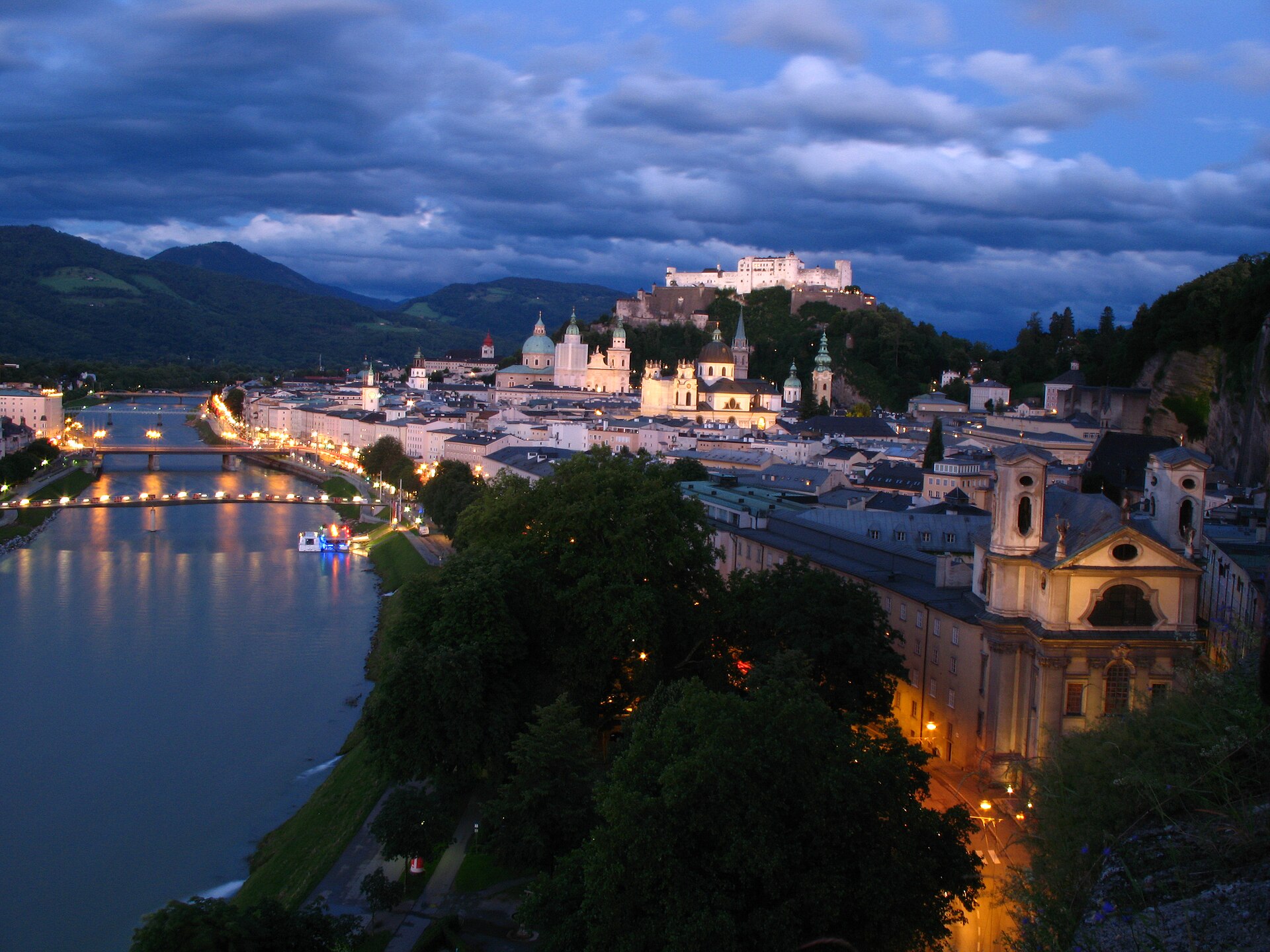
Salzburg is the one Austrian city outside Vienna that almost everyone has heard of, and it lives up to it. The Baroque old town, squeezed between the Salzach river and the cliffs of the Mönchsberg, is a UNESCO World Heritage Site; above it stands the Hohensalzburg fortress, reached by funicular. Mozart was born here in 1756, in a house on the Getreidegasse that is now a museum, and the city has been trading on him ever since. In summer the Salzburg Festival, founded in 1920, fills the city with classical music; the 2026 edition ran from 17 July to 30 August.
What most visitors do not realise is how much better Salzburg is when you stay. The day-trippers arrive at 10:00 and leave at 16:00; the evenings, when the old town empties and the beer gardens fill, belong to the people sleeping there. Two nights lets you add the Hellbrunn trick fountains, the cable car up the Untersberg, a long evening at the Augustiner monastery brewery in Mülln, and a morning walk along the Mönchsberg before anyone else is up.
Honest verdict: unmissable, but plan around the crowds. The Getreidegasse at midday is a slow-moving queue, festival-season hotel prices are steep, and the Sound of Music tours are fun if you love the film and baffling if you do not (it flopped in Austria and most locals still wonder what the fuss is about). For the same-day version from Vienna, see our Salzburg day trip guide.
Hallstatt and the Salzkammergut
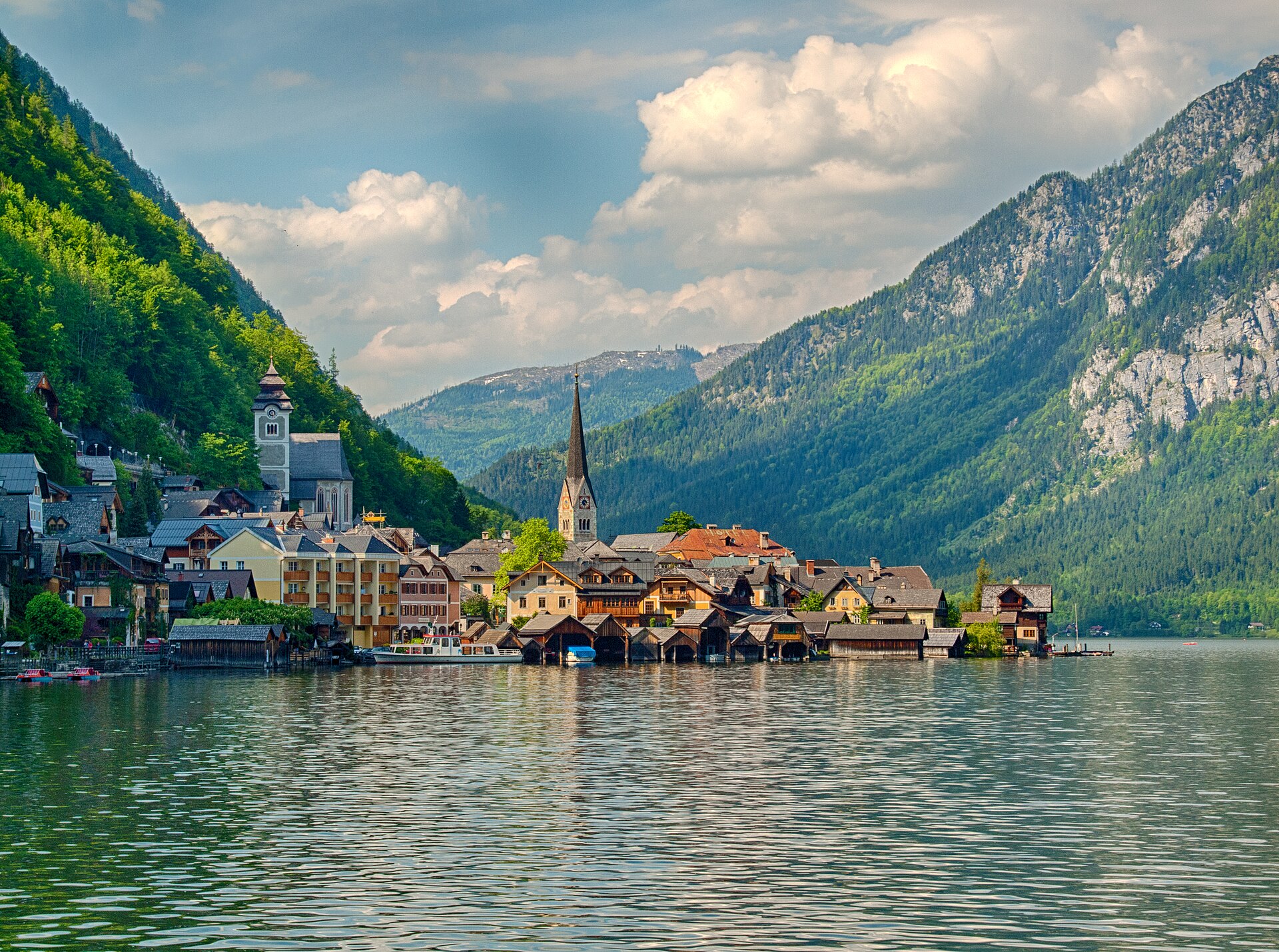
East of Salzburg, the Salzkammergut is a region of lakes and mountains that the Habsburgs made fashionable as a summer retreat and that has been packing in visitors ever since. Its most famous village, Hallstatt, clings to a ledge between a lake and a mountainside, and its pastel houses and church spire are among the most photographed views in Europe. The salt mine above the village, reached by funicular, claims to be the oldest in the world, with some 7,000 years of mining history; the small bone house beside the Catholic church holds painted skulls stacked in rows.
Hallstatt’s problem is its success. Coach tours arrive in force in the middle of the day, and a village of fewer than 800 people can feel overwhelmed. The fix is simple: stay overnight, or come in the shoulder seasons and winter, when it is quiet, atmospheric and occasionally snow-covered. Rooms are limited, so book early.
The rest of the Salzkammergut is the better-kept secret. Bad Ischl, where Emperor Franz Joseph spent his summers at the Kaiservilla, was a European Capital of Culture in 2024 and has one of the finest pastry shops in Austria in Zauner. St. Wolfgang on the Wolfgangsee has the White Horse Inn of operetta fame and a cog railway up the Schafberg. Klimt painted the shores of the Attersee summer after summer. The Dachstein’s ice caves and the Five Fingers viewing platform sit above Obertraun, at the far end of the Hallstätter See.
Honest verdict: the region deserves two or three nights, not a rushed day. The day trip from Vienna works, but it is long; our Hallstatt day trip guide sets out when it is worth it and when it is not.
Innsbruck and Tyrol
Innsbruck lets you ride from the old town to the Hafelekar station, at 2,269 metres, in about 20 minutes. The Hungerburg funicular, whose stations Zaha Hadid designed, starts beside the Congress centre, and the Nordkette cable cars climb in stages from there to the ridge above the city, with views along the Inn valley. Down below, the old town has the Golden Roof, built around 1500 for Emperor Maximilian I, the Hofkirche with its bronze statues of Habsburg ancestors, and arcaded streets that feel more Italian than Viennese.
Innsbruck is also the best base in Austria for seeing the Alps without a car. Buses and trains reach Hall in Tirol with its old mint, the Swarovski Kristallwelten at Wattens, Ambras Castle and the Achensee, and the ski areas above the city are a bus ride away in winter. The wider state of Tyrol holds the famous valleys — the Zillertal, the Ötztal, the Stubaital — and the big-name ski resorts: St. Anton, Ischgl, Sölden and Kitzbühel.
Honest verdict: superb, but it is a western trip. Over four hours each way from Vienna means Innsbruck works far better as a stop on a route across the country — or as a destination in its own right, reached via Munich or Zürich — than as an excursion from the capital.
Graz and Styria
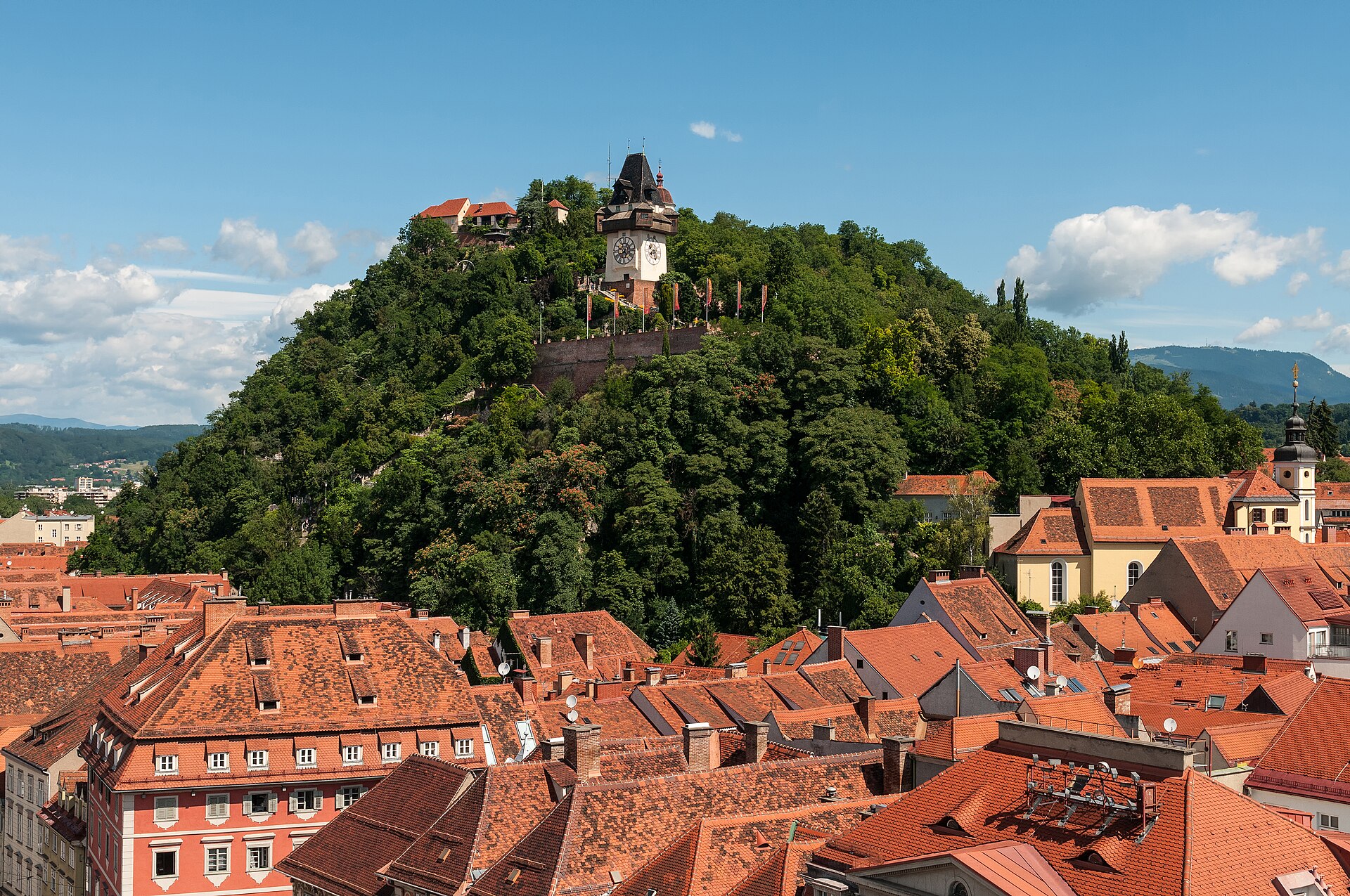
Graz is Austria’s second city and its most underrated. Its compact old town of red roofs and Renaissance courtyards is a UNESCO World Heritage Site, as is Eggenberg Palace on the western edge. The wooded Schlossberg rises right out of the centre, with a lift through the rock and a funicular to the top, where the clock tower — the Uhrturm — has hands the wrong way round, a big one for the hours and a small one for the minutes. Below it, the city’s modern streak shows in the blobby blue Kunsthaus and the Murinsel, a steel shell of a café floating in the river, both built when Graz was European Capital of Culture in 2003.
It is a university city, which keeps it young, cheap by Austrian standards and lively in the evenings. And it is the gateway to Styria, which rewards anyone who rents a car or joins a tour: the steep vineyards of the South Styrian Wine Road, the dark-green pumpkin-seed oil that Styrians put on everything including vanilla ice cream, the castle at Riegersburg and the Zotter chocolate factory nearby, and the thermal spas of the east.
Honest verdict: the most rewarding city in Austria that most visitors skip. With the Koralm line now linking Graz and Klagenfurt in about 42 minutes, it is the natural first stop on a southern loop.
Linz and Upper Austria
Linz is the city Austrians used to joke about — a steel town on the Danube — and it has spent thirty years reinventing itself as a centre for digital and contemporary art. The Ars Electronica Center on the riverbank is a museum of the future that lights up its glass façade at night; the Lentos art museum faces it across the water; and the Pöstlingberg tram climbs one of the steepest adhesion railway lines in the world to a pilgrimage church with views over the city. Linz also claims the oldest named cake recipe in the world in the Linzer Torte.
Half an hour or so east of the city stands the former Mauthausen concentration camp, now a memorial. It is a hard visit, and an important one; allow half a day and go with time to think afterwards.
Honest verdict: an acquired taste, and the best value city break in the country for culture lovers. At about an hour and a quarter from Vienna, it is also an easy overnight on the way to Salzburg.
The Wachau and Lower Austria
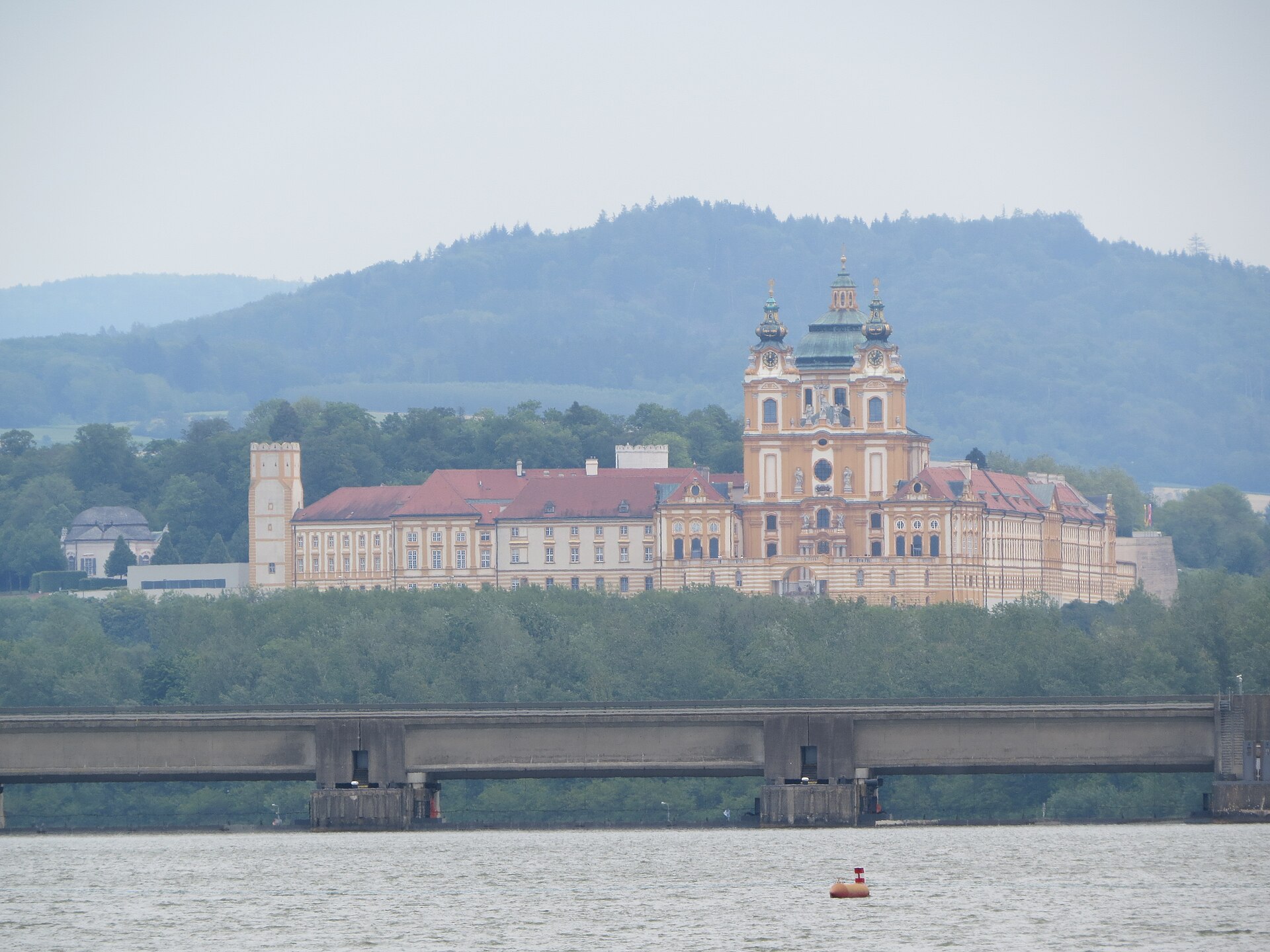
The state that surrounds Vienna is the one most visitors already know, usually without realising it. The Wachau, the UNESCO-listed stretch of the Danube between Melk and Krems, is a river valley of terraced vineyards, apricot orchards that blossom white in early spring, the ruined castle at Dürnstein where Richard the Lionheart was held prisoner, and some of the country’s finest Grüner Veltliner and Riesling. Most people see it as a day trip; it is better as a night in a wine village, when the cruise boats have gone. Our guides to the Wachau Valley, Melk Abbey and Krems cover the logistics.
South of Vienna, the Semmering railway — a pioneering piece of mountain-railway engineering, built between 1848 and 1854 and a World Heritage Site since 1998 — winds over viaducts into the first real mountains of the Alps, with the Rax plateau above and walking from Semmering itself. It is the nearest genuinely Alpine scenery to the capital; see our Semmering railway guide. Closer still are the spa town of Baden bei Wien and the Cistercian abbey of Heiligenkreuz in the Vienna Woods.
Carinthia’s Lakes
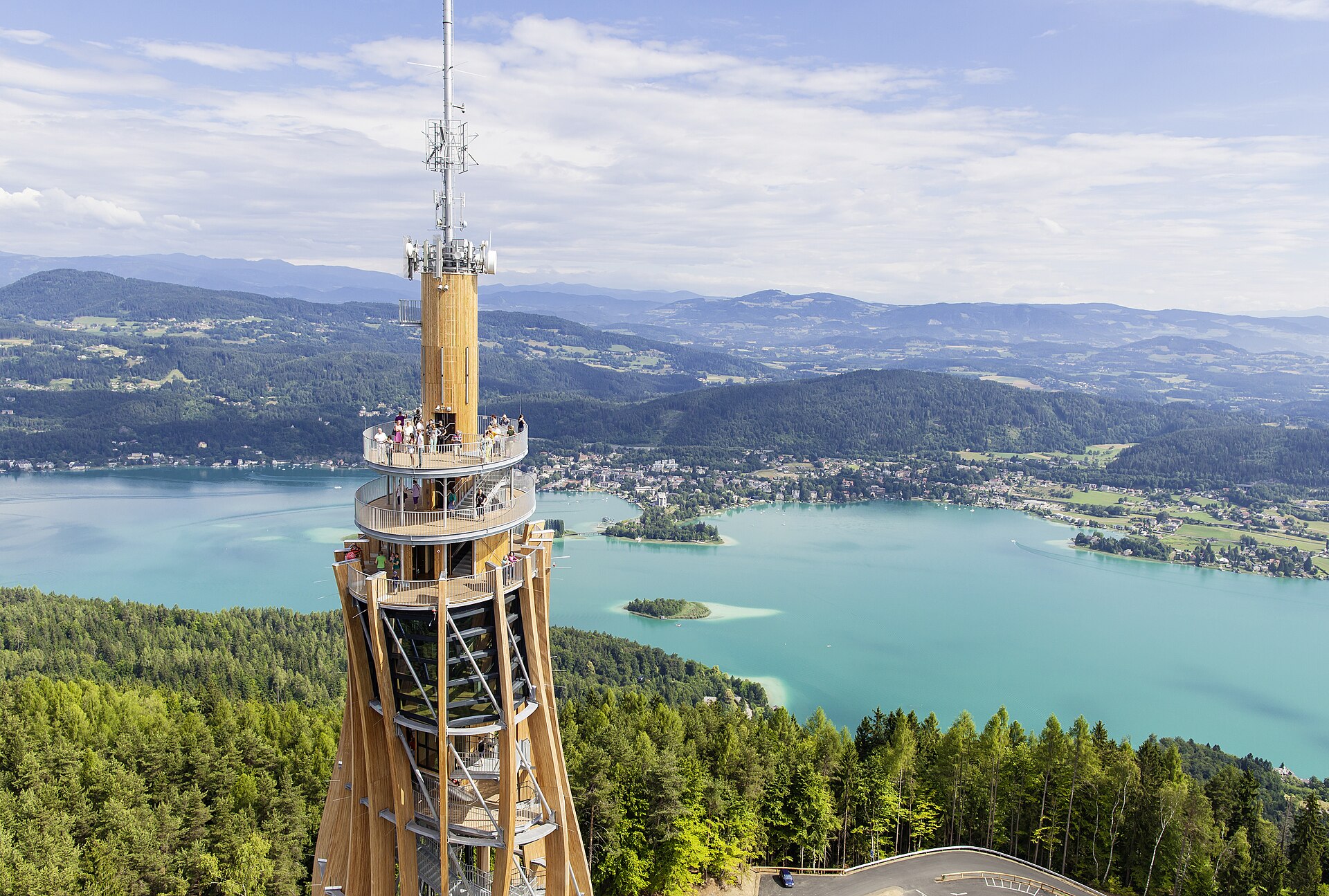
Austria’s southernmost state feels like a different country, and on a hot August afternoon it looks like one. Carinthia has lakes that are warm by Alpine standards, and the biggest, the Wörthersee, has a turquoise colour and a summer scene — villas, lidos, waterskiing, late-night bars in Velden — that is closer to the Italian lakes than to Tyrol. Above it, the wooden Pyramidenkogel observation tower gives the best view of the whole lake. Quieter alternatives include the Millstätter See and the Weissensee, which freezes solid in winter and becomes one of Europe’s great natural ice rinks.
Klagenfurt, the state capital, has a pleasant old town with a dragon fountain as its emblem, and the hill-top fortress of Hochosterwitz is a short drive away. Thanks to the Koralm line, Klagenfurt is now about three hours from Vienna by train, which makes a lakeside summer stay far easier than it used to be.
Honest verdict: the best summer swimming in Austria. Outside June to September, it is a much quieter place, and many lakeside hotels close.
Vorarlberg and Burgenland: The Two Ends of the Country
Vorarlberg
At the far western tip, Vorarlberg looks towards Switzerland and Germany across Lake Constance. Its capital, Bregenz, is famous for the Bregenz Festival, which stages opera on a vast floating stage on the lake from mid-July to mid-August, and the Bregenzerwald inland is one of the best places in Europe to see modern timber architecture alongside old farmhouses and serious cheese. Lech and Zürs are among the most exclusive ski resorts in the Alps. From Vienna it is a long way; from Zürich it is under two hours.
Burgenland
At the opposite end, Burgenland is flat, sunny and quiet. It rolls down to Lake Neusiedl, a vast, shallow steppe lake shared with Hungary, ringed by reeds, birdlife and wineries making some of the best red wine in Austria. Storks nest on the chimneys of Rust; the Esterházy Palace in Eisenstadt is where Haydn worked for decades. It is an hour from Vienna, cycles beautifully, and is covered in our Eisenstadt and Lake Neusiedl guide.
The Alps: Scenic Drives, Hiking and Skiing
The Grossglockner High Alpine Road
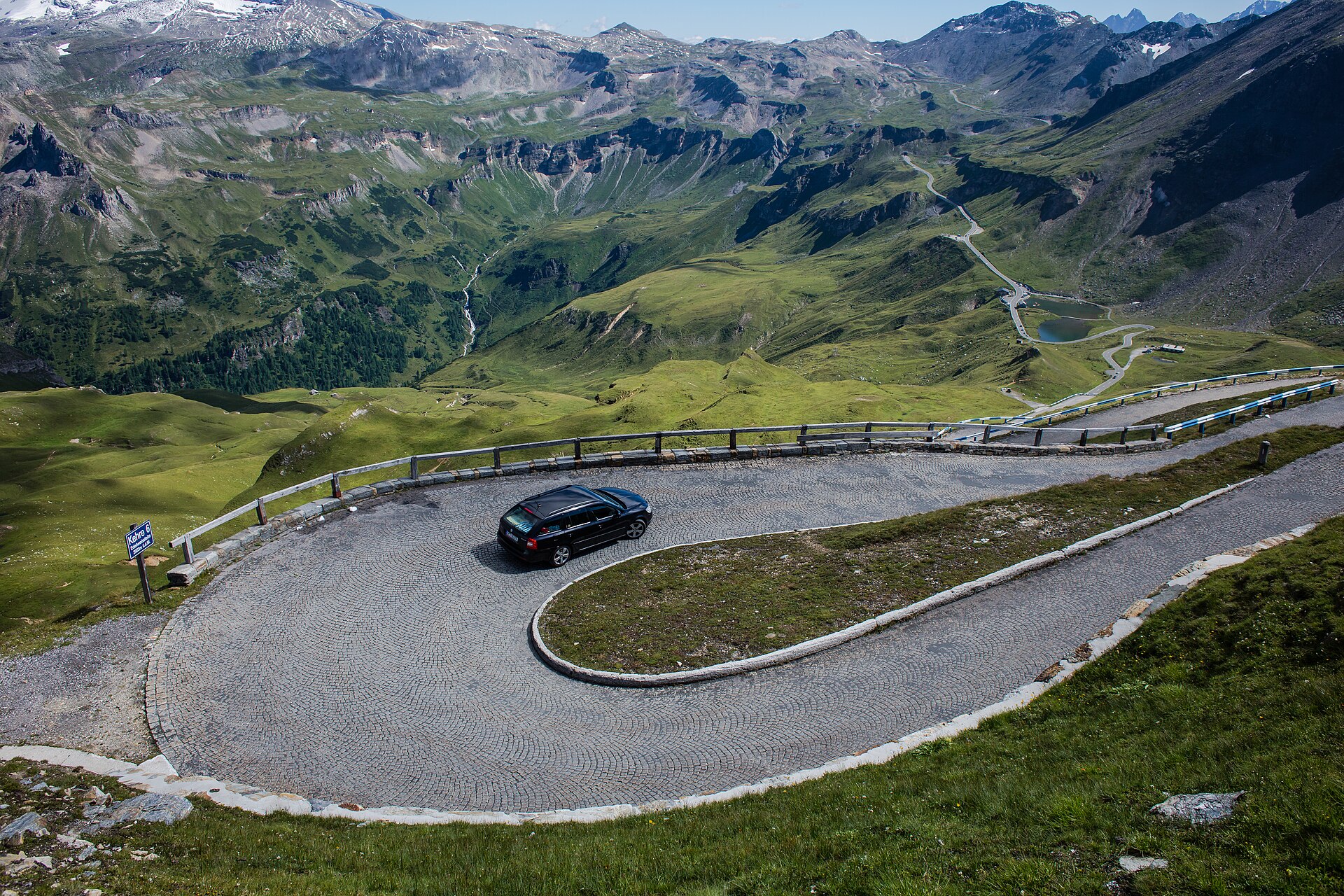
Opened in 1935 and running for around 48 kilometres between Salzburg and Carinthia, the Grossglockner High Alpine Road climbs through 36 hairpins to 2,504 metres at the Hochtor and is one of the great drives of Europe. A spur road leads to the Kaiser-Franz-Josefs-Höhe, where you look across to the Grossglockner, Austria’s highest peak, and down onto the Pasterze glacier. The road generally opens in early May and closes for the winter in early November, depending on snow; the standard 2026 day ticket for a car is €46.50, reduced to €36.50 from 15 October until the winter closure.
Check the weather before you pay. In fog, the toll buys you a view of your bonnet; on a clear day, it is worth every cent. Without a car, seasonal buses cover parts of the route in summer; check the regional timetables before planning around them.
Waterfalls, ice caves and glaciers
- Krimml Waterfalls, at the western edge of the state of Salzburg, drop around 380 metres in three tiers — the highest falls in Austria, with a well-made path alongside.
- Eisriesenwelt above Werfen is often billed as the largest ice cave in the world; the full tour involves about 1,400 steps, and temperatures hover around freezing even in summer.
- Zell am See and Kaprun combine a lake town with a glacier ski area and high-altitude reservoirs, and make an easy summer base.
- Hohe Tauern National Park, surrounding the Grossglockner, is the largest national park in the Alps and the place to see marmots and ibex.
Hiking
Austria’s huts make it one of the easiest Alpine countries to hike in. Hundreds of mountain huts, many run by the Alpine clubs, serve hot food and beer on summit routes and offer simple dormitory beds; well-marked trails are graded by colour. The season for high routes runs from late June to late September, depending on snow. You do not need to go far from Vienna to start: the Rax and Schneeberg, a couple of hours south, are serious mountains with cable-car and rack-railway access.
Skiing
Austria is one of the great ski nations, with resorts ranging from the glitz of Kitzbühel and Lech to the party scene of Ischgl and St. Anton and family-friendly valleys everywhere in between. The season generally runs from December to Easter, longer on the glaciers; the Hintertux Glacier in the Zillertal advertises the longest ski season in Austria, so check its current skiing dates before you travel. From Vienna, the nearest serious skiing is around Semmering and the Stuhleck, a couple of hours away, while the big Tyrolean resorts are easier to reach from Munich or Innsbruck.
When to Go
Austria has two high seasons — summer and winter — and two shoulder seasons that are often the best of all.
- Spring (April–May): apricot blossom in the Wachau, empty cities and good prices. The high Alpine roads and many huts are still closed by snow until May or June.
- Summer (June–August): lakes, hiking, festivals in Salzburg and Bregenz, and long evenings. Also peak crowds in Hallstatt and Salzburg, and peak prices.
- Autumn (September–October): our favourite. The wine harvest and new-wine taverns, golden larches in the mountains, warm lakes into early September and the Grossglockner open until late October.
- Winter (December–March): skiing, Christmas markets from November, with dates that differ by market (in Vienna in 2026 the Rathausplatz market runs from 13 November to 26 December), and snow on the old towns. Some lake resorts and Alpine roads close entirely.
For the capital itself, our guide to the best time to visit Vienna goes month by month, and the Christmas markets guide covers the season that Salzburg and Innsbruck do almost as well.
Arriving and Leaving: Think About Where You Finish
Vienna is the main international gateway and, for most visitors, the obvious place to start. It is worth thinking just as hard about where you finish. Salzburg and Innsbruck have small airports of their own with European and seasonal flights, and Graz and Klagenfurt have a handful of connections, but for western Austria the big hubs at Munich and Zürich are often more useful than anything Austrian. Munich is under two hours from Salzburg by train, and Zürich is the natural gateway to Vorarlberg and the Arlberg.
That makes an open-jaw ticket — into Vienna, out of Munich or Zürich — the smartest booking for any trip that goes west of Salzburg. It saves you the long ride back east at the end, lets you travel across the country in one direction, and often costs no more than a return. Our guides to Vienna Airport and finding cheap flights to Vienna cover the arrival end.
How to Put It Together: Three Sample Routes
One week: Vienna, Salzburg and the lakes
- Days 1–3: Vienna. See our three-day Vienna itinerary.
- Day 4: train to Salzburg (about 2½ hours). Afternoon in the old town, evening at the Augustiner beer garden.
- Day 5: Salzburg. Fortress in the morning, Hellbrunn or the Untersberg in the afternoon.
- Day 6: Hallstatt by bus via Bad Ischl, with a stop at Zauner. Stay the night to see the village empty.
- Day 7: back to Vienna (by train via Attnang-Puchheim; check the ÖBB timetable for the journey time), or on to Salzburg or Munich for a flight home.
Ten days: the southern and western loop by train
- Days 1–3: Vienna.
- Days 4–5: Graz, with a half-day in the Styrian vineyards.
- Days 6–7: Klagenfurt and the Wörthersee, 42 minutes away on the Koralm line.
- Days 8–9: Salzburg, over the Tauern railway through the mountains; from 8 February to 9 July 2027 the line is closed between Mallnitz-Obervellach and Schwarzach-St. Veit, with replacement buses on that stretch.
- Day 10: Innsbruck for the Nordkette, then fly home from Innsbruck or Munich — or take the train back to Vienna.
A long weekend from Vienna
- Day 1: train to Melk, the abbey in the morning, then a boat or bike through the Wachau to Dürnstein.
- Day 2: a night in a wine village, a morning in Krems, the train back to Vienna.
- Day 3: Semmering or Lake Neusiedl, depending on whether you want mountains or water.
If you are still deciding how much time Vienna itself needs before you head out, our guide to how many days to spend in Vienna answers that.
What Austria Costs Beyond Vienna
Austria is not a cheap country, but it is rarely a rip-off, and outside the obvious hotspots it is often better value than the capital. Rough rules of thumb:
- Hotels in Graz, Linz and Klagenfurt are usually cheaper than in Vienna. Salzburg during the festival, Hallstatt in summer and the top ski resorts in February are the expensive exceptions.
- Food is cheapest at lunchtime: most inns serve a Mittagsmenü, a set lunch of soup and a main, at well below dinner prices.
- Trains are good value if you book Sparschiene fares in advance and expensive if you buy flexible tickets on the day.
- Driving adds up: the vignette is cheap, but the Grossglockner toll, the special tunnel tolls and city parking soon outweigh it.
- Mountain huts are good value for hearty food and very good value for the view; bring cash.
For the Vienna end of the budget, see our breakdown of what a Vienna trip costs.
Eating and Drinking Your Way Round Austria
Austrian food is regional, and leaving Vienna is the only way to taste most of it. Look out for:
- Tyrol: Speckknödel (bacon dumplings) in broth, Tiroler Gröstl (fried potatoes, meat and onions with an egg) and cheese-filled Kaspressknödel.
- Salzburg: Salzburger Nockerl, a mountainous soufflé said to represent the city’s peaks, and the hand-made original Mozartkugeln from Konditorei Fürst, in silver-and-blue foil — not the mass-produced red-and-gold ones.
- Styria: Backhendl (fried chicken), salads dressed in pumpkin-seed oil and some of the best white wine in the country.
- Carinthia: Kärntner Kasnudeln, pasta parcels filled with curd cheese, potato and mint.
- Upper Austria: Linzer Torte and hearty dumpling dishes.
- Vorarlberg: Käsknöpfle, cheese noodles with crispy onions, and mountain cheeses from the Bregenzerwald.
Wine follows the east: Grüner Veltliner and Riesling in the Wachau, Kamptal and Kremstal; Sauvignon Blanc in southern Styria; Blaufränkisch and Zweigelt reds around Lake Neusiedl. Our Vienna wine guide and wine regions day trip are good primers, and the dishes you will meet in the capital are in our guide to traditional Viennese food.
Practical Tips for Travelling Around Austria
- Greetings matter. Outside Vienna, Grüß Gott is the standard hello and Servus the friendly, informal one. Saying hello when you walk into a shop, a small inn or a mountain hut is expected, and it changes the welcome you get.
- Emergency numbers. 112 works everywhere. Austria’s own numbers are 144 for an ambulance, 133 for the police, 122 for the fire brigade and 140 for mountain rescue.
- Mountain weather. Afternoon thunderstorms are common in summer, so start hikes early and turn back if the sky darkens. Even a cable-car summit can be ten or fifteen degrees colder than the valley floor; pack a layer.
- Tap water is excellent across the country, much of it straight from Alpine springs. Carry a bottle and refill it.
- Tipping works as it does in Vienna: round up, or add five to ten per cent in restaurants. Our tipping guide has the details.
- Opening hours are shorter than many visitors expect. Check each restaurant’s kitchen hours and rest days, and each mountain hut’s or lakeside hotel’s seasonal opening dates, before you rely on them.
- Public holidays. Austria has thirteen of them, several of them Catholic feast days that catch visitors out — Ascension, Whit Monday, Corpus Christi and 15 August among them. Shops close on most; museums and restaurants usually stay open.
Honest Verdicts: Where Austria Over- and Under-Delivers
- Over-delivers: Graz. Beautiful, lively and cheap by Austrian standards, and hardly anyone goes.
- Over-delivers: the train network. Fast, clean and punctual, with views most countries charge extra for.
- Over-delivers: the shoulder seasons. September and early October beat August almost everywhere.
- Under-delivers: Hallstatt at midday in summer. Go early, stay late, or go in winter.
- Under-delivers: ski resorts in summer. Some big resorts are half-shut construction sites between seasons; choose a valley with a life beyond skiing.
- Under-delivers: Sunday shopping. Shops close on Sundays across the country, apart from stations, airports and a few tourist areas. Plan picnics on Saturday.
Common Mistakes
- Trying to see Austria from Vienna. Innsbruck, Tyrol and Vorarlberg are too far for excursions; build a route instead.
- Doing Hallstatt as a coach day trip in July. It is the worst version of the best village in the country.
- Driving without a vignette. The fines are steep and the cameras are automatic.
- Buying flexible train tickets on the day. Book Sparschiene fares as soon as your plans are fixed.
- Planning high-Alpine hikes in May. Many routes and huts are still under snow until late June.
- Skipping Graz. We will keep saying it.
Frequently Asked Questions
Is Austria worth visiting beyond Vienna?
Yes. Vienna is the cultural capital, but the Alps, the lakes, Salzburg, Graz and the wine regions make up most of what makes Austria distinctive, and all of them are easy to reach by train.
How many days do I need for Austria?
A week covers Vienna, Salzburg and the Salzkammergut lakes comfortably. Ten days to two weeks lets you add Graz, Carinthia and Innsbruck. Less than five days, and you are better off concentrating on Vienna with one or two day trips.
Can you travel around Austria without a car?
Easily. Railjets link every major city, Postbus services reach most valleys and lakes, and Innsbruck and Salzburg make excellent car-free bases for the mountains. A car only really helps for the high Alpine roads and remote wine country.
Do I need a vignette to drive in Austria?
On motorways and expressways, yes. In 2026 it costs €9.60 for a day (digital only), €12.80 for ten days, €32.00 for two months or €106.80 for a year. Some tunnels and Alpine routes charge an extra toll.
How long is the train from Vienna to Salzburg?
About two and a half hours on the fastest services, with ÖBB and WESTbahn trains between them running roughly every half hour through the day.
What is the best time to visit Austria?
June to September for lakes, hiking and festivals; December to March for skiing and Christmas markets. For fewer crowds and good weather, September and early October are hard to beat.
Should I visit Salzburg or Hallstatt?
Ideally both, as they are only a couple of hours apart. If you have to choose, Salzburg is the richer place to spend two days; Hallstatt is the more spectacular place to spend one night.
Can I see the Alps on a day trip from Vienna?
Yes. The Semmering railway and the Rax are about two hours south and are genuinely Alpine. Hallstatt and Salzburg are possible as very long days, but both are much better with an overnight stay.
Skiing is the reason many visitors cross Austria in winter, and the resorts are further from Vienna than most people expect: about four hours by train to Schladming or Gastein, four and a half to Kitzbühel and five and a half to St. Anton. From 8 February to 9 July 2027, engineering work lengthens journeys to Tyrol and puts the Gastein valley on replacement buses. Our guide to skiing in Austria compares the big areas, their 2026/27 lift prices and the fastest trains from Wien Hauptbahnhof.
For Salzburg in depth, from the fortress and the Mozart houses to the 2027 festivals and the Christmas market on the Domplatz, see our Salzburg travel guide, with current prices and itineraries for two and three days.
Related Vienna Guides
- Day Trips from Vienna
- Salzburg Day Trip from Vienna
- Hallstatt Day Trip from Vienna
- Vienna to Salzburg: Trains, Buses and Driving
- Wachau Valley Day Trip
- The Semmering Railway
- Eisenstadt and Lake Neusiedl
- The Complete Vienna Travel Guide
Photo Credits
Hairpin on the Grossglockner High Alpine Road: Grossglockner hochalpenstrasse 12 2016 by Arne Müseler, CC BY-SA 3.0 de, via Wikimedia Commons.
Salzburg at dusk from the Mönchsberg: 1913 – Salzburg – View from Mönchsberg by Andrew Bossi, CC BY-SA 2.5, via Wikimedia Commons.
The Schlossberg and clock tower in Graz: 16-07-06-Rathaus Graz Turmblick-RR2 0275 by Ralf Roletschek, CC BY-SA 3.0 at, via Wikimedia Commons.
The Pyramidenkogel tower above the Wörthersee: Aussichtsturm Pyramidenkogel DER Logenplatz (c) Wörthersee Tourismus Gert Steinthaler (1) by Gert Steinthaler, CC BY-SA 4.0, via Wikimedia Commons.