Cheap Flights to Vienna: Airlines, Routes & When to Book
Vienna's budget market is contracting: Wizz Air is closing its base and Ryanair has cut its fleet. What the air transport levy adds, when to book, and why Bratislava is now the cheapest way in.

Photo by YL Lew
- The Tax You Cannot Avoid
- Who Actually Flies to Vienna in 2026
- When to Fly for the Lowest Fares
- Other Airports Worth Checking
- Long-Haul: Getting to Vienna From Outside Europe
- If the Flight Goes Wrong
- Where the Cheap Fare Stops Being Cheap
- Flying From the UK and Ireland
- Practical Booking Strategy
- Arriving: What Happens Next
- The Honest Verdict
- Frequently Asked Questions
- Related Vienna Guides
- Photo Credits
This article contains advertising. Our booking links are routed through a partner that adds commission tracking automatically, so if you book through one we earn a commission from the provider, at no extra cost to you. It never affects what we recommend. Affiliate disclosure
Something has changed about flying to Vienna, and most fare-comparison sites have not caught up with it. Wizz Air is closing its Vienna base outright, Ryanair has shrunk its based fleet and moved capacity across the border to Bratislava, and the reason both airlines give is the same: Austria’s air transport levy and the airport’s charges. Hunting for cheap flights to Vienna in 2026 therefore means understanding a market that is actively contracting at the budget end while the full-service carriers expand at the top — which is close to the opposite of what has happened almost everywhere else in Europe over the past decade.
This guide covers who actually flies to Vienna now, what the tax you cannot avoid adds to every ticket, when to book and when to travel for the lowest fares, the nearby airports worth considering, and the specific traps that turn a cheap headline fare into an expensive journey. Everything was checked in September 2026; airline route decisions move fast, so verify schedules before you commit.
The Tax You Cannot Avoid
Austria charges an air transport levy — the Flugabgabe — on every departing passenger, and it is structured in a way that catches people out because it is the short flights that are penalised, not the long ones.
| Great-circle distance | Levy per departing passenger |
|---|---|
| Under 350 km | €30 |
| 350 km and over | €12 |
That is not a misprint. The levy was introduced in 2020 explicitly as a steering measure: make very short flights unattractive where a train exists, and take a flat, modest amount from everything else. It raises roughly €170 million a year.
Two consequences for you. First, a headline fare of €19.99 out of Vienna is arithmetically impossible on any route under 350 km, because the tax alone exceeds it. Second, the levy is charged on departure from an Austrian airport, so it affects your return leg rather than your outbound if you are flying in from elsewhere. It is already inside the price you are quoted; you are not going to be asked for it separately at the gate.
It is also the direct cause of the low-cost pullback described below, which the airlines have said publicly and repeatedly.
Who Actually Flies to Vienna in 2026
The low-cost contraction
Wizz Air is closing its Vienna base. The withdrawal ran in two phases: two Airbus A320neos removed in late October 2025, and the remaining three on 15 March 2026. At its height the base served 28 routes to 20 countries. The airline’s stated reason was that costs and airport charges had risen to the point where the base was incompatible with its business model.
Ryanair has cut its Vienna-based fleet from 19 aircraft to 16, shifting some of that capacity to Bratislava, an hour away by road and rail. Ryanair has not left Vienna and continues to announce new routes here, but the direction of travel is clear and it has been explicit about the levy being the reason.
What this means practically: the very cheapest Vienna fares of the 2018–2024 era are thinner on the ground, some city pairs have gone entirely, and the routes that survive are less likely to run daily. Check whether your route still exists before assuming it does — a lot of published advice about flying to Vienna cheaply was written for a market that no longer exists.
The full-service expansion
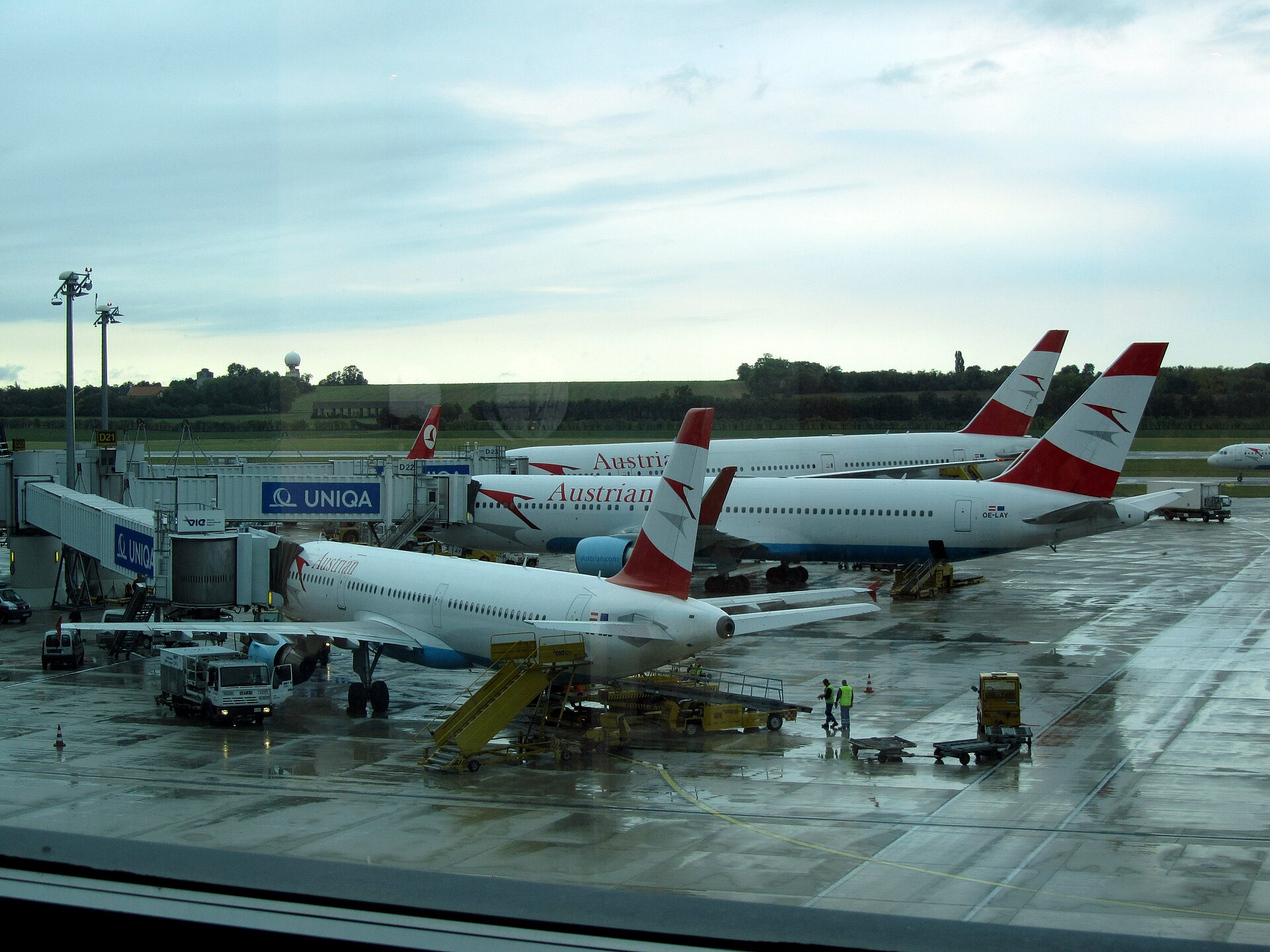
At the other end, Austrian Airlines continues to build Vienna as a long-haul hub. Bangkok has gone to twice daily, the Maldives runs daily, and Mauritius runs up to five times a week in peak season. Its Star Alliance partners feed the same terminal.
This matters for cheap fares in a way that is not obvious: hub carriers price connecting itineraries aggressively to fill seats, and a one-stop Lufthansa, Swiss or Austrian routing through Frankfurt, Munich or Zurich is frequently cheaper into Vienna than a direct low-cost flight, particularly from beyond Europe. Do not filter for direct flights only until you have looked at what the connections cost.
New routes announced for 2026
Even with the base closures, the route map is not shrinking uniformly — Ryanair, airBaltic, Austrian and Wizz have all announced new Vienna services for 2026, including Tallinn, Dubai and Milan. The pattern is fewer based aircraft but continued point-to-point flying by aircraft based elsewhere, which is a different and less price-aggressive model.
When to Fly for the Lowest Fares
By season
| Period | Fares | Worth it? |
|---|---|---|
| January (after Epiphany) – February | Lowest of the year | Yes — cold, but the city works |
| March – April | Low, rising | Excellent value |
| May – June | High | Best weather, worst prices |
| July – August | High, hotels lower | Hot and busy |
| Early November | Lowest since February | The single best value window |
| Late Nov – 23 December | High | Christmas market surcharge |
| Between Christmas and New Year | Highest of the year | Only if you want the Silvesterpfad |
The stand-out is early November. The Christmas markets have not opened — the earliest, at Schönbrunn, opens on 6 November, and Rathausplatz not until the 14th — so demand collapses for a fortnight while the city is still fully functional. Our November guide covers what you get and what you miss.
January after Epiphany is the other genuine bargain, though it is the coldest month with an average high under four degrees. See the best time to visit Vienna for the full trade-off.
By day and time
The usual European patterns hold. Tuesday and Wednesday departures are typically the cheapest; Friday afternoon and Sunday evening the most expensive. The first flight of the morning and the last of the evening are usually the cheapest of the day, and at Vienna the very early departures have an added cost you should factor in: with the S-Bahn’s inner-city line closed for engineering works, the airport transfer before six in the morning is more awkward than it used to be. Our airport transfer guide covers what is running.
How far ahead to book
For European short-haul into Vienna, the useful window is roughly six to ten weeks out. Earlier than that and the airlines have not started discounting; later and the cheap buckets are gone. Long-haul behaves differently and rewards booking three to five months ahead.
The advice to book on a particular day of the week is folklore. Airline revenue systems reprice continuously and there is no Tuesday-afternoon magic. What does work is setting a fare alert and being flexible by a day either side.
Other Airports Worth Checking
Vienna’s levy and charges have pushed capacity to neighbouring airports, and for genuinely price-driven travellers this is now worth a look rather than a footnote.
- Bratislava (BTS) is the serious alternative. It is about an hour from central Vienna by bus or train, Ryanair has actively moved capacity there, and fares can be substantially lower. The transfer is easy and cheap — see our Vienna to Bratislava transport guide, which works in both directions. This is the single best cost-saving option on this page.
- Budapest (BUD) is around two and a half to three hours away by rail. Worth checking only if the saving is large, because the transfer eats most of a day at each end.
- Brno and Graz are occasionally cheaper but poorly connected to Vienna for a visitor with luggage. Rarely worth it.
Run the arithmetic honestly. A €60 saving on a Bratislava fare is real money; the same saving via Budapest costs you six hours of travelling and two extra transfers, which is not.
Long-Haul: Getting to Vienna From Outside Europe
Vienna is a mid-sized European hub rather than a mega-hub, and that shapes how you should search from further afield.
North America
Austrian Airlines flies transatlantic from Vienna, and its Star Alliance partners connect through Frankfurt, Munich and Zurich. A one-stop itinerary via a German or Swiss hub is very often cheaper than a nonstop and adds two or three hours; on an eight-hour crossing that is a real trade-off worth pricing rather than assuming.
The counter-intuitive move that frequently wins: search into a major Western European hub as a separate ticket, then buy a short-haul hop into Vienna. It works when the transatlantic fare into London, Amsterdam or Frankfurt is unusually low, and it fails when your bags do not transfer and a delay on leg one strands you. Only do it with a long connection and no checked bags.
Asia, the Gulf and Australia
The Gulf carriers connect Vienna to almost everywhere east of it via Dubai, Doha and Abu Dhabi, and Turkish Airlines does the same through Istanbul, frequently at the lowest prices of anyone. Austrian’s own long-haul network out of Vienna has grown — Bangkok twice daily, the Maldives daily, Mauritius up to five times a week in peak season — which is good news for availability even if it rarely produces the cheapest fare.
Within Europe by rail instead
For several origins, the honest answer is not to fly at all. Vienna sits on a strong rail network with direct railjet services to Munich, Salzburg, Prague, Budapest and Zürich, and Nightjet sleepers reach Hamburg, Amsterdam, Paris, Rome and Brussels. Once you add the airport transfers at both ends, city-centre to city-centre journey times are much closer than the flight times suggest, and the Austrian levy exists precisely to push travellers this way on the shortest routes.

If the Flight Goes Wrong
Worth knowing in a year when routes are being consolidated. Flights departing from any EU airport, and flights into the EU on an EU carrier, are covered by EU air passenger rights. The essentials:
- Cancellation gives you the choice between a full refund and rerouting at the earliest opportunity, plus compensation unless the airline gave you at least 14 days’ notice or can show extraordinary circumstances.
- A significant schedule change after booking entitles you to a refund rather than obliging you to accept the new time. This is the clause that matters most at Vienna in 2026.
- Long delays trigger a duty of care — meals, refreshments and accommodation where relevant — regardless of the cause.
- Downgrading entitles you to reimbursement of a proportion of the fare.
You claim from the airline, not from the booking agency, which is another argument for booking direct. Do not pay a claims company a percentage for something that takes one form and twenty minutes.
Where the Cheap Fare Stops Being Cheap
The usual low-cost traps apply, plus two that are specific to Vienna.
- Cabin bag rules. The under-seat bag is free on the major low-cost carriers; anything going in the overhead locker is a paid extra and is enforced at the gate. Paying at the gate costs multiples of paying online.
- Checked bags on the return. Vienna is a shopping city and the Christmas markets in particular send people home heavier than they arrived. Buy the bag allowance when you book, not at the airport.
- Seat selection. Genuinely optional. Two people on a three-hour flight do not need to pay to sit together.
- The early-departure transfer. Vienna specific. A 06:10 departure means being airside by 05:20, which in practice means a taxi rather than public transport, and a Vienna airport taxi is not cheap. A fare that is €40 lower but requires a €45 taxi is not a saving.
- The airport is genuinely out of town. Schwechat is about 18 km south-east of the centre. Budget the transfer both ways into the trip cost from the start; our Vienna trip cost guide builds it in.
Flying From the UK and Ireland
The busiest visitor market for Vienna deserves its own section, because the pattern here is unusually clear.
London is the strongest city pair, served from several airports by both full-service and low-cost carriers, and it is the route where fares remain genuinely competitive despite everything above — there is simply too much demand for it to thin out. Manchester, Birmingham, Edinburgh and Dublin have thinner coverage, fewer daily frequencies and a greater exposure to the base changes; if your route from a regional airport disappears, the reliable fallback is a connection through Frankfurt, Munich, Amsterdam or Istanbul rather than a low-cost hop to London and a separate ticket onward.
Flight time from London is around two hours and twenty minutes, which puts Vienna in the same bracket as Rome or Barcelona. Vienna is on Central European Time, one hour ahead of the UK and Ireland year-round, and both regions change their clocks on the same dates, so the offset never varies.
One habit worth breaking: the assumption that a Friday-night-out, Sunday-night-back weekend is the default. Those are the two most expensive slots in the week, and Vienna is a city where a Tuesday-to-Friday trip is both cheaper and considerably more pleasant, because the museums and coffee houses are half as busy. Our guide to how many days you need in Vienna makes the case for the longer, midweek version.
Practical Booking Strategy
Search properly
Use a meta-search engine for discovery and then book direct with the airline. Direct booking matters more than it used to: when a route is cancelled or retimed — which is happening more than usual at Vienna given the base changes — the airline will rebook or refund its own customers straightforwardly and will treat an agency booking as the agency’s problem.
Search the whole month rather than a fixed date, and search Vienna plus Bratislava together where your search tool allows it. Several do this natively because the two airports genuinely serve the same city for practical purposes.
Watch for schedule changes, not just fares
This is the unusual bit of advice for 2026. With Wizz Air’s base gone and Ryanair’s fleet reduced, routes are being retimed and consolidated more than normal. A flight booked in January for June may be moved by several hours or cancelled outright. Under EU rules a significant schedule change gives you the right to a refund or rerouting, but you have to notice it — check your booking a month before travel rather than assuming.
Package versus separate
Flight-plus-hotel packages to Vienna are frequently cheaper than the components booked separately, particularly in the low season, and a package booked with a UK or EU tour operator carries stronger consumer protection than two separate bookings. Worth pricing, especially for a three- or four-night city break. Our guide to where to stay in Vienna covers which districts to accept in a package deal and which to refuse.
Fare alerts and flexibility
The single most effective habit is setting an alert on your route and letting it run for a fortnight before you commit. Fares on European short-haul move within a fairly narrow band most of the time and then drop sharply for a day or two when an airline releases inventory or a competitor announces a route; you cannot predict that day, but an alert catches it and a manual search once a week does not.
Flexibility of one day either side is worth more than any other single tactic. On many Vienna routes the difference between a Friday and a Thursday departure is larger than the difference between booking eight weeks out and booking four months out, and it costs you nothing but a half-day of annual leave.
Arriving: What Happens Next
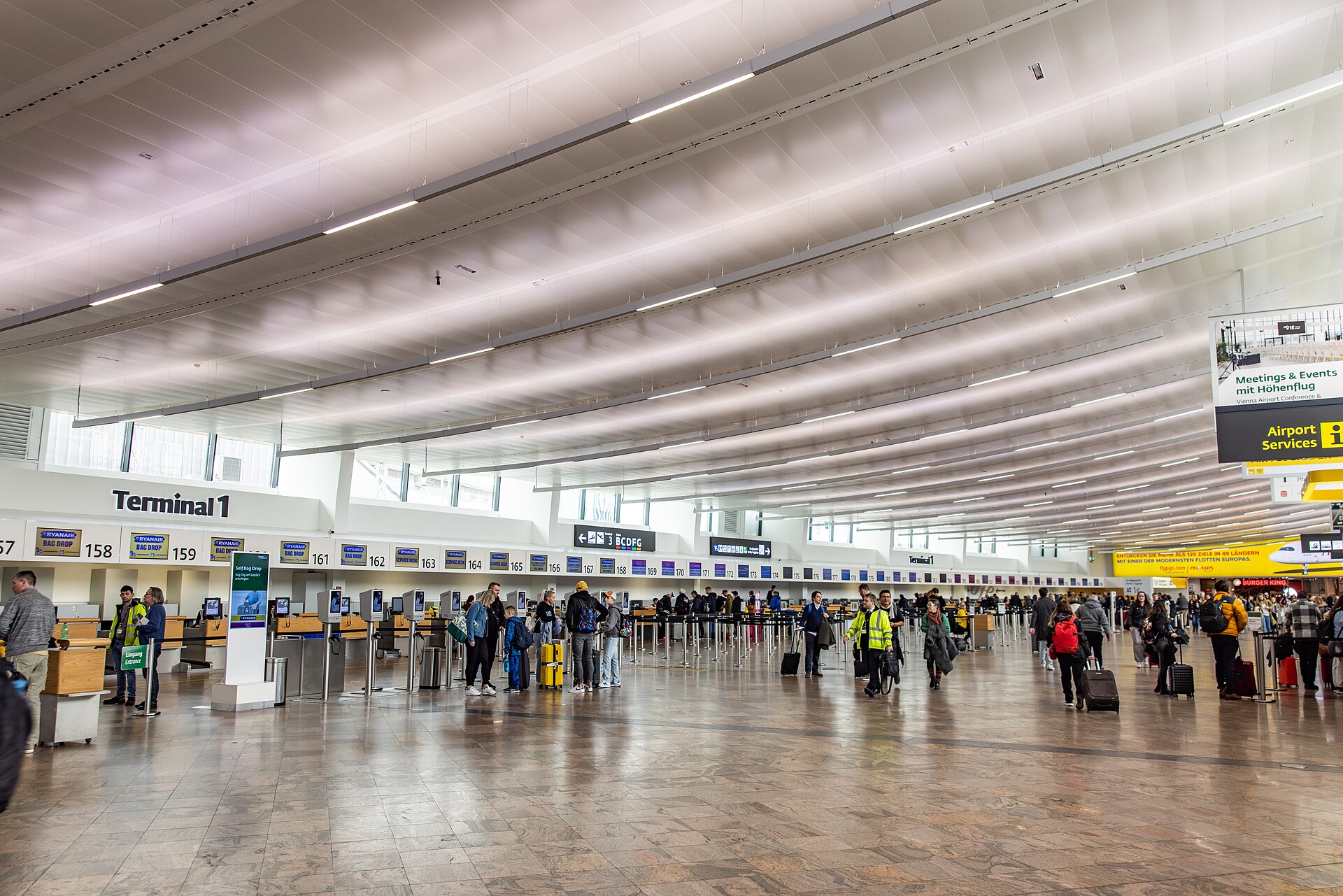
A cheap flight lands you at Vienna Airport (VIE) at Schwechat, which uses Terminals 1, 1A and 3. Low-cost and charter carriers work out of Terminal 1; Austrian Airlines, its Star Alliance partners and most full-service airlines use Terminal 3. Terminal 2 is not in passenger check-in use, despite appearing on old signage and older maps.
The rail station sits directly beneath the terminal complex, which normally makes the transfer trivial. In 2026 it is less trivial than usual: the S-Bahn’s inner-city core between Praterstern and Wien Hauptbahnhof is closed for viaduct works until late 2027, the S7 terminates at St. Marx rather than Wien Mitte, and the City Airport Train is running as a bus rather than a train. Long-distance railjet services to Wien Hauptbahnhof are unaffected and are frequently the best option. Our Vienna Airport guide and the transfer guide cover the current position in detail.

The Honest Verdict
Vienna is no longer a bargain-airfare city and pretending otherwise wastes your time. The levy puts a floor under every fare, the airport’s charges have driven two low-cost carriers to retrench, and the cheapest seats have moved to Bratislava. That is the market as it stands in 2026.
What still works: travel in early November or in January after Epiphany, book six to ten weeks out, price Bratislava alongside Vienna as a matter of routine, look at one-stop full-service connections rather than filtering for direct flights, and buy your bags when you book. Do those five things and you will pay a fair price. Chasing a twenty-euro fare into Vienna in 2026 is chasing something that mostly is not there any more, and the time is better spent on saving money once you arrive, where the opportunities are considerably larger.
Frequently Asked Questions
What is the cheapest month to fly to Vienna?
January after Epiphany and February are the cheapest for airfares, with early November close behind and arguably better value overall — the Christmas markets have not opened, so demand is low while the city is fully functional. Late December between Christmas and New Year is the most expensive period of the year.
Why are flights to Vienna more expensive than they used to be?
Austria’s air transport levy adds €30 per departing passenger on flights under 350 km and €12 on everything longer, and airport charges have risen. Wizz Air is closing its Vienna base and Ryanair has cut its based fleet from 19 aircraft to 16, both citing those costs. Less low-cost capacity means higher fares.
How much is the Austrian air transport levy?
€30 per departing passenger for flights of under 350 km great-circle distance, and €12 for flights of 350 km or more. It applies on departure from an Austrian airport and is already included in the fare you are quoted.
Is it cheaper to fly to Bratislava than Vienna?
Often, yes. Ryanair has moved capacity to Bratislava specifically because of Vienna’s costs, and Bratislava is about an hour from central Vienna by bus or train with cheap, frequent connections. It is the single best cost-saving option for price-driven travellers.
How far in advance should I book flights to Vienna?
Six to ten weeks ahead for European short-haul, three to five months for long-haul. Booking a year in advance rarely helps because airlines have not begun discounting; booking inside three weeks means the cheap fare buckets are gone.
Which airlines fly to Vienna?
Austrian Airlines is the hub carrier, with its Star Alliance partners feeding Terminal 3. Ryanair, Eurowings and other low-cost and charter operators use Terminal 1. Wizz Air is closing its Vienna base in March 2026 but continues to serve some routes with aircraft based elsewhere.
Should I book direct with the airline or through an agency?
Direct, in 2026 more than usual. Vienna’s route map is being retimed and consolidated because of the base changes, and airlines rebook and refund their own customers far more readily than they handle agency bookings.
Which terminal will my flight use at Vienna?
Terminal 1 for low-cost and charter airlines, Terminal 3 for Austrian Airlines, Star Alliance and most full-service carriers. Terminal 1A is a pier off Terminal 1. Terminal 2 is not in passenger check-in use, despite older maps showing it.
Flying low-cost does not rule out a comfortable wait. Ryanair and Eurowings passengers check in at Terminal 1, and airside the VIENNA Lounge by the C gates, voted Europe’s best Priority Pass lounge in 2026, takes walk-in guests for about €59. Whether that is money well spent depends on how long you have; our guide to Vienna airport lounges does the arithmetic.
Before booking a fare into Bratislava because it looks cheaper, add the bus. The direct coaches from BTS to Vienna start at about €5 but take between an hour and ten minutes and nearly two hours, and the last one leaves around 23:00. Our guide to flying into Bratislava Airport for Vienna suggests the fare needs to be roughly €25 to €30 cheaper per person, return, before the detour pays.
Related Vienna Guides
- Vienna Airport: The Complete Guide
- Vienna Airport to the City Centre
- The Best Time to Visit Vienna
- Vienna Trip Costs and Budget
- Vienna to Bratislava Transport
- Hotels Near Vienna Airport
- Vienna on a Budget
- Vienna Money-Saving Tips
Photo Credits
Terminal 1 check-in hall: Austria schwechat vienna airport terminal1 by Arne Müseler, CC BY-SA 4.0, via Wikimedia Commons.
Aircraft on the apron at Vienna: Planes on the apron at Vienna Airport (6363295953) by David Jones, CC BY 2.0, via Wikimedia Commons.