Wien Museum & Technisches Museum: Vienna’s Most Underrated Museums
Two museums most visitors walk past: the free, newly rebuilt Wien Museum on Karlsplatz and the Technisches Museum by Schönbrunn, with 2026 prices, hours, highlights and honest verdicts.
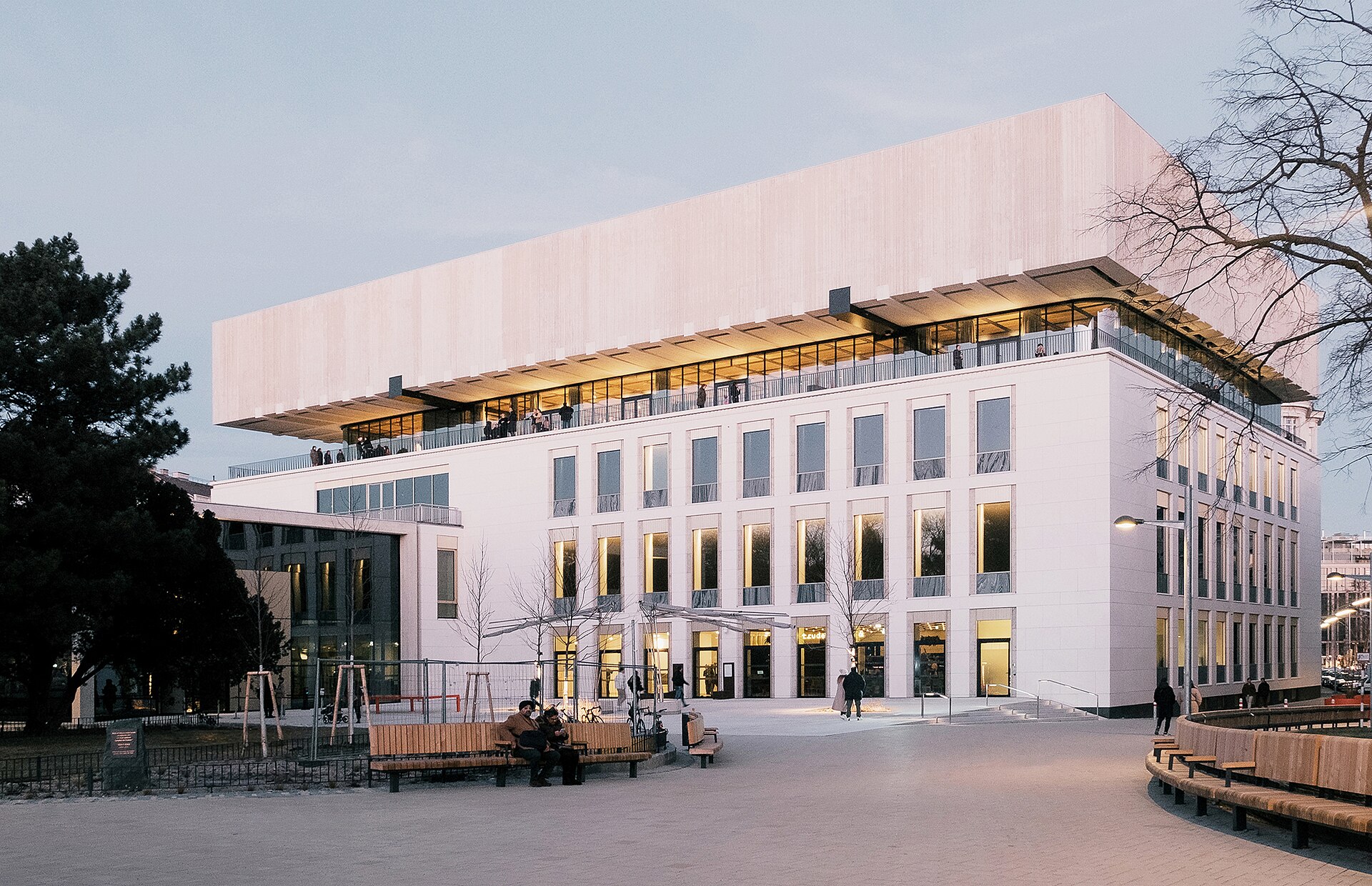
- Wien Museum and Technisches Museum at a Glance
- Why These Two Get Overlooked
- The Wien Museum on Karlsplatz
- The Wien Museum’s Other Sites
- The Technisches Museum Wien
- Wien Museum or Technisches Museum: Which One?
- Combining Them with the Neighbours
- A Sample Day: Two Underrated Museums
- Saving Money on Both
- Common Mistakes
- Frequently Asked Questions
- Related Vienna Guides
- Photo Credits
This article contains advertising. Our booking links are routed through a partner that adds commission tracking automatically, so if you book through one we earn a commission from the provider, at no extra cost to you. It never affects what we recommend. Affiliate disclosure
Stand on Karlsplatz and almost everyone is looking the same way — up at the dome of the Karlskirche. Very few turn round to the white block beside it, which is a pity, because the Wien Museum is the best introduction to the city that money cannot buy: its permanent exhibition, a walk through two thousand years of Vienna with Klimt, Schiele and Adolf Loos along the way, is free. Across town, beside Schönbrunn, the Technisches Museum Wien gets the same treatment. Visitors queue for the palace, then walk past one of Europe’s great science and technology collections on their way back to the U-Bahn.
This guide covers both: what is inside each, what they cost in 2026, the opening hours, how to get there, the Wien Museum’s smaller sites around the city, and how to fit either into a crowded itinerary. Prices and hours were checked in October 2026; treat them as the right order of magnitude and confirm before you go. If you are still choosing between Vienna’s big names, our guide to the best museums in Vienna ranks the lot.
Wien Museum and Technisches Museum at a Glance
| Wien Museum (Karlsplatz) | Technisches Museum Wien | |
|---|---|---|
| Subject | The history of Vienna, from the Romans to today | Science, engineering, transport and everyday technology |
| Adult price | Permanent exhibition free; special exhibitions €13 (€11 reduced) or €9 (€7 reduced) | €18; €15.50 for students aged 19–25 |
| Under-19s | Free | Free |
| Opening hours | Tue, Wed, Fri 09:00–18:00; Thu 09:00–21:00; Sat–Sun 10:00–18:00; closed Mondays | 09:00–18:00 on weekdays; check weekend and holiday times online |
| Getting there | U1, U2, U4 Karlsplatz | Trams 52 and 60 from Westbahnhof; short walk from Schönbrunn |
| Time needed | 2–3 hours | 2–4 hours (longer with children) |
| Best for | Anyone who wants to understand the city | Families, engineers, rail and aviation fans, rainy days |
Two things stand out. The Wien Museum’s main collection costs nothing at all, and under-19s go free at both. For a family, that turns two of the city’s most absorbing museums into a day out for the price of the adults’ tickets at one of them.
Why These Two Get Overlooked
Vienna has more museums than any visitor can manage, and a handful of them hoover up the attention: the Kunsthistorisches Museum, the Belvedere for The Kiss, the Albertina, Schönbrunn and the Hofburg. They deserve it. But they share a theme, which is the Habsburgs and what the Habsburgs collected, and after three days of gilt and emperors many visitors still could not tell you how ordinary Vienna lived, worked, built and rebuilt itself.
The Wien Museum is the answer to that. It is the city’s own museum, run by the city, about the city, and since its reopening it has been one of the most quietly popular places in Vienna among the Viennese themselves. The Technisches Museum is the answer to a different problem: the rainy afternoon, the bored teenager, or the travelling companion who has had enough of painting. Neither is on the standard first-timer checklist, and both are better than half of what is.
The Wien Museum on Karlsplatz
The building: old and new
The museum lives in a cool, white, rigorously modern building by Oswald Haerdtl, opened in 1959 as the Historisches Museum der Stadt Wien and long regarded as a fine building that had grown far too small. After years of planning it closed for a major renovation and extension by the architects Certov, Winkler + Ruck, and reopened in December 2023. Haerdtl’s block was kept and restored; on top sits a new two-storey volume that seems to hover above it, separated by a glazed terrace level that is open to visitors. From the terrace you look straight across Karlsplatz and onto the green dome of the Karlskirche next door — one of the best free views in the city centre.
Inside, the new building is generous and full of light, with the kind of wide stairs and open hall that make it a pleasant place simply to be in. There is a café on the ground floor, and the whole ground level works as a public space rather than a ticket barrier.
The permanent exhibition: Vienna, from the Romans to now
The permanent exhibition, Wien. Meine Geschichte (“Vienna. My History”), runs chronologically across several floors and uses some 1,700 objects to tell the city’s story. It follows the city from the first settlement to the present day.
What makes it good is that the story is told from the point of view of the city rather than the court. You get the emperors, but you also get the market traders, the tenement dwellers, the coffee-house regulars and the social reformers. The labelling is bilingual, the pace brisk, and the design never lets a room become a dull corridor of glass cases.
The highlights worth hunting down
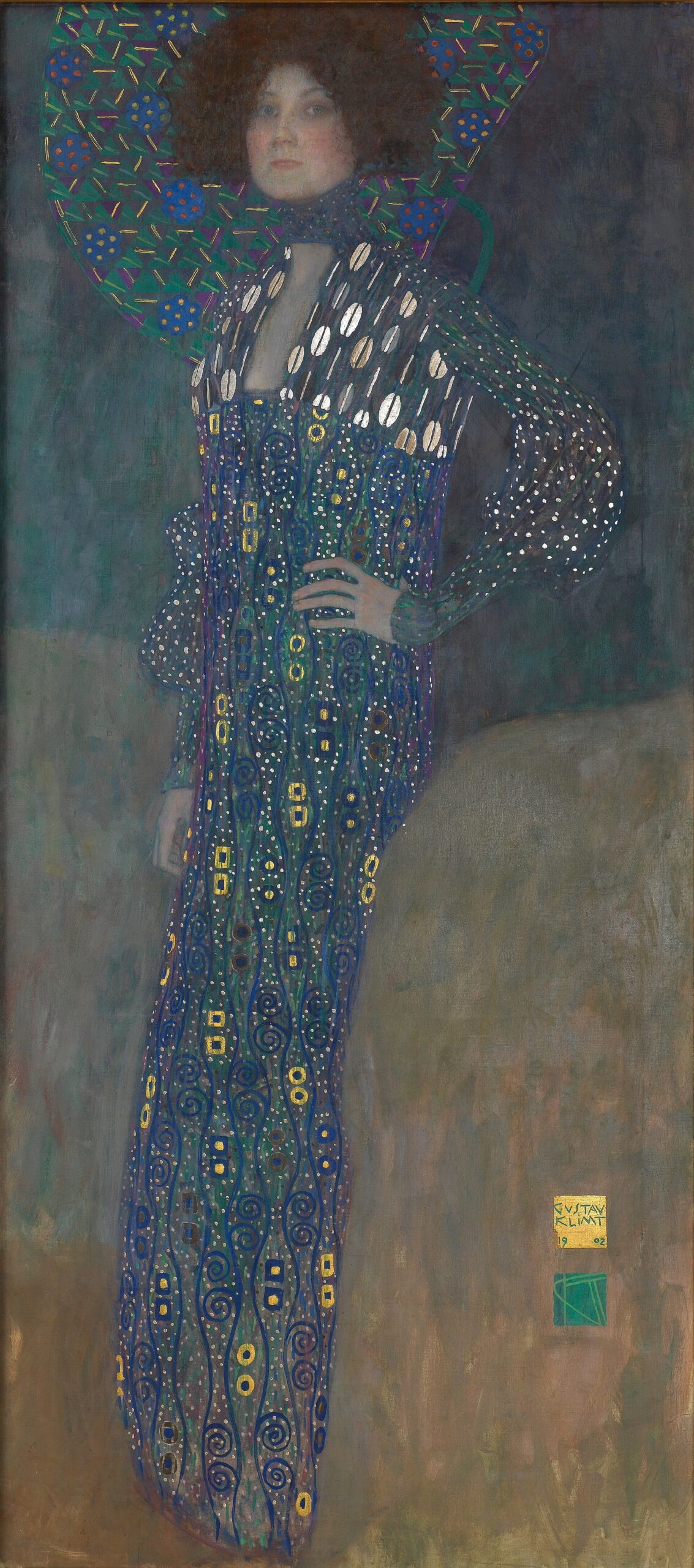
- Gustav Klimt’s portrait of Emilie Flöge (1902). The fashion designer and Klimt’s closest companion, in a dress patterned like a mosaic. Seeing a major Klimt without paying or queuing is a small Vienna miracle. Our Klimt guide maps where the rest of his work hangs.
- Klimt’s Pallas Athene (1898), the armoured goddess who became the emblem of the Secession years.
- Egon Schiele, including his portrait of the critic Arthur Roessler, one of his early champions.
- Adolf Loos’s living room, moved here from the architect’s own apartment — plain wood, an inglenook and not one unnecessary curl, built by the man who declared ornament a crime.
- Franz Grillparzer’s apartment, the rooms of Austria’s national playwright reassembled as he left them: a perfect Biedermeier time capsule.
- The city models. The city model of 1852–1854 shows the inner city as it was in the middle of the nineteenth century.
- Red Vienna. The rooms on the 1920s municipal housing programme put the great Gemeindebauten in context; pair them with our guide to Red Vienna and its social housing and go and see one.
Special exhibitions
Alongside the free permanent exhibition, the museum runs temporary shows on everything from photography and design to urban history, for which the ticket is €13 (€11 reduced) or €9 (€7 reduced), depending on the exhibition. They are usually thoughtful and well made, and they are the only part of a visit you pay for. Whether they are worth it depends entirely on the subject, so check what is on before you go rather than buying by default.
Hours, free days and practicalities
- Opening hours: Tuesday, Wednesday and Friday 09:00–18:00; Thursday 09:00–21:00; Saturday and Sunday 10:00–18:00. Closed on Mondays and on 1 January, 1 May and 25 December.
- Free admission to the permanent exhibition for everyone, every day it is open. Special exhibitions are free for under-19s, and everything is free on the first Sunday of the month at all Wien Museum sites.
- Getting there: U1, U2 or U4 to Karlsplatz, then two minutes on foot across Resselpark. Trams on the Ring stop a short walk away.
- Thursday is the late-opening day, with the museum open until 21:00, so you can finish with dinner nearby or a concert at the Musikverein across the square.
Our verdict: if you visit one museum about Vienna itself rather than about the Habsburgs or their paintings, make it this one. It is free, it is central, and it will make every other sight in the city make more sense. Do it early in your trip rather than at the end.
The Wien Museum’s Other Sites
The Wien Museum is not just one building. It runs a network of sites across the city, from Roman ruins to composers’ apartments, and some of them are among the most characterful small museums in Vienna. The annual pass covers all of them, including special exhibitions, and a combined ticket called Musicus bundles the composer sites. Admission rules vary by site: the permanent exhibition at Karlsplatz and the musa are free, and every site is free on the first Sunday of the month and for under-19s.
| Site | Where | Why go |
|---|---|---|
| Römermuseum | Hoher Markt 3, 1010 | Excavated remains of Roman Vindobona, under one of the oldest squares in the city |
| Uhrenmuseum (Clock Museum) | Schulhof 2, 1010 | Hundreds of clocks and watches in an old house behind Am Hof; best on the hour |
| Pratermuseum | Prater 92 (Straße des 1. Mai), 1020 | The story of the Prater’s funfair, from the Hanswurst puppet stages that gave the Wurstelprater its name to the Riesenrad |
| Beethoven Museum | Probusgasse 6, 1190 | The Heiligenstadt house where Beethoven wrote the Heiligenstadt Testament in 1802 |
| Haydnhaus | Mariahilf, 1060 | Joseph Haydn’s home in his final years |
| Otto Wagner Pavillon Karlsplatz | Karlsplatz, 1040 | Art Nouveau pavilion by Otto Wagner, erected in 1898 |
| Otto Wagner Hofpavillon Hietzing | Schönbrunner Schloßstraße, 1130 | The emperor’s private Stadtbahn station by Schönbrunn, reportedly used by him only twice |
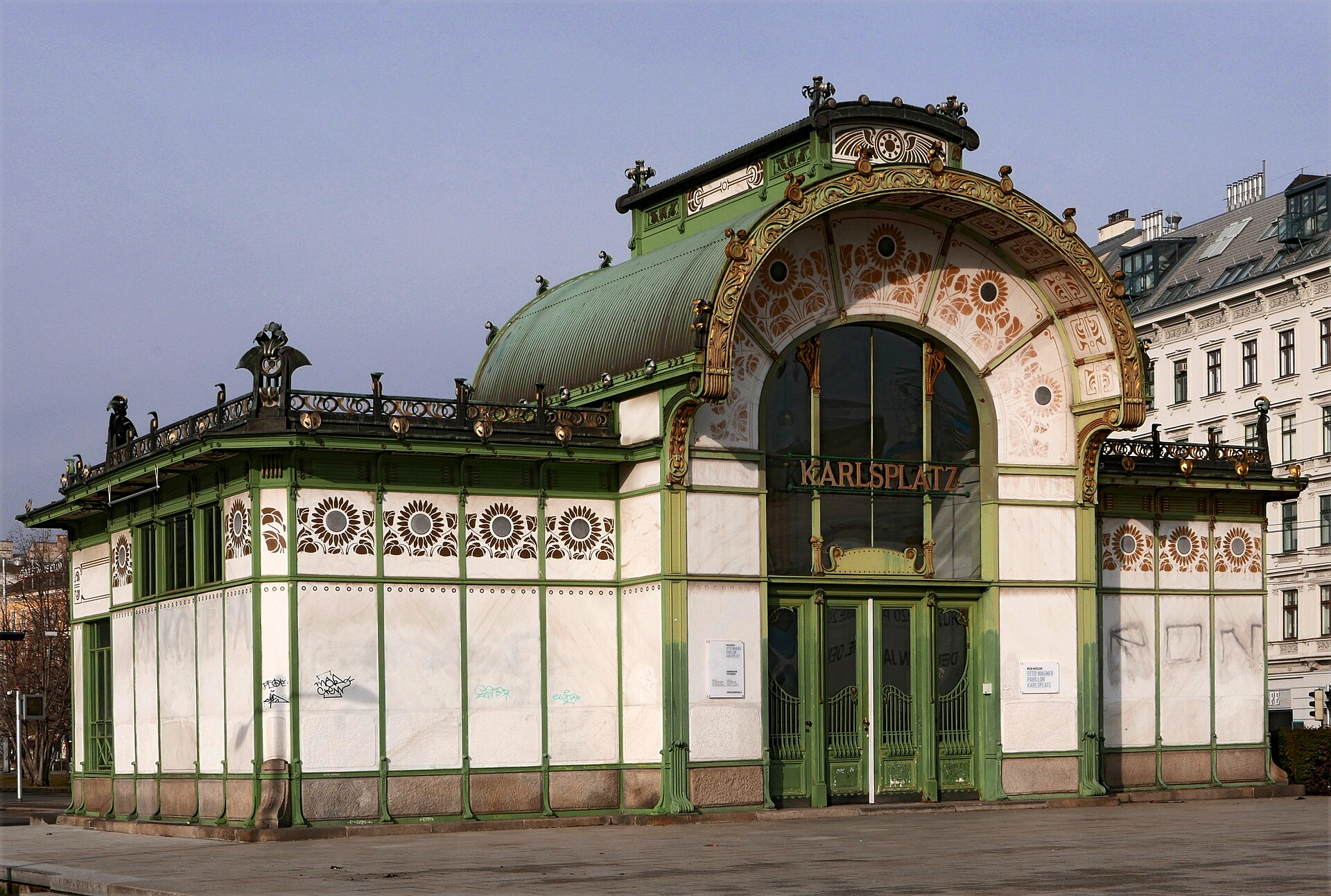
Opening hours vary by site, and some of the smaller ones open only on certain days or seasonally, so check the Wien Museum website before crossing town for one. The Otto Wagner pavilion on Karlsplatz is the obvious add-on to a visit to the main museum; the Beethoven Museum pairs naturally with a Heuriger evening in Heiligenstadt; and the Pratermuseum is a good wet-weather stop before or after the Riesenrad. For more on the composer sites, see our guide to Vienna’s composers.
The Technisches Museum Wien
A museum built for an empire’s engineers
The Technisches Museum Wien had its foundation stone laid in 1909 and opened in 1918, in the last months of the Habsburg monarchy, as a showcase for the empire’s industry and invention. Its grand building on Mariahilfer Straße, a short walk from Schönbrunn, was designed to impress, and it still does: the central halls are tall, light and big enough to hold full-size locomotives. Today it is one of Austria’s federal museums and the country’s largest technology museum, combining original objects with interactive exhibits.
What is inside
The permanent exhibitions are organised by theme rather than by date, and the ones most visitors remember are these:
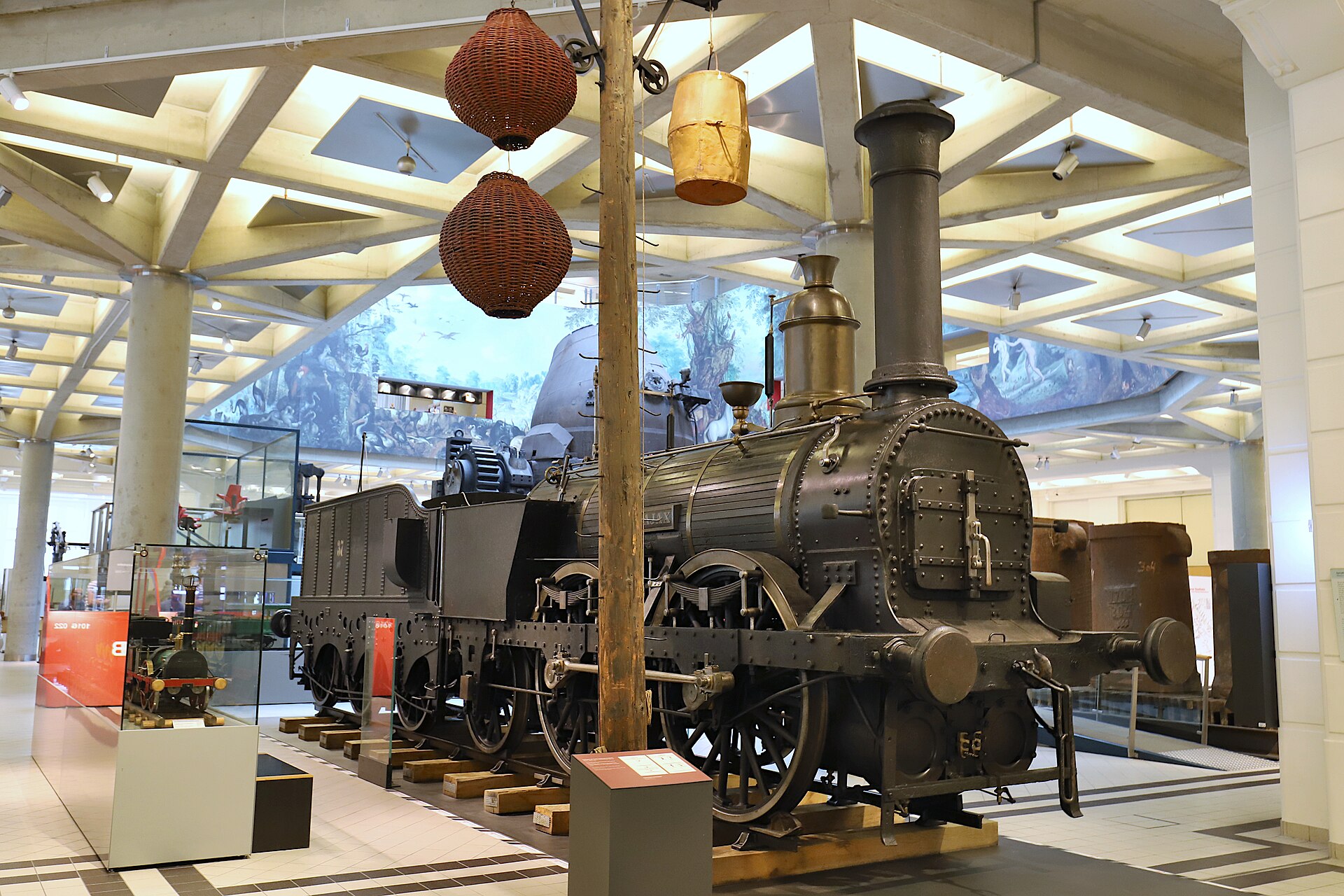
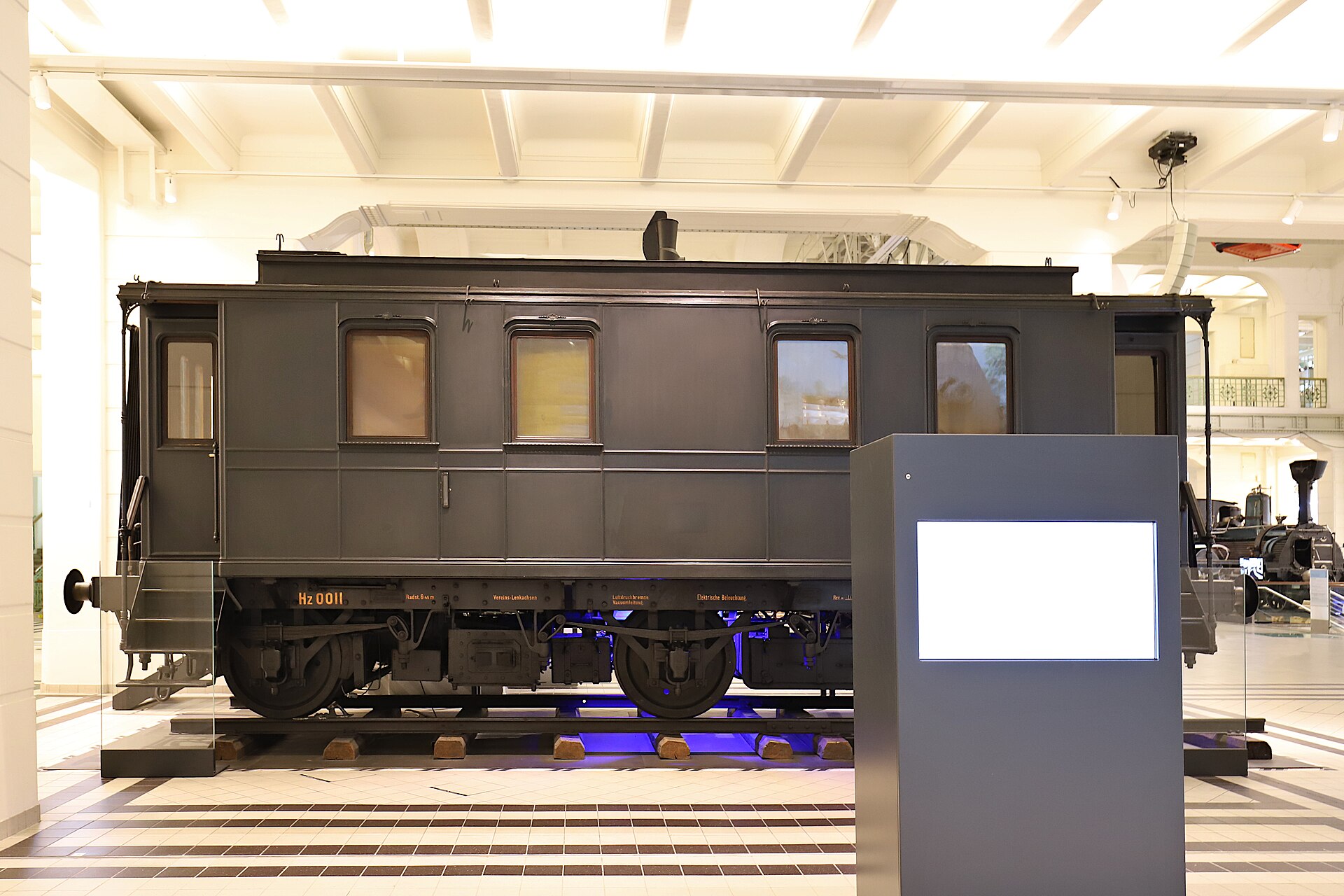
- Mobility. The heart of the museum for most people: horse-drawn vehicles, bicycles, early cars, aircraft and, above all, railways. The star is Ajax, a steam locomotive built in 1841 for the Kaiser Ferdinands-Nordbahn, and nearby stand carriages from the Habsburg court train, including a saloon car whose understated exterior gives little away about who rode in it. Look out too for the car built by Siegfried Marcus, a pioneer of the petrol engine, and for the Etrich Taube, the bird-winged monoplane of Austrian aviation’s earliest days.
- Material Worlds. How the stuff of everyday life — metals, plastics, textiles, glass — is made, used and thrown away, with plenty of things to touch.
- Climate. Knowledge. Action! A newer exhibition on climate science and what can be done about it, aimed squarely at teenagers and adults rather than small children.
- techLAB. A maker space where visitors can try out tools and technologies themselves; check the daily programme for supervised sessions.
- The high-voltage demonstration. A half-hour show in which the museum fires up enormous voltages and lets artificial lightning crack through the hall — loud, theatrical and the thing every child talks about afterwards. It carries a small extra charge (€5.50) on top of admission; confirm the day’s programme on arrival.
Special exhibitions in autumn 2026 include More than Recycling, which runs until 7 February 2027, and Science Changes, alongside a rolling “Innovation Corner” on new technology.
For children
This is one of the best museums in Vienna for families, and not just because under-19s get in free. Two dedicated areas are built for the youngest visitors: minTi, for children aged roughly one and a half to five, is about exploring and moving; miniXplore, for ages three to eight, lets them discover, try things out and experiment. Older children get the techLAB, the high-voltage show and halls full of things that move. Plan on a longer visit than you expect. Our guide to Vienna with kids has more family ideas.
Tickets and discounts
| Ticket | Price |
|---|---|
| Adult | €18.00 |
| Children and young people under 19 | Free |
| Pupils, students and apprentices aged 19–25; people in military or civilian service | €15.50 |
| People with disabilities (plus an accompanying person if specified in their ID) | €15.50 |
| Annual pass | From €40 (€35 reduced) |
| Bundesmuseen Card (eight federal museums for a year) | €99 |
Discounts are generous if you hold the right card. The Vienna City Card and the KlimaTicket Austria each take 20% off, and entry is free with the Vienna Pass. Concession tickets need photo ID. Whether either city card is worth buying for a trip like this is a separate question, answered in our comparison of the Vienna City Card and the Vienna Pass.
Opening hours and getting there
The museum is at Mariahilfer Straße 212, 1140 Vienna. It opens 09:00–18:00 on weekdays; weekend and public-holiday hours can differ, so check technischesmuseum.at before a Saturday, Sunday or holiday visit. Trams 52 and 60 run from Westbahnhof (U3, U6) along Mariahilfer Straße and stop by the museum. From the U4 at Schönbrunn it is a walk of around ten to fifteen minutes, which makes the museum an easy pairing with the palace. There is a café inside.
Our verdict: at €18 an adult it is not cheap, and if you are child-free, short of time and indifferent to machines, it is a skip. But for families — the under-19s go free — for anyone who has ever stopped to look at a steam engine, and for any rainy day within reach of Schönbrunn, it is one of the most rewarding museums in Vienna and far less crowded than its neighbours.
Wien Museum or Technisches Museum: Which One?
| If you are… | Go to | Why |
|---|---|---|
| On a tight budget | Wien Museum | The permanent exhibition is free |
| Travelling with children under 10 | Technisches Museum | Dedicated play-and-explore areas, and children go free |
| Interested in art and architecture | Wien Museum | Klimt, Schiele, Loos and the story of the Ringstrasse |
| A rail, car or aviation fan | Technisches Museum | Ajax, the court train, Marcus’s car, early aircraft |
| In Vienna for one or two days | Wien Museum | Central, quick to combine with Karlsplatz and the Naschmarkt |
| Visiting Schönbrunn anyway | Technisches Museum | A short walk from the palace |
| An evening visit | Wien Museum | Open until 21:00 |
If you have time for both, do them on different days. They are on opposite sides of the city centre, and either one is enough museum for a single afternoon.
Combining Them with the Neighbours
Around the Wien Museum: Karlsplatz and the Naschmarkt
The Wien Museum sits in the middle of one of the richest few hundred metres in Vienna. The Karlskirche is next door; Otto Wagner’s pavilions are across the square; the Musikverein is on the far side; the Secession, with Klimt’s Beethoven Frieze, is a five-minute walk west; and the Naschmarkt begins just beyond it. A morning at the Wien Museum, lunch at the market and an afternoon at the Secession makes a satisfying day that barely needs public transport. Our guide to the Secession and Viennese Art Nouveau covers the second half.
Around the Technisches Museum: Schönbrunn and Mariahilfer Straße
The Technisches Museum is the natural partner for Schönbrunn Palace. Do the palace in the morning, when timed tickets are easier to get, eat in Hietzing, and spend the afternoon in the museum when the palace crowds are at their worst. Alternatively, ride tram 52 or 60 back towards Westbahnhof and walk the length of Mariahilfer Straße, Vienna’s main shopping street, into the city. The Neubau and Mariahilf guide has the best of the streets on either side.
A Sample Day: Two Underrated Museums
For a Thursday, when the Wien Museum stays open late, this works well:
- 09:00 — Technisches Museum as it opens. Mobility halls first, before the school groups arrive.
- 11:15 — The high-voltage demonstration, if it is running that day.
- 12:30 — Lunch on or near Mariahilfer Straße.
- 14:00 — Tram and U-Bahn to Karlsplatz; a look inside the Karlskirche or the Otto Wagner pavilion.
- 15:30 — Wien Museum: the permanent exhibition from the Romans to the present, then the terrace at dusk.
- 19:00 — Dinner around the Naschmarkt, or a concert at the Musikverein.
It is a full day, and it costs two adults €36 in museum tickets, or nothing at all for the children.
Saving Money on Both
- Go to the Wien Museum on the first Sunday of the month, when the special exhibitions and every other Wien Museum site are free as well.
- Bring the kids. Under-19s go free at both museums, which makes these two of the best-value family days in the city.
- Use the card you already have. Vienna City Card and KlimaTicket holders get 20% off the Technisches Museum; Vienna Pass holders get in free.
- Do not buy the Bundesmuseen Card for a short trip. At €99 it only pays back if you work through a good number of the federal museums, so add up the admissions you actually plan before buying.
More ways to cut costs are in our guide to free museums in Vienna and our Vienna money-saving tips.
Common Mistakes
- Turning up at the Wien Museum on a Monday. It is closed.
- Paying for a special exhibition you did not want. The permanent collection is free and is the reason to go; the temporary shows are optional.
- Underestimating the Technisches Museum. It is big. Families regularly plan an hour and leave four hours later.
- Doing both on the same afternoon. They are on opposite sides of the centre and each deserves fresh legs.
- Saving the Wien Museum for the last day. It is the context for everything else you will see; go early.
Frequently Asked Questions
Is the Wien Museum free?
The permanent exhibition, Wien. Meine Geschichte, is free for everyone. Special exhibitions cost €13 (€11 reduced) or €9 (€7 reduced), depending on the exhibition, except for under-19s and on the first Sunday of the month, when they are free too.
What is the Wien Museum?
It is the city of Vienna’s own history museum, on Karlsplatz next to the Karlskirche. Its permanent exhibition tells the story of Vienna from Roman times to the present, with works by Klimt and Schiele and reconstructed rooms such as Adolf Loos’s living room.
When is the Wien Museum open?
Tuesday, Wednesday and Friday 09:00–18:00, Thursday 09:00–21:00, and Saturday and Sunday 10:00–18:00. It is closed on Mondays and on 1 January, 1 May and 25 December.
How much does the Technisches Museum Wien cost?
€18 for adults and €15.50 for students aged 19–25. Under-19s are free, Vienna City Card holders get 20% off, and the Vienna Pass covers entry.
Is the Technisches Museum good for kids?
Very. There are dedicated areas for under-fives (minTi) and three-to-eight-year-olds (miniXplore), plus the high-voltage show and halls full of trains and cars. Children under 19 go free.
How do I get to the Technisches Museum?
Take tram 52 or 60 from Westbahnhof along Mariahilfer Straße, or walk ten to fifteen minutes from the U4 station at Schönbrunn. The address is Mariahilfer Straße 212, 1140 Vienna.
Are these museums good on a rainy day?
Both are among the best rainy-day options in Vienna, and the Wien Museum’s free entry means you can drop in for an hour without feeling you have to get your money’s worth. See our rainy-day guide for more.
Related Vienna Guides
- The Best Museums in Vienna
- Free Museums in Vienna
- Karlskirche: Visitor Guide
- Gustav Klimt in Vienna
- Schönbrunn Palace: The Complete Guide
- Vienna with Kids
- Vienna on a Rainy Day
- A Short History of Vienna
Photo Credits
Wien Museum, Karlsplatz, after the 2023 extension: Außenansicht des Wien Museums, Karlsplatz, Wien by Lumpej, CC0, via Wikimedia Commons.
Otto Wagner Pavillon Karlsplatz: Karlsplatz Otto Wagner Pavillon 03 by Geolina163, CC BY-SA 4.0, via Wikimedia Commons.
Klimt’s portrait of Emilie Flöge: Gustav Klimt – Bildnis Emilie Flöge by Gustav Klimt, Public domain, via Wikimedia Commons.
The locomotive Ajax at the Technisches Museum: KFNB AJAX TMW 2018-07-21 by Herbert Ortner, CC BY 4.0, via Wikimedia Commons.
Court-train saloon carriage Hz 0011: Hofsalonwagen Hz 0011 TMW 2018-07-21 by Herbert Ortner, CC BY 4.0, via Wikimedia Commons.