Free Museums & Attractions in Vienna (2026 Complete List)
Complete list of free museums and attractions in Vienna for 2026. Permanent free venues, first-Sunday free days, and outdoor sights that cost nothing.
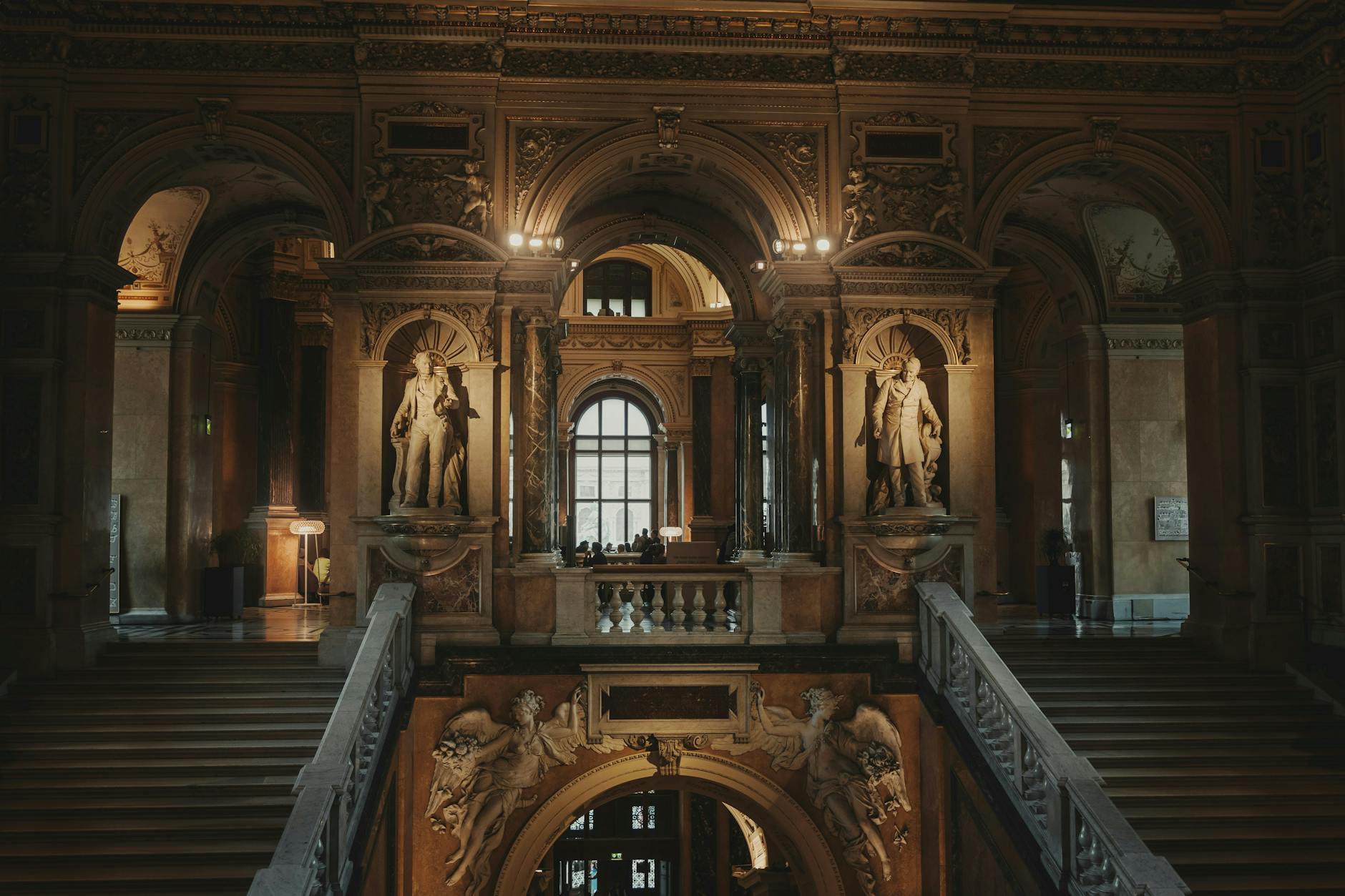
Photo by Michael Pointner
- Vienna’s permanently free museums
- Museums with free admission on specific days
- Museums with regular free-entry hours
- Free admission for under-19s
- Free attractions and outdoor sights
- Holidays and special free-entry days
- Free-entry strategies for budget travelers
- How free admission works in practice
- Free Vienna for families
- Free entertainment in summer Vienna
- Free Christmas market season
- Combining free and paid museums smartly
- Free museums for art lovers specifically
- Vienna’s lesser-known free museums
- Free events calendar by month
- Free workshops and educational events
- Free museums Vienna FAQ
- Related Vienna Guides
This article contains advertising. Our booking links are routed through a partner that adds commission tracking automatically, so if you book through one we earn a commission from the provider, at no extra cost to you. It never affects what we recommend. Affiliate disclosure
Vienna’s museums range from world-class galleries to quirky niche collections. The best news for budget-conscious visitors: a good number of them are either permanently free or offer free admission on specific days of the month. This complete guide lists every free museum and attraction in Vienna, including always-free venues, free-day calendars, and free outdoor sights, with current 2026 details and exactly when to visit each one.
Vienna’s permanently free museums
The Wien Museum’s permanent exhibition on Karlsplatz is free without a ticket during opening hours. Admission at the other venues below varies, some free and some paid, so check each one before you go. Temporary exhibitions may charge separately.
Wien Museum Karlsplatz
The flagship history museum of Vienna reopened in late 2023 after a major renovation and offers free entry to its permanent exhibition tracing Vienna’s history from Roman settlement through modern times. The free permanent collection includes scale models of the medieval city, Habsburg-era artifacts, and Klimt and Schiele works. Temporary exhibitions on the upper floors charge separately, 13 or 9 euros depending on the show (11 or 7 euros reduced), and they are free for under-19s and on the first Sunday of the month.

Location: Karlsplatz 8, 1040 Vienna. U1, U2, U4 to Karlsplatz. Open Tuesday, Wednesday and Friday 9 a.m. to 6 p.m., Thursday 9 a.m. to 9 p.m., and Saturday-Sunday 10 a.m. to 6 p.m.; closed Monday. Plan 90 minutes minimum.
Musa (Museum auf Abruf)
The contemporary art museum of the City of Vienna, also called Wien Museum Musa, is permanently free. Its changing exhibitions focus on contemporary Viennese art. Smaller and less crowded than major institutions, it’s a great quick stop.
Location: Felderstrasse 6-8, behind the Rathaus, 1010 Vienna. U2 to Rathaus. Open Tuesday-Sunday 10 a.m. to 6 p.m., closed 1 May, 24 December and 31 December. Allow 45-60 minutes.
National Library State Hall (sometimes free)
The State Hall of the Austrian National Library is not free in general (adult admission is 12 euros). Some museums open free on Austrian National Holiday (October 26), so check the library’s website to see whether it takes part that year.
District museums (Bezirksmuseen)
Each of Vienna’s 23 districts maintains a small district museum showcasing local history, often free or nominal entry (0-2 euros). These are quirky, small-scale exhibitions in repurposed buildings. Of particular interest: the Leopoldstadt Bezirksmuseum, Mariahilf Bezirksmuseum, and Wieden Bezirksmuseum. Most open only on certain afternoons; check schedules in advance.
Vienna Pathological-Anatomical Museum (Narrenturm)
The historic “Fools Tower” houses an extraordinary medical-pathology collection. It is not free: regular admission is 8 euros, and guided tours cost 5 euros extra, though the display collection can be seen on your own. Bring a guide if you read German.
Museums with free admission on specific days
Every Wien Museum site is free on the first Sunday of the month, permanent and special exhibitions alike, and the smaller Wien Museum locations below charge admission the rest of the time. For the other venues, check each museum’s own terms:
Roman Museum (Römermuseum): First Sunday free. Showcases Roman-era Vindobona under Hoher Markt. Normally 9 euros.
Clock Museum (Uhrenmuseum): First Sunday free. Three floors of mechanical clocks. Normally 9 euros.
Haydn House (Haydnhaus): First Sunday free. Joseph Haydn’s last residence. Normally 6 euros.
Schubert Birthplace and Death Apartment: First Sunday free. Two locations connected to Franz Schubert. The birthplace has been closed for renovation since 2 March 2026, so check the current status of both sites before you plan a visit.
Pratermuseum: First Sunday free. History of the Prater amusement park. Normally 9 euros.
Mozarthaus Vienna: Normally 16 euros for adults; check the museum’s website for any current offers before you go.
Beethoven Museum: First Sunday free. The Heiligenstadt apartment where Beethoven wrote the famous “Heiligenstadt Testament.” Normally 9 euros.
Museum of Military History (HGM): First Sunday free. Massive military history collection including the car in which Archduke Franz Ferdinand was assassinated. Normally 7 euros.
Vienna Funeral Museum (Bestattungsmuseum): First Sunday free. Quirky and uniquely Viennese. Normally 9 euros.
Bezirksmuseen (district museums): Admission is normally free, during each museum’s own opening hours.
Museums with regular free-entry hours
Secession (Beethoven Frieze): First Wednesday of every month free entry. Famous for the Klimt-painted Beethoven Frieze. Normally 13 euros.
Leopold Museum: First Thursday of every month free 6 p.m. to 9 p.m. evening entry. Houses the world’s largest Schiele collection. Normally 19 euros.
MAK (Museum of Applied Arts): Tuesday evenings 6 p.m. to 9 p.m. discounted entry at 8.50 euros online or 9.50 euros on site, instead of 18 euros online or 19 euros on site. Not technically free but exceptionally good value.
Kunsthalle Wien: “Pay what you can” Thursday evenings 5 p.m. to 8 p.m. Visitors pay any amount from 1 euro upward. Normally 14 euros.
House of the Sea (Haus des Meeres): Free for children up to age 2; ages 3-5 pay 6.50 euros and ages 6-15 pay 9.80 euros.
Free admission for under-19s
Many federal museums in Vienna are free for visitors under 19, including:
Kunsthistorisches Museum (free under 19, normally 22 euros online or 24 euros on site)
Naturhistorisches Museum (free under 19, normally 18 euros)
Albertina (free under 19, normally 20.90 euros)
Belvedere Palace (free under 19, Upper Belvedere normally 23 euros)
MAK (free under 19)
Imperial Treasury at the Hofburg (free under 19)
This is excellent for families and student travelers. ISIC student cards may extend partial discounts up to age 26 at some institutions.
Free attractions and outdoor sights
Beyond museums, many of Vienna’s best experiences cost nothing:
Imperial parks and gardens
Schoenbrunn Palace Gardens: Free year-round (the palace interior is paid). Includes the Gloriette viewpoint hike, Neptune Fountain, Roman Ruins, and Maze (the maze is paid but the gardens themselves are free).

Belvedere Gardens: Free year-round. The baroque garden between the Upper and Lower Belvedere palaces is one of Vienna’s most beautiful free outdoor spaces.
Volksgarten: Free year-round. Rose garden behind the Hofburg, beautiful June through October.
Burggarten: Free year-round. Contains the famous Mozart statue and the Palmenhaus (the historic glasshouse is now a restaurant).
Stadtpark: Free year-round. Contains the iconic gold Johann Strauss statue and beautiful planted areas. See our complete things to do in Vienna guide for more park ideas.
Augarten: Free year-round. Contains a baroque palace (now the Porcelain Manufactory and Vienna Boys’ Choir base) and two WWII flak towers.
Free public art
The KOeR (Public Art Vienna) program funds free public art installations throughout the city. Notable highlights include the Wittgenstein Monument in the MuseumsQuartier, the Memorial Against War and Fascism at Albertinaplatz, and rotating installations along the Donaukanal.
Free walking experiences
Walking the Ringstrasse past the State Opera, Kunsthistorisches Museum, Parliament, Rathaus, Burgtheater, and University is free and one of the most rewarding architectural walks in Europe. Combine with our things to do in Vienna guide.
The Naschmarkt food market is free to wander; tasting (and not buying) is welcome at most stalls.
The Donauinsel offers 21 km of free walking, cycling, swimming, and people-watching along the Danube.
Free churches
Many of Vienna’s churches let you step inside without a ticket (donations welcome). Highlights include:
Stephansdom (St. Stephen’s Cathedral): Main nave free; catacombs, tower, and treasury paid.
Karlskirche: Main nave free; access to the dome lift and museum is paid.
Peterskirche (St. Peter’s Church): Free to enter, with organ or choir music every day, including a 3 p.m. slot (donations requested); the church’s dated programme says what is on.
Augustinerkirche: Free; the church where Habsburg royal weddings took place.
Votivkirche: Free.
Free concerts and performances
Peterskirche organ and choir music: A daily performance at 3 p.m., among others, with donations requested rather than tickets.
Karlsplatz Stadtgalerie open-air concerts: Free during summer festivals.
Donauinselfest: Europe’s largest free open-air festival, three days of free concerts on Danube Island; the 2026 edition ran from 3 to 5 July.
Rathausplatz Film Festival: Free outdoor opera and concert films projected on a large screen, July-August.
Volkstheater free Wednesday matinees: Occasional free performances; check schedule.
Mozart at the State Opera (live broadcast): The State Opera broadcasts performances free on outdoor screens on the Opera house facade, April-October.
Holidays and special free-entry days
Several Austrian holidays trigger free or reduced museum entry:
Austrian National Holiday (October 26): Some museums open free of charge, among them the Haus der Geschichte Österreich; check each museum’s own listing for the day.
International Museum Day (third Saturday in May): Many free entries citywide.
Long Night of Museums (early October): A single ticket (19 euros in 2026) admits you to participating museums across Austria, Vienna’s among them. The 2026 edition, on Saturday 3 October, ran from 6 p.m. to midnight at around 670 museums and cultural institutions.
Free-entry strategies for budget travelers
To maximize free museum experiences in Vienna:
Plan your trip around the first Sunday of the month. Many museums offer free entry that day, including the Beethoven Museum, Haydn House, Pratermuseum, and Roman Museum.
Visit on the first Wednesday of the month for the Secession. The Beethoven Frieze alone justifies the trip.
Visit the Wien Museum and Musa first. Free entry means you can pop in whenever they are open; both close on Mondays, and the musa also shuts on 1 May, 24 December and 31 December.
Visit federal museums with kids under 19. Two children get free entry to many otherwise expensive museums; the family savings are substantial.
Time the Leopold Museum for first-Thursday evenings. Free 6-9 p.m. is one of the best free-entry deals in Vienna.
Build outdoor and church visits into rainy days. Free churches and the Wien Museum complement paid attractions on weather-uncertain days.
How free admission works in practice
Most free museums require no ticket, just walk in. Some larger institutions issue a paper “free” ticket at the desk for headcount purposes. Bring ID (especially for under-19 free entry) and be ready to show it at federal museums.
On first-Sunday free days, popular museums see significantly higher crowds, especially in winter or on rainy weekends. Arrive at opening time for the smoothest experience, particularly at Haydn House and the Roman Museum.
Free Vienna for families
Vienna families can fill a full day with free attractions: morning at Schoenbrunn Gardens (free), lunch at Naschmarkt (cheap, not free), afternoon at the Wien Museum (free) and a free church, evening strolling the Volksgarten and Heldenplatz. Pair with our things to do in Vienna for things-to-do guide.
Free entertainment in summer Vienna
Summer transforms Vienna into a city of free outdoor entertainment. Beyond the museum schedule, look out for:
Donaukanal pop-up beach bars: The bars along the canal are free to walk into; you pay only for what you drink. Strandbar Herrmann, Adria Wien, and Hermann Beach are the main spots.
Vienna Festwochen (May-June): Some events free, others ticketed. Avant-garde theater, music, and dance.
Vienna Pride (June): Free parade and Rainbow Parade festivities at Heldenplatz.
Wiener Kaiser Wiesn (September-October): Vienna’s version of Oktoberfest at Prater. Entry to the festival grounds and the Wiesn village is free, food and drink are purchased separately, and some tent programmes need a paid ticket.
Buskers and street musicians: Year-round at Graben, Stephansplatz, and Kärntner Strasse. Free entertainment, tips appreciated.
Free Christmas market season
From early November into the new year, Vienna’s Christmas markets fill its squares, and Schoenbrunn’s, open from 6 November 2026 to 6 January 2027, has free admission. The major markets are at Rathaus (City Hall), Schoenbrunn Palace, Belvedere Palace, Stephansplatz, Spittelberg, and Karlsplatz. Free entertainment includes children’s choirs, brass band concerts, and historical reenactments.
Food and drink at the markets cost separately (Glühwein 4-5 euros, sausages 5-7 euros, traditional treats 3-6 euros). The atmosphere itself is the main attraction.
Combining free and paid museums smartly
The strategic approach to Vienna’s museum scene is to mix free venues with selected paid highlights. Sample 3-day itinerary:
Day 1: Wien Museum (free) + Schoenbrunn Gardens (free) + a paid Upper Belvedere visit (23 euros).
Day 2: Free first-Sunday museum tour (3-4 museums) + the 3 p.m. organ or choir performance at Peterskirche (donation requested).
Day 3: Paid Kunsthistorisches Museum (22 euros online, 24 on site) + free Volksgarten and Burggarten stroll + free Musa contemporary art.
Total museum spend across 3 days: ~41 euros for two world-class paid experiences plus an entire trip’s worth of free museum content.
Free museums for art lovers specifically
If your priority is fine art rather than history, the free options are slightly thinner, but still substantial:
Musa Wien Museum: Permanent free entry to contemporary Viennese art.
Kunsthalle Wien: “Pay what you can” Thursday evenings.
Secession (first Wednesday free): See the Beethoven Frieze by Klimt without paying.
MAK (Tuesday evening reduced): 8.50 euros online (9.50 on site) for design and decorative arts from 6 p.m. to 9 p.m.
Leopold Museum (first Thursday evening free): Major Schiele and Klimt collection. 6-9 p.m.
For more comprehensive Vienna art coverage, see our complete {LINKS[‘pillar5’]} and {LINKS[‘pillar6’]} pillars.
Vienna’s lesser-known free museums
Beyond the well-publicized free museums, Vienna has smaller free institutions that reward curious visitors:
Geymüllerschlössel: The MAK’s Biedermeier branch in the 18th district. Not free on first Sundays: admission is 8.50 euros online or 9.50 euros on site, under-19s go free, and in 2026 it opens Saturday and Sunday, 10 a.m. to 6 p.m., from 9 May to 1 November. Beautiful early 19th-century interiors.
Friedhof der Namenlosen (Cemetery of the Nameless): Free outdoor cemetery and memorial for unidentified Danube drowning victims. Free to visit in daylight (entry is forbidden after dark, and the chapel opens by appointment only), and hauntingly beautiful in autumn.
Sigmund Freud Park Statue Garden: Free outdoor exhibition of small Freud-related sculptures near the Votivkirche.
Hofgartens Mozart Statue: The famous bronze Mozart in Burggarten. Free year-round.
Memorial Against War and Fascism (Albertinaplatz): Powerful outdoor memorial by Alfred Hrdlicka.
Stalingrad Memorial (Schwarzenbergplatz): Soviet WWII memorial, free outdoor experience.
Hundertwasserhaus: The exterior of Hundertwasser’s famous apartment building is free to visit and photograph. The Hundertwasser Museum (KunstHausWien) is paid but worth the 16 euros for art lovers.
Otto Wagner Pavilion (Karlsplatz): Small free museum dedicated to Otto Wagner’s art nouveau station design. Open seasonally.
Free events calendar by month
January: Vienna Open free concerts; Vienna film festival continuations.
February: Vienna Ball season has some free public viewings.
March: Vienna Spring Marathon (free spectator event); some free museum events for International Women’s Day.
April: Vienna City Marathon (watch from the roadside); Easter markets (generally no entry fee).
May: Vienna Festwochen begins (mixed free/paid); International Museum Day.
June: Vienna Pride (29 May to 14 June in 2026); outdoor classical concerts in parks. Donauinselfest, three days of free concerts, moved into early July in 2026 (3-5 July).
July-August: Vienna Film Festival at Rathausplatz (free outdoor films); Naschmarkt flea market expanded.
September: Vienna Design Week (free exhibitions); Wienwoche cultural festival.
October: Austrian National Holiday (October 26, some museums free); Long Night of Museums.
November: Christmas markets open, Schoenbrunn’s free to enter from 6 November.
December: Christmas markets in full swing; the Silvesterpfad through the old town on New Year’s Eve (free).
Free workshops and educational events
Several Vienna institutions offer free educational programming:
Vienna Public Libraries: Free WiFi, reading rooms, and occasional lectures. Some branches in tourist-accessible districts.
Universities open lectures: The University of Vienna and Technical University offer some public lectures free during the academic year.
Architectural tours of Vienna’s Modernist housing: Free guided walks through the Karl-Marx-Hof and other 1920s-era social housing landmarks during selected weekends.
Free guided tours at the Austrian National Bank museum (Geldmuseum): Reservation required.
Free museums Vienna FAQ
Which Vienna museums are always free? Wien Museum Karlsplatz (permanent collection), Wien Museum Musa, and many district museums.
What’s the best day to visit Vienna museums for free? The first Sunday of the month for the largest variety, or the first Thursday evening for the Leopold Museum.
Is the Belvedere ever free? Free entry for under-19s. Otherwise paid for adults.
Are Schoenbrunn Palace tours free? No: the palace interior needs a paid ticket, though children under six go in free. The gardens, Gloriette hike, and outdoor areas are free.
Are church entries free? Yes, most Vienna churches are free for sightseeing, with paid tickets for catacombs, towers, or treasury sections.
Do I need to book free museum visits in advance? Usually not. Walk-in is fine. Some museums offer optional online registration to skip queues.
Are there free guided tours? Vienna Greeters offers free city walking tours led by locals. Original Vienna Tours runs free walking tours on tip basis. Some museums offer free guided tours on specific days (German only at smaller institutions).
Vienna proves that great culture doesn’t require deep pockets. Between the permanent-free museums, monthly free days, outdoor sights, and church experiences, a determined budget traveler can experience the city’s full cultural depth on a tiny fraction of the typical museum-pass budget. Combine this guide with our complete Vienna on a budget pillar for more ways to save without missing out.
Children under seven get into the Leopold Museum free, and at €2.50 for young visitors it is as close as serious art in Vienna gets; a family ticket for two adults and up to three under-19s costs €40. Our Leopold Museum guide has the full 2026 price list and the combined tickets worth doing the arithmetic on.
The best free deal in Vienna is not a free museum at all — it is the Naturhistorisches Museum, where every visitor under 19 walks in without paying anything. Our Natural History Museum guide has the full 2026 prices, opening hours and what is in each of the thirty-nine halls.
If you only see one free museum in Vienna, make it the Wien Museum on Karlsplatz. Since its reopening in December 2023, its permanent exhibition — two thousand years of Vienna, with Klimt’s portrait of Emilie Flöge and Adolf Loos’s living room along the way — has cost nothing to enter. Our guide to the Wien Museum and the Technisches Museum covers the highlights, the late opening on Thursdays and the first-Sunday free days at its smaller sites.