Vienna in January: Weather, Sales, Balls & What’s Open
The coldest, quietest, cheapest month once the first week is over: the two public holidays that shut the shops, when the Christmas markets actually end, ball season, the ice rinks and the empty museums.
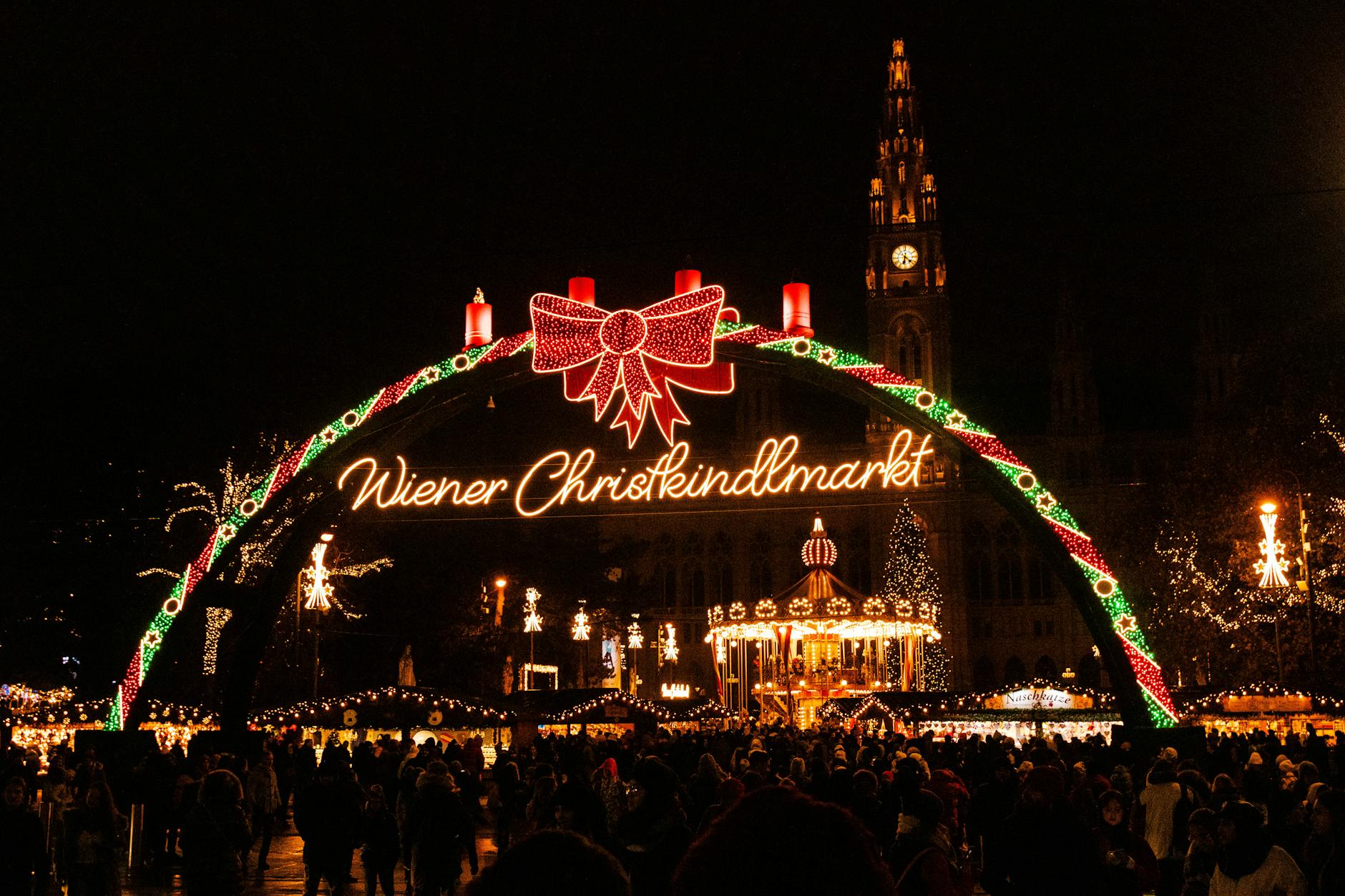
Photo by Simófi István
- Vienna in January at a Glance
- The Weather: The Coldest Month
- The Two Public Holidays That Catch People Out
- After Epiphany: The Quietest, Cheapest Vienna
- Ball Season
- The New Year’s Concert, and What to Do Instead
- Ice Skating and Winter Outdoors
- Fasching: The Other Thing Happening in January
- Where to Stay in January
- The Best Things to Do in January
- What to Pack
- What January Is Not Good For
- Frequently Asked Questions
- Related Vienna Guides
- Photo Credits
This article contains advertising. Our booking links are routed through a partner that adds commission tracking automatically, so if you book through one we earn a commission from the provider, at no extra cost to you. It never affects what we recommend. Affiliate disclosure
On 6 January the last of Vienna’s Christmas markets close, and the city that has been a lit-up Advent postcard for eight weeks reverts to being a cold, grey, working capital with about two million people in it and almost no tourists. Vienna in January is the version of the city that Viennese people actually live in — and for a certain kind of traveller it is the best month of the year to be here.
This guide covers the coldest weather of the Viennese calendar, the two public holidays that catch out almost every visitor, what ball season actually involves, where the ice rinks are and when they open, and why January is the cheapest month to stay somewhere genuinely good. Dates and prices were checked in October 2026; confirm anything time-critical on the venue’s own site before you travel.
Vienna in January at a Glance
| Average high | About 3.5°C at Hohe Warte (1991–2020) — the coldest month of the year |
|---|---|
| Average low | About −1.3°C at Hohe Warte (1991–2020) |
| Daylight | About 8 hours 26 minutes on 1 January, lengthening through the month |
| Snow | The most likely month, alongside February, for snow that actually lies |
| Crowds | Very low after the first week. The quietest month after early November |
| Hotel prices | Low from about the 7th, after a very expensive first week |
| Public holidays | 1 January (Neujahr) and 6 January (Heilige Drei Könige) — shops shut on both |
| Christmas markets | Schönbrunn and the Prater run to 6 January, then nothing |
| Wiener Eistraum | From 22 January 2027, Rathausplatz and the Rathauspark |
| Ball season | Running. Several major balls fall in January |
The Weather: The Coldest Month
January averages a high of about 3.5°C and a low of about −1.3°C at the Hohe Warte weather station (1991–2020), which makes it the coldest month in Vienna. Cold spells can bring daytime temperatures below freezing and colder nights.
Crucially, it is a dry cold. Vienna’s continental winter delivers clear, hard-frozen days, and they are excellent for walking. When a high-pressure system parks over central Europe you get a week of brilliant blue sky, sharp light and frozen breath — and the Ringstrasse under that light is genuinely spectacular.
Daylight lengthens noticeably through the month, from just under eight and a half hours on New Year’s Day. It is still a dark month, but unlike December it is getting better rather than worse, which changes how it feels.
Snow
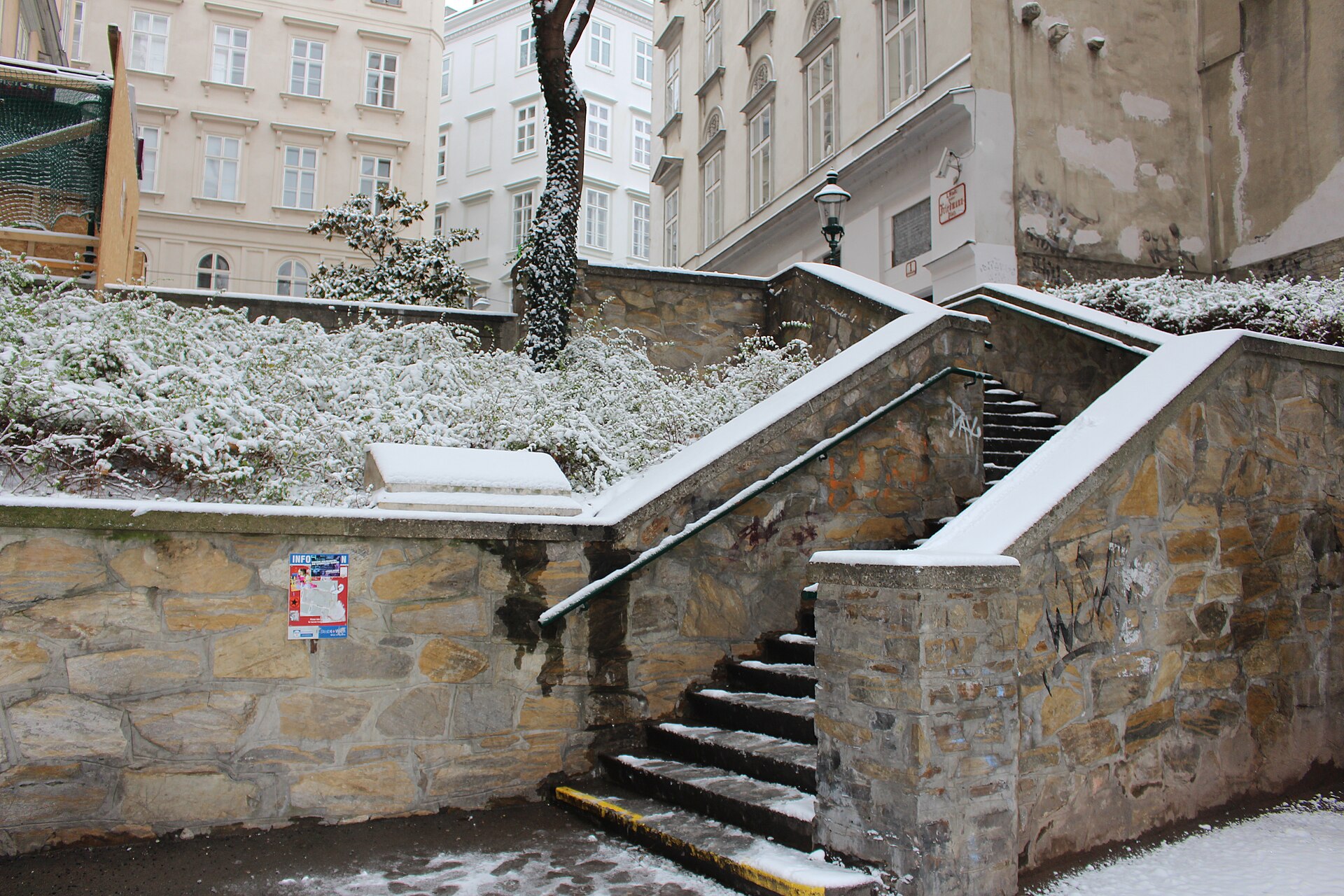
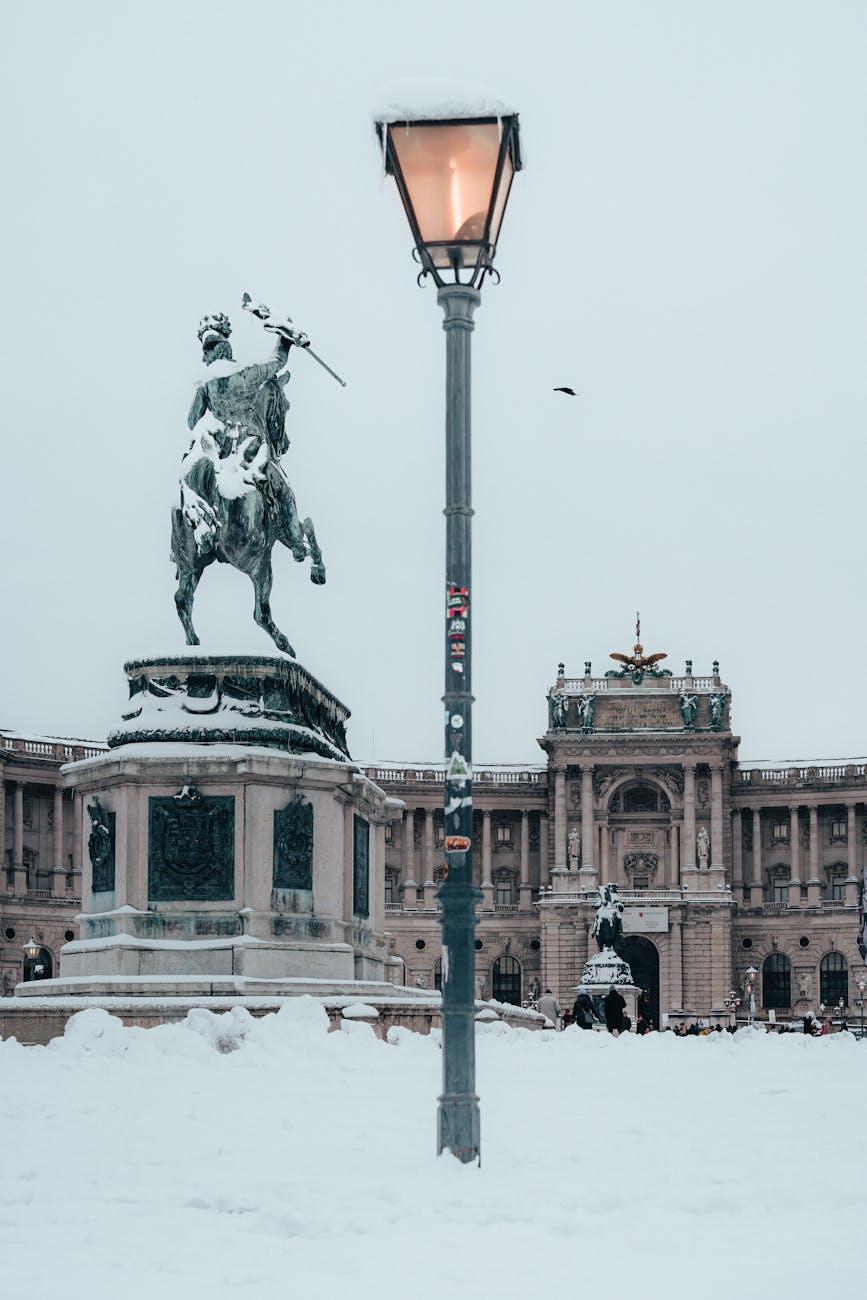
January and February are the two months where snow in Vienna genuinely lies rather than turning immediately to slush. It is still not guaranteed — some Januaries pass with nothing more than a dusting — but if you want a realistic chance of seeing Schönbrunn under white, this is when to come. When it does snow properly, the city is transformed and the Vienna Woods on the western edge become a legitimate day out.
The Two Public Holidays That Catch People Out
Austria closes more thoroughly on public holidays than most of western Europe, and January has two of them in the first week.
Friday 1 January — Neujahr
A full public holiday. Shops and supermarkets are closed. Public transport runs, extended through the night from New Year’s Eve. Museums vary — several open, several do not — and restaurants are a mixed picture, with many taking the day off after a heavy night. If you are arriving on 1 January, buy food at the airport or a station, and do not assume anything will be open.
Wednesday 6 January — Heilige Drei Könige
Epiphany, and the one almost nobody researches. It is a full public holiday in Austria: shops and supermarkets close, exactly as on Christmas Day. Restaurants stay open, and the exemptions are the usual ones — petrol station shops and shops inside railway and metro stations.
It is also the day the Christmas season formally ends. The Schönbrunn market and the Prater winter market both run until the 6th, and then close. If seeing a Christmas market is on your list and your trip starts on the 7th, you have missed it by a day — a genuinely common and entirely avoidable disappointment.
After Epiphany: The Quietest, Cheapest Vienna
From roughly 7 January the city empties. The New Year visitors have gone, the ski traffic passes through Vienna rather than staying in it, and there is no seasonal reason for anyone to be here. What is left is Vienna functioning normally, with no queues.
Practically, that means: no wait at Schönbrunn, no wait at the Belvedere, a walk-in at the Kunsthistorisches on a Saturday afternoon, tables at restaurants that need a fortnight’s notice in December, and hotel rates back down near their annual floor. The difference between a good mid-range room and a genuinely luxurious one narrows to almost nothing — see luxury hotels in Vienna if that is the trade you want to make.
Retail discounting is the other January feature. Austrian seasonal sales are voluntary and unregulated rather than fixed to a legal date, but the pattern is consistent: discounting begins in earnest once Epiphany is out of the way and deepens through the second half of the month. Our Vienna shopping guide covers where to actually go.
Ball Season
Vienna’s ball season opens on New Year’s Eve and runs to Shrove Tuesday, and January is its first full month. This is not a tourist attraction bolted onto the city; there are several hundred balls across the season, most of them organised by professions, guilds, universities and district associations, and the people at them are overwhelmingly Viennese.
January’s calendar typically includes the Kaffeesiederball (the coffee-house owners’ ball, one of the most characterful), the Zuckerbäckerball (confectioners, at the Hofburg), the Philharmonikerball at the Musikverein, and the Rainbow Ball. The Opernball — the one everybody has heard of — is in February, not January, which surprises people who booked January specifically for it.
Two honest points. First, a ball is a real commitment: white tie or tails for men, a full-length gown for women, and an evening that starts around nine and ends at four in the morning with onion soup. Hire is available and widely used. Second, the balls people can actually get into are not the famous ones, and are often better — smaller, cheaper, more relaxed and more genuinely social. Our Vienna ball season guide explains how to choose one, what it costs, what to wear and whether you need to be able to waltz. (You do, a little. Crash courses exist and Viennese dance schools run them all season.)

The New Year’s Concert, and What to Do Instead
The Vienna Philharmonic’s Neujahrskonzert at the Musikverein on 1 January is watched by tens of millions of people worldwide and is, for practical purposes, unobtainable. Tickets are allocated by public ballot more than a year in advance, applications vastly exceed supply, and anything offered to you at short notice by a reseller is either enormously marked up or not what it claims to be.
What you can actually do:
- Go to a different concert. Check the January listings at the Musikverein, the Konzerthaus and the State Opera for dates and tickets. See our Musikverein guide.
- Buy State Opera standing room. €13 for the balcony, €15 gallery, €18 parterre, sold on the day of performance, online from 10:00 Vienna time. In January the queue is as short as it gets. The State Opera guide explains the process.
- Ignore the costumed sellers. The people in wigs and frock coats selling “exclusive Mozart concerts” on Kärntner Straße and outside the opera house are selling tourist-grade performances in minor venues for €70–120. This is a standing warning on this site and it applies year-round. Our classical music guide explains how to tell a real concert from a costumed one.
Ice Skating and Winter Outdoors
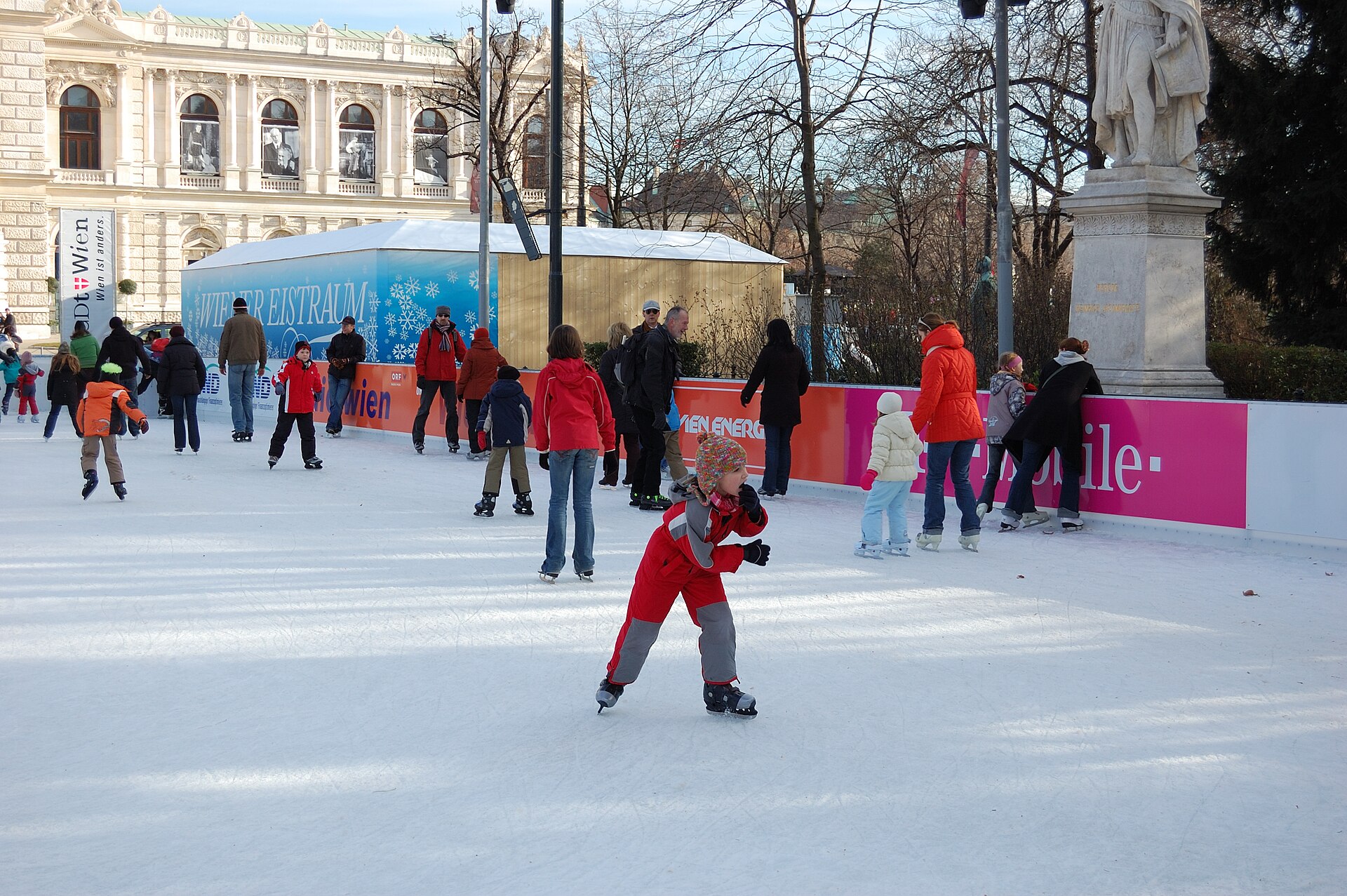
The Wiener Eistraum is the big one: an enormous open-air installation of rinks and skating trails covering Rathausplatz and winding through the Rathauspark, floodlit at night, with skate hire on site. In 2027 it opens on 22 January and runs into March. Until then, the smaller Eistraum am Christkindlmarkt rink stays open at the Christmas market until 6 January, except on 31 December.
If your dates fall before that, the Wiener Eislaufverein near the Konzerthaus is a large, long-established open-air rink that runs right through the winter, and it is arguably the more authentic experience — it is where Viennese people have skated since the nineteenth century.
Beyond skating, a hard-frozen January is genuinely good for the outdoor city: the Prater’s Hauptallee bare and empty, the Vienna Woods and Kahlenberg with a view over a frozen basin, and the parks and gardens without another soul in them. Dress properly and it is one of the best walking months of the year.
Fasching: The Other Thing Happening in January
Ball season is only the formal half of the Austrian carnival period. Fasching runs from 11 November through to Shrove Tuesday, and it peaks in January and February, with Faschingskrapfen — jam-filled doughnuts — the traditional carnival treat in the bakeries.
It is a much lower-key affair in Vienna than in Cologne or Venice; nobody closes the streets for it, and if you were not looking you might miss it entirely. But it explains a great deal of what you will see: why there are people in costume on the U-Bahn at eleven at night in the middle of January, why every Konditorei suddenly has one product in the window, and why the ball calendar is as dense as it is. Our desserts and pastries guide covers the Krapfen, which are genuinely worth seeking out from a proper bakery rather than a supermarket.
Where to Stay in January
Two considerations, and they pull in different directions from December’s.
First, price collapses after the 6th, which means the sensible move is to trade up rather than to economise. A room in the Innere Stadt or a genuinely good hotel on the Ring costs in mid-January roughly what a mid-range place costs in June. If you were ever going to stay somewhere memorable in Vienna, this is the month.
Second, location still matters because of the cold and the dark. You will be walking back at night in sub-zero temperatures, repeatedly, and a fifteen-minute walk from the nearest U-Bahn is a different proposition in January than in May. Stay on a U-Bahn line within a few stops of the centre, or inside the Ring.
Our guide to where to stay in Vienna breaks the districts down, and budget hotels in Vienna covers the lower end if you would rather bank the saving than spend it.
The Best Things to Do in January
- Do the great museums properly, without queues, on the dark afternoons they were built for. Start with the museum guide.
- Spend a whole afternoon in a coffee house. January is when the institution makes most sense — a warm room, a marble table, a newspaper on a stick and no pressure to leave. See the coffee house guide.
- Take State Opera standing room at least once. Thirteen euros.
- Skate — the Eislaufverein all month, the Eistraum from the 22nd.
- Eat the heavy end of the Viennese kitchen. Gulasch, Tafelspitz, Beuschel, Krautfleckerl. This is the weather it was invented for. See traditional Viennese dishes.
- Go to a ball, if your dates allow and you fancy it. Nothing else in Europe is quite like it.
- Ride tram 1 or 2 along the Ring after dark for the price of a ticket. Each covers part of the Ring rather than the full circuit.
- Walk Schönbrunn’s park in the snow if you get lucky with the weather. The park is free and it is extraordinary under white.
What to Pack
- A genuinely warm coat. Not a transitional jacket. This is the coldest month.
- Waterproof boots with grip. Slush, ice and salted pavements.
- Hat, gloves, scarf — non-negotiable in a cold snap, and the wind on the open Ring is real.
- Thermal layers rather than one thick jumper. Interiors are well heated and you will be taking things off constantly.
- Something formal if there is any chance of a ball or a serious opera evening.
- Lip balm and hand cream. Dry cold plus heavy indoor heating is hard on skin.
Our full Vienna packing list covers the rest.
What January Is Not Good For
- Christmas markets. Schönbrunn and the Prater winter market close on 6 January, so a trip that starts on the 7th misses them. If Advent is what you want, see Vienna in December.
- The first week, if budget matters. New Year is the year’s second pricing peak. Arrive on the 7th and pay a fraction of it.
- Day trips. The Wachau and the wine villages are largely shut, the Danube boats have stopped, and the light goes early. Our day trips guide flags what is seasonal.
- Anyone who cannot tolerate cold. Be honest with yourself. It is properly cold and the days are short.
- Gardens and outdoor terraces. Bare, closed, or both.
- The Opernball. February.
If none of that is a problem, January is arguably the best value month in the Viennese year: the full cultural season at its peak, the museums empty, the food at its most appropriate, and the city entirely itself. Our guide to the best time to visit Vienna weighs it against the alternatives.
Frequently Asked Questions
Is January a good time to visit Vienna?
After the first week, yes — very. It is the quietest and among the cheapest months, the entire opera, concert and museum season is at full strength, and ball season is running. The trade-offs are real cold, short days and no Christmas atmosphere after the 6th.
How cold does Vienna get in January?
Average high about 3.5°C, average low about −1.3°C (Hohe Warte, 1991–2020), with cold spells taking daytime temperatures below freezing and nights colder still.
Does it snow in Vienna in January?
Often, and January is one of the two months where it actually lies rather than melting on contact. It is not guaranteed — some Januaries manage little more than a dusting.
Are Vienna’s Christmas markets open in January?
Yes, but only into the first week: Schönbrunn and the Prater winter market both stay open until 6 January.
Are shops open on 6 January in Vienna?
No. Heilige Drei Könige is a full public holiday and shops and supermarkets close, as they do on Christmas Day. Restaurants stay open; petrol station and station shops may trade. The same applies to 1 January.
When does the Wiener Eistraum open?
22 January in 2027, running into March. Until then, the smaller Eistraum am Christkindlmarkt rink stays open until 6 January, except on 31 December. The Wiener Eislaufverein near the Konzerthaus is open throughout the winter if you want to skate before then.
Can I get tickets for the Vienna New Year’s Concert?
Realistically, no. Tickets are allocated by public ballot more than a year in advance and demand vastly exceeds supply. Anything on offer at short notice is either heavily marked up or not the concert it claims to be. Go to a different concert instead — the standard across the city in January is exceptional.
When is the Vienna Opera Ball?
February, on the Thursday before Ash Wednesday. Several other major balls — the coffee-house owners’, the confectioners’, the Philharmonic — do fall in January.
Is Vienna expensive in January?
Mostly around New Year, when hotels charge the most. Once the holiday week is over, check the dates you want, as rates often ease for the rest of the month.
How many hours of daylight are there in Vienna in January?
Just under eight and a half hours at the start of the month, and the days get noticeably longer as the month goes on.
Related Vienna Guides
- Vienna in Winter
- Vienna in December
- The Vienna Ball Season Guide
- Vienna State Opera: Tickets & Standing Room
- Vienna Classical Music Guide
- The Best Time to Visit Vienna
- Rainy Day Vienna
- What to Pack for Vienna
- Vienna Money-Saving Tips
Photo Credits
Skating at the Wiener Eistraum: Wien Wiener Eistraum by Cha già José, CC BY-SA 2.0, via Wikimedia Commons.
Back street in the first district under snow: Back street in Vienna’s 1st District dusted in snow by traveljunction, CC BY-SA 2.0, via Wikimedia Commons.