Vienna Cooking Classes & Strudel Workshops
The difference between a EUR 19.90 strudel show and a EUR 120 hands-on class, what each teaches, and the one question that decides which is worth your money.
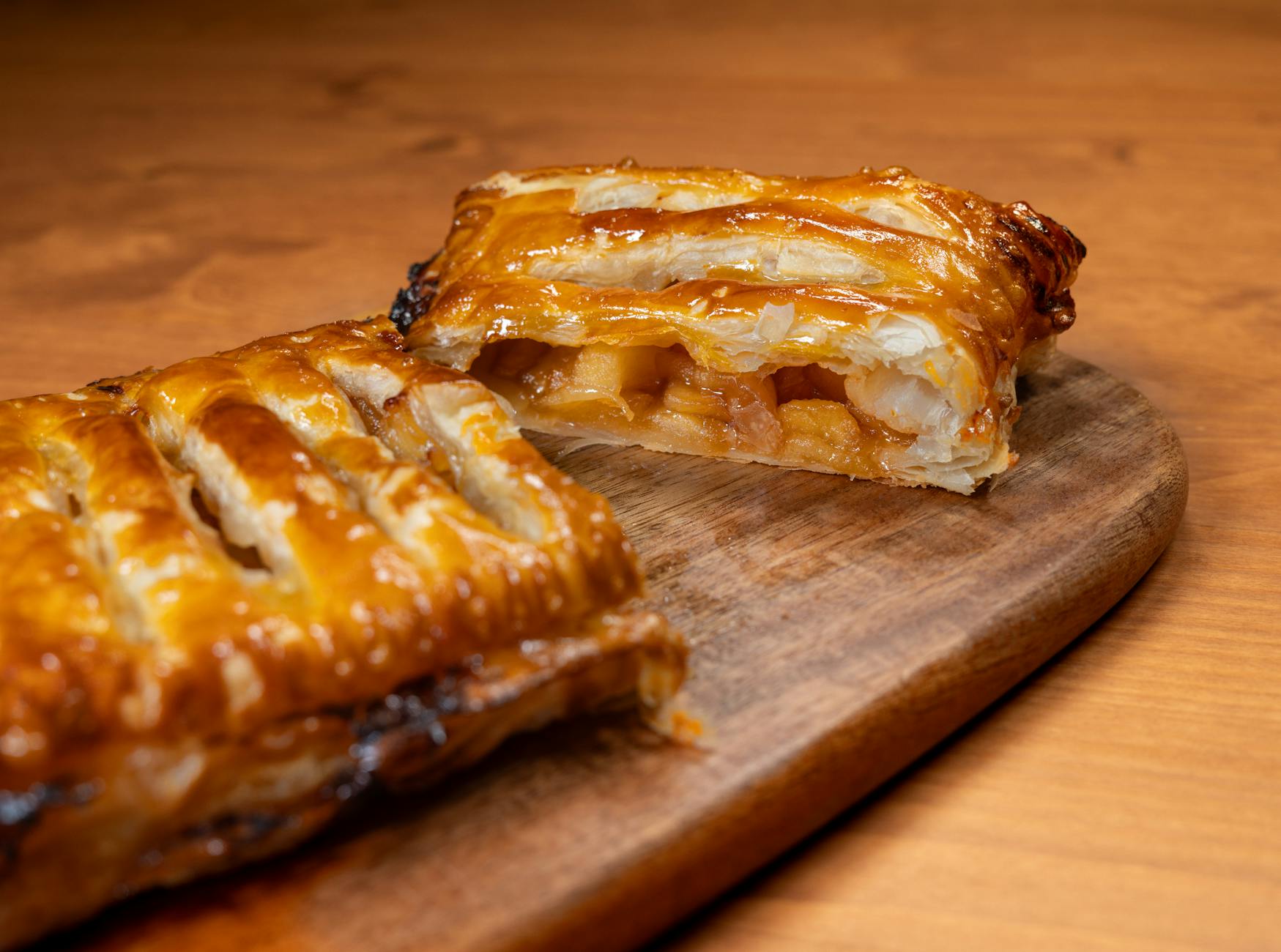
Photo by Gu Ko
- Shows Versus Classes: The Distinction That Matters
- The Strudel Show at Schönbrunn
- Hands-On Cooking Classes
- Why Viennese Cooking Is Harder Than It Looks
- The Other Food Workshops
- What the Day Actually Involves
- Booking, Timing and Group Size
- Where the Classes Are
- What a Class Is Actually Worth
- Frequently Asked Questions
- Related Vienna Guides
- Photo Credits
This article contains advertising. Our booking links are routed through a partner that adds commission tracking automatically, so if you book through one we earn a commission from the provider, at no extra cost to you. It never affects what we recommend. Affiliate disclosure
The dough for a proper apple strudel has to be pulled until you can read a newspaper through it. Not stretched, not rolled — pulled, over the backs of your hands, across a floured cloth, until it covers a table and is nearly transparent, and one hole means starting again. Booking a Vienna cooking class to learn how is the point at which most visitors discover that Viennese cooking is a great deal more technical than its reputation for schnitzel and cake suggests.
This page separates the two things that get sold under the same heading and are not remotely the same product: the demonstration shows, where somebody else cooks and you watch and eat, and the hands-on classes, where you cook. It covers what each costs in 2026, how long they take, which is right for whom, and the specific case where the cheap one is genuinely better value than the expensive one. Prices were checked in September 2026; the demonstration prices are firm, the class prices are market ranges and will vary.
Shows Versus Classes: The Distinction That Matters
| Demonstration show | Hands-on class | |
|---|---|---|
| Price | €19.90 | €80–160 per person |
| Duration | ~20 minutes | 3–4 hours |
| You cook | No | Yes |
| You eat | A slice, with a drink | A full meal you made |
| Booking | Same day is usually fine | Days to weeks ahead |
| Recipe to take home | Usually | Always |
| Best for | Families, tight schedules, curiosity | People who cook at home |
Booking platforms blur this constantly. A listing titled “Apple Strudel Workshop” for twenty euros is a show; a workshop where you pull your own dough costs four to eight times that, because it needs a kitchen, an instructor and ingredients per head. Read the duration field before the title — twenty minutes is a show, three hours is a class, and nothing in between exists.
The Strudel Show at Schönbrunn
The best-known demonstration in Vienna runs in the vaulted Hofbackstube beneath the café at Schönbrunn, now operated under the Gerstner K.u.K. Hofzuckerbäcker name at Schloss Schönbrunn, Kavalierstrakt 52, 1130 Wien. Older guidebooks and blog posts list it under the Café Residenz name; that branding is superseded, and the old website now redirects, which causes a good deal of confusion in search results.
Price, times and what you get
The package is €19.90 per person and includes the live show, one hot drink or half a litre of mineral water, and one piece of apple strudel. Shows run daily at 11:00, 12:00, 15:00 and 16:00 on the operator’s current schedule — note that this is four fixed slots rather than the hourly programme older listings describe, so check before you plan around it. The demonstration itself runs about twenty minutes, in German and English, with time afterwards for photographs and to finish your strudel.
A baker takes you through the history of the strudel, the ingredients, and then does the thing you came for: pulling the dough out over the cloth until it is translucent. You can book online in advance or, outside high summer, generally turn up.
The honest verdict on the show
Twenty euros for twenty minutes sounds steep until you subtract what a coffee and a slice of strudel cost anywhere near Schönbrunn — realistically eleven or twelve euros — at which point you are paying seven or eight for the demonstration. On that basis it is decent value, and if you are already visiting Schönbrunn it slots into the day without a detour.
What it is not is a class. You will not touch dough. Children love it, adults who wanted to learn something come away slightly deflated, and the strudel you eat is the same strudel sold upstairs. Book it as a pleasant twenty minutes with cake attached, not as an education.
Hands-On Cooking Classes
The real classes are a different proposition entirely. Expect three to four hours, a group of somewhere between six and twelve, a proper kitchen, and €80–160 per person depending on length, group size and whether wine is included. The upper end of that range usually means a small group, a market visit or a wine pairing; the lower end means a larger class working through two or three dishes.
What you actually cook
Most Viennese classes are built around the same core repertoire, and there is nothing wrong with that — it is the repertoire people want.
- Wiener Schnitzel. Always. The technique is genuinely worth learning: veal beaten thin enough, the three-stage coating, and above all enough fat at a high enough temperature that the schnitzel floats and the coating puffs away from the meat. Almost everybody cooking it at home uses too little fat in too cool a pan, and one class fixes it permanently.
- Apfelstrudel. The dough-pulling is the headline and it is much harder than it looks. Most classes let you attempt it and then quietly rescue the sheet.
- Tafelspitz or another boiled-beef dish, usually with the Apfelkren and Schnittlauchsoße that go with it — the sauces are the actual lesson.
- Kaiserschmarrn, the shredded pancake, which is quick, forgiving and the dish most likely to enter your actual repertoire at home.
- Sachertorte or Salzburger Nockerl on pastry-focused courses, though Sachertorte in particular is a long, technical bake that does not fit comfortably into a three-hour class.
Our guide to traditional Viennese dishes covers what each of these actually is, and the Wiener Schnitzel guide goes into the veal-versus-pork question that every class instructor will raise within the first ten minutes.
Market-visit classes
A common and genuinely good format pairs a walk around the Naschmarkt or a district market with a cooking session afterwards. You shop, then you cook what you bought.
These run longer — four to five hours — and cost accordingly. They are the best version of the product for people who are interested in how the city eats rather than in three specific recipes, and they solve the Naschmarkt’s real problem for visitors, which is that its stalls are hard to read without somebody explaining what is a genuine Viennese ingredient and what is aimed squarely at tourists. Going with an instructor who buys there weekly removes that entirely.
Vegetarian, vegan and dietary needs
Classical Viennese cooking is not a natural fit for a vegan diet — the canon is built on veal, beef, pork fat, butter and eggs. That said, several Vienna operators run vegetarian versions of the standard class, and the city’s vegetarian and vegan scene is far stronger than its reputation.
The practical advice is to declare requirements when booking rather than on the day. A class working from a fixed shopping list cannot improvise an alternative main course for one person at 18:00, and the honest instructors will tell you in advance whether they can accommodate you rather than promising and disappointing.
Why Viennese Cooking Is Harder Than It Looks
Viennese food has an international reputation for being heavy and simple. It is frequently the first, almost never the second, and the gap between the two is what makes a class worth taking. Four examples, all of which a good instructor will spend real time on.
The strudel dough
Strudel dough is flour, water, a little oil, a little salt, and an enormous amount of gluten development. It is worked until it is elastic enough to stretch to translucency without tearing, rested under a warm bowl, then pulled — not with fingertips but over the backs of the hands, working outwards from the centre, letting gravity do most of it. A properly pulled sheet covers a dining table and you can read print through it. Nobody manages this first time and the classes are honest about that.
What you actually take home is the understanding of why it fails: dough that has not rested, hands that grab rather than support, and a room that is too cold. All three are fixable at home.
The schnitzel fat
A Wiener Schnitzel is not fried in a film of oil. It needs enough fat for the escalope to move freely, at a temperature high enough that the coating sets and separates from the meat, producing the loose, blistered surface that distinguishes a real one from a breaded cutlet. Traditionally the fat is clarified butter or lard; oil works and tastes different.
The other half of the lesson is the meat. Veal is the classic and the legally protected version — anything sold as Wiener Schnitzel in Austria must be veal, and pork must be labelled Schnitzel Wiener Art. Classes usually cook veal and explain the distinction, which is the single most useful thing a visitor can learn before ordering one in a restaurant.
Tafelspitz and its sauces
Boiled beef sounds like the least interesting thing on any menu and is in fact a precise dish: a specific cut from the rump cap, simmered rather than boiled, in a broth that becomes the first course. The lesson is the accompaniments — Apfelkren, apple and horseradish, and Schnittlauchsoße, a chive sauce thickened with bread — because without them the dish is genuinely dull and with them it is not.
Kaiserschmarrn
The most forgiving thing in the repertoire and the one most likely to survive contact with your own kitchen: a thick pancake batter, cooked, torn up with two forks while still in the pan, caramelised with sugar, served with plum compote. Twenty minutes, no technique to speak of, and the dish every class participant reports actually making again at home.
The Other Food Workshops
Cooking is not the only hands-on food product in Vienna, and a couple of the alternatives are better value.
- Coffee and barista workshops. Vienna’s coffee house culture is on the UNESCO intangible heritage list, and several roasters run tastings and brewing sessions. Shorter and cheaper than a cooking class, and the thing you learn — what actually distinguishes a Melange from a Kapuziner from a Franziskaner — is immediately useful the same afternoon.
- Chocolate and confectionery. Sachertorte workshops exist and are the hardest sell in this article: it is a long, technical bake, the apricot glaze and the chocolate icing both need precision, and three hours is tight. Truffle and praline sessions fit the format far better.
- Wine tastings and Heuriger visits. A guided tasting in the wine taverns of Grinzing or Nussdorf is a different sort of education and, for many visitors, a better evening than a kitchen. Our Vienna wine guide covers the Gemischter Satz that makes the city’s wine unusual.
- Beer brewing. A small number of Vienna breweries run sessions. Niche, but genuine, and Vienna Lager has a real historical claim worth hearing about.
What the Day Actually Involves
A few practical things that listings rarely mention and that shape the experience more than the menu does.
- You will be on your feet for three hours. Most kitchens have no seating until the meal at the end. Sensible shoes matter more than you would expect.
- Aprons are provided; your clothes still get floury. Strudel dough is worked with a great deal of flour and it goes everywhere. Do not wear the outfit you booked dinner in.
- You will eat a full meal at the end. This is not a tasting. A class that starts at 17:00 replaces dinner entirely, and booking a restaurant afterwards is a mistake people make once.
- Recipes come home with you, generally by email afterwards rather than on paper. Check this is included if it matters to you.
- Leftovers. Strudel classes produce far more strudel than the group can eat, and instructors will usually wrap the rest. This is a genuine and undersold benefit if you have an apartment.
Booking, Timing and Group Size
- Book classes a week to a fortnight ahead in high season. Groups are small by necessity — you cannot teach twenty people to pull strudel dough — so they fill faster than tours of the same price.
- Check the group maximum. Anything over twelve and the ratio starts telling. Six to ten is the sweet spot.
- Check whether you eat what you cook. Most classes end with everyone sitting down to the meal; a few are demonstrations with tasting portions dressed up as classes. The listing should say plainly.
- Check whether wine is included. This is often the entire difference between a €95 class and a €130 one.
- Evening classes fill first. Morning and early-afternoon sessions are easier to get and often quieter.
Private and family classes
Private classes are quoted per group and are worth pricing for four or more people, exactly as with private guides. They also solve the age problem: scheduled classes generally want participants over about twelve because of hot fat and knives, whereas a private session can be built around children with the frying handled by the instructor.
Kaiserschmarrn and strudel are the dishes that work best with children involved. Schnitzel, with a pan of fat at 170 degrees, is not.
Where the Classes Are
Vienna’s cooking classes do not cluster in one district the way its coffee houses do. Most run from small professional kitchens or private studios spread across the second, sixth, seventh and fifteenth districts, which means the address matters and you should look it up before booking rather than assuming a central start.
Practically, this is rarely a problem — almost everything is within a few stops of a U-Bahn line, and our U-Bahn guide covers the network. But a class in Ottakring starting at 17:00 is a genuine journey from a hotel by the Staatsoper in rush hour, and turning up flustered twenty minutes late to a session where the dough has already been started is a poor beginning. Allow more time than the map suggests.
The market-visit classes are the exception and always start at the market itself, most often the Naschmarkt or, less predictably and rather better, one of the district markets such as the Brunnenmarkt or the Karmelitermarkt. If you are offered a class starting at a district market rather than the Naschmarkt, take it — those are the markets Viennese people actually shop at.
What a Class Is Actually Worth
A hundred euros for three hours is a lot of money against Vienna’s other tour options, and whether it is worth it comes down to one question: do you cook at home?
If you do, a class is among the best-value things on this site’s entire tour section, because you take the technique home and use it for years. The schnitzel lesson alone changes how you cook it forever. If you do not cook — if this is a novelty rather than a skill you will use — then a food tour at €70–140 gives you more of Vienna for similar money, and the €19.90 strudel show gives you the theatre for a fifth of the price.
That is the honest split, and it is unusual for us to end up recommending the cheap option so often. The demonstration show is good value on its own terms. The class is excellent value for a specific person and mediocre value for everybody else.
Frequently Asked Questions
How much is a cooking class in Vienna?
Hands-on classes run roughly €80–160 per person for three to four hours, with the upper end reflecting small groups, a market visit or wine pairing. The apple strudel demonstration show at Schönbrunn is a different product at €19.90 including a drink and a slice.
How much is the apple strudel show at Schönbrunn?
€19.90 per person, covering the twenty-minute live show, one hot drink or half a litre of mineral water, and a piece of apple strudel. It runs daily at 11:00, 12:00, 15:00 and 16:00 in the Hofbackstube beneath the café at Kavalierstrakt 52.
Is the strudel show a cooking class?
No. It is a demonstration: a baker makes the strudel and explains it while you watch and eat. You do not handle the dough. If you want to make strudel yourself you need a hands-on class, which costs several times more and lasts several hours.
What do you cook in a Viennese cooking class?
Almost always Wiener Schnitzel and apple strudel, frequently Kaiserschmarrn, and often Tafelspitz with its horseradish and chive sauces. Pastry-focused courses add Salzburger Nockerl or Sachertorte, though the latter is a long bake for a short class.
Are Vienna cooking classes in English?
Almost all classes aimed at visitors are taught in English, and the Schönbrunn strudel show runs in both German and English. Confirm the language when booking a smaller or more local operator.
How far in advance should I book?
A week to a fortnight in high season. Classes take six to twelve people, so they sell out faster than tours at the same price. Evening slots go first. The strudel show can usually be booked same-day outside July and August.
Can children do a cooking class in Vienna?
Scheduled classes generally want participants over about twelve because of hot fat and sharp knives. Private classes can be built around younger children, with the frying done by the instructor. The strudel show has no age restriction and works well for families.
Is a cooking class better value than a food tour?
Only if you cook at home. A class teaches technique you keep; a food tour at €70–140 shows you more of the city and requires nothing of you afterwards. For a non-cook the tour wins comfortably.
Related Vienna Guides
- Vienna Food Tours Compared
- Traditional Viennese Dishes
- The Wiener Schnitzel Guide
- Vienna Desserts and Pastries
- The Naschmarkt Guide
- Schönbrunn Palace Guide
- Vienna Food Guide
- Vienna Tours & Experiences
Photo Credits
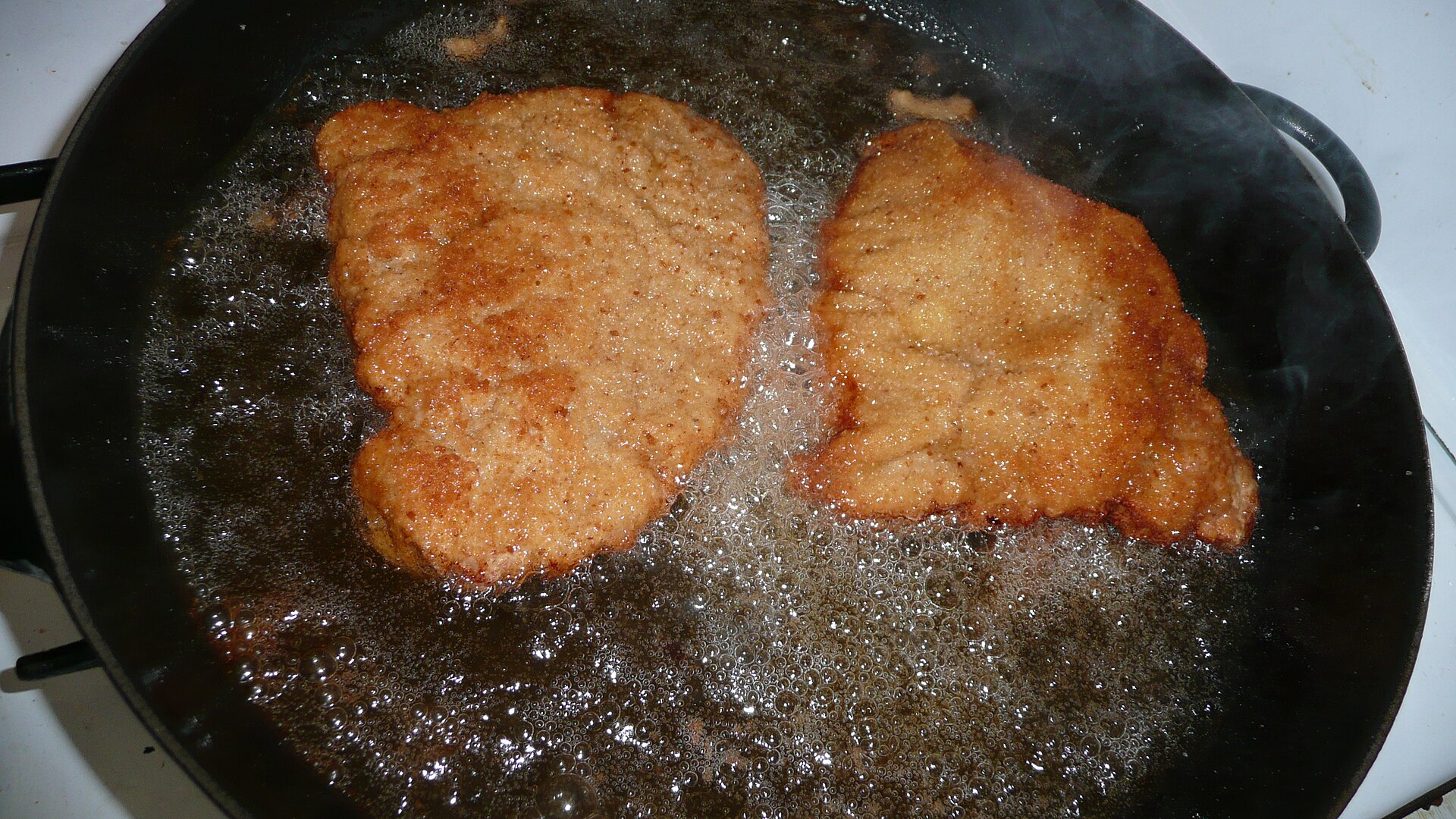
Wiener Schnitzel in the pan: Wiener Schnitzel in der Pfanne 2 by Brücke-Osteuropa, CC0, via Wikimedia Commons.
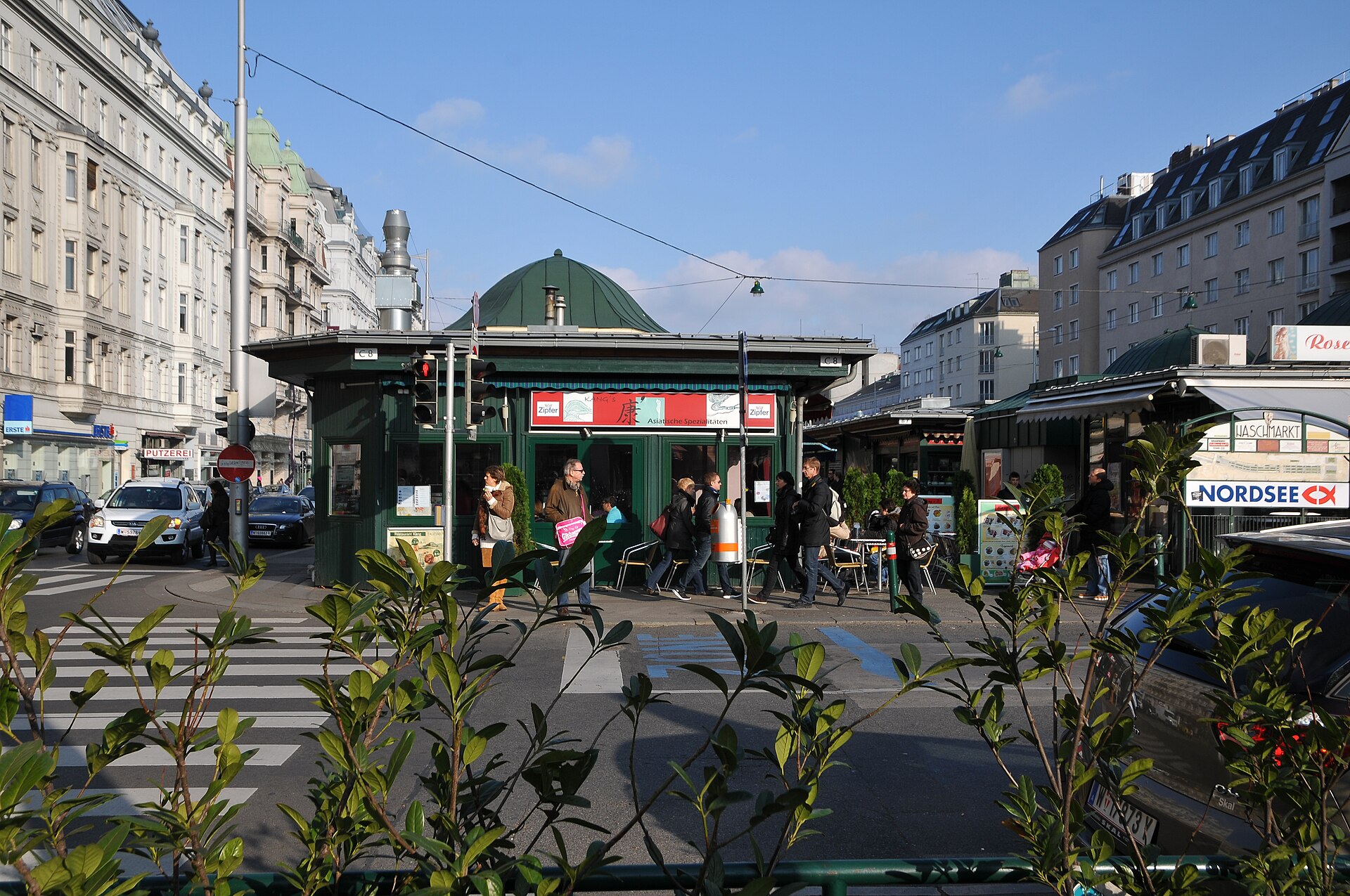
The Naschmarkt from Schleifmühlgasse: Wiener Naschmarkt Stand C8, Schleifmühlgasse by böhringer friedrich, CC BY-SA 3.0 AT, via Wikimedia Commons.