Sisi Museum & Imperial Apartments: Tickets and What You Actually See
The Sisi Museum reopens on 19 November 2026 after a redesign; until then the ticket covers the Imperial Apartments at €15. What each part is like, when to go, and whether the Sisi Pass pays back.
- Sisi Museum Tickets and Prices 2026
- Opening Hours and When to Turn Up
- What You Actually See
- How Long to Allow
- Getting There
- Accessibility and Practicalities
- Visiting With Children
- Sisi Museum or Schönbrunn: If You Only Do One
- Is the Vienna Pass or City Card Worth It Here?
- Our Honest Verdict
- Frequently Asked Questions
- Related Vienna Guides
- Photo Credits
This article contains advertising. Our booking links are routed through a partner that adds commission tracking automatically, so if you book through one we earn a commission from the provider, at no extra cost to you. It never affects what we recommend. Affiliate disclosure
There is a moment, about ten minutes into the Sisi Museum, when the lighting drops and you realise the exhibition is not on your side. You have come in past the gift shop, past the fridge magnets and the violet-flavoured sweets, expecting the Romy Schneider version: the girl on the swing, the crinolines, the nice Alpine romance. Instead you get a black room, a death mask and a copy of the file a starving Italian anarchist sharpened on a bench in Geneva. Sisi Museum Vienna tickets cover the museum and the Imperial Apartments on one day ticket. Until 18 November 2026 the museum rooms are closed and the ticket buys the Imperial Apartments alone, at €15 for adults; the redesigned Sisi Museum opens on 19 November 2026 with additional rooms, and it is the part of the visit that actually argues with you.
This guide covers what the ticket costs and what it includes, the Sisi Pass and whether it pays back, opening hours and the reduced ticket until 18 November, what you actually see in each part of the visit, how long to allow, how it compares with Schönbrunn if you only have time for one imperial palace, and our honest verdict on whether the Imperial Apartments are worth your afternoon. Prices and hours were checked on the museum’s own website in September 2026; treat them as the right order of magnitude and confirm before you travel, because the Schönbrunn Group adjusts its prices most years.
Sisi Museum Tickets and Prices 2026
One ticket, two attractions. There is no way to buy the Sisi Museum on its own: the day ticket covers the museum and the Imperial Apartments together. Until 18 November 2026 the museum rooms are closed while the redesigned Sisi Museum is finished, so the ticket covers the Imperial Apartments alone; the new museum opens on 19 November with additional rooms. The Silver Collection, once the third part of the ticket, has been closed since April 2023.
| Ticket | Adult | Child 6–18 | Student 19–25 |
|---|---|---|---|
| Day Ticket (Imperial Apartments only, until 18 November 2026) | €15.00 | €9.00 | €13.50 |
| Guided tour of museum and apartments (from 20 November 2026, about 60 minutes) | €33.00 | €22.00 | €31.00 |
| Sisi Pass (three imperial sites, valid one year) | €60.00 | €38.00 | — |
| Visitors with disabilities (valid ID, until 18 November 2026) | €13.50 | — | — |
| School groups (6–18) | — | €8.00 | — |
| Children under 6 | Check the museum’s ticket page | ||
The audio guide is included in every ticket, in a long list of languages, and it is not optional in any meaningful sense: the rooms carry very little wall text and the guide is doing most of the interpretive work. Take it even if you normally refuse audio guides on principle.
What the day ticket actually includes
- The Sisi Museum — about 300 objects from Empress Elisabeth’s life, in a sequence of themed rooms in the Stephan Apartments, where the museum opened in 2004. It is closed until the redesigned museum opens on 19 November 2026.
- The Imperial Apartments — the private and official rooms of Franz Joseph and Elisabeth in the Reichskanzleitrakt and the Amalienburg, around two dozen rooms in all.
- The audio guide, and a printed floor plan at the desk.
What it does not include, despite sharing a courtyard and a postal address: the Spanish Riding School, the Imperial Treasury, the National Library State Hall, the Papyrus Museum, the Weltmuseum or the Albertina. The Hofburg is not one attraction. It is about a dozen separately ticketed institutions that happen to share a roof, which is the single most common source of confusion on the whole site — our complete Hofburg guide maps out which door leads where.
The Sisi Pass, and whether it pays back
The Sisi Pass costs €60 for adults and €38 for children, is valid for a full year, and covers the Sisi Museum and Imperial Apartments here, the Grand Tour at Schönbrunn Palace, and the Imperial Furniture Collection at the Hofmobiliendepot out in the 7th district.
Do the arithmetic before you buy it. Schönbrunn’s Grand Tour is €42 and the Hofburg day ticket is €15 until 18 November 2026, while only the Imperial Apartments are open, so the two headline attractions on their own come to €57. The pass is €60. Until then you are paying three euros extra for the Furniture Collection — which, for the record, is a far better museum than its name suggests, full of Biedermeier interiors and props from the Sisi films, and close to empty on a weekday. Hofburg prices change on 19 November, when the redesigned museum opens, so redo the sum against the museum’s ticket page for a later visit.
So the pass is worth it under one condition: you were already going to do the Schönbrunn Grand Tour. If you were planning on Schönbrunn’s cheaper State Apartments ticket, or on skipping the palace interior altogether in favour of the free gardens, the pass loses money. It is not a discount card. It is a bundle priced a hair under its components, and the third component is the one nobody plans for.
One genuine advantage: the year of validity. If you are the sort of traveller who comes back to Vienna, or you are visiting family here, the pass stops being a same-trip calculation. Note that the Schönbrunn element still requires a timed slot booked in advance — the pass gets you in, it does not get you in whenever you like.
The reduced ticket until 18 November
Until 18 November 2026, while the museum rooms are closed for the redesign, the Hofburg runs reduced opening hours — 10:00 to 16:30, with last admission and the ticket office closing at 16:00 — and charges a reduced day ticket for the Imperial Apartments: €15 for adults. The museum also flags “seasonal price changes from 19 November”, the day the redesigned Sisi Museum opens.
The hours are short until 18 November and the museum rooms are closed, so the €15 ticket buys the apartments alone. If your dates are flexible, you can take the reduced price now or wait for the redesigned museum on 19 November; the rest of the month is covered in our Vienna in October guide.
Opening Hours and When to Turn Up
Until 18 November 2026 the hours are daily 10:00 to 16:30, last admission 16:00; the opening-hours page on the museum’s website gives the schedule from 19 November, when the redesigned museum opens. The Imperial Apartments open every day, public holidays included.
A few things shape how the visit goes:
- Doors open at 10:00 until 18 November 2026. An early start leaves time for the whole audio guide without one eye on the clock.
- Group tours are routed through the Michaelertrakt, and the one-way circuit backs up at the narrow doorways between the apartment rooms when one is just ahead of you.
- Late in the day you are racing the clock: until 18 November the apartments close at 16:30, with last admission at 16:00.
Unlike Schönbrunn, the Hofburg does not put the standard day ticket on fixed timed entry, so you can simply turn up. The queue is for the ticket desk, not for an admission slot — buying online in advance skips it, and on a summer morning that is worth twenty minutes. In February it is worth nothing at all.
What You Actually See
The route runs through the Sisi Museum and then the Imperial Apartments, and it is strictly one-way; until 18 November 2026 it is the apartments alone. You cannot go back. If you lose your party, you meet them at the end.
The Sisi Museum
The museum opened in 2004, built to question the Sisi legend rather than polish it. The staging was theatrical — it was designed by a stage designer, and it showed — with dark rooms, dramatic lighting and a route that opened with her death and the myth that grew out of it before going back to her childhood and later life. That is an unusual structure for a museum about a much-loved royal, and an unmistakable statement of intent. This is the museum as it was laid out from 2004: the redesigned Sisi Museum opens on 19 November 2026 with additional rooms, so expect the sequence and some of the objects below to change.
The objects are small and personal and they accumulate:
- Her death certificate, and a replica of the sharpened file Luigi Lucheni used to kill her on the Geneva lakefront on 10 September 1898.
- Her parasols, fans and gloves — dozens of them, which is how she kept her face out of photographs from roughly her early thirties onwards.
- Her travelling medicine chest, her reconstructed dressing room with the wall bars and rings she used for daily gymnastics, and the cosmetic recipes applied to her face overnight.
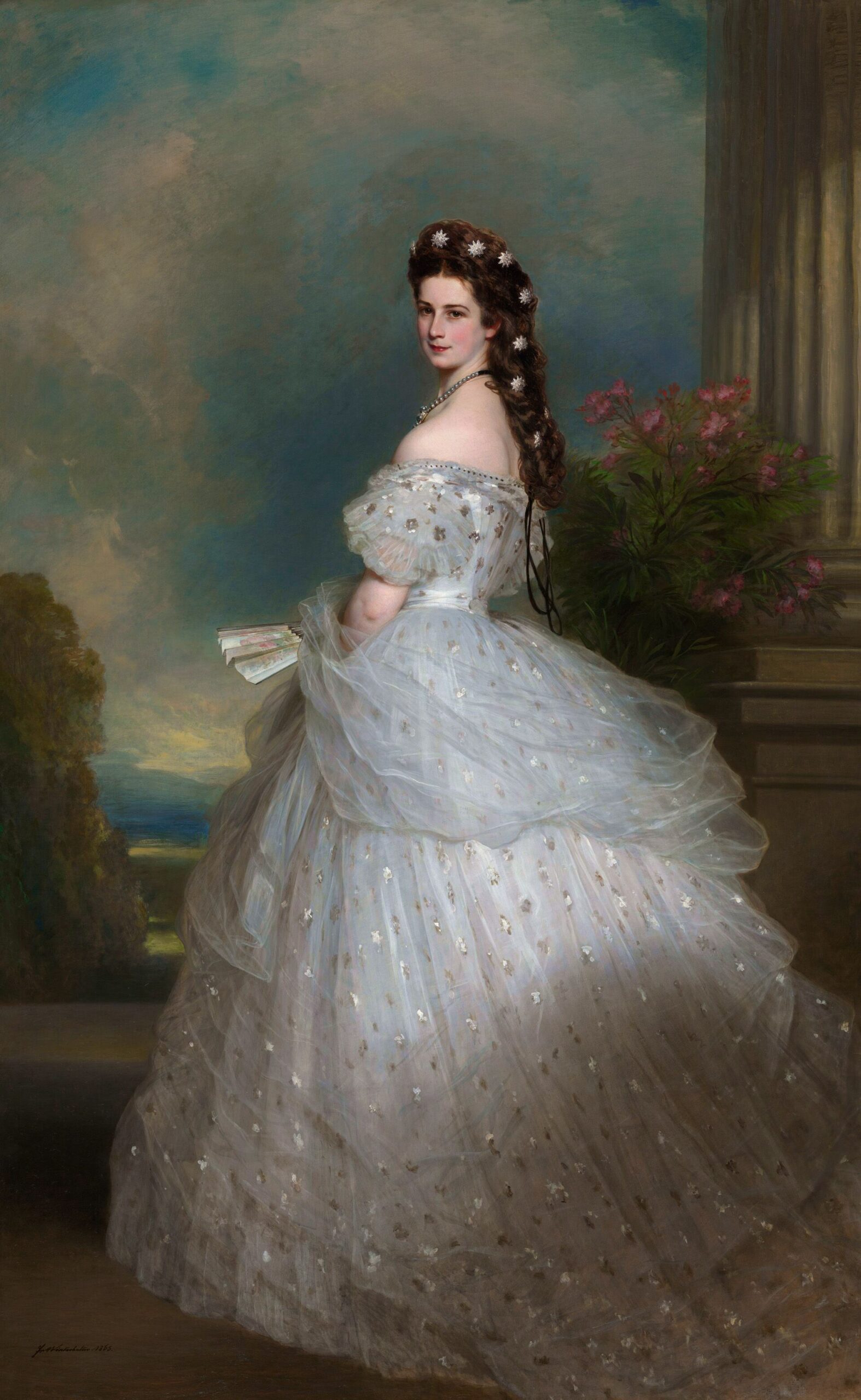
- Replicas of the diamond stars Franz Xaver Winterhalter painted into her hair in 1865.
- Her poetry, which is bleak, self-pitying, occasionally very good, and almost never quoted on the fridge magnets.
What the museum did, patiently, over the course of its rooms, was dismantle the films. It presented a woman who was married at sixteen into a court run on rigid protocol, whose mother-in-law took charge of her older children, whose restrictive eating historians have linked to an eating disorder, alongside a punishing exercise regime, who travelled almost constantly in her later years, above all after her son Rudolf’s death in 1889, and who was stabbed by a man who had actually been hoping to kill a different aristocrat entirely. It was not a cheerful hour. It was a very good one.
The Imperial Apartments
And then you walk into the apartments, and the air goes out of the thing slightly.
These are the real rooms — Franz Joseph’s study with his desk, the audience chamber with the standing desk where he received petitioners, his bedroom with the simple iron bed he slept on until he died in 1916, and on the other side Elisabeth’s rooms: dressing room, bedroom, drawing rooms.
They are genuinely interesting as a document of how the Emperor lived, which was with a startling, almost monastic austerity for a man who ran an empire of fifty million people. He rose at half past three in the morning. He worked at that desk for eleven hours. The iron bed is the detail that stays with people.
But room after room of red damask, white ceramic stoves and roped-off Biedermeier furniture does begin to blur, and the rooms are not large. If you have already done Schönbrunn’s Grand Tour you will find yourself walking faster. If you have not, this is your Habsburg interior and it does the job. Reading up on the people in advance helps more than you would think — our guide to the Habsburg dynasty and the Empress Sisi trail across Vienna both give you the family before you meet their furniture.
How Long to Allow
| Visit style | Time | What you get |
|---|---|---|
| Fast | Shortest | Sisi Museum properly, apartments at pace (from 19 November 2026; until then the apartments alone) |
| Standard | Longer | The audio guide followed most of the way through |
| Thorough | Longest | Every label, every track on the guide |
| With a guided tour (from 20 November 2026) | About 60 min | Guide covers museum and apartments |
Budget two hours if you are the kind of person who reads the labels, and do not schedule anything tight behind it: the exit puts you back on Michaelerplatz, which is a hard square to walk quickly out of.
Getting There
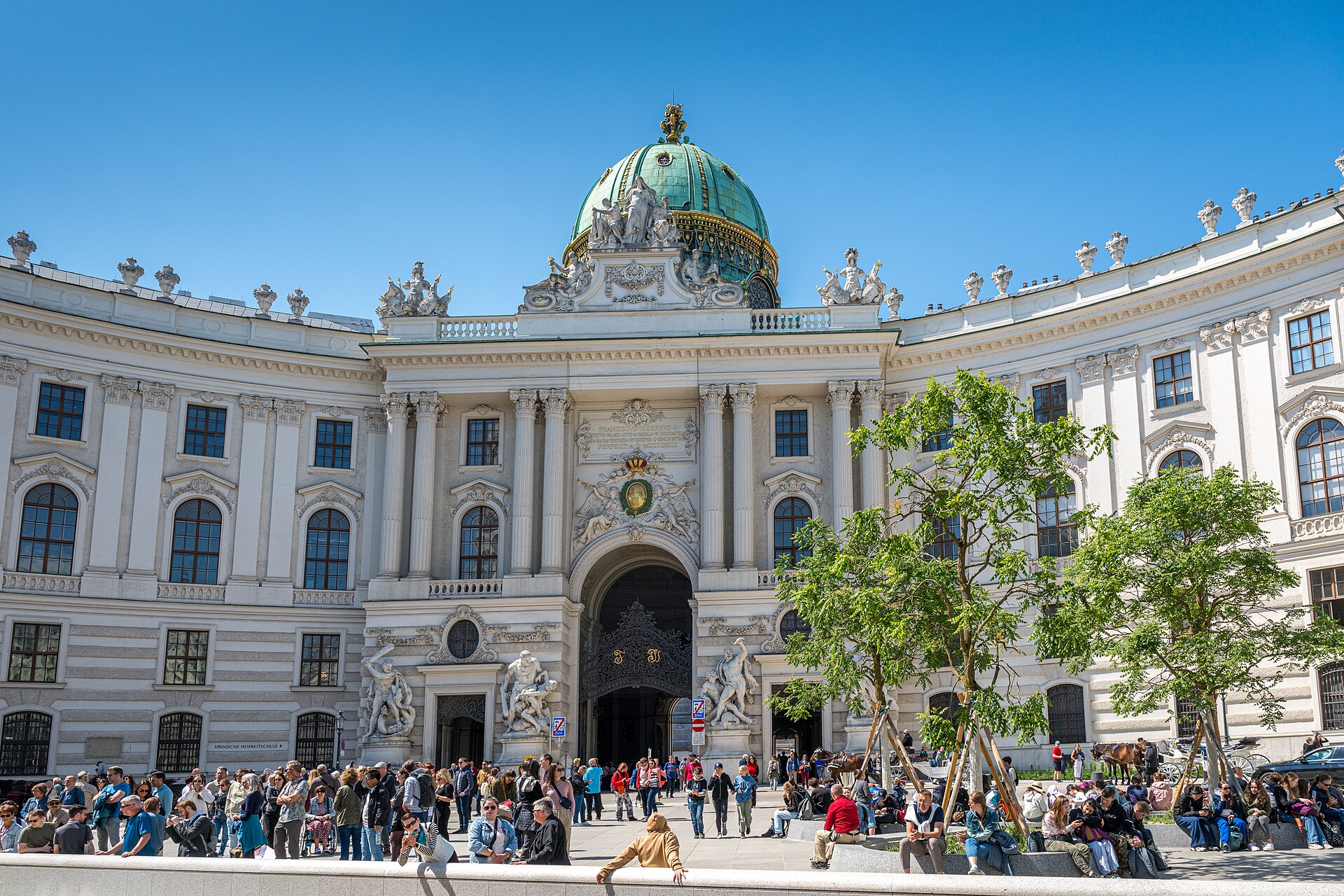
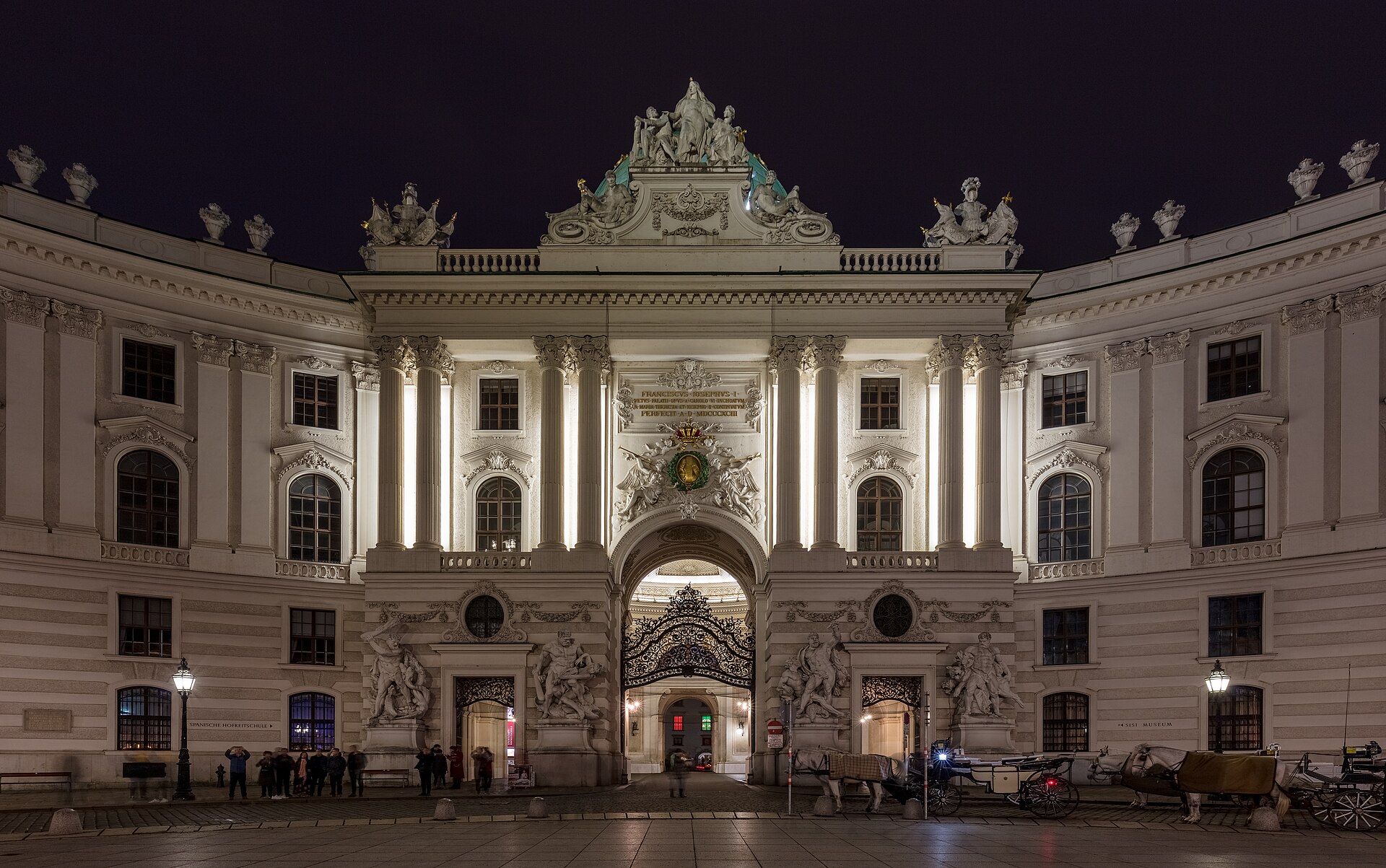
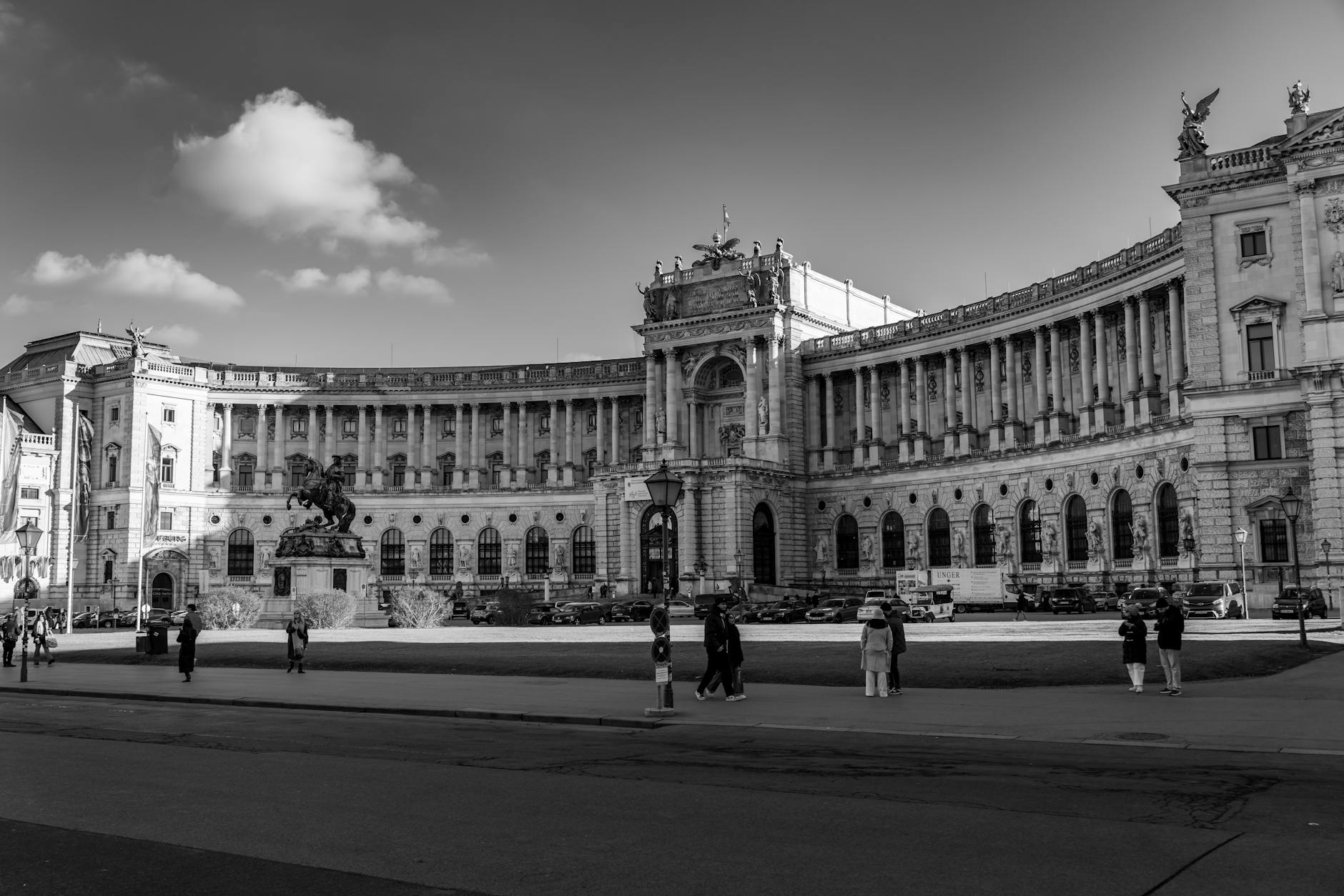
The entrance is under the Michaelerkuppel, the domed gateway on Michaelerplatz — walk into the arch and the ticket office is on the right-hand side, marked “Sisi Museum”. This is the most-photographed gateway in Vienna and it is still, somehow, easy to walk past the entrance.
- U3 Herrengasse is the station the museum itself recommends, a short walk from Michaelerplatz.
- U1 or U3 Stephansplatz, then a five-minute walk west along the Graben and down Kohlmarkt — the better approach, because Kohlmarkt frames the Michaelertrakt dome perfectly.
- Trams 1, 2, 71 or D to Burgring, then in across Heldenplatz.
- The fiaker rank on Michaelerplatz is directly outside, which is picturesque and expensive in that order — the numbers are in our fiaker guide.
Within three minutes’ walk: the Spanish Riding School, Demel, the National Library State Hall, the Imperial Treasury, Kohlmarkt and the Graben. Within eight: Stephansdom, the Albertina and the State Opera. This is the densest concentration of attractions in the city, and the reason our Innere Stadt guide runs to the length it does.
Accessibility and Practicalities
- Step-free access is good, with some limits. Lifts, ramps and mobile wheelchair rails make the exhibition areas accessible, and visitors with disabilities pay €13.50 with valid ID until 18 November 2026, but some types of wheelchair need to be discussed with the museum first. Contact it in advance if you need the detail for a specific mobility aid — the staff answer properly.
- No large bags. There is a free cloakroom at the entrance and you will be made to use it for anything backpack-sized.
- Photography is not permitted in the Sisi Museum or the Imperial Apartments, and the rule is enforced.
- No café on the route. Once you are in, you are in. Demel is a short walk away afterwards, and Café Central, closed for renovation since March 2026, runs a temporary DECENTRAL on Freyung until it reopens — see our coffee house guide for which one deserves the queue.
- Toilets are near the ticket desk at the start. Use them then; there is not much on the route.
- The gift shop is at the entrance, not the exit, which is a small mercy and means you can ignore it entirely.
Visiting With Children
Honestly: this is a museum about an unhappy woman who was murdered, attached to a suite of rooms full of furniture children are not allowed to touch. Younger children may find it hard going, and the one-way route means there is no bailing out early.
It works for children who arrive with the story already in their heads — the Sisi animated films and the musical both have devoted young followings across Austria and Germany, and a nine-year-old who knows who Sisi is will find the parasols and the diamond stars genuinely thrilling. Teenagers often do better than expected, because the museum’s revisionist angle is exactly the kind of thing that lands at fourteen.
If you are travelling with younger children, Schönbrunn’s Children’s Museum, where things can be touched and dressing up is the point, is the better use of the same money. Our Vienna with kids guide has the alternatives.
Sisi Museum or Schönbrunn: If You Only Do One
| Hofburg (Sisi Museum) | Schönbrunn (Grand Tour) | |
|---|---|---|
| Adult ticket | €15 (until 18 November 2026) | €42 |
| Timed entry required | No | Yes |
| Getting there | City centre, walkable | U4 to Schönbrunn station |
| What you walk through | Sisi Museum (from 19 November 2026) and 24 apartment rooms | The entire piano nobile |
| Gardens | Volksgarten and Burggarten nearby | Vast, free, exceptional |
| Time needed | Shorter | Half a day or more, depending on what you add |
| Best for | Sisi herself; the winter court; a half-day | Baroque spectacle; gardens; a full day |
They are not substitutes. The Hofburg was the winter residence and the working seat of government; Schönbrunn was the summer palace and the show. If you want to understand Elisabeth, come here — the museum explores her as a person and questions the legend that grew around her rather than selling it. If you want the Habsburg spectacle, the sweep of gilded rooms and a garden the size of a small town, go to Schönbrunn.
On a short trip our recommendation is unfashionable: do the Hofburg properly and do Schönbrunn’s gardens rather than its interior. The main palace park is free (the Privy Garden, Orangery Garden and Maze are ticketed), it is the better half of Schönbrunn, and until 18 November 2026 you will have spent €15 instead of €57. Our Vienna on a budget guide is built around exactly this kind of swap.
Is the Vienna Pass or City Card Worth It Here?
The Vienna Pass includes admission outright, so if you have one, walk in. The Vienna City Card is a discount card, not an entry card — City Card holders get a reduced rate but book through the Schönbrunn Group’s own timeslot system rather than at the desk, so sort it out before you arrive rather than waving the card at a queue. The full comparison, including the break-even maths, is in our City Card vs Vienna Pass guide and our Vienna Pass review.
Our Honest Verdict
The Sisi Museum is one of the best-conceived museums in Vienna and it is attached to one of the most ordinary palace tours. That is the whole review.
The museum is sharp, unsentimental and quietly furious about the mythology it sits inside. It is doing something genuinely difficult — being the official museum of a tourist industry’s biggest brand while refusing to sell that brand back to you. The Imperial Apartments are fine: historically real, visually repetitive, and if you have already walked the Grand Tour at Schönbrunn they will feel like a rerun with the lights turned down.
At €15 until 18 November 2026, for the Imperial Apartments alone, the ticket is fair for a visit in the exact centre of the city; prices change on 19 November, when the redesigned museum opens. What is not worth it, unless you actively dislike audio guides, is the guided tour, which from 20 November costs €33 for adults for about 60 minutes: the included audio guide is well written and it lets you set your own pace.
And the thing to avoid entirely is the costumed ticket touts on Michaelerplatz outside. They are selling concert tickets, not museum entry, and several of them are deliberately vague about the difference. Buy from the desk inside the arch or online, and walk past the wigs — a habit worth forming generally, as our Vienna tourist traps guide explains.
Frequently Asked Questions
Do I need to book Sisi Museum tickets in advance?
Not in the way you need to for Schönbrunn. There is no fixed timed entry on the standard day ticket, so you can turn up and buy at the desk. Booking online only saves you the ticket queue, which is worth doing on a summer morning and pointless in winter.
How much are Sisi Museum tickets in 2026?
Until 18 November 2026, while the museum rooms are closed, the day ticket covers the Imperial Apartments and costs €15 for adults, €9 for children aged 6 to 18, and €13.50 for students aged 19 to 25 and for visitors with disabilities. Prices change from 19 November, when the redesigned Sisi Museum opens. Guided tours start on 20 November at €33 for adults, €22 for children aged 6 to 18 and €31 for students and visitors with disabilities.
Is the Sisi Museum the same as Schönbrunn?
No, and this is the most common mistake visitors make. The Sisi Museum is inside the Hofburg in the city centre, on Michaelerplatz. Schönbrunn is a separate palace, reached by U4 to Schönbrunn station. Elisabeth lived in both. The Sisi Pass covers both, plus the Furniture Collection, for €60.
How long does the Sisi Museum take?
Until 18 November 2026 the visit is the Imperial Apartments alone, so it is shorter than the full route. From 19 November the redesigned museum adds its rooms back, and the guided tour of museum and apartments takes about 60 minutes; allow longer if you listen to the audio guide properly.
Can you take photos in the Sisi Museum?
No. Photography is prohibited in the Sisi Museum and the Imperial Apartments, and the rule is actively enforced by room staff.
Is the Sisi Museum wheelchair accessible?
Largely. Lifts, ramps and mobile wheelchair rails make the exhibition areas accessible, and visitors with disabilities pay €13.50 with valid ID until 18 November 2026. Some wheelchair types need a word with the museum in advance, so contact it directly with your specific requirements before you travel.
What is included with the Sisi Museum ticket?
The Sisi Museum and the Imperial Apartments of Franz Joseph and Elisabeth, plus the multilingual audio guide; until 18 November 2026 the museum rooms are closed and the ticket covers the apartments alone. The Silver Collection, once included, has been closed since April 2023. It does not include the Spanish Riding School, the Imperial Treasury or the National Library State Hall, which are separately ticketed even though they sit in the same complex.
When is the Sisi Museum least busy?
There is no timed entry on the standard day ticket, so you can choose your moment; until 18 November 2026 the doors open at 10:00. Group tours are routed through the Michaelertrakt, and the narrow doorways between the apartment rooms back up when one is ahead of you.
Is the Sisi Museum worth it?
Yes, if Elisabeth interests you at all — it is a genuinely good museum that takes a serious, revisionist view of a figure usually served up as a fairytale. The Imperial Apartments attached to it are more ordinary, and will feel repetitive if you have already done Schönbrunn’s Grand Tour. At €15 for the apartments alone until 18 November 2026, the ticket is fair, and from 19 November the redesigned museum is the reason to go.
Related Vienna Guides
- Hofburg Palace: The Complete Visitor Guide
- Empress Sisi in Vienna: Following Elisabeth’s Trail
- Schönbrunn Palace: Tickets, Tours and What to See
- The Habsburg Dynasty in Vienna
- The Best Museums in Vienna
- The Spanish Riding School: Tickets and Performances
- Vienna City Card vs Vienna Pass
- Innere Stadt: Vienna’s First District
- Vienna Attractions: The Complete List
- One Day in Vienna: The Perfect Itinerary
Photo Credits
Michaelertrakt at night: Michaelertrakt, Hofburg, Viena, Austria, 2020-01-31, DD 130-132 HDR by Diego Delso, CC BY-SA 4.0, via Wikimedia Commons.
Empress Elisabeth with diamond stars, 1865: Elisabeth of Austria, by Franz Xaver Winterhalter by Franz Xaver Winterhalter, Public domain, via Wikimedia Commons.