Vienna Bike Tours: Guided Rides Along the Ring, Danube & Prater
Guided bike tours in Vienna compared: operators, 2026 prices, departure times and distances, plus the three kinds of visitor who should hire a bike instead.
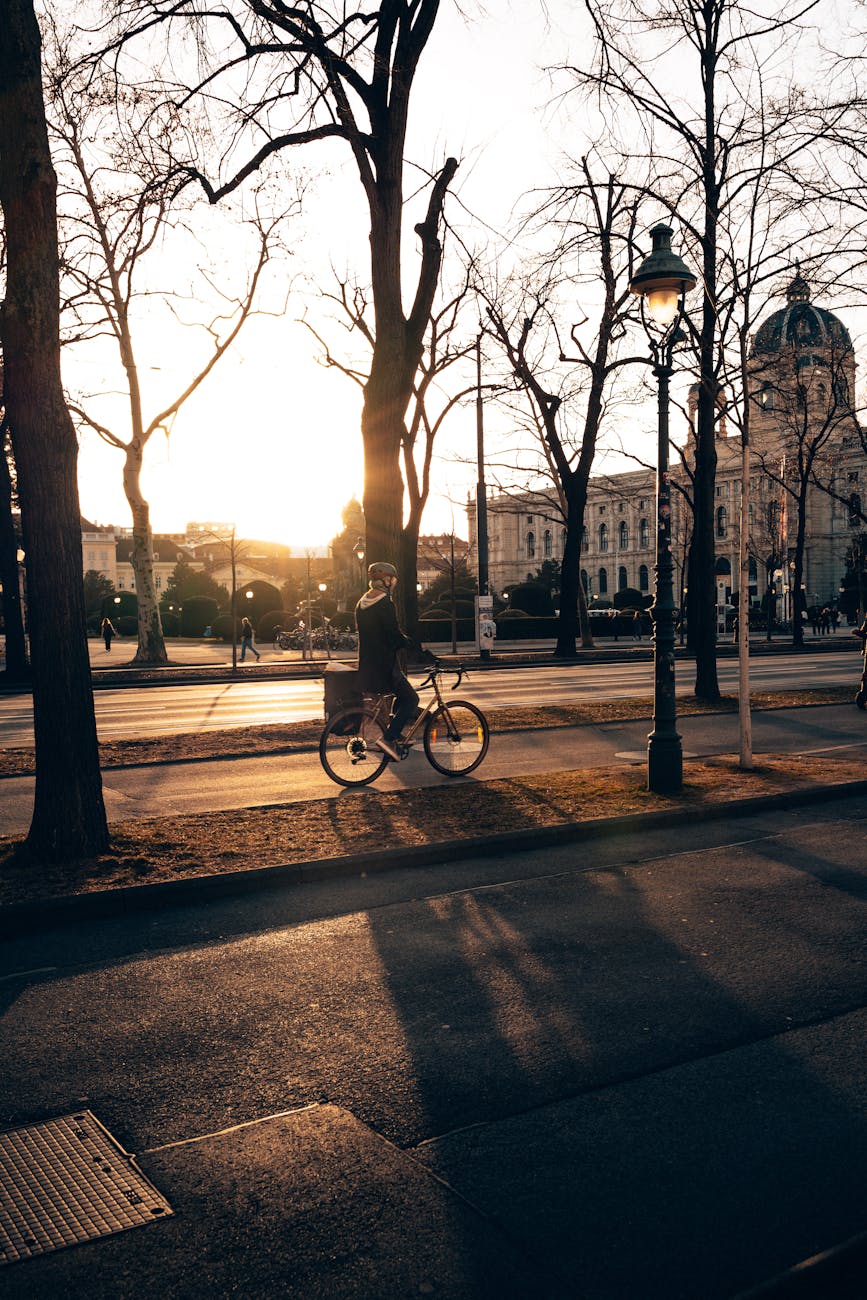
Cycling is a popular and scenic way to explore Vienna
This article contains advertising. Our booking links are routed through a partner that adds commission tracking automatically, so if you book through one we earn a commission from the provider, at no extra cost to you. It never affects what we recommend. Affiliate disclosure
Vienna is startlingly flat for a city with this many palaces in it. The Innere Stadt sits on a low terrace, the Danube runs dead straight past it, and the only real climbs are out in the wine hills where nobody takes beginners. That geography is why a Vienna bike tour works so well as a first-day orientation and why the operators here can promise fifteen kilometres in three hours without anybody arriving red-faced and furious.
This page is about the guided end of the market: who runs the tours, what they cost in 2026, how long they last, which one fits which kind of rider, and where a guided tour is simply the wrong purchase. If what you actually want is to hire a bike and ride off on your own, our guide to cycling in Vienna covers rental systems, the route network and the traffic rules; there is no point repeating any of it here. Prices were checked in September 2026 — correct as we found them, but confirm before booking.
Vienna Bike Tours at a Glance: What Everything Costs
| Tour type | Price | Duration | Distance | Best for |
|---|---|---|---|---|
| Classic city tour, bike included | €49 | 3 hrs | ~15 km | Almost everyone, day one or two |
| Classic city tour, own bike | €41 | 3 hrs | ~15 km | People already renting elsewhere |
| E-bike upgrade | +€29 | — | — | Heat, hills, mixed fitness groups |
| Full-day bike rental | €75 (e-bike €103) | All day | Your call | Self-guided riders |
| Private guided tour | Quoted per group | 2–6 hrs | Flexible | Families, specific interests |
| Wine-hills / Danube day tour | €80–150 | 5–8 hrs | 30–50 km | Confident riders wanting distance |
The forty-nine euro classic tour is the market’s anchor product and the figure everything else is measured against. It is not cheap for three hours, and it includes a bike you could hire for a day for not much more — which is exactly the calculation to make before booking.
The Operators
Pedal Power
The established name and the one whose pricing is public, which in this market counts for something. Pedal Power runs its Classic Vienna Bike Tour from Bösendorferstraße 5 in the first district — a two-minute walk from Karlsplatz and the Musikverein — covering roughly 15 km in three hours.
The numbers: €49 including bike hire, €41 if you bring your own, and €29 extra to upgrade to an e-bike. Students up to 26 and over-65s get 10% off when booking direct, which is one of the few genuine reasons here to skip the marketplaces. Helmets and baskets are thrown in at no charge. Minimum age is 12. Cancellation is free up to 24 hours before; inside that you pay in full.
Departures follow the season closely. In March, April, October and November there is a single 10:00 departure on Mondays, Wednesdays, Fridays, Saturdays and Sundays. From May to September it runs daily at 10:00 and again at 17:30. That evening slot is the underrated one — cooler, emptier, and the light on the Ringstrasse buildings between six and eight in high summer is the best you will get.
Pedal Power also sells full-day rental at €75 (€103 for an e-bike), private tours, self-guided routes with maps, and a Danube Bike Trail package for people continuing along the Donauradweg.
Vienna Explorer
The other name that comes up constantly, running a three-hour flat-terrain guided tour around the edges of the Old Town alongside its walking tours and day trips. It is a smaller, more informal operation than Pedal Power and the guiding tends to be chattier.
The frustration is that Vienna Explorer publishes no price on its own tour page — you have to go to a booking platform or phone them. Expect it to land in the same band as everyone else. This is annoyingly common in Vienna: the operator’s website is a brochure and the price lives on Viator. Our guide to Vienna’s tour operators and resellers explains why that pattern exists across the whole market.
The smaller outfits and the official list
Beyond the two, Vienna has a scattering of one- and two-guide operations doing specialist rides: architecture-focused tours, Red Vienna housing tours by bike, food-and-cycling hybrids, Danube-island loops. The city tourist board maintains a list of licensed guided cycling providers on wien.info, which is the most reliable place to start rather than a marketplace search — the listing exists because Austria licenses guides properly and the board has an interest in the list being accurate.
These small operators are where the genuinely interesting tours are. They are also the ones most likely to run on a fixed weekly day, sell out, and vanish for the winter.
Which Tour Suits Whom
The three-hour classic
This is the right purchase for the majority of visitors, and it is genuinely a different product from a walking tour rather than a faster version of one. Three hours on a bike covers the Ringstrasse, the Danube Canal, a slice of the Prater and usually the MuseumsQuartier and Karlsplatz — a geography that would take two separate walking tours and most of a day on foot.
It works best on day one or day two, before you have formed a mental map, because the thing it does better than anything else is show you how the districts join up. Vienna’s layout is unusually legible from a saddle: the Ring is a ring, the canal cuts a diagonal, the Prater is a green wedge pointing at the Danube. Half an hour in you understand the city in a way a week of U-Bahn journeys will not give you.
The e-bike upgrade
Twenty-nine euros on top of forty-nine is a lot for terrain this flat, and for most people on the classic route it is money wasted. Three situations change that. Heat — Vienna hits the mid-thirties in July and August and an e-bike turns a sweaty ordeal into a pleasant one. Mixed groups, where one rider is significantly less fit and would otherwise hold everyone up or hate the whole experience. And anything going into the wine hills at Grinzing, Nussdorf or the Kahlenberg, where the gradients are real and the e-bike stops being a luxury.
Longer day tours
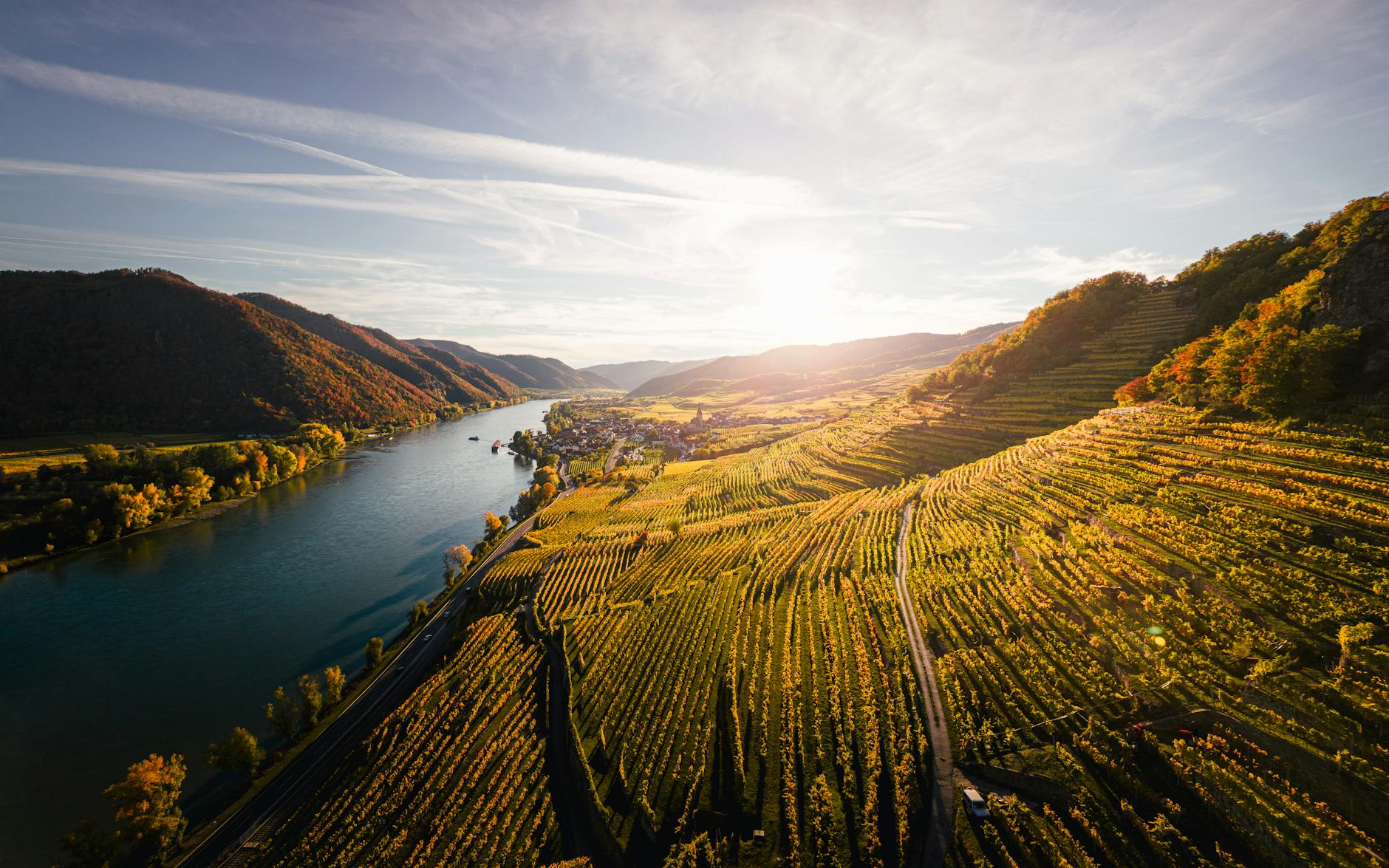
Five- to eight-hour tours running out along the Danube, into the wine villages or down the Donauradweg cost €80–150 and cover 30 to 50 kilometres. These are for people who cycle at home. The distance is not hard on flat ground but six hours in a saddle you are not used to is its own kind of difficulty, and no guide can fix a sore backside at kilometre thirty-five.
Private and family tours
Private tours are quoted per group and are the sensible option with children. Austrian rules put the minimum age for most scheduled tours at 12, which rules out a lot of families from the standard product entirely; a private guide can bring trailers, tag-alongs and child seats, and can cut the route in half when the smallest rider has had enough. If your party is four adults, the per-head cost often lands close to the scheduled tour anyway.
Themed and specialist rides
The classic loop is the volume product, but the more interesting tours in Vienna are the narrow ones, and they exist because the city gives a guide with a bicycle something a walking guide cannot reach. Red Vienna housing tours are the outstanding example: the great interwar Gemeindebauten are scattered across the outer districts, the Karl-Marx-Hof alone runs more than a kilometre along its street, and covering three or four of them on foot is a day of U-Bahn changes. By bike it is an afternoon, and the distances between them are part of the point.
Architecture rides work the same way, stringing together Otto Wagner’s Stadtbahn stations, the Wienzeile houses and the Kirche am Steinhof — sites that are miles apart and individually a short visit. Food-and-cycling hybrids do a loop of markets and Beisln with stops to eat, generally pricier and generally three to four hours. And a handful of operators run evening and night rides in high summer, which is the version we would pick if we could only do one: the Ring after dark, the canal, no traffic, and the buildings floodlit.
These are not always bookable on demand. Many run on a single fixed day per week and disappear between November and March. If a specialist ride is what you want, plan around its day rather than expecting to slot it in.
Booking direct or through a platform
Bike tours are one of the few Vienna products where booking direct has a concrete advantage. Pedal Power’s student and senior discount is a direct-booking offer, and the operators need to know your height in advance to have the right frame waiting — something that survives a direct booking form better than a marketplace field. Against that, the marketplaces give you the 24-hour free cancellation as standard and let you see four operators at once.
The rule of thumb: if you qualify for a discount or you are unusually tall or short, book direct and say so. Otherwise book wherever is easiest, because the price is broadly the same either way.
What to wear and bring
- Something you can pedal in. The bikes are step-through city frames with upright bars, so a skirt or a dress is genuinely fine. Sandals with no back strap are not.
- Sun protection in summer. The Ring and the Prater are exposed and three hours in July burns people who did not think they were outdoors for long.
- A layer for the evening departures. Vienna cools sharply once the sun goes behind the buildings, and moving air makes it feel colder still.
- Not much else. Baskets come with the bike, so you are not riding with a rucksack on your back unless you choose to.
When a Guided Tour Is the Wrong Purchase
We would tell three groups of people not to book one.
- Anyone staying five days or more. A day’s rental at €75 — or a fraction of that on the city’s public bike scheme — gives you more riding, more freedom and a better afternoon than a fixed three-hour loop. You will not get commentary, but you can read.
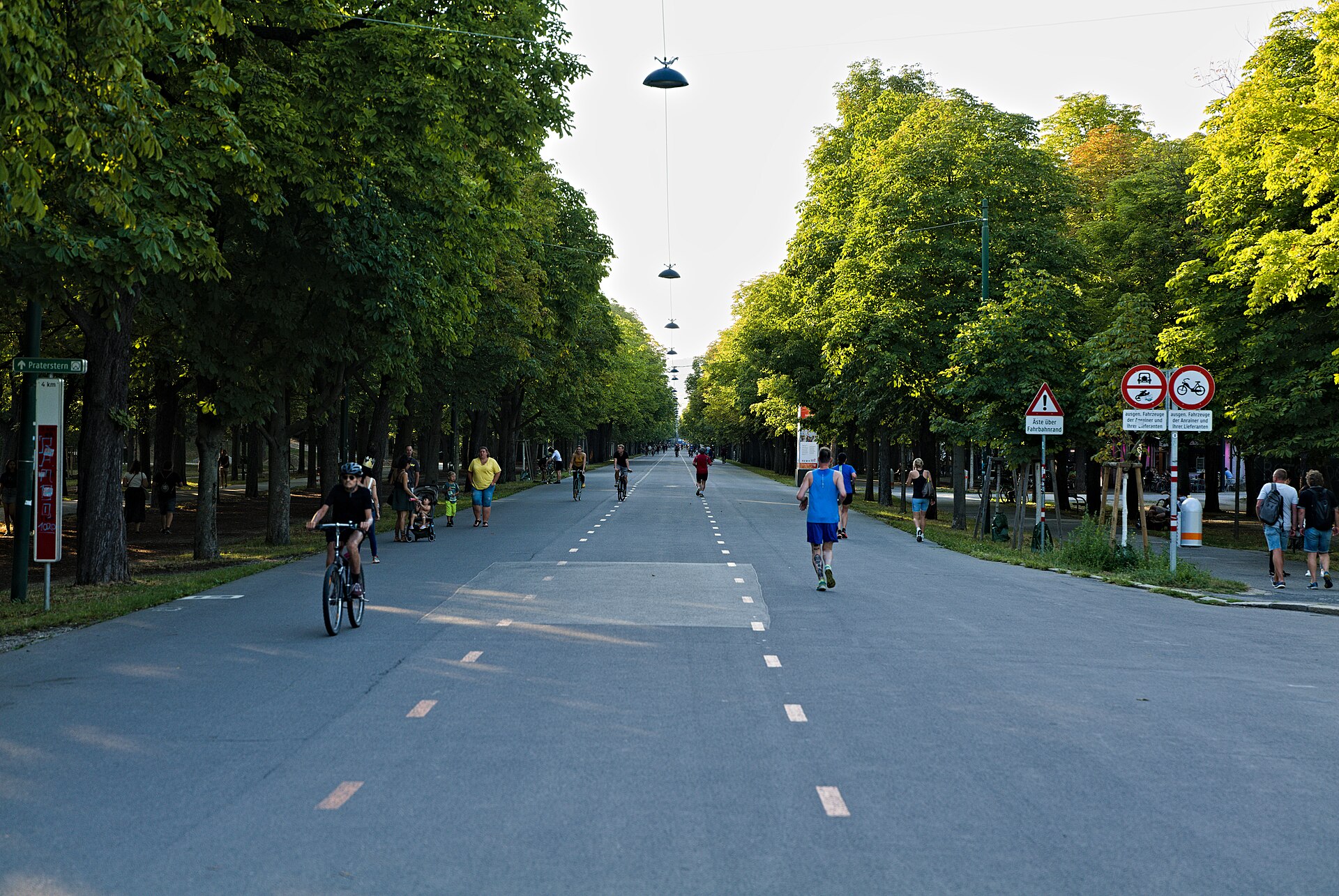
- Anyone whose main aim is the Prater or the Danube Island. Both are self-explanatory. The Hauptallee is four and a half kilometres of straight, car-free chestnut avenue and needs no guide; the Donauinsel is twenty-one kilometres of flat path between two channels of river. Paying someone to point at them is odd. Our Prater guide and Danube activities guide cover both.
- Nervous urban cyclists. Vienna is good but it is not Amsterdam. Guided groups still cross tram tracks, share space with buses on some stretches, and negotiate the Ring’s junctions. If you have not ridden in traffic for a decade, the tour will be stressful rather than relaxing, and a walking tour will teach you more.

Riding in Vienna: What the Tours Will Tell You Anyway
A few things worth knowing before you clip in, all of which a decent guide covers in the first five minutes but which are better absorbed in advance.
- Tram tracks are the main hazard. Cross them at as close to a right angle as you can manage. Wet tracks have put more visitors on the tarmac than cars ever have.
- Helmets are not compulsory for adults in Austria, but are for children under 12. Every operator provides them free and there is no reason to decline.
- Cycling on footpaths is prohibited unless the path is signed as shared. Enforcement is real and the fines are not nominal.
- Blood alcohol limits apply to cyclists — the threshold is higher than for drivers but it exists. This matters more than you would think on tours that end at a Heuriger.
- One-way streets are frequently cycle-exempt, signed with a small bike plate under the no-entry sign. This is why your guide keeps riding the wrong way up streets and why you should not copy it without checking the sign.
The thing nobody warns you about: the group
Scheduled bike tours run with whoever turns up, and a group of fifteen strangers on bicycles moves only as well as its weakest member. One rider who has not been on a bike since school will slow the whole tour, and the guide — correctly — will look after them rather than the pace. That is worth knowing in advance so you can be philosophical about it rather than irritated.
It also argues for the morning departure over the evening one if you want to cover ground, and for a small operator over a large one if group size matters to you. Ask what the maximum is before booking. Anything above about eighteen and the stops start being spent waiting at kerbs rather than listening.
Season, Weather and Booking
The season is essentially March to November, with the frequency stepping up sharply in May and dropping again in October. Nobody runs a meaningful scheduled programme in January and February; the paths are open and rideable but the tour market goes quiet.
The sweet spots are May, early June and September — warm enough to be pleasant, not the July heat, and long enough days for the evening departures. Late September and October give you the Heuriger season and the Sturm, which several operators build into their wine-hills tours.
Book a few days ahead in high season and a week ahead for anything small-group or specialist. Tours run in light rain and are cancelled for storms; the 24-hour cancellation window that most operators use is the thing to pay attention to, because Vienna’s summer thunderstorms are usually forecast well inside it. Check the evening before, not the morning of.
The Honest Verdict
The forty-nine euro classic city tour is worth it once, early, as an orientation device rather than as sightseeing. You will not see the inside of anything and you will not linger anywhere, and that is fine because that is not what it is for — it is for building the map in your head that makes the rest of the trip easier.
Beyond that first tour, Vienna rewards riding alone more than almost any European capital. The infrastructure is good, the terrain is flat, the river paths run for tens of kilometres without a junction, and a day’s hire costs not much more than three guided hours. Take the tour, then hire a bike for a day and go and find the Danube Island on your own. That is the sequence we would recommend to anybody.
Frequently Asked Questions
How much is a bike tour in Vienna?
The standard three-hour guided city tour costs around €49 including bike hire, or €41 if you bring your own bike. An e-bike upgrade adds about €29. Longer day tours out to the Danube or the wine villages run €80–150. Full-day rental without a guide is around €75.
How long is a Vienna bike tour and how far do you ride?
The classic city tour is three hours and covers roughly 15 kilometres at an easy pace with frequent stops. Longer excursion tours run five to eight hours and 30 to 50 kilometres. The terrain in the city is essentially flat throughout.
Do I need to be fit to do a Vienna bike tour?
No. The central routes are flat and the pace is set by the slowest rider. If you can ride a bike at all, the three-hour tour is within reach. Fitness only starts to matter on the wine-hills routes above Grinzing and Nussdorf, where an e-bike is a genuinely good idea.
What is the minimum age for a Vienna bike tour?
Scheduled tours generally set a minimum of 12 years. Younger children need a private tour, where guides can supply child seats, trailers and tag-alongs and shorten the route. Helmets are legally required for under-12s in Austria.
Are bike tours available in winter?
Barely. The scheduled season runs roughly March to November, with reduced timetables at each end and daily departures only from May to September. The cycle network stays open all winter, so hiring a bike remains possible when guided tours are not running.
Where do Vienna bike tours start?
Central meeting points, usually within a few minutes of Karlsplatz or the Staatsoper — Pedal Power meets at Bösendorferstraße 5 in the first district. All are reachable on the U-Bahn, and you should arrive ten to fifteen minutes early for bike fitting.
Is it better to take a guided tour or hire a bike in Vienna?
Take one guided tour early for orientation, then hire. Three guided hours costs about two-thirds of a full day’s rental, so the tour is worth it for the commentary and the route-finding, but Vienna’s flat, well-signed network makes independent riding easy from day two onwards.
Do bike tours run in the rain?
Light rain, yes. Storms, no. Most operators allow free cancellation up to 24 hours before, which is the window to use — check the forecast the evening before rather than hoping on the morning.
Related Vienna Guides
- Cycling in Vienna: Rentals, Routes and Rules
- Vienna Tours & Experiences Compared
- Vienna Day Tour Operators Compared
- The Prater: Complete Guide
- Things to Do on the Danube
- The Ringstrasse Guide
- Vienna’s Parks and Gardens
- Vienna’s Wine Regions
Photo Credits
The Hauptallee in the Prater: Hauptallee Prater Wien 2022-08-09 01 by Leonhard Lenz, CC0, via Wikimedia Commons.
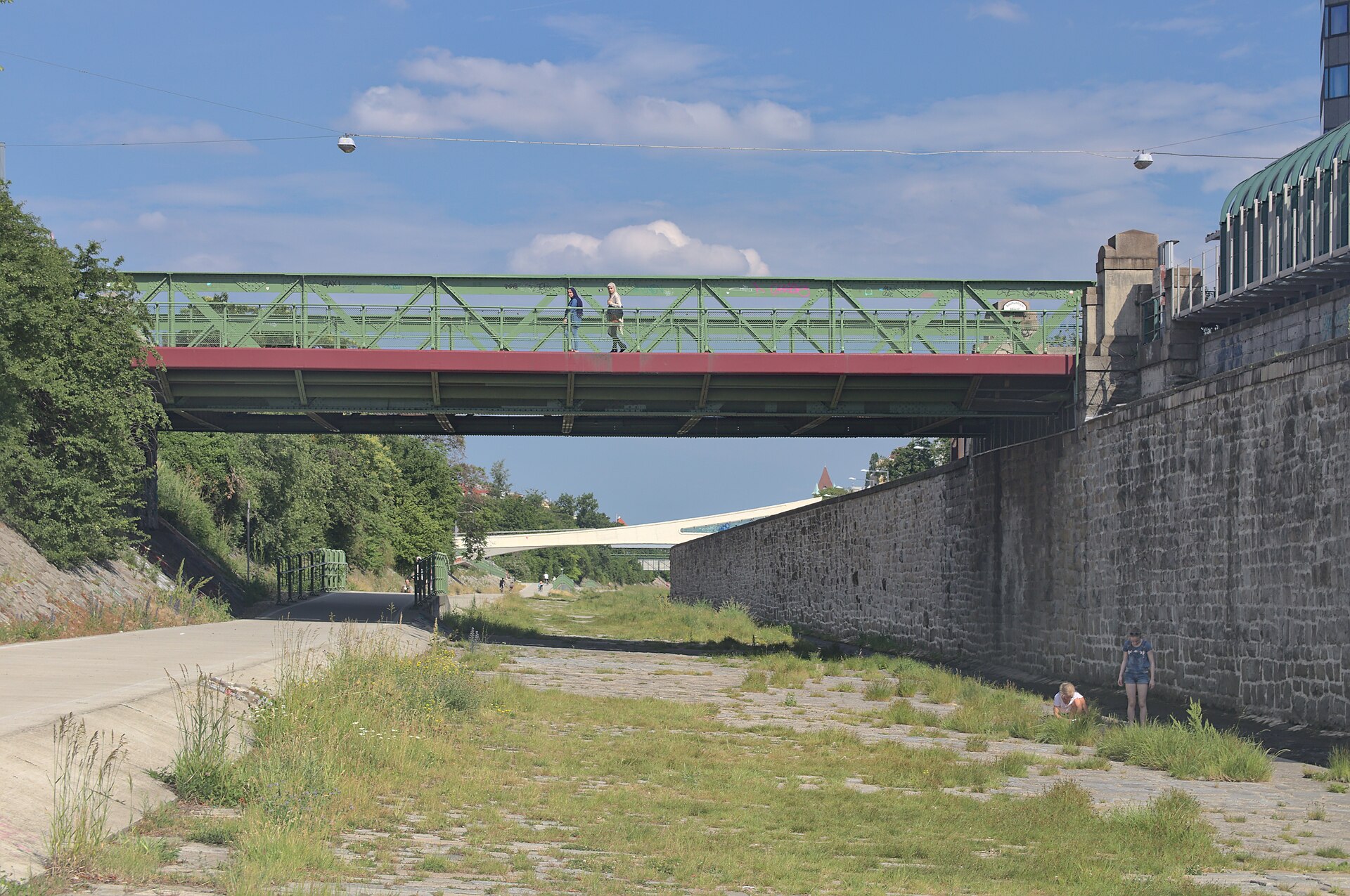
The Wienfluss cycle path at the Baumgarten-Brücke: 2017-06-05 AT Wien 13 Hietzing & Wien 14 Penzing, Wienfluss, Wienfluss-Radweg, Baumgarten-Brücke (50598533076) by Paul Korecky, CC BY-SA 2.0, via Wikimedia Commons.