Hundertwasserhaus & Kunst Haus Wien: Vienna’s Wonkiest Landmark
How to visit the Hundertwasserhaus in Vienna, why you cannot go inside, and what KunstHausWien adds — with 2026 prices, hours, a half-day route and an honest verdict.
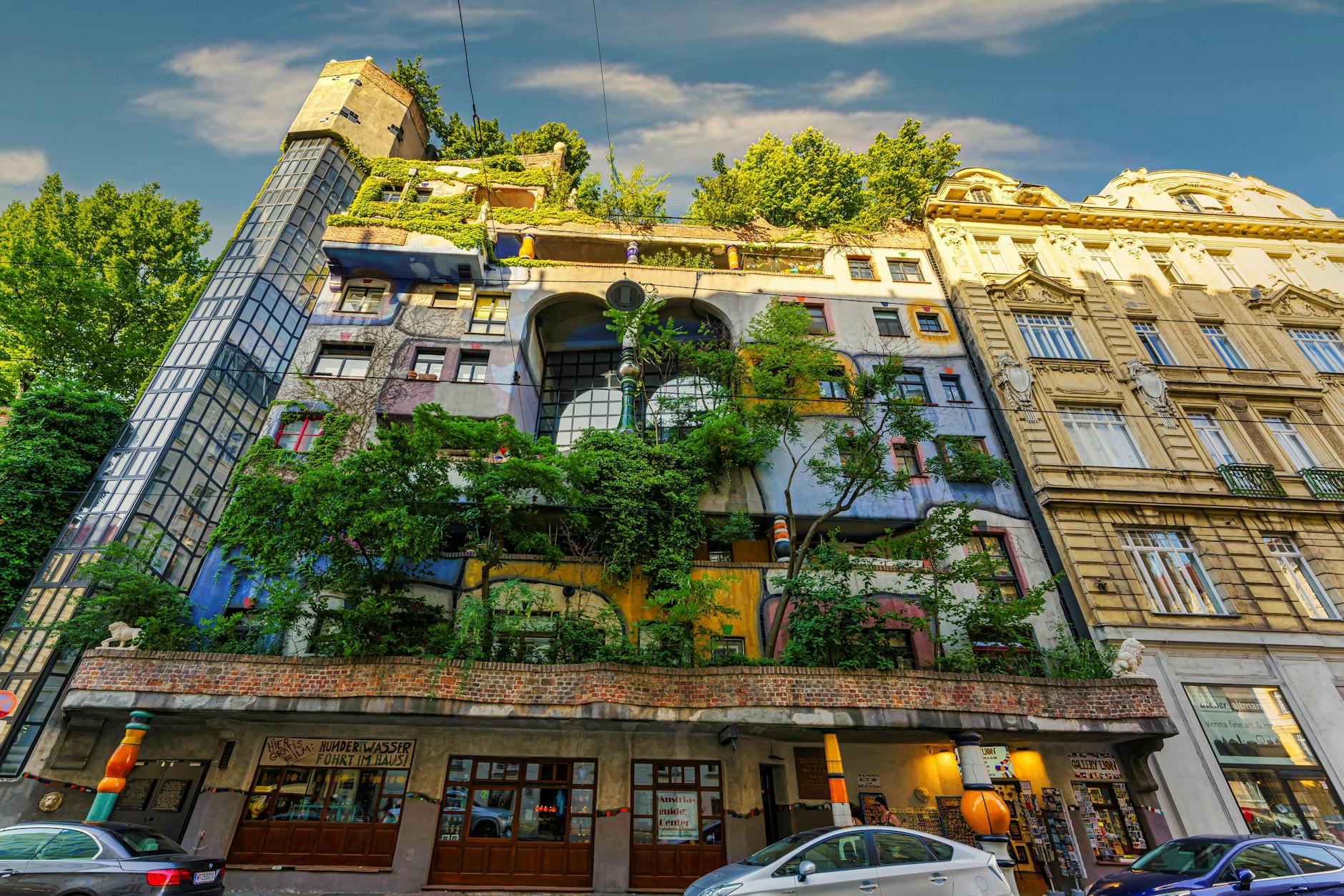
The Hundertwasserhaus — Vienna's most unconventional building proves the city never stopped experimenting
- At a Glance
- What the Hundertwasserhaus Is
- How to Visit (Without Annoying the Residents)
- KunstHausWien: The Museum
- The Third Hundertwasser: Spittelau
- A Half-Day Route
- What Else Is in the Neighbourhood
- Hundertwasser’s Ideas, and Why They Still Matter
- Who Was Hundertwasser?
- Photographing the House
- With Children
- Is It Worth Visiting? Our Verdict
- Practical Tips
- Frequently Asked Questions
- Related Vienna Guides
- Photo Credits
This article contains advertising. Our booking links are routed through a partner that adds commission tracking automatically, so if you book through one we earn a commission from the provider, at no extra cost to you. It never affects what we recommend. Affiliate disclosure
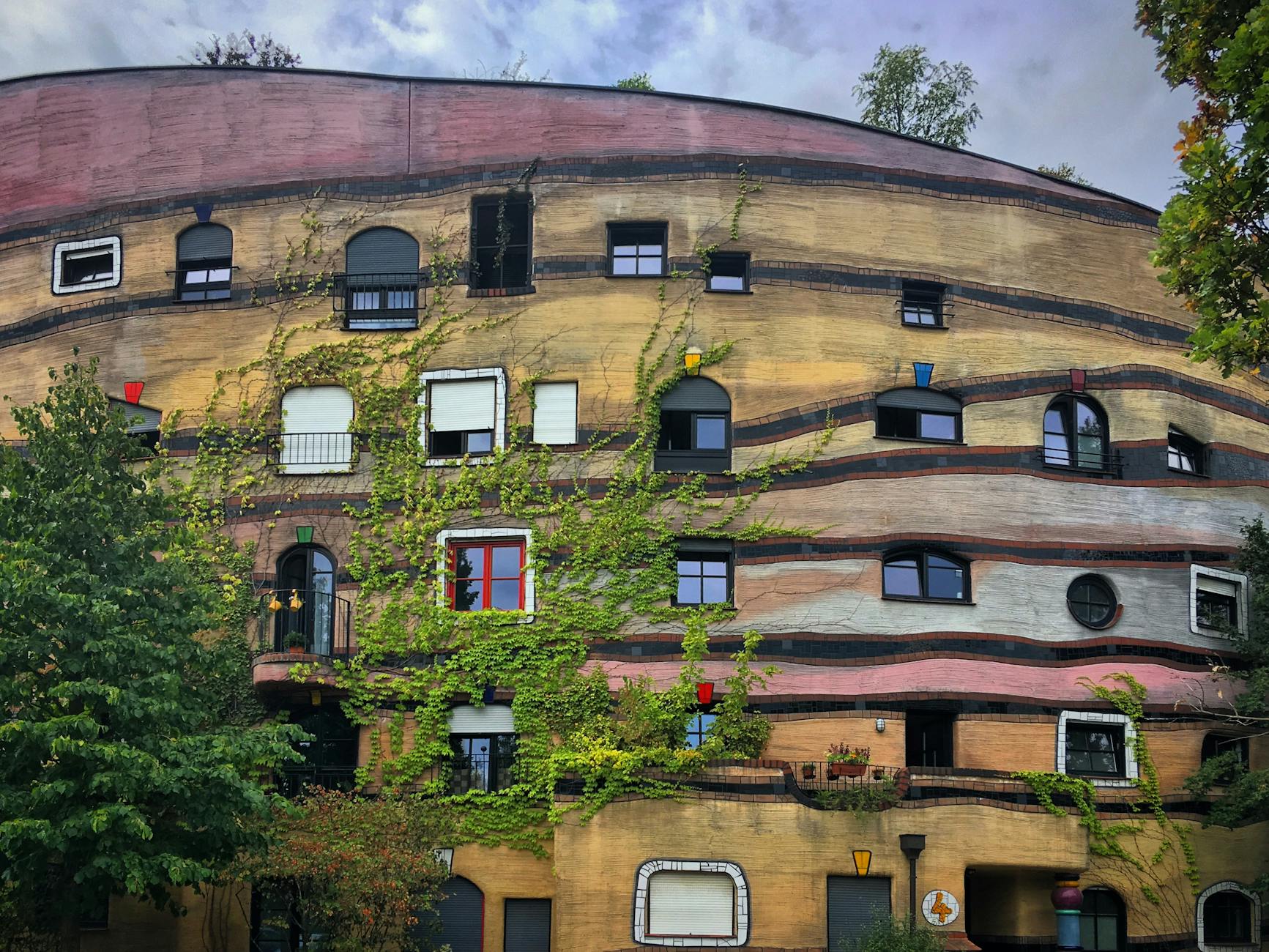
Turn the corner of Kegelgasse and Löwengasse in the 3rd district and the street stops behaving. The building in front of you has no straight lines worth speaking of: the facade is patched in blue, pink, white and ochre like a quilt, the windows are all different, trees grow out of the upper floors, the pavement in front of it rolls like a low swell, and gilded onion domes sit on the roof. The Hundertwasserhaus Vienna is a council housing block, finished in the mid-1980s, and it is the most photographed building in the city after the cathedral. It is also, to a surprising number of visitors’ disappointment, somebody’s home — you cannot go inside.
This guide explains what the Hundertwasserhaus is and how it came to exist, how to visit it without annoying the people who live there, what else is in the immediate area (including the Hundertwasser Village opposite), and how to turn a fifteen-minute photo stop into a proper half-day by adding KunstHausWien, the museum Hundertwasser built in a former furniture factory five minutes away, and the Spittelau incinerator he wrapped in gold and ceramic. Prices and hours were checked with KunstHausWien in September 2026; confirm before you travel.
At a Glance
| Hundertwasserhaus | KunstHausWien | |
|---|---|---|
| Address | Kegelgasse 36–38 / Löwengasse 41–43, 1030 Vienna | Untere Weißgerberstraße 13, 1030 Vienna |
| What it is | Municipal apartment building, private residence | Museum: permanent Hundertwasser display plus changing exhibitions |
| Can you go in? | No — exterior only | Yes |
| Cost | Free | €16 adult; €13 over-65s; €7 students to 25 and children to 18; free under 10; family ticket €27 |
| Hours | Any time; best early morning | Daily 10:00–18:00, last tickets 17:30 |
| Time needed | 15–30 minutes | 1.5–2 hours |
| Nearest stop | Radetzkyplatz, then a short walk | Radetzkyplatz, trams 1 and O |
| Vienna City Card | — | 30% off admission |
What the Hundertwasserhaus Is
Friedensreich Hundertwasser — born Friedrich Stowasser in Vienna in 1928, painter first and architect later — spent his career arguing that the straight line was, in his words, “godless and immoral”, and that people had a right to shape the buildings they lived in. In the late 1970s the City of Vienna invited him to design a municipal apartment block. He worked with the architects Josef Krawina and Peter Pelikan on the technical side; the building went up between 1983 and 1985 and tenants moved in shortly afterwards.
The result contains around 50 apartments and a handful of shops and communal spaces, and it is still Gemeindebau — city-owned social housing, with ordinary tenants paying ordinary rents. That is the fact that makes it interesting. Vienna’s social housing tradition is one of the most important things about the city, and this is its most famous and least typical example. Our guide to Red Vienna and its social housing explains the wider story.
The ideas built into it
- Uneven floors. Hundertwasser believed flat floors were a machine-age imposition, and the corridors and some interiors undulate deliberately.
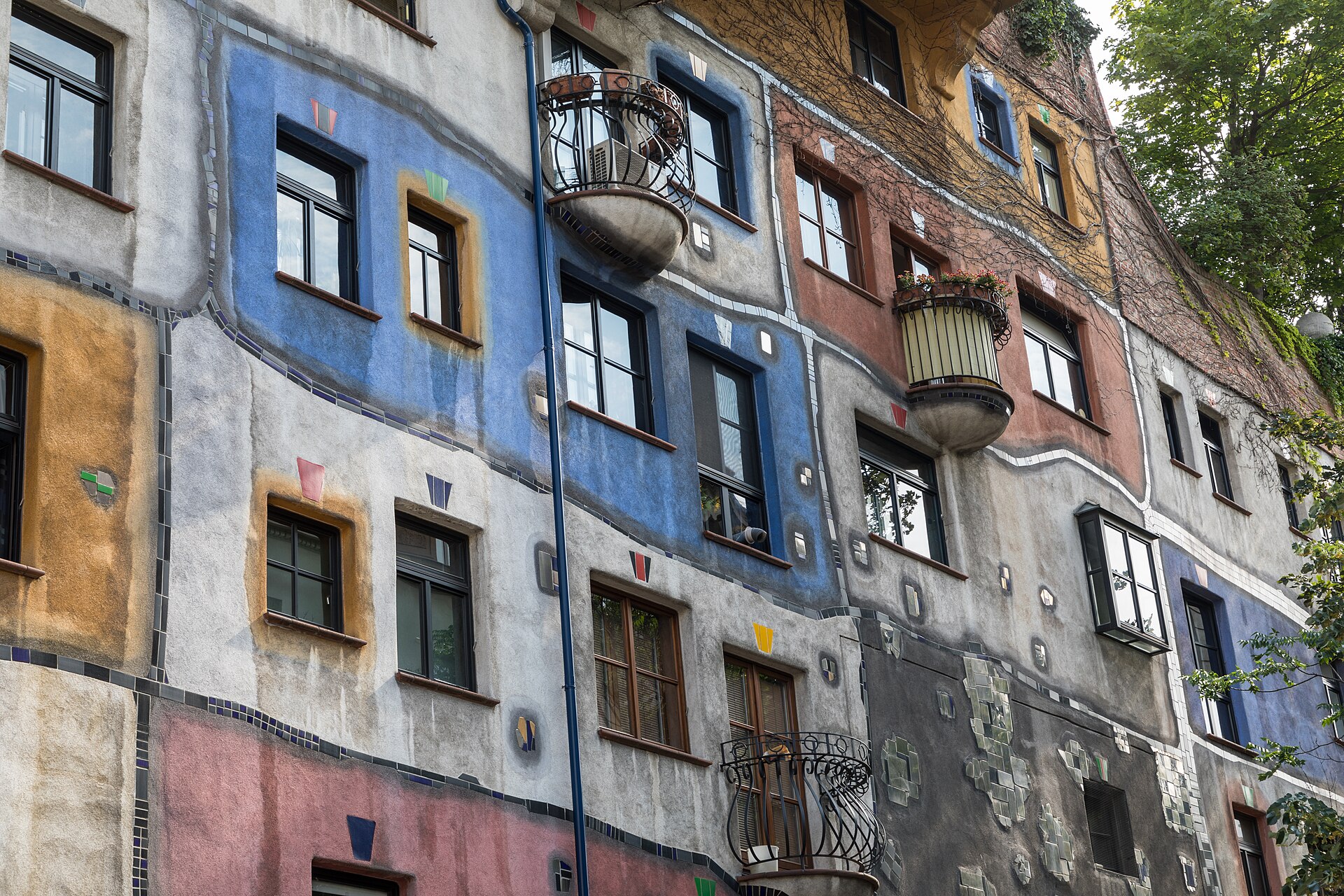
- The window right. Every tenant may decorate the wall around their own window as far as their arm will reach, which is why the facade is a patchwork rather than a design.
- Tree tenants. Trees grow from the terraces and out of some windows as full residents of the building, with a right to the space they occupy.
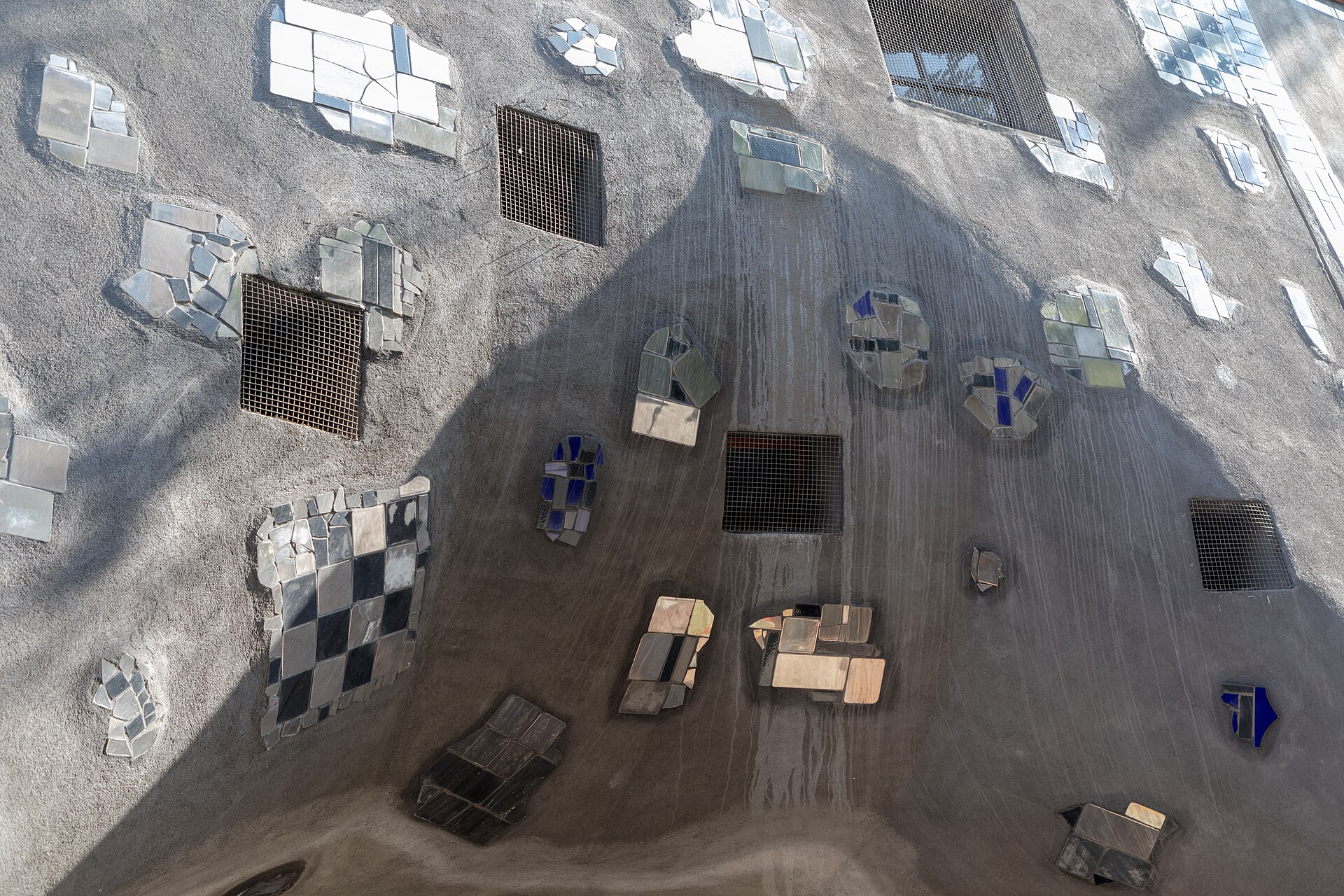
- Irregular columns, ceramic fragments and gold domes, all salvaged or hand-made, none repeating.
- A green roof long before green roofs were policy anywhere.
How to Visit (Without Annoying the Residents)
This is the part most guides leave out. Roughly a hundred people live in the Hundertwasserhaus, and several hundred visitors a day stand outside it with cameras. The building has notices asking for quiet, and the tenants have every right to expect it.
- You cannot go inside. There are no tours of the apartments, no lobby to visit and no viewing platform. Photograph the exterior and move on.
- Do not ring the doorbells or try to follow a resident through the door.
- Keep the pavement clear. The best-known view is from the corner of Kegelgasse and Löwengasse, and the street is narrow.
- Go early. Before 09:00 you will have it more or less to yourself.
- Keep the noise down, particularly early and late. People are asleep behind those windows.
Fifteen to thirty minutes is enough. Walk round the corner into Kegelgasse to see how the building meets the ordinary tenements on either side — that contrast is the whole point of it.
The Hundertwasser Village
Directly opposite, in a converted former tyre workshop, is the Hundertwasser Village, a small arcade of souvenir shops and a bar, decorated in the same style and designed by Hundertwasser himself in 1990. It is free to walk into. It is also unashamedly a shop, and much of what it sells is the sort of thing you can buy at any airport with a picture printed on it.
The one attraction worth the money is the “Toilet of Modern Art”, a tiled public lavatory in full Hundertwasser style, for which there is a small charge. It is exactly as silly and as enjoyable as it sounds, and it is a genuine Hundertwasser interior, which is more than the apartments will give you.
KunstHausWien: The Museum
Five minutes’ walk from the house is the museum Hundertwasser made out of a nineteenth-century furniture factory — the former Thonet works, where the bentwood chairs that furnish every Viennese coffee house were once produced. He converted it in 1989–1991, and it opened as a museum with the same chequered floors, uneven surfaces, planted terraces and irregular windows as the housing block. If you want to know what it feels like to be inside a Hundertwasser building, this is one of the places in Vienna where you can.
Tickets and hours
- Adults €16.00
- Seniors 65+ €13.00
- Students to 25 and children to 18: €7.00
- Children under 10: free
- Family ticket (two adults, one to four children): €27.00
- Annual pass €29.00 — cheaper than two visits
- Vienna City Card holders: 30% off
- Open daily 10:00–18:00; ticket sales close at 17:30
That City Card discount is worth noting: it takes adult entry from €16 to about €11. Our City Card vs Vienna Pass guide explains whether the card is worth buying in the first place.
What is inside
The permanent Hundertwasser Museum covers his life and work — paintings, graphics, architectural models, his flag and stamp designs, his ecological writing and the buildings he made around the world — with an audio guide in German, English and French. The upper floors hold changing exhibitions, which since the museum’s 2020s reorientation have focused on photography, ecology and climate, often by contemporary artists. In 2026 these have included a show on seeds; check what is on before you go, because the temporary programme is a large part of what you are paying for.
There is a good café, Café Friedlich, with a planted courtyard, and the building is barrier-free with a lift, an accessible WC and wheelchairs available on request. It is one of the easier Vienna museums for anyone with mobility needs, which is not something you can say about most historic buildings here.
The Third Hundertwasser: Spittelau
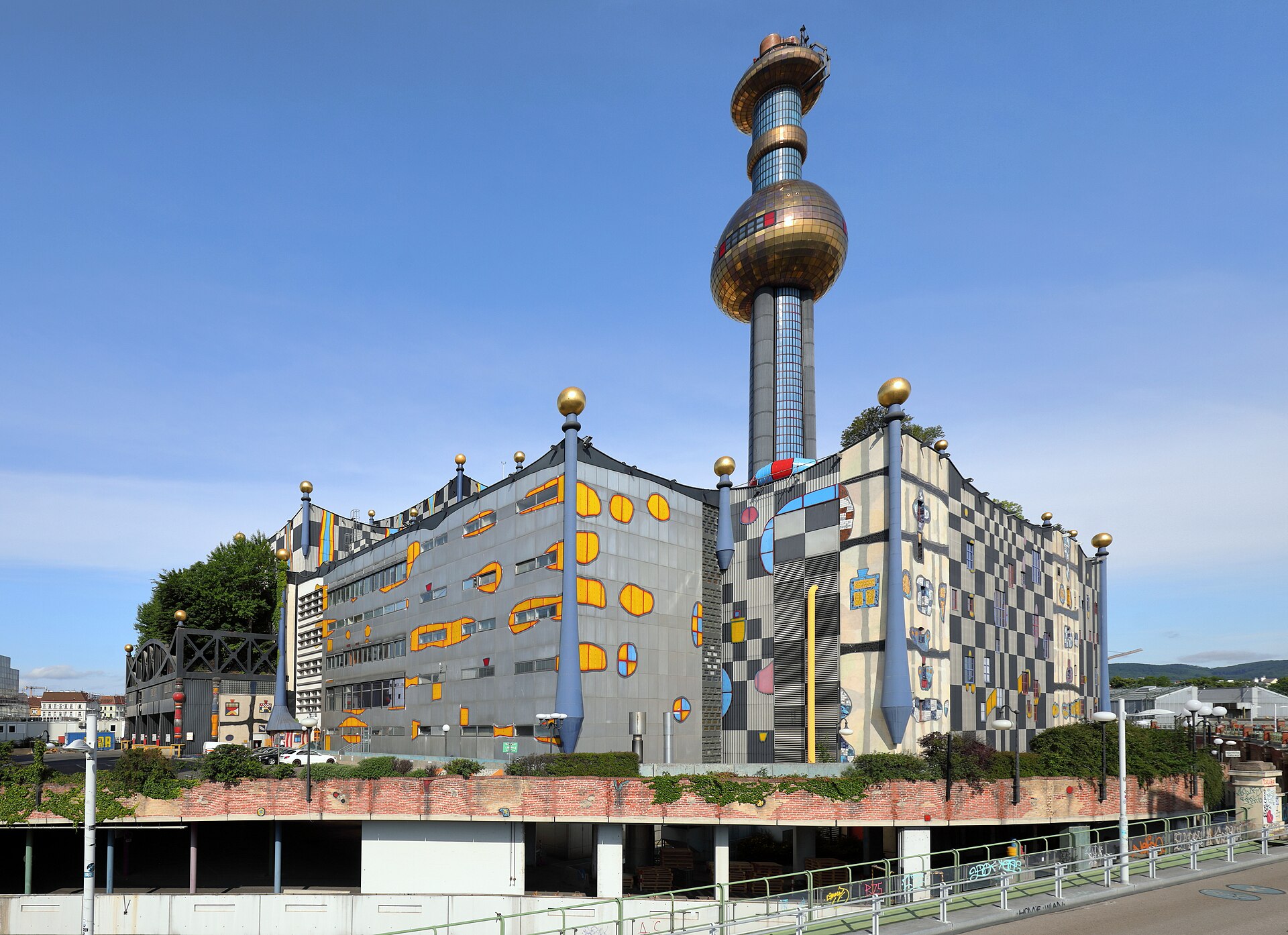
The building most Viennese people would name first is not the housing block at all. It is the Spittelau district heating plant in the 9th district: a municipal waste incinerator, rebuilt after a fire, which Hundertwasser was asked to redesign at the end of the 1980s. He accepted on condition that the plant become the most modern and cleanest waste-incineration plant in Europe, and the result, finished in 1992, has become a Vienna landmark.
It burns the city’s rubbish and heats tens of thousands of homes through Vienna’s district heating network. You can see it from the U4 and U6 platforms at Spittelau, and it is spectacular at night. There is no general public access to the interior; it is a working plant, and guided tours for groups have to be arranged with the operator.
A Half-Day Route
The three sites and the streets between them make a good, low-effort morning or afternoon.
- Start at Schwedenplatz (U1, U4) and take tram 1 along the Danube Canal to Radetzkyplatz, then walk on to the house.
- Hundertwasserhaus, Kegelgasse and Löwengasse: 15–30 minutes, plus the Village opposite if you want the souvenirs or the famous lavatory.
- Walk five minutes to KunstHausWien, Untere Weißgerberstraße 13: plan on 1.5–2 hours including the temporary exhibition and a coffee in the courtyard.
- Walk down to the Danube Canal and follow it back towards the centre, past the street art on the canal walls; our street art guide covers that stretch, and our Danube guide the water itself.
- Add Spittelau only if you are already going that way — it is across the city on the U4 and U6, and it is an exterior view from a station platform rather than a visit.
Alternatively, combine the Hundertwasserhaus with the Belvedere, which is twenty minutes away by tram, or with the Prater across the canal. Our Prater guide and Belvedere guide have the details.
What Else Is in the Neighbourhood
Landstraße, the 3rd district, is one of the more rewarding parts of Vienna to walk around and one of the least visited, because almost everyone arrives for the Hundertwasserhaus and leaves again twenty minutes later. Within fifteen minutes on foot:
- The Danube Canal, a short walk north, with its continuous run of legal graffiti walls, floating bars in summer and a cycle path that takes you back into the centre in ten minutes.
- The Wittgenstein House (Haus Wittgenstein) on Kundmanngasse, designed in the late 1920s by the philosopher Ludwig Wittgenstein for his sister, and about as far from Hundertwasser as a building can get: austere, proportioned to the millimetre, entirely without ornament. Seeing the two within half an hour of each other is one of the better architectural jokes in Vienna. It now houses a cultural institute; check access before you go.
- The Belvedere, twenty minutes’ walk or a short tram ride away, for Klimt’s The Kiss.
- The Stadtpark, with the gilded Johann Strauss monument, on the other side of the Ring.
- Rochusmarkt, a proper working neighbourhood market on Landstraßer Hauptstraße (U3 Rochusgasse), where Viennese people actually shop — a useful antidote if the Naschmarkt felt like a tourist attraction. Our markets guide covers it.
- Joseph Brot on Landstraßer Hauptstraße, one of the city’s best bakeries, for breakfast before or lunch after; see our breakfast and brunch guide.
Hundertwasser’s Ideas, and Why They Still Matter
It is easy to file the Hundertwasserhaus under whimsy and move on. It is worth a moment’s thought, though, because the arguments built into it were unusual in 1983 and are mainstream now.
Hundertwasser’s central claim was that people should not live in buildings that treat them as identical units. The window right — the tenant’s licence to paint their own patch of wall — is a small, concrete version of that idea, and it is the reason the facade looks like a collage rather than a composition: it was not designed all at once by one person. His insistence on trees as tenants, with a right to space and light of their own, reads today as an early argument for urban greening; his green roof predates city policy on green roofs by decades. He made his acceptance of the Spittelau commission conditional on the plant becoming the most modern and cleanest waste-incineration plant in Europe.
The criticisms are also fair. The ornament is applied to an otherwise ordinary reinforced-concrete structure; maintaining the building is expensive; the uneven floors are charming to look at and awkward to live with; and the tourist pressure on the tenants is real and daily. Vienna, which argues about architecture as a civic sport, has never fully settled whether the house is a landmark or a stunt.
What is not in doubt is that it works as a piece of city. It stands on a perfectly ordinary street corner in a perfectly ordinary district, next to nineteenth-century tenements, and it makes the whole junction memorable. Very few buildings of the 1980s anywhere can claim that.
Who Was Hundertwasser?
Friedrich Stowasser was born in Vienna in 1928 to a Jewish mother and a Catholic father; his father died when he was an infant, and much of his mother’s family was murdered in the Holocaust, which he survived in Vienna as a child. He renamed himself Friedensreich Hundertwasser — roughly “peace-rich hundred-water” — and made his name as a painter in the 1950s, working in dense, spiralling colour that owes something to Klimt and Schiele and something to the Viennese decorative tradition.
From the 1970s he turned increasingly to architecture and to environmental campaigning, decades before either was fashionable: green roofs, humus toilets, reforestation, opposition to nuclear power, a lifelong argument against the “tyranny” of the grid. He designed flags, stamps, posters and buildings across Austria, Germany, Japan and New Zealand, where he spent much of his later life; among the best known in Austria are the Rogner Bad Blumau spa village in Styria and the parish church at Bärnbach. He died at sea in 2000, aboard the Queen Elizabeth 2, and was buried according to his wishes on his own land in New Zealand, under a tree.
His critics — and there are plenty in Vienna — argue that the buildings are decoration applied to conventional structures by a painter, that maintenance is expensive, and that the tourists are a burden on the tenants. His defenders point out that he was arguing for green roofs, biodiversity and tenant participation in the 1970s, and that half of what he proposed is now standard urban policy. Both can be true.
Photographing the House
It is the most photographed modern building in Vienna, which means the obvious shot has been taken several million times. A few ways to get something better:
- The classic frame is from the corner of Kegelgasse and Löwengasse, far enough back to get the whole facade. Morning light, and a lens wide enough to include the rolling pavement, help.
- Go close instead. The details — the ceramic fragments, the mismatched window frames, the hand-formed columns under the arcade — photograph better than the whole building and are far less familiar.
- Include the neighbours. A frame that catches the plain nineteenth-century block next door tells the story the building was built to tell.
- Come in the rain. Wet ceramic and wet paint saturate the colours, and the crowds thin out.
- Do not photograph into the windows. People live there, and a telephoto lens pointed at somebody’s kitchen is not street photography.
Our Vienna photography spots guide has the rest of the city’s best frames.
With Children
This is one of the easiest sights in Vienna to enjoy with children, and one of the few where nobody has to be quiet in a gallery. The building looks like something out of a picture book, the Village opposite has the famously decorated lavatory, and KunstHausWien’s uneven floors and chequerboard surfaces are more fun to walk on than to look at. Children under 10 enter the museum free and those up to 18 pay €7, and the family ticket at €27 covers two adults and up to four children — one of the better family rates in the city. Combine it with the Prater across the canal for a day that needs no queueing and very little planning; see our Vienna with kids guide.
Is It Worth Visiting? Our Verdict
The Hundertwasserhaus: yes, but keep it in proportion. It is free, it takes twenty minutes, it is genuinely unlike anything else in Vienna, and it is a short tram ride from the centre. What it is not is an attraction: there is nothing to enter, no view to climb to and no interpretation on site. Visitors who travel across the city expecting a Gaudí-scale experience come away flat. Visitors who treat it as a stop on the way to KunstHausWien or the Belvedere are usually delighted.
KunstHausWien: yes, if you like the idea. At €16 — or about €11 with a Vienna City Card — you get a Hundertwasser interior you can walk through. The permanent display explains the man and the philosophy; the temporary exhibitions are a genuine contemporary programme rather than an afterthought. If Hundertwasser’s work strikes you as kitsch, the museum will not convert you, and your money is better spent at the Belvedere or the Albertina.
Who should go: anyone interested in architecture, ecology or twentieth-century Vienna; families with children, who tend to love the building; photographers; and anyone who has had enough gilt and marble for one trip.
Who might skip it: visitors on a very short trip who have not yet seen the centre — our two-day itinerary leaves it out — and anyone allergic to whimsy.
Practical Tips
- Best light on the Hundertwasserhaus facade is in the morning; the colours flatten in the middle of the day.
- Rain is fine for the house, because you are only outside for twenty minutes, and it is a good excuse to spend longer in the museum.
- Toilets: the Village opposite has the Hundertwasser-designed ones; the museum has normal ones.
- Getting there: trams 1 and O stop at Radetzkyplatz for the museum, and the house is a short walk on. Both are on the standard transport ticket — €3.20 a single on paper (€3.00 in the WienMobil app), €10.20 for 24 hours (€9.70 digital).
- Combine with the Sunday flea market? No — the Naschmarkt is in the other direction and its food stalls are closed on Sundays. The museum, though, is open every day of the year including Sundays, which makes this a good Sunday plan when the shops are shut.
- Eating: Café Friedlich at the museum, or walk to the Danube Canal, which has bars and restaurants along it in summer.
Frequently Asked Questions
Can you go inside the Hundertwasserhaus?
No. It is a private apartment building with around 50 households, and there is no public access to the interior. You can photograph the outside and visit the Hundertwasser Village opposite. For a Hundertwasser interior, go to KunstHausWien.
How much does it cost to visit the Hundertwasserhaus?
Nothing. It is a street view and free to see. KunstHausWien, five minutes away, costs €16 for adults, €7 for students to 25 and children to 18, and is free for under-10s.
Where is the Hundertwasserhaus?
At the corner of Kegelgasse and Löwengasse in the 3rd district, Landstraße. Take tram 1 to Radetzkyplatz, the stop for the museum, and walk the last few minutes.
What are KunstHausWien’s opening hours?
Daily from 10:00 to 18:00, with last ticket sales at 17:30.
Who built the Hundertwasserhaus and when?
It was designed by the artist Friedensreich Hundertwasser with the architects Josef Krawina and Peter Pelikan, and built by the City of Vienna between 1983 and 1985 as municipal housing.
How long do you need at the Hundertwasserhaus?
Fifteen to thirty minutes for the building and the Village opposite. Add about two hours if you continue to KunstHausWien.
Is the Hundertwasserhaus worth visiting?
Yes, as a short, free stop, especially combined with KunstHausWien or the Belvedere. It is not an attraction in its own right, and it disappoints people who cross the city expecting one.
What other Hundertwasser buildings are in Vienna?
KunstHausWien in the 3rd district and the Spittelau district heating plant in the 9th, with its gold-topped chimney, which you can see from the U4 and U6 station. Elsewhere in Austria, the Rogner Bad Blumau spa in Styria is the largest example.
Related Vienna Guides
- Vienna Attractions
- Red Vienna and Social Housing
- Vienna Street Art and Contemporary Art
- Albertina Museum Vienna
- Belvedere Palace Guide
- Vienna Photography Spots
- Vienna Hidden Gems
- Vienna 2-Day Itinerary
Photo Credits
The Hundertwasserhaus facade: Wien, Hundertwasserhaus — 2018 — 3166 by Dietmar Rabich, CC BY-SA 4.0, via Wikimedia Commons.
Facade detail: Wien, Hundertwasserhaus — 2018 — 3173 by Dietmar Rabich, CC BY-SA 4.0, via Wikimedia Commons.
The Spittelau plant: Spittelau (Wien) – Müllverbrennungsanlage (1) by C.Stadler/Bwag, CC BY-SA 4.0, via Wikimedia Commons.