Albertina Museum Vienna: Tickets, Highlights & Visitor Tips
Albertina Vienna tickets and 2026 prices for all three sites, opening hours including late nights, the state rooms and the Monet-to-Picasso collection, and an honest verdict.

Photo by fatma kaya
- Albertina Tickets and Prices 2026
- Opening Hours and When to Go
- What Is Inside
- A Route Through the Museum
- The Collection and How It Got Here
- Five Things to Look For
- Visiting with Children and Teenagers
- The Other Two Albertinas
- How Long to Allow
- Getting There and What Is Nearby
- Practicalities
- Where to Eat and Drink Nearby
- Is the Albertina Worth It? Our Verdict
- Albertina vs Vienna’s Other Big Museums
- Frequently Asked Questions
- Related Vienna Guides
- Photo Credits
This article contains advertising. Our booking links are routed through a partner that adds commission tracking automatically, so if you book through one we earn a commission from the provider, at no extra cost to you. It never affects what we recommend. Affiliate disclosure
The Albertina is the museum most visitors walk past without realising it is there. It stands on the Augustinian Bastion, one of the surviving remnants of Vienna’s old fortifications, a few steps from the State Opera, and from the street you mainly see a stone wall, a fountain and a flight of steps. Go up them and you are in a Habsburg palace with a grand staircase, twenty restored state rooms and, on the floor above, Monet, Degas, Renoir, Picasso and Chagall. If you are comparing Albertina Vienna tickets with everything else on a short trip, the headline numbers are €20.90 for adults, free for under-19s, and late opening until 21:00 on Wednesdays and Fridays.
This guide covers ticket prices for all three Albertina sites and which one to buy, opening hours and the best times to go, what is actually on display (including why Dürer’s famous hare is usually not), how long to allow, what is nearby, accessibility and practicalities, and our honest verdict on how it compares with Vienna’s other big museums. Prices and hours were checked on the Albertina’s own website in September 2026; exhibitions and prices change, so confirm before you go.
Albertina Tickets and Prices 2026
| Ticket | ALBERTINA | ALBERTINA MODERN | ALBERTINA KLOSTERNEUBURG |
|---|---|---|---|
| Standard adult | €20.90 | €17.90 | €9.00 |
| Seniors 65+ | €17.50 | €15.90 | €7.00 |
| Under 26 | €17.50 | €15.90 | €7.00 |
| Under 19 | Free | Free | Free |
| Vienna City Card holders | €18.90 | €15.90 | — |
| Ö1 Club members | €18.90 | €14.90 | €7.00 |
| Visitors with special needs | €7.00 | Free | Free |
| ICOM members, Kulturpass holders, Friends of the Albertina | Free | Free | Free |
The combined ticket for all three locations costs €29.90 (€24.90 for over-65s and under-26s, free for under-19s, €7.00 with special needs). There is also a €13.00 combined ticket for Albertina Klosterneuburg and Klosterneuburg Abbey, sold at the ticket machine only.
Two extras to know about: public guided tours cost €6.00 on top of your entry ticket, and the smartphone guide costs €5.00.
Which ticket should you buy?
- Most visitors: the standard Albertina ticket at €20.90. The main building holds the state rooms, the modern collection and the big temporary exhibitions.
- Families: the same, and remember that everyone under 19 goes free — one of the best family deals among Vienna’s major museums.
- If you have a Vienna City Card, it saves €2.00 here. That is modest; see our City Card vs Vienna Pass comparison before assuming a pass pays.
- If you are interested in post-war and contemporary art, the €29.90 combined ticket makes sense as soon as you visit two sites: Albertina plus Albertina Modern separately would cost €38.80.
- Under 26? Bring ID: €17.50 instead of €20.90.
Opening Hours and When to Go
- ALBERTINA: daily 10:00–18:00, with late opening until 21:00 on Wednesdays and Fridays.
- ALBERTINA MODERN: daily 10:00–18:00.
- ALBERTINA KLOSTERNEUBURG: Thursday to Sunday, 10:00–17:00.
The best time to visit is a Wednesday or Friday evening. After about 18:00 the galleries empty out, the light in the state rooms is at its best, and you can look at a Monet without three phones in front of it. Failing that, go at 10:00 on a weekday. The worst times are wet weekend afternoons and the first hours after a major exhibition opens.
Unlike Schönbrunn Palace, the Albertina does not use fixed entry slots for general admission, so you can turn up. Buying online still saves queuing at the desk on busy days.
What Is Inside
The Albertina is really three museums under one roof, which is why people’s impressions of it vary so much.
The Habsburg state rooms
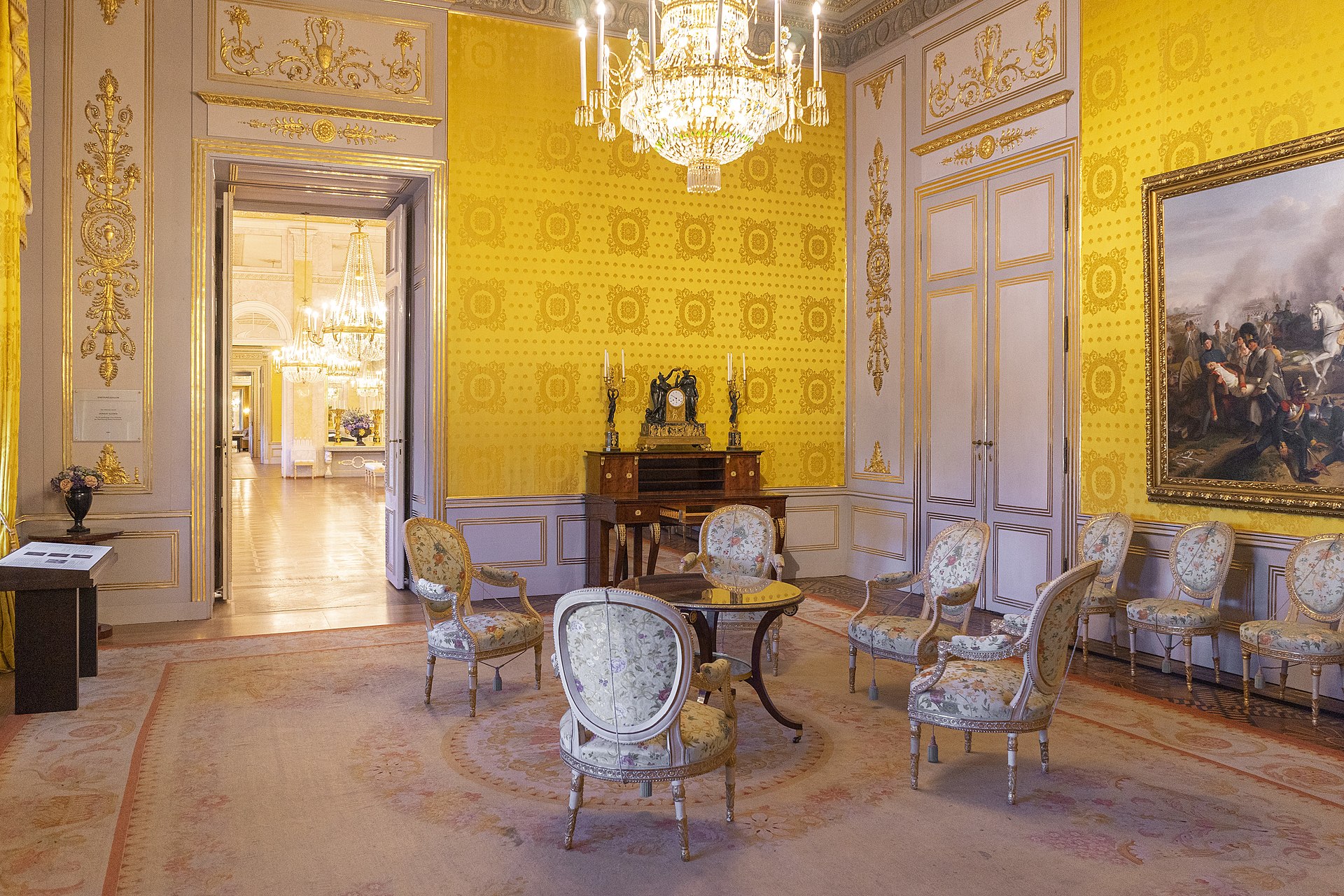
The building is the former palace of Duke Albert of Saxe-Teschen — the Albert whose collection gave the museum its name — and his wife Marie Christine, daughter of Maria Theresa. Around twenty of its state rooms (Prunkräume) have been restored to their classicist decoration, with silk wall coverings, parquet floors, chandeliers and original furniture. They are included in your ticket. If you have already done the Hofburg and Schönbrunn, they are also a useful corrective: this is what a very rich aristocratic household looked like, rather than an imperial court.
Monet to Picasso: the Batliner Collection
The permanent modern display, built on the Batliner Collection, is the reason most people come. It runs from French Impressionism through to the second half of the twentieth century: Monet — including The Water Lily Pond — Degas, Renoir, Cézanne, Toulouse-Lautrec, the German Expressionists, Kandinsky, Klee, Chagall, Malevich and a substantial group of Picassos. It is a compact, well-hung collection that you can see properly in an hour, and it is the best single place in Vienna to see French and German modernism, which the other big museums largely lack.
The graphic collection — and the truth about Dürer’s hare
The Albertina’s core is one of the largest and most important collections of prints and drawings in the world: around a million prints and tens of thousands of drawings, including Albrecht Dürer’s Young Hare and Praying Hands, works by Michelangelo, Raphael, Rubens, Rembrandt, Klimt and Schiele.
Here is the honest part: works on paper are extremely light-sensitive and cannot be permanently displayed. The Dürer originals are shown only rarely, for short periods, and the rest of the time you will see a facsimile in the shop rather than the watercolour itself. If you are coming specifically for the Young Hare, check the current exhibition programme first. The Albertina also stages temporary exhibitions through the year, so what is on show changes from one visit to the next.
Temporary exhibitions
The Albertina runs several large temporary exhibitions a year, and they are usually the reason the queue is long. They are included in the standard ticket. Check what is on before you go: if it is an artist you care about, add an hour to your visit; if not, the permanent modern collection and the state rooms still justify the entry.
A Route Through the Museum
The Albertina is laid out over several floors of a palace, and it is easy to see the temporary exhibition, walk out and miss half of what your ticket covers. A sensible order:
- Up the ramp or the lift from Albertinaplatz and into the entrance hall under the flying roof. Leave coats and large bags in the cloakroom.
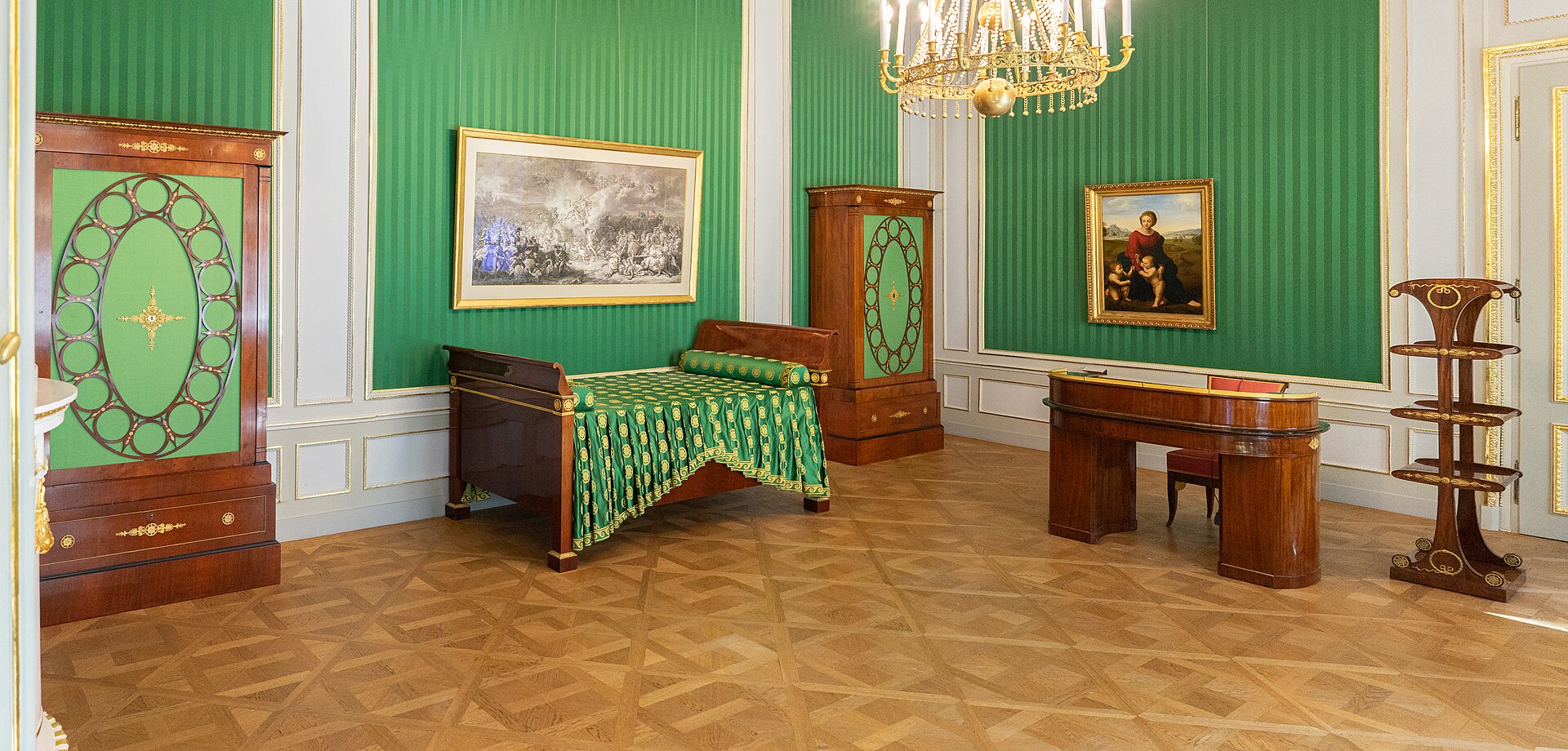
- Start with the state rooms. They are the part most visitors skip and the part that is emptiest first thing. Twenty rooms take about half an hour at a walking pace, longer if you stop to look at the furniture and the views over the Burggarten and the Opera.
- Then the modern collection. Impressionism first, then the German Expressionists, the Russians and Picasso. An hour is right; two if you linger.
- Then the temporary exhibition, whatever it is. Doing it last means you are not rushing the permanent collection to get to it.
- Finish at the terrace. The bastion terrace outside gives you a rooftop-level view over the Opera and towards the Hofburg — one of the better free views in the 1st district, and a good place to work out where to go next.
If you are short of time, the compressed version is state rooms plus the Impressionist and Picasso galleries: forty-five minutes, and you will have seen the two things the museum does best.
The Collection and How It Got Here
The museum takes its name from Duke Albert of Saxe-Teschen, who married Maria Christina, one of Maria Theresa’s daughters, and who began collecting prints and drawings systematically in the 1770s while serving as governor in Pressburg — today’s Bratislava. He built an encyclopaedic collection of drawings and prints, and by the end of the eighteenth century it was housed in his palace on the bastion in Vienna.
What he assembled is still the core of the Albertina: roughly a million prints and tens of thousands of drawings, a graphic collection ranked with the very best in the world. Through the nineteenth century it stayed in the family, passing to successive archdukes; after the fall of the monarchy in 1918 it became state property, and in 1920 it was merged with the imperial library’s collection of prints, which is where much of its later depth comes from.
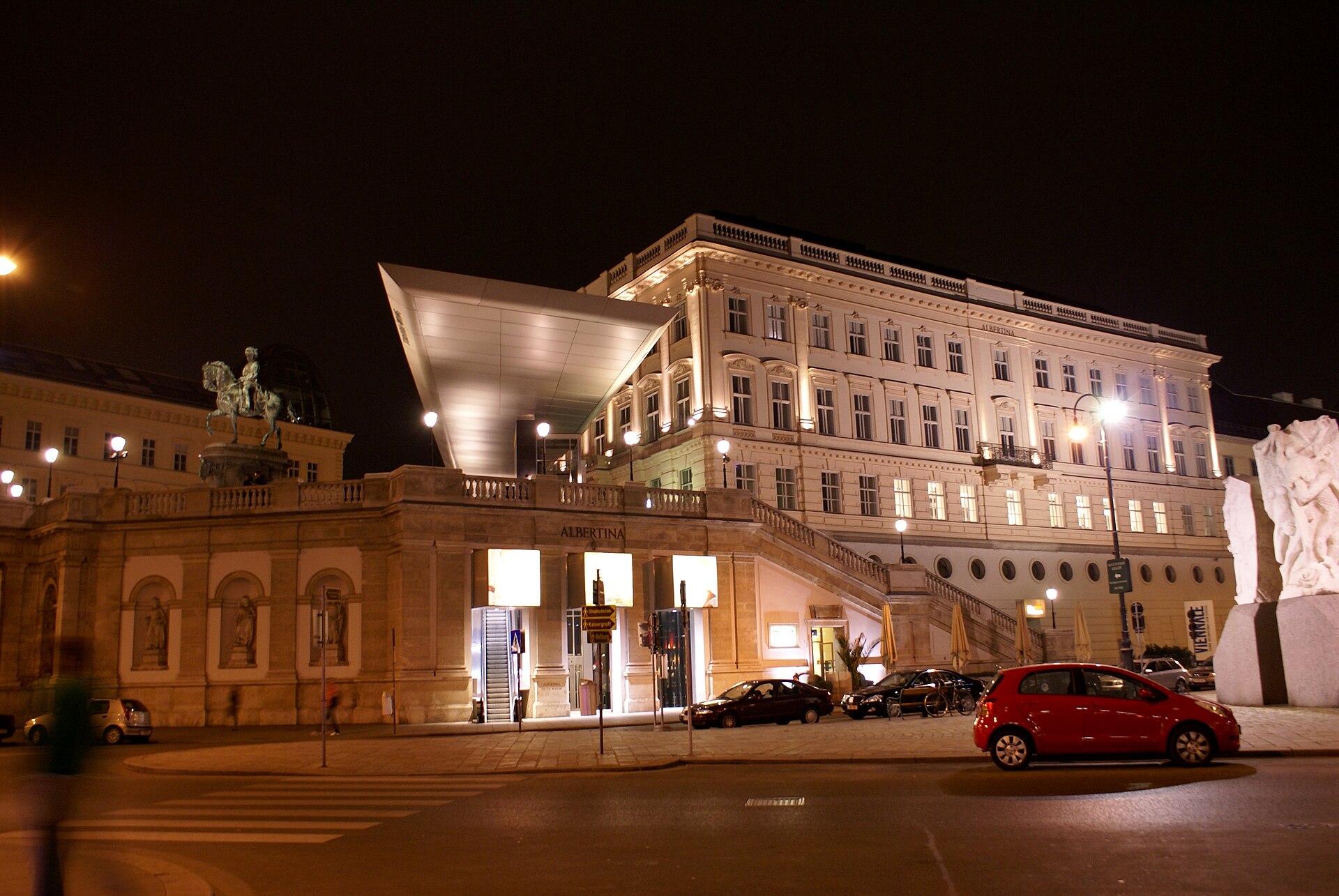
The twentieth century was less kind to the building than to the collection. The palace was severely damaged by bombing in the Second World War, and it reopened in 2003, when the architect Hans Hollein added the oversized canopy over the Albrecht Ramp, the new entrance. Viennese opinion on that canopy remains divided, which is the traditional Viennese response to any new roof over an old building.
The modern paintings arrived much more recently, as a long-term loan and then a permanent presence: the Batliner Collection, assembled by a Liechtenstein couple over decades, gave the Albertina the twentieth-century picture gallery it had never had, and turned a specialists’ print room into one of Vienna’s most visited museums. It is worth knowing this history when you are inside, because it explains the museum’s odd, appealing shape: an aristocratic house, a world-class archive that is mostly invisible, and a modern collection that is only half a century old as an idea.
Five Things to Look For
- Monet, The Water Lily Pond. The single most reproduced picture in the house and the anchor of the Impressionist rooms.
- The Picasso group. The Albertina holds works from several periods, and seeing them together is the best short course in Picasso available in Vienna.
- The German Expressionists. Kirchner, Nolde and Macke are much better represented here than anywhere else in the city, and they make a striking contrast with the Viennese modernism at the Belvedere and the Leopold.
- The state rooms’ floors and stoves. Look down and look into the corners: the parquet, the tiled stoves and the door furniture are original craftsmanship of a kind that is usually roped off elsewhere.
- Whatever is out of the print room. The rotating graphic exhibitions are the museum’s real speciality — Dürer, Rubens, Rembrandt, Klimt and Schiele drawings appear in turn, and a drawing seen at close range tells you more about how an artist worked than any painting.
Visiting with Children and Teenagers
Under-19s go free, so two adults and two teenagers pay €41.80 in total. In practice, the Albertina suits older children better than small ones — there is no dedicated children’s trail on the scale of the Natural History Museum’s, and the state rooms require a certain amount of not touching things.
What does work well with teenagers is the modern collection: it is compact, the names are familiar, and an hour is enough. The late opening on Wednesdays and Fridays is also useful for families who want a slow morning and an evening activity. For younger children, the Natural History Museum, the Haus des Meeres aquarium and the Schönbrunn Children’s Museum are better bets — see our Vienna with kids guide and our Schönbrunn Zoo guide.
The Other Two Albertinas
ALBERTINA MODERN
A few minutes’ walk away at Karlsplatz, in the Künstlerhaus building, ALBERTINA MODERN shows modern, postmodern and contemporary art from 1945 onwards, Austrian and international in equal measure. Entry is €17.90, or free under 19. It is a very different experience from the main house: white-walled galleries, big rooms, and the noise of the Karlsplatz outside. Well worth it if modern and contemporary art is your thing; skippable if it is not.
ALBERTINA KLOSTERNEUBURG
The newest site is outside the city in Klosterneuburg, north of Vienna on the Danube, open Thursday to Sunday, 10:00–17:00, at €9.00. It shows large-format works from the collection in a converted industrial space. The natural way to visit is combined with Klosterneuburg Abbey, one of the great monastic complexes of Austria, on the €13.00 joint ticket sold at the ticket machine. That is a half-day trip out of the city rather than an add-on to an afternoon — a good rainy-day option if you have already done central Vienna. Our guide to day trips from Vienna covers the area.
How Long to Allow
| Visit | Time |
|---|---|
| Modern collection only | 1 hour |
| Modern collection and state rooms | 1.5–2 hours |
| With a major temporary exhibition | 2.5–3 hours |
| Albertina and Albertina Modern in one day | Half a day, with a coffee between them |
The Albertina is one of the few big Vienna museums you can do properly in under two hours, which makes it the right choice on a short trip. The Kunsthistorisches Museum needs at least three, and the Belvedere two. See our best museums in Vienna guide for how they compare.
Getting There and What Is Nearby
The Albertina is at Albertinaplatz 1, behind the State Opera in the 1st district.
- U-Bahn: Karlsplatz (U1, U2, U4), about five minutes’ walk, or Stephansplatz (U1, U3), about seven.
- Tram: lines 1, 2, D and 71, among others, stop at Oper/Karlsplatz on the Ring.
- Walking: five minutes from the Hofburg, two from the Opera.
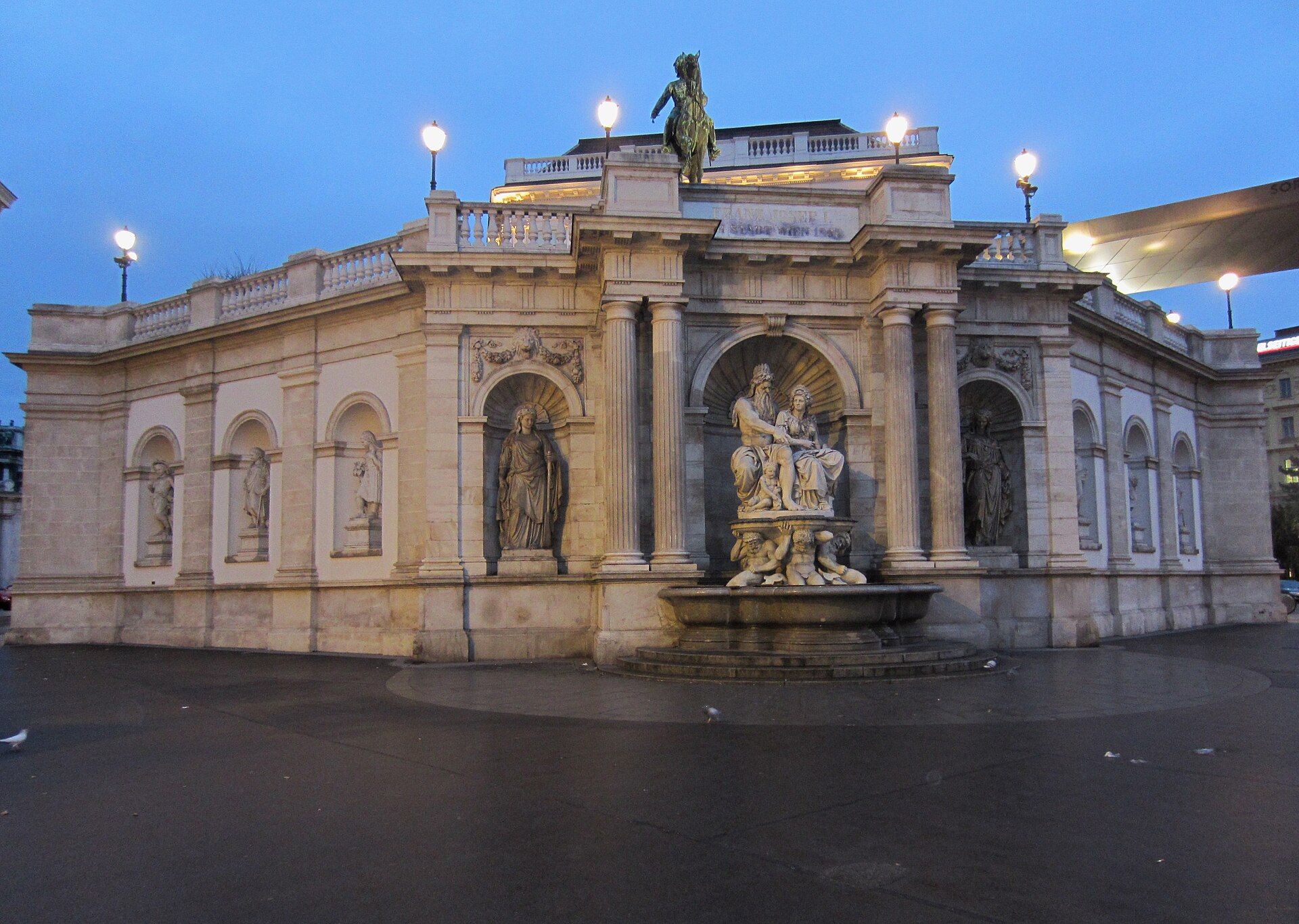
The Albrechtsbrunnen, the fountain at the street-level base of the bastion, is one of Vienna’s standard meeting points — free walking tours gather in front of it, under a green umbrella, and our free walking tours guide explains how those work.
Within a few minutes’ walk:
- The State Opera, where standing-room tickets cost €13–18 on the day. See our State Opera guide.
- The Burggarten, with the Mozart monument, the Palmenhaus café and the small Butterfly House in its Jugendstil glasshouse.
- The Hofburg and the Spanish Riding School.
- The Kaisergruft (Imperial Crypt) on the Neuer Markt, €15, daily 10:00–18:00 (it closes at 14:00 on 1 and 2 November and at 16:00 on 24 and 31 December, and opens at 12:00 on 1 January) — the Habsburg burial vault, and a short, extraordinary visit.
- Café Sacher and the Hotel Sacher, for the cake argument; see Sacher vs Demel.
- Café Hawelka and the coffee houses off the Graben; see our Café Hawelka guide.
Practicalities
- Cloakroom: large bags, rucksacks and umbrellas must be left in the cloakroom, as at every major Viennese museum. Allow a few minutes at the start and end.
- Photography: generally permitted without flash in the permanent displays, but often restricted in temporary exhibitions because of loan conditions. Look for the signs at each entrance.
- Accessibility: the museum is on a bastion, but there is lift access from street level; contact the museum in advance if you need assistance.
- Audio and guided tours: smartphone guide €5.00; public guided tours €6.00 on top of admission.
- Café and shop: both on site. The shop’s print reproductions are among the better souvenirs in Vienna; see our shopping guide.
- Rain: an obvious wet-weather choice, so expect company on a rainy afternoon. Our rainy day guide has alternatives.
Where to Eat and Drink Nearby
The Albertina sits in one of the most expensive few hundred metres in Austria, so a little local knowledge saves money.
- The museum café is pleasant and convenient, and priced accordingly.
- Café Mozart, immediately behind the museum, is a traditional grand café in the Landtmann group — comfortable, central, and firmly in visitor territory.
- The Würstelstand at Albertinaplatz, a few steps from the entrance, is a Vienna institution and one of the cheapest hot meals in the 1st district. A Käsekrainer eaten standing up between a museum and an opera is a very Viennese sequence.
- Trześniewski, on Dorotheergasse five minutes away, for small open sandwiches at a stand-up counter, and Café Hawelka a few doors further for a coffee afterwards.
- The Burggarten, two minutes away, for a picnic on the grass in summer, with the Palmenhaus café in its glasshouse if it rains.
For a full meal after an evening visit on a Wednesday or Friday, remember that not every kitchen in the centre serves late; our late-night food guide covers what is open afterwards, and our restaurants guide has the sit-down options.
Is the Albertina Worth It? Our Verdict
Yes — and it is the museum we would send most first-time visitors to if they only have time for one after the Kunsthistorisches.
The reasons are practical as much as artistic. It is central, it is manageable in under two hours, it combines three different things — imperial interiors, a first-rate modern collection and big temporary shows — and it opens late twice a week when the rest of the city’s museums have shut. For families it is unusually good value, because everyone under 19 is free.
The honest caveats: at €20.90 it is not cheap. The graphic collection that makes the Albertina internationally important is mostly in storage for conservation reasons, so the famous Dürer is usually not on show. And if you have limited time and want the single greatest art experience in Vienna, the Kunsthistorisches Museum’s Bruegel room is the answer, with the Belvedere’s Klimts second.
Go if: you like Impressionism and modernism; you want a palace interior and a picture gallery in one ticket; you are travelling with teenagers; or you want a museum you can visit at 19:00 on a Wednesday.
Skip it if: your interest is strictly Old Masters (go to the Kunsthistorisches Museum) or strictly Klimt and Schiele (go to the Belvedere and the Leopold Museum).
Albertina vs Vienna’s Other Big Museums
| Museum | Best for | Time needed |
|---|---|---|
| Albertina | Monet to Picasso, Habsburg state rooms, graphic-art exhibitions | 1.5–2 hours |
| Kunsthistorisches Museum | Bruegel, Vermeer; the building itself | Allow a long visit |
| Upper Belvedere | Klimt’s The Kiss, Schiele, a baroque palace | 2 hours |
| Leopold Museum | The largest Schiele collection, Viennese modernism | 2 hours |
| Albertina Modern | Austrian and international art after 1945 | 1.5 hours |
Our museums guide covers the rest, including the free ones — see also free museums in Vienna.
Frequently Asked Questions
How much are Albertina Vienna tickets?
Standard adult admission is €20.90. Over-65s and under-26s pay €17.50, Vienna City Card holders €18.90, and under-19s go free. A combined ticket for the Albertina, Albertina Modern and Albertina Klosterneuburg costs €29.90.
What are the Albertina’s opening hours?
Daily 10:00–18:00, with late opening until 21:00 on Wednesdays and Fridays. Albertina Modern is open daily 10:00–18:00; Albertina Klosterneuburg is open Thursday to Sunday, 10:00–17:00.
Do I need to book Albertina tickets in advance?
No — there are no timed entry slots for general admission. Booking online saves queuing when a popular exhibition is on.
Is Dürer’s Young Hare on display at the Albertina?
Usually not. It is a watercolour on paper and far too light-sensitive for permanent display, so it is shown only occasionally and briefly. Check the current exhibition programme if it is the reason for your visit.
How long do you need at the Albertina?
About 1.5 to 2 hours for the modern collection and the state rooms, and up to 3 hours if a major temporary exhibition is on.
Is the Albertina free for children?
Yes. Everyone under 19 enters free, at all three Albertina sites.
What is the difference between the Albertina and Albertina Modern?
The Albertina, on Albertinaplatz, has the Habsburg state rooms, the Monet-to-Picasso collection and the graphic collection. Albertina Modern, at Karlsplatz, shows art from 1945 onwards, Austrian and international in equal measure.
Is the Albertina included in the Vienna Pass?
Check the current inclusion list before buying any pass. The Vienna City Card, which is a different product, gives a €2 discount on Albertina admission.
Related Vienna Guides
- Best Museums in Vienna
- Kunsthistorisches Museum Guide
- Belvedere Palace Guide
- Gustav Klimt in Vienna
- Vienna Attractions
- Innere Stadt Guide
- Vienna 2-Day Itinerary
- Vienna Rainy Day Activities
Photo Credits
The Albertina at night: Albertina Wien by Florian Prischl, CC BY-SA 3.0, via Wikimedia Commons.
Reception salon in the state rooms: Prunkräume, Empfangssalon, Albertina, Wien by Thomas Ledl, CC BY-SA 4.0, via Wikimedia Commons.
The archduke’s study: Prunkräume, Arbeitszimmer des Erzherzogs Carl, Albertina, Wien by Thomas Ledl, CC BY-SA 4.0, via Wikimedia Commons.