Vienna Airport Layover: What to Do With 3, 6 or 10 Hours
How much of a layover is actually yours once you subtract the fixed overhead, what three, six and ten hours genuinely buy you in Vienna, and why 2026's rail works change the maths.
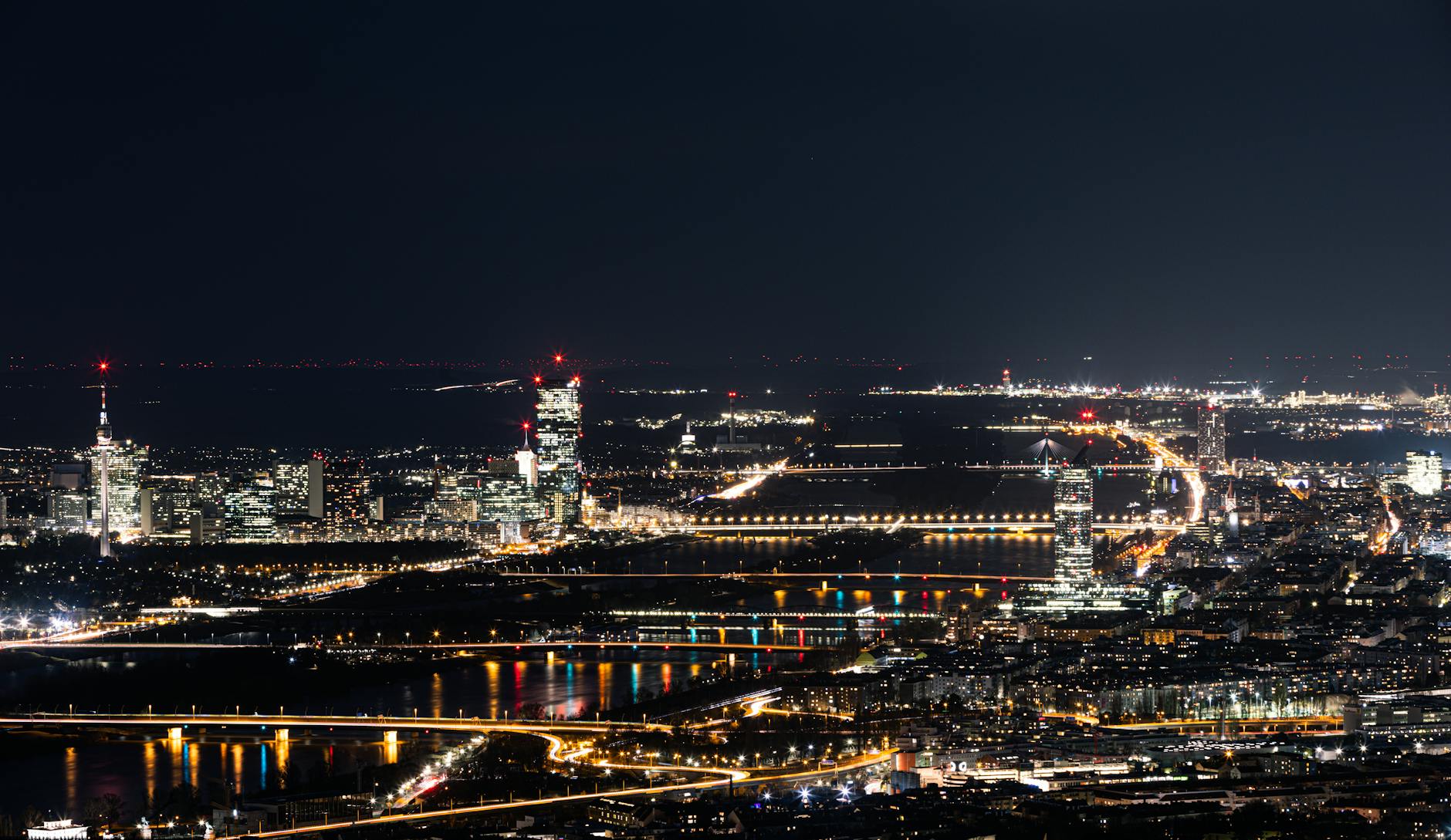
Photo by Zoran Cindrić
- The Arithmetic, Before Anything Else
- Three Hours: Stay Airside
- Six Hours: One Thing, Chosen Carefully
- Ten Hours or More: A Real Visit
- Two Worked Timelines
- Airside at Vienna: What Is Actually There
- Practicalities That Decide the Day
- Long Layovers by Season
- What Not to Do
- When Your Layover Is a Delay, Not a Plan
- The Honest Verdict
- Frequently Asked Questions
- Related Vienna Guides
- Photo Credits
This article contains advertising. Our booking links are routed through a partner that adds commission tracking automatically, so if you book through one we earn a commission from the provider, at no extra cost to you. It never affects what we recommend. Affiliate disclosure
The question is never really “what can I do in Vienna in six hours”. It is “how much of those six hours is actually mine”, and the answer is always less than people assume. A Vienna airport layover looks generous on a booking confirmation and shrinks alarmingly once you subtract disembarking, immigration, the transfer in both directions, and the ninety minutes you must be back at the terminal before your onward flight. Get that arithmetic wrong and you spend the day anxious; get it right and Vienna is one of the better European airports to be stuck at.
This guide is about the time budget rather than the transfer mechanics. It works out what three, six and ten hours genuinely buy you, what to do if the honest answer is “stay airside”, and the specific complications at Vienna in 2026 — because the rail link into the city is disrupted by long-term engineering works and every layover calculation written before September 2026 is now optimistic. For how to actually make the journey, our airport to city centre guide is the companion piece and covers every option in detail.
The Arithmetic, Before Anything Else
Work out your usable time before you look at a single attraction. Subtract all of the following from your total connection time.
| Stage | Allow | Notes |
|---|---|---|
| Disembark and walk to arrivals | 20–30 min | Longer from a remote stand |
| Passport control (non-Schengen arrival) | 15–45 min | Nothing if arriving from within Schengen |
| Luggage: check bags or store them | 15 min | Skip if hand baggage only |
| Transfer into the city | 40 min | Longer than usual in 2026 — see below |
| Transfer back | 40 min | Plus a buffer for missing one departure |
| Back at the terminal before departure | 90 min Schengen / 2 hrs non-Schengen | Non-negotiable |
Add it up and the fixed overhead on a Schengen-to-Schengen connection is roughly three and a half hours, and on a connection involving passport control closer to four and a half. Everything above that is yours.
Which produces a blunt rule: under five hours, stay at the airport. Five to seven hours, one thing in the city. Eight hours or more, a genuine visit.
The 2026 complication
Vienna’s inner-city S-Bahn core between Praterstern and Wien Hauptbahnhof is closed for viaduct and retaining-wall renewal until late 2027. The consequences for a layover are direct: the S7 now terminates at St. Marx rather than Wien Mitte, and the City Airport Train is operating as “CAT by bus” rather than as a train.
In normal times the CAT covered the 16 kilometres to Wien Mitte in 16 minutes nonstop, every 30 minutes from around 05:38 to 23:08 — the figure quoted by almost every layover guide online. The bus replacement is slower and subject to road traffic, which is exactly the sort of variability a layover cannot absorb. Long-distance railjet services to Wien Hauptbahnhof are unaffected and are the more reliable option while the works continue. Check what is running on the day rather than trusting a published journey time.
Practically, add fifteen or twenty minutes to each leg of the transfer against the pre-closure figures, and treat any layover under five hours as an airport layover.
Three Hours: Stay Airside
Three hours is a connection, not a layover. By the time you have walked to arrivals you have roughly ninety minutes of genuinely free time, and using it on a round trip into the city means arriving somewhere for fifteen minutes and immediately leaving.
What to do instead, in descending order of usefulness:
- Buy into a lounge. The SKY Lounge admits economy-ticket holders on payment, currently €49 for a stay of up to three hours, paid by card in the lounge or by voucher bought in advance. That is a lot of money for a sandwich and it is not a lot of money for a shower, a quiet chair, working wifi and food included when the alternative is three hours on a bench eating an eleven-euro airport panini. On a long-haul connection with a night flight ahead it is straightforwardly worth it.
- Walk it. Vienna’s airside piers are long and mostly windowed. An hour of walking, deliberately, is the single most effective thing you can do for a body about to sit still for another eight hours.
- Eat properly. The airport’s food is unremarkable and expensive, in that European airport way, but it is not bad, and eating a real meal before a flight beats airline catering.
Do not attempt the city on three hours. People do, and the ones who make it spend the entire time watching the clock rather than looking at anything.
Six Hours: One Thing, Chosen Carefully
Six hours is the interesting case and the one most people are actually asking about. After the fixed overhead you have roughly two to two and a half hours in the city, which is one destination and a coffee, not a tour.
The right choice is the one closest to where the transfer drops you, which is the Innere Stadt.
The single best two hours
Stephansplatz. Get to the cathedral, go inside, walk the Graben and Kärntner Straße, sit down somewhere for a coffee, and go back. That is it, and it is enough — you will have stood in the geometric and emotional centre of the city, seen its most important building, and had a Viennese coffee in a Viennese café. Our Stephansdom guide covers what to look at in a short visit and which tickets are worth buying.
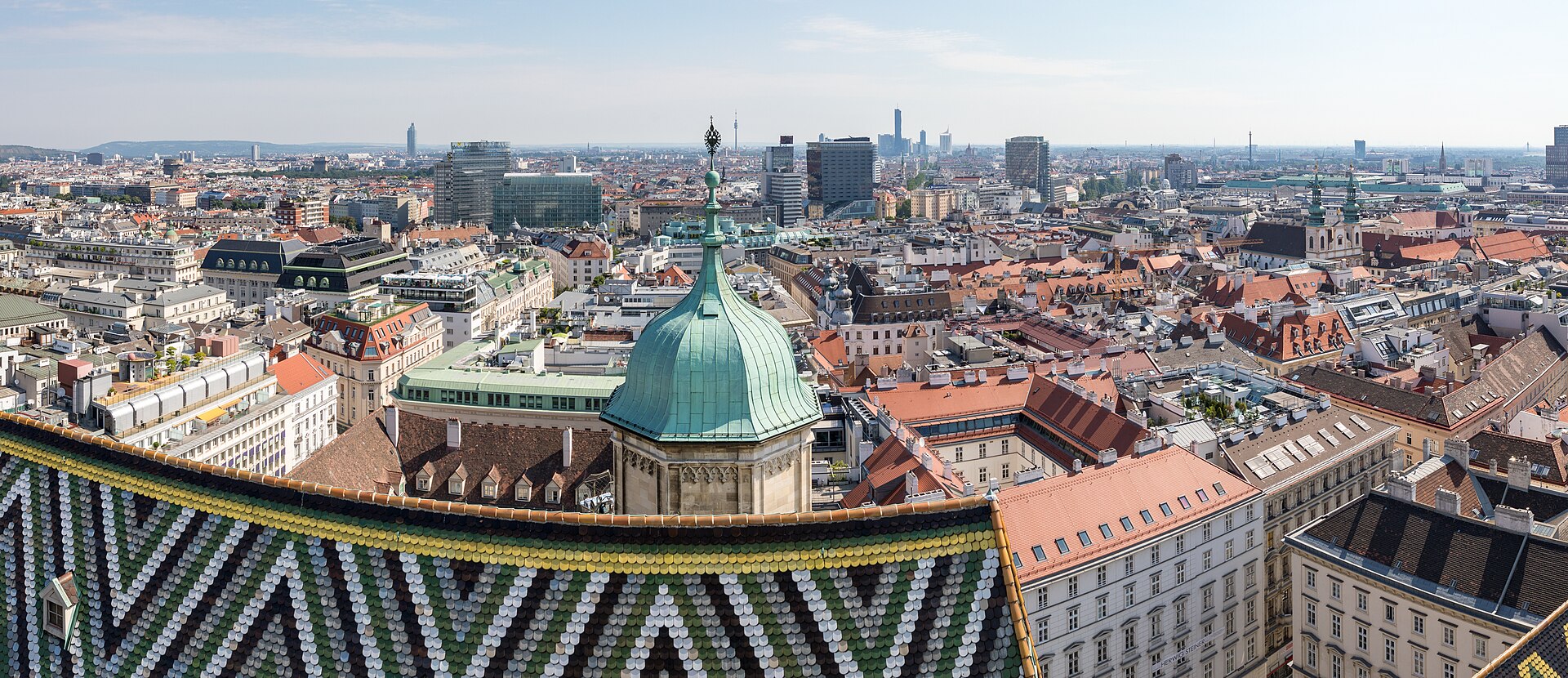
If you want a view rather than an interior, the south tower is 343 steps and about twenty minutes including the climb, and it gives you the whole city at once. On a tight layover that is arguably a better use of the time than the cathedral floor.
Alternatives if the cathedral does not appeal
- The Ringstrasse by tram. Trams 1, 2, D and 71 between them circle most of the boulevard, and a loop past the Staatsoper, the Rathaus, the Burgtheater and the university costs the price of a single ticket and takes about forty minutes sitting down. It is the highest ratio of Vienna-seen to effort-spent available. See our Ringstrasse guide.
- The Naschmarkt, if you land on a Saturday and want food rather than architecture.
- One coffee house, properly. Sitting for an hour in a genuine Viennese coffee house with a newspaper is more authentically Viennese than anything you could rush past in the same hour. Our coffee house guide names the ones worth the detour.
What not to attempt on six hours
Schönbrunn. It is out at the western end of the U4, the palace visit is timed-entry and takes an hour minimum before you have looked at the gardens, and the round trip alone will consume most of your window. The same applies to the Belvedere, the Kunsthistorisches Museum and anything in the MuseumsQuartier — these are two- to three-hour visits that deserve to be done properly or not at all.
Ten Hours or More: A Real Visit
With ten hours you have six or seven in the city, which is a genuine half-day and more than many people give Vienna on a deliberate trip. Two shapes work.
The concentrated version
Stephansplatz, the Hofburg complex, the Ringstrasse on foot as far as the Rathaus, lunch, and back. All on foot within the first district, no transport decisions, no timed entries, no risk. This is the version to choose if your layover is on a tight airline connection and a missed onward flight would be catastrophic.
The one-museum version
Pick a single museum and do it properly: the Kunsthistorisches Museum for the Bruegel room, the Belvedere for the Klimt, or Schönbrunn if the palace is the thing you came for. Two to three hours inside, an hour either side for transfer and lunch, and you have had a real day out rather than a hurried sample. Our one-day itinerary is over-ambitious for a layover but its first half is not.
At this length it is also worth eating a proper Viennese meal rather than airport food, which is a genuine argument for the city on its own. A Wiener Schnitzel somewhere the locals eat is a better lunch than anything airside and costs less.
Two Worked Timelines
Abstract rules are easy to agree with and hard to apply, so here are the two most common layovers set out minute by minute. Both assume a Schengen-to-Schengen connection with hand baggage only — add 30 to 45 minutes at each end if you are clearing passport control, and 15 minutes if you need to store a bag.
A six-hour layover, landing 10:00, departing 16:00
| Time | What is happening |
|---|---|
| 10:00 | Wheels down. Taxi to stand, disembark. |
| 10:25 | Through arrivals, walking to the station beneath the terminal. |
| 10:40 | On the transfer, return ticket already bought. |
| 11:20 | In the Innere Stadt. Walk to Stephansplatz. |
| 11:30–12:30 | The cathedral, or the south tower, then the Graben. |
| 12:30–13:15 | Sit down. Coffee, or a quick lunch somewhere off the main streets. |
| 13:20 | Start back. Do not be tempted by one more thing. |
| 14:05 | At the terminal. Two hours before departure, comfortably. |
Note what this timeline does not contain: a second destination, a museum, or any slack for a missed connection on the transfer. It contains one hour of looking at Vienna and forty-five minutes of sitting down, and that is a genuinely good use of six hours. Trying to add the Hofburg to it is how people end up running through Wien Mitte.
A ten-hour layover, landing 08:00, departing 18:00
| Time | What is happening |
|---|---|
| 08:00–08:40 | Land, disembark, walk to the station. |
| 09:20 | In town. Coffee and a pastry — you have time, and the museums are not open yet anyway. |
| 10:00–12:45 | One museum, properly. The Kunsthistorisches, the Belvedere, or Schönbrunn. |
| 13:00–14:15 | A real Viennese lunch, sitting down, not rushed. |
| 14:30–15:15 | A walk: the Ringstrasse on foot, or the first district at a human pace. |
| 15:30 | Start back. |
| 16:15 | At the terminal, an hour and three-quarters before departure. |
That is a better day than a great many people have on a deliberate weekend in Vienna, and it fits inside a connection. The single rule that makes it work is the 15:30 departure time from the city, held to regardless of what is in front of you at 15:25.
Airside at Vienna: What Is Actually There
If you are staying, it helps to know what the airport offers, because Vienna is better provisioned than its reputation suggests and worse than a genuine layover hub like Doha or Singapore.
- Lounges. The SKY Lounge serves Terminal 3 and the VIENNA Lounge serves Terminal 1. Both admit paying economy passengers. Showers are the feature that justifies the fee on a long-haul connection.
- Food. A reasonable spread from bakery counters to sit-down restaurants, at the usual airport premium. The Austrian bakery chains airside sell a decent Kaisersemmel and coffee for a fraction of what the sit-down places charge.
- Shopping. Extensive, and the duty-free is genuinely competitive on Austrian wine and spirits if you are leaving the EU. Sachertorte in a wooden box is sold at every second unit and is a perfectly good present, though it costs more here than in the city.
- Wifi. Free and functional throughout.
- FastTrack security is available and is worth buying if your connection is tight and you have had to pass landside.
- Quiet. The one thing genuinely lacking. There is no dedicated rest zone, and finding somewhere to lie down is a matter of luck and a far corner of a pier.
Layovers with children
The calculation changes with small children, and mostly it changes against leaving the airport. Everything takes longer, the transfer with a pushchair is more work, and the recovery time after a rushed return is spent by everybody rather than by you alone.
The threshold we would use is roughly two hours longer than for adults: seven hours before going into the city at all, and even then one destination and a long sit-down. Below that, the airport with a lounge bought for the space rather than the food is the better call — children need somewhere to be, and €49 for three hours of somewhere to be is not the worst money you will spend on the trip. Our Vienna with kids guide covers what actually works in the city when you do have the time.
Layovers with mobility needs
Airport assistance at Vienna is booked through the airline, not the airport, and needs at least 48 hours’ notice. Assistance covers the terminal and the aircraft; it does not extend to the transfer into the city, so if you are planning to leave the airport you are on your own from the station onwards. The rail station is step-free and the trams and U-Bahn in the centre are largely accessible, but the 2026 bus replacements are less predictable. On a tight layover with mobility needs, the airport is usually the right answer.
Practicalities That Decide the Day
Luggage
If your bags are checked through to your final destination, you are free. If they are not, storing them is essential — nobody enjoys the Ringstrasse dragging a suitcase.
Vienna Airport’s own left-luggage facility is in Terminal 1, from €4 for small items, open 05:30 to 23:45 daily. Note the closing time: if your onward flight leaves after midnight, you cannot retrieve a bag from the airport facility, which catches people out badly. Third-party storage networks in the city advertise from around €2.50 a day and are worth considering if you are heading into town anyway, but check their opening hours with the same scepticism.
Passport control and Schengen
The dividing line that matters is Schengen, not the EU. If both your flights are within the Schengen area you will not pass immigration at all and can walk out of the terminal in minutes. If you are arriving from outside — the UK, the US, most of Asia — you clear passport control on the way in and again on the way out, and each is an unpredictable queue.
Two warnings. Non-EU nationals should confirm that leaving the airside area does not create a visa issue for them; some nationalities may transit airside without a Schengen visa but require one to enter Austria, and this is a rule you must check against your own passport rather than assume. And EU Entry/Exit biometric registration adds time at first entry for third-country nationals. Build in the buffer.

Money and tickets
Buy your return transfer ticket at the same time as your outbound one. Standing at a machine in Wien Mitte with forty minutes to go and a queue in front of you is the single most avoidable stress on a layover. Card payment works everywhere on the transfer network; our payment guide covers where cash is still needed in Vienna, which is mostly small cafés and market stalls.
Sleeping and overnight layovers
Vienna Airport is not a comfortable airport to sleep in — it has no dedicated rest zone worth the name, and the seating is armrested. For an overnight connection the sensible options are a lounge for as long as it is open, a transit hotel at the airport, or a city hotel if the gap is genuinely long. Our guide to hotels near Vienna Airport covers the shuttle-distance options.
The threshold is roughly this: under eight hours overnight, stay at the airport and buy lounge access. Over eight, get a bed, because four hours of real sleep changes the following day entirely and an airport bench does not provide it.
Long Layovers by Season
The same six hours are worth different amounts at different times of year, and it is worth knowing which before you decide whether to leave the terminal.
Summer is the obvious best case for a short layover: long daylight, everything open late, and a 21:00 departure still leaves you a usable evening in the city. It is also the worst case for queues, both at passport control and at every attraction you might reach.
Winter is harder than people expect. Sunset in December is before 16:15, which means an afternoon layover delivers you into a dark city, and the walk from the transfer to the Innere Stadt in freezing drizzle is less charming than the summer version. The compensation, from mid-November, is the Christmas markets — a market at Stephansplatz or on the Rathausplatz is an excellent two-hour layover destination precisely because it requires no ticket, no timing and no queue, and is at its best after dark.
Spring and autumn are the sweet spot: mild, uncrowded, and long enough in the day. Late September and October in particular give you a comfortable temperature for walking and no queues to speak of.
One seasonal warning: on public holidays the shops close and a good deal of the city with them. 1 November, 8 December, 25 and 26 December, 1 January and 6 January all shut Austrian retail, and 6 January in particular catches visitors out because few expect it. Museums and restaurants vary. A layover on one of those dates is better spent on architecture and a coffee house than on any plan involving shops.
What Not to Do
A short list of the mistakes that turn a layover into a story.
- Do not book a tour. Every guided product in Vienna runs to a fixed schedule and lasts two to three hours, which does not fit inside a layover window with any margin. A tour that overruns by twenty minutes is a missed flight.
- Do not plan on a timed-entry attraction unless your layover is genuinely long. Schönbrunn’s palace tickets are slot-based and a missed slot is a lost ticket.
- Do not leave your onward boarding pass to chance. Check in online before you land, so that a phone with a dead battery is the only thing standing between you and the gate.
- Do not go somewhere with a single transport option. If your route back depends on one bus every thirty minutes, one missed bus is thirty minutes of your buffer gone.
- Do not eat at the last minute. Eat in the city with time in hand, or eat airside once you are back through security. Trying to fit a meal into the gap between the two is how people end up with neither.
When Your Layover Is a Delay, Not a Plan
Different situation, different rules. If you are stuck at Vienna because of a delay or a cancellation rather than by choice, do not leave the airport until you have a confirmed onward booking in hand. Rebooking desks work through queues in order and a passenger who is in the city is a passenger who is not being rebooked.
Once you have a confirmed seat with a known time, the arithmetic above applies as normal. EU passenger rights also give you a duty of care from the airline during a long delay — meals and refreshments, and accommodation for an overnight — and the airline will not offer it unprompted. Ask.
The Honest Verdict
Vienna is a good layover city and a bad one to be greedy in. The centre is compact, the sights are close together, and the rail link runs from directly beneath the terminals — all of which makes a short visit genuinely feasible in a way it is not at, say, Frankfurt or Charles de Gaulle. But the 2026 engineering works have quietly added twenty minutes to each leg, and every layover guide written before this year now understates the transfer.
So: under five hours, stay airside and consider paying for the lounge. Five to seven, go to Stephansplatz, look at one thing, drink one coffee, and come back without stopping anywhere else. Eight or more, do one museum properly or walk the first district at a human pace. And whatever the number, work out your usable time before you start choosing attractions, because the constraint is never Vienna — it is the ninety minutes at the end that you cannot spend.
Frequently Asked Questions
How long a layover do I need to leave Vienna Airport?
At least five hours, and six is more comfortable. The fixed overhead — disembarking, any passport control, the transfer both ways and 90 minutes back at the terminal before a Schengen departure — runs to three and a half to four and a half hours before you see anything.
Can I visit Vienna city centre on a 6-hour layover?
Yes, for about two to two and a half hours in the city. That is one destination: Stephansplatz and the cathedral, or a Ringstrasse tram loop, plus a coffee. It is not enough for Schönbrunn, the Belvedere or any of the major museums.
How long does it take to get from Vienna Airport to the city?
Normally 16 minutes nonstop on the City Airport Train to Wien Mitte, or about 23 minutes on the S7. In 2026 the inner-city S-Bahn core is closed for engineering works: the CAT is running as a bus, the S7 terminates at St. Marx, and long-distance trains to Wien Hauptbahnhof are the more reliable option. Allow 40 minutes each way.
Is there luggage storage at Vienna Airport?
Yes, in Terminal 1, from €4 for small items, open 05:30 to 23:45 daily. The closing time matters — you cannot collect a bag there for a flight departing after midnight. City-network storage services advertise from around €2.50 a day.
How much is lounge access at Vienna Airport without business class?
Economy-ticket holders can pay into the SKY Lounge at €49 for a stay of up to three hours, by card in the lounge or by buying a voucher in advance. On a long connection with food, showers and a quiet seat included, it compares reasonably with three hours of airport catering.
Do I need a visa to leave the airport during a layover?
Possibly. Some nationalities may transit airside without a Schengen visa but need one to enter Austria. Check the requirement for your own passport before planning to leave the terminal; do not assume that a transit permission covers entry.
Can you sleep at Vienna Airport?
You can, but it is not comfortable — there is no proper rest zone and the seating has armrests. For an overnight gap of under about eight hours, buy lounge access while it is open. For longer, take an airport hotel or a city hotel; the sleep is worth more than the saving.
What is the best thing to do on a short Vienna layover?
Stephansplatz. Get to the cathedral, go inside or climb the south tower for the view, walk the Graben, and drink one coffee sitting down. It is the highest-value two hours available and it is close to where every transfer drops you.
One thing that makes Vienna an unusually forgiving airport to connect at: it is one building, so moving between check-in areas is a walk rather than a shuttle. What does cost time is crossing the Schengen boundary between the Schengen gates (B, C, F) and the non-Schengen ones (D, G), which means passport control. Our guide to Vienna airport terminals and gates explains where that line falls and how long the walk to Pier North really is.
If your connection is too short to leave the airport, a lounge is the obvious alternative, but check which side of passport control it is on before you pay. Both of Vienna’s pay-in lounges, the VIENNA Lounge by the C gates and the SKY Lounge by the F gates, sit before passport control, and beyond it every lounge belongs to Austrian Airlines. Our guide to Vienna airport lounges sets out who gets in where, and what a three-hour pass costs.
Layovers that run overnight are a different problem. The rail link stops in the late evening, the lounges close by 23:00 and do not reopen until about 04:30, and most shops shut. If you are stuck at Schwechat until morning, our guide to sleeping at Vienna Airport explains your options, from Terminal 3 benches to sleeping cabins and walkable hotels.
Related Vienna Guides
- Vienna Airport to the City Centre
- Vienna Airport: The Complete Guide
- Hotels Near Vienna Airport
- Stephansdom: The Complete Guide
- One Day in Vienna
- The Ringstrasse Guide
- Vienna Coffee Houses
- Cheap Flights to Vienna
Photo Credits
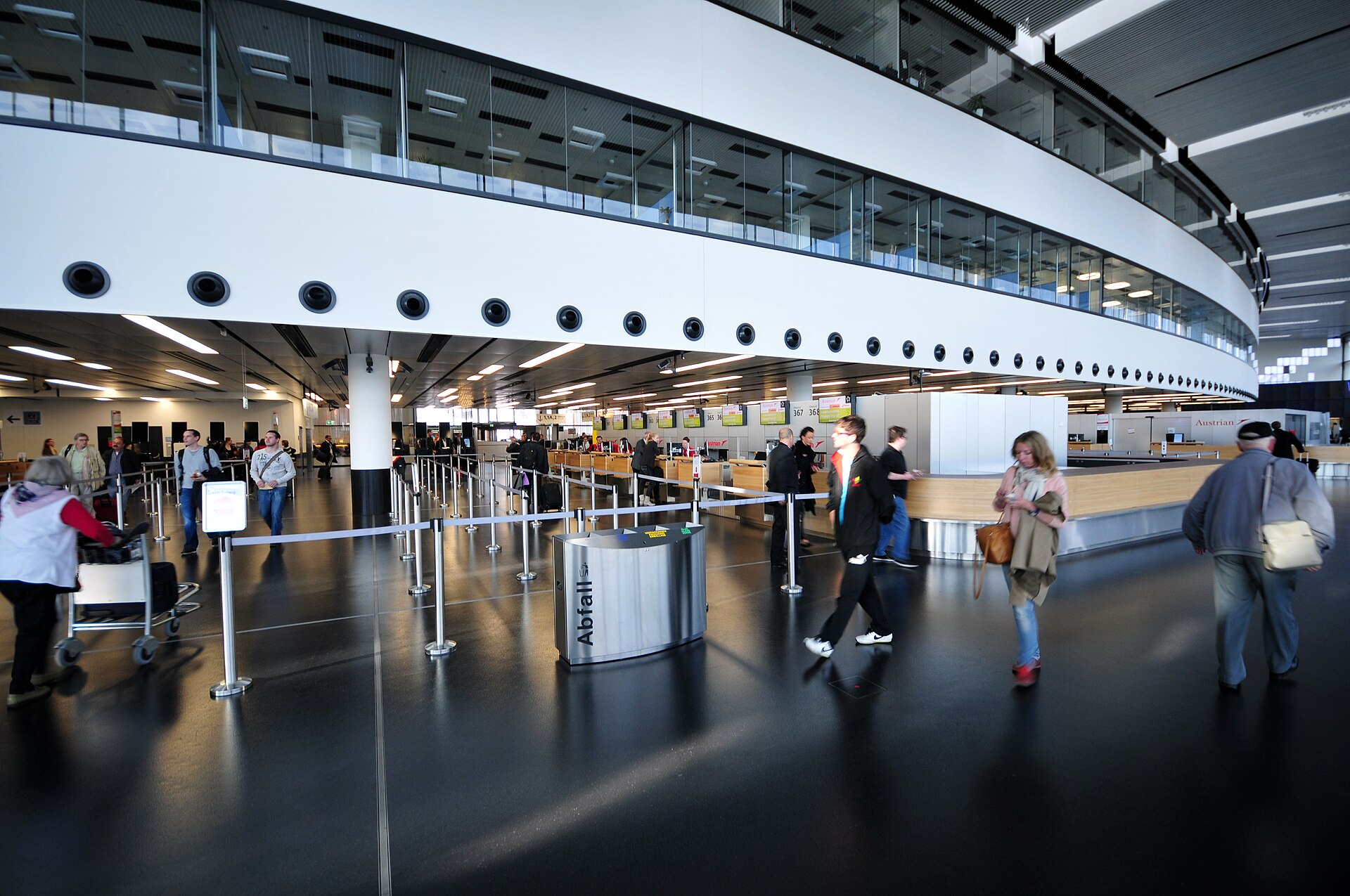
Terminal 3 check-in hall: 13-05-24-wien-RalfR-276 by Ralf Roletschek, CC BY 3.0, via Wikimedia Commons.
Vienna from the Stephansdom south tower: Wien, Stephansdom, Blick vom Südturm — 2018 — 3271-3 by Dietmar Rabich, CC BY-SA 4.0, via Wikimedia Commons.