Haus der Musik & Mozarthaus: Vienna’s Interactive Music Museums
Conduct the Vienna Philharmonic badly and they will tell you so. Plus the only Mozart apartment left in Vienna, on a combination ticket that makes it cost €7.

Photo by Alfred Franz
- Prices and Opening Hours 2026
- Haus der Musik, Floor by Floor
- Hearing the Real Thing Afterwards
- Mozarthaus Vienna
- Which One, If You Only Have Time for One
- Getting There
- A Warning About the Men in Wigs
- Practicalities
- A Music Day in Vienna, Built Around These Two
- Our Honest Verdict
- Frequently Asked Questions
- Related Vienna Guides
- Photo Credits
This article contains advertising. Our booking links are routed through a partner that adds commission tracking automatically, so if you book through one we earn a commission from the provider, at no extra cost to you. It never affects what we recommend. Affiliate disclosure
In a townhouse on Seilerstätte, a man in a business suit is waving a baton at a screen. The Vienna Philharmonic are playing the Radetzky March badly because he is rushing them. He speeds up again. The first violin puts down his instrument, looks directly at the camera and tells him, in Viennese German, that this is not going to work. Haus der Musik Vienna is an interactive museum of sound where the exhibits answer back, it costs €19, and it stays open until ten at night — which, combined with the Mozarthaus around the corner on a shared ticket, makes for the most sensible pairing of music museums in a city with rather too many of them.
This guide covers both: what each one costs, the combination ticket and why it is genuinely good value, what is on each floor of the Haus der Musik, what the Mozarthaus apartment actually contains (and what it does not), the late opening that makes one of these an evening rather than a daytime plan, and our honest verdict on which to do if you only have time for one. Prices and hours were checked in October 2026; the Mozarthaus charges €16 for a regular adult ticket on its own, so if you are seeing both, the combination ticket is the one to buy.
Prices and Opening Hours 2026
| Ticket | Price |
|---|---|
| Haus der Musik, adult | €19.00 |
| Haus der Musik, reduced | €15.00 |
| Haus der Musik, child under 12 | €8.00 |
| Haus der Musik, child under 3 | Free |
| Haus der Musik, family (2 adults + 3 children under 12) | €39.00 |
| Combination: Haus der Musik + Mozarthaus, adult | €26.00 |
| Combination, reduced | €19.00 |
| Combination, child under 12 | €12.00 |
Opening hours:
- Haus der Musik: daily 10:00–22:00, last entry 21:00.
- Mozarthaus Vienna: daily 10:00–19:00.
Neither closes for a weekly rest day, which puts both on the short list of things to do on a Monday or Tuesday when much of Vienna’s museum sector shuts.
The combination ticket is the obvious buy
Do the arithmetic. Haus der Musik alone is €19. Haus der Musik plus Mozarthaus is €26. That means the Mozarthaus is effectively costing an adult €7, against €16 for a regular adult ticket bought on its own.
At €7 the Mozarthaus is straightforwardly worth doing. At its standalone adult price of €16 it becomes a harder call, for reasons we get to below. If you are doing both, buy the combination. If you are only doing the Mozarthaus, weigh it against the combination first: for €10 more, it adds the whole of the Haus der Musik.
The two sites are a six-minute walk apart, both inside the Ring, and the combination ticket is not same-day only in the way some Vienna bundles are — ask when you buy, and split them across two days if that suits your itinerary better.
Haus der Musik, Floor by Floor
Seilerstätte 30, in a townhouse that was once the home of Otto Nicolai, the conductor who founded the Vienna Philharmonic in 1842. The museum opened in 2000 and is organised as a climb: the Philharmonic’s history on the first floor, the science of sound on the second, composers on the third, with hands-on exhibits along the way.
Ground and first floor: the Vienna Philharmonic
The orchestra’s own museum. Instruments, batons, programmes, photographs, and the story of the New Year’s Concert — including the fact that tickets for it are distributed by public ballot more than a year ahead and that essentially nobody you know has ever been.
It is the most conventional part of the building and a good primer if you are planning to hear the orchestra for real. How to actually do that is in our Musikverein guide.
Second floor: the Sonosphere
Sound itself, treated as a physical phenomenon rather than a cultural one, and it is much better than that description makes it sound. There is a room that reproduces what a foetus hears in the womb — muffled, rhythmic, unnervingly familiar. There are installations that let you slow down, stretch and rebuild noises. There are demonstrations of how the ear works that are genuinely clarifying for adults, never mind children.
The staircase between floors is itself an instrument: each step plays a note when you tread on it, which means the museum has a permanent soundtrack of people going up and down being pleased with themselves.
Third floor: the composers
A room each for Haydn, Mozart, Beethoven, Schubert, Johann Strauss and Mahler, with manuscripts, objects, portraits and — the good bit — audio that places each of them in the Vienna they actually lived in rather than in a general fog of powdered wigs.
The Beethoven room does the best job. Vienna was where he went deaf, and the museum handles that without sentimentality. Our Vienna composers guide follows the whole cast around the city.
The Virtual Conductor
This is the single best interactive exhibit in Vienna and it is worth the ticket on its own.
You take a baton, stand in front of a screen showing the Vienna Philharmonic, and conduct. The orchestra follows your beat — tempo, dynamics, the lot. If you are good, it works. If you are bad, the playing falls apart, and if you are very bad the musicians stop, put down their instruments and complain about you, on camera, in German with subtitles.
If you only save energy for one exhibit, make it this one. Children are ruthless about how long adults are taking. Adults are considerably worse.
Also in the museum: Mozart’s musical dice game, which builds a random waltz from your throws of the dice, and Namadeus, which turns your name into a Mozart composition.
The house itself
The building is worth a glance before you go in. It was the home of Otto Nicolai, the conductor and composer who in 1842 persuaded the orchestra of the court opera to give concerts under its own name — which is how the Vienna Philharmonic began, in this building, with a musicians’ cooperative that still governs itself the same way today. The orchestra has no chief conductor and elects its own committee. Every player is also a member of the State Opera orchestra. It is a genuinely unusual institution and the museum’s ground floor is where you learn why.
Nicolai himself is remembered here mainly for the founding and for The Merry Wives of Windsor. He left Vienna in 1847 and died two months after his opera’s Berlin premiere, aged thirty-eight, which is the sort of detail the composer floors are full of and which the audio guide delivers without ceremony.
Hearing the Real Thing Afterwards
A museum about music is improved enormously by hearing some, and Vienna makes that cheap if you know where to stand.
- Vienna State Opera standing room — €13 for the balcony, €15 gallery, €18 parterre, sold on the day of performance only and released online at 10:00 Vienna time. For under twenty euros you are in one of the great opera houses watching a full production. Details in our State Opera guide.
- Musikverein standing room — about €12 in the Golden Hall for most concerts, at a price set per event, so check the individual concert on the Musikverein’s own site.
- Wiener Konzerthaus — Vienna Symphony programmes commonly in the €25 to €80 range, in three halls of different sizes, and generally easier to get into at short notice than the Musikverein.
- Church music — Sunday High Mass at several central churches includes full orchestral settings sung by professional choirs, and attending a service costs nothing.
The contrast is worth stating plainly: a costumed seller on Kärntner Straße will ask €90 for a Mozart-in-a-wig programme, while the Musikverein will take €8 to put you in the Golden Hall for selected concerts. The seller is counting on you never comparing the two.
Mozarthaus Vienna
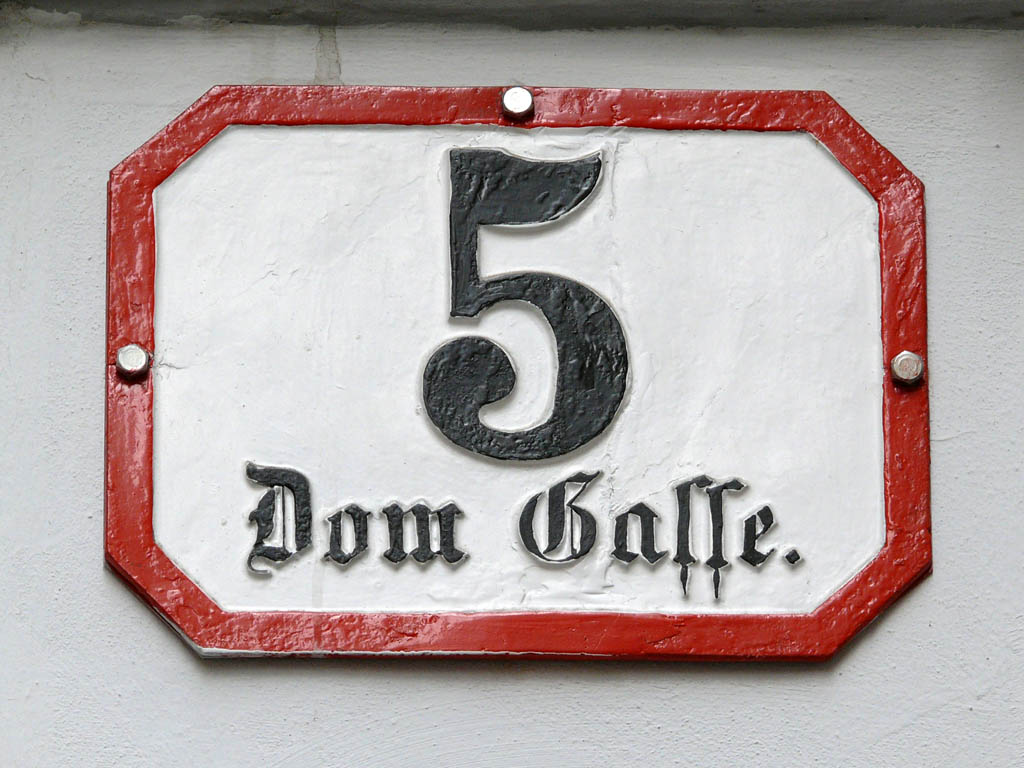
Domgasse 5, a narrow lane behind Stephansdom, a short walk from the cathedral. This is the only one of Mozart’s Viennese apartments to be preserved, and he lived and worked here from 1784 to 1787, at the height of his creative powers.
He wrote The Marriage of Figaro here, along with a stack of piano concertos, chamber music and three of the six quartets he dedicated to Haydn — who visited these rooms in 1785 and told Mozart’s father that his son was the greatest composer he knew of, a scene that is worth standing in the room and thinking about.
The rent was enormous. Mozart was, at this point, doing very well: fashionable, in demand, playing his own concertos to subscription audiences, and living accordingly in a large apartment in the most expensive part of the city. What happens afterwards — the decline, the cheaper addresses, the unmarked grave at St Marx five years later — is all downstream of the three years spent here.
What you actually see
Four levels. The apartment itself is on the first floor; two further floors hold exhibitions on Mozart’s Vienna, his social world, his finances, the theatre and opera scene he worked in, and the myths that grew afterwards.
And here is the honest part: the apartment is essentially empty of Mozart’s own possessions. There is no piano he played, no desk he wrote at, no coat he wore. Almost nothing survived, and what did is scattered across the world. What you get is the rooms — the proportions, the windows, the floors, the sequence of spaces — plus context on the walls.
For some visitors that is profoundly affecting: these are the actual rooms, the light through those actual windows is what he worked by, and Figaro came out of this specific volume of air. For others it is three floors of interpretive panels in an empty flat. Both reactions are legitimate and you probably already know which one you will have.
Mozart’s Vienna, beyond Domgasse
Mozart moved house roughly a dozen times in the ten years he lived in Vienna, and the addresses track his fortunes with uncomfortable precision: fashionable and central when the subscription concerts were selling, further out and cheaper when they were not. Domgasse is the high-water mark, and his apartment there is the only one to have been preserved.
If the subject grips you, the rest of the trail is walkable and mostly free:
- Stephansdom — he married Constanze here in 1782, and his funeral was held in the Crucifix Chapel in 1791. Our cathedral guide covers the visit.
- Schönbrunn’s Mirror Room — where, the palace believes, he played for Maria Theresa at six, in 1762, twenty-two years before Domgasse.
- The Burggarten — the Mozart monument, with a treble clef planted in flowers in front of it, which is the most photographed and least interesting Mozart site in the city.
- St Marx Cemetery, out in the 3rd district — where he was buried in 1791 in a common grave, the ordinary burial for anyone who was not an aristocrat. There is a monument at the approximate spot. It is a long way out, it is quiet, and it is the only place on this list that feels like anything.
The Amadeus version of the story — the pauper’s funeral in the rain, Salieri at the graveside — is mostly fiction. A common grave was the standard burial for ordinary Viennese at the time under Josephine burial reforms, not a mark of destitution. The museum on Domgasse is refreshingly firm about this.
Which One, If You Only Have Time for One
| Haus der Musik | Mozarthaus Vienna | |
|---|---|---|
| Adult ticket | €19 | Check at the desk |
| Hours | 10:00–22:00 daily | 10:00–19:00 daily |
| Time needed | The longer visit | The shorter visit |
| With children | Excellent | Limited |
| If you love music | Broad, playful, technical | Narrow, specific, atmospheric |
| The one thing | The Virtual Conductor | Standing in Figaro’s rooms |
Take the Haus der Musik. It is the better museum by a clear margin, it works for adults and children simultaneously, it covers more ground, and the late opening means it can absorb an evening rather than eating a daytime slot you need for things that shut at six. Then add the Mozarthaus for €7 on the combination ticket, because at that price the question of whether an empty apartment is worth it stops being a question.
Reverse the advice in one case: if you are a serious Mozart devotee, and the specificity of place matters to you more than interpretation does, go to Domgasse first and take your time.
Getting There
Haus der Musik, Seilerstätte 30, 1010 — just inside the Ring, behind the State Opera.
- U1, U2 or U4 Karlsplatz, then a six-minute walk past the Opera.
- U1 or U3 Stephansplatz, then eight minutes south.
- Trams 1, 2, 71 or D to Oper, Karlsplatz U.
Mozarthaus Vienna, Domgasse 5, 1010 — directly behind Stephansdom.
- U1 or U3 Stephansplatz, then three minutes. Walk round the east end of the cathedral and into the lanes.
- The two museums are a short walk apart, through the old streets of the Innere Stadt.
Domgasse itself is worth the detour regardless. It and Blutgasse next to it are among the atmospheric old lanes of the first district, narrow and quiet after the crowds at the cathedral.
A Warning About the Men in Wigs
Outside the Mozarthaus, around Stephansplatz and along Kärntner Straße, you will be approached by people in eighteenth-century costume selling concert tickets. They are not selling entry to either museum, and they are usually not selling what you think you are buying.
Before you buy from one of them, ask exactly which hall and which ensemble you are paying for. Concerts of this kind cost between €70 and €120. Standing room at the State Opera costs €13 to €18 on the day, and standing room at the Musikverein costs about €12 for most concerts; buy either from the venue itself. Our concert tickets guide explains how to buy properly, and our tourist traps guide covers the rest of the genre.
Practicalities
- Allow two to two and a half hours at the Haus der Musik. People consistently underestimate it, largely because the Virtual Conductor queue is unpredictable.
- Allow an hour at the Mozarthaus, ninety minutes if you read everything.
- Headphones and audio are central to the Haus der Musik experience; much of the museum does not work without sound, so it is not a good choice if you are visiting with a large group who all want to talk.
- Accessibility: the Haus der Musik has lifts to all floors. The Mozarthaus is an 18th-century building and is more constrained — contact them in advance if this matters.
- The Vienna Pass includes admission to the Haus der Musik outright. Whether the pass as a whole pays back is a separate question, covered in our Vienna Pass review.
- Evening visits: the Haus der Musik stays open until 22:00, so it works as an after-dinner plan. More options in our Vienna evening activities guide.
A Music Day in Vienna, Built Around These Two
Both museums sit inside the Ring, within a few minutes of the Opera and the cathedral, which makes them easy to build a full day around without ever touching public transport.
| Time | What | Note |
|---|---|---|
| 10:00 | Mozarthaus Vienna | Quietest hour of its day; Domgasse is empty first thing |
| 11:15 | Blutgasse and the lanes behind the cathedral | Free, and the prettiest ten minutes in the first district |
| 11:45 | Stephansdom | Mozart married and was mourned here |
| 13:00 | Lunch on Weihburggasse or Singerstraße | Away from the Kärntner Straße prices |
| 14:30 | Musikverein or State Opera exterior, then the box office | Check what is on and what standing room is available tonight |
| 16:00 | Haus der Musik | The rest of the afternoon, ending at the Virtual Conductor |
| 19:00 | Standing room queue, or dinner | State Opera standing room is sold on the day |
If you would rather not commit to a concert, reverse the order: do the Haus der Musik in the evening, since it is open until 22:00, and give the daylight hours to the churches and the streets. That is the version we would pick, and it is cheaper.
Our Honest Verdict
The Haus der Musik is one of the three or four best museums in Vienna and it is consistently underrated because it looks, from the outside, like a gimmick. It is not. The sound physics floor is properly educational, the composer rooms are well made, and the Virtual Conductor is a piece of exhibition design that has been imitated everywhere and bettered nowhere. At €19, with a two-and-a-half hour visit and a 22:00 closing, it is good value and unusually flexible.
The Mozarthaus is a harder recommendation on its own and an easy one at €7. What it sells is presence, not objects, and if you go in expecting relics you will come out disappointed. If you go in understanding that you are being given access to an apartment of four rooms, two cabinets and a kitchen where a specific thing happened between 1784 and 1787, it does something no amount of interpretation elsewhere can.
What is not worth it: buying them separately, and buying anything at all from a man in a wig. What is worth it: the combination ticket, the evening slot, and taking the baton even though there are people watching.
Frequently Asked Questions
How much is Haus der Musik in 2026?
€19 for adults, €15 reduced, €8 for children under 12, free under 3, and €39 for a family ticket covering two adults and up to three children under 12. The combination ticket with Mozarthaus Vienna is €26 for adults, €19 reduced and €12 for children under 12.
What are the opening hours?
The Haus der Musik is open daily from 10:00 to 22:00, with last entry at 21:00. Mozarthaus Vienna is open daily from 10:00 to 19:00. Neither has a weekly closing day, which makes both useful on Mondays and Tuesdays.
Is the combination ticket worth it?
Yes. The Haus der Musik alone is €19 and the combination is €26, so the Mozarthaus effectively costs €7 — less than buying it separately and comfortably worth it for an hour in Mozart’s only surviving Vienna apartment.
What is the Virtual Conductor?
An interactive exhibit in the Haus der Musik where you conduct the Vienna Philharmonic on screen with a real baton. The orchestra follows your tempo and dynamics, and if you conduct badly enough the musicians stop playing and tell you so. It is the most popular thing in the building.
Did Mozart really live at Mozarthaus Vienna?
Yes. He lived at Domgasse 5 from 1784 to 1787, and his apartment there is the only one of his Vienna homes that has been preserved. He composed The Marriage of Figaro there, which is why the house is nicknamed the Figarohaus.
Is there any original furniture in the Mozarthaus?
Essentially none. Almost nothing of Mozart’s survived, and what did is scattered internationally. You are visiting the rooms themselves, with exhibitions on two further floors providing the context. Manage expectations accordingly.
Is Haus der Musik good for children?
Very. The sound physics floor, the musical staircase and the Virtual Conductor are all built to be played with, and under-12s pay €8 with a €39 family ticket available. It is one of the better wet-afternoon options in the city centre.
How long do you need for both?
About four hours in total: two to two and a half at the Haus der Musik and an hour to ninety minutes at the Mozarthaus, plus the six-minute walk between them. They do not have to be done on the same day.
Is Mozarthaus Vienna the same as Mozart’s birthplace?
No. Mozart was born in Salzburg, and his birthplace on Getreidegasse is a separate museum about two and a half hours away by train. Mozarthaus Vienna is the apartment he lived in as an adult during his most successful years.
Related Vienna Guides
- Classical Music in Vienna: The Complete Guide
- Vienna’s Composers: Where They Lived and Worked
- The Musikverein: Tickets and the Golden Hall
- The Vienna State Opera: Tickets and Standing Room
- How to Buy Vienna Concert Tickets
- Stephansdom: Vienna’s Cathedral
- Vienna with Kids: The Complete Guide
- Evening Activities in Vienna
- The Salzburg Day Trip from Vienna
- The Best Museums in Vienna
Photo Credits
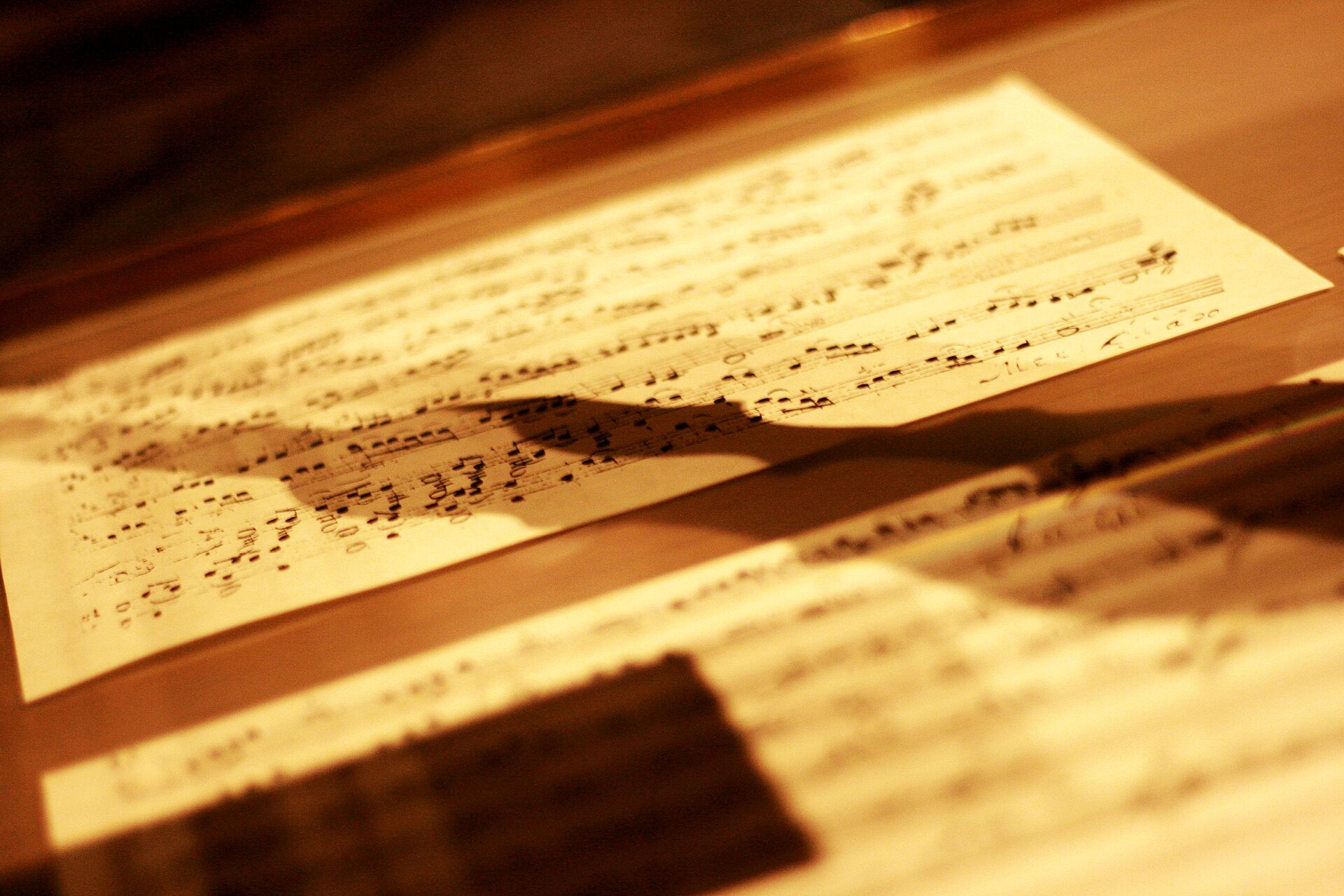
Manuscript at the Haus der Musik: Haus der Musik, Klangmuseum Wien by Marina Ivkic, CC BY-SA 4.0, via Wikimedia Commons.
The Domgasse 5 house number: Domgasse z01 by Zyance, CC BY-SA 2.5, via Wikimedia Commons.