The Viennese Coffee Menu Decoded: Melange, Einspänner & Verlängerter
Every coffee on a Vienna coffee-house menu explained, from the Kleiner Brauner to the Fiaker and Kaisermelange, with 2026 prices, the German to order and the mistakes to avoid.
- Viennese Coffee Types at a Glance
- The Rules of the Viennese Coffee Menu
- The Black Coffees
- The Milky Coffees
- The Whipped-Cream Coffees
- The Spiked Coffees
- The Cold Coffees
- The Rest of the Drinks Menu
- Coffee and Cake: Classic Pairings
- What It Costs
- How to Order in German
- What to Order, and When
- Common Misunderstandings
- Where to Practise
- Frequently Asked Questions
- Related Vienna Guides
- Photo Credits
This article contains advertising. Our booking links are routed through a partner that adds commission tracking automatically, so if you book through one we earn a commission from the provider, at no extra cost to you. It never affects what we recommend. Affiliate disclosure
Sit down in a Viennese coffee house, open the menu and the first thing you notice is that the word “coffee” has almost disappeared. In its place is a list of names that sound like a cast of characters: a small Brown, a Lengthened One, a One-Horse Carriage, a Franciscan, a Capuchin, an Empress, a Hackney Cab. The waiter in the black waistcoat is not going to explain them, and ordering “a latte” in one of the old houses may earn you a long look. This guide to Viennese coffee types is the translation you need to order like a regular.
It decodes every coffee you are likely to meet on a Vienna menu, from the everyday Melange to the spiked and whipped curiosities, explains how coffee is served and what the glass of water is for, gives the German you need to order, and sets out what a cup costs. Prices were checked in September 2026 against the menu of Café Landtmann, one of the grand Ringstraße houses, so treat them as the top of the range; neighbourhood cafés charge less.
Viennese Coffee Types at a Glance
| On the menu | What you get | Nearest thing elsewhere |
|---|---|---|
| Kleiner Schwarzer (Mokka) | A single espresso-strength black coffee | Espresso |
| Großer Schwarzer | A double black coffee | Double espresso |
| Kleiner Brauner | A single black coffee with a little jug of cream or milk | Macchiato, roughly |
| Großer Brauner | A double, with cream or milk on the side | Double macchiato, roughly |
| Verlängerter | Black coffee lengthened with hot water | Americano |
| Wiener Melange | Coffee with steamed milk and milk foam | Cappuccino, milder |
| Kaffee verkehrt | More milk than coffee | Latte |
| Einspänner | Strong black coffee in a glass, topped with whipped cream | None |
| Franziskaner | A Melange topped with whipped cream instead of foam | None |
| Kapuziner | Black coffee with a dash of cream | None |
| Fiaker | Black coffee with rum | None |
| Maria Theresia | Coffee with orange liqueur and whipped cream | None |
| Kaisermelange | Coffee with egg yolk, and often honey or brandy | None |
| Wiener Eiskaffee | Chilled coffee with vanilla ice cream and whipped cream | Affogato’s bigger cousin |
The Rules of the Viennese Coffee Menu
Before the individual drinks, a few conventions explain most of the menu.
“Kleiner” and “Großer”
Kleiner means small and Großer means large, but in coffee they mean single and double. A Kleiner Schwarzer is one shot of strong black coffee; a Großer Schwarzer is two, in a bigger cup. The same applies to the Brauner.
Schwarz, braun and the colour code
Many names describe the colour of the drink. Schwarz is black, braun is brown, which means with a little milk or cream, and a Kapuziner is the brown of a Capuchin friar’s habit. The older word Mokka still appears on some menus as a synonym for black coffee.
Obers and Schlagobers
Obers is the Austrian word for cream, and Schlagobers, or just Schlag, is whipped cream. If a drink is listed “mit Schlag”, it comes with a generous crown of it.
The tray and the glass of water
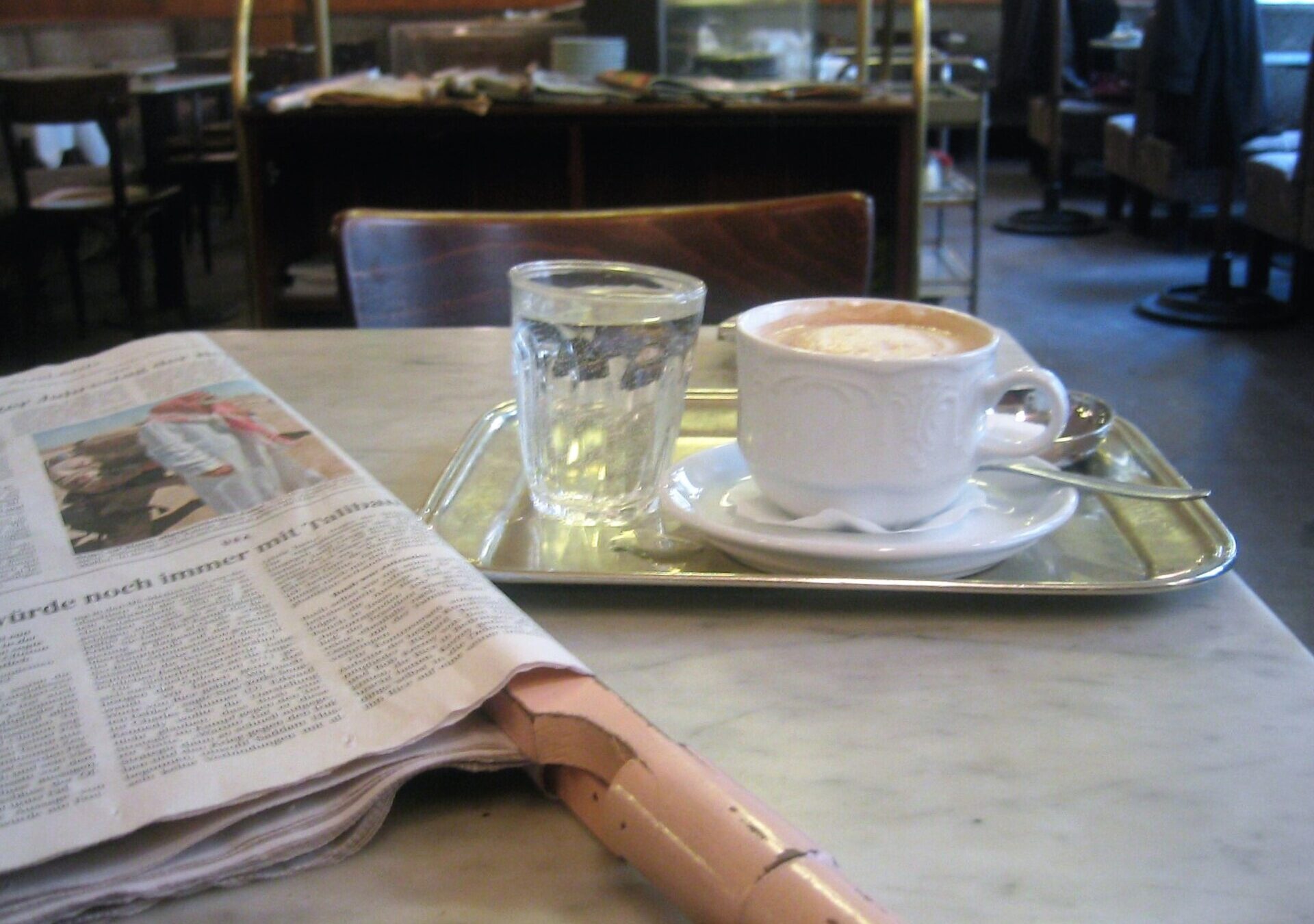
Coffee in a proper coffee house arrives on a small tray, usually metal, with a spoon and a glass of water. The water is not a mistake. It is there to cleanse your palate and, by long tradition, to be refilled as long as you sit there, which is part of the unspoken deal that one coffee buys you the table for as long as you want it. The glass is often laid with the spoon across it.
Milder than you expect
Traditional Viennese coffee is not the dark, bitter roast of southern Italy, and it is not the bright, fruity espresso of a modern specialty café. It is usually a medium roast, smooth and gentle, built to be drunk slowly with cake. If you want a punch, order a Großer Schwarzer.
The Black Coffees
Kleiner Schwarzer and Großer Schwarzer
The basic unit of Viennese coffee. A Kleiner Schwarzer is a single shot of strong black coffee in a small cup, the closest thing on the menu to an espresso, and a Großer Schwarzer is a double. Locals drink them after lunch, standing at a bar or at a table with a newspaper. Sugar is on the table; milk is not assumed.
Kleiner Brauner and Großer Brauner
The same, but “brown”: the coffee comes with a small jug of cream or milk on the side so you can add as much as you like. The Kleiner Brauner is perhaps the most Viennese order of all, and the cheapest coffee on most menus. At Café Landtmann it was listed at €4.20 in 2026.
Verlängerter
Literally “the lengthened one”: a black coffee topped up with hot water to make a longer, milder cup. It is the Viennese equivalent of an Americano, and one of the two most popular orders in the city alongside the Melange. Ask for a Verlängerter Brauner if you want milk with it, or a Verlängerter Schwarzer if you do not. Landtmann listed it at €6.90.
The Milky Coffees
Wiener Melange
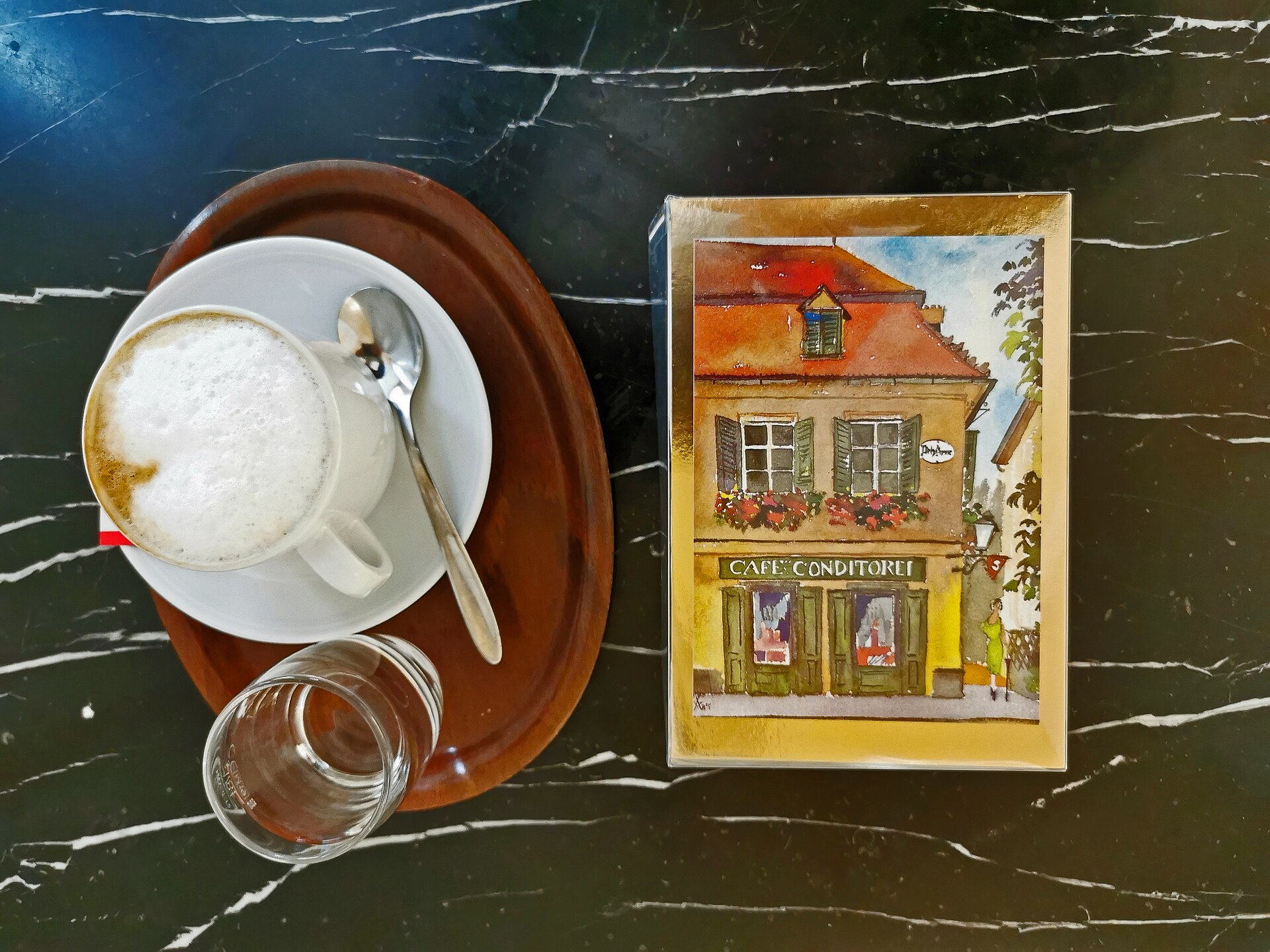
The signature drink of the city. A Melange is coffee with steamed milk and a cap of milk foam, served in a large cup. It resembles a cappuccino but is generally milder and softer, made with a gentler coffee and more milk. Some houses will add a dollop of whipped cream if you ask. It is the default order at any hour and the one to choose if you only try one. Landtmann listed its Wiener Melange at €6.90.
Kaffee verkehrt
“Coffee the wrong way round”: a milky coffee in which the milk outweighs the coffee. If you want something like a latte, this is the traditional name to ask for. Most coffee houses now also list a Caffè Latte for visitors; Landtmann’s was €7.50.
Schale Gold
An older name for a coffee with enough milk or cream to turn it a golden colour, somewhere between a Brauner and a Melange. You will find it on a few traditional menus; if you see it, it is a mild, creamy cup.
Häferlkaffee
A Häferl is a mug, and a Häferlkaffee is plain, homely coffee with milk in one. It is a breakfast drink, not a coffee-house showpiece, and you are more likely to meet it with a breakfast plate than on the grand menus.
Cappuccino, the Viennese way
This is the one that surprises people. In many traditional Viennese coffee houses, a cappuccino comes topped with whipped cream, not milk foam. If you want the Italian version, ask for a “Cappuccino italienisch” or “mit Milchschaum”, or simply order a Melange instead. Landtmann listed a cappuccino at €6.90.
The Whipped-Cream Coffees
Einspänner
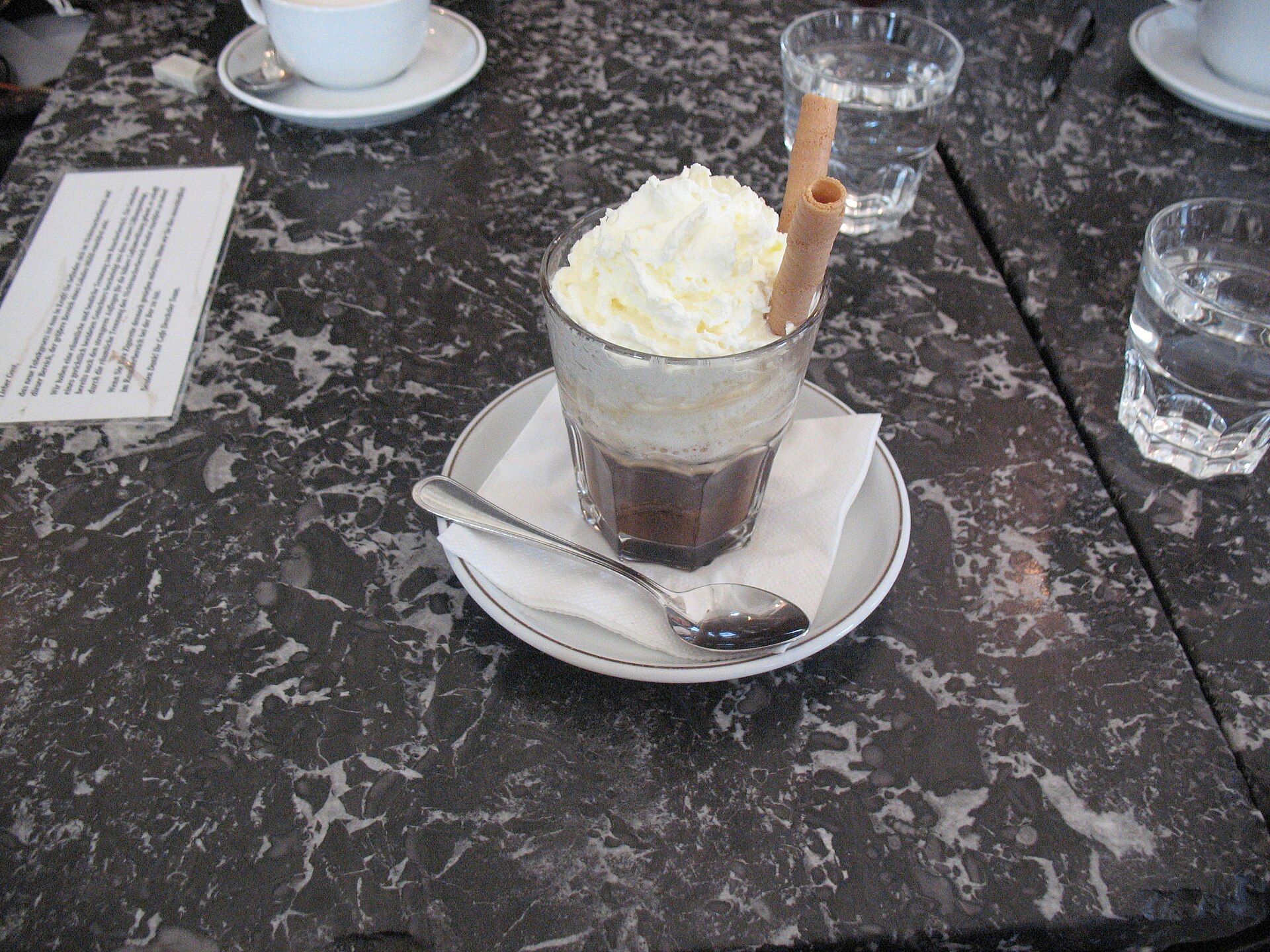
A strong black coffee, usually a double, served in a glass with a tall cap of whipped cream, and often a dusting of icing sugar. The name means a one-horse carriage. The story goes that the carriage drivers who waited for fares could hold the glass in one hand and the reins in the other, while the cream kept the coffee warm. Whether or not that is true, the way to drink it is not to stir: sip the hot coffee through the cold cream. Landtmann’s Salon Einspänner was €7.20.
Franziskaner
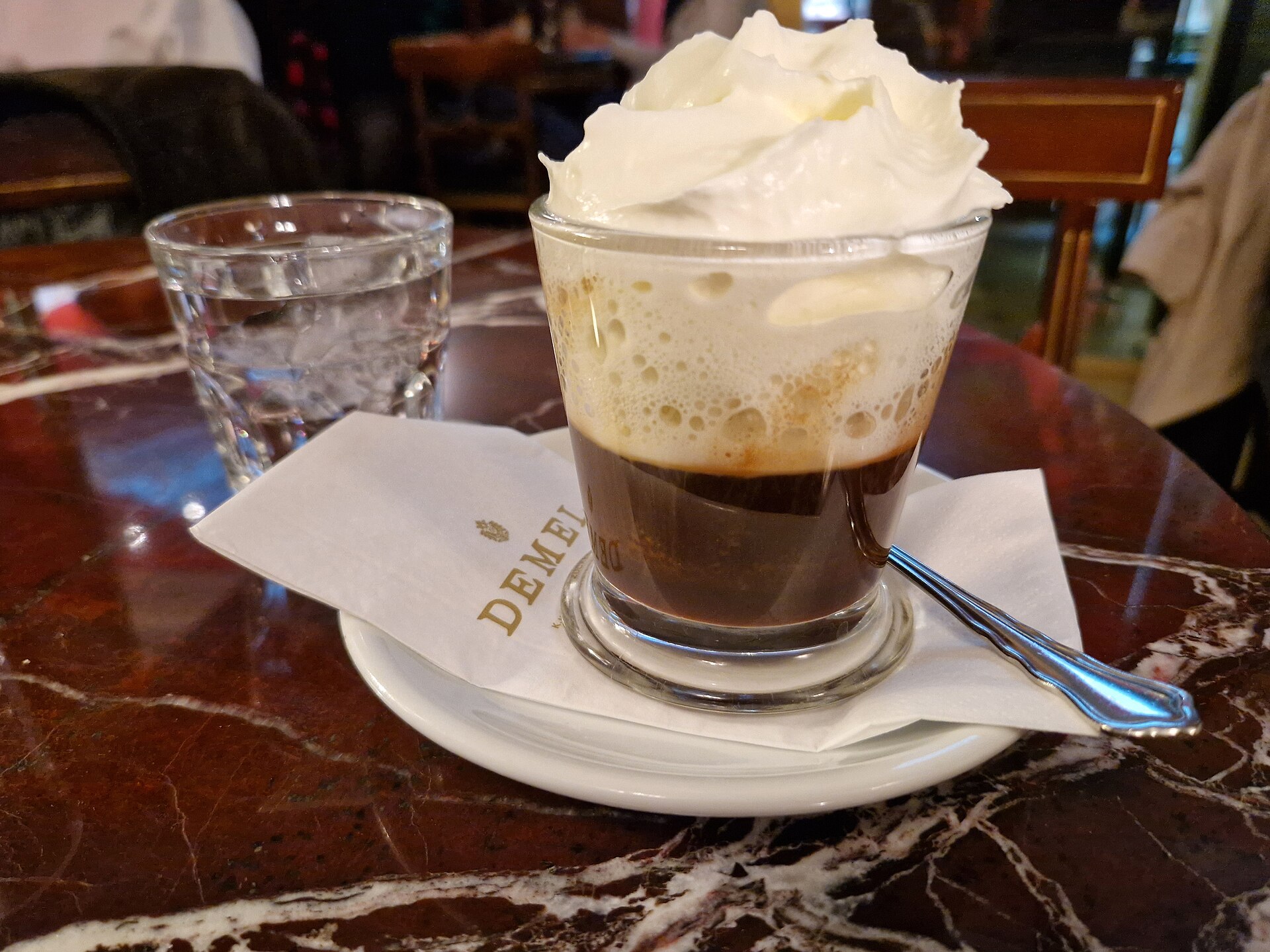
A Melange topped with whipped cream instead of milk foam, named for the lighter brown of a Franciscan friar’s habit. Sweet, soft and indulgent; a good partner for a plain cake such as a Gugelhupf. Landtmann listed it at €7.20.
Kapuziner
A small black coffee with just a dash of cream, or a small spoonful of whipped cream, enough to turn it the colour of a Capuchin’s habit. This is the ancestor of the Italian cappuccino’s name, and it looks nothing like one.
Überstürzter Neumann
A curiosity you will find on a handful of traditional menus: whipped cream is put into the cup first and the hot coffee is poured over it, “overturning” the usual order. It tastes much like a Franziskaner. Order it if you see it, mainly for the name.
The Spiked Coffees
Viennese coffee houses have a long tradition of coffees with a little alcohol in them, and they make an excellent afternoon treat in winter.
Fiaker
Named after Vienna’s horse-drawn cabs and their drivers, a Fiaker is a black coffee, often a Verlängerter, with a shot of rum, and sometimes a topping of whipped cream. Recipes vary from house to house. It is the traditional warm-up on a cold day, and a good excuse to find out more about the Fiaker carriages themselves.
Maria Theresia
Named after the eighteenth-century empress, a Maria Theresia is a strong coffee with orange liqueur and whipped cream, sometimes finished with a little orange zest or sugar. It is sweet, aromatic and more of a dessert than a coffee.
Kaisermelange
The “Emperor’s Melange” is a black coffee blended with an egg yolk, usually with honey or sugar, and often a splash of brandy. It sounds strange and tastes rich, like a warm, coffee-flavoured eggnog. Try it once.
Mazagran
A cold coffee served over ice with a shot of rum or, in some versions, maraschino. Traditionally it is drunk quickly, in one or two goes, rather than sipped. It is a summer drink and rarer than the others on this list.
The Cold Coffees
Wiener Eiskaffee
The Viennese iced coffee is not a coffee with ice cubes. It is chilled coffee poured over vanilla ice cream, topped with whipped cream, and served in a tall glass with a wafer and a long spoon. It is a dessert, and on a hot afternoon in July it is exactly the right one. If you want a simple cold coffee, ask for coffee “mit Eis”, and be prepared for a puzzled look in the older houses.
Eisschokolade
The same idea with cold chocolate and chocolate or vanilla ice cream. The children’s order, and more than a few adults’.
The Rest of the Drinks Menu
A coffee house is not only about coffee, and the rest of the drinks list has its own Austrian vocabulary.
- Heiße Schokolade: hot chocolate, often with whipped cream. In the grander houses it is thick and serious.
- Tee: tea, usually a choice of loose or bagged black, green and herbal teas, served with lemon or milk on request. Tea is an afterthought in most coffee houses; do not expect a British cuppa.
- Almdudler: Austria’s herbal lemonade, sweet and slightly alpine. Children love it; adults mix it with white wine or beer.
- Soda Zitron: soda water with fresh lemon juice. The classic cheap, refreshing order on a hot day.
- Himbeersaft or Himbeer-Soda: raspberry cordial with water or soda, another childhood favourite.
- Frucade and Apfelsaft gespritzt: orange soda, and apple juice topped up with sparkling water.
- Ein Achtel or ein Viertel: an eighth or a quarter of a litre of wine, the Viennese measures. A G’spritzter is white wine with soda water.
- Ein Seidl or ein Krügerl: a small (0.3 litre) or large (0.5 litre) beer, in the coffee houses that serve it.
Coffee and Cake: Classic Pairings
In Vienna, coffee and cake are one order, and some combinations work better than others.
- Melange and Apfelstrudel. The safe, perfect pairing: mild milky coffee against warm spiced apple and thin pastry.
- Kleiner Schwarzer and Sachertorte. The dense chocolate cake with apricot jam needs a strong, unsweetened coffee to cut through it, and a spoonful of unsweetened whipped cream on the side.
- Einspänner and Gugelhupf. A plain marble cake is the right partner for the richer, creamier coffee.
- Verlängerter and Topfenstrudel. Soft, lemony curd-cheese strudel with a longer, gentler black coffee.
- Franziskaner and Linzer Torte. The nutty, jam-filled tart likes a sweet, creamy cup.
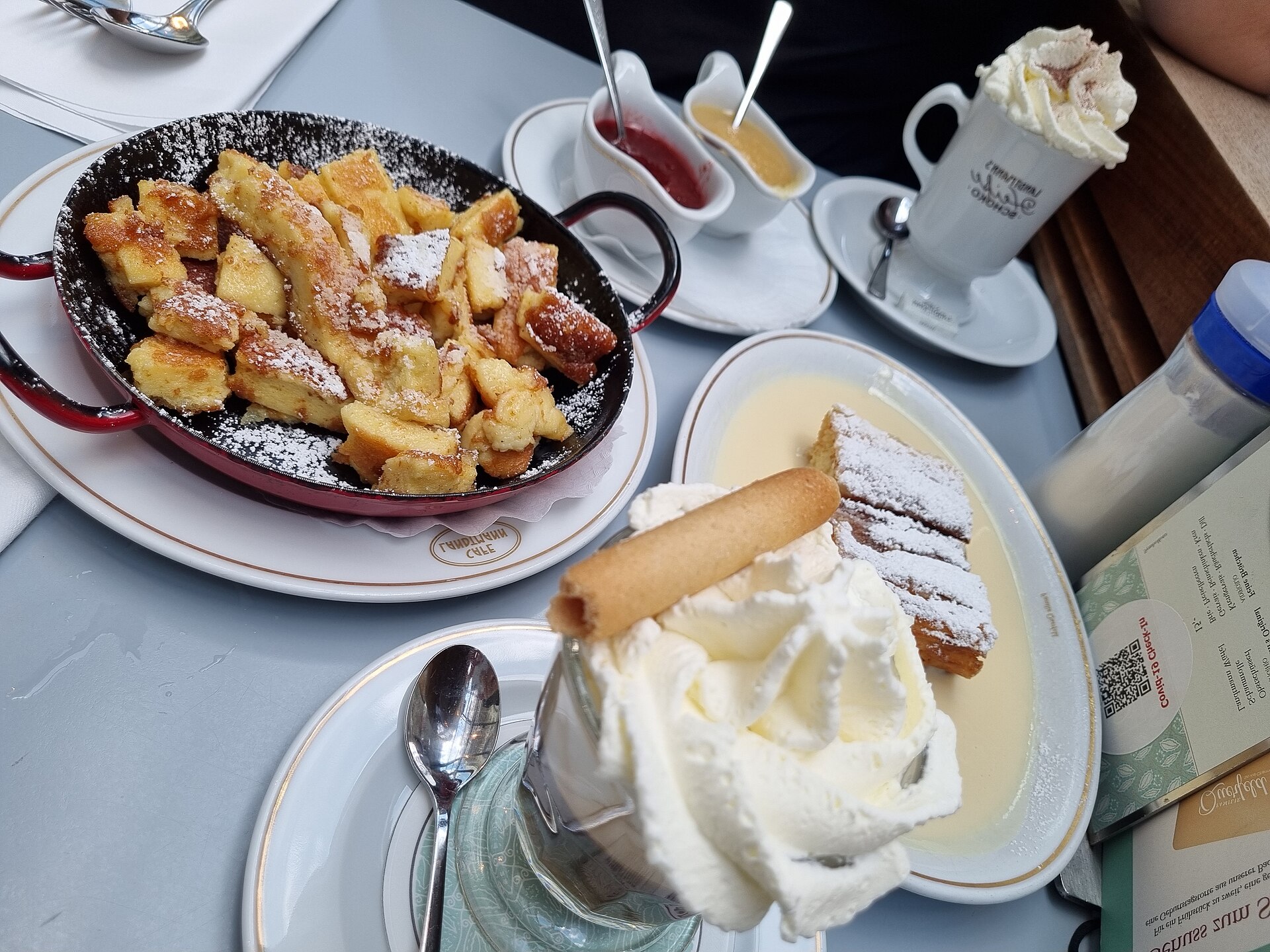
- Kaisermelange and Kaiserschmarrn. An imperial double: the torn pancake with plum compote and the emperor’s egg-yolk coffee. Share it; it is a lot.
Rules are made to be broken, and nobody in a Viennese coffee house will judge your order. But if the waiter raises an eyebrow at a Wiener Eiskaffee with a Sachertorte, you will know why.
What It Costs
Coffee in Vienna’s historic coffee houses is not cheap, because you are paying for the table, the waiter, the newspapers and as long as you want to stay. Here is the benchmark from Café Landtmann, one of the grandest houses on the Ringstraße, in 2026:
| Coffee | Café Landtmann, 2026 |
|---|---|
| Kleiner Brauner | €4.20 |
| Wiener Melange | €6.90 |
| Verlängerter | €6.90 |
| Cappuccino | €6.90 |
| Salon Einspänner | €7.20 |
| Franziskaner | €7.20 |
| Caffè Latte | €7.50 |
Treat these as the top of the market. The famous houses in the first district and on the Ring charge the most. A neighbourhood coffee house in the outer districts charges noticeably less for the same Melange, and a stand-up espresso bar or a bakery chain less again. Add a tip of about 10% by rounding up when you pay; our Vienna tipping guide explains how.
Is it worth it? Yes, as long as you use what you are paying for. A €6.90 Melange gulped in ten minutes is expensive coffee. The same Melange with an hour, a newspaper and three refills of water is one of the best-value pleasures in the city.
How to Order in German
Waiters in the central coffee houses speak English, but a few words of German go a long way, and the coffee names do not translate anyway.
| To say | In German |
|---|---|
| A Melange, please | Eine Melange, bitte |
| A small Brauner, please | Einen kleinen Braunen, bitte |
| A Verlängerter with milk | Einen Verlängerten mit Milch |
| With whipped cream | Mit Schlag |
| Without whipped cream | Ohne Schlag |
| Decaffeinated | Koffeinfrei |
| With oat milk | Mit Hafermilch |
| A glass of water | Ein Glas Wasser |
| The bill, please | Zahlen, bitte |
Note the grammar: Einen kleinen Braunen and einen Verlängerten change their endings because they are masculine, while eine Melange is feminine. Nobody will mind if you get it wrong. Our guide to English in Vienna and useful phrases has more.
What to Order, and When
- Breakfast: a Melange or a Häferlkaffee with a Kipferl, the crescent roll.
- After lunch: a Kleiner Schwarzer or Kleiner Brauner, the Viennese digestif.
- Afternoon Jause (the coffee-and-cake break): an Einspänner or a Franziskaner with a slice of cake. Our guide to Vienna’s desserts and pastries helps you choose the cake.
- A cold winter afternoon: a Fiaker or a Maria Theresia.
- A hot summer afternoon: a Wiener Eiskaffee.
- If in doubt: a Melange. It is never wrong.
Common Misunderstandings
- “A latte, please.” Modern cafés will understand; in a traditional house, ask for a Caffè Latte or a Kaffee verkehrt so there is no confusion.
- The whipped-cream cappuccino. In traditional houses, a cappuccino often arrives with whipped cream. Order a Melange if you want foam.
- “Can I get it to go?” Historic coffee houses are for sitting, not for takeaway. Bakeries and modern cafés sell coffee to go.
- Waiting for the bill. It will not come until you ask. Say “Zahlen, bitte”.
- Stirring the Einspänner. You can, but the point is to drink the hot coffee through the cold cream.
- Plant milks. Oat and soy milk are increasingly common, but not universal in the old houses. Ask.
- Expecting specialty coffee. The coffee houses sell atmosphere and tradition, not single-origin pour-overs. For those, look for the specialty roasters and modern cafés in Neubau and Mariahilf; our Neubau and Mariahilf guide covers the neighbourhood.
Where to Practise
Every one of these drinks is best ordered in a proper coffee house. The famous names — Café Central, Landtmann, Sperl, Hawelka, Demel — are covered in our guide to Vienna’s coffee houses, which also explains the etiquette of the tables, newspapers and waiters. Note that Café Central closed for renovation in March 2026 and is due to reopen in winter 2026; its temporary DECENTRAL operates at Freyung meanwhile.
Frequently Asked Questions
What is the most popular coffee in Vienna?
The Wiener Melange and the Verlängerter are the two most common orders. The Kleiner Brauner is the classic quick coffee.
What is the difference between a Melange and a cappuccino?
A Melange is generally milder and milkier than an Italian cappuccino, made with steamed milk and topped with milk foam. In traditional Viennese coffee houses, a cappuccino is often served with whipped cream instead of foam.
What is an Einspänner?
A strong black coffee served in a glass and topped with whipped cream. The name means a one-horse carriage; the story is that carriage drivers could hold it in one hand. Sip the coffee through the cream rather than stirring.
What is a Verlängerter?
A black coffee lengthened with hot water, the Viennese equivalent of an Americano. Order a Verlängerter Brauner if you want milk with it.
Why do Viennese coffee houses serve a glass of water with coffee?
To cleanse the palate, and by tradition as a sign of hospitality: the water is refilled for as long as you stay, and one coffee buys you the table for as long as you like.
How much does a coffee cost in Vienna?
In a grand coffee house such as Café Landtmann in 2026, a Kleiner Brauner was €4.20, a Melange €6.90 and an Einspänner €7.20. Neighbourhood coffee houses and bakeries charge less.
What is a Wiener Eiskaffee?
Chilled coffee poured over vanilla ice cream and topped with whipped cream, served in a tall glass. It is a dessert rather than an iced coffee.
Which Viennese coffees contain alcohol?
The Fiaker (with rum), the Maria Theresia (with orange liqueur), the Mazagran (cold, with rum) and, in many versions, the Kaisermelange (with brandy).
Everything above is the traditional coffee-house list. If you would rather have a light-roasted Ethiopian filter or a flat white, Vienna now has a serious third-wave scene too, led by Gota on Mariahilfer Straße, ranked the best coffee shop in Europe, and local roasters such as Jonas Reindl and Kaffeefabrik. Our guide to specialty coffee in Vienna has the addresses, hours and a walking route.
Related Vienna Guides
- Vienna Coffee Houses Guide
- Café Central Vienna
- Vienna Desserts and Pastries
- Traditional Viennese Dishes
- Vienna Tipping Guide
- English in Vienna: Language Tips
- Vienna Food Guide
- Neubau and Mariahilf Guide
Photo Credits
Melange with a glass of water: Cafe Konditorei Ullmann – Baden, Schlossergässchen – Melange + Konfekt by Ferry Paur, CC BY-SA 4.0, via Wikimedia Commons.
Einspänner with whipped cream: Einspänner mit Schlag und Dekorhippe by johl on Flickr, CC BY-SA 2.0, via Wikimedia Commons.
Whipped-cream coffee at Demel: Hofzuckerbäcker Demel Frühstück 04 by Geolina163, CC BY-SA 4.0, via Wikimedia Commons.
Coffee and desserts at Café Landtmann: Austrian coffee and desserts by בר, CC BY-SA 3.0, via Wikimedia Commons.
Melange at Café Bräunerhof: Cafe Braeunerhof Wien 2004 by Andreas Praefcke, CC BY 3.0, via Wikimedia Commons.
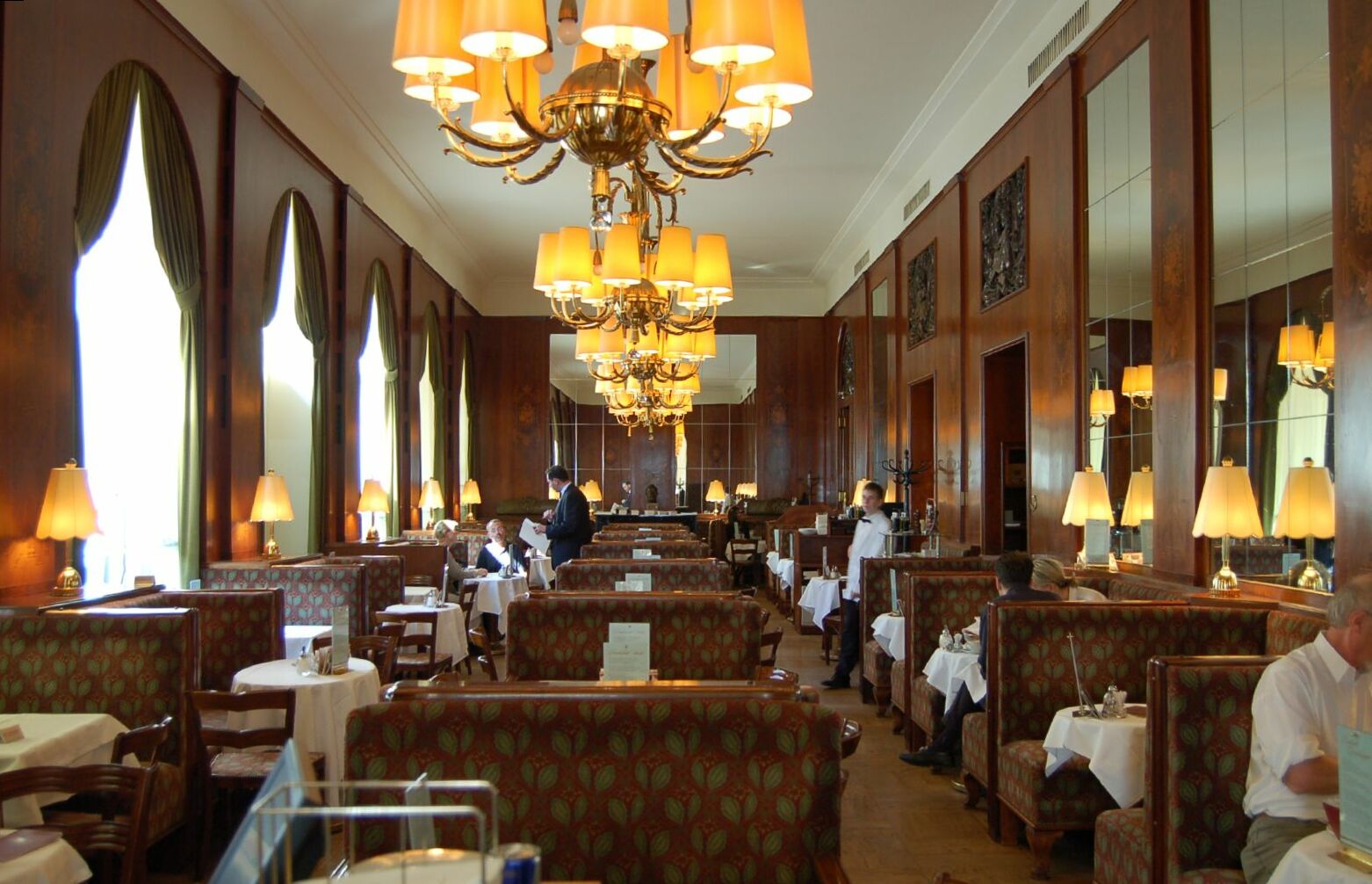
Table service at Café Landtmann: Landtmann interior by Joe Ross, CC BY-SA 2.0, via Wikimedia Commons.