Vienna Taxi & Ride-Sharing Guide: Uber, Bolt & Tips (2026)
Vienna taxi and ride-sharing guide. Uber, Bolt, FREE NOW prices, where to find taxi stands, airport rates, and when to use them vs public transport.
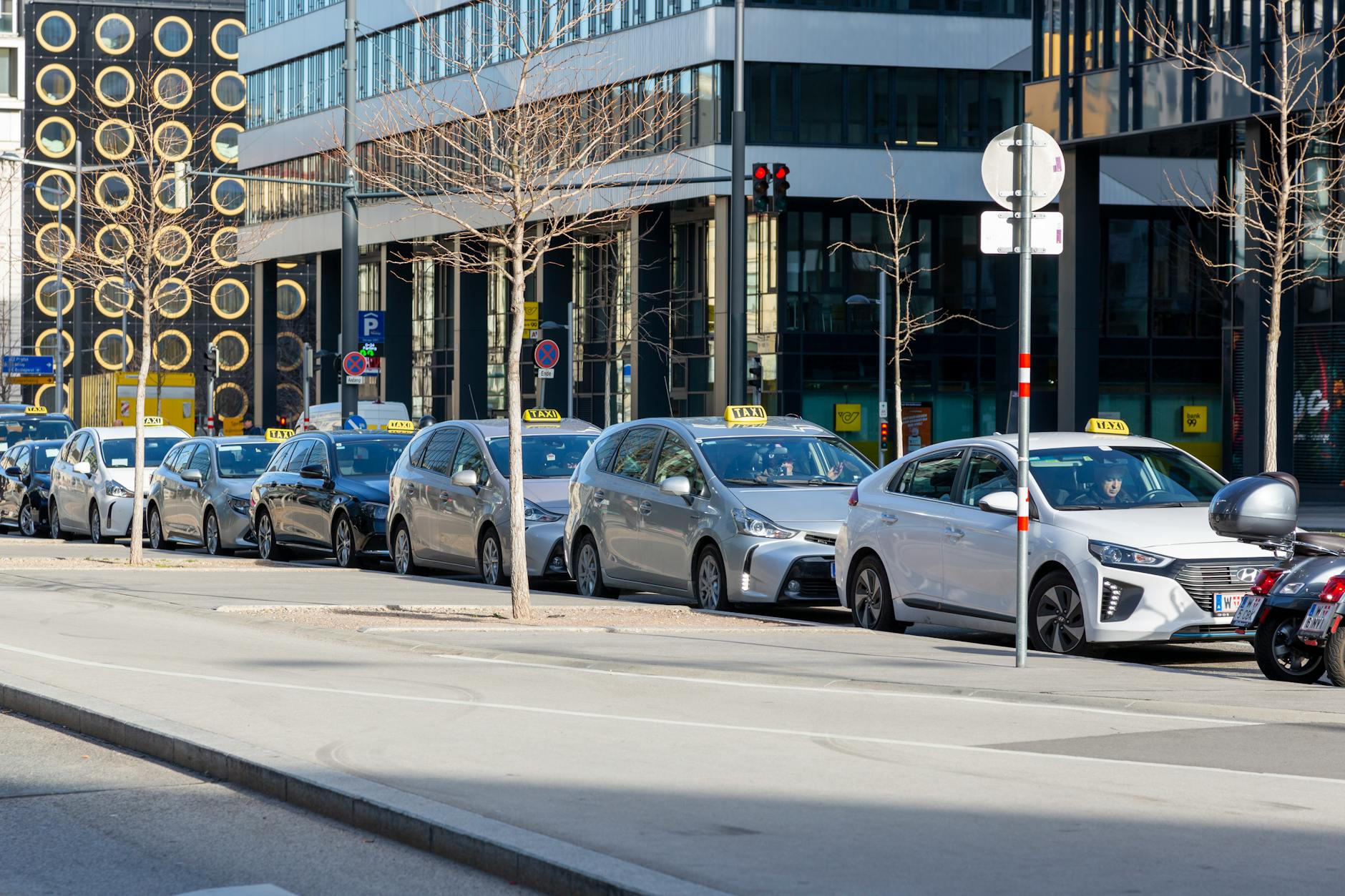
Photo by Valentin Ivantsov
- Taxis vs ride-sharing in Vienna: the key differences
- The three main ride-sharing apps in Vienna
- Hailing a traditional taxi
- Vienna airport taxi options
- Tipping taxi and ride-share drivers
- When to choose a taxi over public transport
- Typical Vienna taxi prices to common destinations
- Common Vienna taxi mistakes
- Safety considerations
- Accessibility and special services
- Vienna taxi etiquette
- When public transport beats a taxi
- Pre-booked airport transfers
- Specialty taxi services
- Vienna taxi and rideshare FAQ
- Related Vienna Guides
This article contains advertising. Our booking links are routed through a partner that adds commission tracking automatically, so if you book through one we earn a commission from the provider, at no extra cost to you. It never affects what we recommend. Affiliate disclosure
Getting around Vienna is dominated by the U-Bahn, trams, and walking, but there are moments when you need a taxi or ride-share: a late return from a concert, an early-morning airport run, a heavy bag of suitcases, or a quick crosstown sprint when you’re running late. Vienna offers traditional taxis, Uber, Bolt, and FREE NOW (formerly mytaxi), all within a single regulated tariff system. This 2026 guide explains the differences, current price ranges, how to avoid the common tourist mistakes, and when a taxi is the right choice versus another transport option.
Taxis vs ride-sharing in Vienna: the key differences
Vienna’s taxi and ride-sharing market is more regulated than in many other capitals. Rides booked by phone or online, which includes Uber and Bolt, must be priced within a band of 20% above or below the official taxi tariff. That keeps app fares close to the meter: ride-sharing here will never undercut a taxi by half, as it can in some other cities.
Traditional Vienna taxis use a metered tariff. The base charge is €3.80, then about 1.70-2.00 euros per kilometer, with a waiting time charge of around 0.40 euros per minute when stationary. A typical 3-5 km inner-city ride costs 9-14 euros on the meter.
Ride-share apps (Uber, Bolt, FREE NOW) show an estimated fare before you book. For the same 3-5 km inner-city ride, the displayed price is usually 9-13 euros. The quote changes with demand, so compare it across the apps before you confirm.
The three main ride-sharing apps in Vienna
Uber
Uber launched in Vienna in February 2014. It covers the central districts and the airport, and the app shows a live pickup estimate before you confirm. UberX is the standard option; UberXL handles larger groups; UberBlack offers premium vehicles at a higher rate.
You pay by card in Uber’s app. You can split fares with companions through the app. For first-time visitors, it’s the most familiar interface and usually the easiest entry point.
Bolt
Bolt (originally from Estonia) entered Vienna in October 2017, when it was still called Taxify, and has grown rapidly. Bolt is often slightly cheaper than Uber on identical routes, with reported savings of 1-3 euros on a typical inner-city ride. Before you book, set its quote and pickup time against Uber’s.

As with Uber, you pay by card in the app.
FREE NOW (mytaxi)
FREE NOW is the rebranded mytaxi platform, which connects you with traditional Vienna taxis through an app interface. You see the price after the ride based on the meter.
FREE NOW is the choice for travelers who want the security of a regulated, official taxi but the convenience of an app for booking.
Hailing a traditional taxi
The dependable ways to get a traditional taxi in Vienna are a taxi stand (Taxistand) or a phone or app booking. Major taxi stands are at Stephansplatz, Karlsplatz, the Opera, Rathausplatz, and outside every major train station.
For phone bookings, the most common Vienna taxi dispatch numbers are 31300 (Taxi 31300), 40100 (Taxi 40100), and 60160 (Taxi 60160). Ask the dispatcher how long the pickup will take when you call.
Hotels routinely book taxis on guests’ behalf at no extra charge. If you’re returning from a restaurant or attraction, ask the staff to call a taxi for you. Phrases that help: “Konnten Sie ein Taxi rufen?” (Could you call a taxi?).
Vienna airport taxi options
Vienna International Airport (VIE) is 18 km southeast of the city center. Taxi and ride-share options from the airport include:

Traditional metered taxi: Pickup at the marked taxi rank outside Arrivals. Metered fare to the city center runs approximately 40-50 euros, including a 10 euro airport supplement. The fare depends on the operator and how you book, so ask before you set off. Going the other way, book an airport taxi rather than an ordinary city cab: otherwise an €18 charge for the taxi’s empty return to Vienna is added. The city’s tourist office puts the journey at about 20–25 minutes, longer in heavy traffic or to outlying districts.
Airport Driver and similar flat-rate services: Pre-booked flat-rate transfers come from operators like AirportDriver and HiVienna. Booked online, AirportDriver’s Economy Line to anywhere within Vienna starts at €39 and its Business Line at €45. These are pre-paid and the driver waits for you in Arrivals with a name sign, which is convenient after a long flight.
Uber, Bolt, FREE NOW: Uber and Bolt both offer rides from Vienna Airport. The pickup point varies with the terminal, the time and conditions at the airport, so follow the directions in your app rather than looking for a sign. Fares run 35-55 euros to central Vienna depending on demand. Surge pricing applies during peak arrival times.
CAT (City Airport Train): Cheaper than a taxi for solo travelers at 12 euros one-way. While the rail line is closed, the CAT runs as a nonstop premium bus to Wien Mitte in the city center, taking 21 minutes; the bus service is expected to run until 31 October 2027. See our complete Vienna transport guide for full airport-to-city comparisons.
Tipping taxi and ride-share drivers
For metered taxis, the Austrian custom is to round up the fare to a convenient number, typically adding 5-10%. A 12.40 euro fare becomes 13 euros; a 22.30 euro fare becomes 24 euros. For longer journeys or if the driver helps with luggage, a 10% tip is standard.
Ride-share apps include tip options in the app after the ride. Standard tip is 1-2 euros for short rides, 10% for longer rides. Tipping in cash is also welcome if you have small change.
For airport flat-rate services, no tip is expected since the fare is pre-paid, but 1-2 euros for help with luggage is appreciated.
When to choose a taxi over public transport
Vienna’s public transport network is dense, reliable, and cheap, so taxis make sense in specific situations rather than as a default:
Late nights: The U-Bahn runs all night Friday and Saturday but not other nights. Night buses cover the gaps but routes are limited.
Heavy luggage: Public transport with two large suitcases each is workable but slow. A taxi door-to-door is worth the extra cost when departing or arriving at the airport.
Group of 3-4 people: A taxi fare split four ways can match or beat the cost of individual transport tickets, especially over longer distances.
Bad weather: Heavy rain or snow makes walking from tram stops unpleasant. A taxi or ride-share is comfortably worth 10-15 euros to skip the weather.
Time pressure: If you’re late for a train, opera, or restaurant, a direct taxi beats route planning.
Mobility limitations: Some U-Bahn stations have only stairs. Wheelchair-accessible taxis can be booked through specialized services like Hilfswerk.
Typical Vienna taxi prices to common destinations
For planning purposes, these are typical metered fares within Vienna (without surge):
Vienna Airport to central Vienna: 40-50 euros
Vienna Hauptbahnhof to Stephansplatz: 10-14 euros
Westbahnhof to Hofburg: 11-15 euros
Stephansplatz to Schoenbrunn: 16-22 euros
Schwedenplatz to Belvedere: 12-16 euros
Crosstown (e.g., 16th district to 22nd district): 25-35 euros
Ride-share apps quote their own prices, which may sit up to 20% above or below the official tariff, so check the app quote against these figures before you book.
Common Vienna taxi mistakes
The most common mistake is counting on a passing taxi to stop for you. Walk to a taxi stand or use an app instead.
Second is not confirming the fare type. For destinations outside Vienna’s central tariff zone (e.g., to the airport or to suburbs), some taxi drivers offer a flat-rate alternative to the meter. Confirm before getting in whether you want metered or flat-rate; the meter is usually cheaper in light traffic, the flat-rate cheaper in heavy traffic.
Third is paying with a large bill. Many drivers carry limited change. Have 20 euro and 10 euro notes for typical fares, or simply pay by card: every Vienna taxi must carry a working card terminal that takes at least debit cards.
Fourth is using Uber or Bolt during late-night surge and then complaining about the price. Vienna’s surge pricing can hit 1.5-2x during peak demand, making a ride that normally costs 12 euros suddenly 22 euros. Check the app price before confirming and switch to FREE NOW (metered) when surge is high.
Safety considerations
Vienna is generally safe, and taxis are no exception. Standard precautions apply:
Use licensed taxis (look for the taxi sign on the roof) or recognized ride-share apps.
Confirm the driver’s name and license plate matches your booking before getting in.
Check the meter is running for metered rides.
Avoid unmarked vehicles offering rides at airports or train stations.
Share trip details with a companion via the app’s share feature for late-night journeys.
Accessibility and special services
Wheelchair-accessible taxis can be booked through Vienna’s dispatch numbers or via dedicated accessibility services like Hilfswerk. Book ahead by at least an hour, especially for evenings and weekends.
Child seats are not standard in Vienna taxis. Austrian law requires children under 14 who are shorter than 135 cm to use a child restraint in cars. If you’re traveling with young children, book through AirportDriver or a similar service that confirms child seats in advance.
Pets are generally accepted in taxis at the driver’s discretion. Charges vary by operator: Taxi 40100 carries animals at no extra cost, so ask when you book with anyone else. If you travel with an assistance dog, mention it when you book.
Vienna taxi etiquette
Some Vienna taxi customs are worth knowing. Drivers traditionally take the most efficient route by knowledge rather than relying on GPS. If you have a preferred route, mention it before departure. Don’t sit in the front passenger seat unless invited; back-seat passengers are the norm.
Smoking is forbidden in all Vienna taxis. Eating in taxis is generally tolerated for short journeys but ask before opening anything aromatic. Austrian rules require child restraints for children under 14 and under 135 cm; ask when you book whether a seat is available, or book through AirportDriver if you need a confirmed child seat.
Most drivers speak some English, especially in central Vienna and at the airport. Older drivers may speak only German; having your destination written down or on a map app prevents confusion. Vienna taxi drivers are required to take posted routes and meter the fare honestly; the regulated industry has very few tourist-targeting scams compared to other capitals.
When public transport beats a taxi
Vienna’s public transport is so efficient that taxis often lose time advantages, not just cost advantages. Before you book a car, set the journey planner’s time for your route against the app’s pickup estimate. The taxi only wins when:
You’re carrying heavy luggage to or from a train station.
You’re traveling late at night when U-Bahn frequency drops.
You’re moving between districts not directly connected by a single U-Bahn line.
You’re in a group of 4 splitting the fare.
You’re in physical discomfort (elderly, injured, sick).
For everything else, a 24-hour ticket (€10.20 paper, €9.70 digital) or a 7-day ticket (€28.90 paper, €25.20 digital) gives unlimited travel in the core zone and quickly pays for itself against taxi fares.
Pre-booked airport transfers
Companies like AirportDriver, HiVienna, and Welcome Pickups offer flat-rate pre-booked airport transfers; AirportDriver’s online fares to addresses within Vienna start at €39. The advantages over a walk-up taxi or app ride are:
Driver waits in Arrivals with a name sign even if your flight is delayed.
Fixed price regardless of traffic.
Vehicle and driver details confirmed in advance.
Booking is easy through their websites.
This service is especially valuable if you’re arriving late at night, traveling with children or elderly companions, or have multiple suitcases. The 4-12 euros saved compared to a metered taxi adds peace of mind for the same money.
Specialty taxi services
Vienna has specialty taxi services for specific needs:
Frauen-Taxi (women-only taxi): Female drivers for women travelers who prefer it.
Wheelchair-accessible taxis: Booked through dispatch numbers; requires advance notice.
Premium black car services: For business travelers and luxury arrivals. UberBlack and dedicated chauffeur services like Sixt premium offer Mercedes E-class or higher.
Pet-friendly taxis: If you travel with an animal, tell the dispatcher or driver when you book.
Vienna taxi and rideshare FAQ
Is Uber legal in Vienna? Yes. Uber has operated in Vienna since 2014, and like any ride booked online, its fares must stay within 20% of the official taxi tariff.
Can I pay cash in Uber or Bolt? Payment options depend on the app and can change, so check the payment settings in the Uber or Bolt app before you ride. Card payment through the app is the most common.
Are taxis cheaper than Uber/Bolt? Sometimes. A taxi from a stand charges the official metered tariff, while booked and app fares can be up to 20% above or below it, so when the app quote is high, a taxi from the stand can work out cheaper.
How long is the typical wait for an Uber in Vienna? It depends on the district and the time of day. The app shows a live pickup estimate before you confirm, and longer waits come with peak surge.
Is it safe to take taxis at night? Yes. Vienna taxi drivers are licensed and traceable. Standard precautions apply.
Do drivers speak English? Most younger drivers and central Vienna drivers speak basic English. Having your destination written down or shown on a map app helps.
Can I book a ride to a destination outside Vienna? Yes, taxis and ride-shares serve regional destinations including the airport, day-trip locations, and even cross-border trips. Negotiate the price upfront or use a pre-booked flat-rate service.
Are there pink/female-only taxi services? Yes, Vienna has women-only taxi services like Frauen-Taxi for travelers who prefer female drivers. Book by phone or through specialized apps.
Taxis and ride-sharing in Vienna are convenient but rarely essential. For most visitors, a 24-hour or 7-day public transport ticket covers nearly every journey, with taxis filling specific gaps like late-night returns or heavy luggage transfers. Whether you choose a metered taxi, Uber, Bolt, or FREE NOW, the regulated tariff system means you’re unlikely to be overcharged, and the experience is consistently safe and professional. For other transport options, see our complete Vienna transport guide guide which covers the U-Bahn, trams, buses, and ticket pass strategy.
The airport run is where most visitors first meet a Viennese taxi, and it is the journey where pre-booking makes the biggest difference. We compare it against every rail and coach alternative — including what the current S-Bahn closure has done to the trains — in our Vienna Airport guide.
For an airport run there is a third option people forget: driving yourself and leaving the car. It is rarely worth it for one person on a short trip, but for four people on a week’s holiday one parking booking beats four taxi fares comfortably, and the departure kerb allows ten free minutes for a drop-off. Our guide to Vienna airport parking works through where the arithmetic tips.