Is Vienna Walkable? Complete Walking Guide by District (2026)
Is Vienna walkable? Yes, and our complete walking guide covers district-by-district routes, walking times, accessibility tips, and recommended itineraries.
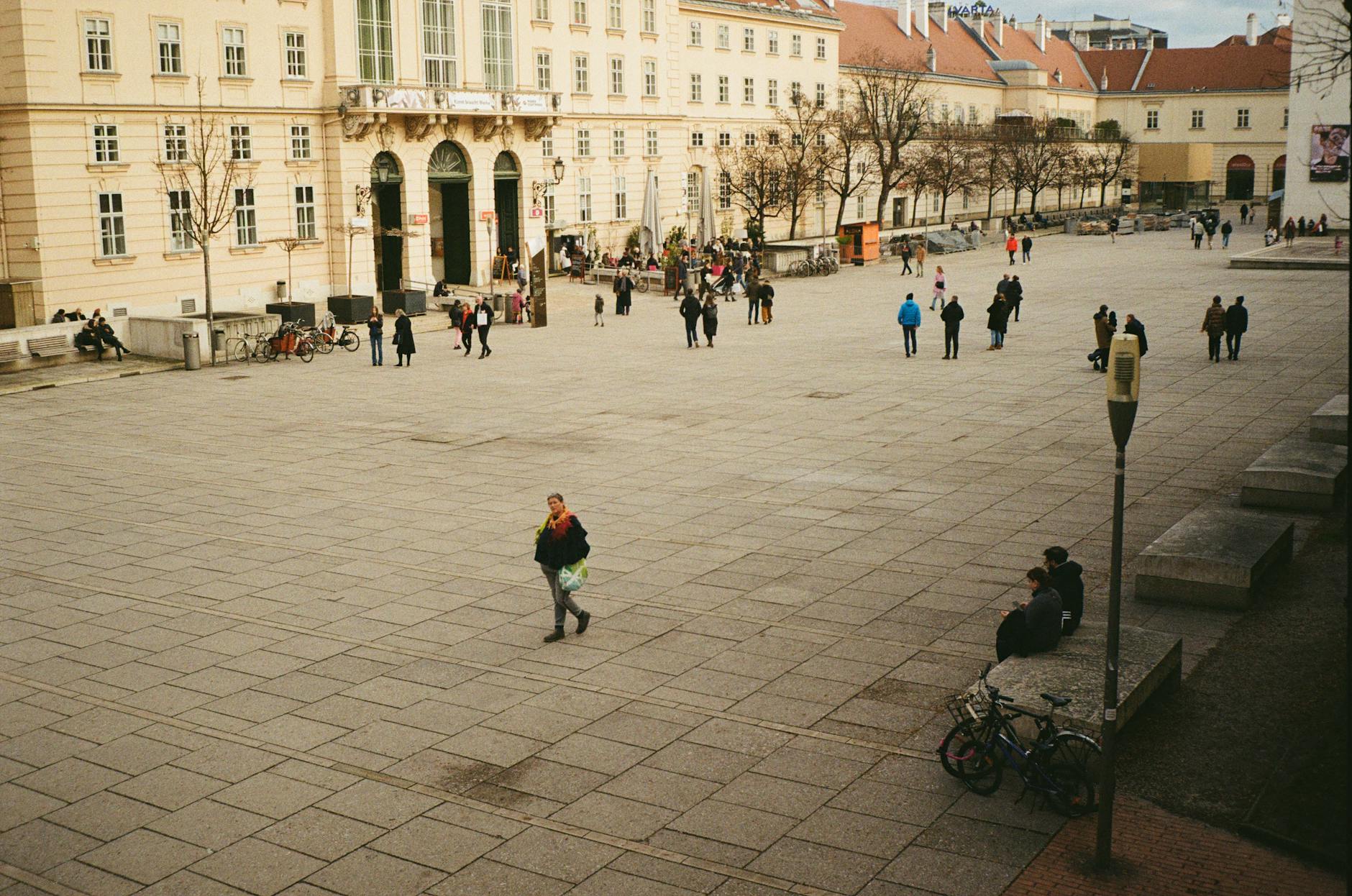
Photo by Mykhailo Volkov
- Is Vienna walkable? The short answer
- Vienna walking times: a quick orientation
- Walking the Innere Stadt (1st district)
- Walking the Ringstrasse
- Walking outside the Innere Stadt
- Walking with mobility considerations
- Walking shoes and what to wear
- Recommended walking itineraries by trip length
- Self-guided vs guided walking tours
- Walking safety in Vienna
- Combining walking with public transport
- Best season for walking in Vienna
- Walking with kids
- Walking after dark
- Common walking mistakes
- Walking shoes recommendations
- Walking with luggage
- Best walking neighborhoods by interest
- Walking and photography
- Walking guide FAQ
- Related Vienna Guides
This article contains advertising. Our booking links are routed through a partner that adds commission tracking automatically, so if you book through one we earn a commission from the provider, at no extra cost to you. It never affects what we recommend. Affiliate disclosure
Vienna is an easy capital to explore on foot. The historic center is flat and compact, many of the major attractions sit close together, and pedestrian zones and traffic-calmed streets run through the heart of the old town. For most first-time visitors, walking is not just an alternative to public transport, it’s the best way to experience Vienna’s coffee-house culture, Habsburg architecture, and street life. This guide answers the question “Is Vienna walkable?” with practical district-by-district walking times, recommended routes, and tips for visitors with different fitness levels.
Is Vienna walkable? The short answer
Yes. Vienna’s Innere Stadt (1st district) and the Ringstrasse around it bring together many of the major sights, including Stephansdom, the Hofburg, the State Opera, and the big museums on the Ring, and all of them can be explored on foot. The terrain is essentially flat, pedestrian-only zones cover key shopping and tourist streets, and from a central hotel most of the headline attractions are within an easy walk.
Beyond the Innere Stadt, walkability remains high in the inner districts (2nd, 3rd, 4th, 6th, 7th, 8th, 9th). Schoenbrunn Palace (15th district) and Belvedere Palace (3rd district) are accessible on foot for visitors staying centrally, though most travelers will use the U-Bahn or tram for at least the journey out and walking once they arrive.
Vienna walking times: a quick orientation
To plan your time, use these approximate walking times between major points:
Stephansplatz to Hofburg: a short stroll down Graben and Kohlmarkt
Stephansplatz to State Opera: a short walk down Kärntner Straße
Stephansplatz to MuseumsQuartier / Kunsthistorisches Museum: an easy walk past the Hofburg
Hofburg to Belvedere Palace: a longer walk, worth it on a fine day
State Opera to Naschmarkt: close by, via Karlsplatz
State Opera to Schoenbrunn Palace: too far for most visitors on foot (better by U-Bahn)
Stephansplatz to Prater (Giant Ferris Wheel): a longer walk across the Danube canal
Stephansplatz to Karlsplatz: an easy walk past the State Opera
Stephansplatz to Rathaus (City Hall): a comfortable walk across the old town
Karlsplatz to MuseumsQuartier: a short walk
Walking the Innere Stadt (1st district)
The Innere Stadt is the historic heart of Vienna, enclosed by the Ringstrasse on the west and south, the Danube canal on the east, and Schottenring on the north. It’s small enough to cross on foot without thinking about transport. Many streets are pedestrian-only or strictly traffic-calmed.

The classic Innere Stadt walking route starts at Stephansplatz (the cathedral square), proceeds west down Graben (a wide pedestrian boulevard lined with luxury shops), turns south at the Pestsäule plague column, continues along Kohlmarkt to Michaelerplatz where the Hofburg complex opens up, then heads south through Heldenplatz to the State Opera. It takes in the whole imperial core, with cafés and squares to stop at along the way.
For more in-depth walking, see our complete guides to the Vienna attractions and the Innere Stadt by district.
Walking the Ringstrasse
The Ringstrasse is the grand boulevard laid out on the site of Vienna’s medieval city walls. It forms a 5.3 km horseshoe around the Innere Stadt, lined with monumental buildings: the State Opera, Kunsthistorisches Museum, Naturhistorisches Museum, Parliament, Rathaus (City Hall), Burgtheater, University of Vienna, and Votivkirche.

Walking the full Ringstrasse at a relaxed pace takes a good chunk of a morning or afternoon, and longer if you stop at the buildings. For a shorter taster, walk the section from the State Opera past the Hofburg to the Burgtheater, which takes in some of the best-known buildings on the boulevard.
Alternative to walking: regular trams 1 and 2 run along sections of the Ring at the standard public transport fare. Neither covers the full loop and there is no commentary, so walking still gives you the flexibility to stop at any of the buildings along the way.
Walking outside the Innere Stadt
The inner districts immediately surrounding the Ringstrasse are nearly as walkable as the Innere Stadt itself. Particularly worth exploring on foot:
Mariahilfer Strasse (6th and 7th districts): Vienna’s main shopping street, with a 1.6 km redesigned stretch of pedestrian and shared-traffic zones. Connects Westbahnhof to the MuseumsQuartier area and is easy to walk end to end.
Naschmarkt (6th district): Vienna’s main food market runs between the two Wienzeile roads. Walk the full market for sample stalls, restaurants, and the famous flea market on Saturdays.
Leopoldstadt (2nd district): The former Jewish quarter and home to Prater amusement park. From Schwedenplatz you can walk across the Danube canal and on to the Giant Ferris Wheel.
Neubau (7th district): Hipster cafe and gallery neighborhood. Walk Spittelberg, Lerchenfelder Strasse, and Burggasse for boutiques and coffee.
Belvedere (3rd district): Walk from Stephansplatz via Schwarzenbergplatz and Prinz-Eugen-Strasse. Beautiful walk along leafy avenues.
For deeper district guides, see our complete where to stay in Vienna guide which covers neighborhoods to stay in and explore on foot.
Walking with mobility considerations
Vienna’s central streets are generally accessible. Pedestrian zones are flat and even, with smooth paving on Graben, Kärntner Strasse, and the Hofburg approaches. Some older streets in the Innere Stadt have cobblestones that can be uncomfortable for wheelchair users or travelers with mobility limitations.
Step-free U-Bahn access exists at almost all stations (look for the lift symbol), making it easy to skip walking sections. Most major attractions have step-free entrances, though some older venues like the State Opera have limited accessibility.
For travelers with significant mobility limitations, central Vienna remains accessible with a mix of walking flat sections, taking U-Bahn between districts, and using ride-share for cobblestone areas. Specialized accessible-tour operators run guided walking tours adapted to wheelchair users.
Walking shoes and what to wear
Vienna’s terrain is flat but the cobblestone sections in the Innere Stadt and around Schoenbrunn can be tough on feet over a full day. Wear comfortable, broken-in walking shoes with cushioned soles. Sneakers, walking sandals, or comfortable flats work; heels and dress shoes don’t, even for “casual” wear.
In summer (June-August), shoes that breathe are essential. Vienna heat waves can push temperatures into the mid-30s Celsius, and walking 5-8 km a day in non-breathable shoes is miserable.
In winter (December-February), waterproof boots with good grip are ideal. Snow and ice form on shaded streets and bridges. Avoid slick-soled boots.
For complete clothing guidance by season, see our Vienna packing list.
Recommended walking itineraries by trip length
Half-day Vienna walking tour (3 hours): Start at Stephansplatz, walk Graben to Kohlmarkt, through Michaelerplatz to the Hofburg complex, exit through Heldenplatz to the Ringstrasse, walk past Kunsthistorisches and Naturhistorisches museums, end at the State Opera. Coffee break at any historic coffee house along the route.
Full-day Vienna walking tour (6-8 hours with stops): Morning: Innere Stadt loop as above. Lunch at Naschmarkt or a Beisl. Afternoon: walk the Ringstrasse with stops at Parliament and Rathaus. End at Belvedere Palace gardens.
Two-day deeper walking tour: Day 1 covers Innere Stadt and Ringstrasse as above. Day 2 explores Leopoldstadt and Prater on foot, walks Mariahilfer Strasse end to end, ends in Neubau for dinner.
For more itinerary ideas, see our 3-day Vienna itinerary and 5-day Vienna itinerary which include detailed walking routes.
Self-guided vs guided walking tours
Vienna’s compact center makes self-guided walking easy with a good map and audio guide app. Apps like Rick Steves’ Audio Europe and GPSmyCity offer free or low-cost Vienna walking tours. The official Vienna tourism app has self-guided routes for Habsburg history, Jewish Vienna, and Jugendstil architecture.
Guided walking tours add expert commentary and reach less-obvious spots. Popular tours include Vienna Greeters (free, run by locals), Original Vienna Tours (free walking tours, tips appreciated), Vienna Sightseeing tours (paid), and themed walks like Third Man Tour (for Graham Greene fans) and Jewish Vienna tours.
For comprehensive walking tour comparisons, see our complete things to do in Vienna article.
Walking safety in Vienna
Vienna is one of the safest capitals in Europe by every metric. Walking even late at night in central districts feels safe for solo travelers, including women. Standard precautions still apply, especially at Karlsplatz and Praterstern, two of the few areas where petty crime concentrates.
Traffic safety is the bigger concern. Tram lines run through pedestrian areas and quietly approach from behind. Always look both ways even on pedestrianized streets where trams may run. Cyclists are also a hazard on shared paths; stay to the right and watch for marked bike lanes within sidewalks.
At pedestrian crossings (zebra stripes), always make eye contact with drivers before stepping out. Vienna drivers stop reliably but not instantly.
Combining walking with public transport
Most visitors walk further in Vienna than they realize, with public transport filling specific gaps. The natural pattern is: walk within a district, take U-Bahn or tram to move between districts. A 24-hour transport ticket at €9.70 in the WienMobil app (€10.20 on paper) pays for itself easily on a sightseeing day.
The most useful U-Bahn routes for walking tourists are U1 (Stephansplatz-Hauptbahnhof-Praterstern), U3 (Westbahnhof-Stephansplatz-Erdberg), and U4 (Schwedenplatz-Schoenbrunn-Hütteldorf). Each connects walking destinations efficiently.
Best season for walking in Vienna
The best months for walking are April through June and September through October, when temperatures are usually mild enough for long days on foot. Long daylight hours and late sunsets in May and June maximize sightseeing time.
July and August are warm and crowded. Walking remains pleasant in the morning and evening, but midday heat and the crush of summer tourists make some sections (Stephansplatz, Schoenbrunn approach) frustrating. Plan early starts and afternoon coffee-house breaks.
Winter (December-February) is cold but the Vienna Christmas markets season transforms walking into a magical experience. Bundle up and walk between markets at Rathaus, Schoenbrunn, Belvedere, and Spittelberg.
For full seasonal planning, see our best time to visit Vienna guide.
Walking with kids
Vienna with children works well as a walking city, especially in the Innere Stadt where pedestrianized streets reduce traffic concerns. Sights like Stephansdom catacombs, the Spanish Riding School training, the Hofburg, the Prater amusement park, and the Naschmarkt food stalls appeal to most ages.
Strollers handle most central streets, with the exception of some cobblestoned alleys in the Innere Stadt. Public transport is fully stroller-accessible. Pace yourself with frequent coffee or ice cream breaks, and plan around toddler nap times.
Walking after dark
Vienna’s central districts are well-lit and feel safe for walking until late. The Innere Stadt is particularly atmospheric at night, with illuminated facades and quiet streets after restaurants close. Watch for tram lines and ride-share pickup points at the major squares.
The Ringstrasse at night is one of the most beautiful walks in central Europe, with lit-up Parliament, Rathaus, and Burgtheater. Allow extra time to photograph each building.
Common walking mistakes
The most common mistake is underestimating distances and overplanning. Vienna’s center is compact, but a packed day of sightseeing still adds up to a lot of kilometres. Build in coffee breaks every 90 minutes.
Second is wearing fashionable shoes for the imperial walks. Cobblestone sections will destroy heels and thin soles by day two. Save fashion shoes for restaurant dinners.
Third is missing the underground passages at major squares. At Karlsplatz, Schwedenplatz, and Stephansplatz, the U-Bahn station passages can be a quicker way across than the busy streets above.
Fourth is forgetting water in summer. Public drinking fountains exist but aren’t ubiquitous; carry a refillable bottle. Vienna’s tap water is excellent (it comes from Alpine springs) and free in all coffee houses and restaurants on request.
Walking shoes recommendations
For most Vienna walking days, mid-range walking sneakers with cushioned soles handle 5-10 km of mixed pavement and cobblestone comfortably. Brands that work well include Hoka, On Cloud, Allbirds, and traditional walking shoe makers like ECCO and Mephisto. Avoid stiff dress shoes, thin-soled flats, and any shoes that haven’t been broken in.
Investment-grade walking shoes (100-200 euros) pay off across a multi-city trip. If you’re combining Vienna with Salzburg, Prague, or Budapest, your feet will thank you for the quality.
Walking with luggage
Many travelers arrive in Vienna by train and need to walk to their hotel with suitcases. The flat terrain helps, but cobblestones in older districts test luggage wheels. Pick up your hotel address ahead of time and plan a route avoiding the worst cobblestoned alleys (consult Google Street View to check surfaces).
For genuinely heavy luggage, consider a taxi for the final leg even if your hotel is “only 10 minutes” from the station. The savings of walking are not worth carrying a 25 kg case over uneven sidewalks.
Best walking neighborhoods by interest
For history buffs: Innere Stadt (1st), Ringstrasse, Heldenplatz, Hofburg complex. Half-day to full-day walks.
For art and culture: MuseumsQuartier and Spittelberg (7th). Combines indoor museums with outdoor strolls.
For coffee and conversation: Innere Stadt and Josefstadt (8th). Coffee house walks with literary history.
For food: Naschmarkt area, Wieden (4th), Mariahilf (6th). Market and restaurant clusters.
For art nouveau and modernism: Karlsplatz area, Naschmarkt edge, Otto Wagner stations. Distinctive Vienna 1900 architecture.
For Jewish history: Leopoldstadt (2nd), Judenplatz. Modern Jewish quarter and Holocaust memorial.
For green space: Schoenbrunn (15th), Belvedere (3rd), Prater (2nd). Park-focused walks.
Walking and photography
Vienna rewards photographers who walk slowly. Pre-dawn and “blue hour” (just after sunset) light is particularly flattering for the imperial buildings on the Ringstrasse. The reflections from Donaukanal at twilight are spectacular. Stephansdom and Karlskirche have dramatic lighting at night.
For Instagram-friendly walks, the colorful Hundertwasserhaus, the symmetrical baroque of Schoenbrunn Gardens, and the famous corner at the Naschmarkt are reliable hits. See our complete Vienna photography guide for spot-by-spot recommendations.
Walking guide FAQ
How many kilometres do tourists typically walk in Vienna per day? More than most expect: the distances add up quickly on a sightseeing day, even in the compact center. Pace yourself and use public transport for longer hops.
Are there walking tours in English? Yes, free and paid English-language walking tours run multiple times daily from Stephansplatz and other meeting points.
Can I rent a stroller or wheelchair for the day? Yes, several Vienna rental services offer day rentals; some hotels keep strollers available for guests.
Is Vienna safe for solo women walking? Yes, even at night in central districts. Standard urban precautions apply.
What’s the best walking app? Google Maps works well. Citymapper has good Vienna data including escalator and lift access. The official Vienna tourism app has themed routes.
Are there pedometer-friendly walking challenges? Vienna has signposted city hiking trails (Stadtwanderwege) on its outskirts, several of them leading into the Vienna Woods. The Wienerwald trails are particularly popular for serious walkers.
Walking is Vienna’s secret superpower as a tourist destination. The compact center, flat terrain, and abundant pedestrian zones make on-foot exploration faster than transit for many journeys and infinitely more interesting. Plan your trip around walking, use public transport to bridge longer gaps, and you’ll discover the courtyards, passages, and details that most rushed tourists miss. Combine this guide with our first time visiting Vienna tips and Vienna transport guide for complete Vienna mobility planning.
When you have walked the city streets, walk out of them. The Vienna Woods begin where the tram lines end, and the vineyard path from Nussdorf up to the Kahlenberg and the Leopoldsberg is the finest half-day walk in the city, finishing at a wine tavern. Our guide to outdoor Vienna covers the hiking trails, the Lainzer Tiergarten and how to reach them by public transport.