Leopold Museum: Schiele, Klimt & the Vienna 1900 Collection
The world's largest Egon Schiele collection, major Klimt and Gerstl works and a three-floor Vienna 1900 presentation including Wiener Werkstätte design - for €19, and €2.50 if you are under 19.

Photo by Lydia Griva
- Leopold Museum Tickets and Prices 2026
- Opening Hours and the Tuesday Problem
- What Is Actually Inside
- The Uncomfortable Part: Where the Collection Came From
- Getting There
- Practicalities
- Leopold vs Belvedere vs Albertina
- Our Honest Verdict
- Where to See Schiele and Klimt Beyond the Leopold
- Making a Day of the MuseumsQuartier
- Frequently Asked Questions
- Related Vienna Guides
- Photo Credits
This article contains advertising. Our booking links are routed through a partner that adds commission tracking automatically, so if you book through one we earn a commission from the provider, at no extra cost to you. It never affects what we recommend. Affiliate disclosure
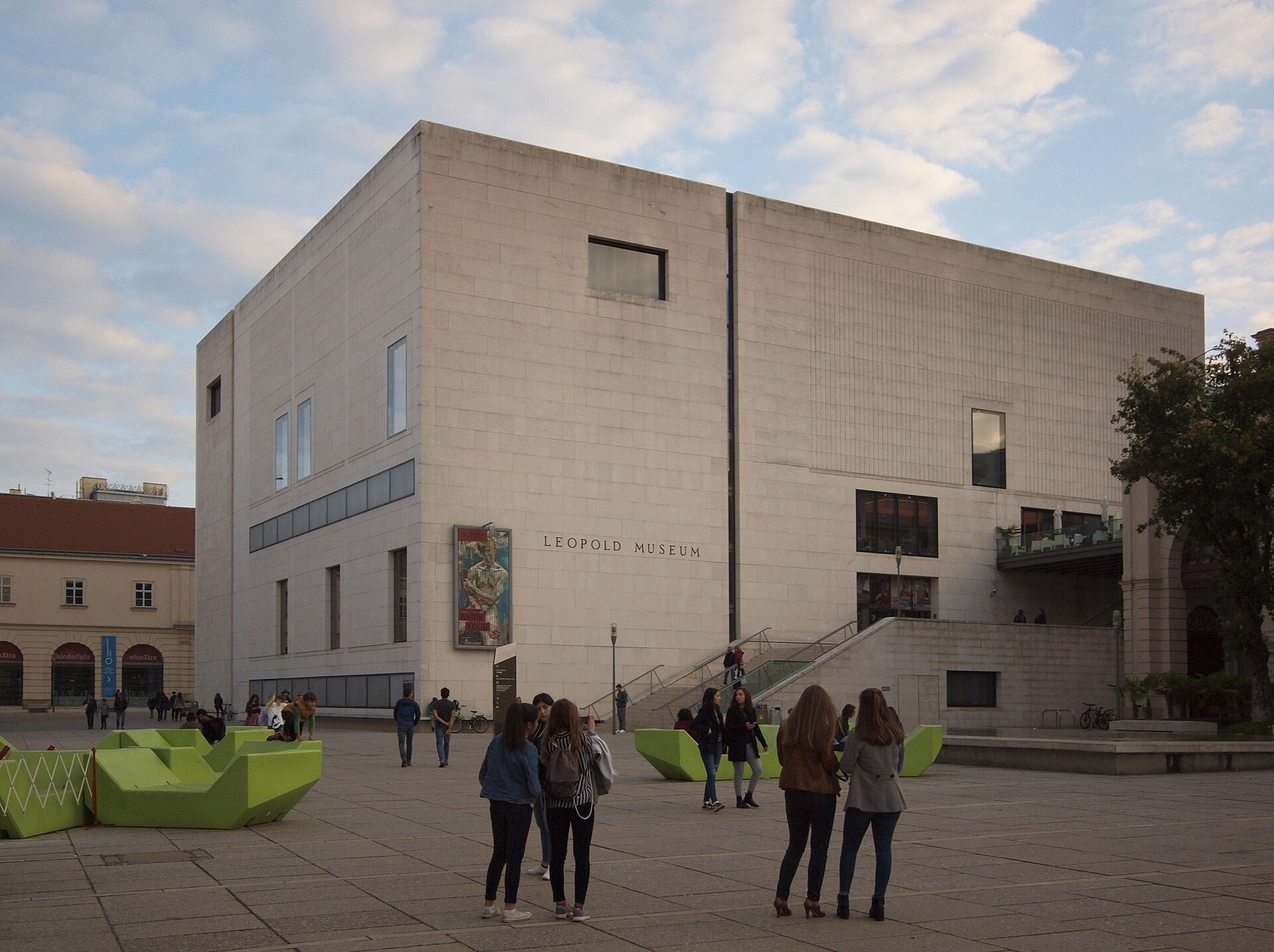
Two cubes face each other across the courtyard of the MuseumsQuartier. One is dark grey basalt and houses modern art; the other is a pale block of Danube limestone, and inside it is the reason a great many people come to Vienna without quite knowing it. The Leopold Museum Vienna holds the largest collection of Egon Schiele anywhere in the world — 42 paintings and 187 original graphic works — plus a serious group of Klimts, the world’s largest collection of works by Richard Gerstl, and a Vienna 1900 presentation spread over three floors that most visitors walk through on their way out and then wish they had started with. Admission is €19 in 2026, and it is closed on Tuesdays, which catches out more people than anything else on this page.
This guide covers 2026 ticket prices and which combination ticket is actually worth buying, opening hours and the Tuesday problem, what is on each floor and which works you should not leave without seeing, the museum’s genuinely uncomfortable history, how it compares with the Belvedere and the Albertina, and our honest verdict on where it sits in Vienna’s crowded museum landscape. Prices and hours were checked on the museum’s own website in September 2026; exhibitions rotate constantly and prices shift, so confirm both before you go.
Leopold Museum Tickets and Prices 2026
| Ticket | Price | Who |
|---|---|---|
| Regular | €19.00 | Standard adult admission |
| Reduced | €16.00 | Under 26, 65+, disabilities, unemployed |
| Vienna City Card holders | €17.00 | Card shown at the desk |
| Youth | €2.50 | Under 19 |
| Children | Free | Under 7 |
| Family ticket 1 | €21.00 | 1 adult + up to 3 under-19s |
| Family ticket 2 | €40.00 | 2 adults + up to 3 under-19s |
| Annual pass | €49.00 | Reduced €36 (under 30, 65+, disabilities) |
| Public guided tour | €5.00 | On top of admission |
| Audio guide | €5.00 | “Take 2” €8; smartphone guide €3 |
The number to notice is €2.50 for under-19s. That is not a typo and it is not a school-group rate — any teenager walks in for the price of a coffee. Combined with the family tickets, the Leopold is quietly a bargain for anyone travelling with children old enough to look at a painting. Two adults and three teenagers is €40 for the lot.
Combination tickets, and which one earns its money
- Leopold + Kunsthistorisches Museum — €37. The headline pairing, and the one to think hardest about. It only works if you were genuinely doing both, and the two are very different museums sitting on opposite sides of the Ring. Check what the Kunsthistorisches is charging separately when you go before you commit.
- Leopold + mumok — €33 (reduced €29). The easiest sell, because mumok is thirty metres away in the dark cube and you can do both in an afternoon without leaving the courtyard.
- Leopold + MAK — €34 (reduced €30). Good if the Vienna 1900 design galleries are what brought you, because the MAK over on the Stubenring is the other half of that story.
- Leopold + Sigmund Freud Museum — €30. A thematically neat pairing — the same city, the same decade, the same obsessions — with the Freud museum at Berggasse 19.
The annual pass at €49 breaks even on the third visit, which sounds academic for a visitor, but the Leopold runs large temporary exhibitions and if you are in Vienna for a week with a rainy stretch in it, the maths is less silly than it looks.
Audio guide or guided tour?
They cost the same €5, which makes this an easy call: take the public guided tour. A human being can answer the question the audio guide cannot anticipate, and the Leopold’s collection is full of works where the interesting thing is the context rather than the canvas. If tour times do not fit your schedule, the smartphone guide at €3 does the job for less than the headset version.
Opening Hours and the Tuesday Problem
The Leopold is open daily except Tuesday, 10:00 to 18:00, including public holidays. From 7 December 2026 to 10 January 2027 it opens every day, Tuesdays included, except 24 December, and it closes at 17:00 on 31 December. Outside those dates, that single closed day causes more wasted journeys than any other scheduling detail in the MuseumsQuartier, because the buildings around it keep different hours and the courtyard is always busy, so nothing looks shut until you are at the door.
If you are building a Vienna itinerary, write the closed days down before you book anything. It is the same discipline that saves you at the Kunsthistorisches and half the museums on the Ring, and our best museums in Vienna guide lists them side by side for exactly this reason.
For crowds: the first hour after opening is comfortably the quietest, and late afternoon from about 16:00 is the second-best window. Big temporary exhibitions change this completely — when the Leopold has a blockbuster on, the queue for the timed exhibition entry can be substantial even when the permanent collection floors are half empty. The permanent collection is the reason to come, so if you find yourself queuing, consider skipping the special show.
What Is Actually Inside
Seven levels, with the permanent collection split between Schiele, Klimt and the Vienna 1900 material, which occupies levels 0, 3 and 4, and changing special exhibitions on levels −1 and −2. Allow two hours; allow three if design interests you at all.
The Schiele floor
This is why the museum exists and it is genuinely overwhelming in a way photographs do not prepare you for. Schiele died at twenty-eight in the 1918 influenza pandemic, three days after his pregnant wife, having produced an extraordinary body of work in roughly a decade. Seeing forty of his paintings in sequence makes clear how fast he moved — from the gilded Klimt-influenced early pieces to the raw, scraped, agonised portraits and back towards something almost tender in the last two years.
The works to find:
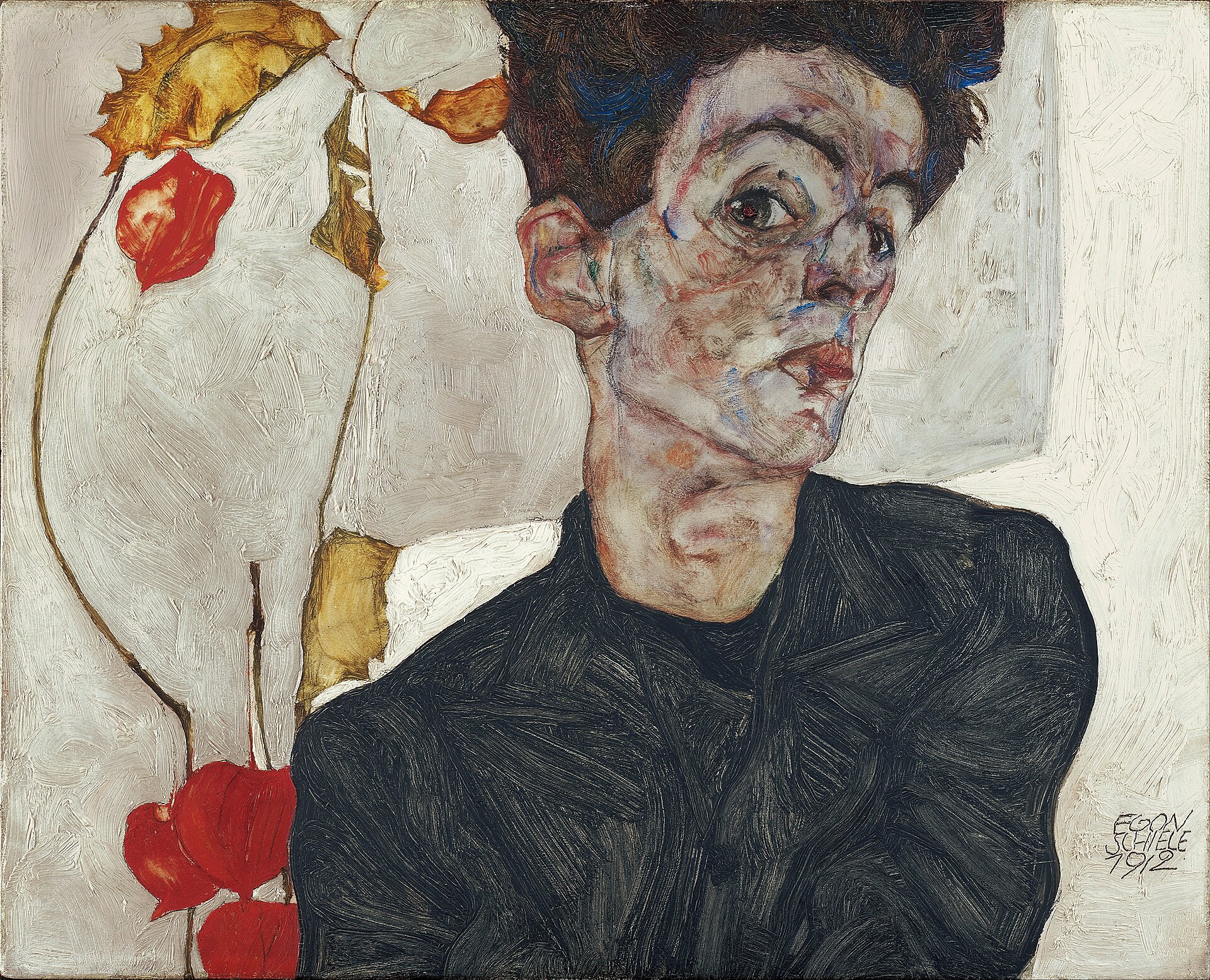
- Self-Portrait with Chinese Lantern Plant (1912) — the face on every poster in the gift shop. It is a small painting. People routinely walk past it looking for something bigger.
- Cardinal and Nun (1912) — Schiele’s deliberate, scandalous reworking of Klimt’s The Kiss, with the gold stripped out and the tenderness replaced by something closer to fear. Seeing it in a city where the original is twenty minutes away is the point.
- The Hermits (1912) — Schiele and Klimt as two figures merged into one black mass, which is either a tribute or an act of absorption depending on who is writing the label.
- Setting Sun and the Krumau townscapes — his landscapes are underrated because the portraits shout louder, and the crooked-roof town pictures are among the best things here.
- Portrait of Wally Neuzil (1912) — the subject of a long restitution dispute, covered below.
The Klimt rooms
Smaller than the Schiele holding but not a footnote. The centrepiece is Death and Life, a large allegorical canvas Klimt worked on over several years and reworked after winning a prize for it — a huddle of sleeping figures on one side, a grinning skeleton in a patterned robe on the other. It is arguably a more interesting painting than the one everybody comes to Austria for.
There is also a group of his Attersee landscapes, square and dense and almost pointillist, painted on summer holidays away from Vienna, and a scatter of drawings. Our Klimt in Vienna guide maps out which works live where across the city, because they are spread across at least five buildings.
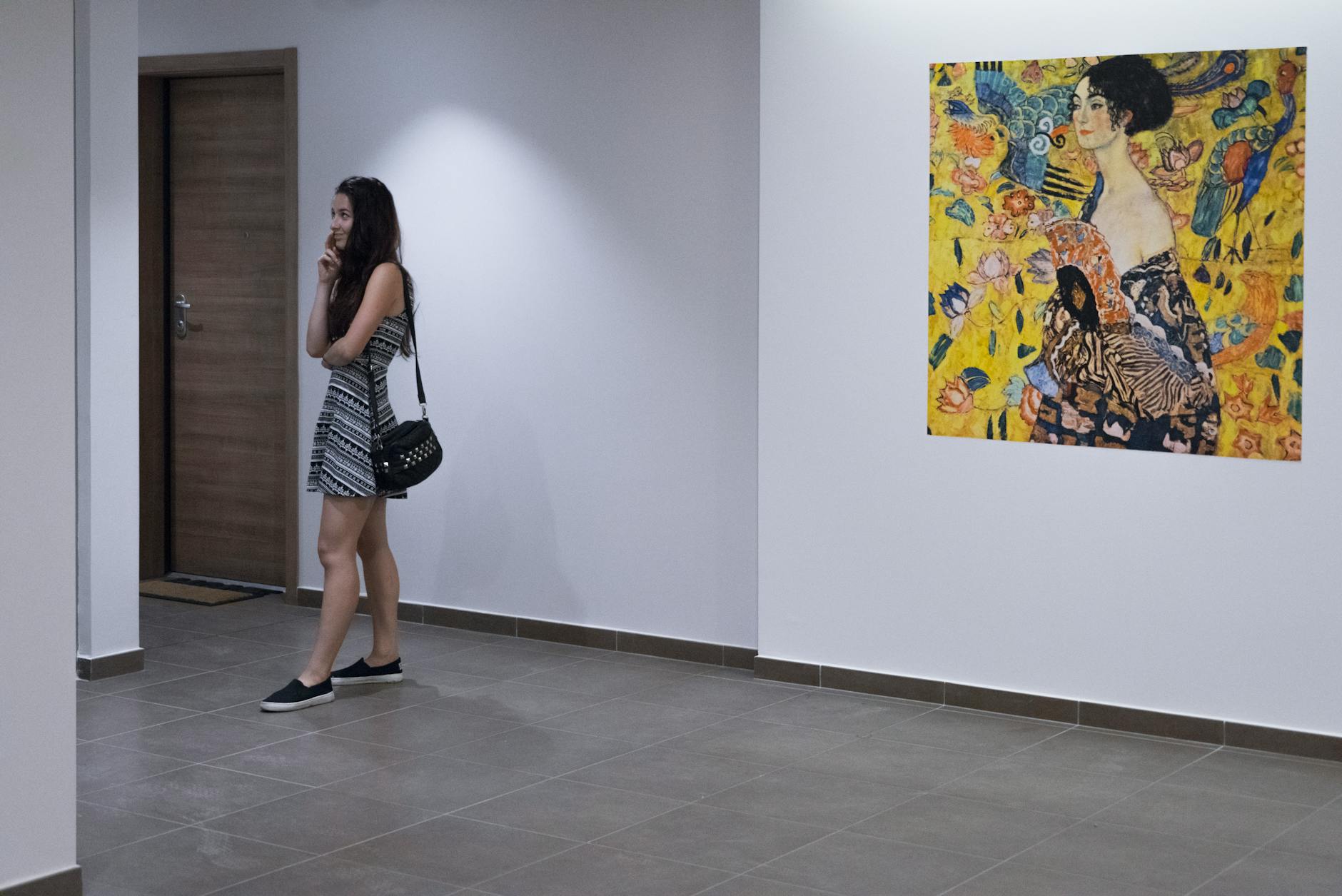
Say it plainly, because the Leopold’s marketing does not: The Kiss is not in this museum. It is at the Upper Belvedere, so check which Klimt you came for before you buy a ticket here. If gold-leaf Klimt is what you want, go to the Belvedere instead, or as well.
Richard Gerstl, and the room people do not expect
Gerstl is the Leopold’s best secret. He destroyed much of his work and killed himself at twenty-five in 1908 after an affair with the wife of the composer Arnold Schönberg collapsed and his circle closed against him. What survives — perhaps seventy works in total, a substantial share of them here — is astonishing: slashing, half-dissolved portraits that look like they were painted in the 1950s rather than before the First World War.
If you have twenty minutes and a choice, spend them here rather than in the temporary exhibition. Almost nobody does.
Vienna 1900: the design galleries
The part of the museum that visitors consistently underrate. The Leopolds collected furniture and decorative arts alongside the paintings, and the result is a Wiener Werkstätte display with Josef Hoffmann and Koloman Moser furniture and decorative works and a table by Adolf Loos, which shows how Vienna 1900 was a total design project rather than a painting style.
It is also the part that explains the rest of the building. The Secession, the Werkstätte and Schiele’s generation were one argument happening in one square mile, and seeing the chairs next to the canvases makes that legible in a way the paintings alone do not. Our guides to the Secession and Jugendstil across the city pick the thread up outside the museum.

The Uncomfortable Part: Where the Collection Came From
The Leopold Museum is named after Rudolf Leopold, an ophthalmologist who began collecting Schiele in the 1950s and kept buying until he had assembled the collection that became the museum. In 1994 more than five thousand works were brought together in a private foundation, with the support of the Republic of Austria and its National Bank. The museum opened in 2001.
That is where the difficulty starts. A collection built in post-war Vienna from works that passed through the art market of the 1930s and 1940s inevitably contains items with contested provenance, and the Leopold Foundation’s status as a private foundation rather than a state museum meant it was not initially bound by Austria’s art restitution law. The most famous case is Portrait of Wally, which was seized by US authorities while on loan in New York in 1998 after heirs of the Jewish dealer Lea Bondi Jaray identified it as looted. The case ran for twelve years and ended in 2010 with a $19 million settlement, after which the painting returned to Vienna.
The museum has since run its own provenance research programme and made restitutions and settlements, and it does not hide any of this — the Wally case is told openly on the wall. It is worth knowing before you go, because it changes what you are looking at. This is a collection assembled by one obsessive man in a country that spent decades avoiding the question of what happened to Jewish property, and the museum is now, slowly, doing the work. Our Jewish Vienna guide covers that longer story.
Getting There
Museumsplatz 1, 1070 — the MuseumsQuartier, on the Neubau side of the Ring.
- U2 Museumsquartier is directly outside; the exit puts you into the courtyard.
- U2 or U3 Volkstheater is an equally short walk from the other end of the complex.
- Trams 1, 2, 71 or D to Burgring, then across the Ring past the Maria-Theresien-Platz museums.
- Bus 48A stops at Volkstheater.
The approach across Maria-Theresien-Platz from the Ring is the good one: you pass between the Kunsthistorisches and Naturhistorisches museums, through the arch, and into a courtyard that is one of the best public spaces in the city. Our MuseumsQuartier guide covers what else is in there, and our Neubau and Mariahilf guide covers the streets behind it, which are where you should eat afterwards.

Practicalities
- Bags and coats go in the cloakroom; lockers are free and anything backpack-sized will be stopped at the gallery entrance.
- Photography without flash is generally permitted in the permanent collection, but loaned works in temporary exhibitions are often excepted and signed as such. Check at the door.
- Accessibility is good — this is a purpose-built museum from 2001, with lifts to every level, accessible WCs and reduced admission at €16 for visitors with disabilities.
- The café and terrace on the upper level give you a view out across the MuseumsQuartier roofs, and you do not need a ticket to reach them.
- The shop is better than most — the Leopold’s Schiele and Werkstätte reproductions are genuinely good, and it is a rare Vienna gift shop that is not selling Mozart in a wig.
- Rain makes this one of the best places in the city to lose three hours. It is on every list in our rainy day guide for good reason.
Leopold vs Belvedere vs Albertina
| Leopold | Upper Belvedere | Albertina | |
|---|---|---|---|
| Adult ticket | €19 | Check current rate | €20.90 |
| Under 19 | €2.50 | Varies | Free |
| Closed | Tuesdays | Open daily | Open daily |
| The draw | Schiele, Gerstl, Vienna 1900 design | Klimt’s The Kiss, Austrian 19th century | Dürer, Monet to Picasso, Habsburg state rooms |
| Setting | Modern cube in the MQ | Baroque palace and gardens | Palace on the city bastion |
| Time needed | 2–3 hours | 2 hours plus gardens | 2 hours |
They do not overlap as much as the marketing suggests. The Belvedere is where you go for The Kiss and the palace setting; the Albertina is where you go for prints, drawings and a broad European modern collection; the Leopold is where you go for Schiele in depth and for Vienna 1900 as a complete world. If you are only doing one and Klimt is the reason, go to the Belvedere. If you are doing one and you want to understand what Vienna was actually like in 1910, come here.
Our Honest Verdict
The Leopold is fair value for what it holds and the museum most likely to leave you with something you did not expect. €19 for two or three hours in a purpose-built building with the world’s most comprehensive Schiele collection is straightforwardly fair, and at €2.50 for under-19s it is easy on a family budget.
The reservations are real but small. The temporary exhibitions are hit and miss and are not why you are here, so do not let a queue for one of them eat your morning. The building is efficient rather than beautiful, and after the Belvedere’s staircase or the Kunsthistorisches’ dome it can feel a little like a very good airport. And the Schiele floor is emotionally heavy going — a room of self-portraits by a man who died at twenty-eight, next to a room by a man who died at twenty-five, is not a light hour. Plan the coffee afterwards.
What is not worth it: the €5 audio guide when the €5 guided tour exists and costs the same. What is worth it and almost nobody does it: an unhurried look at the Vienna 1900 design galleries, which is the part of this museum that will change how you look at the rest of the city.
Where to See Schiele and Klimt Beyond the Leopold
Vienna scattered its own modernists across half a dozen buildings, and knowing which holds what saves an enormous amount of walking.
- Upper Belvedere — The Kiss, Judith, and a room of Schieles including Death and the Maiden. The largest Klimt holding in the world, in a baroque palace with gardens.
- Albertina — drawings rather than paintings, which for Schiele is arguably the stronger medium. Rotated for conservation reasons, so what is up depends on when you go.
- Secession Building — Klimt’s Beethoven Frieze, in the basement, in the building the Secessionists put up themselves in 1898. A single room, thirty-four metres of it, and worth the detour.
- Kunsthistorisches Museum — Klimt’s early decorative panels are up in the spandrels of the main staircase, painted when he was still a respectable establishment decorator. You need to look up, and most people never do.
- MAK — the Werkstätte archive, Klimt’s working drawings for the Stoclet Frieze, and the design half of the story the Leopold tells in miniature.
- Karlsplatz and the Ring — Otto Wagner’s Stadtbahn pavilions and the Postsparkasse are free to look at from the street, and they are the architecture the paintings were hanging inside.
Two of the six are free to walk past, which matters if you are pacing a trip on a budget — the full set of no-cost options is in our free things to do in Vienna guide.
Making a Day of the MuseumsQuartier
The Leopold on its own is a half-morning. The courtyard around it is a full day if you want one, and it is one of the better full days in Vienna because everything is within ninety seconds of everything else and none of it involves transport.
| Time | What | Notes |
|---|---|---|
| 10:00 | Leopold Museum | Schiele, Gerstl, Vienna 1900 — start at the top and work down |
| 12:15 | Lunch in the courtyard or Spittelberg | The MQ’s own cafés are fine; Spittelberg, two minutes west, is better |
| 13:30 | mumok | The dark basalt cube; post-war and contemporary. Combined ticket €33 |
| 15:00 | Kunsthalle Wien or Architekturzentrum | Both in the MuseumsQuartier; check what is on at each |
| 16:00 | Enzi furniture, coffee, doing nothing | The actual point of the MuseumsQuartier |
| 17:00 | Walk into Neubau | Neubaugasse, Kirchengasse and the 7th district’s bars |
Compress it if you have less time. The honest minimum is the Leopold plus an hour in the courtyard, which is a good use of a morning even in bad weather because the arcade along the old baroque facade is covered. If you are travelling with children, swap mumok for ZOOM Kindermuseum, which is in the same courtyard and needs booking ahead — the details are in our Vienna with kids guide.
One warning about the evenings: in summer the courtyard fills up, the bars open, and it becomes one of the city’s main drinking spaces. That is pleasant if you want it and loud if you have booked a hotel room overlooking it. Our nightlife guide covers what the MQ turns into after dark.
Frequently Asked Questions
How much does the Leopold Museum cost in 2026?
€19 for a regular adult ticket, €16 reduced (under 26, over 65, disabilities, unemployed), €17 for Vienna City Card holders, €2.50 for under-19s and free for children under 7. Family tickets are €21 for one adult with up to three children and €40 for two adults with up to three children.
Is The Kiss at the Leopold Museum?
No. Klimt’s The Kiss is at the Upper Belvedere. The Leopold’s major Klimt is Death and Life, along with a group of his Attersee landscapes. This is the most common mix-up visitors make.
When is the Leopold Museum closed?
Every Tuesday. It is open all other days including public holidays, from 10:00 to 18:00; from 7 December 2026 to 10 January 2027 it opens every day except 24 December, and on 31 December it closes at 17:00. The Tuesday closure catches out a lot of visitors because the surrounding MuseumsQuartier stays busy.
How long do you need at the Leopold Museum?
Two hours covers the permanent collection at a reasonable pace. Three hours if you give the Vienna 1900 design galleries proper attention or there is a temporary exhibition you want to see. It is a multi-level building and the floors are larger than the exterior suggests.
Is the Leopold Museum worth it?
Yes, particularly if Egon Schiele, Richard Gerstl or Vienna 1900 design interest you — it holds the world’s most comprehensive Schiele collection, the world’s largest collection of Gerstl and an extensive Vienna 1900 presentation. It is less essential if you came to Austria specifically for gold-leaf Klimt, in which case the Belvedere is the priority.
Is there a combined ticket with other Vienna museums?
Several: Leopold plus the Kunsthistorisches Museum for €37, plus mumok for €33, plus the MAK for €34, and plus the Sigmund Freud Museum for €30. Each only saves money if you were genuinely going to visit both.
Can you take photographs in the Leopold Museum?
Generally yes in the permanent collection, without flash. Temporary exhibitions containing loaned works are often exceptions and will be signed at the entrance, so check before you start.
Is the Leopold Museum good for children?
Under-19s pay €2.50, and the museum runs a Leo Kids Studio at €4.50. Younger children may find the Schiele floor heavy going; ZOOM Kindermuseum, in the same MuseumsQuartier courtyard, is built for them instead.
How do I get to the Leopold Museum?
U2 to Museumsquartier puts you at the door, or U2/U3 to Volkstheater at the other end of the complex. Trams 1, 2, 71 and D stop at Burgring on the Ring, across Maria-Theresien-Platz from the museum complex.
Related Vienna Guides
- The MuseumsQuartier: What’s Inside and What’s Worth It
- The Best Museums in Vienna
- Gustav Klimt in Vienna: Where to See His Work
- Belvedere Palace: The Kiss, Tickets and Gardens
- The Albertina: Tickets, Collections and Verdict
- Kunsthistorisches Museum: The Complete Guide
- The Secession Building and Vienna’s Art Nouveau
- Jugendstil Vienna: A Walking Guide
- Neubau and Mariahilf: Vienna’s Best Neighbourhoods
- What to Do in Vienna When It Rains
Photo Credits
Leopold Museum exterior in the MuseumsQuartier: Leopold Museum, Wien by HarkOlufs02, CC BY-SA 4.0, via Wikimedia Commons.
Egon Schiele, Self-Portrait with Chinese Lantern Plant, 1912: Egon Schiele – Self-Portrait with Physalis – Google Art Project by Egon Schiele, Public domain, via Wikimedia Commons.