Vienna Airport with Kids, Wheelchairs & Special Assistance
How to book free special assistance at Vienna Airport, what happens step by step, facilities for blind, deaf and neurodivergent travellers, and everything families with young children need.
- Special Assistance at a Glance
- How the Assistance Service Works
- Departing From Vienna, Step by Step
- Arriving in Vienna
- Connecting Flights
- Blind and Partially Sighted Travellers
- Deaf and Hard of Hearing Travellers
- Hidden Disabilities
- Travelling With Children
- Older Travellers
- Medical Needs
- If Something Goes Wrong
- A Checklist Before You Fly
- Frequently Asked Questions
- Related Vienna Guides
- Photo Credits
This article contains advertising. Our booking links are routed through a partner that adds commission tracking automatically, so if you book through one we earn a commission from the provider, at no extra cost to you. It never affects what we recommend. Affiliate disclosure
Schwechat is a long airport to walk. From security to the far end of Pier North takes a fit adult twenty minutes, and a lot of flights still board from the apron by bus and steps. That matters little if you are twenty-five and travelling with a backpack. It matters a great deal with a wheelchair, a walking frame, a toddler and a pushchair, a hidden disability or a parent in their eighties. The good news is that Vienna airport special assistance is free, available around the clock, and generally well run, and the airport has put real thought into making the building easier to navigate. The catch is that it works best when you arrange it in advance.
This guide covers how the assistance service works and how to book it, what happens step by step on departure and arrival, the facilities for travellers who are blind, deaf or have a hidden disability, and everything a family with young children needs to know, from the separate security entrance to the baby-changing rooms. It was checked against the airport’s own accessibility information in September 2026. Your airline’s rules on mobility aids, batteries and assistance dogs also apply, so check those alongside this page.
Special Assistance at a Glance
| Question | Answer |
|---|---|
| Who provides it? | The airport, under EU Regulation (EC) 1107/2006 |
| Cost | Free |
| Hours | Around the clock |
| How to book | Tell your airline or tour operator when you book, and at least 48 hours before departure |
| Not booked? | Go to your airline’s check-in desk; you will still be helped, but it may take longer |
| Where to report | The mobility service in Terminal 3 or in the arrivals hall, or your airline’s check-in desk |
| Boarding without jet bridges | Apron transfer in specially equipped minibuses |
| Parking | Barrier-free spaces, free pick-up and drop-off spaces, 50% parking discount |
| Security | Separate entrances for passengers with reduced mobility and families in Terminals 1 and 3 |
| Hidden disabilities | The Hidden Disabilities Sunflower is recognised by trained staff |
| Accessible washrooms | 46 across all terminals, with baby-changing tables |
How the Assistance Service Works
Under the EU’s air passenger rights rules for people with disabilities and reduced mobility, Regulation (EC) 1107/2006, the responsibility for assistance at the airport lies with the airport itself, not the airline. At Vienna that means a single assistance service covering every airline and every terminal. It is free of charge and available 24 hours a day.
The airline still plays a key part: it is the airline that records your needs at booking and passes them to the airport. That is why the advice is always the same.
- Mention your needs when you book your flight. Most airlines have a special-assistance option in the booking process or in “manage booking”.
- Confirm at least 48 hours before departure with your airline or tour operator. This is the notice period that guarantees the request reaches the assistance service.
- Book the return journey too. Assistance at Vienna on the way out does not automatically mean assistance at your destination or on the way back.
If you have not booked, or the request has been lost, you will still be helped. Go to your airline’s check-in desk and ask. The airport is clear that you will get assistance in any case; it may just take longer because staff have to be found and scheduled.
Which kind of help to ask for
Airlines use standard codes to describe the level of assistance you need, and knowing them makes booking smoother. The airport lists seven.
| Code | What it means |
|---|---|
| WCHR | You can walk short distances and manage steps, but need a wheelchair or help for longer distances, such as the walk to the gate. |
| WCHS | You can move around in the cabin but cannot manage steps, so you need help boarding and leaving the aircraft. |
| WCHC | You are fully immobile and need help to and from your seat on board. |
| DEAF | You are deaf or hard of hearing. |
| BLND | You are blind or partially sighted. |
| BLND/DEAF | You are both blind or partially sighted and deaf or hard of hearing. |
| DPNA | You have an intellectual or developmental disability and need assistance, for example with autism or dementia. |
If you are not sure which fits, describe what you can and cannot do when you contact the airline. Asking for too much help is far better than finding yourself at the bottom of a set of aircraft steps you cannot climb.
What the service covers
- A personal escort through the airport, from check-in to the aircraft, or from the aircraft to the exit.
- Shorter waiting times at check-in, security and the gate.
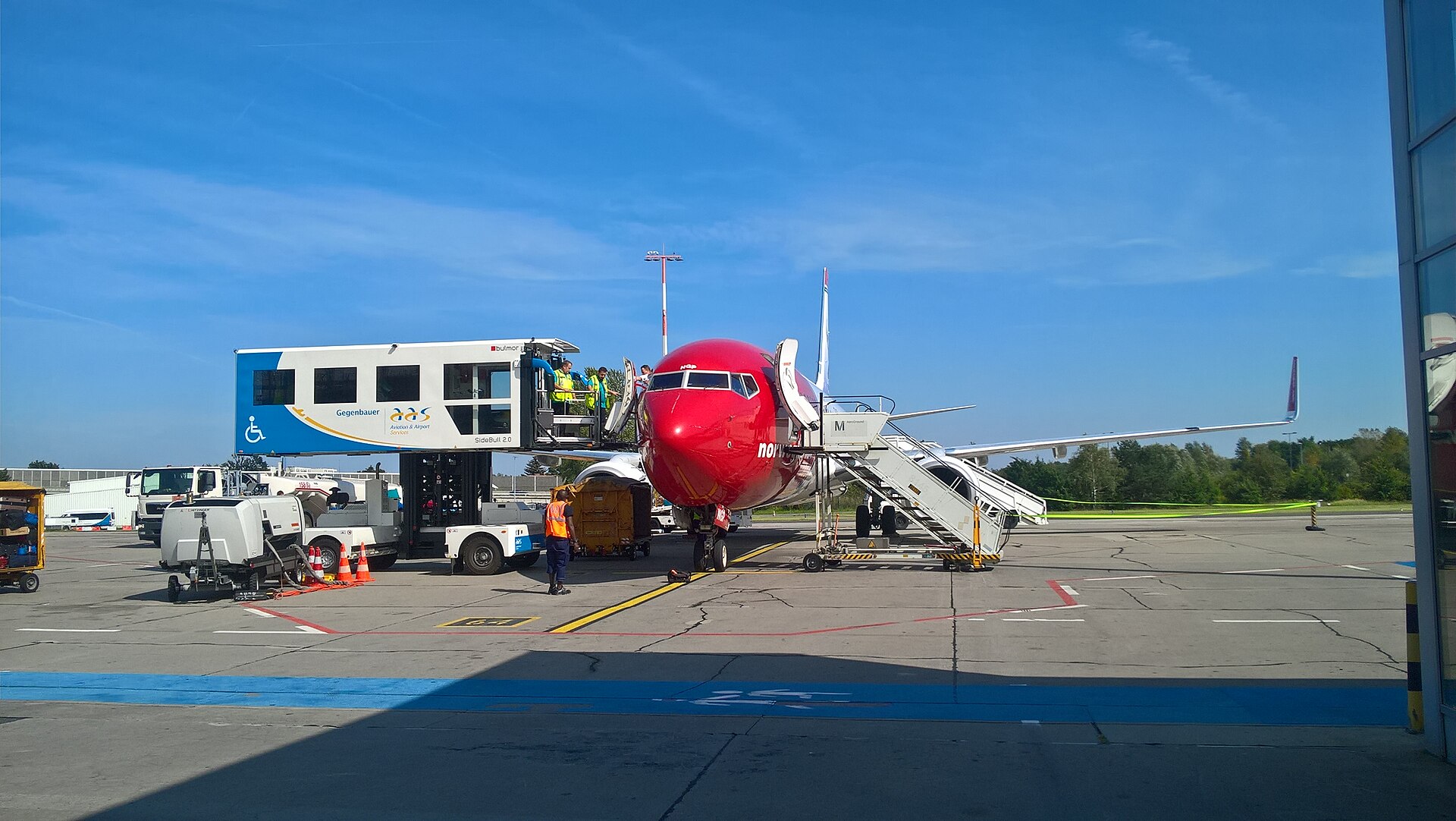
- Apron transfer in specially equipped minibuses when your flight boards away from a jet bridge, with a lifting vehicle for boarding where there are no steps you can use.
- Help with connections between flights, including between the Schengen and non-Schengen areas.
Departing From Vienna, Step by Step
1. Getting to the airport
If you are being driven, there are free, barrier-free pick-up and drop-off spaces at the terminal, as well as parking zones for companions who want to escort you inside. If you are parking, the airport has barrier-free parking spaces and gives a 50% parking discount to passengers with reduced mobility. Ask how to claim it when you book or at the car park. Our guide to Vienna Airport parking has the car parks and rates.
By public transport, allow extra time at the moment. The central S-Bahn trunk line through Vienna is closed until the end of October 2027, the S7 terminates at St. Marx, and the CAT runs as a bus from Wien Mitte. The CAT trains themselves have ground-level entrances, dedicated areas for passengers with reduced mobility and accessible toilets, but a replacement bus is a different vehicle. If step-free access is essential, contact the operator before you travel. Our guide to getting between the airport and the city sets out the current options. A taxi or pre-booked accessible transfer is often the simplest choice during the closure.
2. Reporting for assistance
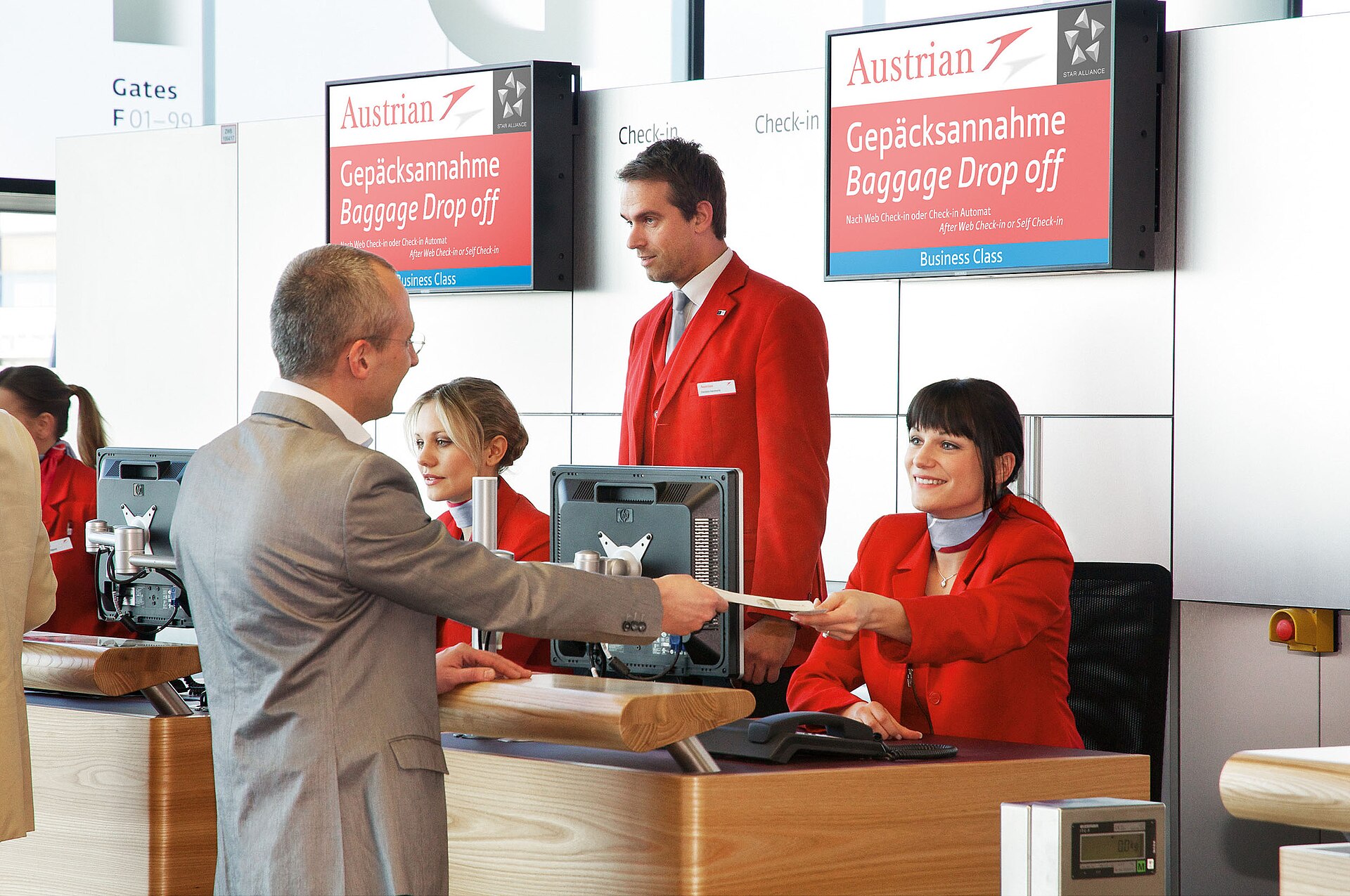
When you arrive, go to the mobility service in Terminal 3 or to your airline’s check-in desk. In Terminal 3, a tactile guidance system leads from the entrances to the mobility counters, which are fitted with induction loops for hearing-aid users and sign-language displays.
Arrive in good time. The airport’s general advice is two hours before a short or medium-haul flight and three hours before a long-haul flight, and when you need assistance it is better to be early and waiting in comfort than late and rushed.
3. Check-in
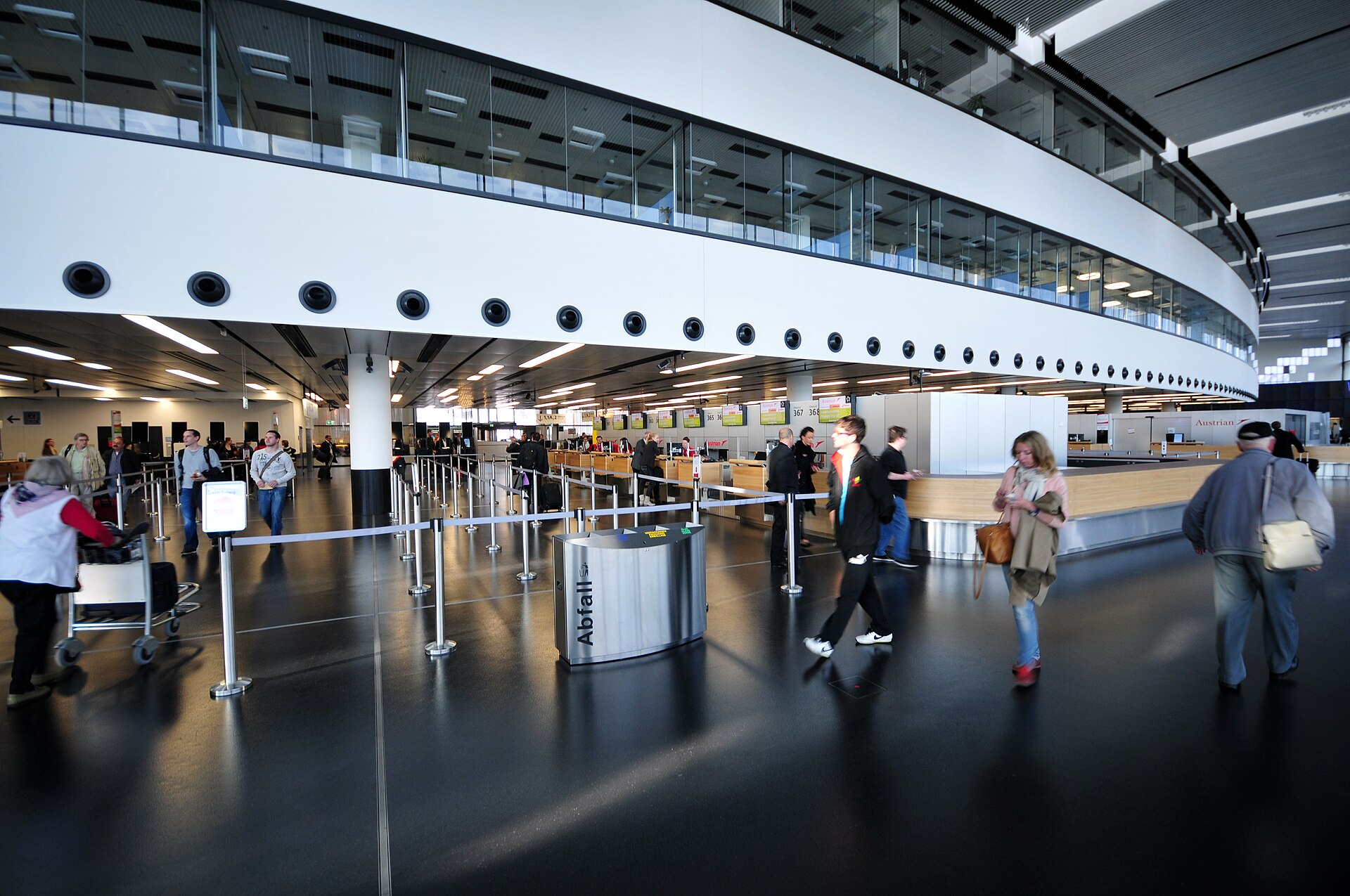
If you are checking in yourself, every tenth self-service kiosk is set lower and can be approached from the side by a wheelchair user. If you are travelling with your own wheelchair or mobility scooter, tell the check-in agent. Most airlines let you use your own chair to the aircraft door, where it is taken to the hold and returned to you at the aircraft door on arrival, but practice varies and power chairs with batteries have their own rules. Confirm the details with your airline well before you fly.
4. Security
Vienna has separate entrances to security for passengers with reduced mobility and families: in Terminal 1 at both the normal boarding-pass control and FastTrack, and a wide accessible entrance in Terminal 3 for both economy and FastTrack passengers.
The new security rules help too. Since July 2026, the CT scanners at Vienna’s central checkpoints let you leave laptops and liquids in containers of up to 2 litres in your bag, which means less lifting and unpacking at the belt. Medication, medical liquids and equipment are allowed; tell the security staff about them, and about any implant, pacemaker or medical device, before you are screened. Our guide to Vienna Airport security and check-in explains the rules in full.
5. Passport control and the walk to the gate
Flights outside the Schengen area leave from the D and G gates, after a passport check. Assistance staff will take you through. If you are walking without an escort, bear in mind that the walk to the far end of Pier North, where the F and G gates are, takes up to twenty minutes at a normal pace. The departure screens show walking times, and those times assume a brisk walker. There are seats along the piers.
6. Boarding
Assistance passengers are usually boarded first. If your flight boards from a jet bridge, you will be taken to the aircraft door. If it boards from the apron, the assistance service transfers you in a specially equipped minibus, and a lifting vehicle can bring you level with the aircraft door if you cannot use the steps.
Arriving in Vienna
- Stay in your seat until the crew tell you that assistance has arrived. Passengers needing help usually leave the aircraft last.
- Your own wheelchair should be brought to the aircraft door where possible. If it has been sent to the baggage hall instead, staff will provide an airport wheelchair.
- If you arrive from outside the Schengen area, you pass passport control, and the assistance staff will accompany you through it.
- After baggage reclaim, the mobility service in the arrivals hall is the place to go for help onward, including to a taxi, a waiting car or public transport.
Vienna itself is one of the more accessible cities in Europe to get around. All U-Bahn stations have lifts, and most trams and buses are low-floor. Our guide to getting around Vienna has the details.
Connecting Flights
If you need assistance to connect between two flights at Vienna, make sure it is booked for both flights, and ideally on a single ticket. The assistance service handles transfers, including between the Schengen and non-Schengen areas, which involves a passport check. Allow a generous connection time. A connection that is comfortable for a fast walker can be tight when you are waiting for an escort, a lift and a passport queue.
Blind and Partially Sighted Travellers
- A tactile guidance system runs from the Terminal 3 entrances to the mobility counters.
- Floor surfaces are marked at different heights, and glass doors are highlighted.
- More than 680 signs are LED-lit and colour-coded, which helps travellers with partial sight.
- Request the BLND code when you book, and an escort will guide you through the airport.
- Assistance dogs: the rules for travelling with a guide dog in the cabin are set by your airline, and entry rules for animals into the EU also apply. Arrange both well in advance.
Deaf and Hard of Hearing Travellers
- The mobility counters are fitted with induction loops and have sign-language displays.
- Flight information monitors are placed at eye level, so you do not need to rely on announcements.
- Request the DEAF code when you book, so that gate staff know to tell you about boarding and changes in person.
- Keep your airline’s app notifications switched on; gate changes and delays usually reach your phone before they are announced.
Hidden Disabilities
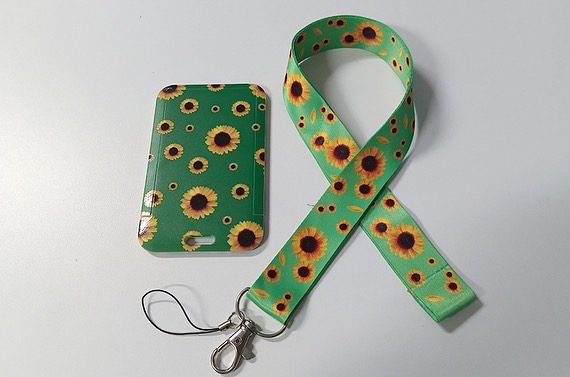
Vienna Airport supports the Hidden Disabilities Sunflower. If you or someone you are travelling with has a disability that is not immediately visible — autism, dementia, anxiety, chronic pain, a hearing impairment or many others — you can wear the Sunflower lanyard, pin or wristband to signal that you may need extra help, understanding or time. Staff are trained to recognise it.
The Sunflower is a signal, not a booking. If you want active assistance, such as an escort or help at security, also request it through your airline using the DPNA code where appropriate. It is also worth bringing your own lanyard rather than counting on finding one at the airport.
Tips for autistic travellers and people with dementia
- Choose quieter times. The early-morning departure wave, roughly 05:00 to 08:00, and summer Saturdays are the busiest. Weekday late mornings and early afternoons are usually calmest.
- Prepare with pictures. Showing the check-in hall, the security scanners and the aircraft in advance makes the day less of a surprise. Our guide to Vienna Airport terminals has photos of the halls.
- Use the family and accessible security entrances in Terminals 1 and 3, which are usually calmer than the main lanes.
- Find a quieter place to wait. The lounges are calmer than the gate areas; our guide to Vienna Airport lounges explains access and day passes.
- Bring ear defenders and something familiar to hold or do.
Travelling With Children
Vienna is a straightforward airport for families, and a few details make it easier.
Security with children
- Use the family entrances to security in Terminal 1 and Terminal 3.
- Baby food, milk and drinks go through without the old 100 ml fuss at Vienna’s CT scanners, where containers of up to 2 litres are allowed. Rules at your return airport may be stricter.
- Pushchairs go through security. Most airlines let you take a pushchair to the aircraft door and collect it on arrival, but the rules on size and folding vary. Check with yours.
- Children usually have to walk through the scanner, or be carried by a parent. Staff are used to it.
Changing, feeding and playing
- All 46 barrier-free washrooms in the terminals have baby-changing tables.
- The VIENNA Lounge by the C gates has a children’s play area. It opens at about 04:30 and closes at about 22:00; a walk-in child pass was about €31 in summer 2026. For a family facing a delay, it can be worth every cent.
- Food is easy: the F gates have the widest choice, and Leberkäse rolls, pretzels and pasta go down well with most children. Our guide to food at Vienna Airport lists what is open where.
The walk to the gate
Twenty minutes to the far end of Pier North is a long way for small legs. Add ten minutes if you are travelling with young children, or bring the pushchair even if they have outgrown it at home. If your flight boards by bus, expect a short wait on the apron.
Documents
Every child needs their own passport or, for travel within the EU, an identity card valid for travel. If a child is travelling with only one parent, or with grandparents, carrying a letter of consent from the absent parent is sensible, even where it is not strictly required.
Older Travellers
You do not need to use a wheelchair every day to ask for help at the airport. If long distances, standing in queues or aircraft steps are difficult, request WCHR assistance. You will be taken to the gate by wheelchair or buggy and can walk on board yourself. Many older travellers find that a single booking of this kind turns Vienna from an exhausting walk into an easy day.
For a very early flight, consider a night at one of the hotels near Vienna Airport, a short walk or ride from the terminal, rather than a pre-dawn transfer from the city.
Medical Needs
- There is a pharmacy and a medical centre in Terminal 1, landside, before security.
- Carry medication in your hand luggage, in its original packaging, with a copy of the prescription.
- If you need oxygen on board, or have a condition that could affect your fitness to fly, your airline may ask for a medical form. Start that process weeks, not days, before travel.
- Batteries for mobility aids and medical devices are subject to airline dangerous-goods rules. Tell your airline the type and capacity when you book.
If Something Goes Wrong
Most assistance at Vienna runs smoothly, but not always. If assistance does not arrive, go to the nearest airline or information desk and ask them to call the mobility service. If you are left at the gate or the aircraft door, tell the crew or gate staff immediately; they can call for help by radio.
If you receive poor service, complain to the airport, and to the airline if the problem started with the booking. If the complaint is not resolved, the Austrian national enforcement body for air passenger rights is the apf (Agentur für Passagier- und Fahrgastrechte), which handles complaints under the EU rules.
A Checklist Before You Fly
- Assistance requested when booking, and confirmed at least 48 hours before departure, for both directions.
- The right code: WCHR, WCHS, WCHC, DEAF, BLND, BLND/DEAF or DPNA.
- Airline rules checked for your wheelchair, scooter, batteries, pushchair or assistance dog.
- Medication in hand luggage with prescriptions.
- A Sunflower lanyard, if it helps.
- Extra time for the journey to the airport while the S-Bahn trunk line is closed.
- Arrival time planned: two hours before a short-haul flight, three before a long-haul flight.
Frequently Asked Questions
How do I book special assistance at Vienna Airport?
Ask for it through your airline or tour operator when you book, and confirm it at least 48 hours before departure. The airline passes the request to the airport’s assistance service.
Is special assistance at Vienna Airport free?
Yes. It is provided by the airport under EU Regulation (EC) 1107/2006, free of charge and around the clock.
What if I did not book assistance in advance?
Go to your airline’s check-in desk and ask. The airport says you will be helped in any case, but it may take longer.
Where do I go for assistance at Vienna Airport?
To the mobility service in Terminal 3 or in the arrivals hall, or to your airline’s check-in desk. A tactile guidance system leads from the Terminal 3 entrances to the mobility counters.
Does Vienna Airport recognise the Hidden Disabilities Sunflower?
Yes. The airport supports the Sunflower scheme, and staff are trained to recognise it. For an escort or other active help, also book assistance through your airline.
Is there a family lane at security at Vienna Airport?
Yes. There are separate entrances for families and passengers with reduced mobility at security in Terminal 1, at both boarding-pass control and FastTrack, and a wide accessible entrance in Terminal 3.
Are there baby-changing facilities at Vienna Airport?
Yes. All 46 barrier-free washrooms across the terminals have baby-changing tables.
Is there a children’s play area at Vienna Airport?
The VIENNA Lounge by the C gates has a children’s play area. It is available to lounge guests, including walk-in guests with a day pass.
Can I get a parking discount at Vienna Airport with a disability?
Yes. The airport offers a 50% parking discount to passengers with reduced mobility, as well as barrier-free parking spaces and free pick-up and drop-off spaces.
Related Vienna Guides
- Vienna Airport: The Complete Guide
- Vienna Airport Security and Check-In
- Vienna Airport Terminals Explained
- Vienna Airport to the City Centre
- Vienna Airport Parking
- Vienna Airport Lounges
- Vienna With Kids
- Getting Around Vienna
Photo Credits
Passenger lifting vehicle at an aircraft door: Ambilift SXF by Bulmorairground, CC BY-SA 4.0, via Wikimedia Commons.
Hidden Disabilities Sunflower lanyard: Fita com desenhos de girassóis – símbolo de identificação deficiências ocultas (53060016549) by Agência Senado from Brasilia, Brazil, CC BY 2.0, via Wikimedia Commons.