Vienna Airport Security, Check-In & How Early to Arrive
How early to get to Vienna Airport for every kind of flight, the 2026 CT-scanner rules on liquids and laptops, FastTrack, passport control and the walk to the gate.
- How Early to Arrive: The Short Answer
- Step One: The Right Check-In Hall
- Step Two: Security, and the 2026 Rules
- FastTrack Security
- Step Three: Passport Control for Non-Schengen Flights
- Step Four: The Walk to the Gate
- Timing It Right: Peaks and Quiet Spells
- Getting to the Airport on Time
- A Worked Example: 10:00 to London From the Innere Stadt
- What to Have Ready Before You Reach the Checkpoint
- Special Situations
- Six Mistakes That Make People Miss Flights at Vienna
- Frequently Asked Questions
- Related Vienna Guides
- Photo Credits
This article contains advertising. Our booking links are routed through a partner that adds commission tracking automatically, so if you book through one we earn a commission from the provider, at no extra cost to you. It never affects what we recommend. Affiliate disclosure
Vienna is one of the few big European airports where the old “arrive three hours early” advice now wastes most of a morning. Since July 2026, every central security checkpoint has run on CT scanners, your laptop and your water bottle stay in your bag, and the airport’s own figure for the average security wait is about five minutes. That does not mean you can turn up forty minutes before a flight. It means the right Vienna airport check in time depends far more on your airline, your bag and your destination than on the security queue.
This guide works through all of it: how early to arrive for each kind of flight, which check-in hall you need, how the new security rules work and where they do not apply, FastTrack, passport control for non-Schengen flights, and the walk to the gate that catches people out more than any queue. Rules and recommendations were checked against the airport’s own information in September 2026; airline deadlines change, so confirm yours in your booking.
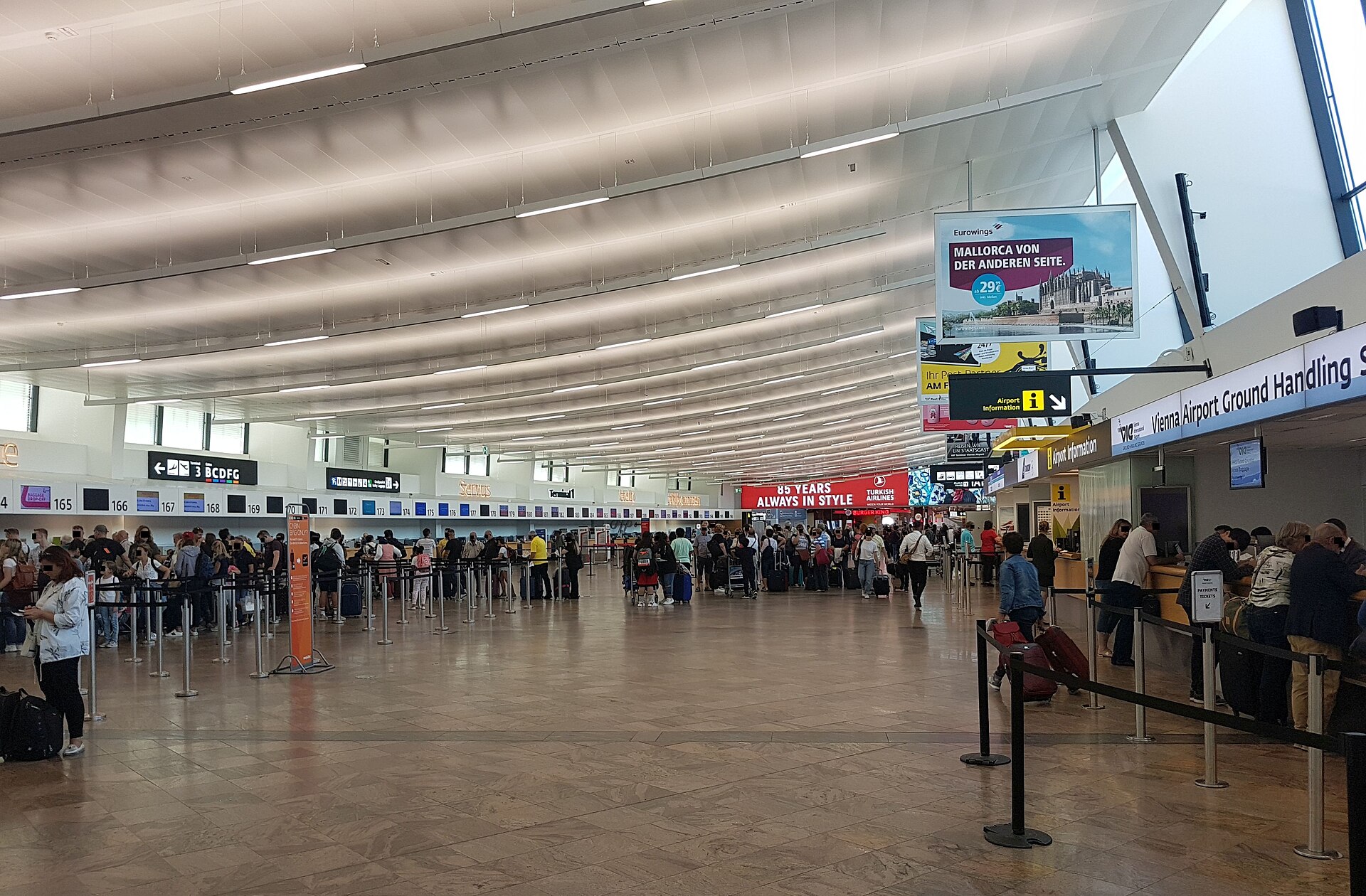
How Early to Arrive: The Short Answer
| Your flight | Airport’s official advice | What we would actually do |
|---|---|---|
| Schengen (B, C, F gates), hand luggage only, online check-in done | 2 hours | 90 minutes; 2 hours at peak times |
| Schengen, checking a bag | 2 hours | 2 hours |
| Non-Schengen short-haul (UK, Ireland, Turkey; D and G gates) | 2 hours | 2 hours; 2.5 hours at peak or with bags |
| Long-haul, 6 hours or more | 3 hours | 3 hours |
| Tel Aviv, New York, Toronto | 3 hours | 3 hours, no exceptions |
| Ryanair with a checked bag | 2 hours | 2 hours; the bag drop closes firmly |
| Claiming a VAT refund on goods | — | Add 30 minutes |
The airport’s advice is two hours before departure for flights of up to six hours and three hours for flights of six hours or more, and for all flights to Tel Aviv, New York and Toronto, which have extra security procedures. Those figures are generous for a Schengen flight with hand luggage, and you can shave them if you know what you are doing. They are not generous for the long-haul flights, and nobody should shave those.
Step One: The Right Check-In Hall
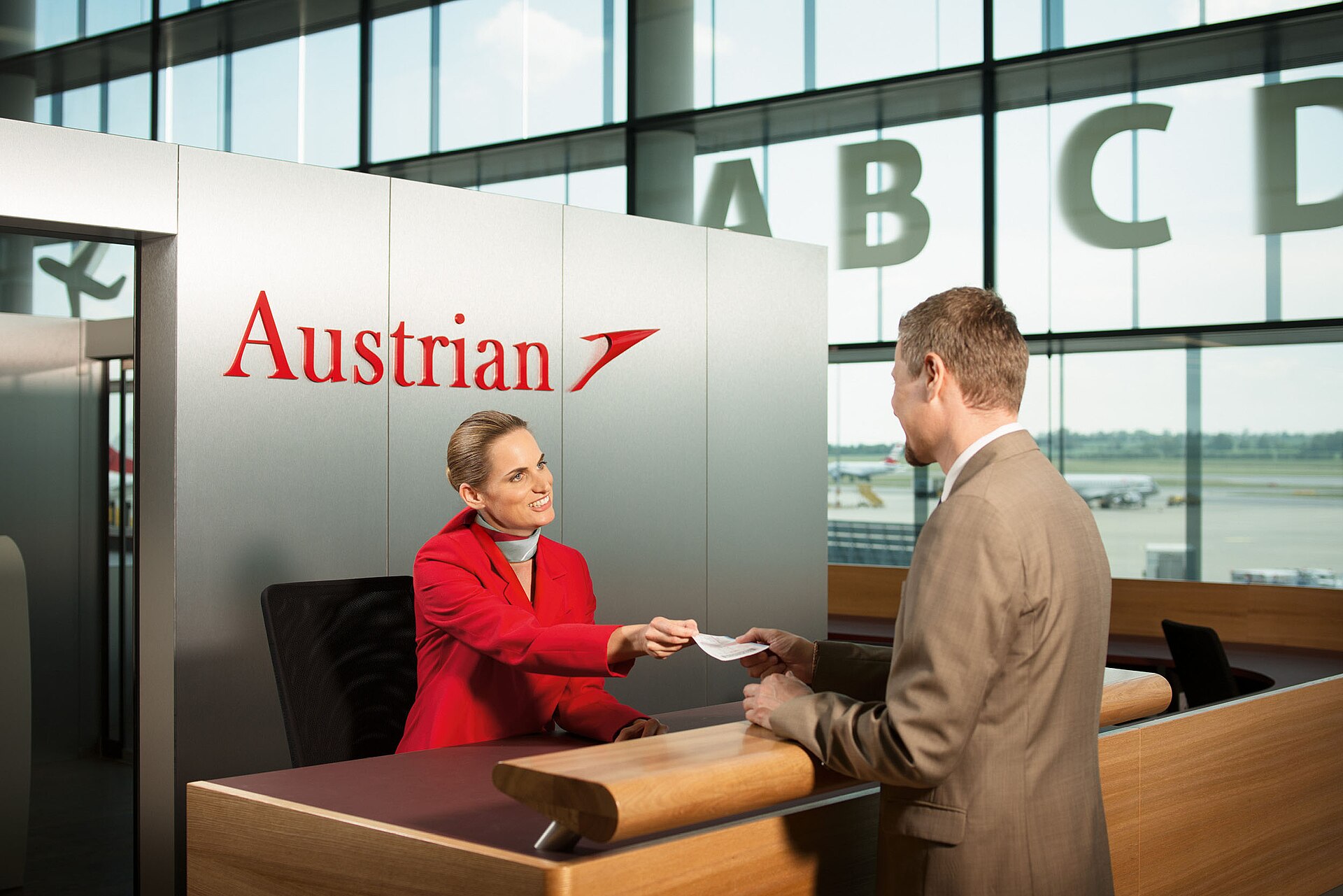
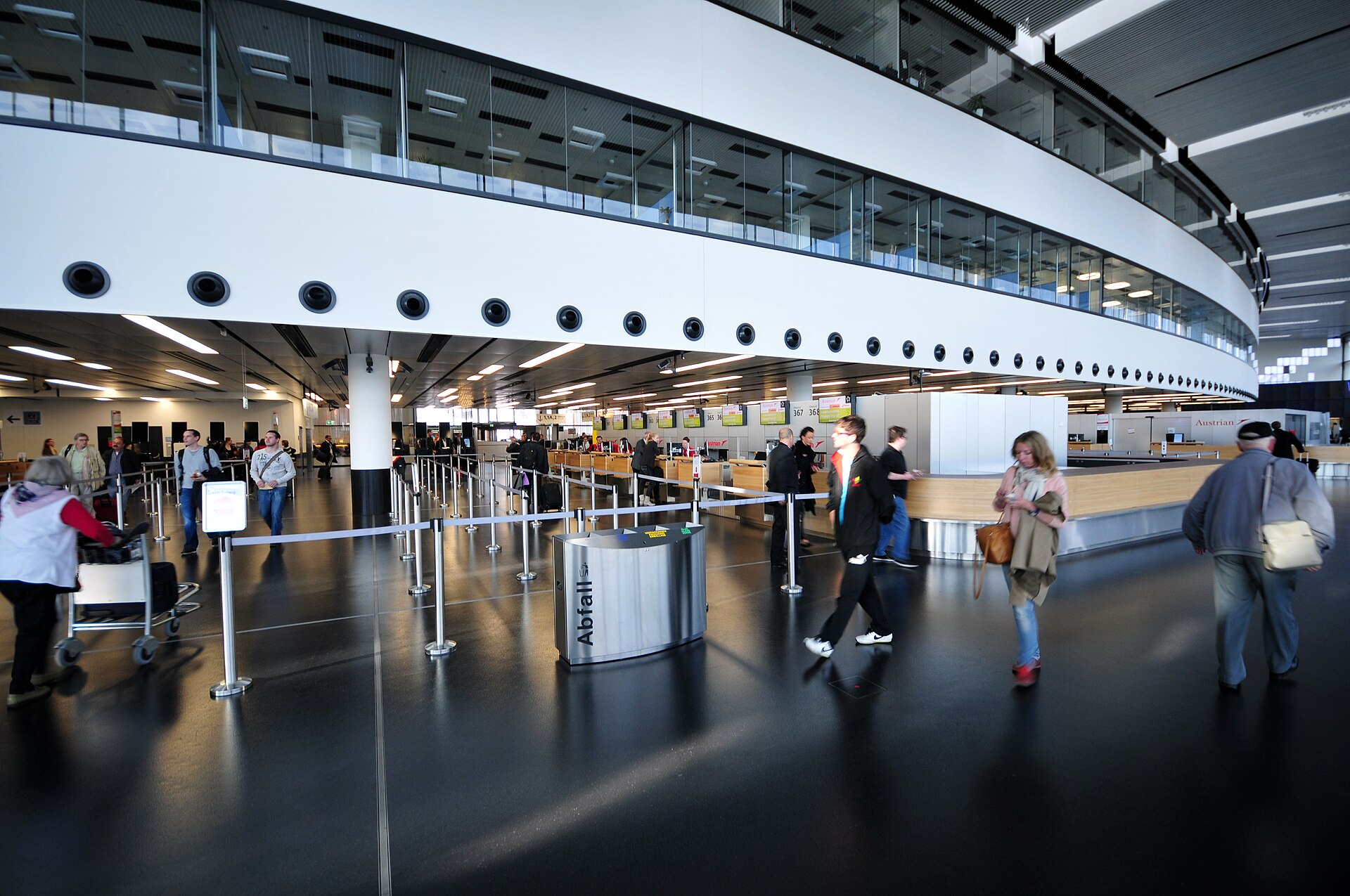
Vienna is one connected building with check-in in Terminal 1, Terminal 1A and Terminal 3. Terminal 2 does not check anyone in, whatever an old map, a taxi driver or a years-old blog post says.
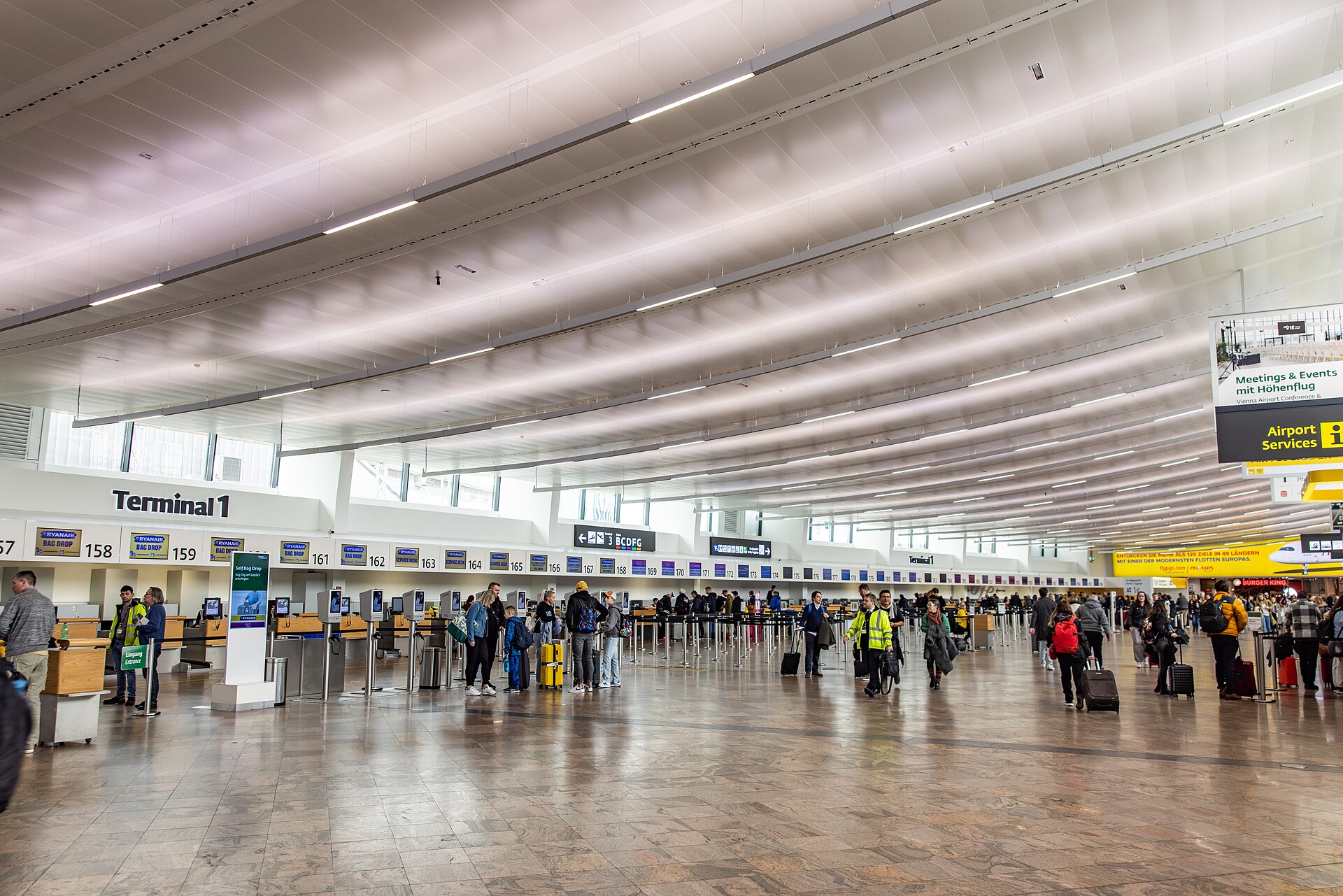
- Terminal 1 and 1A: low-cost and charter airlines, including Ryanair and Eurowings.
- Terminal 3: Austrian Airlines, most Star Alliance partners, and the long-haul carriers such as Emirates, Qatar Airways, Korean Air and El Al.
Being dropped at the wrong end costs you five to ten minutes on foot with bags, which matters only if you are already cutting it fine. The departure screens in every hall list every flight and its desk numbers. Our guide to Vienna Airport’s terminals has the full list and explains the gate letters.
Online check-in, kiosks and bag drop
Almost every airline at Vienna expects you to check in online or in its app, and most have self-service kiosks and bag-drop desks in the hall for anyone who has not. If you are travelling with hand luggage only and have a boarding pass on your phone, you skip the check-in area entirely and go straight to security.
If you are checking a bag, the bag drop is the one part of the process with a hard deadline. Airlines close it at a fixed time before departure, and the desk agents cannot reopen it for you. Ryanair closes its bag drop desks 40 minutes before departure, and charges for airport check-in if you have not checked in online. Austrian and other full-service carriers set their own deadlines by route, and they are earlier for long-haul flights. The deadline for your flight is in your booking confirmation; look it up the night before, not in the taxi.
Step Two: Security, and the 2026 Rules
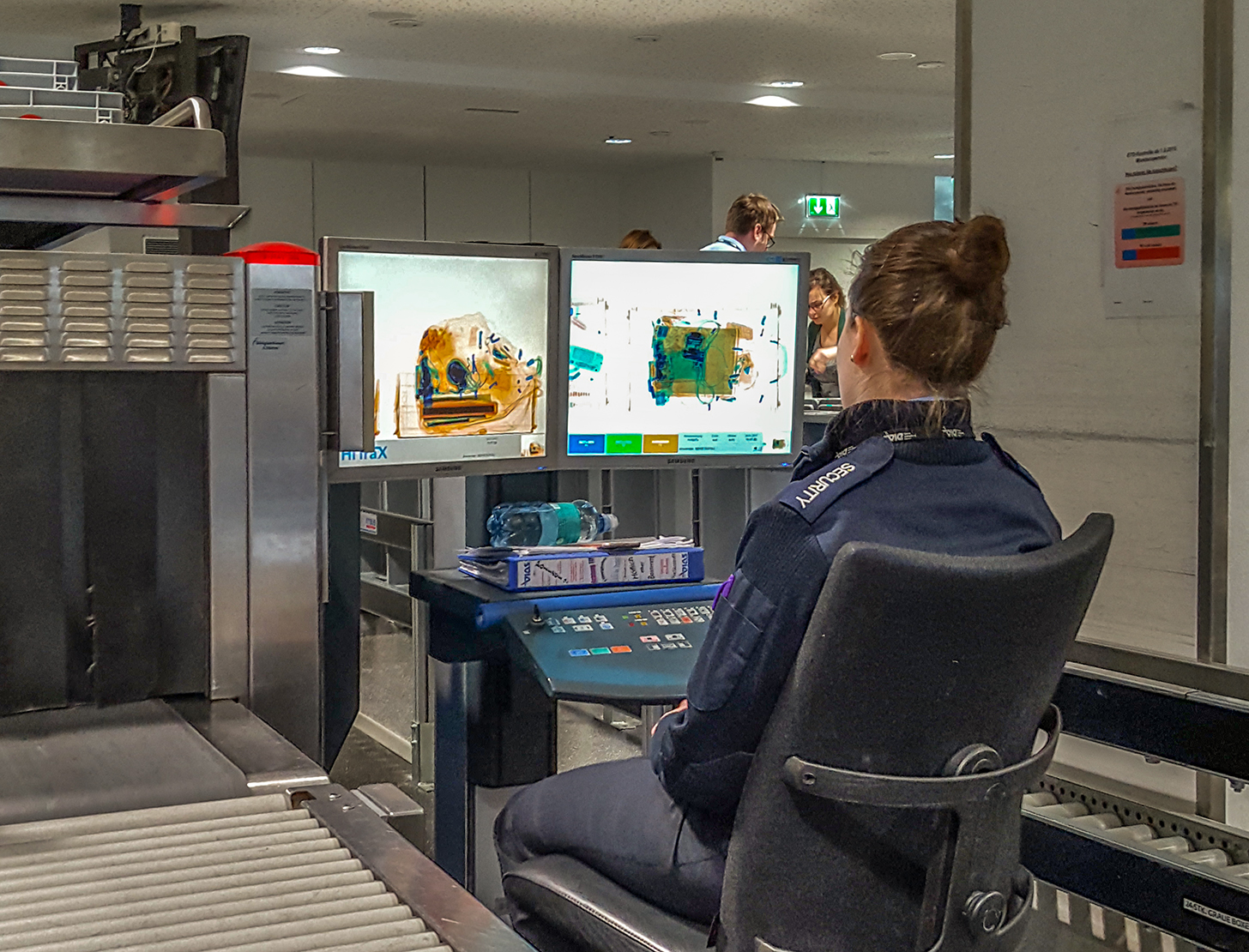
This is the part that changed. On 3 July 2026, Vienna Airport switched its central security checkpoints to 35 new CT scanners, an investment of about €25 million. The scanners produce a 3D image of each bag and use detection software for solid and liquid explosives, so the old ritual of unpacking has largely gone.
What you can now leave in your bag
- Liquids in containers of up to 2 litres each. The 100 ml limit no longer applies when you are screened at Vienna, and there is no clear plastic bag to take out.
- Laptops, tablets and phones. They stay in your bag through the scanner.
In practice this makes the queue move quickly. The airport’s board has quoted an average security wait of around five minutes. Some mornings will be worse than average, particularly during the school-holiday departure peaks, but security is no longer the reason to arrive early at Vienna.
What still slows you down
- Thermos flasks must be presented empty. Pour out the coffee before the queue.
- Food, creams, honey and jam can still trigger an extra check, even within the 2-litre limit. A jar of apricot jam from the Naschmarkt is perfectly allowed, and quite likely to get your bag pulled aside.
- Dense clutter. A bag packed solid with cables, chargers and toiletries is harder to read on a scan than a tidy one. Smaller containers and a sensible pack still get you through faster.
- Pacemakers and medical devices: tell the security staff before you walk through.
The catch: this is Vienna only
The relaxed rules apply at Vienna’s checkpoints. They do not travel with you. If your return flight leaves from an airport that has not installed CT scanners, or you change planes somewhere that has not, the 100 ml rule and the liquids bag apply there. The airport itself tells passengers to check the rules at their destination and any transfer airport. Pack for the strictest airport on your trip, not the most relaxed one.
The new security area in the Terminal 3 southern extension, due to open in the second quarter of 2027, will use the same technology.
If something is not allowed
If security finds something you cannot take through, you are not automatically forced to bin it. Vienna Airport offers three options: go back and check it in, leave it in storage at the airport, or have it posted to you. All take time, which is another argument for not arriving at the last minute with a bag you have not thought about.
FastTrack Security
Vienna sells a FastTrack voucher that takes you through a separate security lane. You can buy it at the Airport Service counter, in the airport’s webshop, or at the payment terminals at boarding-pass control in Terminal 1 and Terminal 3, at the entrance to security. Business-class tickets and higher airline status often include it; your boarding pass will usually show it.
Is it worth paying for? Rarely, now. With an average security wait of about five minutes, FastTrack mostly buys you peace of mind at the busiest times: the early-morning wave, summer Saturdays and the start of school holidays. It does nothing for the bag-drop queue, which is often the longer wait, and nothing for passport control. If you are running late on a peak morning with hand luggage only, it can be the difference. Otherwise, keep your money for a coffee.
Step Three: Passport Control for Non-Schengen Flights
If your flight leaves from a D or G gate, you pass exit passport control after security. This covers the UK, Ireland, the United States, Canada, Turkey, the Gulf, Israel and Asia. Flights within the Schengen area, from the B, C and F gates, have no passport check at all.
- EU, EEA and Swiss citizens use the automated eGates where they are eligible, which are normally quick.
- Everyone else queues for a staffed booth. Since the EU’s Entry/Exit System started, non-EU travellers register biometric data at their first Schengen crossing, and that has made some queues slower, particularly at peak times.
This queue, not security, is where non-Schengen passengers lose time at Vienna. It is also the reason the table at the top recommends two hours rather than ninety minutes for a flight to London or Istanbul. Do your shopping and eating on the far side of passport control, not before it; once you have crossed, you know exactly how much time you have left.
Step Four: The Walk to the Gate
This is the part of the airport that surprises people. Vienna looks compact on a map and is not. From security to the far end of Pier North, where the F and G gates are, can take around twenty minutes at a normal walking pace, longer with children or heavy hand luggage.
- Bus gates add ten to fifteen minutes, because you are taken out to the aircraft by apron bus and boarding closes earlier.
- Construction on the terminal extension, due to finish in 2027, is adding diversions and some longer routes in the meantime.
- The departure screens show walking times to each gate area. They are honest; trust them over a map.
Boarding usually closes 15 to 20 minutes before departure, and earlier at a bus gate. Work backwards from that time, not from the departure time on your ticket.
Timing It Right: Peaks and Quiet Spells
Vienna’s queues are driven by waves of departures, and knowing roughly when they happen is worth more than any fixed rule.
| When | What happens | Adjust by |
|---|---|---|
| Early morning, about 05:00–08:00 | Based aircraft leave on their first rotations; the biggest departure wave of the day | Add 20–30 minutes |
| Summer Saturdays and the start of school holidays | Families, charter flights and lots of checked bags | Add 30 minutes |
| Friday and Sunday evenings | Weekend and business travellers | Add 15 minutes |
| Weekday late morning and early afternoon | Usually the quietest time | Standard times are generous |
| Days around Christmas and Easter | Holiday departures plus heavier bags | Add 30 minutes |
Getting to the Airport on Time
The most common reason for a missed flight at Vienna is not the terminal; it is the trip there. Build this into the plan.
The S-Bahn closure
From 7 September 2026 to the end of October 2027, the central S-Bahn section between Praterstern and Hauptbahnhof is closed for engineering work. The S7 terminates at St. Marx instead of Wien Mitte, and the CAT runs as “CAT by bus” between Wien Mitte and the airport, which is slower than the old 16-minute train. Long-distance Railjet and InterCity trains still reach the airport from Hauptbahnhof. Allow extra time, whichever option you use; our guide to getting between the airport and the city centre sets out the current routes.
By car or taxi
The drop-off lanes outside departures give you 10 minutes free once per vehicle per day, then charge €2.90 per 15 minutes. If someone is dropping you off, that is plenty. If you are parking, add the walk from the car park and check the height limit before you book, especially with a roof box. Our Vienna Airport parking guide has the rates and the options.
Staying near the airport
For a flight before about 07:30, especially long-haul, the calm option is to spend the night before at one of the hotels near Vienna Airport, several of which are a short walk from the terminal. It turns a pre-dawn transfer into a ten-minute walk.
A Worked Example: 10:00 to London From the Innere Stadt
Rules are easier to trust once you see them add up. Take a common case: two adults staying near Stephansplatz, flying Austrian Airlines to London Heathrow at 10:00 on a weekday in October, with one checked suitcase between them. London is outside Schengen, so the gate will be a D or a G.
| Time | What happens |
|---|---|
| 07:00 | Leave the hotel. U-Bahn to Wien Mitte, then the CAT bus to the airport. With the S-Bahn trunk line closed, allow an hour door to door rather than the half hour it used to take. |
| 08:00 | Arrive at Terminal 3, two hours before departure, as the airport recommends. |
| 08:00–08:20 | Bag drop at the Austrian desks. Boarding passes already on the phone. |
| 08:20–08:30 | Security. Liquids and laptop stay in the bag. |
| 08:30–08:55 | Exit passport control. Non-EU passports allow for the queue; EU passports use the eGates. |
| 08:55–09:15 | Walk to the G gates, with a coffee on the way. |
| 09:15–09:30 | Sit down, buy water, find the toilets. Boarding starts. |
| 09:40 | Boarding closes. |
Nothing in that timeline is padded, and it leaves only a quarter of an hour of genuine slack. That is the honest reason the two-hour rule survives at Vienna despite the five-minute security average: the checkpoint is fast, but the bag drop, the passport queue and the walk are not. Take away the checked bag and the passport control, as on a flight to Paris with hand luggage, and the same morning comfortably fits into ninety minutes.
What to Have Ready Before You Reach the Checkpoint
A fast security lane only stays fast if the people in it are ready. Two minutes of preparation in the hall saves you the awkward shuffle at the trays.
- Boarding pass open on your phone, or printed, for the scanners at the entrance to security. Screenshots are safer than an app that needs a signal.
- Passport in a pocket, not buried in a bag, if you are flying non-Schengen.
- Coats, belts and big metal jewellery ready to come off. The CT scanners have changed what goes in your bag, not what you wear through the body scanner.
- Coins, keys and power banks in one pocket of your bag rather than scattered through your clothes. Power banks belong in hand luggage, never in a checked bag.
- Drinks finished or flasks emptied. A 2-litre bottle of water is allowed; a hot coffee in a thermos is not.
- Any souvenirs in jars or tins near the top of the bag, so that if the scan flags them, the officer can find them without unpacking everything.
Special Situations
VAT refunds
Non-EU residents can reclaim Austrian VAT on eligible purchases. If the goods are going in your checked bag, you need the export confirmation before you check the bag in, which means doing the tax-refund formalities first. If the goods are in your hand luggage, the process comes after security. Either way, it is an extra queue, and at busy times a slow one. Add at least 30 minutes.
Families with children
Pushchairs can usually go to the gate, and children’s food and drinks are routine at security. The walk to the gate is the thing to plan for, not the checkpoint. If you need help, the airport’s assistance services should be booked through your airline in advance.
Sports equipment and oversized bags
Skis, bikes, golf bags and other bulky items go through a separate oversized-baggage drop, and the check-in agent has to tag them first. That adds a few minutes and sometimes a queue. Treat a flight with sports equipment as a flight with a checked bag, plus 15 minutes.
Connecting in Vienna
If you are connecting on one ticket, you do not check in again and your bag is usually checked through. If you move between the Schengen and non-Schengen areas, you pass passport control between the two, and that is where connection time goes. Separate tickets are a different matter: you collect your bag, check in again and go through security again. Our guide to a Vienna Airport layover covers the timings.
Six Mistakes That Make People Miss Flights at Vienna
- Going to Terminal 2. It does not handle check-in.
- Treating the departure time as the deadline. The bag drop closes 40 minutes or more before departure, and boarding closes around 15 to 20 minutes before.
- Forgetting the passport queue on a non-Schengen flight. It is a second queue after security, and the slower of the two.
- Underestimating the walk to Pier North. Twenty minutes to the far F and G gates is realistic.
- Assuming the CAT is still a 16-minute train. It runs as a bus until late 2027.
- Packing for Vienna’s rules on the way home. If your return airport does not have CT scanners, the 2-litre water bottle is going in the bin.
Frequently Asked Questions
How early should I get to Vienna Airport?
The airport recommends two hours before departure for flights up to six hours and three hours for longer flights and for flights to Tel Aviv, New York and Toronto. With hand luggage only on a Schengen flight, ninety minutes is usually enough outside peak times.
Can I take liquids through security at Vienna Airport?
Yes. Since 3 July 2026, Vienna’s central checkpoints use CT scanners, and liquids in containers of up to 2 litres can stay in your cabin bag. The 100 ml rule still applies at airports without CT scanners, so check the rules for your return or transfer airport.
Do I need to take my laptop out at Vienna Airport security?
No. Laptops, tablets and phones can stay in your bag through the CT scanners at Vienna’s central security checkpoints.
How long is the security queue at Vienna Airport?
The airport quotes an average wait of around five minutes since the CT scanners were introduced. Expect longer in the early-morning departure wave and at the start of school holidays.
When does Ryanair check-in close at Vienna?
Ryanair’s bag drop desks close 40 minutes before departure. Check in online beforehand to avoid Ryanair’s airport check-in charge. Ryanair uses Terminal 1.
Where can I buy FastTrack at Vienna Airport?
At the Airport Service counter, in the airport’s webshop, or at the payment terminals at boarding-pass control in Terminal 1 and Terminal 3. Business-class tickets and higher airline status often include it.
Is there passport control when leaving Vienna?
Only for flights outside the Schengen area, which leave from the D and G gates. Flights to other Schengen countries leave from the B, C and F gates with no passport check.
How long does it take to walk to the gate at Vienna Airport?
Up to about twenty minutes from security to the far end of Pier North, where the F and G gates are. Bus gates add ten to fifteen minutes. The departure screens show walking times for each gate area.
Related Vienna Guides
- Vienna Airport: The Complete Guide
- Vienna Airport Terminals Explained
- Vienna Airport Lounges
- Vienna Airport to the City Centre
- Vienna Airport Parking
- Hotels Near Vienna Airport
- Vienna Airport Layover
- Vienna Packing List
Photo Credits
Austrian Airlines check-in desk in Terminal 3: Check-In Terminal 3 – 9523667804 by Austrian Airlines, CC BY-SA 2.0, via Wikimedia Commons.
Security screening at Vienna Airport, 2017: 17-01-25-Flughafen-Wien-20170125 105723 by Ralf Roletschek, GFDL 1.2, via Wikimedia Commons.