The Vienna food guide you actually need: no generic “top 10” lists, just the real dishes, the real cafes, and the practical details that help you eat your way through one of Europe’s greatest food cities. Viennese cuisine is the edible legacy of a 600-year empire — Habsburg kitchens absorbed the best of Hungarian, Czech, Italian, and Balkan cooking and refined it into something uniquely Viennese. From the perfectly golden Wiener Schnitzel to the ritual of afternoon coffee with cake, food in Vienna is not just sustenance — it’s cultural identity.
This guide covers everything: the traditional dishes you must try, the coffee house culture that UNESCO declared an Intangible Cultural Heritage, the best restaurants from budget Würstelstände to Michelin-starred kitchens, the Naschmarkt and food markets, Vienna’s unique urban wine culture, and practical tips for eating well at every price point. Current 2026 prices are included throughout.
Traditional Viennese Dishes You Must Try
Viennese cuisine — Wiener Küche — is comfort food elevated to an art form. These are the dishes that define the city, served in the same Beisln (traditional taverns) and Gasthäuser (restaurants) where they’ve been perfected over centuries.
Wiener Schnitzel
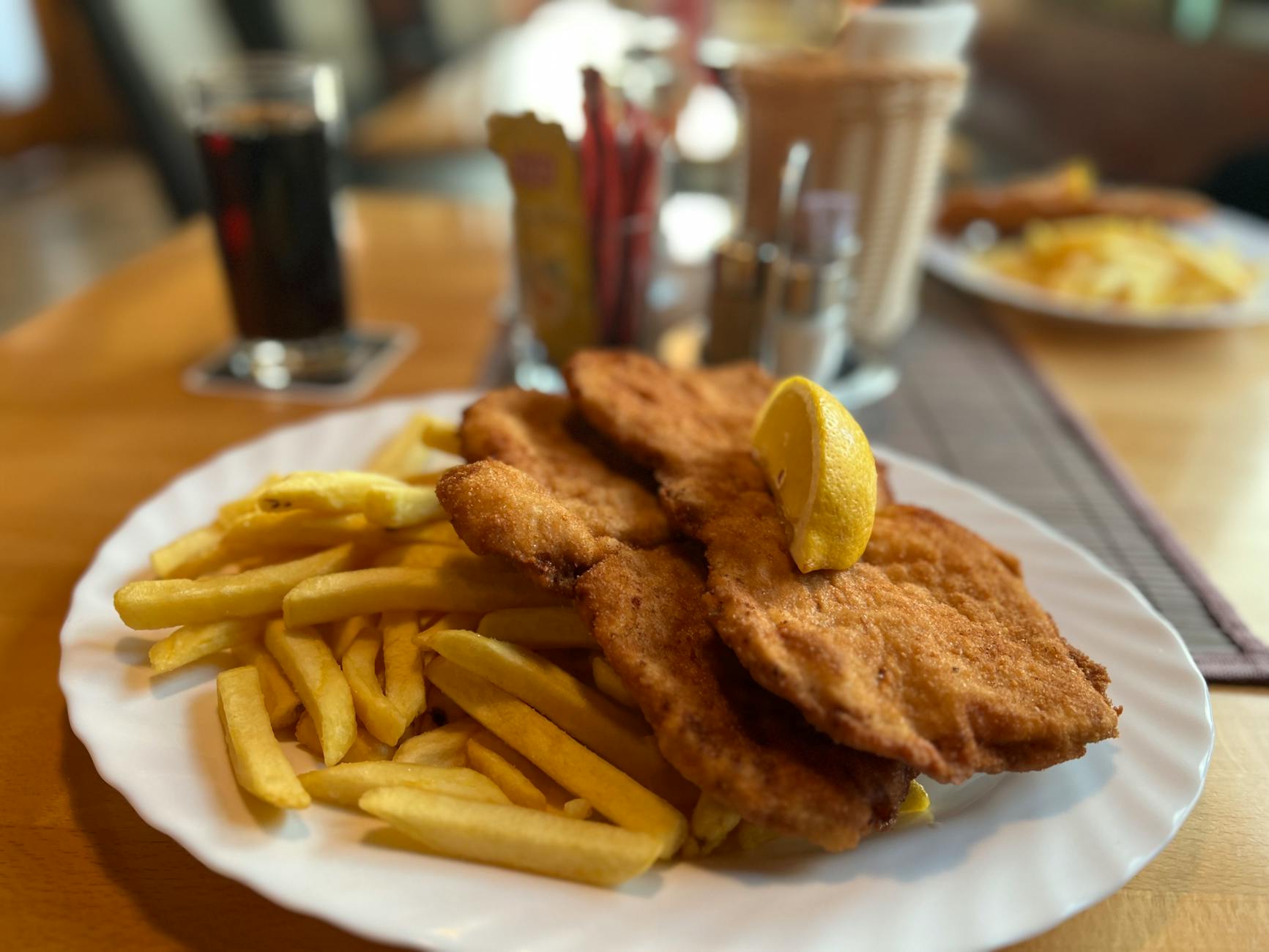
The dish that needs no introduction — yet most visitors eat mediocre versions in tourist traps. An authentic Wiener Schnitzel is always made from veal (Kalb), pounded paper-thin, triple-coated in flour, egg, and breadcrumbs, then fried in clarified butter until the breading puffs away from the meat in golden waves. Served with a lemon wedge and potato salad — never with sauce.
Where to eat it: Figlmüller (Wollzeile 5) is the most famous — their schnitzel hangs over the plate’s edge and costs around €17. But locals often prefer Schnitzelwirt (Neubaugasse 52) for better value at €12–14, or Gasthaus Pöschl (Weihburggasse 17) for a more refined version. If it says “Wiener Art” on the menu, it’s pork — cheaper but not the real thing.
Tafelspitz
Emperor Franz Joseph I’s favorite dish — boiled beef simmered in a rich vegetable broth until impossibly tender, served with minced apple-horseradish sauce (Apfelkren), chive sauce, and roasted potatoes. This is the dish that tells you Viennese cooking isn’t just about fried things. The broth alone, enriched with bone marrow, is a meal in itself.
Where to eat it: Plachutta (Wollzeile 38) has built an empire around Tafelspitz — they serve it in a copper pot with all the traditional accompaniments for €28–35. The ceremony of the service is part of the experience. For a more casual version, try Café Landtmann or Gasthaus Zur Herknerin.
Gulasch (Viennese Goulash)
Borrowed from Hungary and made Viennese — a thick, paprika-rich beef stew simmered for hours until the meat dissolves into the sauce. Wiener Saftgulasch is the local version: no vegetables, just onions, beef, and an intense sweet paprika gravy, served with a semmel (bread roll) or Nockerl (small dumplings). A bowl of gulasch at 2am from a Würstelstand is a Vienna rite of passage.
Where to eat it: Gulaschmuseum (Schulerstraße 20) serves over 15 varieties. For the classic version, Café Sperl and Gasthaus Wild are reliable. Most Beisln serve it for €12–16.
Kaiserschmarrn
A fluffy, caramelized shredded pancake dusted with powdered sugar and served with Zwetschkenröster (plum compote). Legend says Emperor Franz Joseph’s cook created it by accident when a pancake fell apart. Whether dessert or main course is a matter of personal philosophy — most Viennese treat it as either. It’s one of those dishes that sounds simple but is surprisingly difficult to make well.
Where to eat it: Café Central makes an excellent version. Griechenbeisl (Fleischmarkt 11, Vienna’s oldest restaurant since 1447) serves it as a dessert. Expect €10–14.
Würstelstand Sausages
Vienna’s street food tradition centers on the Würstelstand — open-air sausage stands that feed the city at all hours. The must-try is the Käsekrainer — a pork sausage filled with pockets of molten cheese that explode when you bite through the skin. Order it with a Semmel (bread roll), sweet mustard (süßer Senf), and a Pfiff (small beer).
Other sausages to try: Bosna (Balkan-spiced sausage in a baguette with curry powder and onions), Burenwurst (traditional mild boiled sausage), and Leberkäse (a savory meat loaf sliced thick and served in a roll). A Würstelstand meal costs €4–8.
Best stands: Bitzinger at the Albertina (famous for champagne-and-sausage combos), Würstelstand am Hohen Markt, and Zum Scharfen René (Schwarzenbergplatz).
More Essential Dishes
Frittatensuppe: Clear beef broth with sliced herb pancakes — the classic Viennese starter. Served in nearly every Beisl for €5–7.
Zwiebelrostbraten: Roasted beef steak smothered in crispy fried onion rings. Rich, indulgent, and deeply satisfying. €16–22 at most traditional restaurants.
Backhendl: Breaded and fried chicken — the schnitzel’s poultry cousin. Lighter and often served in Heurigen wine taverns alongside a mixed salad.
Powidltascherl: Sweet dumplings filled with spiced plum butter, rolled in buttered breadcrumbs. A Czech-Viennese dessert that perfectly captures the empire’s multicultural kitchen.
Marillenknödel: Apricot dumplings — whole apricots wrapped in potato dough, boiled, and coated in buttered breadcrumbs. Only available in summer when Austrian apricots (Wachauer Marillen) are in season. July is peak month.
Beyond these staples, Vienna’s culinary landscape includes several dishes that reveal the city’s Austro-Hungarian heritage. Beuschel is a traditional offal dish — a ragout of veal heart and lungs in a tangy sauce, typically served with Semmelknödel (bread dumplings). While it may sound adventurous, it’s a beloved comfort food in traditional Beisln and represents authentic, unfussy Viennese cooking at its finest.
Zwiebelrostbraten is another essential dish: a juicy roast beef topped with crispy fried onion rings, often served with roasted potatoes or Bratkartoffeln. It’s hearty, satisfying, and available at almost every traditional restaurant. For something lighter, try Frittatensuppe — a clear beef broth with thin strips of sliced pancakes floating in it. This soup appears on nearly every Beisl menu and is the quintessential Viennese starter.
Erdäpfelsalat (Viennese potato salad) deserves special mention as the traditional accompaniment to Schnitzel. Unlike creamy potato salads elsewhere, the Viennese version is dressed with beef broth, vinegar, oil, and finely sliced onions — creating a warm, tangy side dish that perfectly cuts through the richness of fried cutlets. Every cook has their own closely guarded recipe, and debates about the “correct” preparation can get surprisingly passionate.
For a uniquely Viennese snack experience, seek out a Leberkäsesemmel — a thick slice of meatloaf (despite the name, it contains neither liver nor cheese) served in a crusty roll with mustard. Available at Würstelstände, bakeries, and butcher shops throughout the city, it’s the ultimate Viennese fast food and a perfect mid-morning snack when exploring the city’s neighborhoods.
Vienna’s Coffee House Culture
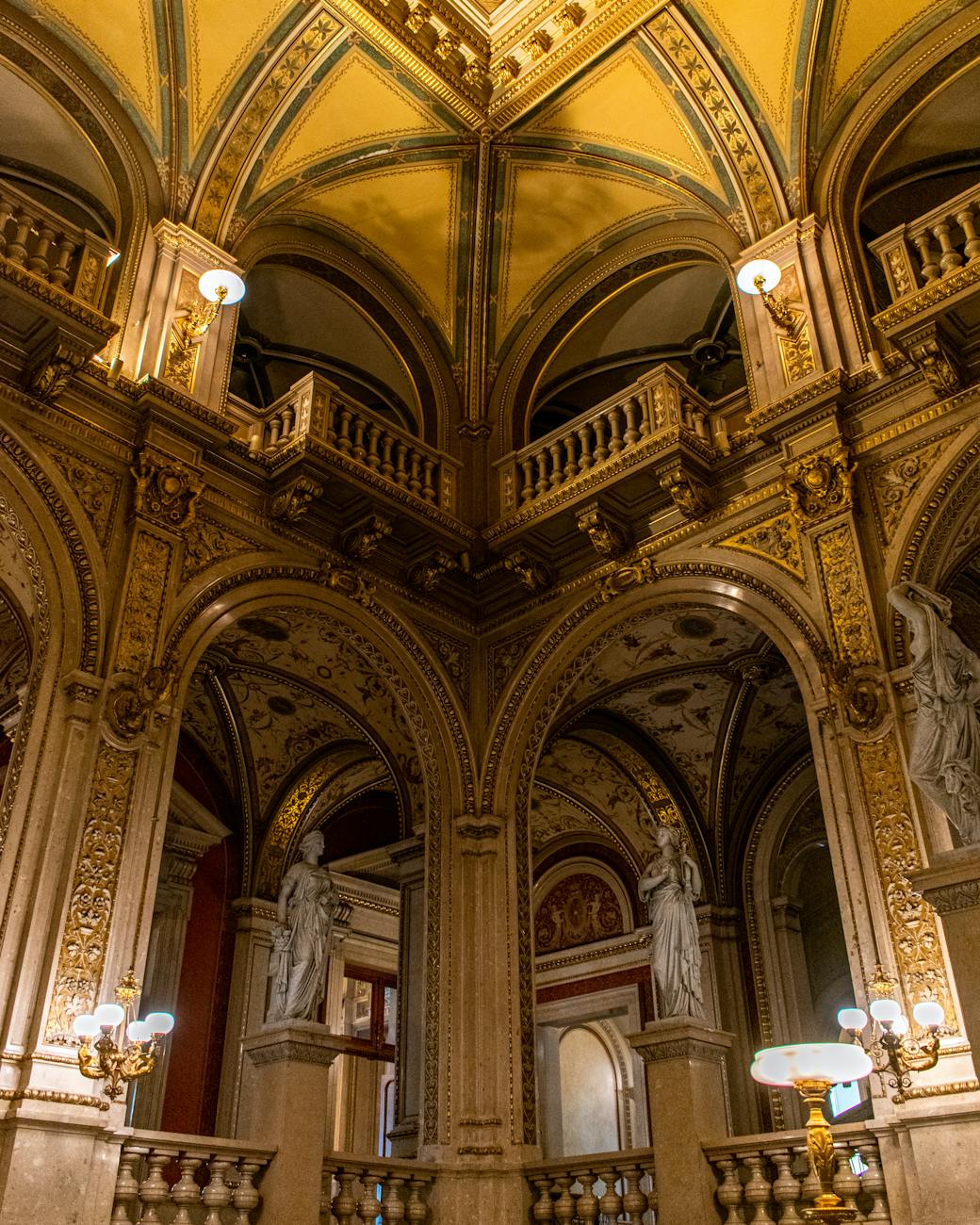
Viennese coffee house culture was inscribed on UNESCO’s Intangible Cultural Heritage list in 2011 — not just for the coffee, but for the entire social institution. A Viennese Kaffeehaus is a living room, a reading room, a meeting place, and a time capsule. You’ll find marble-topped tables, Thonet bentwood chairs, wood-paneled walls, crystal chandeliers, and waiters in black vests who address you with old-world courtesy. There is no expectation to leave quickly — a single Melange and a glass of water entitles you to an entire afternoon with the newspapers on their wooden racks.
The Viennese Coffee Glossary
Ordering coffee in Vienna is an education in itself. Forget “latte” and “cappuccino” — Viennese coffee has its own vocabulary:
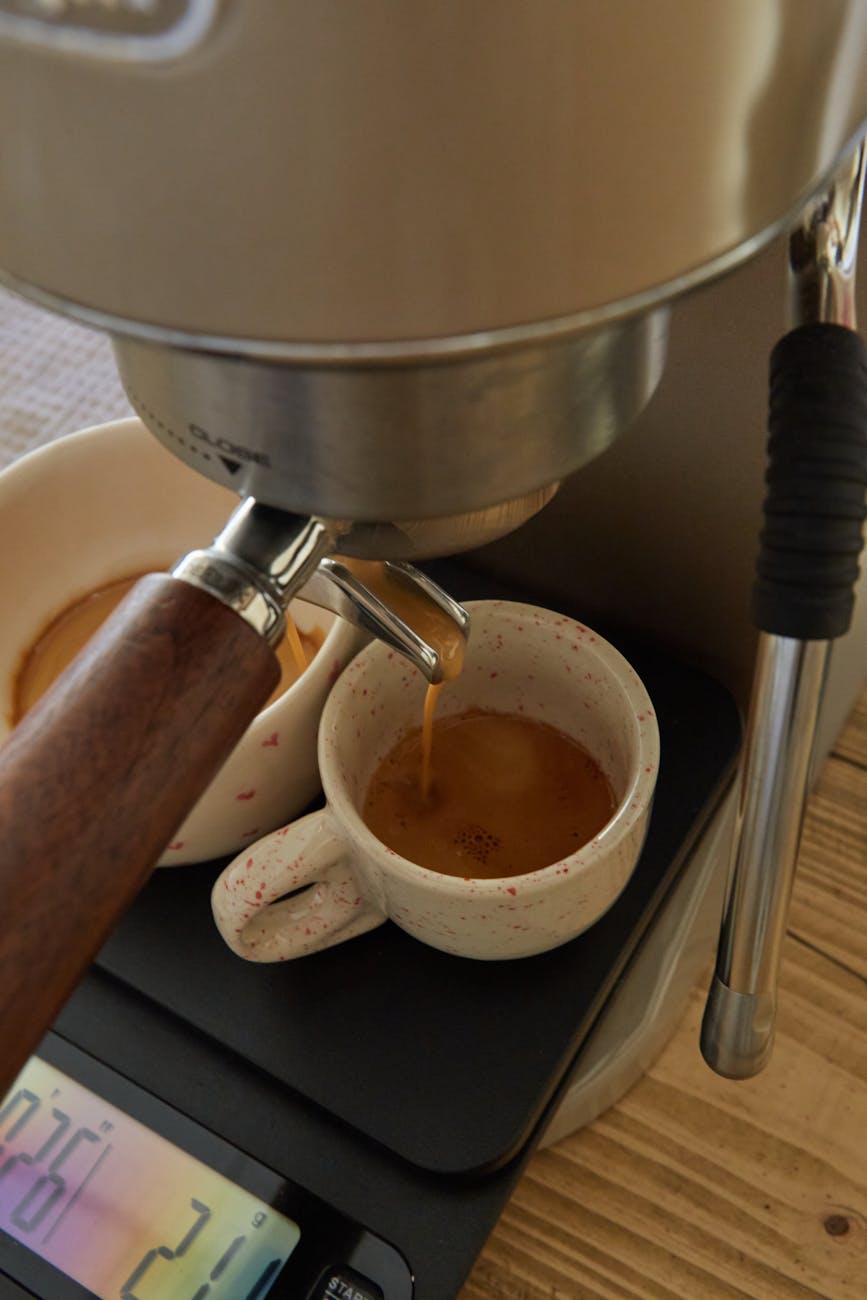
Wiener Melange: Vienna’s signature coffee — espresso with steamed milk and a crown of foam. The closest equivalent to a cappuccino but distinctly lighter. This is the default order. €4.50–6.
Großer/Kleiner Brauner: A large or small espresso served with a tiny jug of cream on the side. The brown refers to the color after you add cream. Strong and direct. €3.50–5.
Einspänner: A strong black coffee (Mokka) in a glass, topped with a generous dome of whipped cream (Schlagobers). The cream insulates the coffee — drink it through the cream without stirring. Named after one-horse carriage drivers who needed a single-handed drink. €5–7.
Kapuziner: The real Viennese “cappuccino” — coffee with a very small amount of cream, darker than a Melange. Named for the brown robes of Capuchin monks.
Verlängerter: A “lengthened” coffee — espresso diluted with hot water. Vienna’s answer to the Americano but traditionally served with cream on the side.
Fiaker: Coffee with a shot of rum or kirsch and whipped cream. Named after Vienna’s horse-drawn carriage drivers. A winter favorite.
Türkischer: Turkish-style coffee brewed in a copper cezve, served unfiltered with the grounds in the cup. A reminder of Vienna’s Ottoman-era connections.
Best Historic Coffee Houses
Café Central (Herrengasse 14, Palais Ferstel): The most famous — Trotsky, Freud, and Peter Altenberg were regulars. Stunning vaulted ceilings and a statue of Altenberg at his regular table. Tourist-heavy but undeniably magnificent. Melange €6.50.
Café Sperl (Gumpendorfer Straße 11): The locals’ choice — less polished than Central but more authentic. Billiard tables, a slightly faded grandeur, and the best Apfelstrudel in the city. Closed Sundays in summer. Melange €5.50.
Café Hawelka (Dorotheergasse 6): A bohemian institution near the Graben. Famously shabby-elegant, with original 1930s furnishings. Try the Buchteln (sweet buns) available from 10pm onward — warm, yeast-risen pastries filled with plum jam.
Demel (Kohlmarkt 14): The imperial court confectioner, now a combined café-patisserie. The Sachertorte rivalry with Hotel Sacher is legendary. Demel’s version has the apricot jam under the icing rather than in the middle. Exquisite pastry display.
Café Landtmann (Universitätsring 4): Next to the Burgtheater and Rathaus. The “power coffee house” — politicians, actors, and journalists since 1873. Excellent brunch on weekends (€18–25).
Third-wave alternatives: If you want specialty coffee with precision pour-overs and single-origin beans, try Jonas Reindl (Währinger Straße 2), Kaffeemodul (Josefstädter Straße), or CoffeePirates (Spitalgasse 17). Vienna’s third-wave scene has exploded since 2018.
The ritual of the Viennese coffee house extends far beyond simply ordering a drink. When you sit down, a Herr Ober (waiter, traditionally addressed formally) brings your coffee on a small silver tray alongside a glass of water — always a glass of water. This is not optional; it’s an essential part of the tradition. The water is refreshed without being asked, and it serves both practical and ceremonial purposes, cleansing the palate between sips of coffee.
Many coffee houses still stock international newspapers on wooden holders, a tradition dating back to the 19th century when coffee houses served as informal reading rooms and gathering places for intellectuals. Writers like Stefan Zweig, Arthur Schnitzler, and Peter Altenberg practically lived in their preferred coffee houses, and this literary tradition continues today. Don’t be surprised to see locals spending entire afternoons reading, writing, or simply watching the world go by — lingering is not just accepted but expected.
The Kaffeehaus Konditorei (coffee house pastry shop) tradition means most establishments bake their own cakes and pastries. The Vitrine (display case) near the entrance showcases the day’s selection — from towering slices of Torte to delicate Mehlspeisen (flour-based sweets). It’s perfectly acceptable to walk up and choose your cake by pointing, and many locals do exactly that before sitting down.
Third-wave coffee has also arrived in Vienna, with specialty roasters like Kaffeefabrik, CaffèCouture, and Jonas Reindl Coffee Roasters pushing the boundaries while respecting tradition. These newer establishments offer single-origin pour-overs alongside reimagined Viennese classics, creating a bridge between old and new coffee culture.
Viennese Desserts and Sweet Traditions
Vienna’s sweet tooth is legendary. The city’s Konditoreien (pastry shops) and café display cases are works of edible art. These are the essentials:
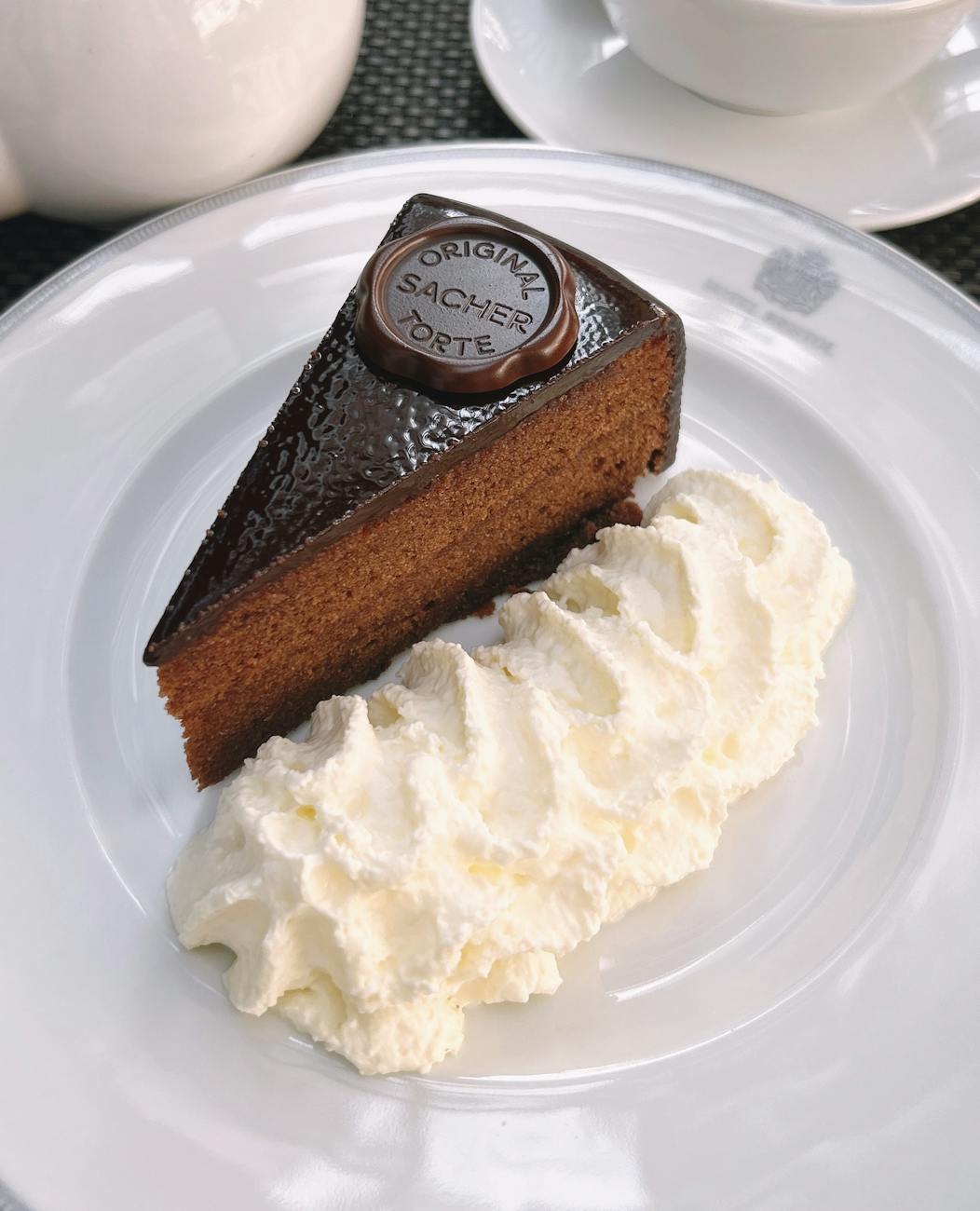
Sachertorte: The chocolate cake that launched a lawsuit. In 1832, 16-year-old Franz Sacher created it for Prince Metternich. Today, Hotel Sacher and Demel both claim the “original” — Sacher puts the apricot jam in the middle, Demel under the icing. Try both (€8–9 per slice with Schlagobers). The Sacher version is denser; Demel’s is more refined.
Apfelstrudel: Paper-thin layers of pastry wrapped around spiced apple filling with raisins, cinnamon, and sometimes rum. The dough should be stretched so thin you can read a newspaper through it — a test of genuine craft. Served warm with vanilla sauce or Schlagobers. Café Sperl and Schönbrunn Palace’s Café Residenz are top choices. €6–8.
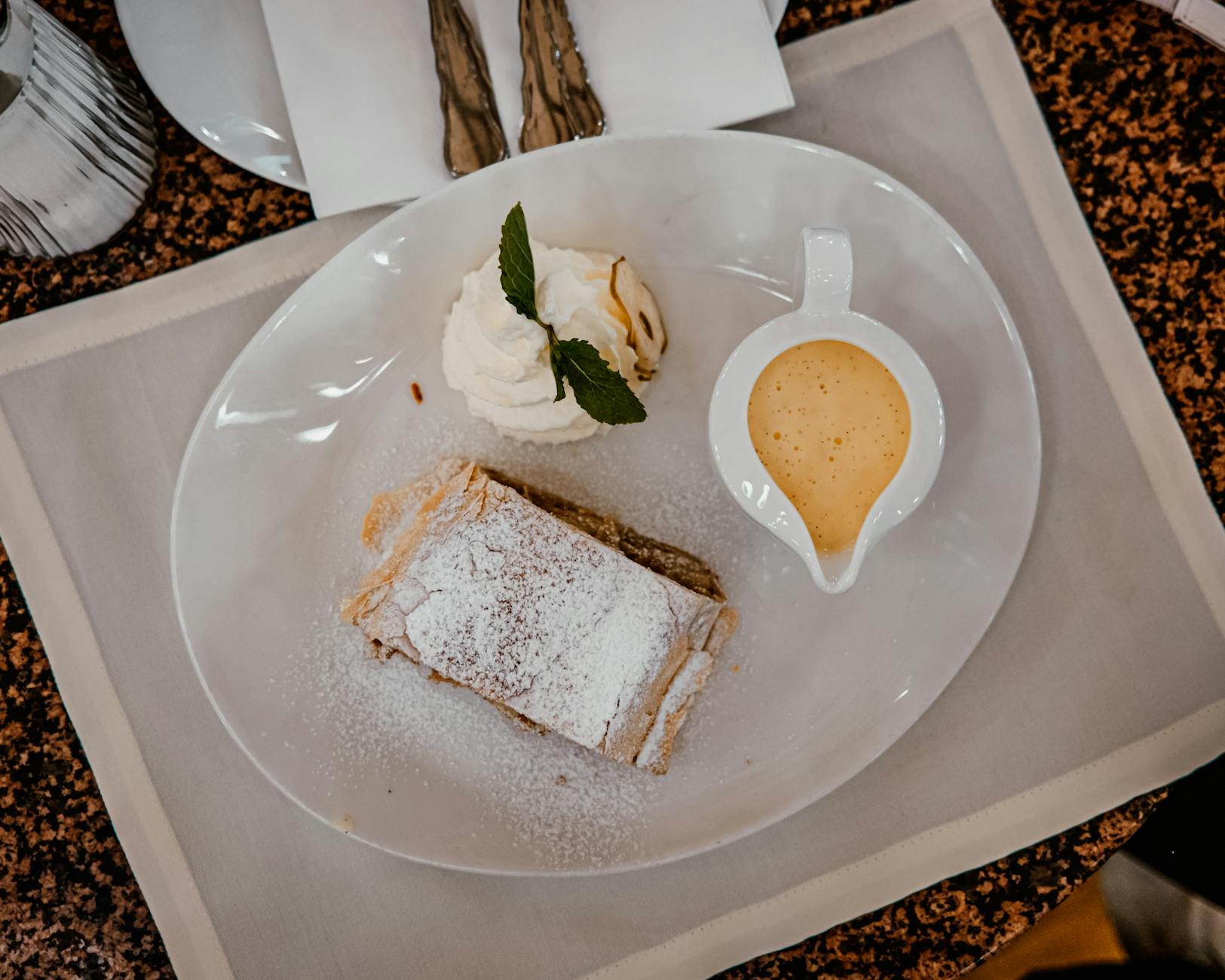
Palatschinken: Viennese crêpes filled with apricot jam, Topfen (quark cheese), Nutella, or ice cream. Thicker than French crêpes and often rolled rather than folded. €7–10.
Topfenstrudel: Strudel filled with sweetened quark cheese, raisins, and lemon zest. Less well-known than Apfelstrudel but equally traditional and arguably more Viennese.
Dobostorte, Esterházytorte, Punschkrapfen: The Habsburg pastry trinity — a Hungarian caramel-layered cake, an almond cream torte, and a pink-glazed rum cake respectively. Available at every Konditorei and bakery chain (Aida’s pink storefronts are everywhere).
The Naschmarkt and Food Markets
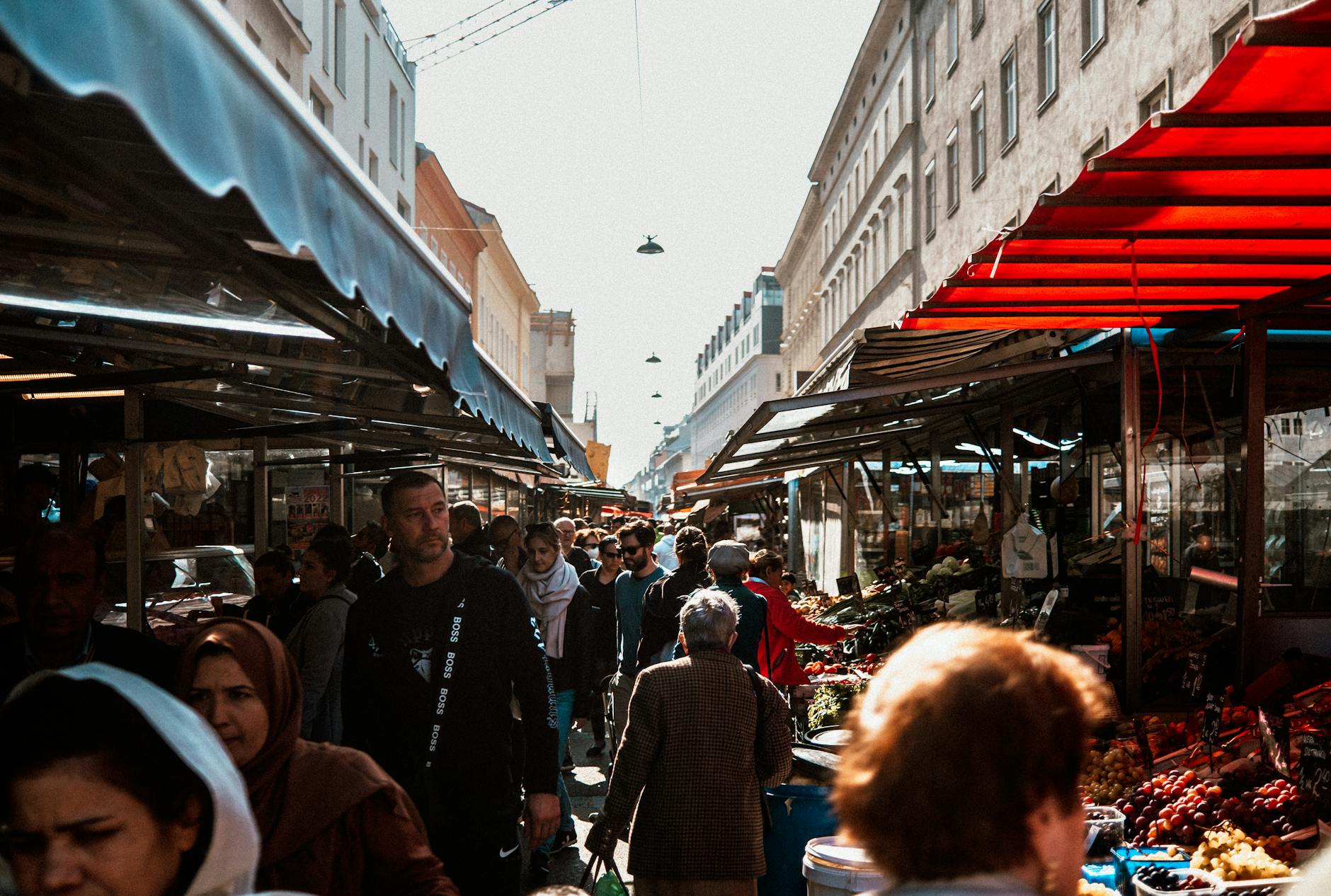
The Naschmarkt has been Vienna’s culinary epicenter since the 16th century. Stretching along the Wienzeile from Karlsplatz to Kettenbrückengasse, its 170+ stalls sell everything from Styrian pumpkin seed oil to Vietnamese pho, Greek olives to Viennese charcuterie.
What to eat: Graze through street food stalls for €3–8 per item — falafel wraps, fresh oysters, Turkish gözleme, Indian samosas, and Viennese open-faced sandwiches. For a sit-down meal, the restaurant stalls along the southern edge offer international cuisines at €15–30 per plate. Neni am Naschmarkt and Tewa are local favorites.
When to go: Open Monday–Saturday, roughly 6am–7:30pm (restaurants until 11pm). Saturday is the most vibrant — and most crowded. Arrive before 10am for the best experience. The Saturday flea market at the western end (Kettenbrückengasse) is legendary for antiques, vinyl, and curiosities.
Practical tips: Some stalls are cash-only — bring euros. Quality and prices vary hugely — the stalls closest to Karlsplatz tend to be more tourist-oriented and expensive. Walk the full length before buying. The stalls deeper in the market often offer better value and more authentic products.
Other markets worth visiting: Karmelitermarkt (2nd district — intimate, local, excellent brunch spots), Brunnenmarkt (16th district — Vienna’s longest street market, heavily Turkish/Middle Eastern), Kutschkermarkt (18th district — small farmers’ market, very local), and the Rochusmarkt (3rd district — daily produce market near the Belvedere).
Arriving at the Naschmarkt, start at the Karlsplatz end (U1/U4 station) and work your way southwest toward Kettenbrückengasse. The first section features established vendors selling spices, dried fruits, cheeses, and cured meats — perfect for assembling a gourmet picnic. Sample freely when invited (and vendors are usually generous with tastes), but always ask before helping yourself.
The middle section is where you’ll find the international food stalls that have made the Naschmarkt a multicultural landmark. Turkish, Lebanese, Indian, Japanese, and Italian vendors create a global food corridor. For a memorable quick lunch, try the falafel wraps at one of the Turkish stalls near Schleifmühlgasse, or grab freshly pressed pomegranate juice from the fruit vendors.
On Saturdays, the Naschmarkt extends into a sprawling flea market (Flohmarkt) at the Kettenbrückengasse end, where you can browse vintage items and antiques alongside breakfast at the market’s sit-down restaurants. Arrive before 9am to beat the crowds, or come at 4pm for end-of-day bargains.
Beyond the Naschmarkt, Vienna has embraced the farmers’ market trend with several excellent options. The Karmelitermarkt in Leopoldstadt (2nd district) is a local favorite with less tourist traffic and outstanding organic produce stands. The Brunnenmarkt in Ottakring (16th district) is the city’s longest street market, with a distinctly multicultural character and some of the best-value groceries in Vienna. The adjacent Yppenplatz has become a foodie destination in its own right, with excellent restaurants and wine bars surrounding the market square.
Vienna’s Wine Culture and Heurigen
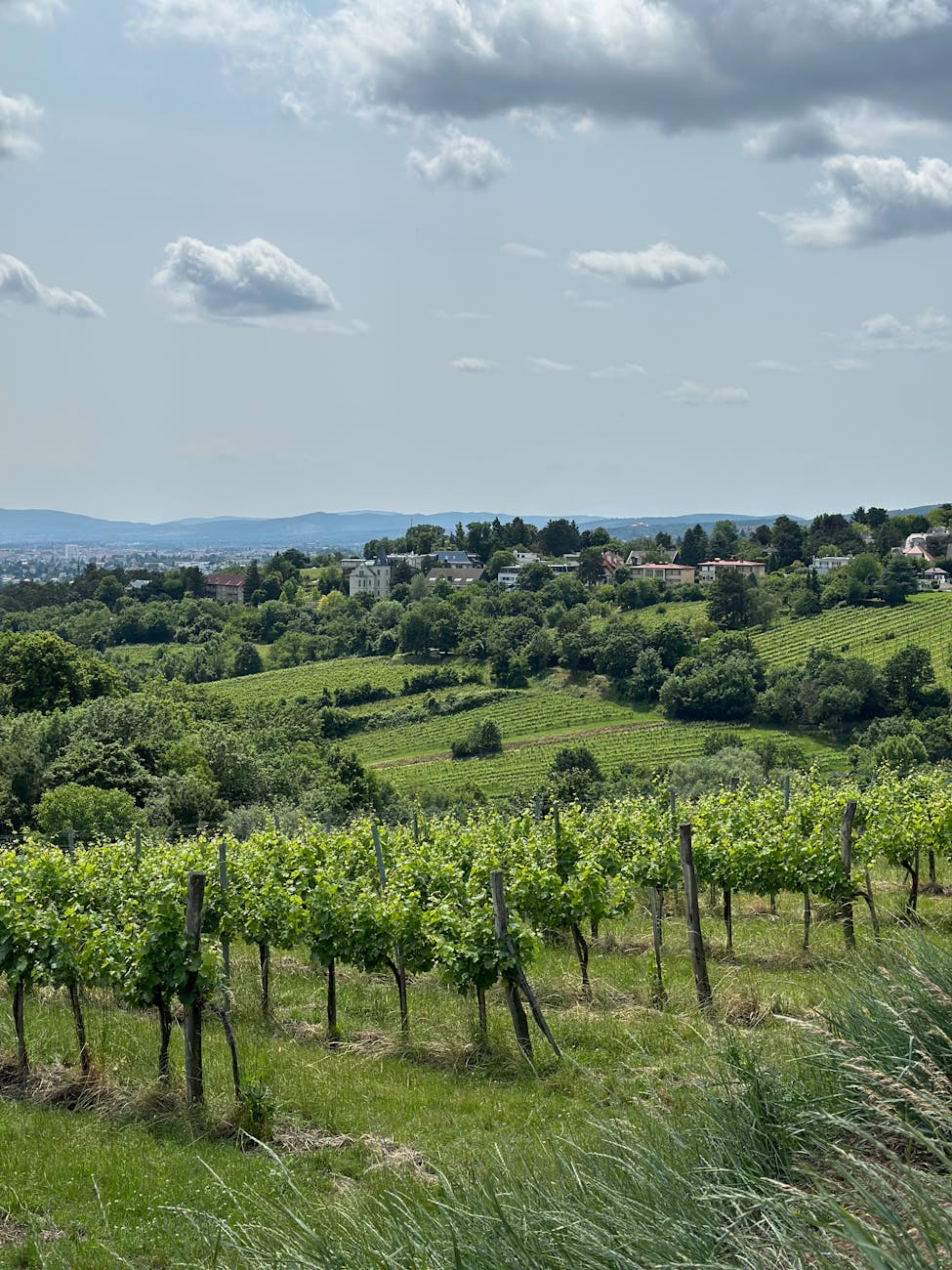
Vienna is the only major capital city in the world with commercially significant vineyards within its city limits — 700 hectares of vines on the hills surrounding the city, producing primarily white wines. This unique wine culture was recognized by UNESCO in 2019.
Grüner Veltliner: Austria’s signature grape and Vienna’s everyday white — dry, crisp, with notes of green pepper and citrus. Pairs perfectly with schnitzel, white asparagus, and basically everything. Order it as a Spritzer (mixed with sparkling water) in summer — that’s how Viennese drink it.
Wiener Gemischter Satz: Vienna’s own wine specialty — a field blend where multiple grape varieties are planted, harvested, and pressed together. Each vineyard produces a unique blend. Protected by DAC (Districtus Austriae Controllatus) status since 2013. Complex, unpredictable, and deeply local.
The Heuriger Experience
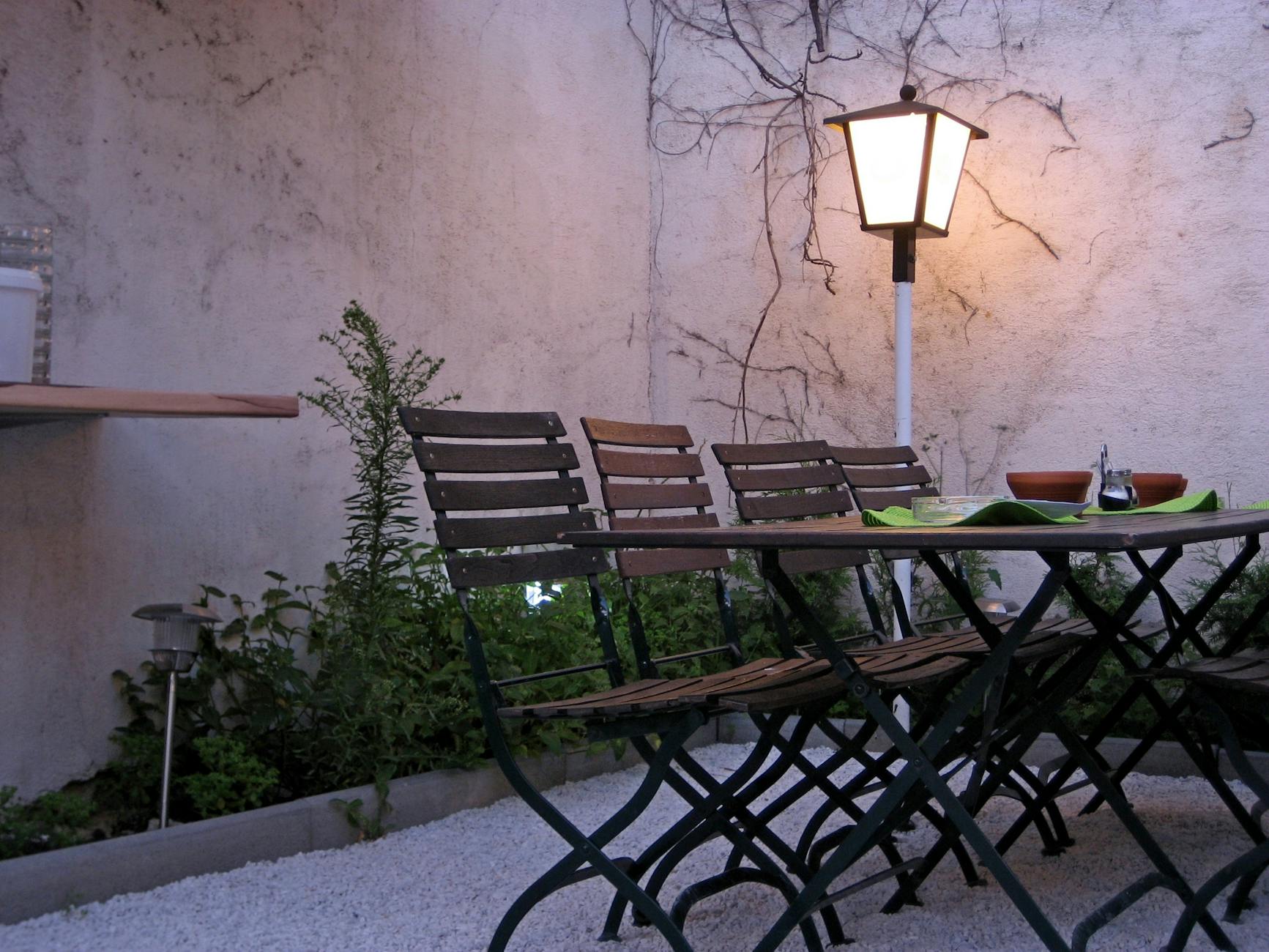
A Heuriger is a wine tavern serving the current year’s wine, traditionally indicated by a pine branch (Buschen) hung above the door. The experience is quintessentially Viennese: rustic courtyards or garden terraces, self-service cold buffets, carafes of house wine, and vineyard views across the city.
What to eat at a Heuriger: Cold buffet platters (Brettljause) with sliced meats, cheeses, pickled vegetables, spreads (Liptauer — paprika-spiced cream cheese), and bread. Some modern Heurigen offer warm dishes. A meal with wine costs €15–25 per person.
Best Heuriger districts:
- Grinzing: The most famous but also the most touristy. Beautiful setting in the Vienna Woods. Weingut Hengl-Haselbrunner is a good choice.
- Nussdorf: On the Danube’s edge with excellent family-run Heurigen. Heuriger Kierlinger and Schübel-Auer are locals’ favorites.
- Neustift am Walde: The best balance of authenticity and atmosphere. Weingut Fuhrgassl-Huber has stunning terrace views.
- Stammersdorf: Across the Danube — the least touristy wine village, deep local character, excellent value.
Getting there: Tram 38 to Grinzing, Bus 35A to Neustift am Walde, or tram D to Nussdorf. All are 30–40 minutes from the center.
Vienna holds a unique distinction in the wine world: it’s the only major capital city with significant commercial vineyards within its borders. Over 700 hectares of vines are cultivated across the city, primarily in the 19th (Döbling), 21st (Floridsdorf), and 23rd (Liesing) districts. The Gemischter Satz — a field blend of different grape varieties grown, harvested, and vinified together — received DAC (Districtus Austriae Controllatus) status in 2013 and is Vienna’s signature white wine, offering a complex, layered drinking experience unique to the city.
The Heuriger tradition is governed by Austrian law: only wine producers who grow and vinify their own grapes can operate a Heuriger. The iconic Buschen (pine branch) hung above the door signals that the establishment is currently open. Traditional Heurigen in neighborhoods like Neustift am Walde, Grinzing, Nussdorf, and Stammersdorf serve their own wine alongside a cold buffet of meats, cheeses, spreads, and salads. The atmosphere ranges from rustic garden courtyards to more polished wine taverns — but the spirit of conviviality remains constant.
For the best Heuriger experience, venture beyond the tourist-heavy Grinzing establishments and head to Stammersdorf (across the Danube, reachable by tram 31) or Mauer in the 23rd district. These less-visited areas offer more authentic experiences, better prices, and a chance to drink wine literally surrounded by the vineyards where it was produced. Ask for a Vierterl (quarter-liter glass) of the house white and a plate of Brettljause (a cold platter with various spreads, cold cuts, and bread) for the definitive Heuriger experience.
Best Restaurants in Vienna by Category
Traditional Beisln (Taverns)
Griechenbeisl (Fleischmarkt 11): Vienna’s oldest restaurant (since 1447). Mozart, Beethoven, and Mark Twain dined here. Traditional Viennese dishes at €14–25. The “signature room” where famous guests signed the walls is worth seeing even if you don’t eat.
Gasthaus Wild (Radetzkyplatz 1): A genuine neighborhood Beisl beloved by locals. No pretension, excellent Gulasch and Zwiebelrostbraten. €12–18 for mains.
Café Anzengruber (Schleifmühlgasse 19): In the Freihausviertel. A no-frills Beisl with a loyal local crowd, serving dependable Schnitzel, Tafelspitz, and daily specials. Mains €10–15.
Modern and International
NENI am NASCHMARKT: Israeli-Mediterranean fusion overlooking the market. Sharing plates, vibrant flavors, weekend brunch crowds. €15–25 per dish.
Mochi: Vienna’s best Japanese restaurant — precision sushi and outstanding karaage chicken. Book ahead. €20–35 for a full meal.
Skopik & Lohn (Leopoldsgasse 17): In Leopoldstadt, with a ceiling drawn by graffiti artist Otto Zitko. Creative Austrian-Mediterranean cuisine. €18–30.
Fine Dining
Steirereck (Am Heumarkt 2A): Vienna’s crown jewel — two Michelin stars, consistently ranked among the world’s best restaurants. Chef Heinz Reitbauer’s modern Austrian cuisine uses hyper-local ingredients. Tasting menu from €190. Book weeks ahead.
Amador: Three Michelin stars — Vienna’s only three-star restaurant. Avant-garde cuisine with Spanish-Austrian influences. €250+ tasting menu. An event rather than a meal.
Konstantin Filippou (Dominikanerbastei 17): Two Michelin stars. Greek-Austrian fusion in a minimalist setting. Tasting menu from €155.
Vegetarian and Vegan
Vienna’s vegetarian scene has grown enormously. Tian (Himmelpfortgasse 23) earned a Michelin star for its vegetarian tasting menus — proving Vienna isn’t only about meat. Swing Kitchen has multiple locations serving plant-based burgers. Harvest (Karmelitermarkt) offers creative vegan brunch.
Eating on a Budget in Vienna
Vienna can be expensive, but it doesn’t have to be. Here’s how to eat well without overspending:
Würstelstände: Sausage stands serve filling meals for €4–8. The Käsekrainer with bread and mustard is the best €5 meal in the city.
Bakeries: Vienna’s bakeries (Ströck, Felber, Anker, Joseph Brot) sell fresh sandwiches, pastries, and pizza slices for €2–5. A bakery breakfast of Semmel rolls with butter and jam plus coffee costs under €5.
Beisl lunch specials: Many traditional taverns offer a Mittagsmenü (lunch menu) from €8–12 for a two-course meal. Look for the chalkboard outside or ask. Available Monday–Friday, typically 11:30am–2pm.
University Mensas: The University of Vienna’s cafeterias are open to everyone. A full hot meal costs €5–8. The Mensa at the old AKH campus (Alser Straße) has the best food and atmosphere.
Supermarket strategy: Hofer (Aldi’s Austrian cousin) and Lidl offer excellent prices. Billa and Spar are convenient and slightly pricier. Many supermarkets have fresh deli counters with Leberkäse, schnitzel, and salads at a fraction of restaurant prices.
Water: Vienna’s tap water comes from Alpine springs and is among the best in Europe. Skip bottled water entirely — restaurants will serve it free if you ask for Leitungswasser, though some may charge for still or sparkling.
University Mensas (canteens) are another insider tip — the Mensa at the University of Vienna (Universitätsstraße 7) and the Technical University Mensa serve filling meals for under €6, and you don’t need to be a student to eat there (though students get a discount). The food is straightforward but decent, and the portions are generous.
For self-catering, the Hofer (Austria’s Aldi equivalent) and Billa supermarket chains are found throughout the city. Billa’s deli counters often have surprisingly good prepared foods — Leberkäse, roast chicken, and salads — at reasonable prices. The Billa Plus locations (formerly Merkur) have expanded gourmet sections with Austrian specialties. Shopping at the end of the day at market stalls like those on Brunnenmarkt or Karmelitermarkt can yield excellent bargains as vendors discount unsold produce.
Vienna’s bakeries (Bäckereien) offer perhaps the best value in the city. Chains like Ströck, Anker, and Der Mann sell fresh sandwiches, pastries, and coffee for a fraction of café prices. A Kornspitz roll with ham and cheese plus a coffee will cost around €4–5 and keep you fueled for hours of sightseeing.
Seasonal Food Calendar
Spring (March–May): White asparagus (Spargel) season dominates menus. Bärlauch (wild garlic) appears in soups and pestos. Easter markets sell traditional pastries.
Summer (June–August): Marillenknödel (apricot dumplings) when Wachau apricots ripen. Heurigen terrace season is at its peak. Danube Island food festivals. Ice cream from Eissalon am Schwedenplatz (Vienna’s most beloved gelateria — expect long queues).
Autumn (September–November): Sturm season — partially fermented new wine, cloudy and sweet, available for only a few weeks. Pumpkin dishes everywhere. Game meats (venison, wild boar) on Beisl menus. The wine harvest festival in Neustift am Walde.
Winter (December–February): Christmas market food — Punsch (hot fruit punch), Maroni (roasted chestnuts), Kartoffelpuffer (potato pancakes), Langos (fried dough). Hearty stews and dumplings dominate restaurant menus. The Sacher and Demel are at their most atmospheric.
Spring (March–May): Bärlauch (wild garlic) appears in markets and on menus everywhere — in soups, pestos, and as a filling for Strudel. White asparagus (Spargel) season is celebrated with dedicated menus across the city, typically running from mid-April through late June. The first Sturm (partially fermented grape juice) of the season appears at Heurigen in late September, but spring brings its own wine festivals including the VieVinum international wine fair.
Summer (June–August): Marillen (apricots) from the Wachau Valley are the star of summer — look for Marillenknödel (apricot dumplings), Marillenkuchen (apricot cake), and Marillenbrand (apricot schnapps). Outdoor dining reaches its peak, with Schanigärten (pavement terraces) appearing at every café and restaurant. The Donauinselfest in June features extensive food stalls along the Danube Island.
Autumn (September–November): Game season brings venison, wild boar, and pheasant to restaurant menus in elegant preparations. Kürbis (pumpkin) appears in soups, oils, and strudels — look for dark-green Styrian pumpkin seed oil drizzled over salads and soups. New wine season (Junger Wein) peaks in October and November, making this the ideal time for a Heuriger visit. Martinigans (St. Martin’s goose) is served around November 11th, a tradition dating back centuries.
Winter (December–February): Christmas markets transform the city into a culinary wonderland, with Punsch (punch, served in ceramic mugs), Maroni (roasted chestnuts), Kartoffelpuffer (potato fritters), and Langos (deep-fried flatbread). After the holidays, Fasching (carnival season) brings Krapfen (jam-filled doughnuts) to every bakery — Viennese consume millions of these between January and Ash Wednesday. Hearty dishes like Beuschel, Gulasch, and Tafelspitz are at their comforting best in the cold months.
Frequently Asked Questions
What is the most famous food in Vienna?
Wiener Schnitzel is Vienna’s most iconic dish — a thin veal cutlet, breaded and fried until golden. Sachertorte (chocolate cake with apricot jam) is the most famous dessert. Both are available at virtually every traditional restaurant in the city.
How much does a meal cost in Vienna?
A Würstelstand sausage costs €4–8, a Beisl lunch special €8–12, a standard restaurant dinner €15–25 per main course, and a fine dining tasting menu €100–250. Coffee and cake at a traditional café runs €8–12. A couple can eat well for €40–60 per day on a mid-range budget.
Is Vienna good for vegetarians?
Yes — much better than its meaty reputation suggests. Tian has a Michelin star for vegetarian cuisine, Swing Kitchen serves plant-based fast food at multiple locations, and most traditional restaurants now offer vegetarian options. The Naschmarkt has excellent vegetarian and vegan stalls.
Do I need to tip in Vienna?
Yes. Tipping is customary — round up to the nearest euro for small orders, or add 5–10% for sit-down meals. Tell the server the total you want to pay when handing over cash (e.g., “Stimmt so” means “keep the change,” or say “€50 bitte” if the bill is €45). Credit card tipping is possible but cash is preferred.
What time do Viennese eat dinner?
Earlier than in southern Europe. Most Viennese eat dinner between 6:30pm and 8:30pm. Restaurant kitchens typically close at 9:30–10pm, though some stay open later on weekends. Coffee house kitchens may close earlier than the café itself.
Your Vienna Food Itinerary
With limited time, here’s how to maximize your Viennese food experience: start your morning at a traditional coffee house with a Melange and Apfelstrudel, graze through the Naschmarkt mid-morning, have a proper Schnitzel lunch at a Beisl with a side of potato salad, take afternoon Sachertorte at either Sacher or Demel, enjoy a pre-dinner Spritzer of Grüner Veltliner, then spend the evening at a Heuriger in the vineyards above the city as the sun sets over Vienna.
For more on planning your trip, see our Ultimate Vienna Travel Guide, find the perfect neighborhood in our Where to Stay in Vienna guide, and discover all 101 things to do in Vienna. For budget tips on dining and more, check our guide to visiting Vienna on a budget.
Leave a Reply