Vienna Culture & Arts: Opera, Classical Music & Performing Arts Guide (2026)
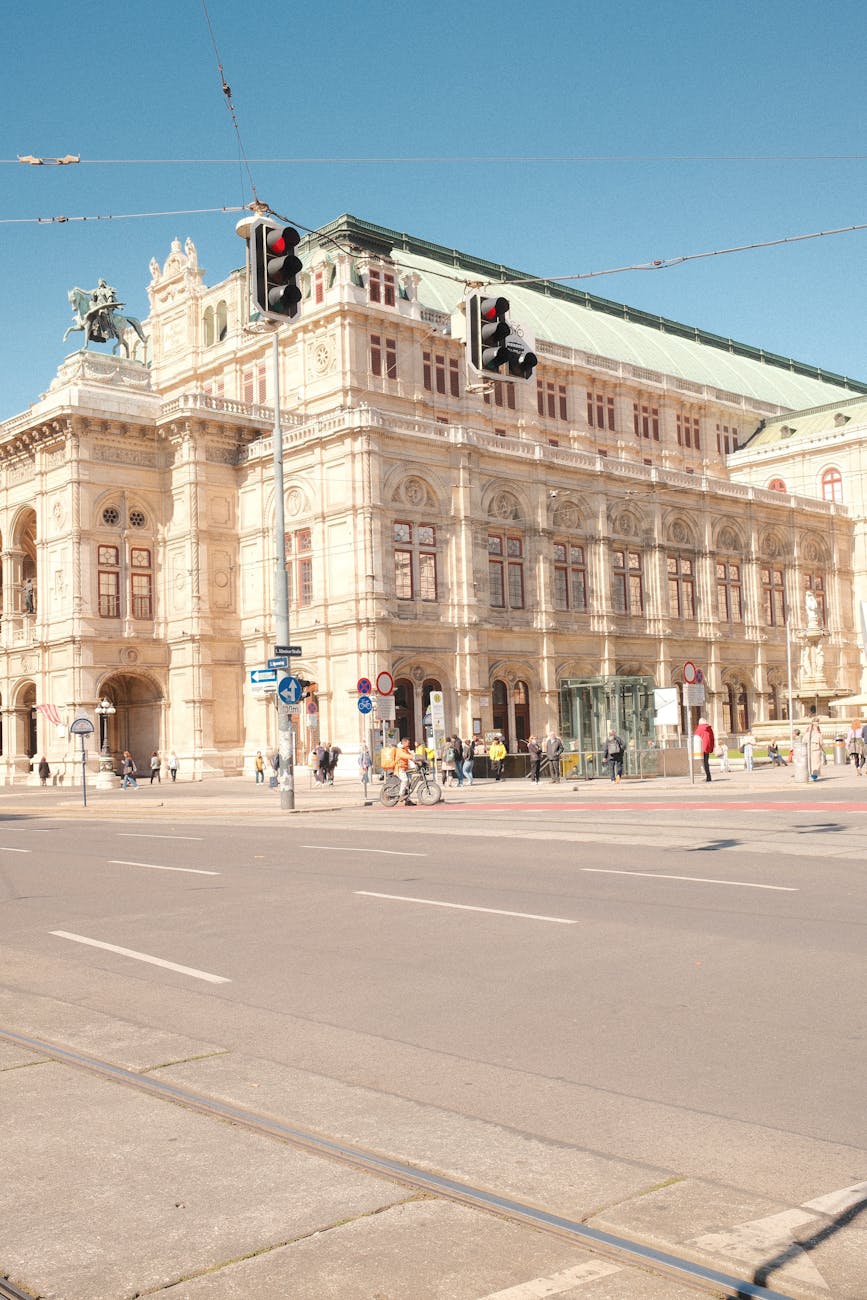
The Vienna State Opera — one of the world's most prestigious opera houses and the beating heart of Vienna's cultural life
- Why Vienna Is the World Capital of Classical Music
- Vienna State Opera (Wiener Staatsoper)
- Musikverein: The Golden Hall and World-Class Acoustics
- Volksoper: Vienna’s Second Opera House
- Classical Music Concerts Beyond the Big Venues
- Vienna Boys’ Choir (Wiener Sängerknaben)
- Theater and Performing Arts
- Practical Guide: Tickets, Dress Code & Etiquette
- Frequently Asked Questions
- Related Vienna Guides
- Planning Your Vienna Cultural Experience
This article contains advertising. Our booking links are routed through a partner that adds commission tracking automatically, so if you book through one we earn a commission from the provider, at no extra cost to you. It never affects what we recommend. Affiliate disclosure
The Vienna opera experience is unlike anything else on Earth. On any given evening, over 10,000 people attend live performances across the city’s concert halls, opera houses, and theaters — making Vienna not just a historical capital of classical music but its thriving, beating heart. This is the city where Mozart premiered “The Marriage of Figaro,” where Beethoven debuted his Ninth Symphony, where Mahler and Strauss conducted, and where the waltz became the soundtrack of an empire.
This guide covers everything you need to experience Vienna’s extraordinary cultural scene in 2026: the major venues, how to get tickets (including standing room for under €15), what to wear, proper etiquette, and insider strategies for seeing world-class performances without emptying your wallet. Whether you’re an opera devotee or a complete newcomer, Vienna makes classical music accessible, exciting, and utterly unforgettable.
Why Vienna Is the World Capital of Classical Music
Vienna’s musical supremacy isn’t a historical accident — it’s the product of centuries of imperial patronage, a culture that treated composers as celebrities, and institutions that have operated continuously for hundreds of years. The Habsburg court attracted the greatest musical talent in Europe: Haydn, Mozart, Beethoven, Schubert, Brahms, Bruckner, Mahler, and Strauss all lived and worked in Vienna, often simultaneously. The city didn’t just host these composers — it shaped them, challenged them, and preserved their legacies in venues that still operate today.
Modern Vienna takes this heritage seriously. The city spends more per capita on cultural funding than almost any other European capital. The Vienna Philharmonic consistently ranks as the world’s finest orchestra. The Vienna State Opera stages over 300 performances annually with virtually no repeats. And on New Year’s Day, over 50 million people worldwide tune in to watch the Vienna Philharmonic’s New Year’s Concert from the Golden Hall of the Musikverein — the most-watched classical music event on the planet.
What makes Vienna unique is that this isn’t museum culture — it’s living culture. Performances sell out, debates about conductors fill newspaper columns, and ordinary Viennese treat opera subscriptions as seriously as football season tickets elsewhere. The music isn’t preserved behind glass; it’s performed, argued about, and constantly renewed.
The numbers tell part of the story: Vienna has four professional opera and ballet companies, at least a dozen professional orchestras, and hundreds of concert series running simultaneously throughout the season. The Vienna State Opera alone employs over 1,000 people — singers, orchestra musicians, ballet dancers, chorus members, technicians, and craftspeople. The Musikverein, Konzerthaus, and dozens of smaller venues add thousands more performers to the ecosystem. On any given evening during the concert season (September–June), you can choose between 20 or more live classical music performances across the city.
This extraordinary density of musical activity creates a competitive environment that pushes quality to extraordinary levels. Singers and conductors consider a successful debut at the Staatsoper a career-defining achievement. Orchestra auditions attract hundreds of applicants from around the world. And audiences — who often hold subscriptions passed down through generations — are among the most knowledgeable and demanding in the world. A mediocre performance in Vienna doesn’t go unnoticed; it makes headlines.
Vienna State Opera (Wiener Staatsoper)
The Wiener Staatsoper is the crown jewel of Vienna’s cultural life and one of the most important opera houses in the world. Located on the Ringstraße in the heart of the city, the neo-Renaissance building opened in 1869 and has since staged tens of thousands of opera and ballet performances featuring the greatest singers, conductors, and dancers of every generation.
The State Opera runs an extraordinary repertory system: rather than performing one production for weeks (as in most opera houses), it rotates between 50–60 different operas and 20 ballet productions per season, performing nearly every evening from September through June. This means on any given night, you might see “La Traviata,” the next night “Don Giovanni,” and the next “Swan Lake” — all performed by world-class casts. Directors including Gustav Mahler, Richard Strauss, Herbert von Karajan, and Riccardo Muti have stood on its podium.
The building itself tells a dramatic story. The original 1869 structure was so fiercely criticized by the Viennese public — who considered it too low, too squat, and insufficiently grand — that one of its architects, Eduard van der Nüll, hanged himself, and the other, August Sicard von Sicardsburg, died of a heart attack two months later. Emperor Franz Joseph, shaken by the tragedy, reportedly never again publicly expressed an opinion about architecture. Ironically, the opera house became beloved within a generation.
During World War II, Allied bombing destroyed much of the building in 1945. The reconstruction, completed in 1955, preserved the grand staircase, the Schwind Foyer, and the Tea Salon from the original structure while modernizing the stage technology and auditorium. The reopening on November 5, 1955, with Beethoven’s “Fidelio” conducted by Karl Böhm, was a powerful symbol of Austria’s rebirth and sovereignty — it’s still celebrated as a defining moment in Austrian cultural history.
Today, the auditorium seats 1,709 with an additional 567 standing room places. The stage is one of the largest in Europe, with sophisticated machinery that allows rapid scene changes between the nightly repertory rotations. The orchestra pit accommodates up to 110 musicians — the members of the Vienna State Opera Orchestra, who simultaneously serve as the Vienna Philharmonic for symphony concerts at the Musikverein.
Attending a Performance
Tickets range from approximately €15 for restricted-view seats to over €250 for prime stalls (Parkett). The opera’s website releases tickets about two months before each performance, and popular shows sell out quickly. However, Vienna offers one of the great cultural bargains in the world: standing room tickets (Stehplatz) are sold for just €13–18 on the day of performance, starting 80 minutes before curtain at the standing room box office on the building’s west side (Operngasse entrance).
Standing room has its own subculture and etiquette. Regular “Stehplatzler” arrive 2–3 hours early for prime spots in the Galerie (top level, best acoustics) or Parterre (ground floor, closest to the stage). Once inside, you’ll claim your spot by tying a scarf to the railing — a charming Viennese tradition. The standing areas have bars to lean against and the sightlines are generally excellent, particularly from the Galerie.
Dress code: Smart casual is the minimum — men typically wear a jacket (tie optional), women a dress or elegant separates. Opening nights and premieres call for formal attire (dark suits, evening dresses). You’ll see everything from tuxedos to clean jeans, but making an effort is appreciated and adds to the experience. Jeans and sneakers won’t get you turned away, but you may feel underdressed.
Etiquette: Arrive at least 20 minutes before curtain — latecomers are not admitted until the first interval. Photography and recording are strictly forbidden during performances. Applause follows each act; shouting “Bravo!” (male performer), “Brava!” (female), or “Bravi!” (ensemble) is enthusiastically encouraged. Booing, while rare, is also part of the tradition — Viennese audiences are passionate and opinionated.
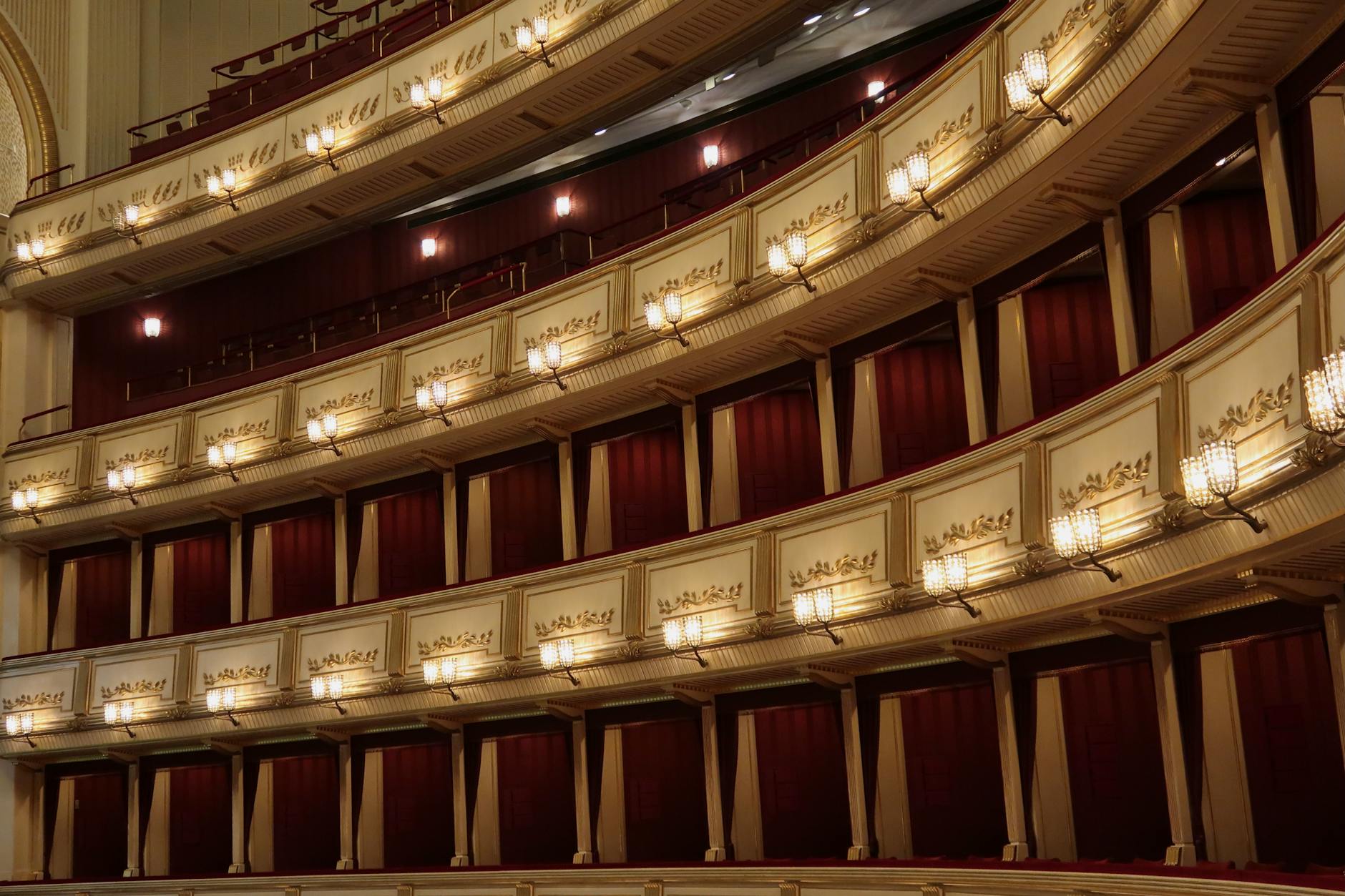
Guided Tours
If you can’t attend a performance, the State Opera offers guided tours lasting approximately 40 minutes (€13 for adults). Tours run daily at varying times — check the website for the current schedule. You’ll see the main auditorium, the Gustav Mahler Hall, the Tea Salon, and the grand marble staircase. Tours are offered in German and English, with occasional French, Spanish, Italian, and Japanese sessions.
Live Streaming on the Operngasse
During the summer months (May–June), selected performances are live-streamed for free on a large screen on Herbert-von-Karajan-Platz outside the opera house. Bring a folding chair or blanket, grab a Würstel from a nearby stand, and enjoy world-class opera under the open sky — one of Vienna’s most magical free experiences.
Musikverein: The Golden Hall and World-Class Acoustics
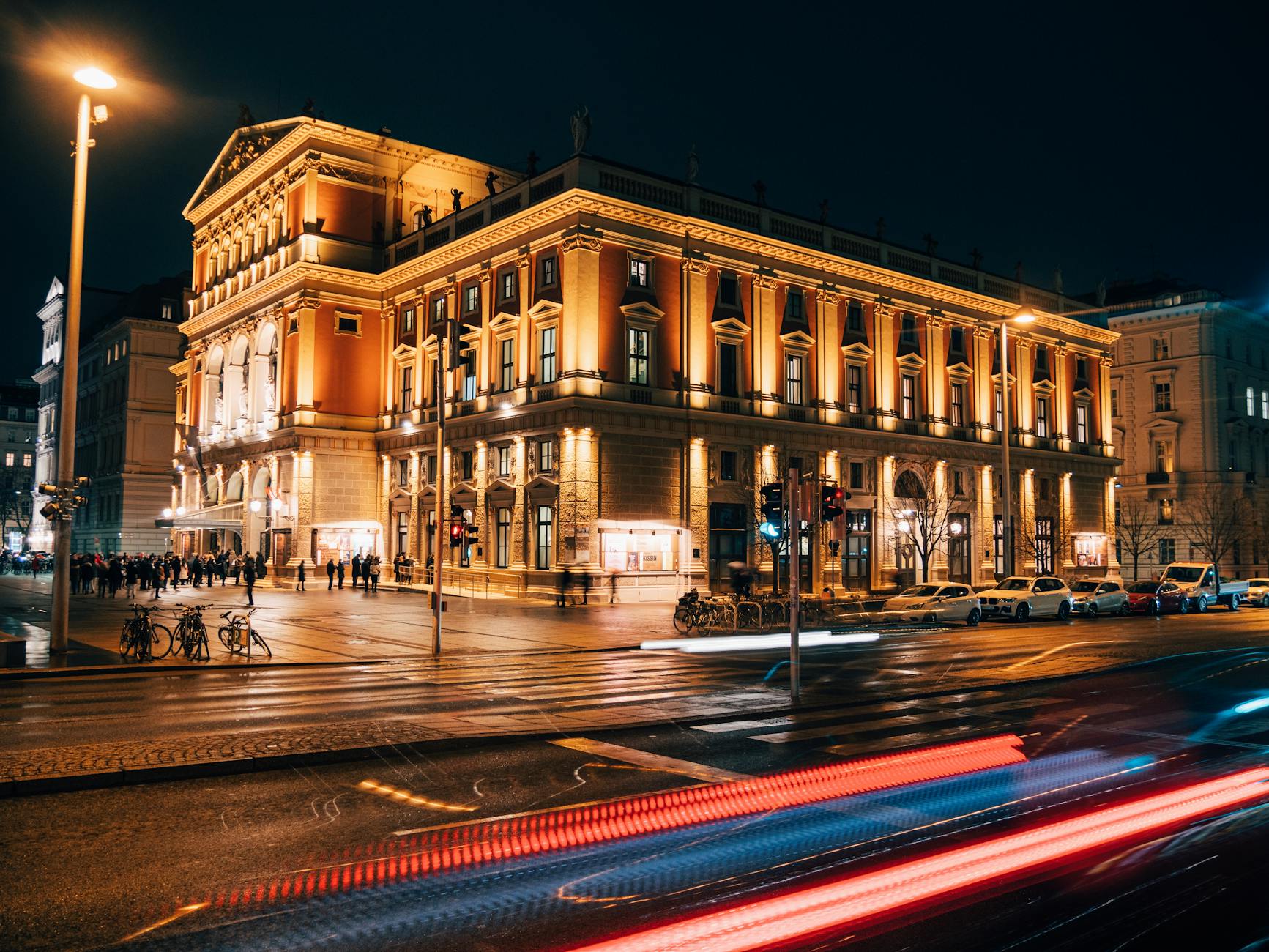
The Musikverein is not an opera house but a concert hall — and arguably the most acoustically perfect room ever built. Opened in 1870, the Großer Saal (Great Hall), universally known as the Golden Hall, is famous for its warm, rich sound that recording engineers and conductors consider unmatched. The secret lies in its “shoebox” shape, wooden floors that act as a resonating chamber, and the narrow proportions that create natural reverberation without electronic enhancement.
The Golden Hall is the home of the Vienna Philharmonic, which performs its subscription concerts here from October through June. The Philharmonic is unique among the world’s great orchestras: its members are drawn exclusively from the Vienna State Opera orchestra, it has no permanent chief conductor (guest conductors are invited), and it self-governs democratically — every major decision is voted on by the musicians.
Beyond the Golden Hall, the Musikverein complex contains five additional performance spaces added during a major expansion completed in 2004. The Brahms-Saal (600 seats) hosts chamber music and recitals in a warm, intimate setting. The four new underground halls — Glass Hall, Metal Hall, Stone Hall, and Wood Hall — each have distinct acoustic characters suited to different repertoire, from contemporary music to solo recitals. Together, the six halls host over 800 events annually, making the Musikverein one of the most active concert venues in the world.
The Golden Hall’s acoustics have been studied by scientists and engineers for over a century. The room’s magic comes from a combination of factors: the parallel walls (creating strong lateral reflections that envelop listeners in sound), the wooden floor built over a hollow space (acting as a giant resonating chamber), the caryatid sculptures and ceiling decorations (scattering sound waves into a rich diffusion), and the relatively narrow proportions (ensuring every seat receives direct and reflected sound in near-perfect balance). Musicians describe playing here as an almost physical experience — the room seems to breathe with you, supporting and amplifying every nuance.
The New Year’s Concert
The Vienna Philharmonic’s New Year’s Concert (Neujahrskonzert) is the most famous classical music event in the world. Broadcast to over 90 countries, it features a program of Strauss waltzes and polkas performed in the flower-bedecked Golden Hall. Tickets are allocated by lottery a year in advance, and even standing room costs several hundred euros. If you’re in Vienna on January 1st, large screens in public spaces broadcast the concert live.
Attending a Concert
Regular concert tickets range from €40 to €180 depending on seating and performer. Standing room tickets are available for many concerts at €8–15 — extraordinary value for hearing the Vienna Philharmonic in the world’s best acoustic space. The Musikverein also hosts the Mozart Orchestra concerts with musicians in period costumes, performing works by Mozart and Strauss — tourist-oriented but genuinely enjoyable and a good introduction to Viennese classical music (tickets from €42).
Practical information: Located at Musikvereinsplatz 1, a 5-minute walk from Karlsplatz (U1/U2/U4). The building also contains four smaller halls used for chamber music, recitals, and contemporary performances. Guided tours are available on select days (€9).
Volksoper: Vienna’s Second Opera House
While the Staatsoper gets the international headlines, the Volksoper Wien (People’s Opera) holds a special place in Viennese hearts. Founded in 1898, it specializes in operetta — the distinctly Viennese art form that combines opera singing with spoken dialogue, dance, and romantic comedy. Think Johann Strauss’s “Die Fledermaus” or Franz Lehár’s “The Merry Widow” — lighter than grand opera but performed with the same musical excellence.
The Volksoper also stages musicals, ballet, and more accessible operas, all performed in German (unlike the Staatsoper, which performs in original languages with subtitle screens). With over 300 performances per season, an ensemble of 150 singers and 100 dancers, and ticket prices starting lower than the Staatsoper, the Volksoper is where many Viennese first fall in love with the performing arts.
Practical information: Tickets range from €8 to €140. Located at Währinger Straße 78 (U6 Währinger Straße/Volksoper). The atmosphere is noticeably more relaxed than the Staatsoper — families with older children are welcome, and the dress code is less formal. Standing room tickets are €5–7.
Operetta is often dismissed as “opera lite,” but that’s a misunderstanding. At its best — and the Volksoper performs it at its best — operetta is a sophisticated art form that demands singers who can act, dance, and deliver spoken comedy with impeccable timing. The genre emerged in mid-19th-century Vienna as a reaction to the perceived stuffiness of grand opera, blending catchy melodies, witty libretti, and social satire into productions that were simultaneously entertaining and artistically ambitious.
The Volksoper’s annual production of “Die Fledermaus” on New Year’s Eve is one of Vienna’s most cherished traditions — a raucous, champagne-fueled celebration that perfectly embodies the Viennese talent for combining high culture with Gemütlichkeit (cozy conviviality). Other signature productions include Lehár’s “The Merry Widow,” Kálmán’s “Die Csárdásfürstin,” and — increasingly — American and British musicals performed in German translation.
Classical Music Concerts Beyond the Big Venues
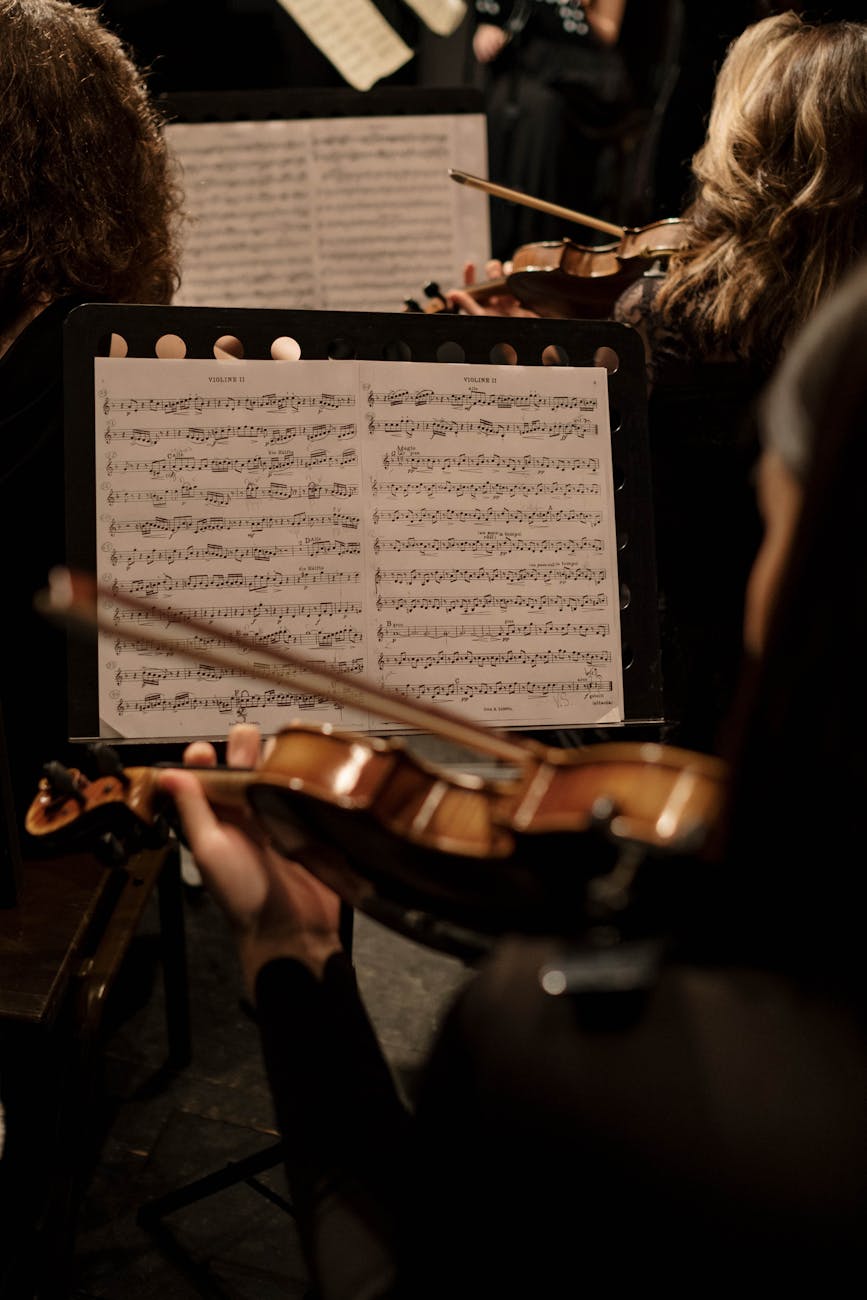
Wiener Konzerthaus
The Konzerthaus opened in 1913 and rivals the Musikverein as a concert venue, though with a broader programming focus. Its three halls host everything from the Vienna Symphony Orchestra to jazz, world music, and contemporary classical. The Große Saal (Great Hall) seats 1,840 and has excellent acoustics, while the Mozart-Saal and Schubert-Saal offer more intimate settings for chamber music and recitals. Programming tends to be more adventurous than the Musikverein — you’re as likely to hear Bartók or Shostakovich as Mozart.
Church Concerts
Vienna’s churches host some of the city’s most atmospheric musical performances. Karlskirche is the most popular venue, with regular performances of Vivaldi’s “Four Seasons,” Mozart’s Requiem, and other baroque and classical works in an incomparably beautiful setting (tickets typically €25–39). The Augustinerkirche (next to the Hofburg) hosts a celebrated High Mass with full orchestra and choir every Sunday at 11am — free to attend and musically outstanding. The Peterskirche on Petersplatz offers free organ concerts several times weekly.
Schönbrunn Palace Concerts
The Schönbrunn Palace Orchestra performs evening concerts in the Orangery, the very room where Mozart and Salieri once competed. The program features Mozart and Strauss works performed by musicians in period costumes, with opera singers and ballet dancers. Tourist-oriented, yes — but the setting is magical and the musical quality is high. Tickets start at €55 and include an optional dinner package. Performances run year-round, usually at 8:30pm.
Kursalon Wien
The Kursalon in the Stadtpark has been hosting Strauss concerts since 1868 — Johann Strauss II himself performed here. Today, the Salonorchester Alt Wien performs nightly “Strauss & Mozart” concerts in the ornate Renaissance Revival hall. Like Schönbrunn, these are tourism-friendly but musically solid, with dinner-concert packages available (from €69 concert only, €99 with dinner).
Church concerts occupy a special niche in Vienna’s musical landscape. The ecclesiastical settings add an emotional dimension that concert halls can’t replicate — hearing Mozart’s Requiem in a candlelit baroque church, with the music echoing off marble and frescoes, creates an experience that’s as much spiritual as musical. The Minoritenkirche hosts regular chamber concerts in a stunning Gothic interior with excellent acoustics. The Ruprechtskirche, Vienna’s oldest church (dating from the 740s), offers intimate concerts where performers and audiences share a space barely larger than a living room.
For contemporary classical music, the Arnold Schoenberg Center (near Karlsplatz) documents the legacy of Vienna’s most revolutionary composer and hosts performances of Second Viennese School works and new music. The Porgy & Bess jazz club in the Innere Stadt programs world-class jazz, improvised music, and cross-genre performances in a sophisticated basement venue. And the RadioKulturhaus (ORF) offers an eclectic program of concerts, readings, and broadcasts in a purpose-built studio-concert space — often free or very affordable.
Vienna Boys’ Choir (Wiener Sängerknaben)
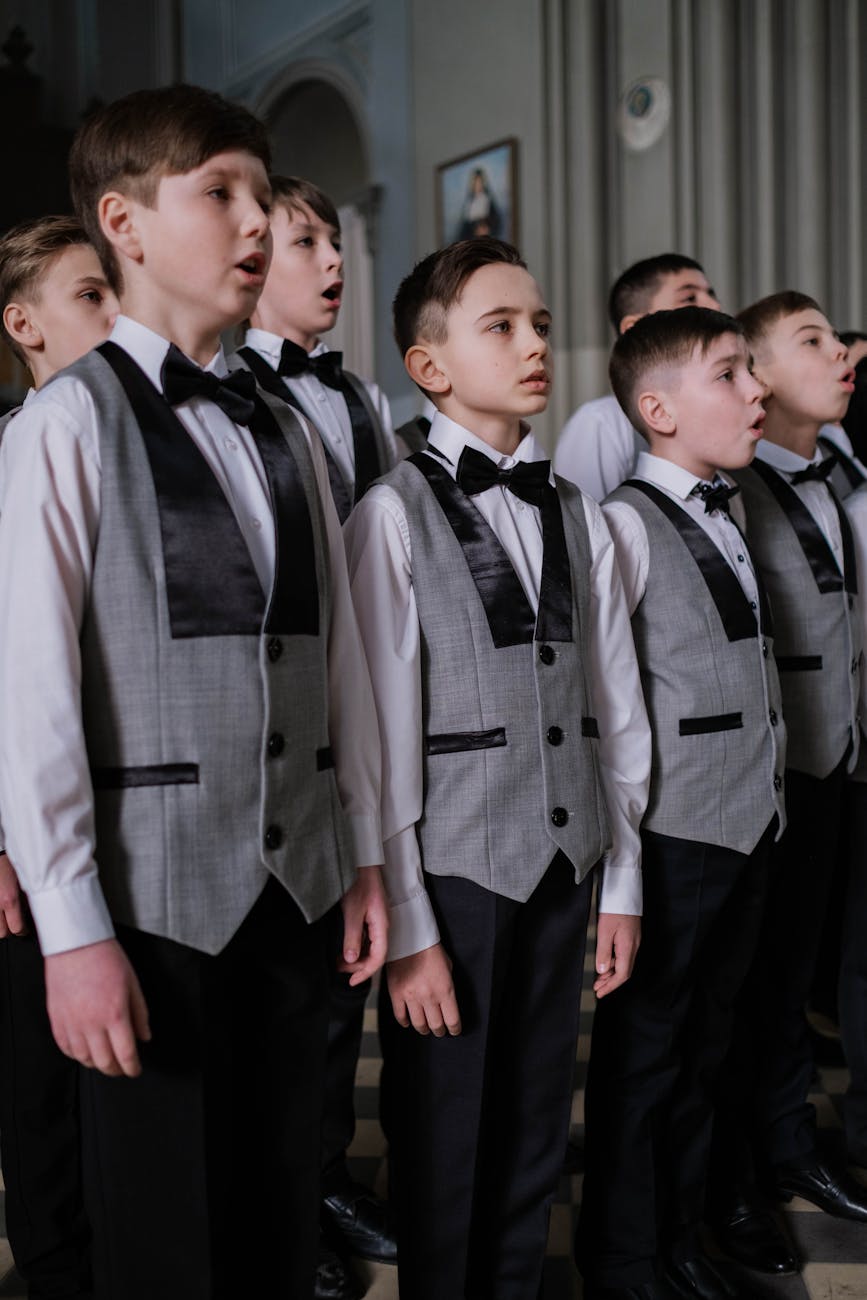
The Vienna Boys’ Choir is one of the oldest and most famous musical institutions in the world, founded in 1498 by Emperor Maximilian I to sing at imperial court masses. Today, approximately 100 choristers aged 10–14 are divided into four touring choirs (named after Bruckner, Haydn, Mozart, and Schubert), performing around 300 concerts annually to a combined audience of half a million people.
The primary way to hear the Vienna Boys’ Choir in Vienna is at the Sunday Mass in the Imperial Chapel (Hofburgkapelle), held at 9:15am from September through June. The choir sings alongside members of the Vienna Philharmonic — a musical combination that’s existed since the 15th century. Seats are free but must be reserved well in advance (usually 6–8 weeks) through the Hofburgkapelle website. Standing room is available on a first-come basis — arrive by 8:30am.
The choir also performs at the MuTh concert hall in the Augarten Palace (their home base), with a varied program that includes classical, pop, and world music arrangements. These Friday afternoon performances are easier to book than the Sunday Masses (tickets €36–60).
Theater and Performing Arts
Burgtheater (Imperial Court Theatre)
The Burgtheater on the Ringstraße is the most prestigious German-language theater in the world and Austria’s national theater. Founded in 1741 by Empress Maria Theresa, it presents a repertoire of classic and contemporary drama performed by one of Europe’s finest permanent ensembles. Even if your German isn’t strong enough for the plays, the building itself — with its grand staircase frescoes by Gustav and Ernst Klimt — is worth a guided tour (€9, offered on specific days).
Theater an der Wien
The Theater an der Wien on Linke Wienzeile has an extraordinary history: Beethoven premiered his Third Symphony here, and “The Magic Flute” had its first performance in the original theater on this site. Today, it operates as Vienna’s third opera house, specializing in baroque opera, Handel, and contemporary works with innovative staging. It’s smaller and more intimate than the Staatsoper (1,000 seats), with tickets from €19 to €159.
Theater in der Josefstadt
Vienna’s oldest continuously operating theater (since 1788), the Theater in der Josefstadt stages high-quality German-language drama and comedy in an intimate, beautifully restored 600-seat house. Beethoven composed the overture “The Consecration of the House” for its reopening in 1822. It’s less tourist-oriented than the Burgtheater but beloved by Viennese theatergoers for its consistently excellent productions.
Vienna’s Musical Theater Scene
Beyond classical theater, Vienna has a thriving musical theater scene centered at the Raimund Theater and Ronacher, both operated by Vereinigte Bühnen Wien (VBW). The Raimund Theater (1,200 seats, in the 6th district) typically hosts long-running international productions — past hits include “Elisabeth” (a Viennese-originated musical about Empress Sisi that became a global phenomenon), “Mozart!,” and “Rebecca.” The Ronacher (1,000 seats, near Schwedenplatz) alternates between musicals and variety shows. Tickets for musicals range from €25 to €140.
What many visitors don’t realize is that Vienna is a major creator of original musicals, not just a host for imported productions. “Elisabeth,” “Mozart!,” “Tanz der Vampire” (Dance of the Vampires), and “Rudolf — Affaire Mayerling” all premiered in Vienna before touring internationally. These shows tend to be darker, more psychologically complex, and more musically ambitious than their Broadway or West End counterparts — reflecting Vienna’s characteristic blend of sophistication and emotional intensity.
Practical Guide: Tickets, Dress Code & Etiquette
How to Get Affordable Tickets
Standing room is Vienna’s great equalizer. The State Opera sells 567 standing room tickets per performance (€13–18), the Musikverein offers them for €8–15, and the Volksoper for €5–7. For the State Opera, standing room tickets are available online from 10am on the day of performance and at the box office from 80 minutes before curtain. Online tickets sell out within minutes for popular productions — set an alarm and be ready at 10:00am sharp.
Last-minute tickets: The Staatsoper and Volksoper offer unsold seats at reduced prices through their box offices on the day of performance. The Kulturpass and Hunger auf Kunst und Kultur programs provide free tickets to residents who can demonstrate financial hardship — a testament to Vienna’s belief that culture should be accessible to all.
Under 27? Both the Staatsoper and the Volksoper offer heavily discounted tickets for audience members under 27. The Staatsoper’s “U27” program sells remaining tickets for €20–25 from 9pm on the evening before the performance — premium seats that normally cost €150+ become available at a fraction of the price.
What to Wear
The question every visitor asks — and the answer is simpler than you think. For the Staatsoper and Musikverein: smart casual minimum (collared shirt and trousers for men, a dress or smart separates for women). You won’t be turned away in clean jeans, but you’ll feel more comfortable dressed up. For opening nights and premieres: formal attire (dark suit or tuxedo, cocktail or evening dress). For the Volksoper, Konzerthaus, and church concerts: neat casual is perfectly fine. For summer outdoor screenings: anything goes.
Concert Etiquette Quick Guide
Silence phones completely (vibrate mode is audible in the Golden Hall’s acoustics). No photography or recording during performances — most venues enforce this strictly. Applause comes after the final movement of a piece, not between movements (a common newcomer mistake that draws disapproving glances). At the opera, applause follows each act. Bravo/Brava calls are warmly welcomed. Coughing is inevitable but try to suppress it during quiet passages — the Viennese take this seriously. Intermissions (Pause) are social events — head to the bar for a glass of Sekt (sparkling wine) and enjoy the people-watching.
Seasonal Festivals and Special Events
Vienna’s cultural calendar peaks during several annual festivals. The Wiener Festwochen (Vienna Festival, May–June) is the city’s premier multi-arts festival, presenting opera, theater, dance, and music performances across dozens of venues — including site-specific works in unusual locations. The ImPulsTanz festival (July–August) is one of Europe’s most important contemporary dance events, with performances, workshops, and installations throughout the city.
The Vienna Jazz Festival (late June–early July) brings international jazz artists to outdoor stages and intimate clubs across the city. The Musikfilm Festival on Rathausplatz (July–August) screens opera films and concerts on a giant outdoor screen with free admission — paired with an international food market, it’s one of Vienna’s most popular summer traditions, drawing 700,000 visitors annually.
In December, the Opera Ball (Opernball) transforms the State Opera into the world’s most glamorous ballroom. Over 5,000 guests in white tie and ball gowns dance the night away on the stage and in the auditorium — tickets start at €350, and the event is broadcast live on Austrian television. Even if you can’t attend, the spectacle of watching Vienna’s high society arrive in their finest is a memorable experience.
Frequently Asked Questions
Can I see opera in Vienna without speaking German?
Absolutely. The State Opera performs in the original language of each opera (Italian, German, French, etc.) with subtitle screens in seven languages built into every seat. The Volksoper performs in German, but the emotional and visual storytelling transcends language barriers. Most concert performances require no language comprehension at all.
What’s the best way to experience Vienna’s music scene?
For a first visit, attend one performance at the State Opera (standing room if budget is tight) and one concert at the Musikverein or a church. This gives you the grandeur of opera in one of the world’s great houses and the acoustic perfection of Vienna’s concert halls. Add a Sunday Mass at the Hofburgkapelle with the Boys’ Choir if timing works.
How far in advance should I book?
For specific productions with star performers: 2–3 months ahead. For general performances: 2–4 weeks is usually fine except during peak season (December, Easter, May–June). Standing room is always available day-of. Vienna Boys’ Choir Masses: book 6–8 weeks in advance for seated tickets. New Year’s Concert: enter the lottery a year ahead (January–February for the following year’s concert).
Is the Vienna Pass worth it for cultural events?
The Vienna Pass covers guided tours of the State Opera and some concert venues, but it does not include performance tickets. For actual concerts and opera, you’ll need to purchase tickets separately. The Pass is better value for museums and sightseeing than for performing arts.
Whichever house you choose, the buying is the part that goes wrong — and it goes wrong in predictable ways. Our guide to Vienna concert tickets ranks the places to buy, explains under-27 and standby pricing, and walks through the standing-room process step by step.
Related Vienna Guides
- Gustav Klimt in Vienna
- Vienna Secession Building & Art Nouveau Trail
- MuseumsQuartier Vienna
- Vienna Theater & Performance Guide
- Vienna Street Art & Contemporary Culture Scene
- Vienna History & Architecture
- Vienna Nightlife & Entertainment
Planning Your Vienna Cultural Experience
If you only have one evening: Attend a performance at the Vienna State Opera — even standing room delivers a world-class experience in a magnificent setting. Check the schedule at wiener-staatsoper.at and choose based on the opera rather than the cast.
For a complete cultural weekend: Friday evening at the State Opera, Saturday afternoon Musikverein tour followed by an evening concert, Sunday morning Boys’ Choir Mass at the Hofburgkapelle, and Sunday evening at the Volksoper for operetta.
On a budget: Standing room at the Staatsoper (€13–18), free organ concert at Peterskirche, free Sunday Mass at Augustinerkirche, and the free summer outdoor screenings at Karlsplatz — four world-class musical experiences for under €20 total.
Vienna doesn’t treat classical music as a relic to be preserved — it treats it as a living art form to be experienced, debated, and shared. The city has been the center of the musical world for 300 years, and on any given evening, in any of its concert halls and opera houses, you’ll hear why.
Exploring more of Vienna? See our guides to planning your Vienna trip, 101 things to do, top attractions and sightseeing, and where to eat. Traveling on a budget? Our Vienna budget guide has you covered.