Vienna’s 1st district — the Innere Stadt — is the city’s UNESCO-listed historic core. It’s where Stephansdom stands at the geographic center, where the Hofburg complex sprawls over six full city blocks, where the State Opera, the Albertina, the Imperial Treasury, and the Spanish Riding School sit within fifteen minutes’ walk of each other, and where Vienna’s most famous hotels (Sacher, Imperial, Bristol, Park Hyatt) all hold their addresses. If you visit Vienna for fewer than three days, you’ll spend nearly all of them inside the Innere Stadt.
This is the complete Innere Stadt Vienna guide: history, what to see, where to stay, where to eat, walking routes, transit, and the trade-offs of basing yourself in Vienna’s most central but priciest district. Pair with our where to stay in Vienna for a broader neighborhood comparison.
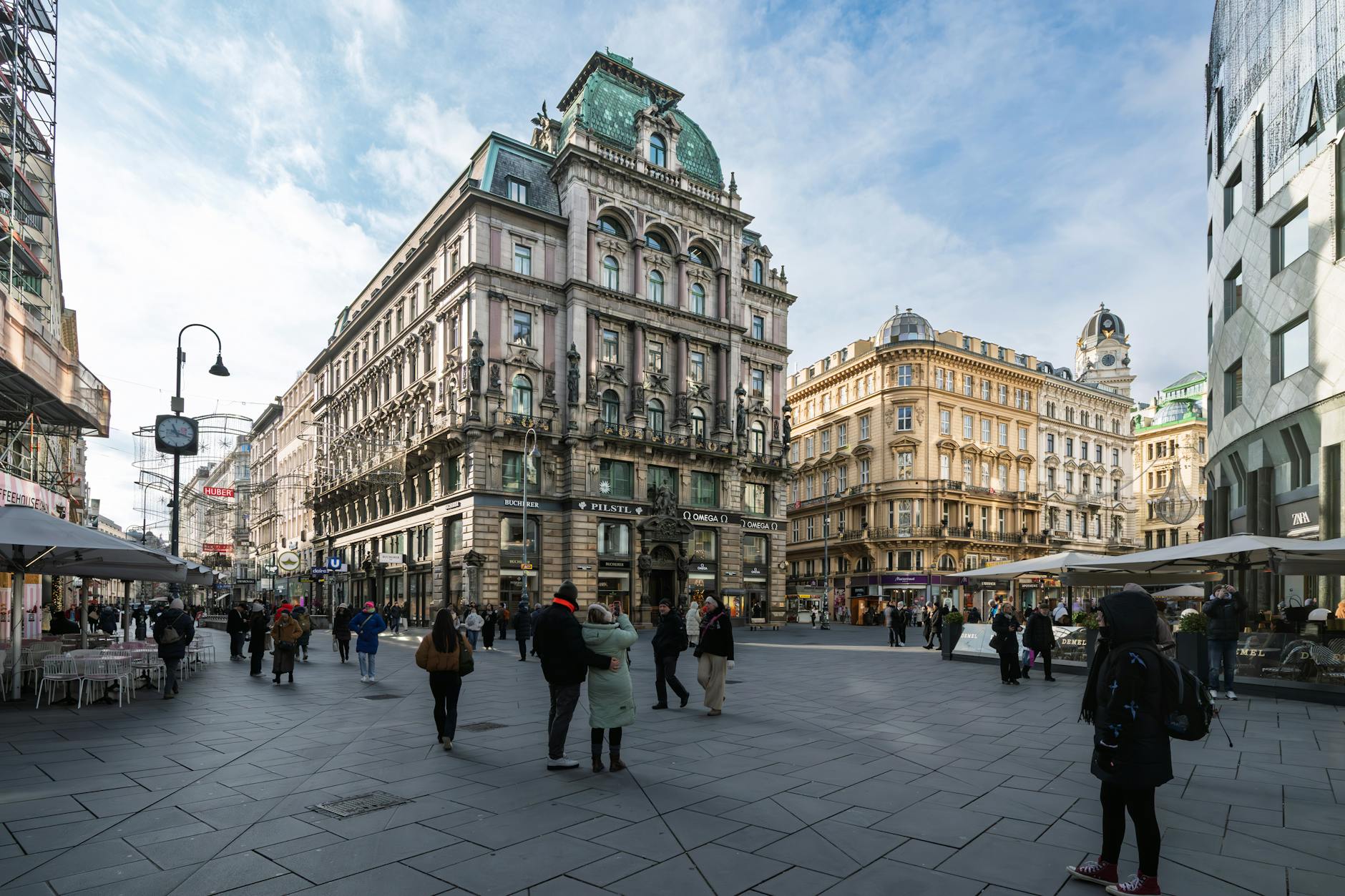
Innere Stadt at a Glance
| Best for | First-time visitors, sightseeing, walking-everywhere convenience |
|---|---|
| Vibe | UNESCO-listed historic center, grand boulevards, marble cafés |
| Hotel range | €140–€800/night (highest in Vienna) |
| Best transit | U1, U3, U4 + 4 tram lines all converge at Stephansplatz |
| Walking distance to major sights | 5–15 minutes to almost everything except Schönbrunn |
| Drawbacks | High prices, fewer locals, touristy in summer |
What Makes the Innere Stadt Special
The Innere Stadt was Vienna’s medieval walled city — the entire district is bounded by the 5.3-km Ringstrasse, the boulevard built in the 1860s after Emperor Franz Joseph ordered the demolition of the city walls. The 1.5-km-across district contains the highest concentration of UNESCO-listed buildings in Europe outside Florence. It’s the Vienna travel-poster Vienna — the imperial palaces, the Gothic cathedral, the marble coffeehouses, and the 19th-century facades.
The Top 12 Things to Do in Innere Stadt
1. Stephansdom (St. Stephen’s Cathedral)
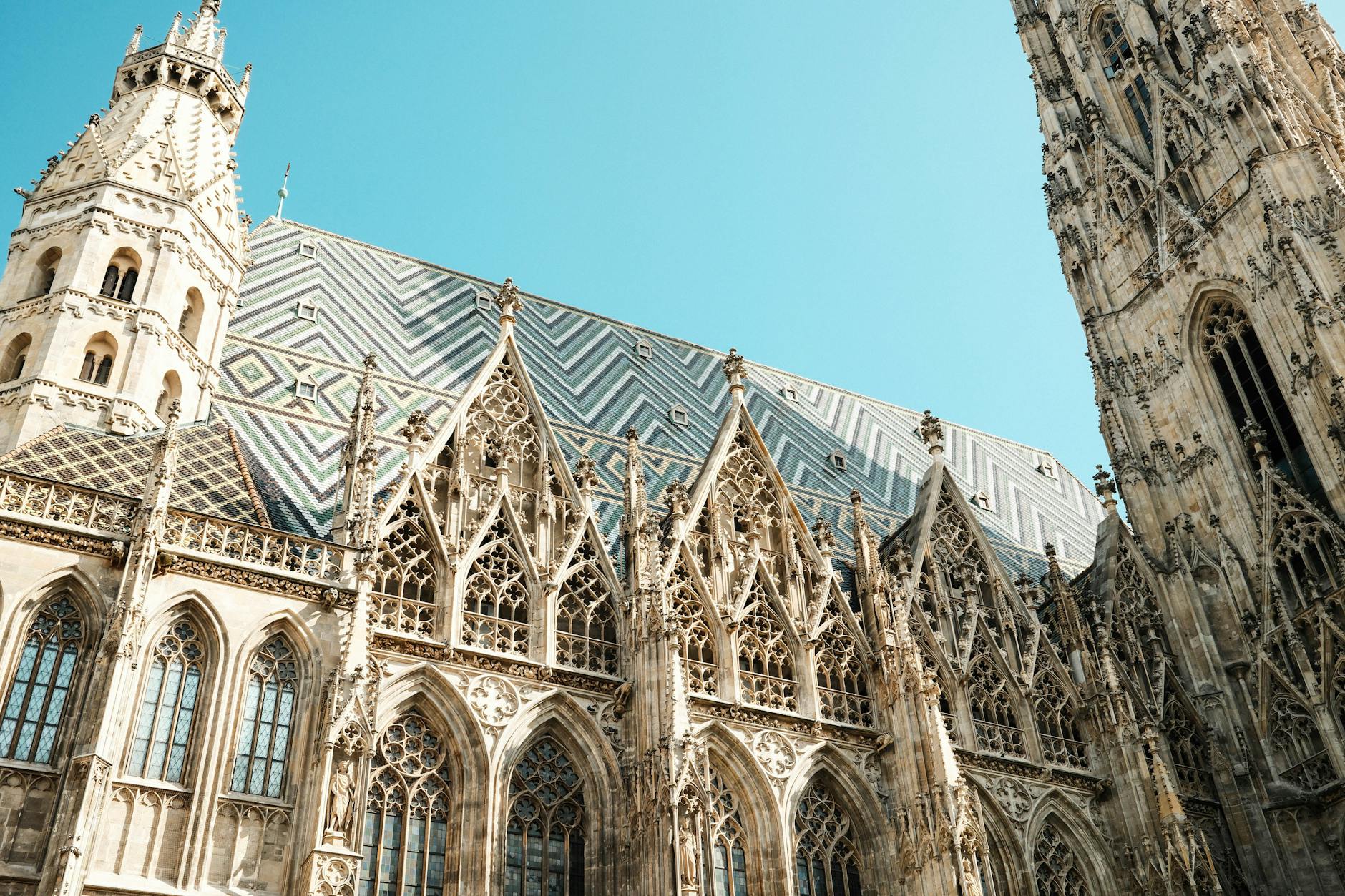
Stephansdom stands at the geographic center of the 1st district. The interior is free; the audio tour, North Tower elevator (€6.50), South Tower stair climb (€5.50, 343 stairs), and catacombs (€6.50) all charge separately. Best at 9 am before tour groups arrive.
2. The Hofburg Imperial Palace Complex
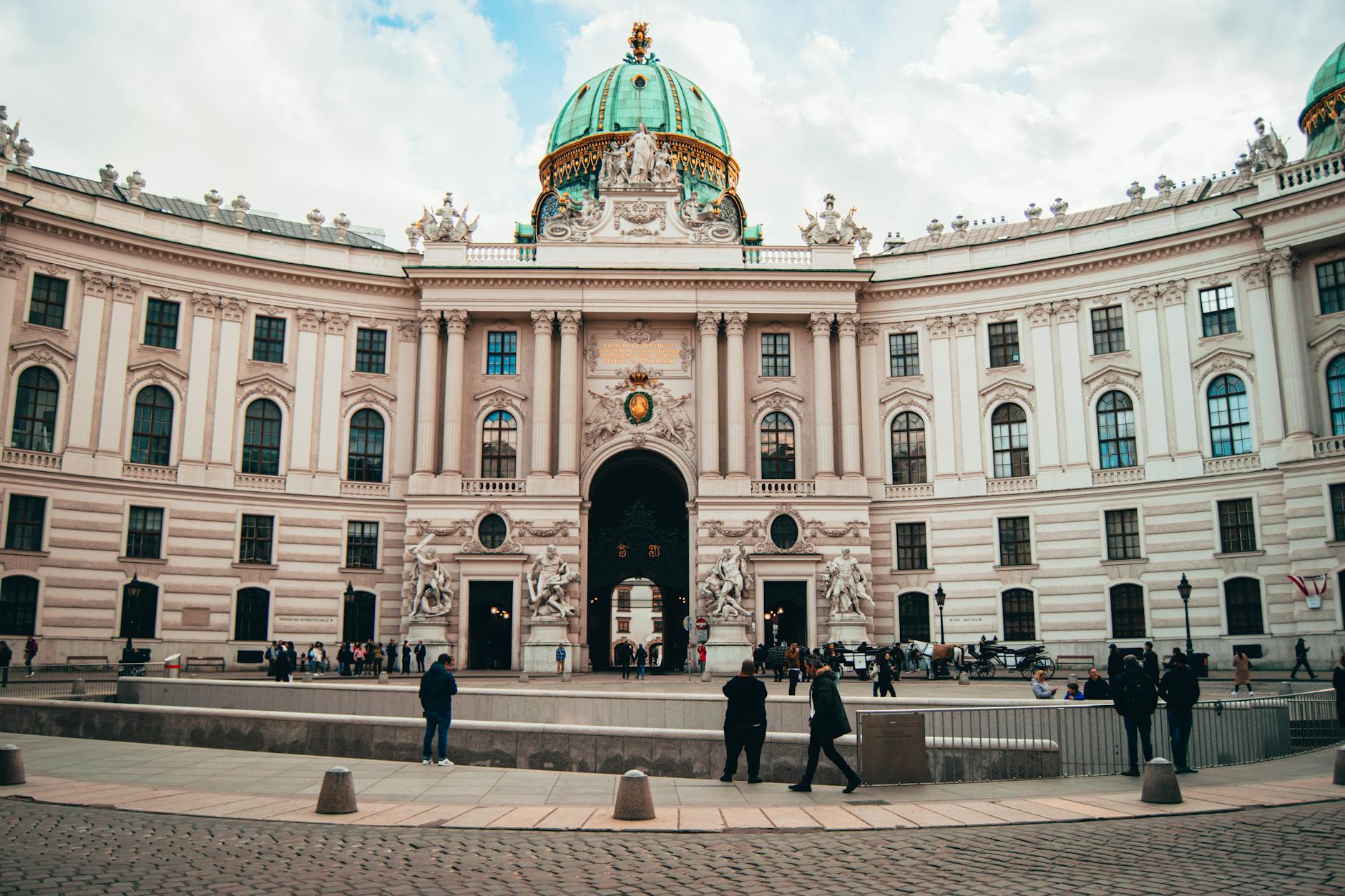
The Hofburg sprawls over a 240,000 m² complex with the Imperial Apartments, Sisi Museum, Imperial Treasury (Schatzkammer), Spanish Riding School, Austrian National Library, and several smaller museums. Buy the combo ticket; allow at least half a day.
3. The Albertina Museum
One of Europe’s most important graphic-arts museums plus a strong Modernist collection (Monet, Klimt, Picasso). The state apartments alone justify the visit. €19.
4. Spanish Riding School Performance or Morning Exercise
The Lipizzaner stallions train and perform inside the historic Winter Riding School. Morning exercise sessions (Tuesday–Friday in season) cost €15–€25 and are kid-friendly. Full performances cost €35–€225 and book months ahead.
5. Vienna State Opera (Wiener Staatsoper)
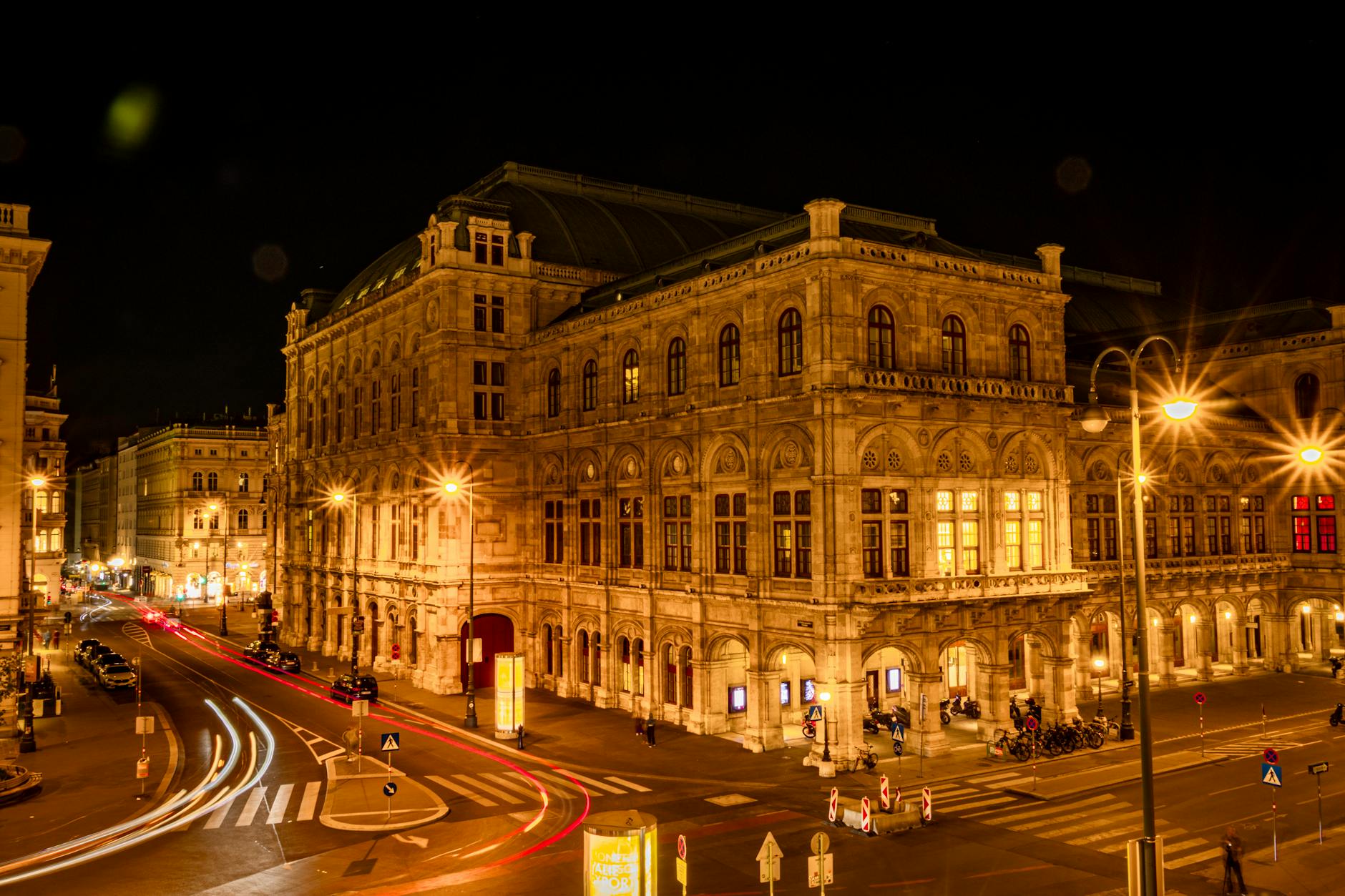
One of the world’s great opera houses, on the southern edge of the 1st district. €15 standing-room tickets sell 80 minutes before each performance at the Operngasse side entrance. Detail in our Vienna culture and arts.
6. The Graben & Kohlmarkt
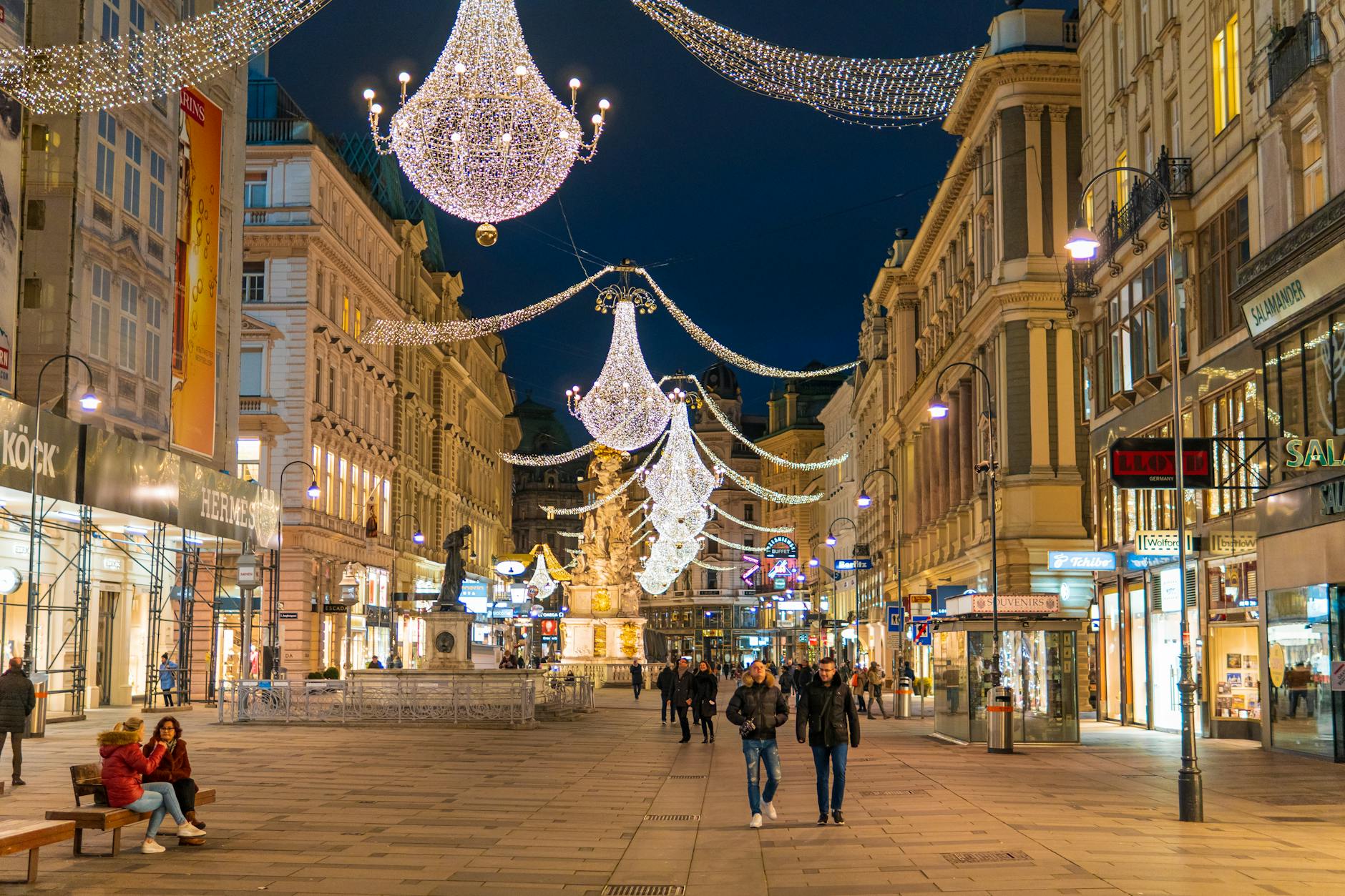
Vienna’s grand pedestrian shopping boulevards. Graben features the 1693 Pestsäule (Plague Column) and Peterskirche; Kohlmarkt is Vienna’s luxury mile (Cartier, Dior, Chopard, Tiffany, Demel). Even non-shoppers should walk this stretch.
7. A Long Coffeehouse Afternoon
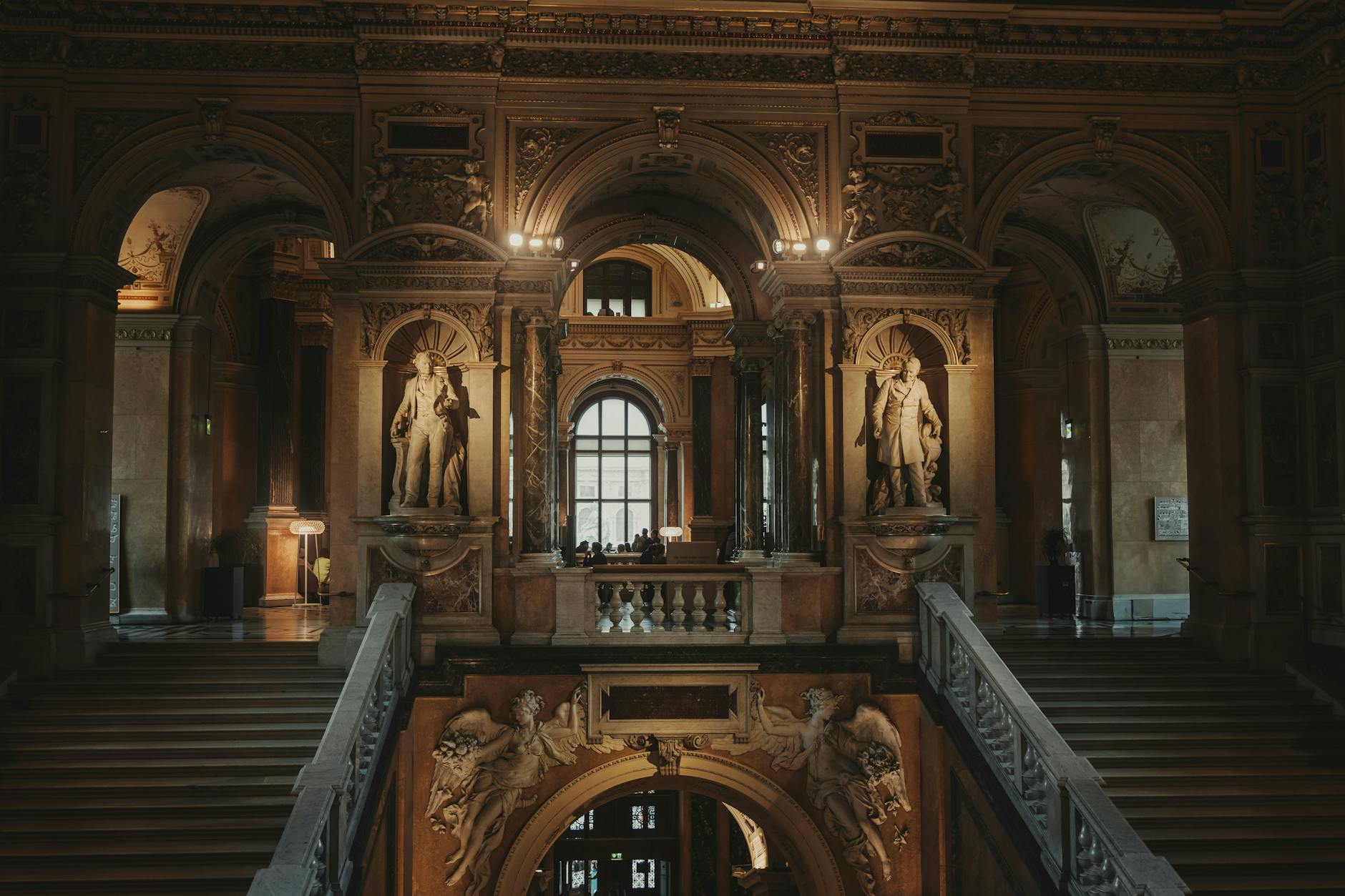
The 1st district has more historic coffeehouses than any other Vienna neighborhood. Top picks: Café Central (Gothic vaulting, touristy but worth it once), Café Hawelka (intimate, dim, artistic), Café Bräunerhof (Thomas Bernhard’s regular), Demel (1786 court confectioner), Café Sacher (original Sachertorte), Café Diglas, and Café Landtmann (next to the Burgtheater).
8. The Inner City Pedestrian Network
Most of the 1st district is car-free or low-traffic. The pedestrian streets — Graben, Kohlmarkt, Kärntner Straße, the Bauernmarkt area — connect smoothly. Walk from Stephansplatz to the Opera in 7 minutes; to the Hofburg in 5 minutes.
9. Hidden Inner Courtyards (Pawlatschen)
The Hofburg has at least eight inner courtyards — Innerer Burghof, Schweizerhof, Heldenplatz, In der Burg. The Heiligenkreuzerhof off Schönlaterngasse is one of the most atmospheric tucked-away medieval squares. Most visitors miss them.
10. The Mozart Apartment (Mozarthaus Vienna)
Mozart lived here 1784–1787, composing Figaro. €13. Allow 90 minutes.
11. The Hofburg Treasury (Schatzkammer)
The Imperial Treasury holds the 1,000-year-old Imperial Crown of the Holy Roman Empire and the famous “unicorn horn” (narwhal tusk). Worth a focused 90 minutes.
12. The Loos American Bar + Loos Haus
Adolf Loos’s 1908 American Bar near Kärntner Straße is one of the most architecturally important small bars in the world. The Loos Haus on Michaelerplatz is his 1910 commercial building; its bare facade so offended Franz Joseph he reportedly stopped using the Hofburg’s Michaelertor.
Where to Stay in Innere Stadt
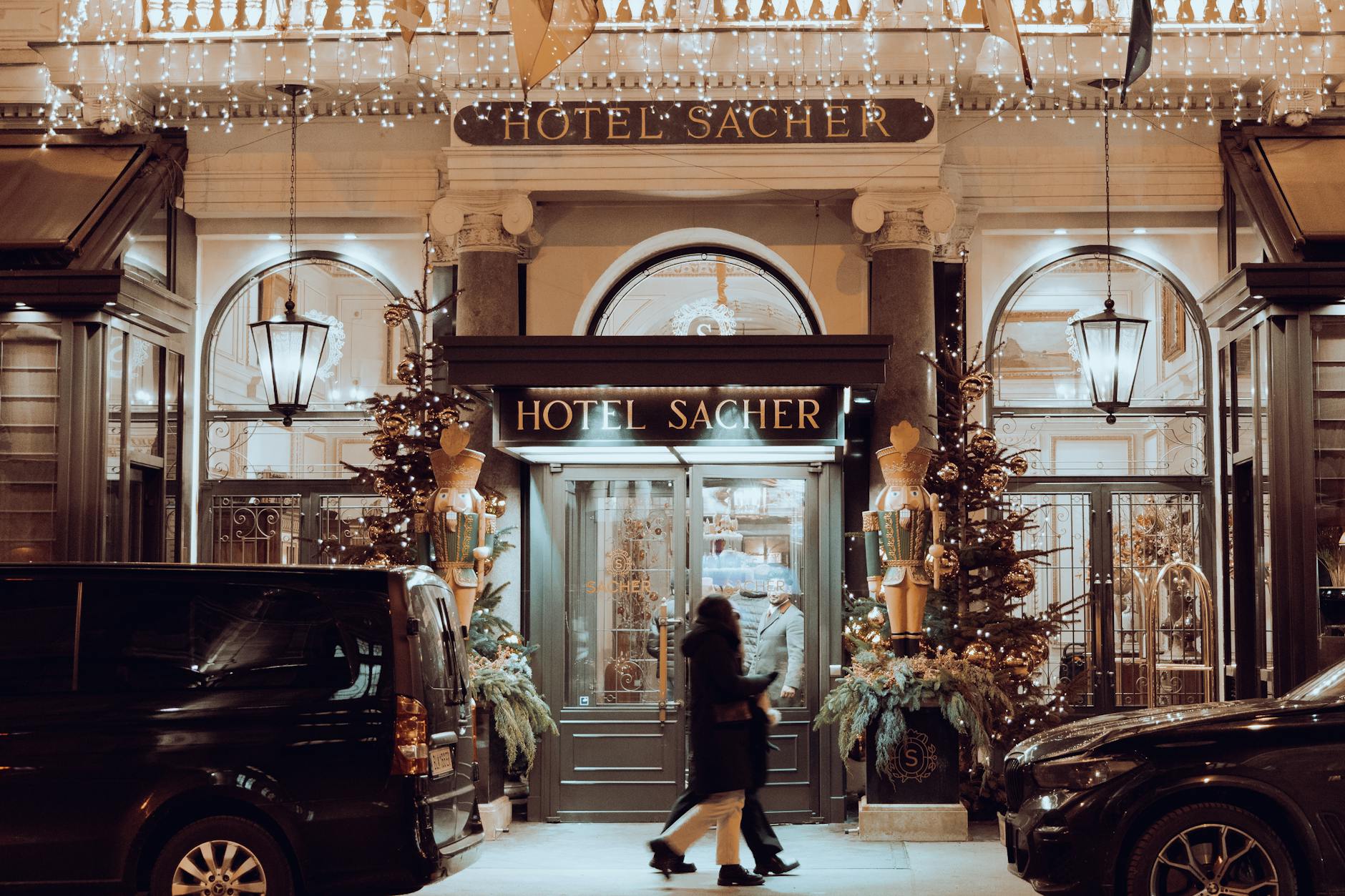
Iconic Luxury (€500–€1,500/night)
- Hotel Sacher — opposite the State Opera; home of the original Sachertorte
- Hotel Imperial — converted 19th-century palace; the lobby tea ritual is its own attraction
- Hotel Bristol — a Marriott Luxury Collection across from the State Opera
- Park Hyatt Vienna — a former imperial bank with the city’s most beautiful indoor pool
- Rosewood Vienna — newest top-end address (opened 2022)
Boutique (€280–€500/night)
- Hotel Topazz — design-forward, with Stephansdom views
- The Guest House Vienna — Conran-designed, central
- Hollmann Beletage — small, local, 17 rooms
- Hotel Pertschy Palais — Baroque palace conversion
Mid-Range (€140–€280/night)
- Motel One Wien Staatsoper
- Austria Trend Hotel Anatol Wien
- Hotel Royal Vienna
- Hotel Pension Suzanne — small, family-run
For broader neighborhood breakdowns, see our where to stay in Vienna.
Best Restaurants in Innere Stadt
Classic Viennese
- Plachutta Wollzeile — Vienna’s most famous tafelspitz house
- Figlmüller Bäckerstrasse — oversized Wiener schnitzel
- Lugeck — modern tafelspitz from Plachutta family
- Gasthaus Pöschl — neighborhood Beisl
- Zum Schwarzen Kameel — historic upscale Viennese
Fine Dining
- Konstantin Filippou — two Michelin stars, modern Austrian-Mediterranean
- Tian — Michelin-starred vegetarian
- Silvio Nickol Gourmet at Palais Coburg — three Michelin stars
- Steirereck im Stadtpark — at the southeast edge of the 1st
Casual & Quick
- Trzesniewski — historic open-faced sandwich bar
- Bitzinger Würstelstand at Albertinaplatz — best Käsekrainer
- Zanoni & Zanoni — gelato
- Naschmarkt food stalls at the southwest edge
Getting Around the Innere Stadt
On Foot
The district is just 1.5 km across. Most travelers walk between every major sight in the 1st district itself.
By U-Bahn
Three lines converge at Stephansplatz: U1, U3, plus the U4 stops at Karlsplatz at the southern edge. Add four tram lines (1, 2, D, 71) circling the Ringstrasse.
By Tram
Trams 1 and 2 follow the Ringstrasse — useful for circling the 1st district and seeing the major civic buildings without walking. Pair with our Vienna transport guide.
Outside the District
Schönbrunn (U4 to Schönbrunn, 15 min), Belvedere (5-min walk south of Karlsplatz, or tram to Schloss Belvedere), Wien Hauptbahnhof (U1 south, 8 min).
Best Innere Stadt Walking Routes
Route 1: Old Town Core (2 hours)
State Opera → Kärntner Straße → Stephansplatz → Graben → Kohlmarkt → Hofburg → Heldenplatz → Albertinaplatz → State Opera. Covers ~80% of must-see Inner City.
Route 2: Imperial Walk (90 min)
Volksgarten → Heldenplatz → Hofburg interior courtyards → Michaelerplatz → Burggarten → Albertinaplatz.
Route 3: Coffeehouse Crawl (Half-day)
Demel → Café Central → Café Hawelka → Café Bräunerhof → Café Sacher. Walking distance only; allow 30–60 minutes per stop.
More walking detail in our things to do in Vienna.
Innere Stadt Hidden Corners
The 1st district isn’t only the Hofburg and Stephansplatz. A handful of small lanes, courtyards, and second-string sights reward visitors who slow down.
The Heiligenkreuzerhof
Tucked behind Schönlaterngasse, this medieval courtyard — the rural property of the Heiligenkreuz Abbey in central Vienna — feels like stepping into a 17th-century village. Stone fountain, ivy walls, resident cats. Free, almost always empty.
Mölker Bastei
A surviving section of the medieval city walls (most were demolished in the 1860s for the Ringstrasse) with the Pasqualati Haus — Beethoven’s apartment from 1804–1808 where he composed Symphony No. 5 and Fidelio. €7. Allow 60 minutes.
The Ankeruhr (Anker Clock)
An Art Nouveau astronomical clock at Hoher Markt, made in 1914. Twelve historical figures (from Marcus Aurelius through Joseph Haydn) parade across the clock face at noon each day — a small but charming 12-minute spectacle. Free.
The Jewish Quarter (Judenplatz)
The historic center of Vienna’s Jewish community for over 700 years until the 1421 expulsion. The Holocaust Memorial (Rachel Whiteread’s 2000 “Nameless Library”) and the Museum Judenplatz with preserved medieval synagogue foundations beneath the square mark the site. The adjacent Stadttempel synagogue (Vienna’s main working synagogue) is visitable by guided tour.
Ruprechtskirche
Vienna’s oldest church (8th century), tucked above Schwedenplatz. Small Romanesque interior, often-empty, and beside one of the city’s most atmospheric weekend bar streets. Free.
Eating in the Innere Stadt Off the Tourist Drag
Most travelers eat on Graben, Kärntner Straße, or right beside Stephansplatz — exactly where the tourist-trap restaurants cluster. The genuinely good Inner City restaurants are 2-5 blocks off the main drags:
- Pfudl (Bäckerstraße) — tiny Beisl, excellent traditional Austrian, reservations essential
- Gasthaus Pöschl (Weihburggasse) — neighborhood feel, classic menu with Beuschel
- Beim Czaak (Postgasse) — varied authentic menu
- Lugeck (Lugeck square) — Plachutta family’s modern outpost; same quality, easier reservations
- Zum Schwarzen Kameel (Bognergasse) — historic upscale with a casual bar at front
- Konstantin Filippou (Dominikanerbastei) — two Michelin stars without the formal hush
- Trzesniewski (Dorotheergasse) — the classic 1902 open-faced sandwich bar; quick stand-up lunches
Innere Stadt Coffeehouses — A Quick Tour
| Coffeehouse | Best For | Atmosphere |
|---|---|---|
| Café Central | Tourists wanting the iconic Gothic-vault image | Stunning but busy |
| Café Hawelka | Intimate, atmospheric afternoon | Dim, artistic, 1930s feel |
| Café Bräunerhof | Quiet reading or writing | Local, Thomas Bernhard’s regular |
| Demel | Cake + window display | Court confectioner since 1786 |
| Café Sacher | The original Sachertorte experience | Hotel restaurant, ceremonial |
| Café Landtmann | Theater crowd + politicians | Ringstrasse grandeur, 1873 |
| Café Diglas | Strong cake selection, less touristy | Classic Wollzeile |
| Café Korb | Quirky 1950s booths + literary crowd | Freud’s other regular |
Best Innere Stadt Walking Routes by Time of Day
Sunrise (6 am – 8 am)
Stephansplatz to the Hofburg via Graben — completely empty Inner City, golden light on the cathedral, all the photogenic spots without other people. The cathedral interior opens at 6 am.
Morning (9 am – 12 pm)
Major-attraction time. Schönbrunn or Belvedere is the choice (both require transit; this is when most Inner City visitors leave for those palaces). For Inner City only: Hofburg complex including Sisi Museum + Treasury.
Afternoon (1 pm – 4 pm)
Stephansdom interior (free, calm after the morning rush), Albertina, or a leisurely coffeehouse afternoon. The Volksgarten roses peak May–June.
Golden Hour (4 pm – 7 pm)
Walk the Ringstrasse from State Opera to Rathaus or do the Stephansdom tower climb (less crowded after 3 pm). The Albertina terrace overlook to the State Opera is a perfect golden-hour spot.
Evening (7 pm – 11 pm)
Standing-room opera or Musikverein concert. Dinner at Plachutta, Pfudl, or Konstantin Filippou. Walk back through the lit Inner City.
Innere Stadt vs Other Districts: When to Stay Where
Stay in Innere Stadt If:
- You’re a first-time visitor (almost everything within walking distance)
- You have 3 days or less
- You want luxury or iconic Vienna hotels
- You don’t mind paying ~30% more for hotels
Consider Another District If:
- You’re staying 5+ days and want a more local feel
- You’re traveling on a budget
- You want a quieter residential evening atmosphere
- You’d rather eat where Viennese eat (the 6th, 7th, 9th, 16th)
Innere Stadt Pros & Cons
Pros
- Walking distance to almost everything
- Best transit hub in Vienna
- Most iconic hotels and restaurants
- Pedestrian streets keep noise low
- Late-night public transit reliability
Cons
- Highest hotel and restaurant prices
- Tourist-heavy summer crowds
- Few Viennese actually live here
- Some tourist-trap restaurants near Stephansplatz
- Limited grocery shopping (compared to outer districts)
A Brief Architectural History of the Innere Stadt
Walking the 1st district is essentially a walking lesson in 2,000 years of Central European architecture. Roman ruins survive under Michaelerplatz (visible through a glass floor) and in the Hoher Markt archaeological zone — Vindobona’s Roman military camp once occupied roughly the area of today’s Innere Stadt. Romanesque Ruprechtskirche (8th century) is Vienna’s oldest church. Gothic Stephansdom (mostly 14th-15th century) anchors the skyline. Baroque Peterskirche, the Plague Column, and Karlskirche just south of the Ring date from the late 17th and 18th centuries. Biedermeier period townhouses (1815-1848) line many small Inner City lanes. Historicist Ringstrasse grandeur (1860s-1890s) frames the district — the Rathaus, Parliament, Burgtheater, Opera, and the twin museums are all from this 30-year burst. Jugendstil Otto Wagner work (Postsparkasse, Loos Haus on Michaelerplatz) shows the early 20th-century turn toward modernism. Post-war reconstruction filled bombed gaps with sometimes-controversial modernist buildings (Haas-Haus across from Stephansdom). The 1st district is the only place in Vienna where you can see every major Austrian architectural period in a 15-minute walk.
1st District Practical Prices in 2026
- Café Melange: €4.80-€6.50 (Café Central charges most; smaller cafes around €4.80)
- Sachertorte slice + coffee: €13-€18 at the iconic spots (Sacher, Demel)
- Wiener Schnitzel: €21.90 at Figlmüller; €25-€32 at Plachutta or Lugeck
- Standing-room opera ticket: €15 Parterre / €18 Galerie
- Stephansdom tower: €5.50 stairs / €6.50 lift
- Hofburg combo ticket (Imperial Apts + Sisi + Silver): €18.50 adult; €11 under-25
- Hotel range: €140-€280 mid-range, €280-€500 boutique, €500-€2,500+ iconic luxury
- Average sit-down dinner: €35-€60/person at mid-range restaurants
A Brief Architectural History of the Innere Stadt
Walking the 1st district is essentially a walking lesson in 2,000 years of Central European architecture. Roman ruins survive under Michaelerplatz (visible through a glass floor) and in the Hoher Markt archaeological zone — Vindobona’s Roman military camp once occupied roughly the area of today’s Innere Stadt. Romanesque Ruprechtskirche (8th century) is Vienna’s oldest church. Gothic Stephansdom (mostly 14th-15th century) anchors the skyline. Baroque Peterskirche, the Plague Column, and Karlskirche just south of the Ring date from the late 17th and 18th centuries. Biedermeier period townhouses (1815-1848) line many small Inner City lanes. Historicist Ringstrasse grandeur (1860s-1890s) frames the district — the Rathaus, Parliament, Burgtheater, Opera, and the twin museums are all from this 30-year burst. Jugendstil Otto Wagner work (Postsparkasse, Loos Haus on Michaelerplatz) shows the early 20th-century turn toward modernism. Post-war reconstruction filled bombed gaps with sometimes-controversial modernist buildings (Haas-Haus across from Stephansdom). The 1st district is the only place in Vienna where you can see every major Austrian architectural period in a 15-minute walk.
1st District Practical Prices in 2026
- Café Melange: €4.80-€6.50 (Café Central charges most; smaller cafes around €4.80)
- Sachertorte slice + coffee: €13-€18 at the iconic spots (Sacher, Demel)
- Wiener Schnitzel: €21.90 at Figlmüller; €25-€32 at Plachutta or Lugeck
- Standing-room opera ticket: €15 Parterre / €18 Galerie
- Stephansdom tower: €5.50 stairs / €6.50 lift
- Hofburg combo ticket (Imperial Apts + Sisi + Silver): €18.50 adult; €11 under-25
- Hotel range: €140-€280 mid-range, €280-€500 boutique, €500-€2,500+ iconic luxury
- Average sit-down dinner: €35-€60/person at mid-range restaurants
A Brief Architectural History of the Innere Stadt
Walking the 1st district is essentially a walking lesson in 2,000 years of Central European architecture. Roman ruins survive under Michaelerplatz (visible through a glass floor) and in the Hoher Markt archaeological zone — Vindobona’s Roman military camp once occupied roughly the area of today’s Innere Stadt. Romanesque Ruprechtskirche (8th century) is Vienna’s oldest church. Gothic Stephansdom (mostly 14th-15th century) anchors the skyline. Baroque Peterskirche, the Plague Column, and Karlskirche just south of the Ring date from the late 17th and 18th centuries. Biedermeier period townhouses (1815-1848) line many small Inner City lanes. Historicist Ringstrasse grandeur (1860s-1890s) frames the district — the Rathaus, Parliament, Burgtheater, Opera, and the twin museums are all from this 30-year burst. Jugendstil Otto Wagner work (Postsparkasse, Loos Haus on Michaelerplatz) shows the early 20th-century turn toward modernism. Post-war reconstruction filled bombed gaps with sometimes-controversial modernist buildings (Haas-Haus across from Stephansdom). The 1st district is the only place in Vienna where you can see every major Austrian architectural period in a 15-minute walk.
1st District Practical Prices in 2026
- Café Melange: €4.80-€6.50 (Café Central charges most; smaller cafes around €4.80)
- Sachertorte slice + coffee: €13-€18 at the iconic spots (Sacher, Demel)
- Wiener Schnitzel: €21.90 at Figlmüller; €25-€32 at Plachutta or Lugeck
- Standing-room opera ticket: €15 Parterre / €18 Galerie
- Stephansdom tower: €5.50 stairs / €6.50 lift
- Hofburg combo ticket (Imperial Apts + Sisi + Silver): €18.50 adult; €11 under-25
- Hotel range: €140-€280 mid-range, €280-€500 boutique, €500-€2,500+ iconic luxury
- Average sit-down dinner: €35-€60/person at mid-range restaurants
A Brief Architectural History of the Innere Stadt
Walking the 1st district is essentially a walking lesson in 2,000 years of Central European architecture. Roman ruins survive under Michaelerplatz (visible through a glass floor) and in the Hoher Markt archaeological zone — Vindobona’s Roman military camp once occupied roughly the area of today’s Innere Stadt. Romanesque Ruprechtskirche (8th century) is Vienna’s oldest church. Gothic Stephansdom (mostly 14th-15th century) anchors the skyline. Baroque Peterskirche, the Plague Column, and Karlskirche just south of the Ring date from the late 17th and 18th centuries. Biedermeier period townhouses (1815-1848) line many small Inner City lanes. Historicist Ringstrasse grandeur (1860s-1890s) frames the district — the Rathaus, Parliament, Burgtheater, Opera, and the twin museums are all from this 30-year burst. Jugendstil Otto Wagner work (Postsparkasse, Loos Haus on Michaelerplatz) shows the early 20th-century turn toward modernism. Post-war reconstruction filled bombed gaps with sometimes-controversial modernist buildings (Haas-Haus across from Stephansdom). The 1st district is the only place in Vienna where you can see every major Austrian architectural period in a 15-minute walk.
1st District Practical Prices in 2026
- Café Melange: €4.80-€6.50 (Café Central charges most; smaller cafes around €4.80)
- Sachertorte slice + coffee: €13-€18 at the iconic spots (Sacher, Demel)
- Wiener Schnitzel: €21.90 at Figlmüller; €25-€32 at Plachutta or Lugeck
- Standing-room opera ticket: €15 Parterre / €18 Galerie
- Stephansdom tower: €5.50 stairs / €6.50 lift
- Hofburg combo ticket (Imperial Apts + Sisi + Silver): €18.50 adult; €11 under-25
- Hotel range: €140-€280 mid-range, €280-€500 boutique, €500-€2,500+ iconic luxury
- Average sit-down dinner: €35-€60/person at mid-range restaurants
FAQ
Is the Innere Stadt the best place to stay in Vienna?
For first-time visitors with 3 days or less, yes — almost everything is walking distance. For longer trips or budget-conscious travelers, the 6th, 7th, or 9th districts often offer better value with easy U-Bahn access.
How big is the Innere Stadt?
The 1st district is a 1.5-km-across area, ringed by the 5.3-km Ringstrasse boulevard. It’s roughly the same size as Manhattan’s SoHo + Tribeca combined.
Is the Innere Stadt safe?
Very safe — among the safest urban districts in Europe. Standard pickpocket precautions at Stephansplatz, particularly at peak tourist hours.
How expensive are Innere Stadt hotels?
Mid-range hotels run €140–€280/night, boutique hotels €280–€500, and the iconic luxury hotels (Sacher, Imperial, Bristol, Park Hyatt) start at €500 and can exceed €1,500 in peak season. Compare with our where to stay in Vienna.
Are restaurants in the Innere Stadt overpriced?
Some are tourist traps (the touts on Graben), but the best places — Plachutta, Figlmüller, Zum Schwarzen Kameel, Konstantin Filippou — match prices for their quality. For better value, walk 10 minutes to the 4th, 6th, or 7th districts.
Can I walk between Schönbrunn and Innere Stadt?
Technically yes (about 5 km), but realistically take the U4 (15 minutes). Schönbrunn is in the 13th district, well outside the Innere Stadt.
What’s the best way to see the Innere Stadt in one day?
Start at the State Opera, walk Kärntner Straße to Stephansplatz, do a Stephansdom interior visit, walk Graben to Kohlmarkt, enter the Hofburg complex, and end with sunset at the Albertina terrace. Allow 6–8 hours with stops.
Final Thought: Innere Stadt Is Vienna’s Postcard Vienna
If you have only one day or one trip in Vienna, the Innere Stadt delivers nearly everything most travelers come for. It’s also the priciest, most-photographed, and most-touristy version of the city — the version that exists for visitors. The best Vienna trips include the Innere Stadt as the spine but extend into the 6th, 7th, 9th, or 19th districts for the lived-in city. Build it that way and you get both Viennas at once.
For more, see our where to stay in Vienna, our things to do in Vienna, and our first time visiting Vienna tips.
Leave a Reply