Vienna is one of Europe’s great walking cities. The Inner City is just 1.5 km across; the entire UNESCO-listed historic center fits inside the 5.3-km Ringstrasse loop. Five self-guided walking routes — the Ringstrasse, the Old Town core, the Imperial Walk through the Hofburg, the Otto Wagner Jugendstil trail, and the 7th-district Spittelberg–Neubau loop — together cover roughly 80% of what most first-time visitors actually want to see, all on foot, all at your own pace.
This is the complete Vienna walking tour guide: five ready-made self-guided routes with maps, timings, what to see, and the strategic stops that make each walk better. Pair it with our things to do in Vienna for what to do off the trail.
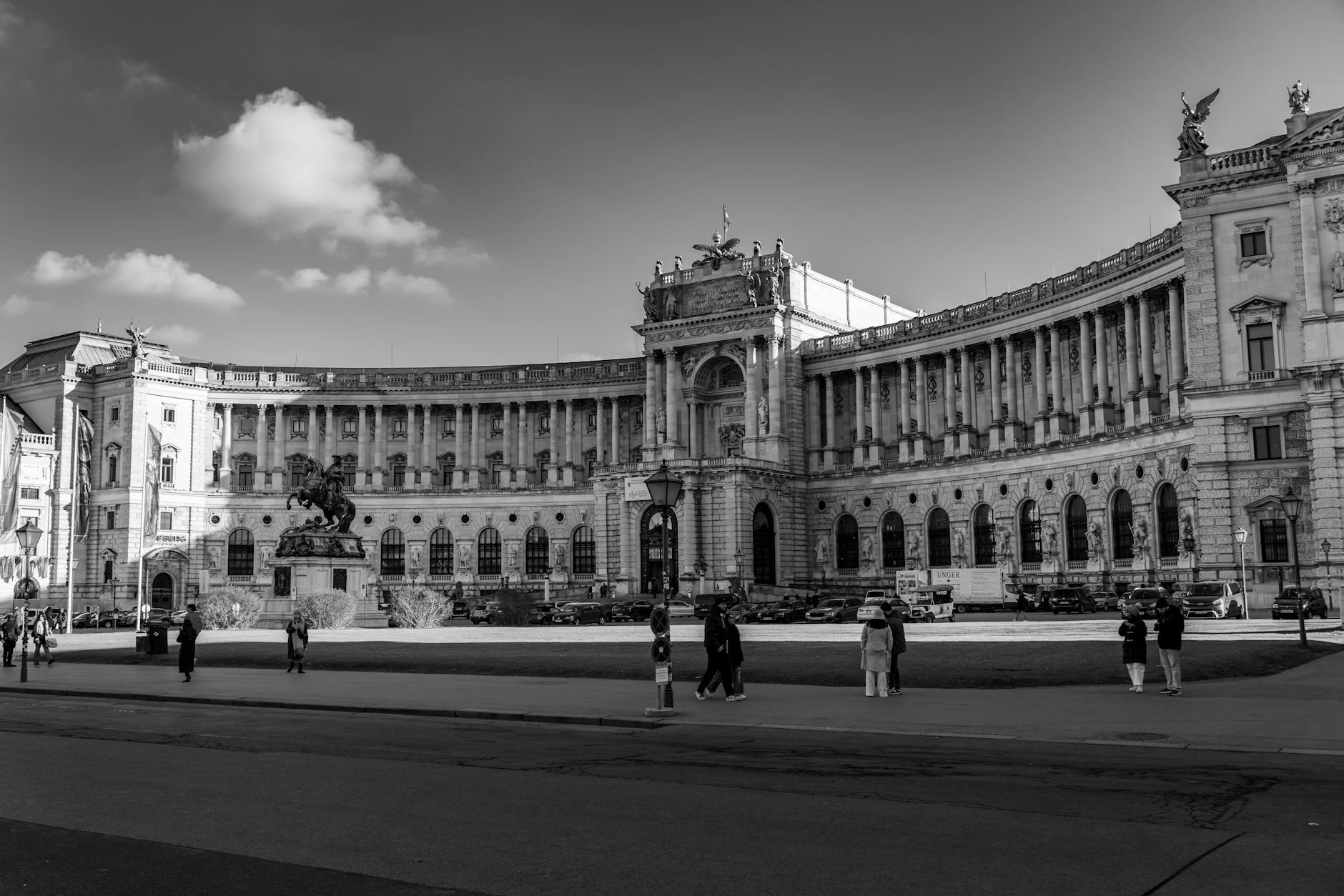
Why Walk Vienna (Instead of Bus or Tram)
Three reasons to walk Vienna:
- Compact distances. The Inner City is 1.5 km across; the Ringstrasse loop is 5.3 km. Most major sights are within 30 minutes on foot of any other.
- Architectural reward. Vienna’s most photogenic moments are at street level. Hop-on buses skip the Otto Wagner pavilions, the Spittelberg alleys, and dozens of detailed Habsburg facades.
- Slow Vienna. The city’s pace rewards walkers — coffeehouse stops, museum drop-ins, and Naschmarkt detours all naturally slot in between routes.
Wear good shoes (cobblestones can be tricky — see our Vienna packing list), and use the U-Bahn for any leg under 1 km only if you’re tired.
Walk 1: The Ringstrasse Loop (5.3 km, 90 minutes minimum)
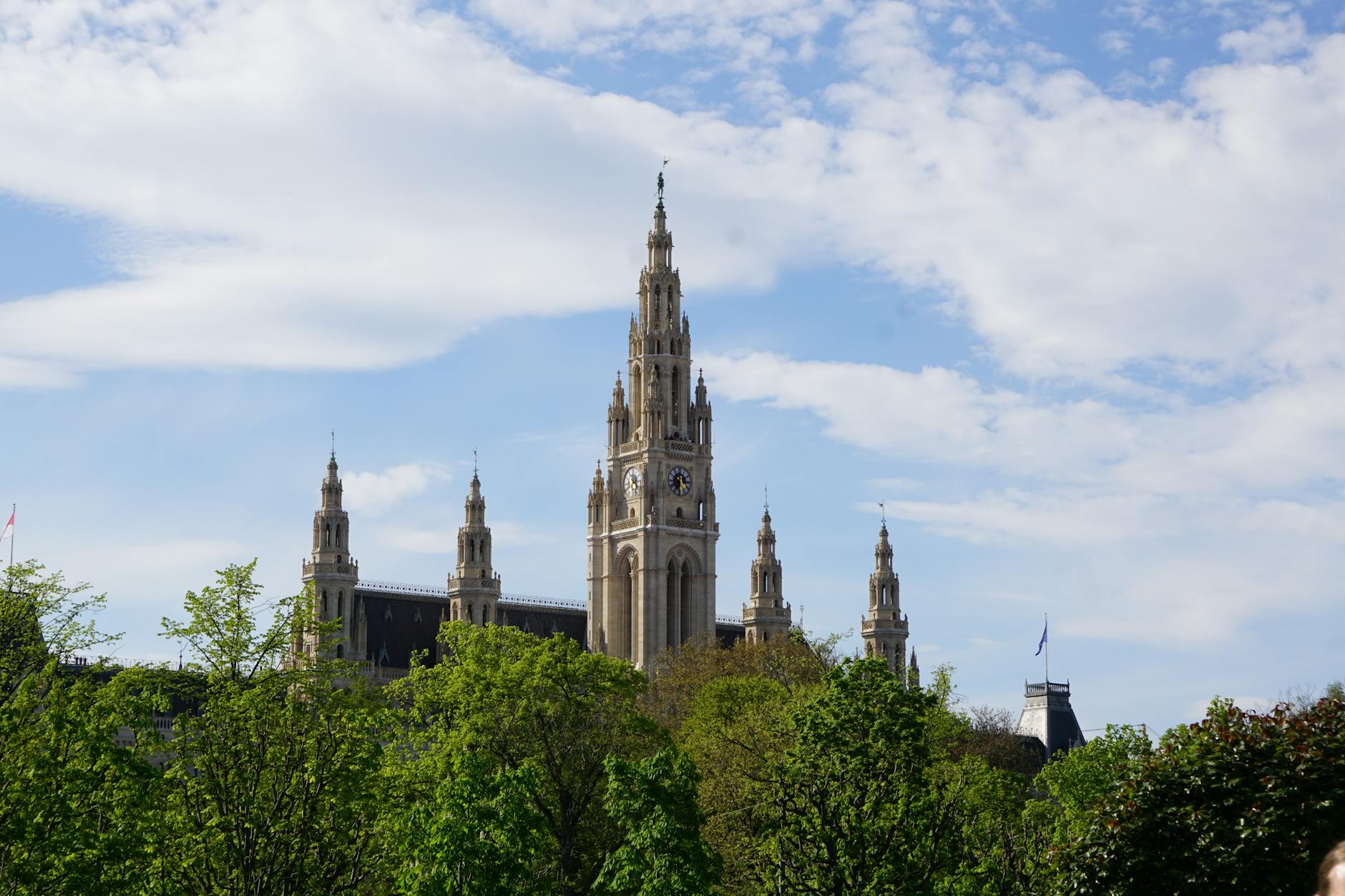
Vienna’s most iconic urban walk. The Ringstrasse was built in the 1860s after Emperor Franz Joseph ordered the demolition of the medieval city walls. The 5.3-km boulevard now traces the path of the old fortifications, lined with Vienna’s grandest 19th-century civic and cultural buildings.
Route
Start at the Vienna State Opera and walk clockwise:
- State Opera (Wiener Staatsoper) — 1869 neo-Renaissance, the city’s most iconic building.
- Burggarten — the Mozart monument and Otto Wagner’s Palmenhaus on your left.
- Heldenplatz — vast public square in front of the Hofburg.
- Maria-Theresien-Platz — between the Naturhistorisches and Kunsthistorisches Museums (twin 1891 buildings flanking the giant Maria Theresia statue).
- Volkstheater & Parliament — Greek-revival Parliament (1883), now with a free visitor center and rooftop terrace.
- Rathaus — Vienna’s neo-Gothic city hall (1883), with summer Film Festival and December Christmas market on its forecourt.
- Burgtheater — the Imperial Theater (1888), one of Europe’s most important German-language stages.
- Universität Wien — Vienna’s main university (1884), Italian Renaissance style.
- Votivkirche — twin-spired neo-Gothic basilica (1879).
- Schottentor — major U-Bahn interchange.
- Börse — the old stock exchange.
- Rossauer Lände — Donaukanal, with views of the canal and street art.
- Postsparkasse — Otto Wagner’s revolutionary 1906 modernist bank.
- MAK — the Museum of Applied Arts.
- Stadtpark — the famous gold-leafed Strauss statue.
- Schwarzenbergplatz — with the Soviet War Memorial.
- Konzerthaus — Vienna’s secondary classical concert hall.
- Stadtpark back to the Opera — closes the loop.
Tips
- Time: 90 minutes if walking briskly with no stops; 3+ hours with photo and coffee breaks.
- Best time: Late afternoon for golden-hour photos; early evening for the buildings lit at dusk.
- Strategic stops: Café Landtmann (next to the Burgtheater) for coffee; Burggarten Palmenhaus for a quick rest.
- Alternatives: Tram 1 or 2 follows roughly the same route if you want the views without the walk.
Walk 2: The Old Town Core (2.9 km, 2 hours)
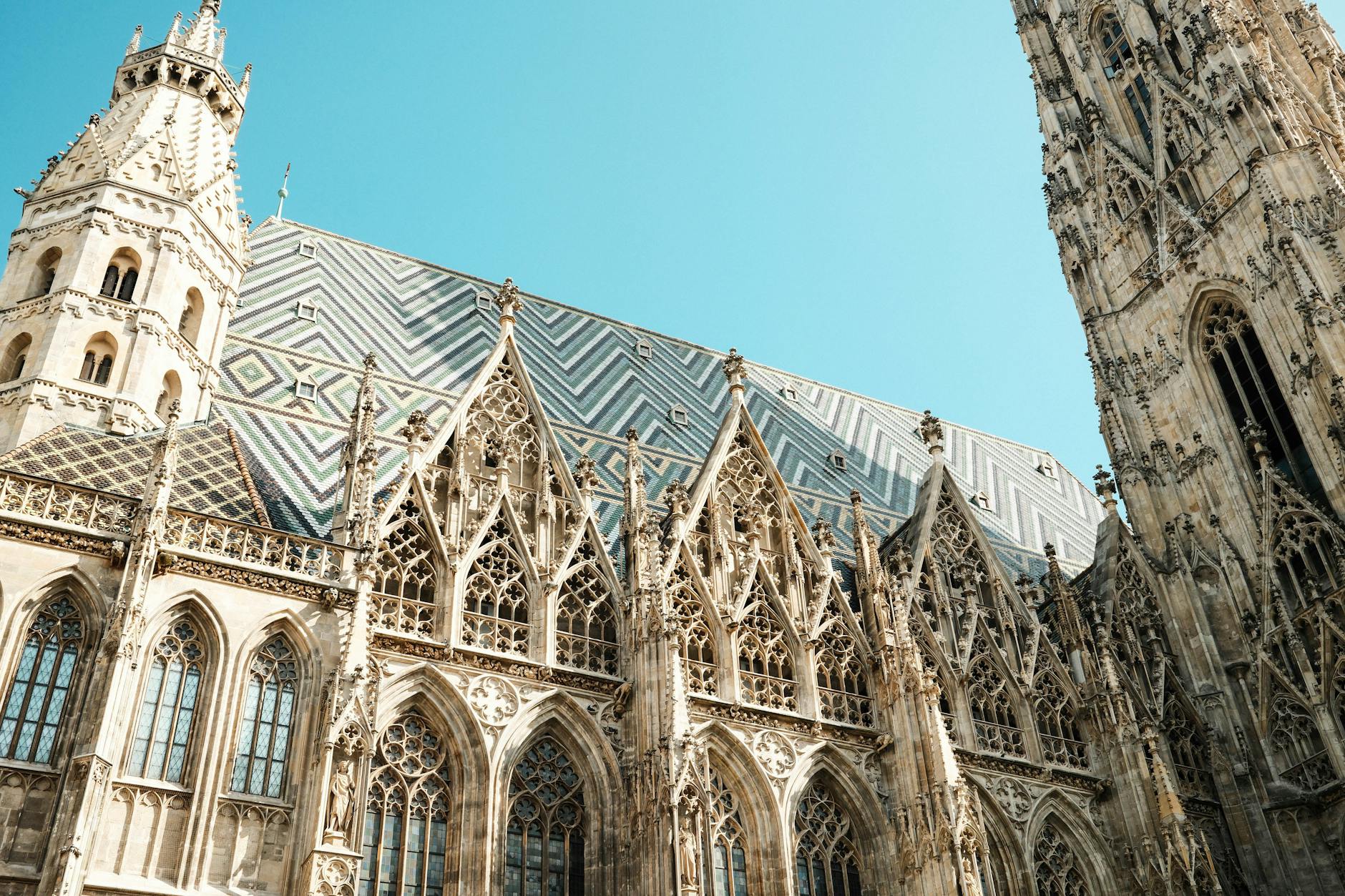
The single most efficient Vienna walk for a first-time visitor. This route covers about 80% of the major Inner City sights without any backtracking.
Route
- State Opera — start here for transit access (U1, U2, U4, plus 4+ tram lines).
- Walk down Kärntner Straße — Vienna’s main pedestrian shopping street. Pass Café Sacher.
- Stephansplatz / Stephansdom — the cathedral interior (free), the Pummerin bell tower elevator, or the South Tower stair climb.
- Graben — the city’s grand pedestrian boulevard. The Pestsäule (Plague Column, 1693), Peterskirche (free Baroque interior).
- Kohlmarkt — luxury shopping street, ending at the Hofburg’s Michaelertor.
- Michaelerplatz — Loos House across from the Hofburg; Roman ruins visible in the square.
- Hofburg / Heldenplatz — walk through the Innerer Burghof courtyard.
- Heldenplatz — the vast public square; Sisi Museum, Imperial Apartments, Spanish Riding School entrance all here.
- Albertinaplatz — Albertina Museum + Bitzinger Würstelstand.
- Back to State Opera — finish where you started.
Tips
- Time: 2 hours without entering attractions; 4+ hours with stops at Stephansdom and one museum.
- Strategic stops: Demel for cake; Café Hawelka for an evening coffee; Bitzinger for a Käsekrainer.
- Free moments: Stephansdom interior, Peterskirche, the Hofburg courtyards.
Walk 3: The Imperial Walk (Hofburg + Volksgarten + Burggarten, 1.5 km, 90 min)
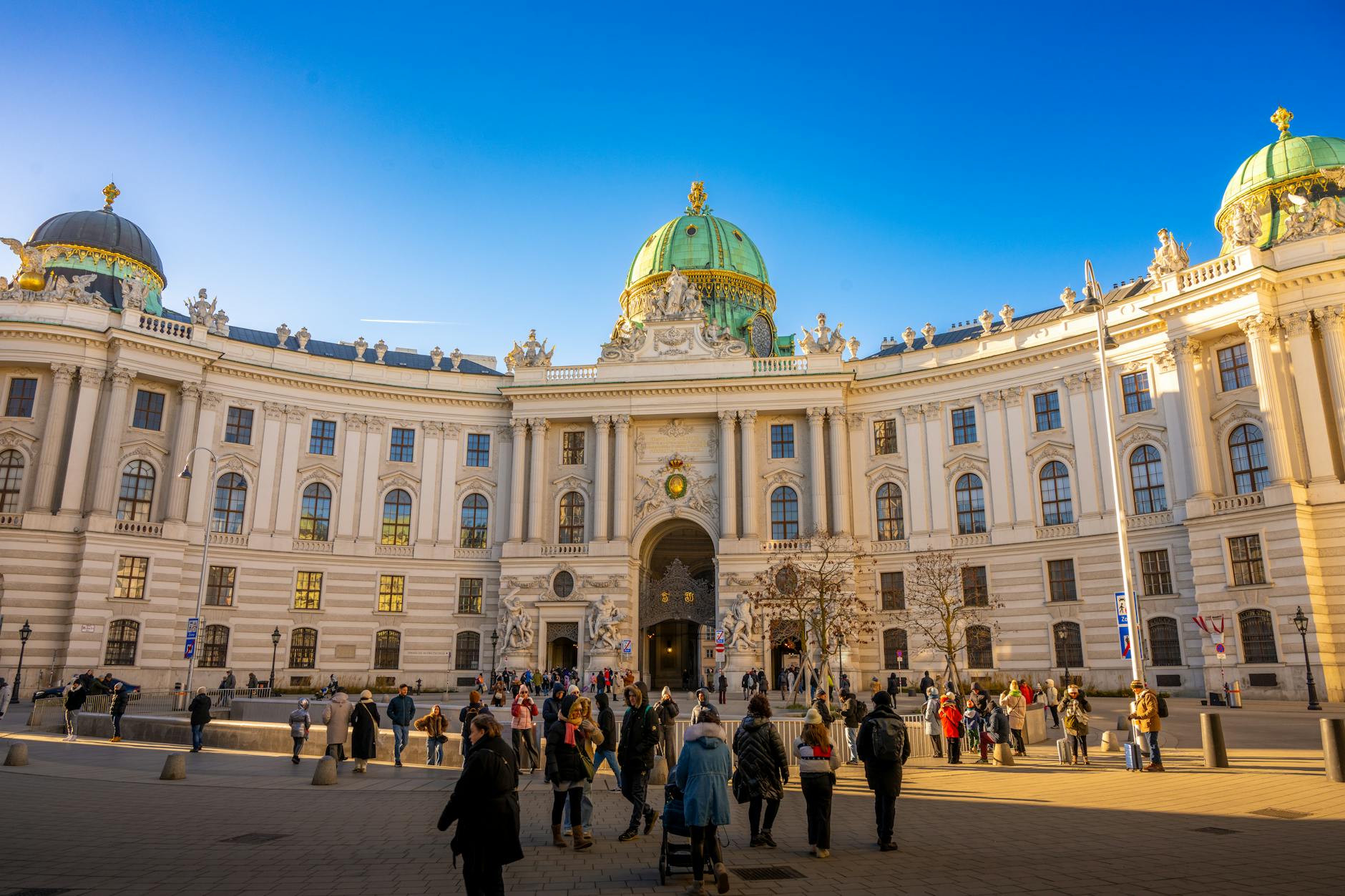
If you have time for only one focused walk, this is the Habsburg-density tour. The route loops the Hofburg complex without entering it — though you can pause for the Sisi Museum, Treasury, or Spanish Riding School at any point.
Route
- Volksgarten — start in the rose garden (peak in May–June).
- Theseus Temple — small replica Greek temple in the middle of the garden.
- Heldenplatz — Prinz Eugen statue, the Heldentor.
- Ephesos Museum & Hofburg interior courtyards — walk through the Pawlatschen.
- Innerer Burghof — Imperial Apartments entrance + Schweizerhof.
- Michaelerplatz — exit through the Michaelertor.
- Burggarten — the Mozart monument and the Palmenhaus greenhouse café.
- Back to the Albertina or State Opera — finish.
Tips
- Best time: Late morning when sunlight hits the Hofburg facades; early evening when the gardens are quiet.
- Free attractions: All the courtyards, both gardens, the Theseus Temple.
- Optional add: The Ephesos Museum (€16) is genuinely interesting and rarely crowded.
Walk 4: The Otto Wagner Jugendstil Trail (3 km, 90 min)
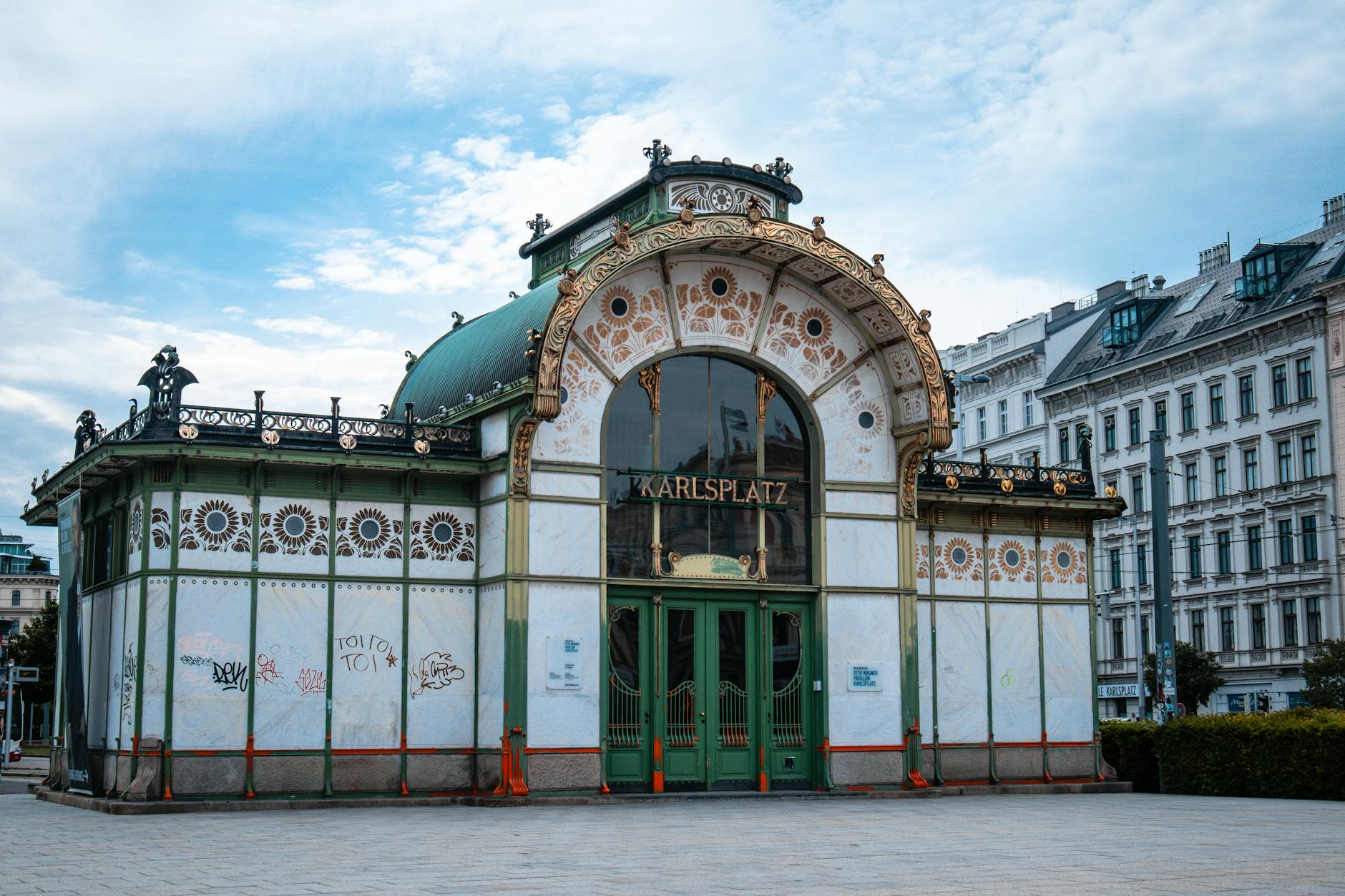
Otto Wagner was the leading architect of Vienna’s Secession-era turn-of-the-century explosion. This route traces his major Vienna works — and is essential for design and architecture fans.
Route
- Postsparkasse (1 Georg-Coch-Platz) — Wagner’s 1906 modernist bank, with the entrance hall freely accessible.
- Walk via MAK south to Karlsplatz.
- Karlsplatz Stadtbahn Pavilions — Wagner’s twin 1898 metro pavilions; one houses a small museum.
- Wagner’s Schützenhaus at Donaukanal (Roßauer Lände) — a small lock-house designed by Wagner.
- Linke and Rechte Wienzeile — Wagner’s apartment buildings: the Majolikahaus (No. 40) with its floral ceramic facade and the Medallion House next door.
- Naschmarkt walk — these buildings frame the market.
- Otto Wagner Kirche am Steinhof (optional add) — Wagner’s masterpiece church. Located in the 14th district, requires bus 47A or U6+tram. Open Saturday 4–5 pm only.
Tips
- Best time: Saturdays late afternoon if you want to add the Steinhof church.
- Strategic stop: Café Sperl on Gumpendorfer Straße is itself an Otto Wagner-era coffeehouse interior.
- Photography: The Majolikahaus and Karlsplatz pavilions are best in soft afternoon light.
Walk 5: 7th District (Spittelberg + Neubau, 2 km, 90 min)

The 7th district (Neubau) is Vienna’s most design-forward residential neighborhood — independent shops, contemporary cafes, restored 18th-century alleys, and one of the city’s best-loved Christmas markets. This walk balances the imperial Vienna of the other routes.
Route
- MuseumsQuartier (start at the U2 station) — courtyard with Enzi loungers, Leopold and MUMOK museums, ZOOM children’s museum.
- Walk west into Spittelberg — preserved 18th-century cobblestone quarter.
- Spittelberggasse — design shops, art studios.
- South to Mariahilfer Straße — Vienna’s main shopping street (mostly pedestrianized).
- North into Neubaugasse — independent design shops, vintage stores.
- Lindengasse and Westbahnstraße — coffee bars and galleries.
- Kirchengasse — independent fashion boutiques.
- End at Café Sperl on Gumpendorfer Straße for a slow coffeehouse close.
Tips
- Best time: Saturday late morning when shops are open and busy; sunny afternoons.
- Strategic stops: Vollpension intergenerational coffeehouse; Pramerl & the Wolf for a Michelin-starred lunch (book ahead); Schau Schau Brillen for handmade eyewear.
- Christmas: The Spittelberg Christmas market in late November/December is one of Vienna’s most atmospheric.
Bonus: Three Shorter Walks Worth Adding
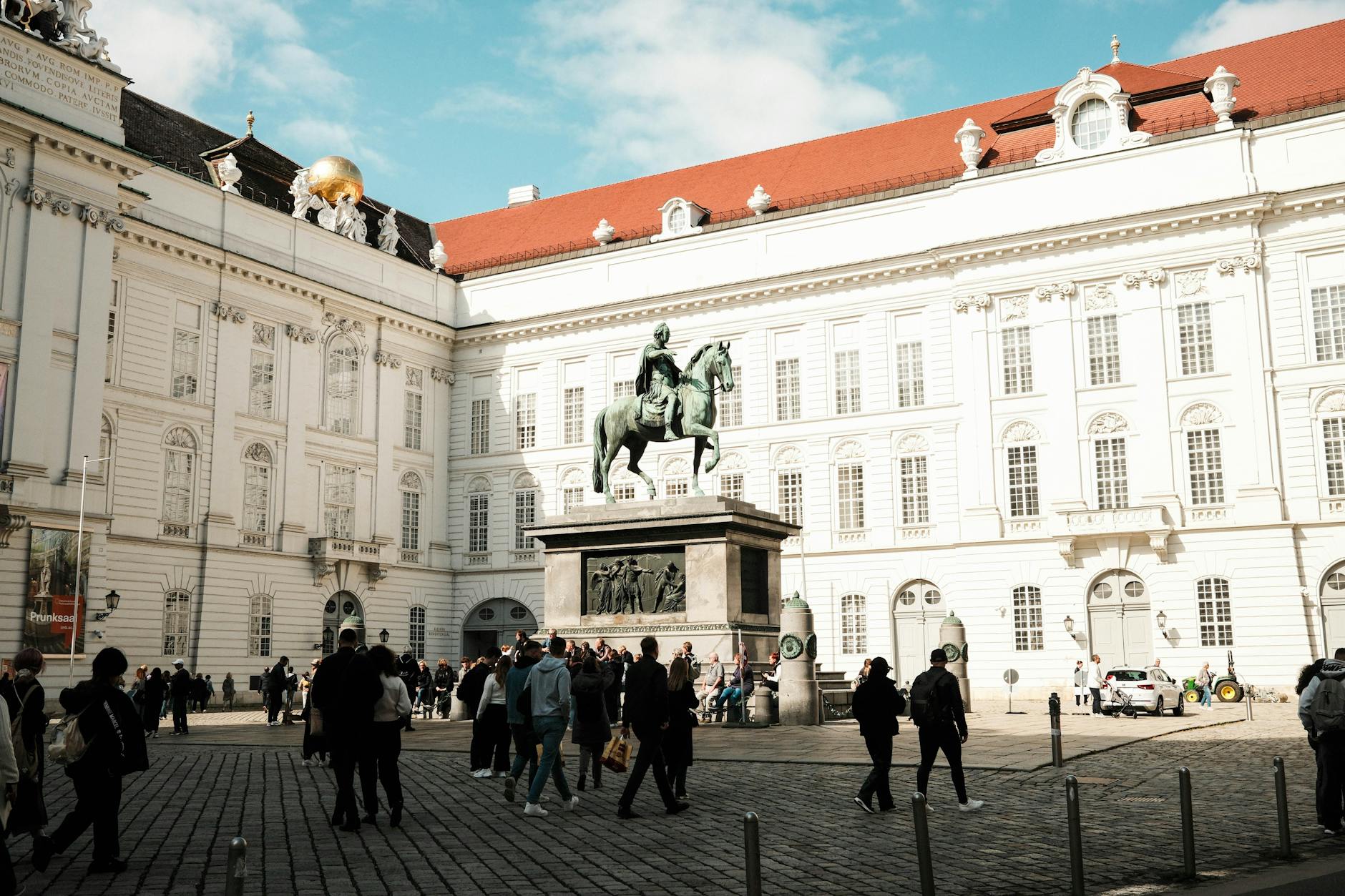
The Naschmarkt + Wienzeile Mini-Walk (1.5 km, 45 min)
Naschmarkt entrance to the Theater an der Wien, walking the Wienzeile to admire Otto Wagner’s Jugendstil apartment buildings, ending at Karlsplatz.
The Donaukanal Street Art Walk (2 km, 30–60 min)
From Schwedenplatz to Friedensbrücke. Continually changing graffiti and KÖR public art on both banks; pop-up summer beach bars in season.
The Vienna Heuriger Walk (3 km, half-day)
U4 to Heiligenstadt. Walk the Beethovengang trail through Heiligenstadt, into the Nussberg vineyards, finishing in Grinzing or Nussdorf at a heuriger tavern. Best September–October.
Combining the Walks: A Full-Day Walking Itinerary
Morning
Walk 2 (Old Town Core) — 9 am to 11 am with a Café Hawelka coffee stop midway.
Late morning
Walk 3 (Imperial Walk) — 11 am to 12:30 pm with optional Sisi Museum entry.
Lunch
Bitzinger Würstelstand at Albertinaplatz, or Glacis Beisl at the MuseumsQuartier.
Afternoon
Walk 5 (7th District + Spittelberg) — 1 pm to 3 pm, with shopping and coffeehouse breaks.
Late Afternoon
Walk 1 (Ringstrasse) — 3 pm to 5 pm, ending at sunset.
Evening
Donaukanal street art walk if light permits, then dinner.
Total walked: roughly 14 km. Vienna locals routinely do this kind of distance on a leisurely day off.
Self-Guided Walking Tour Apps
- Vienna Free Walking Tours app — multiple themed routes
- GPSmyCity — paid offline-capable Vienna walks
- Komoot — popular for the Wachau Valley and Vienna Woods
- Google Maps Lists — build your own walking itinerary by saving spots
- Strava for distance tracking
Practical Walking Tips for Vienna
- Wear comfortable shoes for cobblestones — see our Vienna packing list for specifics
- Carry a reusable water bottle — Trinkbrunnen public fountains are everywhere
- Watch for tram tracks when crossing — and look both ways even at small streets
- Don’t jaywalk — locals strictly wait for the green Ampelmännchen
- Have a 24/72-hour transit pass for backup — even committed walkers occasionally need an emergency tram
- Pause for coffeehouses — Vienna’s walking pace is best with breaks every 2–3 hours
Best Time of Year for Walking Tours
April–June and September–October are ideal: mild weather, gardens in bloom or autumn color, comfortable temps for 3–5 km outings. December offers magical Christmas market routes but cold and dark by 4 pm. July–August are workable but the heat slows you down — start early in the day or save walking for evening. See best time to visit Vienna.
Frequently Asked Questions
Is Vienna walkable?
Yes — extremely. The Inner City is 1.5 km across, the Ringstrasse loop is 5.3 km, and the major sights (Schönbrunn aside) are all within 30 minutes’ walk of one another.
How long does a walking tour of Vienna take?
The Old Town Core walk takes 2 hours; the Ringstrasse loop takes 90 minutes brisk or 3+ hours with stops; the Imperial Walk takes 90 minutes; the 7th-district walk takes 90 minutes. A full day of walking covers roughly 14 km comfortably.
Can I see Vienna in one day on foot?
You can hit the major Inner City sights — Stephansdom, the Hofburg, the Albertina, Karlsplatz, the Naschmarkt — comfortably in one full day on foot. Schönbrunn and Belvedere need separate U-Bahn trips. Pair with our 1-day Vienna itinerary.
What is the best self-guided walking tour in Vienna?
For first-time visitors, the Old Town Core walk (Walk 2) covers about 80% of the must-see Inner City. For architecture fans, the Otto Wagner Jugendstil trail. For atmosphere, the 7th district + Spittelberg.
Are there free walking tours in Vienna?
Yes — Vienna Free Walking Tours and Sandemans both run tip-based 2.5-hour Old Town tours starting from Stephansplatz multiple times daily. Reservations recommended.
Is the Ringstrasse walk worth doing?
Yes — Vienna’s Ringstrasse is one of the great urban architectural walks of Europe. Even casual visitors should walk at least the western half (State Opera to Rathaus) for the Parliament, Burgtheater, and twin museums.
Do I need a guide for a Vienna walking tour?
Not at all — Vienna is well-marked and English signage is widespread. Self-guided walks (with apps or this article) work fine for nearly all visitors. Guided tours add depth for architecture or history specialists.
Can I do walking tours in Vienna with kids?
Yes — most routes are stroller-friendly. The Imperial Walk is the most kid-tolerant (lots of free open spaces); the 7th-district walk is best for older kids who like shopping. Build in playground stops at the Volksgarten or Stadtpark.
Final Thought: Walk Vienna for the Real Vienna
Vienna isn’t a hop-on-bus city. The grand boulevards photograph well from a tram, but the alleys, the inner courtyards, the small civic moments, the smells of a Naschmarkt corner, the light through Otto Wagner pavilion windows — those are walking-only experiences. Treat the walking routes in this guide as scaffolding, not scripts. Take the detour into the side street. Stop at the coffeehouse. Linger at the rose garden. The best Vienna trips are the ones that walked the most.
For more, see our things to do in Vienna, our first time visiting Vienna tips, our Vienna history and architecture, and our romantic Vienna for couples.
Leave a Reply