Vienna Packing List: What to Pack for Every Season (2026)
Complete Vienna packing list with what to wear, opera dress code, cobblestone-friendly shoes, season-by-season essentials, and items most tourists forget. Includes a print-ready checklist and outfit plan for a typical Vienna day.
Photo by Timur Weber
- Vienna Packing List: The Quick Essentials
- Footwear: The Cobblestone Survival Guide
- The Vienna Dress Code: What “Smart Casual” Actually Means
- Vienna Packing List by Season
- Things Most Tourists Forget to Pack
- What NOT to Pack for Vienna
- Tech & Documents
- Health, Hygiene & First-Aid
- Vienna Packing List by Trip Length
- Vienna with Kids: What to Add
- The 24-Hour Vienna Outfit Plan
- Frequently Asked Questions
- The Vienna Packing Checklist (Print-Ready)
- Related Vienna Guides
This article contains advertising. Our booking links are routed through a partner that adds commission tracking automatically, so if you book through one we earn a commission from the provider, at no extra cost to you. It never affects what we recommend. Affiliate disclosure
The single most important thing in your Vienna packing list is the right pair of shoes. Vienna’s inner city is paved in 18th- and 19th-century cobblestones, threaded with tram tracks, and you’ll easily walk 8–12 kilometers on a sightseeing day. The second most important thing — that most first-time visitors get wrong — is one outfit smart enough for the opera, a fine-dining dinner, or an upmarket coffeehouse. Vienna leans elegant, and you’ll feel out of place in athleisure or shorts at most cultural venues.
This is the complete Vienna packing list by season, with specific items most travelers forget, the dress code reality at the State Opera, and exactly how much winter gear you need for a December trip. Use it alongside our best time to visit Vienna to plan around the weather you’ll actually face.
Vienna Packing List: The Quick Essentials
If you’re packing in a hurry and want the short list that works in any season:
- Comfortable walking shoes — leather sneakers, ankle boots, or low-heeled loafers. Not stilettos. Not flip-flops. Not chunky athletic runners (you’ll spot tourists immediately).
- One smart-casual outfit for the opera, an upscale dinner, or a coffeehouse: tailored trousers and a button shirt, or a skirt or dress with closed-toe shoes.
- A waterproof layer — a packable shell or compact umbrella; rain is possible in every month.
- European plug adapter (Type C/F, 230V) — Austria uses the standard EU two-pin.
- Coat or layers appropriate to the season (see below).
- A daypack or shoulder bag small enough not to violate museum cloakroom rules — most museums require any bag larger than 25cm × 30cm to be checked.
- A reusable water bottle — Vienna’s tap water comes from Alpine springs and is some of the best in Europe.
Footwear: The Cobblestone Survival Guide
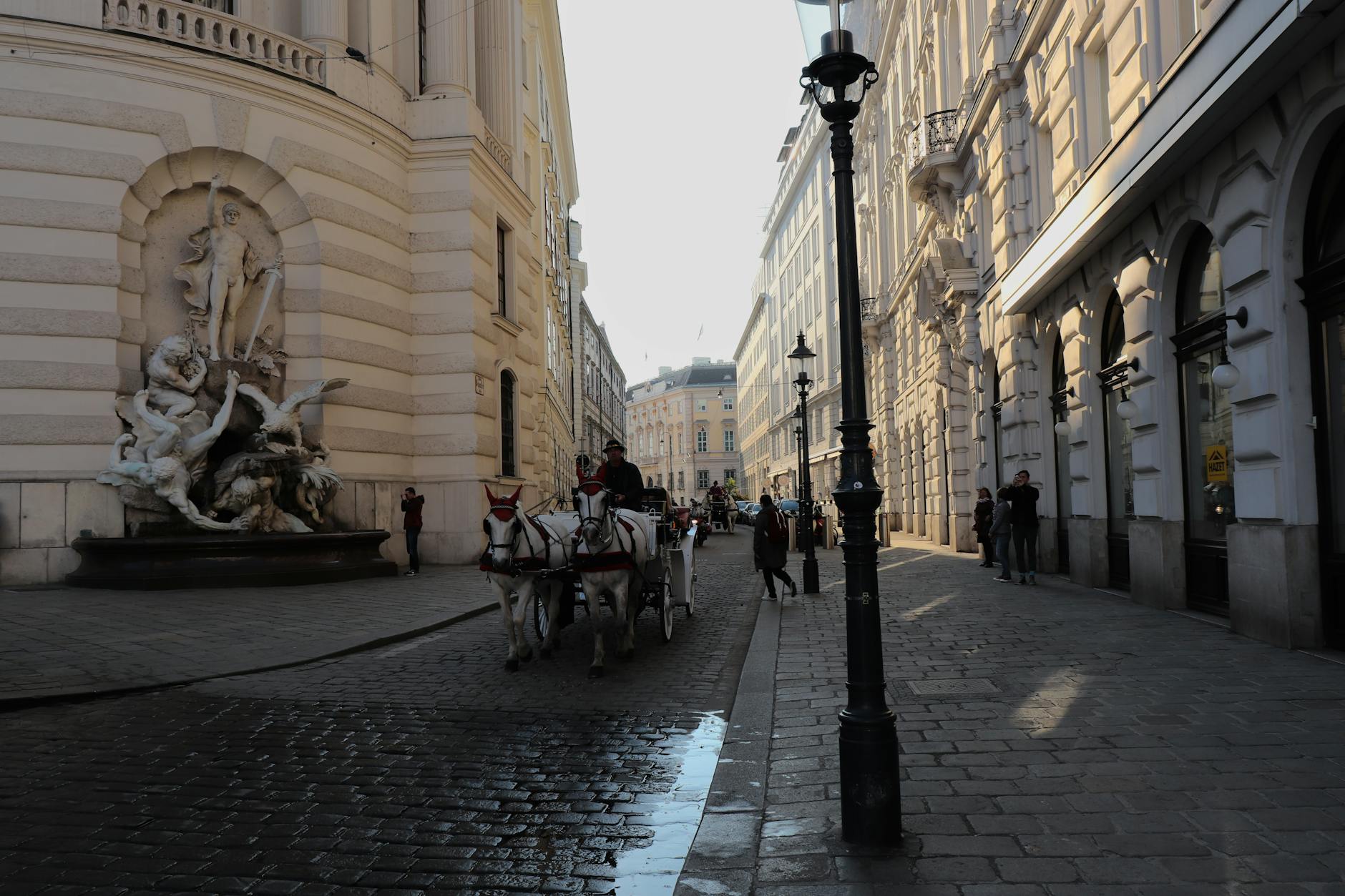
Vienna’s Inner City — the 1st district, where you’ll spend most of your time — is paved with uneven, often-slick cobblestones, and crisscrossed with steel tram tracks that catch heel tips, scooter wheels, and sandal soles with equal cruelty. The right footwear isn’t optional.
What Works
- Leather sneakers (Veja, Common Projects, ECCO Soft 7, etc.) — blend in with locals, comfortable for 10+ km days, look fine at most restaurants.
- Ankle boots with a low block heel or rubber sole — perfect for spring, autumn, and winter.
- Loafers or ballet flats with cushioned insoles — for warm-weather sightseeing.
- Waterproof boots in winter — December through February you’ll want something that handles slush. Sorel, Blundstone, Aquatalia, or basic Hunter rain boots all work.
What Doesn’t Work
- Stiletto heels — they wedge into cobblestone gaps and tram tracks. Save them for indoor venues only.
- Flip-flops — Vienna isn’t a beach city and you’ll feel out of place.
- Chunky athletic runners — fine for a marathon, screaming “tourist” everywhere else.
- New shoes you haven’t broken in — never the trip for that.
Bring two pairs at minimum: one for full-day walking, one slightly nicer for evenings out.
The Vienna Dress Code: What “Smart Casual” Actually Means

Vienna leans more formal than Paris, Berlin, or Amsterdam. You don’t need a tuxedo, but several venues will feel awkward in athleisure or weekend-American-tourist gear:
State Opera (Wiener Staatsoper)
The official rule is “appropriate attire” — in practice, this means no shorts, no leggings, no tank tops, no flip-flops, no obvious sportswear. Smart casual is fine: men in chinos or dark jeans with a button shirt or polo; women in a dress, skirt, or smart trousers. About a third of the audience dresses up significantly more (suits, cocktail dresses) and a third dresses casually-but-tidy. Bring a blazer if you have one. For €15 standing-room tickets you can dress more casually, but still tidy. We cover this in more depth in our Vienna opera and classical music.
Musikverein, Burgtheater, Volkstheater
Identical to the State Opera — smart casual minimum.
Fine-Dining Restaurants
Steirereck, Konstantin Filippou, Tian, Mraz und Sohn, Silvio Nickol — all expect smart-casual at minimum, with most diners in proper smart wear. No shorts; men typically wear a collared shirt.
Coffeehouses & Beisl (Casual Restaurants)
Anything goes during the day, but Vienna’s casual is still tidier than American casual. A clean t-shirt with jeans is fine; a wrinkled hoodie is not.
What Locals Actually Wear
You’ll notice Viennese style runs to neutrals (black, navy, camel, grey), well-cut basics, leather goods, and minimal logos. If you want to blend in, lean into a slightly elevated capsule wardrobe rather than vacation-bright.
Vienna Packing List by Season
Spring (March–May)

Weather range: 3–20°C (37–68°F), with significant day-to-day variability.
- Light wool or thermal merino base layer for early March
- Mid-weight jacket (trench, leather, or quilted)
- Two pairs of trousers (jeans plus tailored chinos or a midi skirt)
- Two long-sleeve shirts and three lighter tops
- One light sweater or cardigan
- Closed-toe walking shoes plus one nicer pair
- Compact umbrella (essential — April showers are real)
- Light scarf for variable mornings/evenings
- Sunglasses — late April sun is stronger than people expect
Summer (June–August)
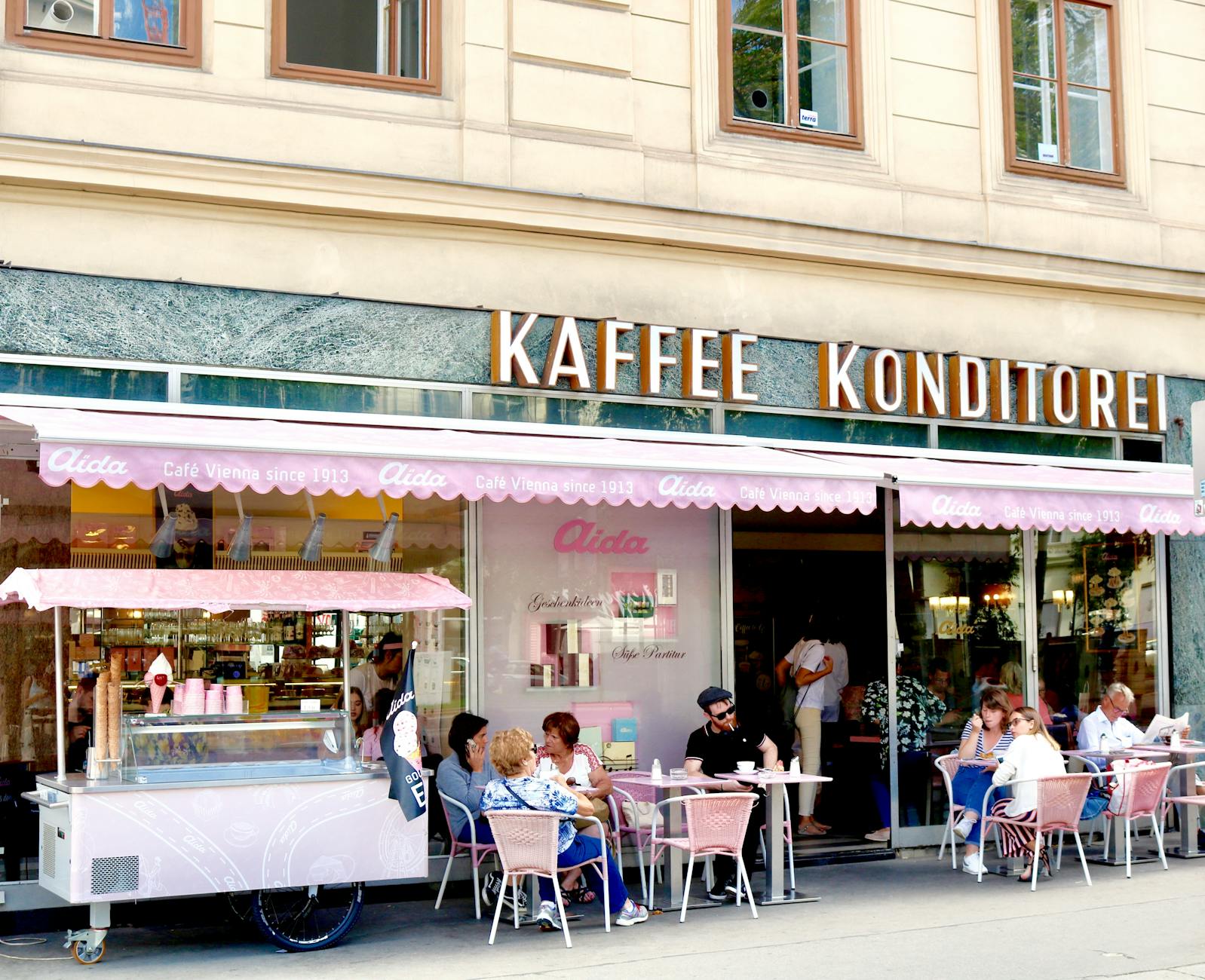
Weather range: 14–35°C (57–95°F). Heat waves are common; few historic buildings have full air conditioning.
- Lightweight, breathable fabrics (linen, cotton, light merino)
- 2–3 dresses or shirt-and-skirt combinations for women; lightweight chinos and short-sleeve button shirts for men
- One light cardigan or shirt for over-air-conditioned trains and museums
- Walking sandals OR breathable closed-toe shoes (avoid flip-flops)
- One smart-casual evening outfit (the opera and Musikverein are closed in summer, but fine-dining restaurants stay open)
- Sun hat — the sun is strong in July and August
- Sunscreen (SPF 30+)
- Swimsuit — a Donauinsel swimming day or a public bath visit (Diana-Bad, Amalienbad) is a Vienna summer ritual
- Small portable fan (battery-powered) — locals carry them on hot U-Bahn rides
Autumn (September–November)
Weather range: 1–22°C (34–72°F). September is mild; November is cold and wet.
- Mid-weight wool coat (essential by mid-October)
- Dark jeans and tailored trousers
- Two-three sweaters or merino long-sleeves
- One nicer dress or smart shirt for evenings
- Waterproof shoes — November is the wettest month
- Compact umbrella
- Light gloves and a scarf for the second half of October onwards
- Layering pieces — September days can swing 12°C between morning and afternoon
Winter (December–February)

Weather range: -8 to 6°C (18–43°F). Damp cold, occasional snow, frequent grey days.
- Proper winter coat — wool overcoat or a quality down jacket. A windbreaker is not enough.
- Thermal base layers (merino top and bottom)
- Wool sweaters (2–3)
- Dark jeans plus thicker trousers (corduroy, wool, or fleece-lined)
- Waterproof boots with grippy soles (essential — sidewalks get icy)
- Wool socks (3–4 pairs minimum)
- Hat, gloves, and a thick scarf
- Hand warmers — invaluable for Christmas market evenings
- Lip balm and rich moisturizer (the air is dry from heating)
- One smart outfit for an opera or ball event — Vienna’s winter cultural calendar is at full peak
For the Christmas market season specifically, layer aggressively — you’ll be outside for 2–3 hour stretches. Mulled wine helps. Our Christmas markets in Vienna guide covers what to expect from each market.
Things Most Tourists Forget to Pack
- European plug adapter (Type C/F) — most US travelers remember this, but UK and AU travelers often don’t.
- A small daypack under 25×30cm — bigger bags must be checked at almost all museums.
- Coins for public restrooms — most charge €0.50–€1.
- A reusable water bottle — Vienna has free public Trinkbrunnen drinking fountains throughout the city; tap water is excellent.
- Compact umbrella — rain is possible in any month.
- A blazer or wrap — saves you from feeling underdressed at one nice meal or concert.
- Hand sanitizer and tissues — useful at busy market stalls and rural cafe restrooms.
- Earplugs — Inner City hotels can be noisy with late-night street activity.
- Travel-size laundry detergent — many Vienna apartments have washers but no soap.
- A roll of small euro coins — trams, restrooms, and luggage lockers all use coins.
- Painkillers and stomach medication — Austrian pharmacies (Apotheke) are excellent but closed Sundays.
- Empty soft tote bag — for Naschmarkt purchases or unplanned shopping.
What NOT to Pack for Vienna
- Hairdryer or curling iron — almost every hotel and apartment has one.
- Beach towel — even for the Donauinsel, pack a quick-dry travel towel, not a full beach towel.
- Heavy guidebooks — kindle them or use offline mobile guides.
- Expensive jewelry — Vienna is safe, but pickpockets target tourists at Stephansplatz, Karlsplatz, and the U-Bahn.
- Formal evening wear (unless attending a ball) — smart casual covers most needs.
- Cash for the trip — Vienna is increasingly card-accepting; €100–200 in cash is plenty for incidentals.
- Travel adaptors with built-in surge protection — many U.S. surge-protected adaptors fail on European 230V; bring a basic adapter and a separate USB charger.
Tech & Documents
- Phone with a working international plan — or a local SIM/eSIM (A1, Magenta, Drei). Most Inner City hotels have strong wifi.
- Power bank — useful on long sightseeing days.
- Passport plus a paper copy stored separately.
- Travel insurance documents — printed and digital.
- Vaccination/health documentation if relevant for your home country’s return entry.
- Credit cards with no foreign transaction fees — Visa and Mastercard work almost everywhere; Amex has spotty acceptance at smaller cafes.
- Pre-loaded transit and museum tickets — Wien Mobil app for transit, Schönbrunn timed tickets via the official site.
Health, Hygiene & First-Aid
- Personal medications with original prescriptions
- Basic first-aid: blister plasters (you’ll need them), pain relievers, antihistamines
- Sunscreen (year-round in Vienna; SPF 30+)
- Lip balm — winters are dry, summers are sweaty
- Hand cream — winter heating dries hands fast
- Insect repellent — only if you’re heading to the Wachau or rural day trips in summer
- Hand sanitizer — small bottle for transit and markets
Vienna Packing List by Trip Length
Weekend (2–3 days)
One carry-on suitcase plus a personal bag is plenty. Two complete outfits, one smart-casual evening look, one pair of walking shoes plus one nicer pair, weather-appropriate outer layer.
Five Days
One mid-size suitcase. Three to four outfits with mix-and-match basics, two pairs of shoes, one smart outfit, weather layer, plus all extras. Most hotels have laundry service if needed; the longer the trip, the more layering matters. Match this to our 5-day Vienna itinerary for what each day demands.
Week or Longer
Pack like you would for five days but with one or two extras. Plan to do laundry mid-trip (€5–€10 self-service or €15–€25 hotel service) — you don’t need fourteen separate outfits.
Vienna with Kids: What to Add
- Lightweight stroller (not the off-road kind) — Vienna sidewalks and U-Bahn elevators handle compact strollers well
- Carrier or baby sling for cobblestone-heavy areas
- Snacks — Austrian supermarkets close earlier than US travelers expect
- Smaller daypack for kids’ essentials
- Wet wipes (sold in pharmacies, but cheaper to bring)
- A favorite stuffed toy and book for downtime in cafes
- Small umbrella for kids — the daycare aesthetic translates fine
The 24-Hour Vienna Outfit Plan
| Time of Day | What to Wear | Why |
|---|---|---|
| Morning sightseeing (8am–12pm) | Walking shoes, layered base, jacket | Schönbrunn or Belvedere will involve indoor + outdoor transitions |
| Lunch (1pm–2:30pm) | Same as morning, drop jacket | Most lunch spots are casual |
| Afternoon coffeehouse | Same plus a nicer top or shirt | Café Central, Sacher, Demel are slightly dressier |
| Pre-dinner change | Smart-casual evening outfit | Vienna dinner culture leans elegant |
| Opera or concert | Add a blazer/wrap; switch to nicer shoes | Smart casual minimum, more dressy preferred |
| Late drinks or heuriger | Same as evening | Evening style holds throughout |
Frequently Asked Questions
What should I wear in Vienna?
Smart casual covers nearly every situation: well-fitted jeans or chinos, button shirts, knit tops, dresses, leather sneakers or low boots. Avoid athleisure, shorts indoors, and flip-flops. For evening cultural venues, add a blazer or smart wrap.
Are jeans okay for the Vienna Opera?
Dark, well-fitted jeans paired with a tucked button shirt and proper shoes are acceptable for regular State Opera performances. For galas, premieres, or balls, dress significantly up — black tie is standard at the Vienna Opera Ball.
What kind of shoes should I bring to Vienna?
Bring two pairs minimum: one fully comfortable walking shoe (leather sneakers or ankle boots) and one nicer pair for evenings out. Avoid stilettos and flip-flops; the cobblestones are unforgiving.
Do I need a coat in Vienna?
Yes from October through April. December–February requires a proper winter coat with thermal layers underneath. May, June, and September can usually get away with a light jacket; July and August often need only a light layer for evenings.
What plug adapter do I need for Vienna?
Austria uses Type C and Type F plugs (the standard EU two-pin), running on 230V/50Hz. US, UK, and Japanese travelers all need an adapter. Most modern phone chargers and laptops handle 230V automatically — check your device label.
Is Vienna safe for tourists?
Vienna consistently ranks among Europe’s safest capitals. Standard urban precautions apply — watch for pickpockets at Stephansplatz, Schönbrunn, Karlsplatz, and U-Bahn lines U1 and U6. Otherwise the city is comfortable to walk in day or night.
Can I drink Vienna tap water?
Absolutely — Vienna’s tap water comes from two springs in the Alpine foothills (the original Hochquellenleitungen built in the 1870s) and is some of the best urban tap water in the world. Bring a refillable bottle.
What should I pack for Christmas markets in Vienna?
Layered insulation, waterproof boots, gloves, hat, and patience for crowds. A flask is unnecessary — the markets sell their own mulled wine in collectible mugs. Detailed tips in our Christmas markets in Vienna guide.
The Vienna Packing Checklist (Print-Ready)
Use this final checklist as your last review:
- ☐ Two pairs of comfortable walking shoes
- ☐ One smart-casual evening outfit
- ☐ Mix-and-match tops and bottoms (3–5 days worth)
- ☐ Weather-appropriate outer layer
- ☐ Compact umbrella
- ☐ European plug adapter (Type C/F)
- ☐ Phone, charger, power bank
- ☐ Passport plus paper copy
- ☐ Travel insurance documents
- ☐ Personal medications with prescriptions
- ☐ Blister plasters and basic first-aid
- ☐ Sunglasses and SPF 30+
- ☐ Reusable water bottle
- ☐ Daypack under 25×30cm
- ☐ Small euro coins for restrooms and trams
- ☐ One nicer accessory (blazer, wrap, scarf)
Pack lighter than you think and lean toward neutral, layerable basics. You’ll feel more like a local, fit more easily into a small Vienna hotel room or apartment, and have space for one bottle of Wachau wine, a Sacher cake tin, or a Gmundner ceramic on the way home.
For everything else trip-related — when to come, where to stay, how to get around — start with our Vienna travel guide or jump into specific guides like our best time to visit Vienna and Vienna transport guide.
Two packing decisions are really airport decisions: whether your liquids survive security without a repack, and whether your bag fits the low-cost gauge in Terminal 1. Our Vienna Airport guide covers both, along with how early to arrive and where the sensibly priced food hides.
Packing your liquids is simpler on the way out than it used to be. Since July 2026, Vienna Airport’s central security checkpoints use CT scanners, so containers of up to 2 litres and your laptop can stay in your cabin bag. The catch is the flight home: if your return airport has not installed the same scanners, the 100 ml rule still applies there. Our guide to Vienna Airport security and check-in times explains what changed and how early to arrive.