Vienna 5-Day Itinerary: The Complete Experience (2026)
Five days is the perfect length for Vienna. This complete day-by-day itinerary covers Schönbrunn, the Hofburg, Belvedere, a Wachau Valley day trip, coffeehouses, and the local neighborhoods most tourists miss — with timing, costs, and family-friendly variations.
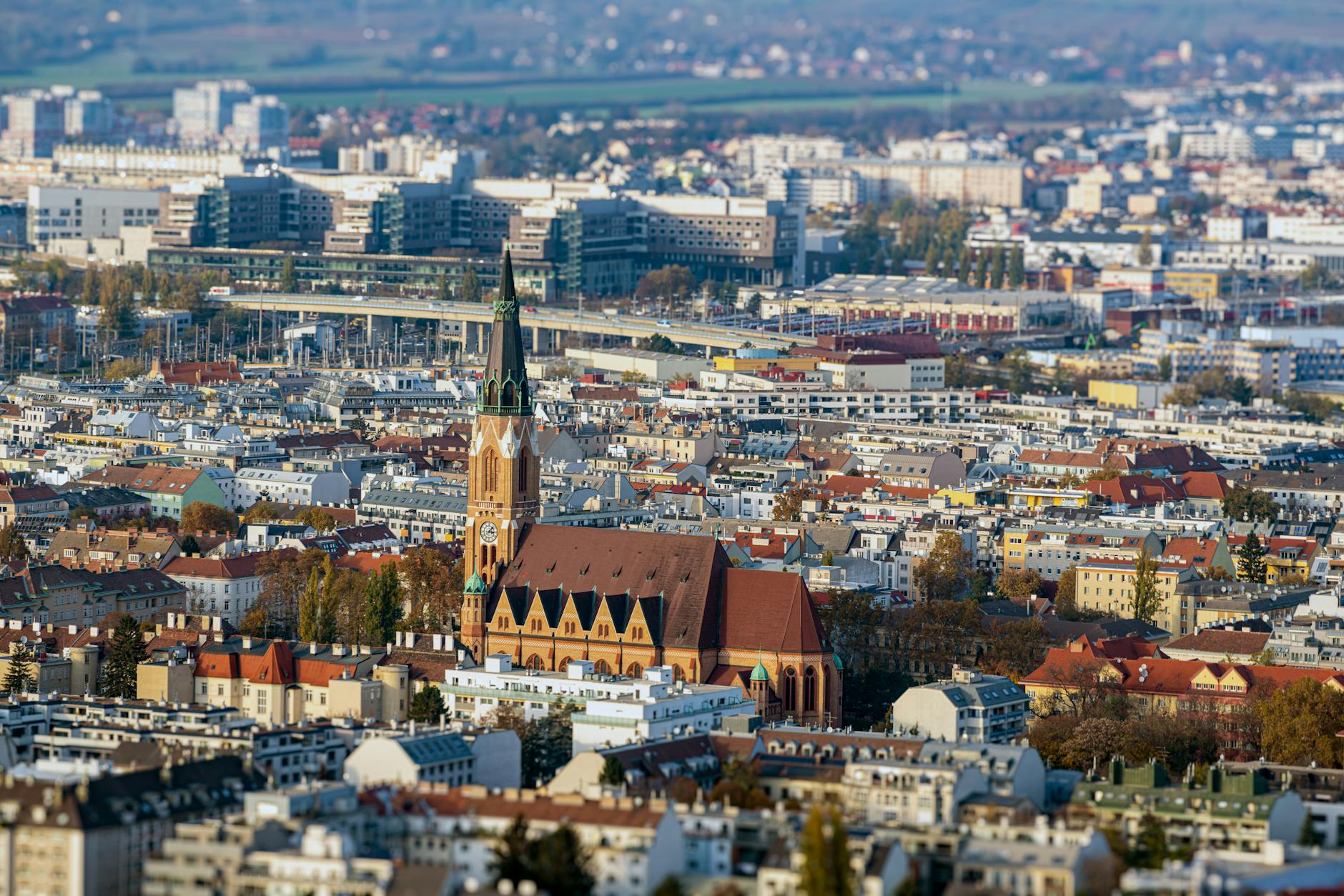
Photo by Ghassan Alkhatib
- Why 5 Days in Vienna Is the Perfect Length
- 5 Days in Vienna: Day-at-a-Glance
- Before You Start: 6 Things to Sort First
- Day 1: Imperial Vienna — The Hofburg, Stephansdom & the Inner City
- Day 2: Schönbrunn Palace & Western Vienna
- Day 3: Belvedere, MuseumsQuartier & Modern Vienna
- Day 4: Day Trip from Vienna — Wachau Valley, Bratislava, or Salzburg
- Day 5: Local Vienna — Coffeehouses, Districts & Saying Goodbye
- Where to Stay for 5 Days in Vienna
- Best Time to Take a 5-Day Vienna Trip
- 5-Day Vienna Budget Estimate
- 5-Day Vienna Itinerary Variations
- Frequently Asked Questions: 5 Days in Vienna
- Final Tips for Your 5-Day Vienna Trip
- Related Vienna Guides
This article contains advertising. Our booking links are routed through a partner that adds commission tracking automatically, so if you book through one we earn a commission from the provider, at no extra cost to you. It never affects what we recommend. Affiliate disclosure
Five days in Vienna is the sweet spot. It’s enough time to see every Habsburg palace, soak up a real Viennese coffeehouse afternoon, take a proper day trip to the Wachau Valley or Bratislava, and still have time to wander neighborhoods most three-day visitors never reach. This complete 5 days in Vienna itinerary is built for a relaxed but ambitious pace — the way locals would tell a friend to do it.
We’ve structured each day around a single neighborhood or theme so you spend less time on the U-Bahn and more time absorbing what makes Vienna special. We’ve also built in flexibility: you can swap Day 4’s Wachau Valley day trip for Bratislava, Salzburg, or Hallstatt depending on your interests, and Day 5 can flex toward art lovers, foodies, or families.
Why 5 Days in Vienna Is the Perfect Length
If you’re still weighing trip length, our deep-dive on how many days do you need in Vienna breaks down the trade-offs. Here’s the short version: three days covers the headline acts (Schönbrunn, Belvedere, Stephansdom, Hofburg) but leaves you breathless. A week is luxurious but starts to feel slow if you’re not planning multiple day trips. Five days threads the needle.
With five full days you get to:
- Visit the three major imperial palaces — Schönbrunn, Hofburg, and Belvedere — without rushing any of them
- Spend an entire afternoon in the MuseumsQuartier without sacrificing other neighborhoods
- Take a real day trip into the surrounding countryside (the Wachau Valley is the local favorite)
- Experience Vienna after dark — opera, classical concerts, heurigen wine taverns, or the modern bar scene
- Discover at least two non-touristy districts: Neubau (7th district) for design shops and cafes, and Leopoldstadt (2nd) for parks, markets, and the Prater
Travelers who try to compress this into three days inevitably skip the Wachau, the coffeehouses, or the contemporary side of the city — and Vienna without those is a postcard, not a place.
5 Days in Vienna: Day-at-a-Glance
| Day | Theme | Highlights | Walking Distance |
|---|---|---|---|
| Day 1 | Imperial Inner City | Hofburg, Stephansdom, Albertina, Spanish Riding School | ~6 km |
| Day 2 | Schönbrunn & Western Vienna | Schönbrunn Palace, Tiergarten, Naschmarkt evening | ~5 km |
| Day 3 | Art & Modern Vienna | Belvedere, MuseumsQuartier, Karlsplatz, Secession | ~5 km |
| Day 4 | Day Trip | Wachau Valley OR Bratislava OR Salzburg | varies |
| Day 5 | Local Vienna | Coffeehouses, Naschmarkt, Prater, Neubau, opera evening | ~6 km |
Before You Start: 6 Things to Sort First
1. Book Schönbrunn and the Spanish Riding School in advance
These are the two attractions that consistently sell out. Schönbrunn Palace timed-entry tickets release several months ahead — book your Day 2 morning slot the moment your trip is confirmed. Same goes for the Spanish Riding School morning exercise (much more affordable than the gala performances). For the rest, see our complete Vienna attractions guide.
2. Decide on the Vienna PASS or Vienna City Card
For a five-day visit doing 8+ paid attractions, the Vienna PASS (3-day version, used Days 1–3) often pays for itself if you’re hitting Schönbrunn, Belvedere, the Albertina, the Imperial Treasury, and Schönbrunn’s Privy Garden. The Vienna City Card is cheaper and includes transport but only gives discounts (10–25%) rather than free entry — better for budget-conscious travelers. We dig into the math in our Vienna on a budget article.
3. Pick a central base, not a cheap one
Five days is long enough that nightly transit time matters. Stay in the 1st district (Innere Stadt), 6th (Mariahilf), 7th (Neubau), or 8th (Josefstadt) so you can walk home from dinner. Our full where to stay in Vienna breakdown covers each district in detail.
4. Buy a 24-hour or 7-day transit pass
Day 1 is mostly walking and Day 4 is your day trip, so you need transit on Days 2, 3, and 5. Wiener Linien stopped selling its 48- and 72-hour tickets in January 2026, which leaves the 24-hour ticket (€10.20, or €9.70 in the WienMobil app) and the 7-day ticket (€28.90, or €25.20 digital). Three 24-hour tickets cost more than one 7-day ticket, so the 7-day ticket is usually the best value. Full breakdown in our Vienna transport guide.
5. Reserve at least one coffeehouse and one concert
Café Sacher and Demel get long lines at peak hours, and Café Central will too once it reopens after its renovation — go for breakfast (8–10am) or late afternoon (3–5pm). For evening concerts, the Vienna State Opera releases €15 standing-room tickets 80 minutes before each performance, but the Musikverein’s classical programs and the various Mozart-and-Strauss tourist concerts (in Karlskirche, Peterskirche, or the Hofburg orchestra hall) are bookable online weeks ahead.
6. Pack for cobblestones and contrast
Vienna’s old city is paved with uneven stone and tram tracks — heels and thin soles will end your day early. Bring waterproof walking shoes, plus one outfit smart enough for the opera or a fine-dining dinner. Vienna leans elegant; you won’t regret packing a blazer or a dress.
Day 1: Imperial Vienna — The Hofburg, Stephansdom & the Inner City
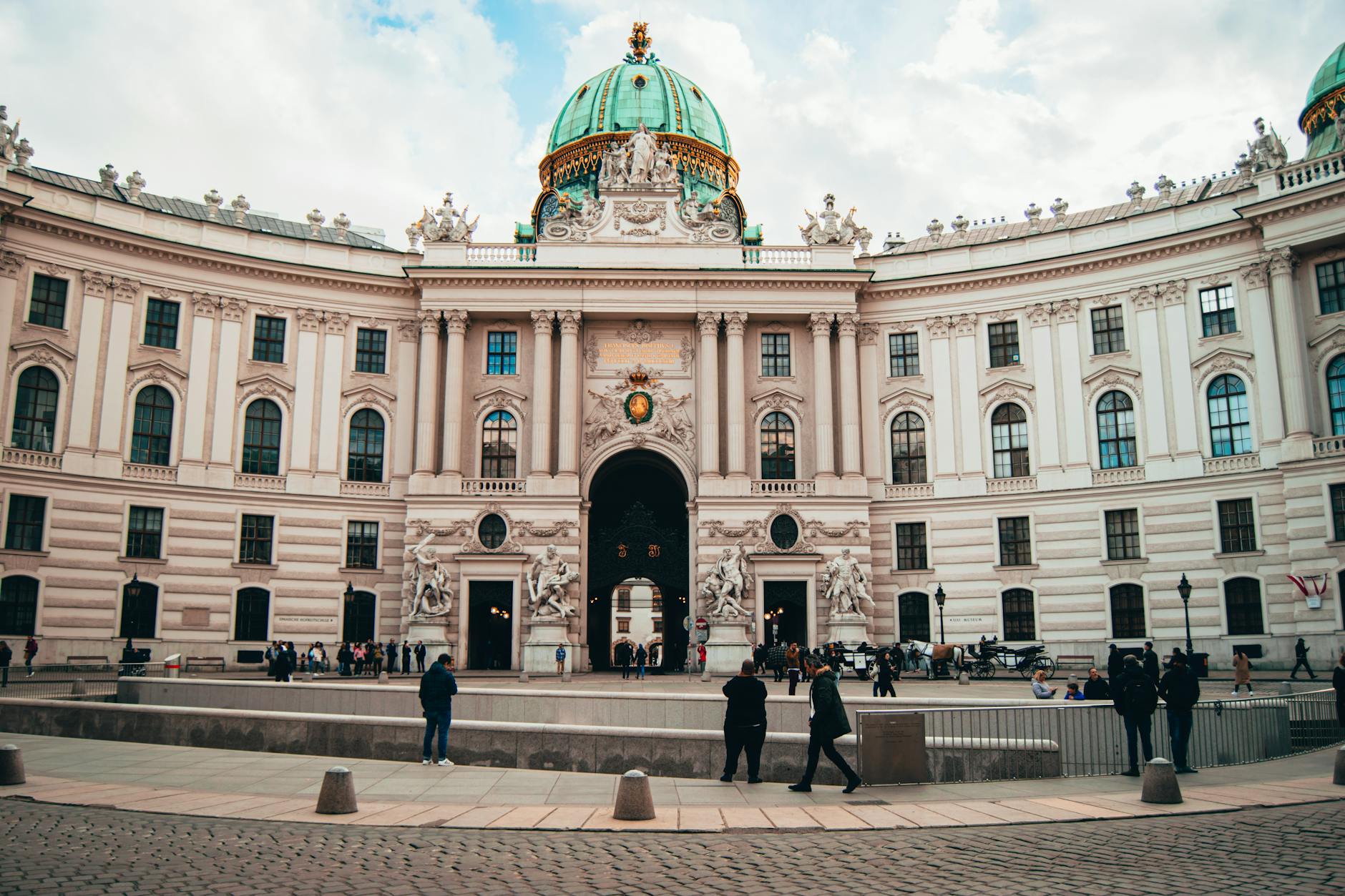
Day 1 is for orientation: a slow loop through the 1st district that will make every other day make sense. Everything below is walkable, so leave the U-Bahn for tomorrow.
Morning (8:30am–12:30pm): Stephansdom & the Hofburg
Start at Stephansdom (St. Stephen’s Cathedral) — Vienna’s symbolic heart. Get there before 9am to walk inside while the cathedral is mostly empty. The interior is free; the audio tour, North Tower elevator (panoramic city view), and South Tower stair climb (343 steps for the better view) are extra. Budget 45 minutes.
Walk down Graben — Vienna’s grand pedestrian boulevard — past the Pestsäule (Plague Column) and onto Kohlmarkt, lined with luxury shops in 18th-century buildings. Pause at Demel (in business since 1786) for a coffee and a slice of Sachertorte if you don’t want to wait at the more famous Café Sacher.
Continue to the Hofburg Palace complex. The Imperial Apartments and the Sisi Museum share one ticket and tell the story of Empress Elisabeth — the ill-fated 19th-century empress whose mythology drives a surprising amount of Vienna’s tourism. The Sisi Museum rooms are closed until the redesigned museum opens on 19 November 2026; until then the ticket covers the Imperial Apartments at a reduced price. Allow 90 minutes minimum, two hours if you read everything.
Lunch: Plachutta or a Beisl
Walk five minutes to Plachutta Wollzeile — Vienna’s most famous tafelspitz (boiled beef) restaurant — or, if you’d rather a casual lunch, find a traditional Beisl (neighborhood tavern) like Gasthaus Pöschl or Glacis Beisl. Both serve excellent schnitzel for under €20 and won’t make you feel underdressed. For more on Viennese cuisine, see our Vienna food guide.
Afternoon (2:30pm–6pm): Albertina, Spanish Riding School & the Ringstrasse
Cross to the Albertina Museum. Most visitors come for the Habsburg state rooms and the Modernist collection (Monet, Klimt, Picasso). Two hours is plenty.
If you’ve timed it well, stop in at the Spanish Riding School for the afternoon “Morning Exercise” or stable visit (check the schedule — it doesn’t run every day). Even without seeing the famous performance, you can tour the historic Winter Riding School.
End the day with a Ringstrasse walk: from the Hofburg you can see the Burgtheater, Rathaus (City Hall), Parliament, the Natural History Museum, and Kunsthistorisches Museum all in one loop. Don’t go inside — that’s tomorrow and the day after — just absorb the scale of late-19th-century Vienna’s grand boulevard. Read more about how this all came together in our Vienna history and architecture guide.
Evening: Coffee, Then Dinner Near the Cathedral
Have your first proper Viennese coffeehouse experience at the more local Café Bräunerhof. Café Central (atmospheric, touristy, worth it once) is closed for renovation until its reopening, scheduled for winter 2026; in the meantime its pop-up, DECENTRAL, runs at the Freyung. Order a melange (Vienna’s answer to a cappuccino) and a slice of Esterházy torte; sit for an hour without feeling rushed — that’s the rule.
For dinner, walk to Figlmüller for the famously oversized schnitzel, or Zum Schwarzen Kameel for an upscale take on Viennese classics. Day 1 is shorter than the others by design — you’ll want energy for tomorrow.
Day 2: Schönbrunn Palace & Western Vienna
Morning (8:00am–1pm): Schönbrunn Palace
Take the U4 line to Schönbrunn — about 15 minutes from the city center. Aim for an 8:30–9am timed entry to beat the cruise-ship and bus-tour crowds that arrive around 10am.
The Grand Tour ticket (40 rooms, 60 minutes with audio) is what most visitors should book. Highlights: the Mirrors Room (where 6-year-old Mozart performed for Maria Theresa), the Great Gallery, the Million Room, and Franz Joseph’s spartan study. After the palace, head outside.
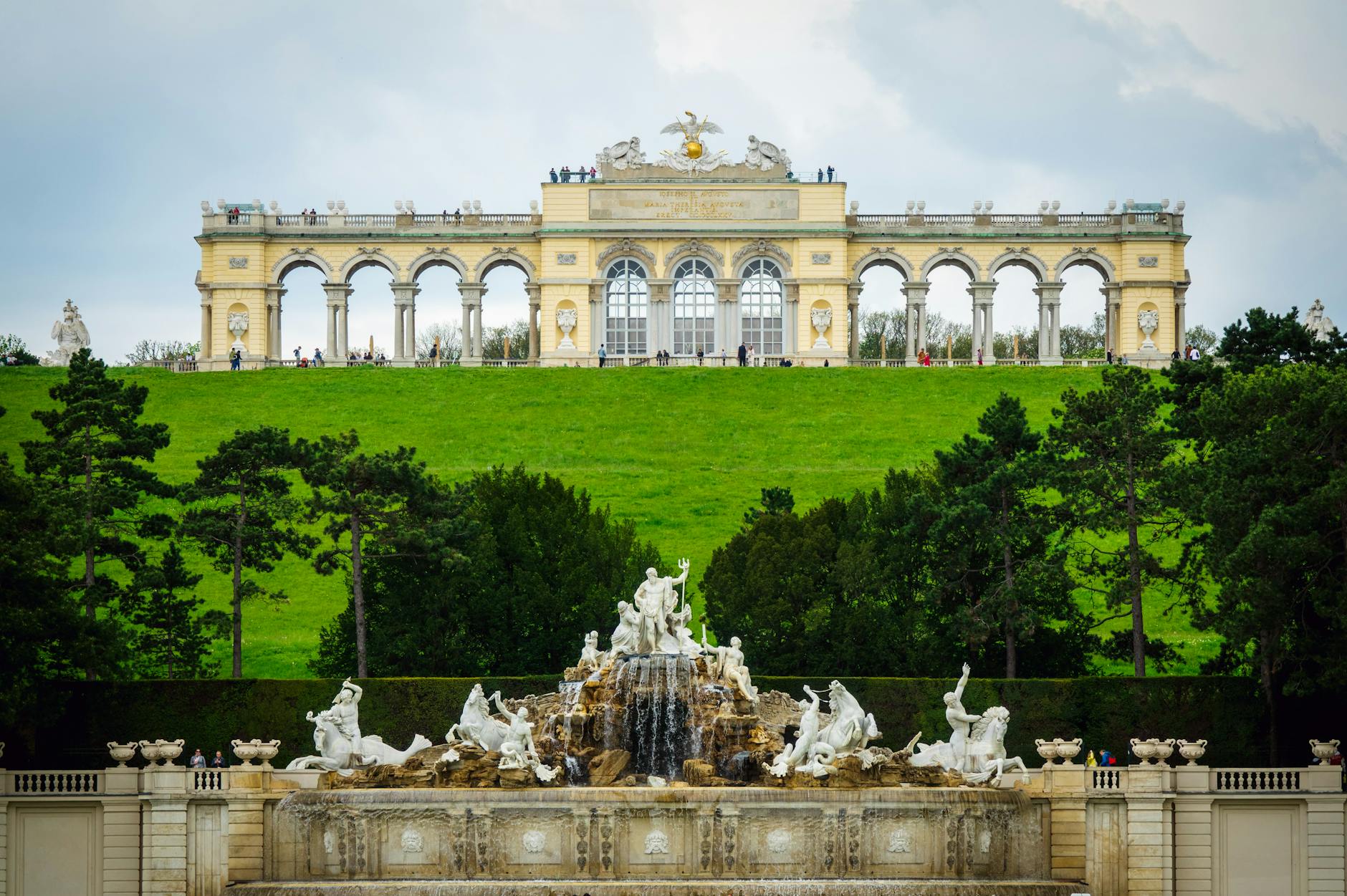
The main park is free, though a few of the gardens are ticketed. Walk up to the Gloriette for the iconic shot back over the palace, the formal parterre, and the city beyond. Allow at least 90 minutes for the gardens. The Privy Garden (part of the €16 Exclusive Gardens ticket, with the Orangery Garden and the Maze) is a quieter, hedge-walled escape that most tour groups skip.
Optional add-ons depending on your group: the Tiergarten Schönbrunn (the world’s oldest continuously operating zoo, founded 1752) is fantastic for families; the Wagenburg (Imperial Carriage Museum) is a sleeper hit with vintage royal coaches.
Lunch at Café Gloriette or Back in the City
Eat at Café Gloriette on the hill (touristy but the view earns it) or jump back on the U4 to lunch at Naschmarkt — five stops away, and where you’re going next anyway.
Afternoon (3pm–6pm): Naschmarkt & Wienzeile
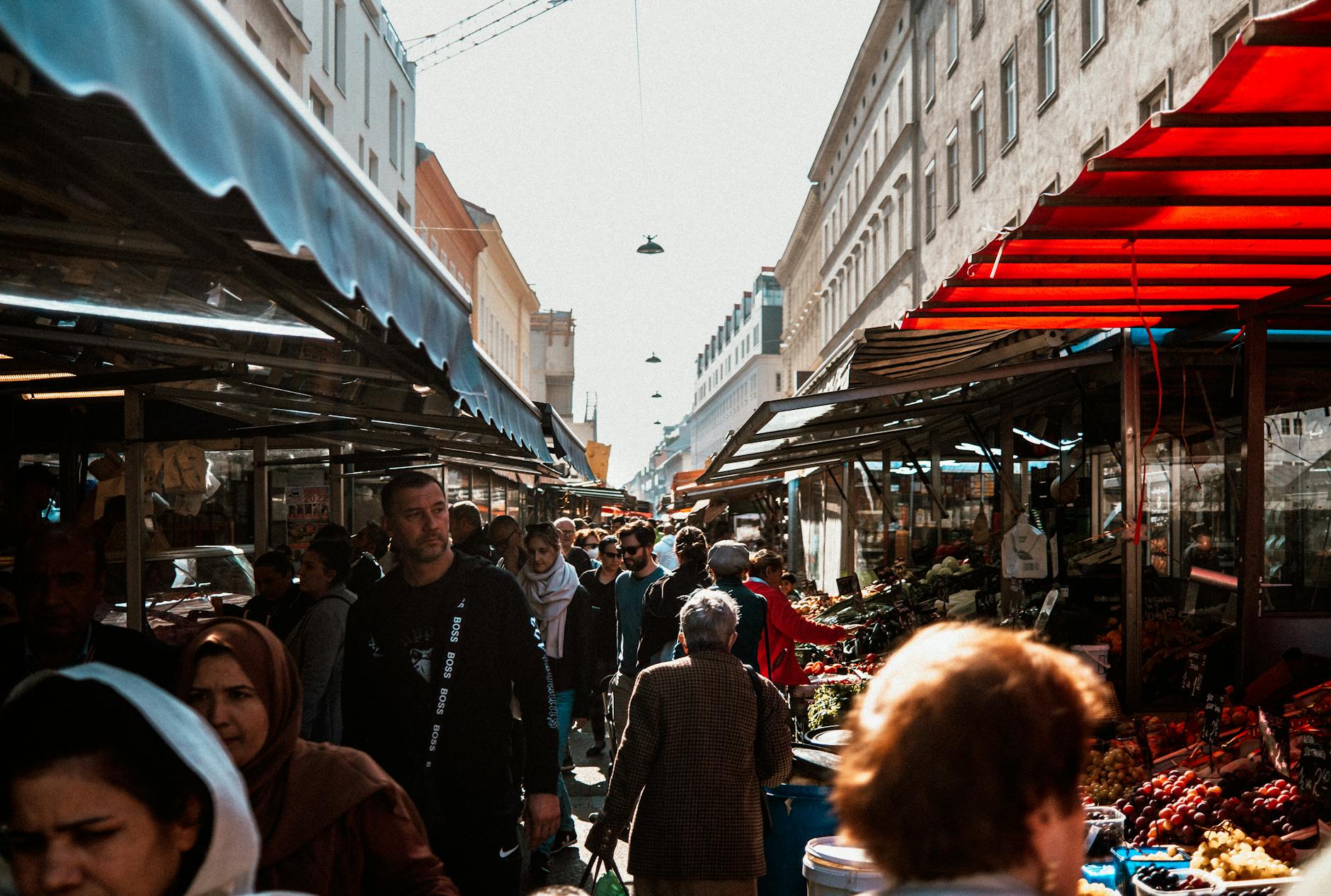
The Naschmarkt stretches for half a kilometer along the old Wien river bed. The east half is mostly produce and spice stalls; the west half is restaurants and meze bars. Browse, snack, and pick up local specialties: Marillenmarmelade (apricot jam), Kürbiskernöl (pumpkin seed oil), and Wachau apricot schnapps for souvenirs.
Walk along Linke and Rechte Wienzeile to admire Otto Wagner’s Jugendstil apartment buildings — the Majolikahaus and the Medallion House are landmarks of Vienna’s Art Nouveau movement. From there it’s a short walk to the Secession Building (Klimt’s Beethoven Frieze is in the basement; entry €13).
Evening: Opera or Local Wine Tavern
If it’s your night for the Vienna State Opera, this is when to go. Standing-room tickets (€15) go on sale 80 minutes before curtain — line up at the Stehplatz entrance on Operngasse 30 minutes before that.
If opera isn’t your thing, head to Grinzing or Nussdorf in the 19th district for an authentic heuriger (wine tavern) evening. Try Mayer am Pfarrplatz (where Beethoven once lived) or Wieninger. You’ll eat buffet-style cold cuts and roasted meats, drink local Grüner Veltliner, and probably stay later than planned. Take the U4 to Heiligenstadt then a short bus or taxi.
Day 3: Belvedere, MuseumsQuartier & Modern Vienna
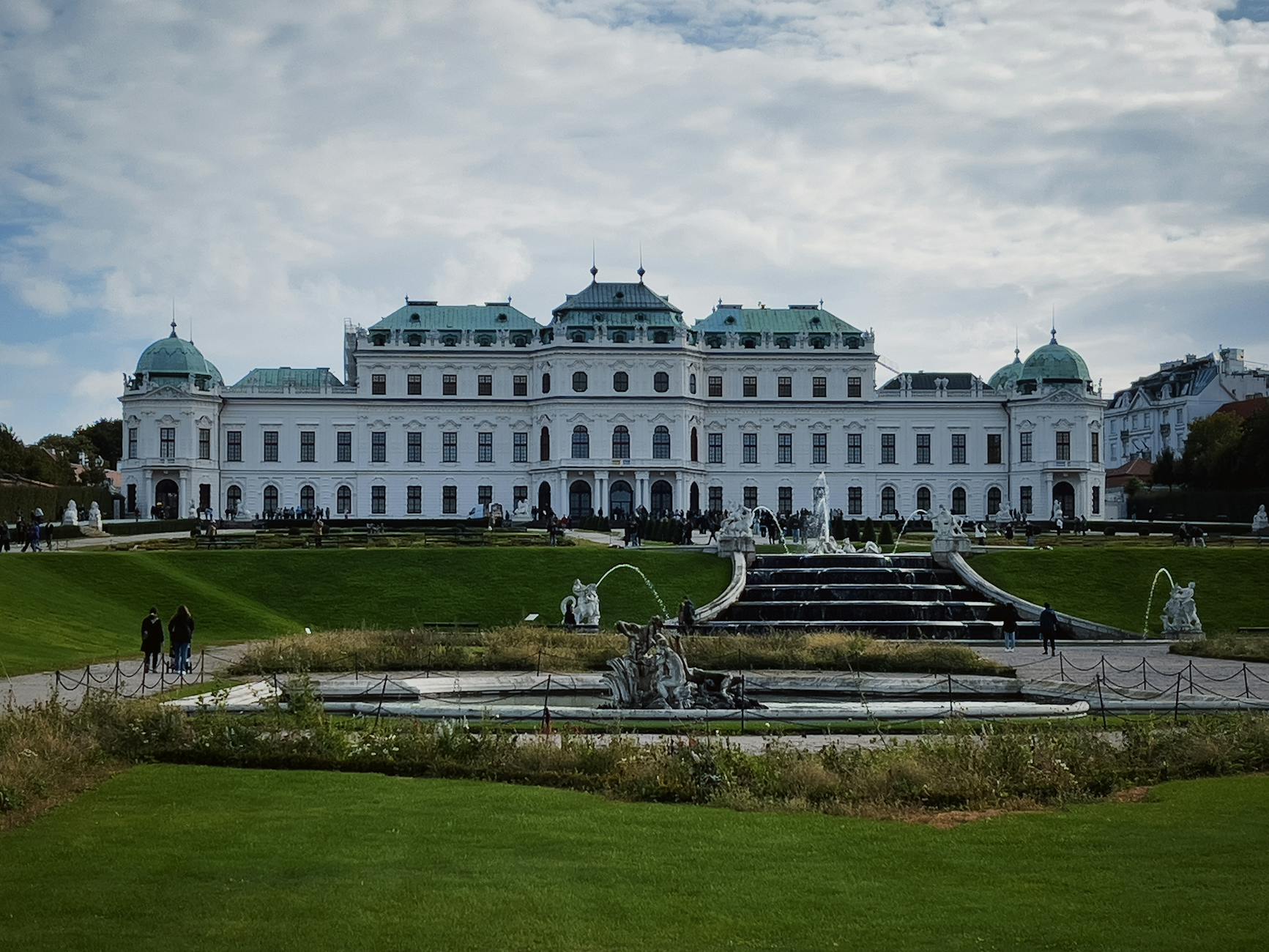
Morning (9am–1pm): Belvedere Palace
Belvedere is two palaces (Upper and Lower) connected by a sloping French garden. The Upper Belvedere houses Austria’s most famous painting — Gustav Klimt’s The Kiss — plus a strong collection of Schiele, Kokoschka, and Austrian Romantics. Allow two hours.
The Lower Belvedere (worth visiting only if you have a combo ticket and time) hosts changing exhibitions. The Belvedere 21, a few blocks south in a 1958 modernist pavilion, is the contemporary art branch. The garden itself, free to enter, is one of Vienna’s loveliest walks — best done from the Upper Belvedere downhill toward the Schwarzenbergplatz exit.
Lunch: Salm Bräu or Steirereck
Salm Bräu, one block from Belvedere, brews its own beer and serves enormous Wiener schnitzel platters. For a higher-end celebration, book Steirereck in the Stadtpark months in advance — one of the most acclaimed restaurants in Central Europe.
Afternoon (2pm–6pm): MuseumsQuartier
The MuseumsQuartier (MQ) is Vienna’s cultural campus — eight museums and dozens of cafes inside a former imperial stables complex. The two essentials are:
- Leopold Museum — the world’s largest Egon Schiele collection, plus major Klimt works (allow 2 hours)
- MUMOK (Museum of Modern Art) — strong on Pop Art, Viennese Actionism, and 1960s–80s European movements (allow 90 minutes)
Skip if short on time: the Architekturzentrum, Kunsthalle Wien, and ZOOM (children’s museum). Spend any leftover time on the courtyard’s distinctive Enzi loungers — the bright-colored sofas where locals hang out in summer.
Late Afternoon: Karlskirche & Klimt’s Kiss Detour
Walk south to Karlsplatz for Karlskirche — Vienna’s most beautiful Baroque church. Adult admission is €9.50. The panorama lift that once carried visitors up into the dome to see the frescoes at eye level was dismantled in late November 2022.
Evening: Classical Concert at Karlskirche or the Musikverein
If you didn’t see opera on Day 2, tonight is your evening. Karlskirche hosts intimate Mozart and Vivaldi concerts (Four Seasons, Requiem) most nights — touristy but the acoustics are extraordinary. The Musikverein’s Golden Hall is the more serious option (home of the Vienna Philharmonic). For a casual night out, see our Vienna nightlife guide.
Day 4: Day Trip from Vienna — Wachau Valley, Bratislava, or Salzburg
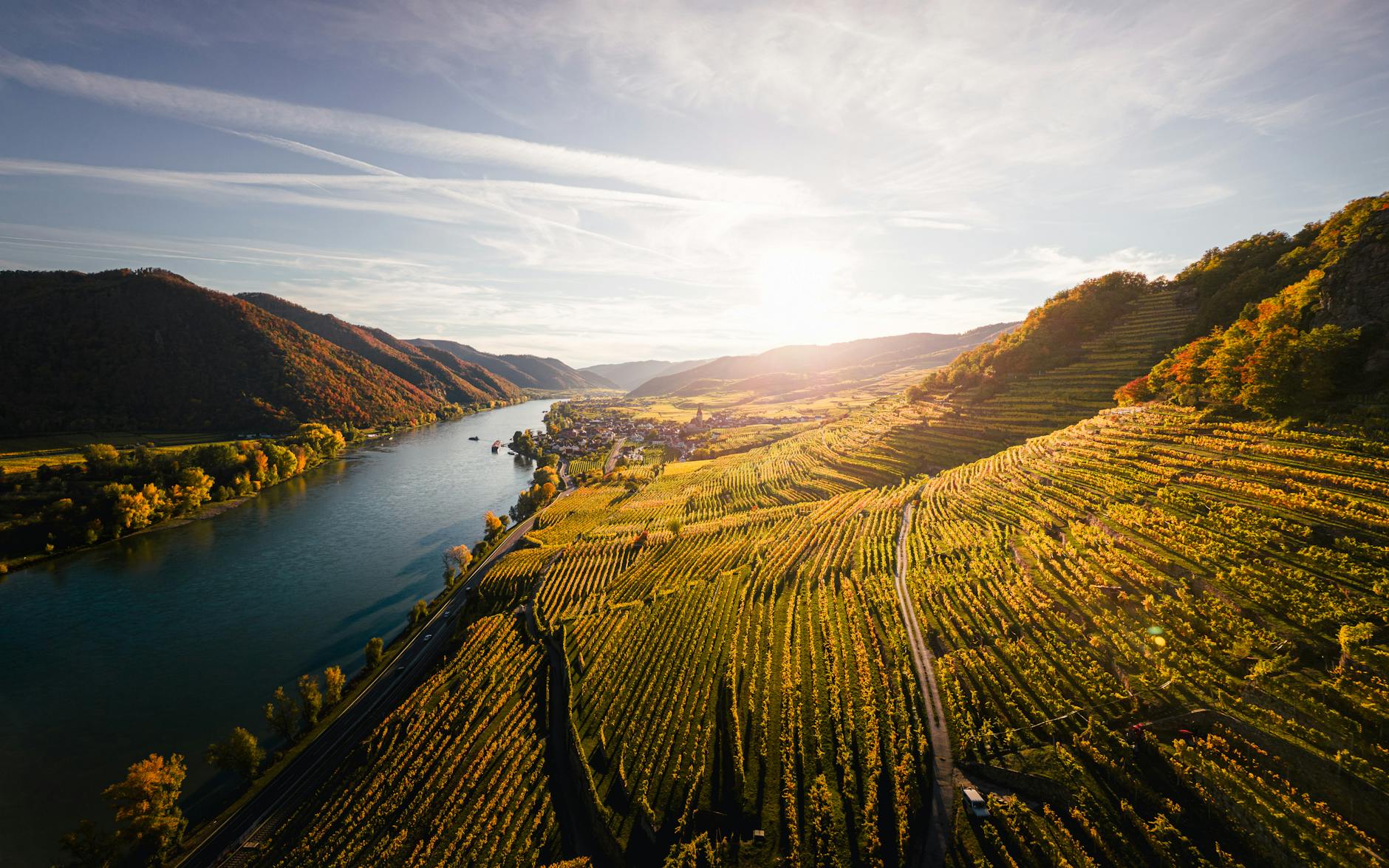
Vienna’s location makes day-tripping easy. Pick one of three based on your travel style; all are doable as a long day. We cover all of these in detail in our day trips from Vienna guide.
Option A: Wachau Valley (Recommended)
The Wachau Valley is a 36-kilometer stretch of the Danube River dotted with vineyards, terraced apricot orchards, hilltop castles, and UNESCO-listed villages. It’s what the rest of the Danube looked like before the dams. Take the train to Krems (1 hour from Wien Hauptbahnhof), then either:
- Cycle from Krems to Melk along the marked Donauradweg (40 km, mostly flat) — rent at the Krems train station
- Cruise from Krems to Melk via DDSG Blue Danube (April–October) — about 2 hours one-way
- Drive or join a guided tour for door-to-door access to wineries
Don’t miss Dürnstein (where Richard the Lionheart was imprisoned in 1192), the blue-and-white Stiftskirche, and a glass of local Grüner Veltliner at any village heuriger. End at Melk Abbey — a Baroque masterpiece perched above the Danube — and train back to Vienna.
Option B: Bratislava
Bratislava is just one hour from Vienna by train, bus, or even Twin City Liner boat down the Danube. Slovakia’s capital has a compact medieval old town, a hilltop castle, excellent beer, and prices noticeably below Austrian levels. Realistic for a half-day plus dinner.
Option C: Salzburg or Hallstatt
Salzburg is 2.5 hours each way by ÖBB Railjet — possible as a day trip but tight (you’ll want to leave Vienna by 7am). Mozart’s birthplace, the Mirabell Gardens, and the fortress are the highlights.
Hallstatt is 3.5 hours each way and requires a tour bus or rental car for a comfortable day. Stunning, but realistically deserves an overnight if you can spare one.
Day 5: Local Vienna — Coffeehouses, Districts & Saying Goodbye
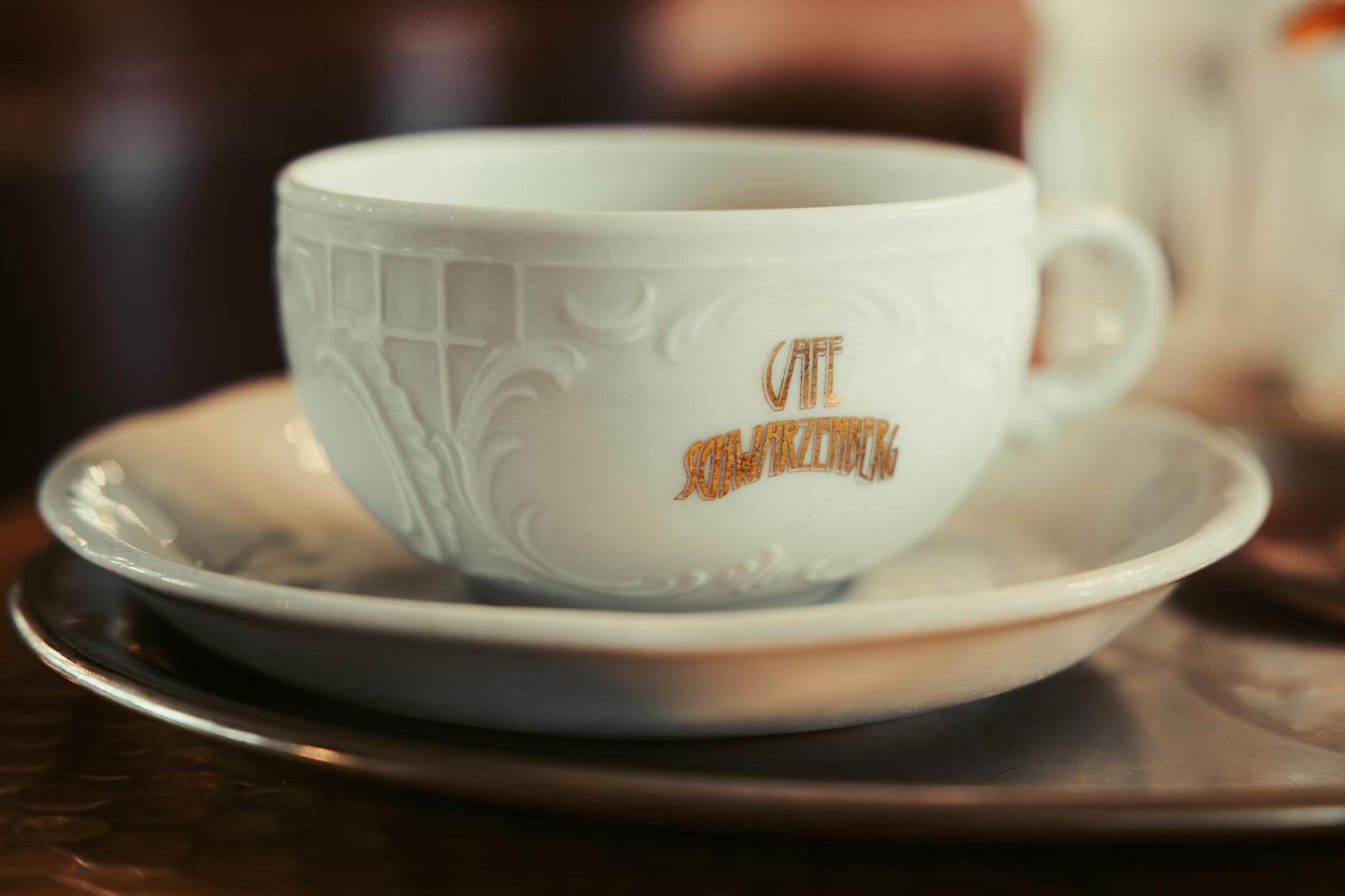
By Day 5 you’ve earned a slower morning. This day is built around the side of Vienna that surprises most first-time visitors — the design-forward, cafe-rich, post-imperial Vienna that locals actually live in.
Morning (9am–12:30pm): Long Coffeehouse Breakfast & Neubau Wander
Sleep in. Take a long Viennese breakfast at Café Sperl (1880, one of the most atmospheric coffeehouses in the city) or Café Jelinek in Mariahilf. Order a frühstück with eggs, butter, jam, ham, and a melange.
Then walk into the 7th district (Neubau): Lindengasse, Westbahnstrasse, and Kirchengasse are full of independent design shops, vintage stores, and coffee bars. The Spittelberg quarter, just east, is a tiny preserved 18th-century district that’s especially pretty around lunchtime.
Lunch: A Modern Bistro or a Würstelstand
Vienna’s modern food scene shines in the 7th. Try Pramerl & the Wolf (Michelin-starred, book ahead), Saigon Soup for pho, or — if you’ve never had one — a Bitzinger Würstelstand Käsekrainer (cheese-stuffed sausage with mustard and Semmel roll). The Würstelstand at Albertinaplatz is the city’s most photographed.
Afternoon (2pm–6pm): Prater & Leopoldstadt
Take the U1 to Praterstern. Vienna’s Prater is two parks in one: the famous Wurstelprater (amusement park, home of the 1897 Riesenrad ferris wheel) and the much larger Grüner Prater — a forested expanse with bike paths, beer gardens, and the long straight Hauptallee. Ride the Riesenrad once for the Carol Reed Third Man photo, then walk into the green.
Time permitting, wander into Karmelitermarkt in the 2nd district for a coffee at Tewa or Vollpension, or detour to the Augarten for the Baroque garden and porcelain manufactory.
Evening: Final Dinner & Optional Heuriger
Choose your closer. For a special meal: Steirereck (book months ahead), Konstantin Filippou (modern Austrian, 2 Michelin stars), or Tian (vegetarian fine dining). For something casual and quintessentially Vienna: Gasthaus Wolf, Pfudl, or — if it’s summer — back up to a Grinzing heuriger for one last carafe of Gemischter Satz.
End the night where you started: a slow walk through the lit Inner City, a final coffee at Café Hawelka, and the realization you’ll be planning your return trip on the flight home.
Where to Stay for 5 Days in Vienna
Five days deserves a base you actually like coming back to. Recommendations by budget, all within easy walking or 1–2 U-Bahn stops of the Inner City:
- Luxury (€350+/night): Hotel Sacher, Hotel Imperial, Park Hyatt Vienna, Rosewood Vienna
- Boutique (€180–300): Hotel Altstadt Vienna (7th), The Guest House Vienna (1st), Hotel Topazz (1st), 25hours Hotel beim MuseumsQuartier (7th)
- Mid-range (€100–180): Motel One Wien Staatsoper, Hotel Beethoven Wien, Hotel Am Konzerthaus, Boutiquehotel Stadthalle
- Budget (€60–100): wombats City Hostel Naschmarkt, Hotel Kaiserhof, A&O Hotels, Hotel Pension Wild
For a deeper breakdown by neighborhood (1st vs 6th vs 7th, and the Belvedere area), see where to stay in Vienna.
Best Time to Take a 5-Day Vienna Trip
Vienna has a more pronounced seasonal personality than most European capitals.
- Late April to mid-June: Mild weather, gardens in bloom (especially Schönbrunn and the Volksgarten roses), shoulder-season prices. Best overall window.
- July & August: Hot, humid, half the city away on holiday. The opera and Musikverein close until early September. Skip if culture is your priority.
- September & October: Returning locals, harvest festivals, heuriger season at peak, comfortable temps. Excellent.
- Late November to December 23: Christmas market season — magical, but Day 4 day trips can be cold and short.
- January–March: Cheapest, quietest, and you’ll get the museums almost to yourself. Pack for genuine cold.
5-Day Vienna Budget Estimate
Approximate per-person costs for a 5-day trip (excluding flights):
| Category | Budget | Mid-range | Luxury |
|---|---|---|---|
| Accommodation (4 nights) | €250 | €600 | €1,400+ |
| Food (5 days) | €125 | €275 | €600+ |
| Attractions & museums | €90 | €140 | €220 |
| Day trip (Day 4) | €40 | €90 | €220 |
| Public transport (5 days) | €25 | €29 | €60 (taxis) |
| One concert/opera | €15 | €60 | €180 |
| Total per person | ~€545 | ~€1,190 | ~€2,680+ |
For more on stretching every euro, see our Vienna on a budget guide.
5-Day Vienna Itinerary Variations
For First-Time Visitors
Stick to the itinerary as written. Don’t try to add Hallstatt as an additional day trip; the included version is already balanced.
For Couples
Move the opera to Day 5, add a horse-drawn Fiaker ride through the Inner City on Day 1 evening, and reserve dinner at Steirereck or Konstantin Filippou. Heuriger evening on Day 2 is strongly recommended.
For Families with Kids
Swap the MuseumsQuartier afternoon for the Tiergarten Schönbrunn extension, add the ZOOM Children’s Museum on Day 3, and prioritize the Prater on Day 5 morning rather than afternoon. The Riesenrad and the Liliputbahn miniature train are guaranteed wins.
For Art & History Lovers
Add the Kunsthistorisches Museum to Day 1 (skip the Albertina) — the Bruegel collection alone justifies a full afternoon. Replace Karlskirche with the Sigmund Freud Museum on Day 3. Make Day 4 Salzburg if you’d rather see Mozart’s Geburtshaus than the Wachau.
For Foodies
Spend longer at Naschmarkt on Day 2, replace one major attraction with a coffeehouse crawl (Sperl, Hawelka, Bräunerhof, Sacher, and Central once its renovation is finished), and book at least one Michelin-starred dinner. Day 4 should probably be a Wachau wine-tasting tour.
Frequently Asked Questions: 5 Days in Vienna
Is 5 days too many days in Vienna?
Not at all. Five days is the sweet spot — long enough to see all three imperial palaces, take a real day trip, and discover Vienna’s modern side, but short enough to keep a vacation pace. Travelers who allotted only three days commonly say they wished they’d had more.
What’s the best month for a 5-day Vienna trip?
Late April through mid-June is generally optimal: mild weather, all attractions open, gardens in bloom, and prices below the August peak. September and October are the second-best window. December offers the famous Christmas markets but darker, colder days.
Can I do Vienna in 5 days without a car?
Absolutely. Vienna’s public transit is among the best in Europe, and a 24-hour or 7-day Wiener Linien ticket covers everything inside the city. The only place you might want a car is the Wachau Valley on Day 4 — and even that has excellent train, boat, and bicycle alternatives.
How much does 5 days in Vienna cost?
For a mid-range traveler, expect around €1,000–€1,200 per person excluding flights. Budget travelers can do it for €500–€600; luxury travelers can easily spend €2,500+. Accommodation is the largest single cost, followed by food.
Is the Vienna Pass worth it for 5 days?
The 3-day Vienna PASS is worth it if you’ll visit Schönbrunn, Belvedere, the Albertina, the Imperial Treasury, and at least three other paid attractions in those three days. For slower-paced travelers, individual tickets often work out cheaper.
Can I take a day trip to Hallstatt from Vienna in one day?
It’s possible but tight — 3.5 hours each way means roughly 4 hours on the ground. We recommend the Wachau Valley or Bratislava as more relaxing day trips and saving Hallstatt for a separate overnight from Salzburg.
What should I not miss in 5 days in Vienna?
The non-negotiables: Schönbrunn (with the gardens), the Hofburg, Stephansdom, Belvedere (for Klimt), Naschmarkt, at least one historic coffeehouse, one classical concert or opera, and a heuriger evening or Wachau day trip.
Is 5 days in Vienna too long for kids?
Not with the right itinerary. Substitute the Tiergarten Schönbrunn for the MuseumsQuartier afternoon, prioritize the Prater amusement park, take the Schönbrunn miniature train, and add the Haus des Meeres (a former WWII flak tower converted into an aquarium). Five days with breaks works very well for families.
Final Tips for Your 5-Day Vienna Trip
- Book your Schönbrunn slot first — it’s the most important reservation of the trip
- Build in a buffer — at least one half-day with no plan beyond a coffeehouse
- Tip 5–10% at sit-down restaurants by rounding up; €1 per drink at bars
- Use the U-Bahn after 8pm — taxis exist but the U-Bahn runs until midnight (and 24/7 on weekends)
- Carry small euros for restrooms — most public WCs cost €0.50–€1
- Don’t tip the Fiaker driver more than 10% — they don’t expect it
- Save one evening completely free — Vienna at night, slowly, is the city at its best
Five days is enough to fall in love with Vienna. It’s also exactly enough to start planning your return — most repeat visitors come back for the Wachau in apricot blossom season, the Christmas markets, or simply another long afternoon at Café Hawelka. Whichever way the trip goes, you’ll leave understanding why generations of travelers have been calling Vienna the most livable city in Europe.
For more itineraries, compare with our 3-day Vienna itinerary or our 1-day Vienna itinerary for shorter visits.